Another Bob Story

A resident of the New Mexico State Veterans’ Home, Bob likes to talk about his years in the Marine Corps. I recently asked him to retell this story. It’s one of my favorites.

The war was over. Just barely. The troops had occupation duties in Korea. In Bob’s opinion, everything was fine, nothing to complain about as long as he wasn’t getting shot at. But there was the usual inequality between officers and enlisted men when it came to adult beverages. Enlisted men got warm beer. The officers had a new club. It was a Quonset hut, set on uneven ground, with dirt piled up around the edges where it didn’t sit flush to the earth, but it served good liquor. And the bartender was a friend of Bob’s.
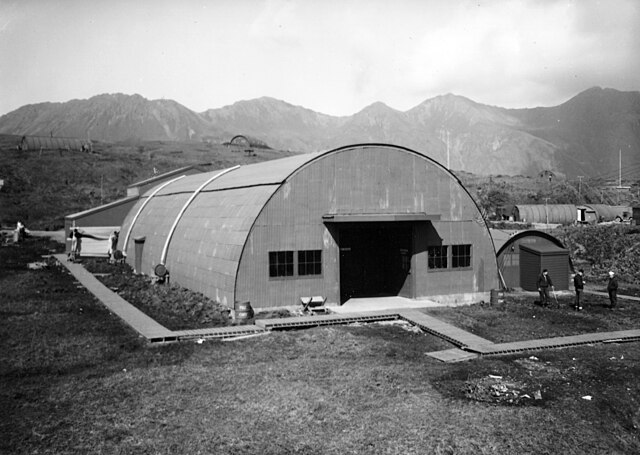
The floor of the new club wasn’t finished. The bartender made sure a few boards remained loose. No one noticed since they were covered with a mat. The more remarkable thing is that no one noticed the tunnel. Granted, it was short, from the loose boards to some of the loose dirt at the edge of the Quonset hut, but Bob and his buddies must have dug silently. Men on guard duty at night were in on the plan. That also helped.

When inventory was taken at night in the club, the enlisted men tending bar made sure it all looked fine, then slipped a bottle under the boards into the tunnel. Later, someone would crawl in to retrieve it and hand it off to the guard. Somehow, it then got transported to a cache under a natural-looking pile of rocks. And the enlisted men occasionally got to enjoy as good a drink as the officers did.

The discrepancy in the inventory was eventually noticed. An officer confronted Bob, who assured him he wouldn’t do such a thing. “Risk six months in the brig for a sip of whisky? Not worth it.”

“We know you took it. But we can’t prove a thing, and you won’t crack. All I can say is that if the enemy ever captured you. I’m confident they couldn’t get a word out of you, either.”

Book Review: Heroes and Villains of New Mexico by Bud Russo

The short chapters in this historical collection cover times dating back to the Pueblo Revolt all the way up to the early days of space program research. Each character is thoroughly researched and portrayed with color and flair. I can’t possibly summarize all of the stories, but there were several that particularly struck me. Two had to do with a flood of the Dry Cimarron River, so called because it seldom flowed fully.

In the early 20th century, a tremendous monsoon filled the river to overflowing. One of the heroes in this book was a telephone operator named Sally Rook. By staying on the job despite the raging flood, she saved the lives of almost everyone in town as she called them while the storm and the waters closed in. Her courage truly moved me.

The aftermath of that flood allowed a cowboy named George McJunkin to discover what became known as the Folsom Site, with the famous Folsom points. It changed the understanding of prehistory in North America. McJunkin had been enslaved in Texas until age fourteen. After the Civil War, the free young man moved to New Mexico, became a cowboy, and worked in exchange for reading lessons as well as  money. He became a self-educated naturalist. He was riding fence when he found what he was sure were not modern buffalo bones exposed by the recent flood. And he noticed indications of human activity in the area. He tried to get scientists to study what he had found, but they ignored his letters and even the bones he sent. After all, he was just a cowboy. Many years after he died, the site was finally investigated.

The heroes range from people who made great discoveries to people who risked their lives or lost their lives to save others. Chester Nez, author of the outstanding autobiography, Code Talker, is one of those portrayed. I highly recommend his entire book, as well as the chapter about him in this book, I took my time reading it, getting absorbed in each vignette. The writing is a little over the top, but it definitely keeps you engaged. And I haven’t even mentioned the villains!

You know you’re in New Mexico when there’s a lizard on the dance floor.

When I arrived for the fund-raising party on the equine rescue farm, my favorite local blues band was playing in the shed where the feed for the animals is kept. A friend waved me to me through the window, encouraging me to come in and dance. There was a hole in the cement that I quickly learned to dodge, even while my dance partner spun me and swung me in and out. He pointed out a beautiful lizard running across the floor. It had patterns in its scales that reminded me of the eyes in peacock feathers done in shades of brown, probably a Holbrookia Elegans—elegant earless lizard. It ran into a corner. The band admired it and kept playing.

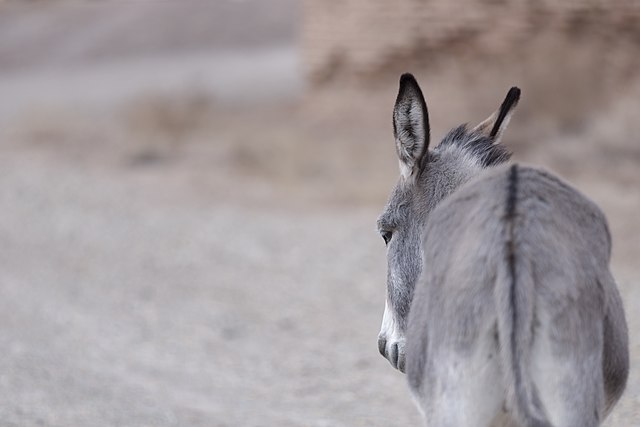
Most of the guests sat around tables outside and on the porch of the house, drinking, eating the potluck dinner. The view of Turtleback Mountain and the rough dirt hills was stunning, Bright blue sky, 101 degrees, a fine June evening. In a pen behind the shed where the band was playing were two gray-and-white donkeys, a white pony, a tiny brown-and-white mini horse, and a couple of mules. The pony was apparently upset with the mini horse, charging at him, kicking up dust. I approached the pen to pet the donkeys, and they both turned their backs to me. I took it as rejection, but was later informed that it was a gesture of trust. They were asking me to scratch their butts. I just don’t speak donkey.

When I returned to the shed, one of the party-goers was drinking tequila straight from the bottle. He was a round-bellied, very white man with tattoos on both arms and long white hair, but a rather young-looking face. He lives across the dirt road from the donkey farm, and said that he felt fine drinking the tequila, since he only had to walk home—which could still be a bit hazardous, though safer than driving. One night, he had stumbled and spent about twenty minutes in the ditch, which we agreed sounded like it could be a blues song. “Twenty Minutes in the Ditch.”

He said, “You can do anything out here that you want, and no one bothers you.” He also said there’s a cave you can see from Sixth Street, and that people sometimes live there for months at a time. I’m not planning on drinking in the ditch or sleeping in the cave, but it’s good to know that there are places that wild within the city limits. Dancing on the donkey farm was wild enough for me.