The Cart

Whose life story did it tell? And how did it become their story? It didn’t begin that way, with a shopping cart full of garbage and drug paraphernalia parked in the unpaved alley behind my apartment. Parked next to the dumpster, with wads of trash and a small cardboard box containing a disassembled pink plastic item still in the cart.

It’s the windy season. If I didn’t do something, this stuff would soon be flying down the alley and getting snagged on cacti. I put on gloves and emptied the cart, aware that I was throwing away things that someone, for some reason, had hung onto. Someone I never see or hear, yet who lives in my town. Someone who hoards peculiar items and uses meth. No matter where their story started, to reach this point, it was a long way down.

I walked the cart to the grocery store and advised the customer service person that it ought to be cleaned, but by the time we got out the back door to where I’d left it , it had already been taken. A shopper was probably pushing it through the store, putting their groceries in it.

I’d like to imagine that whoever left the cart in the alley is getting help, but I’ll never know. Though I’ve tried to come up with an ending for this story, there isn’t one. I passed through the middle of it.

Music and Writing

I can’t have background music. Either I’m listening, or I’m writing. Music totally absorbs me. I attended a concert of the Southwest Chamber Winds in an art gallery, and the effect on my mind and energy was profound. Pattern itself has energy, and has emotional and intellectual effects. Through pace, implied directions, unexpected transitions that somehow flow, mood changes, and pauses, music can create humor or suspense, can make you  wonder with every note what will happen next, and it has to both surprise and satisfy by the end. If it was predictable, it would be dull, but if it had no pattern or resolution, it would be noise, not music.

The concert made me want to write with the complexity, fire, and subtlety of classical music.


Green Earth

Alone in a wild place, I gradually began to sense to earth as a living being, a relative. Like us, she breathes and has fluids and bones. We have our microbiome; she has us and our fellow creatures.

The wild place where I stood, the dirt dam road at Elephant Butte, isn’t entirely wild. The road is paved, though no vehicles have been allowed on it for years. You’re greeted by a sign that warns you to do no damage, because this is property of the United States. (It’s Bureau of Reclamation land.) People respect that sign. There’s no trash. Everywhere else around here, litter abounds, but those who walk the dirt dam road honor it. Maybe the sign reminds visitors that we the people are the owners. Or perhaps those who come there are a special breed, the seekers of silent, isolated places.

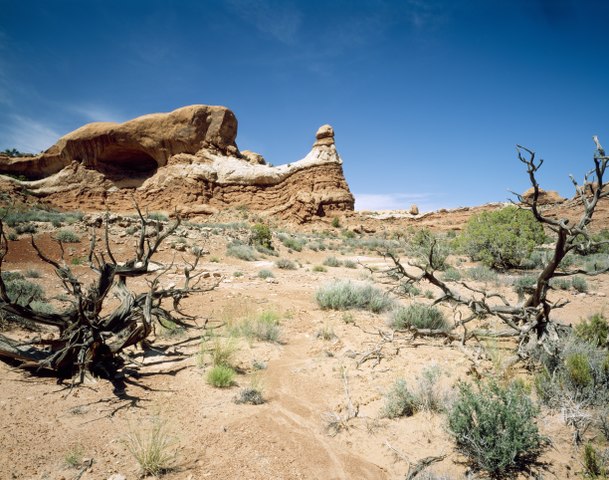
The earth along the road has a green tone, shifting from gray-green to yellow-green. The vegetation is sparse: tiny stubborn, ground-hugging white flowers, cacti with inch-long thorns, spiky shrubs, and brown grasses. The space between them looks alive because of the green dirt. Pink and purple rocks glow against it, pebbles that might look dull in another setting seeming as bright as jewels.

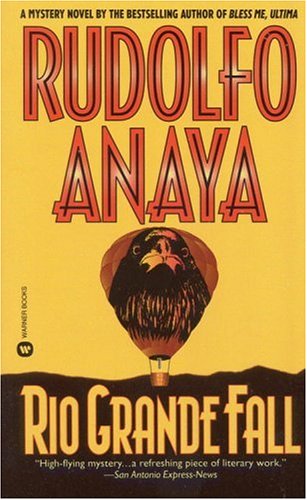
A New Mexico Mystery Review: Rio Grande Fall by Rudolfo Anaya

The second Sonny Baca novel is not just a sequel, but a continuation of a journey through the four seasons and the four sacred directions that began in book one, Zia Summer. Sonny, the great-grandson of legendary New Mexico lawman Elfego Baca, grows as heir to his bisabuelo’s role and also in his spirituality and capacity for love.

To recover from the soul sickness caused by a murder he dealt with in the first book, Sonny seeks healing from a curandera. The healing is his initiation into the spirit world and shamanic experiences, and it introduces the most compelling aspects of the story.

This private investigator character far from noir. Sonny is colorful, a flawed but basically virtuous young man strongly connected to his family, culture, and community. He’s realistic in many ways and yet also a larger-than-life hero who has mythic-scale adventures in his archetypal battle with Raven, the cult leader and domestic terrorist he pursued in the first book.

Sonny is hired by the Alburquerque International Balloon Fiesta when a balloonist who could have been a witness in a case involving Raven dies. (Get use to that extra r in Albuquerque as you read the series. It’s not a typo. Anaya restored it, though it fell off the city’s name a long time ago.) An intriguing aspect of the crime plot is the time period, in the aftermath of the Iran-Contra scandal and the arms-and-drugs deals of that era. One of the themes is corruption.

The balloon fiesta itself, the city’s diverse neighborhoods, and the glory of October in New Mexico, are as central to the story as the characters. The author is so passionate about them he gets carried away sometimes, re-describing them more often than necessary. He also restates his themes a bit too often. I guess his editor didn’t dare tell the master cut, but these repetitions slow the pace. A reflection on autumn in the Rio Grande valley isn’t needed when lives are at stake. The book overall is still powerful. I mean this as praise when I say it has an occasional comic book quality—a fight scene with a leap off a balcony, a mad scientist scene, the invocation of special powers—because myths, archetypes, and superheroes are closely related.

The most complex characters aren’t the good ones or the evil ones, but two women who are torn between: Madge, the balloon fiesta director, and Tamara, Raven’s former follower. The Good Women aren’t filled out as well. Though their roles in Sonny’s life differ, his lover, Rita, restaurateur and herbalist, and the curandera, Lorenza, are virtually identical. This may be due to Sonny’s idealization of them—or the author’s.

Lorenza is Sonny’s new spiritual teacher. His neighbor don Eliseo, a traditional elder, was his teacher in the first book and remains one in this. I’ll be interested to see if each book in the series adds another teacher and how these teachers balance his spiritual wholeness by the end. Despite some excess verbiage, I’ll follow the rest of the series. After all, it’s excess verbiage by Anaya.


Contrast

Tourists were cycling in shorts and sleeveless tank tops today. I could tell they were “from away” (a wonderful phrase I picked up in Maine) not only because they were clad for summer in January, but because they wore actual bike shorts—and helmets. A local cyclist is more likely to ride in jeans and have long gray hair flowing out from under a ball cap, while dangling a grocery bag from one hand or pulling some sort of wagon with his dog in it.

Another tourist I saw today, a man with cropped silver hair, was sunbathing shirtless outside his camper at the lake. No hat. No sunglasses. Getting a tan, of all things. I didn’t think anyone did that anymore, but if you’re from some snowbound Northern state, it might be hard to resist a sunny, fifty-seven degree day in the desert. Meanwhile, I was wearing long pants, two layers of shirts, gloves, a visor hat, wrap-around goggles, and sunscreen.

I enjoy winter here in southern New Mexico, but its beauty is familiar. If I imagine what this day would have felt like should I have been suddenly transported here the year I had a job in Maine, and the snowbanks were as tall as I was, I’d have thought I’d gone to heaven. Back then, I walked to work wrapped in a windproof snowsuit, taking cautious steps on perpetually icy sidewalks. I know I don’t live in paradise. Our community has its problems, and we need rain the way those half-naked Northerners need sun. It’s good to see them. They remind me to appreciate the ordinary and to realize it’s actually extraordinary.

Reversals

The obstacle isn’t necessarily in your path; perhaps it is your path. I took a New Year’s yoga class in which the teacher used this theme. We can’t always remove our obstacles. Sometimes we learn to work with them and learn from them.

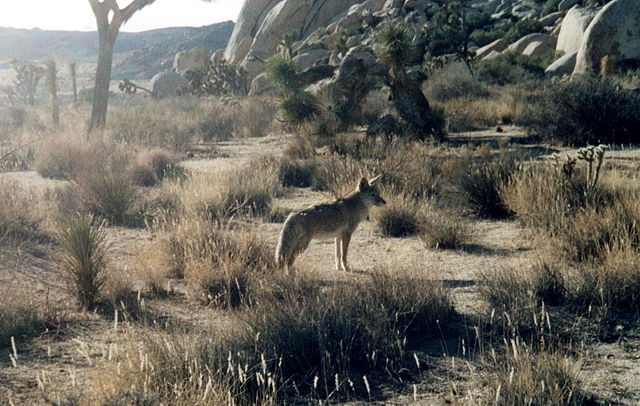
During my run a few days back, I heard coyotes singing.  Then they started yipping and growling, as if there was some kind of scuffle going on. They weren’t far ahead of me, and I remembered that a friend had once been followed by a pack of coyotes when she was hiking alone. Though coyotes almost never attack humans, running past this pack, whatever they were doing, seemed like a bad idea. Maybe there were just two—it’s coyote mating season—but maybe it was a fight with an outsider to their territory.  The noise stopped, and through the gaps between shrubs, I spied them trotting silently toward the section of the trail I was headed for. When in the presence of predators, I told myself, don’t act like prey. I turned around.

Danger is exciting on the page, but even the smallest danger doesn’t appeal to me in real life. Reversals, however, are interesting in both cases. I saw the landscape from a different perspective, since I usually go up the long hill rather than down. The same place can look quite new from the other side. And I ran further, since I had to retrace my steps.

That evening, my work in progress was so stuck it was putting me to sleep. Not a good sign.  I wasn’t sure how to fix it, but I told myself I was going to push through and not go out dancing that night, though there was a musician I would have enjoyed hearing at the Brewery, and I can walk there in five minutes or less. Still stuck, I gave in and went. My favorite dancing partner was there, and an acquaintance who is a mystery fan. I danced a few songs with one, talked story structure with the other, and then headed home, ready to write.

The problem lay in being too linear, telling the story step by step. I need reversals, a surprise, and something as energizing for the reader as a wild dance with a strong partner.

Cold!

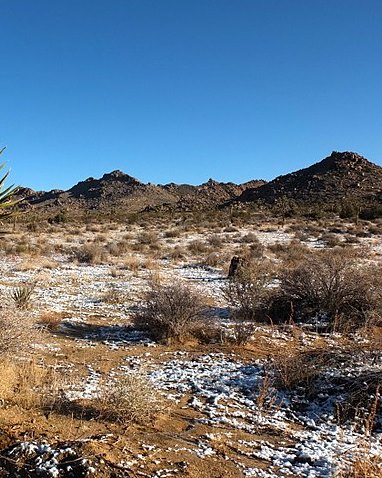
This is not a normal winter in T or C. It’s cold. So cold a few flakes of snow fell, enough to decorate Turtleback Mountain with white stripes way up near the Turtle. I thought I wouldn’t be able to stand running when the temperature was below forty, but I missed the beauty of the trail, the open space on all sides, and the effect on my creative flow, so I gave it a try, wearing so many layers a northerner would have laughed had one seen me. Not bad after all, thirty-seven degrees. Another day this week was windy, almost like spring. I went out anyway. Half-way through the four miles, I realized I felt good enduring the challenges, better than if I’d done something indoors instead. It was good to be reminded that thinking about doing something difficult is often more stressful than actually doing it.

Shorter Days

The sunset was pink, blue, and purple over my neighbors’ blue-and-purple houses as I walked to the yoga studio to teach tonight.  One of those odd T or C sunsets where the color was not in the west, but somewhere else. Tonight, the northeast. It was beautiful, but daylight was ending already at five-fifteen.

 Waiting until I’ve done all my chores and errands before I do what’s most rewarding is no longer an option. It could be dark by then. I’ve always been the work-first play-later type, the anti-procrastinator, but if I want to walk, run, or do outdoor yoga, I have to take advantage of the sunny hours, the warmest part of the day.

Sometimes I make myself do every tedious task before I free myself to write. Life is short. My days are shorter. I feel young, but I’m not. What am I waiting for? Along with teaching yoga, this is my work and my art. I give myself permission, right this minute, to drop everything else and do it.

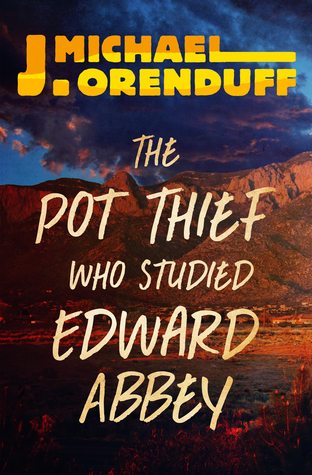
A New Mexico Mystery Review: The Pot Thief Who Studied Edward Abbey

As always in this series, the opening is brilliant, followed by a colorful and intriguingly circuitous journey. If you’ve not yet discovered the pot thief books, think of them as off-beat cozies with an intellectual bent: nonviolent, humorous, character-centered, with a lot of cooking (some of it very funny—yes, recipes can be funny), and a romantic subplot. Unusual in the cozy mystery genre  are the male protagonist and the illegal nature of some of his activities.

In this book, for once Hubie is not stealing ancient pots (rescuing them, in his opinion) but teaching students how to make copies of them, and he’s doing it at the college that kicked him out of graduate school for digging up pots where he wasn’t supposed to be digging.

The portrayal of students, faculty, and administrators is satirical but rings true. Hubie, long out of touch with academic life, has a lot to learn to get back into it. He’s kind, but he’s also a tad opinionated and not a stickler for rules, so he gets off on the wrong foot with a few people—something Edward Abbey would understand.

The department meeting is hilarious (and made me glad I no longer have to attend them), but the best comic scene is the culmination of one of the romance subplots. A few of the discussions over drinks ramble on a bit, but they’re still entertaining.

Hubie’s reading of Edward Abbey assists his thinking, as the pot thief’s topic of study in each book does. I especially liked how his friend Susannah’s background in art history plays a key role in solving the murder. The mystery plot keeps turning. Each time I thought it had wrapped up, another twist came around.

Although this is basically a humorous book, it has some serious moments, and they’re handled with grace, in both the subplots and the mystery plot. The victim of the crime is given a place of honor in the story.

A new reader of the series could start here and not feel lost, but I recommend beginning with The Pot Thief Who Studied Pythagoras and getting to know Hubie and his friends from the beginning.

*****

Click here for my 2016 interview with the author.


Walking to the Lake

Once in a while I need a literal change of pace and take a very long walk instead of a run. Variety is good for the body, mind, and soul, so I explored several miles of Elephant Butte Lake State Park where the surfaces are either too hard (paved roads) or too soft (the beach) for running. Pavement is a great surface for vehicles. Tires don’t tear it up. But walking on it is noisy compared to walking on the natural bare earth, so I started veering off into the desert. To my dismay, it was so churned up by tires that it was hard to find an undisturbed place except in shallow arroyos, firm sandy paths made by October’s heavy rains. It puzzles me why people take their vehicles off the road. The roads are right there, designed for driving. If they want to get out and experience nature—I had an Edward Abbey Desert Solitaire moment—they should get out and experience nature. I can understand using a vehicle if one can’t walk, but otherwise, it doesn’t make sense. And it ruins the landscape. Instead of road runner and quail tracks, deer and coyote tracks, I kept seeing tire tracks. So I went back on the pavement.

I finally reached a dirt road, and when I got to the end of it, I found a patch of undamaged land, too steep for vehicles to intrude upon, with a  deep arroyo running through it. It seemed to be guarded by a low-crouching creosote bush that resembled a giant tarantula. Welcome to the wild.

Eventually, I walked down to the water. The lake was stunningly blue under the clear sky, and a few sailboats were gliding across it, none of the noisy motorized craft of summer. The beach has grown due to the reservoir being so low, and the islands look as if they have bathtub rings from the mineral stains marking how high the water once was. The shoreline is a stark landscape, beautiful in its bare way—nothing but sand, rocks, and water, like an alien planet with no plant life. Then it got more alien-looking, and not in a scenic way. I began to notice unnatural shimmers in the sand caught by the low, late-afternoon sun. Half-buried plastic. Snack food wrappers, foam cups, remnants of bags, fishing line, all on their way to the water.

My collection in hand, I reached a small spit of red dirt and dark gravel jutting out into the blue water. On one side of the curve of the spit perched a huge raven. On the far tip, a blue heron huddled with its neck tucked in so much that its beak seemed to poke out from its wing joints. It looked gray again the brighter colors around it. The only sound was the plop of a jumping fish. Then the raven croaked and flew west across the shining lake, a good direction for a raven.

I hiked back to the paved road, collecting more plastic for the dumpster at the top of the hill. Not far at all. Not difficult to do. Unfortunately, I’m pretty sure that on the rest of the vast beach, there’s more plastic slowly traveling down the slope toward the fish and the birds.

What would make people stop and see it? Walking?