Recharging while Charging

A few years back, I posted about buying gas for the last time.  It turns out the EV charging station I use most often is at a gas station.

That’s where I do some of my most relaxed reading. There’s something special about reading at a charging station. I have few choices how to spend that time. I could take walks, but charging stations most often are located at car dealerships and in parking lots. The one at a gas station in Elephant Butte is definitely not a scenic place for a walk. So, I put the sun shades in my windshield, and I pull a book from the stash on the floor of my passenger seat. There is nothing else demanding of my time, nothing else to do. It’s a little retreat, a little vacation.

People sometimes come up to me and ask, “How long does it take to charge that thing?” I answer that I only have to charge a couple of times a month, but it does take longer than buying gas. They say, “Oh, I wouldn’t be able to stand that.” They don’t grasp how much I enjoy having twenty or thirty minutes committed to nothing but reading.

I have a whole collection of charging station reads. Obscure New Mexico history books happen to be my favorite. I’m currently reading the memoir of a woman who married a cowboy when she had never ridden a horse or lived on a ranch before. She tells how she learned to be a cowgirl. Every chapter is another anecdote of ranch life back in the 40s and 50s on a place that didn’t even have electricity. What would the author think, to know I’m reading her life story while I plug in my car?

The only distraction is people-watching, a writer’s favorite hobby aside from reading. A gas station is still good place for that, even if I’m not buying gas,


Another Bob Story

A resident of the New Mexico State Veterans’ Home, Bob likes to talk about his years in the Marine Corps. I recently asked him to retell this story. It’s one of my favorites.

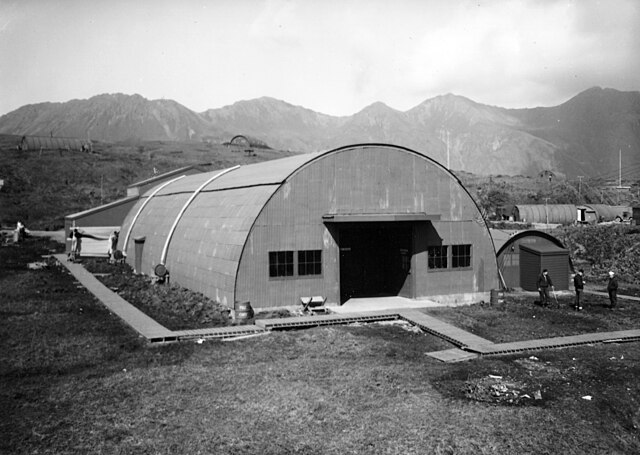
The war was over. Just barely. The troops had occupation duties in Korea. In Bob’s opinion, everything was fine, nothing to complain about as long as he wasn’t getting shot at. But there was the usual inequality between officers and enlisted men when it came to adult beverages. Enlisted men got warm beer. The officers had a new club. It was a Quonset hut, set on uneven ground, with dirt piled up around the edges where it didn’t sit flush to the earth, but it served good liquor. And the bartender was a friend of Bob’s.

The floor of the new club wasn’t finished. The bartender made sure a few boards remained loose. No one noticed since they were covered with a mat. The more remarkable thing is that no one noticed the tunnel. Granted, it was short, from the loose boards to some of the loose dirt at the edge of the Quonset hut, but Bob and his buddies must have dug silently. Men on guard duty at night were in on the plan. That also helped.

When inventory was taken at night in the club, the enlisted men tending bar made sure it all looked fine, then slipped a bottle under the boards into the tunnel. Later, someone would crawl in to retrieve it and hand it off to the guard. Somehow, it then got transported to a cache under a natural-looking pile of rocks. And the enlisted men occasionally got to enjoy as good a drink as the officers did.

The discrepancy in the inventory was eventually noticed. An officer confronted Bob, who assured him he wouldn’t do such a thing. “Risk six months in the brig for a sip of whisky? Not worth it.”

“We know you took it. But we can’t prove a thing, and you won’t crack. All I can say is that if the enemy ever captured you. I’m confident they couldn’t get a word out of you, either.”

Book Review: Heroes and Villains of New Mexico by Bud Russo

The short chapters in this historical collection cover times dating back to the Pueblo Revolt all the way up to the early days of space program research. Each character is thoroughly researched and portrayed with color and flair. I can’t possibly summarize all of the stories, but there were several that particularly struck me. Two had to do with a flood of the Dry Cimarron River, so called because it seldom flowed fully.

In the early 20th century, a tremendous monsoon filled the river to overflowing. One of the heroes in this book was a telephone operator named Sally Rook. By staying on the job despite the raging flood, she saved the lives of almost everyone in town as she called them while the storm and the waters closed in. Her courage truly moved me.

The aftermath of that flood allowed a cowboy named George McJunkin to discover what became known as the Folsom Site, with the famous Folsom points. It changed the understanding of prehistory in North America. McJunkin had been enslaved in Texas until age fourteen. After the Civil War, the free young man moved to New Mexico, became a cowboy, and worked in exchange for reading lessons as well as  money. He became a self-educated naturalist. He was riding fence when he found what he was sure were not modern buffalo bones exposed by the recent flood. And he noticed indications of human activity in the area. He tried to get scientists to study what he had found, but they ignored his letters and even the bones he sent. After all, he was just a cowboy. Many years after he died, the site was finally investigated.

The heroes range from people who made great discoveries to people who risked their lives or lost their lives to save others. Chester Nez, author of the outstanding autobiography, Code Talker, is one of those portrayed. I highly recommend his entire book, as well as the chapter about him in this book, I took my time reading it, getting absorbed in each vignette. The writing is a little over the top, but it definitely keeps you engaged. And I haven’t even mentioned the villains!

You know you’re in New Mexico when there’s a lizard on the dance floor.

When I arrived for the fund-raising party on the equine rescue farm, my favorite local blues band was playing in the shed where the feed for the animals is kept. A friend waved me to me through the window, encouraging me to come in and dance. There was a hole in the cement that I quickly learned to dodge, even while my dance partner spun me and swung me in and out. He pointed out a beautiful lizard running across the floor. It had patterns in its scales that reminded me of the eyes in peacock feathers done in shades of brown, probably a Holbrookia Elegans—elegant earless lizard. It ran into a corner. The band admired it and kept playing.

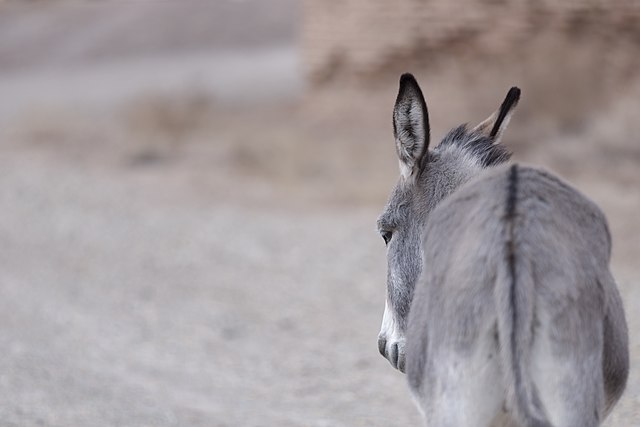
Most of the guests sat around tables outside and on the porch of the house, drinking, eating the potluck dinner. The view of Turtleback Mountain and the rough dirt hills was stunning, Bright blue sky, 101 degrees, a fine June evening. In a pen behind the shed where the band was playing were two gray-and-white donkeys, a white pony, a tiny brown-and-white mini horse, and a couple of mules. The pony was apparently upset with the mini horse, charging at him, kicking up dust. I approached the pen to pet the donkeys, and they both turned their backs to me. I took it as rejection, but was later informed that it was a gesture of trust. They were asking me to scratch their butts. I just don’t speak donkey.

When I returned to the shed, one of the party-goers was drinking tequila straight from the bottle. He was a round-bellied, very white man with tattoos on both arms and long white hair, but a rather young-looking face. He lives across the dirt road from the donkey farm, and said that he felt fine drinking the tequila, since he only had to walk home—which could still be a bit hazardous, though safer than driving. One night, he had stumbled and spent about twenty minutes in the ditch, which we agreed sounded like it could be a blues song. “Twenty Minutes in the Ditch.”

He said, “You can do anything out here that you want, and no one bothers you.” He also said there’s a cave you can see from Sixth Street, and that people sometimes live there for months at a time. I’m not planning on drinking in the ditch or sleeping in the cave, but it’s good to know that there are places that wild within the city limits. Dancing on the donkey farm was wild enough for me.

Did You Miss Something? Gifts and Thefts on Sale

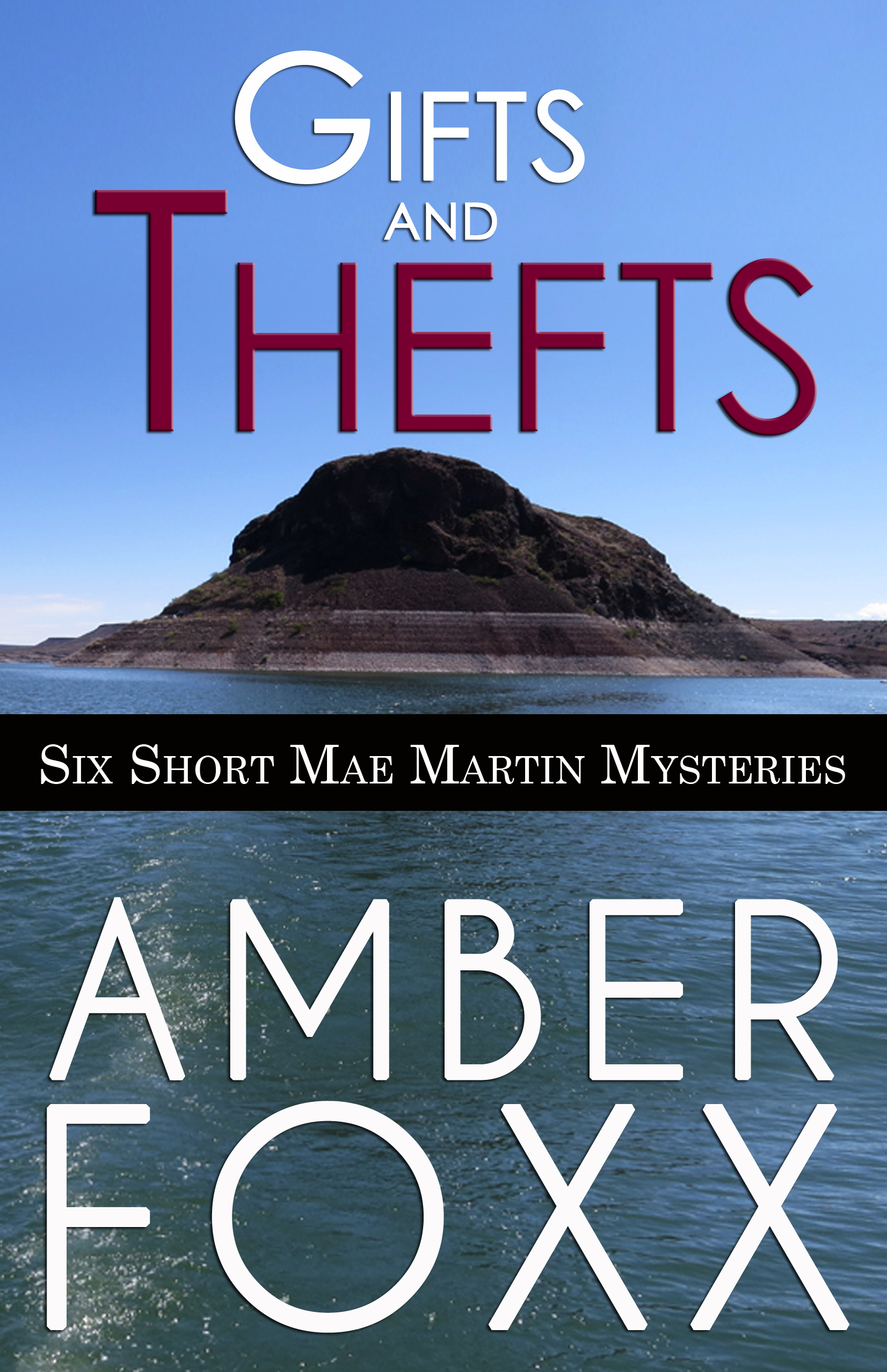
Book 7.5 in the Mae Martin Mystery Series, Gifts and Thefts, is on sale for 99 cents through the end of July. This suite of six short mysteries fills in the year in Mae’s life between the end of Shadow Family and the beginning of Chloride Canyon. I had fun bringing back several characters from earlier books for roles in the short stories. Readers shopping on Amazon can click on a button to buy the series or remaining books in the series, but that click will deliver only the books with whole numbers. Other retailers sometimes show Gifts and Thefts on the series page, but they don’t have a series buy button. And you don’t want to miss this book. A lot happens in it!

Rodeo Regrets: Will Baca receives a cat from an anonymous giver, and his girlfriend suspects it’s from another woman. Mae Martin’s psychic journey into Will’s past on the rodeo circuit takes a puzzling twist while she’s solving the mystery behind the gift.

Responsible Party: Mae’s internship in fitness management gets stressful when her supervisor starts accusing other employees of theft and tells Mae to find the responsible party. Her efforts bring results neither of them expected.

Guardian Angel: When Jamie stops at a roadhouse in west Texas, a woman who won a pool tournament is in trouble and needs a guardian angel. Is he up to the job? Was he somehow called to it?

 Hidden Fish: Mae’s stepdaughters create an elaborate trivia treasure hunt as a Christmas gift for their Uncle Vaughan, leaving a trail of clues and origami fish hidden around downtown Truth or Consequences. But the fish vanish before Vaughan can solve the puzzle, and the children ask Mae to find out what happened. At Jamie’s New Year’s Eve concert, she’s caught between the suspects.

Tipped Off: Who would leave a hotel housekeeper that big a tip, and why? Montana Chino has a birthday surprise for Mae, but first she needs Mae to do a psychic investigation into the suspiciously generous tip. Was there a mistake, or did the guest have mischief in mind?

Elephant: On the weekend Mae and Jamie attend two weddings, she can tell he’s keeping something from her. He has to resolve a problem before he can talk to her, though. A problem that began almost a year before, with the arrival of Will’s gift cat.

Pictures I Didn’t Take

I often get a powerful urge to stop and take a picture. Then I don’t do it, for many reasons, but primarily because it takes me out of the moment. Instead of experiencing where I am and what I’m seeing, feeling, hearing, and smelling, I’ll get wrapped up in composing a picture to post. Granted, I would love to share the experience, but this urge usually occurs when I’m by myself out in the desert on a long run. If I pull out my camera and try to find some shade where I can actually see my screen and then make adjustments, I’m missing part of part of the joy of running. If I were a photographer, this would be joy to stop and take a picture. I admire and deeply appreciate the work of gifted photographers.  But that’s not my creative form. Words are. So, here are the words.

A fox den that lasted two days. I think the fox realized it had dug in too close to a well-used trail. So much work for a couple of busy nights, and now there’s a cobweb draped over the entrance. It’s been there for a long time. Sometimes location is everything. The shade of that big juniper, alas, was a bad location.

The bats. At sunset, they come pouring out from behind the mural on a roofless building. I met a friend on the way there one evening. She also loves the bats. As we watched them emerge in an erratic cloud, a complex aerial ballet, she laughed in delight. They have that effect on me too, as if their sonar is vibrating something positive deep inside us that creates pure happiness.

Other things I haven’t taken pictures of are odd moments where something looks out of place on the street, and I think “I should take a picture of that. That’s strange.” Maybe nobody else would think it was odd or interesting. I don’t take the picture. I have my moment and keep going.

I often think of a friend who told me about being near the edge of a woodland with her father when a herd of deer exploded from the trees. Her father was scrambling in the car for his camera so he could get a picture of the deer while she watched them leaping past. By the time he got his camera out, the deer were gone. Pictures I haven’t taken are moments that I lived. I’ll share them some other way. Some will show up in my stories. I’ll remember them when I need them. A pyrrhuloxia, a desert Cardinal, perched atop of a half dead tree in the desert has a place in the book that I’ve just started. He’s going to show up near the end as a significant and meaningful sight, with his brown-gray body and his red crest and his three different songs pouring out. I saved him in my memory, but I didn’t take his picture. (Someone on Wikipedia did.)

None of These Places are Real

I’m living in the middle of a movie set. As a writer, I find the experience fascinating, seeing how storytelling and setting are handled in film production, and also picking up inspirations for my own stories.

The streets on either side of where I live have been closed at times for filming. Most of downtown Truth or Consequences is playing the role of Eddington in a movie of that name, and the many buildings have temporary new fronts and even new interiors, like actors putting on costumes and make-up, getting into character. Tourists find it bewildering, not sure what’s real. Good thing we’re entering the off season. A commercial laundry is a gun shop. The Chamber of Commerce is a DWI program office. The sign on the Geronimo Springs Museum on Main Street is subtly changed to the Eddington Valley Museum, but otherwise the building looks the same as always. There are many more transformations. I won’t list them all, but you get the idea. Downtown is more Eddington than T or C for now. If a town could get an Oscar for best supporting actor, T or C would deserve it.

The street behind my apartment was closed a week ago for filming a scene of a protest march. Peering out my back window and between the buildings, I saw people with signs and heard them chanting and shouting slogans, heading up and down the street, doing the scene over and over.

Sometimes I can’t walk where I want to because of a scene is being filmed, but at other times I can freely explore and look into some of the windows. The ordinary becomes intriguing when it’s a work of art. I admired the perfect realism of the movie sheriff’s office in all its mundane practicality.

During the Saturday night Art Hop in May, townspeople could walk through one of the sets, where a former antique store on Foch Street is playing the role of Garcia’s Bar. (My photo shows the bar’s creation in progress.) Members of the movie crew were in there playing pool and having drinks. Not filming, just using the bar as a bar. I was intrigued by all the detail that’s not necessarily part of the plot but has to be included on a set. Because if it’s not there, the movie won’t feel authentic. Photographs of Truth or Consequences Miss Fiestas from prior years were displayed along one of the walls. If I were writing a scene set in a bar, I might only need to say “a small, dimly lit bar with a pool table.” I wouldn’t need to describe all the glasses and exactly what kind of beer signs or liquor brands were displayed. I probably wouldn’t need to mention the Miss Fiesta portraits unless a prior Miss Fiesta was part of the plot.

I have to highlight sensory information that tells the story, sets the mood, and which gets the attention of my point of view character, and then trust my readers to fill in the rest. A writer can—and should—include tastes, smells, temperatures, and textures, giving more internal depth to fiction than a film can offer. But a film can give you a hundred percent of the visuals. The mix of imagination and thoroughness on the part of the set crew is extraordinary.

The prolonged presence of this movie crew, living among us for March and most of May, reminds me I’d like I to write a book taking place during the making of a film. I thought of the idea years ago when a different movie came to town for just a few days, and I worked as an extra. The extras had a lot of down time together and developed relationships ranging from friendship to massive annoyance. I didn’t care to do such a job again and didn’t apply for Eddington. Walking half-way down the block over and over again for an entire morning was not exactly exciting. But it entertained a friend who watched me from the window of Ingo’s Art Cafe and waved every time I appeared. I can use the experience in a book along with this two-month immersion in a movie set.

The film company bought the town a beer twice, paying for free drinks at the Brewery for “Eddington social hours,” to thank us for enduring all the street closures and other inconveniences, such as simulated gunfire at night. The beer was generous, but residents are enjoying the strange experience more than they object to it. There hasn’t been a lot conflict or drama. In fiction, though, the potential for conflict is great. I’ve got at least two other books to write first, but I don’t think I’ll forget the idea.

The Annual Whole Series Sale for 2024

The entire Mae Martin Mystery series is marked down through the end of May. Book one, The Calling, is free wherever you buy eBooks, and the rest of the books in the series are discounted to $3.99 each. Book 7.5, Gifts and Thefts, the short story suite that bridges the time between Shadow Family and Chloride Canyon, is always $2.99.

If you prefer paperbacks and are one of those series fans who likes to drive to Truth or Consequences from Albuquerque to buy from Black Cat Books, you should know Black Cat will be following a T or C summer custom and closing for the off season. So, do your shopping in May and stock up on summer reading. They have the best prices on my books—and are simply the best, period. Enjoy soaking in hot springs and going to galleries while you’re in town. See if you can recognize the ones that are in my books.

Book nine, which I think will be titled Smoking Mirror, is almost ready for my beta readers and critique partners. Unless they find something dreadfully wrong with it, it should be with my editor by the end of summer and published in the fall. I hope to be able to show you the cover art soon.

I choose the dirt road

I wonder why running shoes are designed to be pretty. My new ones even have white soles with green and blue treads, as if the person behind me in a race should admire them as I charge ahead. But I run where no one is around to admire my pretty feet.

I meant to take the paved route to the edge of the Elephant Butte dam, but the dirt roads off the side stole my heart and soles. Pavement says nothing to my feet. It slaps back. Dirt has texture and depth. Each step on a dirt road is unlike the step before—soft, rocky, stable, slippery, flat, or uneven. My speed on dirt roads adjusts to the nature of each surface. And underfoot are such amazing finds. A desert flower that tolerates ten percent humidity and the battering of spring winds. In pausing for the flower, I also looked up at the mountains and dared the vertiginous view of the arroyo below.

History lay on both sides of the road. The dirt was dark as if blackened with soot, and in it lay chunks of sturdy white china. Mug handles, mug bottoms, plates, all so thick you could knock your breakfast off the table and nothing would happen to this dinnerware. But something did. One piece had words on the bottom indicating it was made in West Virginia. There was a substantial quantity of it. Friends who know local history think I came across the remains of a Civilian Conservation Corps work camp. If the dishes could talk, they’d have stories, for sure.

Two ravens glided past a red rock cliff, so synchronized I first thought one was the other’s shadow.

My new shoes have now been baptized in dirt.

Experimenting with Paperbacks, Round Two

Since removing my paperbacks from Amazon, I’ve had excellent sales at the local bookstore, but only one paperback sale through my web site. This makes sense. Buyers of physical books do much of their discovery by browsing shelves.

So, I’ve been thinking about the tourists who picked up book one, The Calling, at Black Cat Books and Coffee. If they want book two, Shaman’s Blues, will they look at the end matter, find my web site, notice the “buy paperbacks direct” link, and order from me? Will they remember the name of the bookstore and look up its contact information and order from them? More likely, they’ll look on Amazon and not find a paperback. Maybe they’ll buy the eBook, but probably not, if they’re the type of reader who likes to hold what they call “ a real book.”

My plan was to eventually republish the paperbacks with Ingram, Lulu, or Draft2Digital, but the prices on any of them would have put my books out of range for the average book buyer. Paper is expensive stuff. My books are longer than average, which obviously means more paper, and with the books going through a distributor, the prices increase. Will readers spend twenty-four dollars for a paperback? The same book published through KDP print can be priced six dollars lower. Despite my reluctance to drive business to this company, my ultimate goal is to make books available and affordable to those who want them.

I risk Amazon once again discounting the paperbacks to the point that I lose money on eBooks with their “price match” game. But I also risk losing readers who want the rest of the series in paperback after they passed through Truth or Consequences on vacation. The readers win.

I’m republishing on Amazon. I’ve also made the books available for expanded distribution, meaning other online stores may carry them if they chose. If you want to support small business, you can buy paperbacks for a slightly lower price from me or from Black Cat.