Senior Woman Seen Doing Flips!

An ad for one of the national EV charging networks shows a woman doing tree pose while her car charges. It seemed like a good idea to me, except for standing beside the charger. The charging station at the Dona Ana County Government office center in Las Cruces is right next to a busy street and in full sun. I plugged in my car and found a quiet, shaded place for yoga, a large, recessed area between the county offices and the sheriff’s department. I took off my hat and left it on the paved floor, then did basic standing poses (Warrior One, Warrior Two, and related poses), then some one-legged standing balance poses. I was right side up, which matters later. For seated poses, I moved to a bench, since I didn’t want to sit on the pavement. Then I collected my hat and returned to my car, relaxed and refreshed, but sneezing.

I was sitting with the door open taking a stinging nettle capsule for allergies when suddenly there were people outside my car. Two sheriff’s deputies, a young woman and a very large man.

The woman wanted to know what I was doing. I thought, “Oh my gosh, do they think I’m using drugs?” Alarmed, I said, “I’m taking my allergy medication.” I’d already swallowed it and couldn’t show it was a harmless herb.

“Someone reported that you were doing flips, and they wanted to know that you were all right.”

Flips? I got out of my car. “I was doing yoga. I was stretching. I didn’t flip.”

“This person was worried about you. You left your bag.”

“I didn’t have a bag. I’d put my hat down.”

“We needed to check that you’re okay.”

So, I executed a deep forward bend with straight knees, hands flat on the ground, then repeated the three one-legged balances in sequence, never putting the second foot down as I made the transitions. “I did that. I think that means I’m okay, right?

The female deputy said, “Yeah, I can’t do that.”

“Okay, then?”

They allowed that I was and left.

Bird Meditation

The mystery in the book I’m currently writing centers around a missing birder and the people who care about him. To enter the experience of my characters, I needed to learn more about birds. Learning facts is useful, but what’s even more meaningful is paying attention. I’m starting to understand why people become birders.

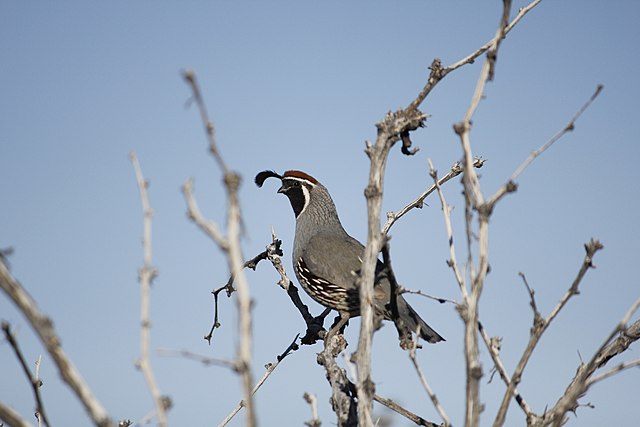
I discovered the small songbirds were quieter in Elephant Butte Lake Park on the trail in the middle of the desert than when I ran on a dirt road behind a nearby residential neighborhood. The further I went, the more songs I heard. Are the trees taller in this neighborhood? Do people feed the birds? Are there more predators in the park than in back yards? The park sounds different, full of Gambel’s quail and their single-note mews or squeaks and occasionally the loud, laughing calls of roadrunners.

On a recent evening the weather was beautiful, the end of a rare spring day without wind. I walked down to the Rio Grande, expecting that all the migratory birds would have left the river by now, but a scattered raft of coots still swam there, clacking and honking and grunting and beeping. A heron soared and circled without flapping its wings for much of its flight, even though, at an earth-level perspective, the air was still. It landed on the other side of the river a few bushes away from where a man was fishing. He acted excited when he caught a fish. The bird held perfectly still and did not catch a fish. Yet.

A coot flipped upside down and disappeared underwater for an incredible length of time. A red-winged black bird in a tree next to the river sang, and one answered from a tree in the wetland on the other side of the parking lot, trilling back and forth to each other. Birds in bushes along the hot ditch, where hot spring water from home tubs and spas empties into the river, were singing a chorus, a symphony. The extraordinary range of sounds silenced my mind. The human world has been a bit stressful lately. As I grew absorbed in the world of birds, everything else fell away, leaving only wings and feathers, swimming and flight, and music.

Bob Stories—Jobs and a Robber

My eighty-nine-year-old friend Bob has often said that he never had trouble getting a job. He described a job interview he had once as a young man. The employer asked him what kind of work he was looking for, and he said, “Anything you tell me to do.”

The employer said, “I like that attitude. But … what if I asked you to kill someone?”

Bob replied, “Well, I know how.”

The man said, “What?” And Bob explained he’d been in the Marines, trained in hand to hand combat. He assured him he really had no intention of taking that sort of job but was otherwise willing to do anything. That was good news for the employer, because what he needed Bob to do was shovel a lot of horse manure.

After Bob had been working for a while, the barn owner asked, “How do you stand the smell?”

Bob told him that his summer job in high school had been on a farm with sixty cows, so he could get used to anything. If you paid him, he’d do the work.

This leads into the next story. In Philadelphia, shortly after getting out of the Marines, Bob was, as he put it, walking on the wrong side of the street. A man came up close and shoved a gun in his ribs, demanding, “Give me your money.”

The way Bob describes it. “For some reason I wasn’t scared. I felt like I was in control. The robber made a mistake, getting the gun too close. He didn’t know what he was doing.”

Bob twisted the gun back at him and asked, “Why do you want to do that?”

“I need the money,” the would-be robber replied.

“Then get a job.”

“I’m desperate. I don’t have time.”

“Yes, you do. Have you got time for the trouble you’ll get into if you keep doing what you’re doing?”

The guy left.

Two years later, Bob ran into him in a bar. “You gonna stick a gun in my ribs?”

“No, actually, I did what you said. I got a job. I was starving for the first week until I got paid, and then I ate like a hog for the first two days that I had money. But now I’m doing fine. Thank you.”

Or that’s the way the story goes.

There is still beauty.

As I watered the forsythias, a soft, humming fountain of bees rose up from the flowers. The plants are hardy and ask for little, but they’re working hard now, the first to flower at the end of what passes for winter here. The bees gave me joy. Certain flighted creatures silence my mind into bliss—bees, bats, sandhill cranes circling with their purring, gargling songs. They sound like crows who took voice lessons from doves.

The internet did me a favor and cut off, waiting exactly until the end of a Zoom yoga class I was taking. I missed sharing “Namaste” with my teacher and classmates, but after that, I was free from listening to the news online or reading the news or my email.

When I needed a break from writing in the evening. I took a walk. Jupiter was glowing in the West, huge and pale gold. Straight overhead, Saturn shone. Further east was Mars, a steady red dot. The streetlights are weak and few in my neighborhood, and the night sky glitters. I invited a neighbor out to share the planet-and-star show. Disconnected from the world, we reconnected with the universe and each other.


Uphill Against the Wind

High winds. No rain.
Hot air blows. A dangerously early spring.
This land I love could burn before it blooms.
I run on desert sand so dry
it slips beneath my feet.
I’m going nowhere.
Firm ground tempts me to linger
on a sheltered stretch of trail.
Jogging back and forth. Going nowhere.
A parhelion glows, an opalescent shell in the cloudy sky.
Rose, violet and mango hues surround a turquoise eye.
I change my stride, long and low, and lean into the gusts.
I can do this.
Uphill against the wind.

Whole Series Price Drop


Book one in the Mae Martin Mystery Series, The Calling, is now $2.99, and the other books are now $3.99. Buy from your favorite store and stock up your e-reader.

Need to keep track of your place in the series? Here’s a guide to the dates and settings and sequence. Follow psychic and healer Mae Martin from North Carolina, where she first discovers her gifts, to her new life in New Mexico. Happy reading!

A New Mexico Mystery Review: Lost Birds by Anne Hillerman

The title refers to Navajo children who were adopted out of the tribe and raised without knowledge of their culture. Joe Leaphorn is hired as a private investigator by such a woman who hopes to find her Navajo family. Another lost bird is a woman nicknamed Songbird, not a lost bird in the sense of an adoptee, but a missing person. She is Leaphorn’s other case, as he’s been hired by her husband. And at the same time, the school where the woman was a music teacher and the husband works as a custodian is struck with an explosion. Bernadette Manuelito is brought in to help investigate.

The weaving of plot threads in this book is extraordinary. Navajo rugs and weaving play an important part—a rug found in the car of the missing woman along with the body of someone who might be her, and a rug in an old photograph that’s a clue to the lost bird, Stella’s, family history.

My sense of the whole book is of a masterpiece of weaving, of stories within the story. There’s the story of Cecil, the custodian, who narrowly escapes the explosion, fearing that someone did it to attack him. He has a terrifying experience, pursued by people to whom he owes money. Then there’s the story of Leaphorn’s beloved friend Louisa and her troubled adult son. When Leaphorn and retired Captain Largo race to be on time for a rescue, I couldn’t stop reading. It’s one of the most intense scenes in a mystery I’ve ever come across.

Though this book is layered with mysteries, chases, and moments of danger, it has none of the clichés, none of the tired tropes, of the mystery genre. It is entirely original.

The characters are, as always, portrayed with great depth. Navajo culture also portrayed with depth and knowledge. The family stories are woven fully into the plot, so you never feel like you’ve gone on a digression. The scenes at a trading post as Leaphorn discovers rugs that may be connected with his client’s Navajo family are quiet but profound and beautiful and just as absorbing as the more intense sections.

I was stunned by the end. I never would have thought that particular person had done that particular crime, and yet, as with any good mystery, it all makes sense.

It was a pleasure to spend so much time with Joe Leaphorn. He’s a character that Tony Hillerman wrote with insight, and Anne Hillerman has gotten to know Leaphorn equally well. I look forward to the next book in the series.

It’s back! Santa Claus Checks in at The Fat Buddha Spa

This short story used to be an annual tradition, but I haven’t shared it for quite a few years. It’s an interlude that takes place “offstage” during Snake Face, book three in the Mae Martin series, while Mae is in northeastern North Carolina over the holidays.

Santa Claus Checks in at the Fat Buddha Spa

             Mae Martin raced her twin stepdaughters to the pasture fence and almost let them win, making it a three-way tie. The llamas looked up from grazing on the dry winter grass, blinking their long lashes. Taking walks to visit the neighbors’ animals had been a favorite pastime for Mae and girls when she’d lived with them. Now, on her first holiday visit after separating from their father, she was trying to keep everything as normal as possible. As the six-year-old girls clambered onto the fence, Brook shouted. “That’s what I want for Christmas. A llama.”

“Are you sure?” Mae picked up a small purple glove from the weeds and put it in her pocket. The late December day was growing warm and both girls had taken off their gloves and hats. “I thought y’all wanted a tarantula.”

“We do, but Miss Jen is scared of spiders.”

Their father’s new girlfriend didn’t share Mae’s appreciation for crawly critters. “She might think a llama was cuter, but I don’t think anybody can afford one right now. You do know your presents come from family, right? Your daddy said y’all don’t believe in Santa anymore.”

“Yeah. We figured it out.” Stream perched on the top rail, swinging her legs. “We watched this TV show with Grampa Jim and Granma Sally about these people who have reindeer in some place near the North Pole.”

“Lapland?”

“Yeah. And those things are big. There’s no way they can fly.”

“What about magic?”

Brook sat beside her sister. They studied Mae as if they felt sorry for her. Poor mama. She’s not caught up with us yet. “Magic is for little kids who can’t figure things out. We’re gonna be bug scientists when we grow up—”

“Nun-uh.” Stream wriggled and sat straighter. “That’s your job. I’m gonna be a race car driver.”

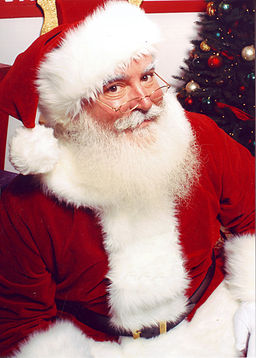
Mae walked up and placed her hands on their knees. She loved their independence and eccentricity, but they could be tactless about how smart they were—like her ex-mother-law—and she needed to take that attitude down a notch. Gently. “Now what in the world is Santa Claus gonna do if all these kids don’t believe in him?”Santa_Claus
Brook frowned, saying he couldn’t do anything if he wasn’t real, but Stream started to laugh. “He’ll pop like a bubble.”

Mae did her best to act serious. “Did you tell your friends there’s no Santa?”

The girls exchanged glances. Brook said, “We got in trouble for it at school. It made some kids cry.”

“It might be hard on ol’ Santa, too. Popping like a bubble. Before you tell any more kids he’s not real, I think I’d better give him a call and see how he’s feeling.” Mae took her cell phone from her jacket pocket and pretended to make a call. She rolled her eyes and sighed as if waiting a long time for an answer.

The girls poked each other and giggled. Stream whispered to her sister, “She can’t call him. She’s making believe.”

Mae raised her eyebrows, giving them the oh yeah? look, and then a triumphant smile as if she’d finally heard a voice. “Well hey, Santa buddy. What’s up? You know Summer Stream and Autumn Brook Ridley don’t believe in you anymore? … Oh. Of course. I can’t surprise you. You know who’s naughty and nice. “

Brook protested, “We weren’t naughty. We told the truth.”

“But did you tell it nice?” Mae turned away, lowering her voice to resume her conversation with Santa. “I hope they didn’t hurt your feelings. They told half the kids in Bertie County, North Carolina—You’re kidding! … So what are you doing now? … Really? Shut up! I live there. I just left for my vacation.” She put her hand over the phone. “You won’t believe it. He’s checked into a spa back in Truth or Consequences, New Mexico. So many kids stopped believing in him, he’s taking this Christmas off.”sign_-_new_mexico_-_truth_or_consequences_-_exit_4892943477
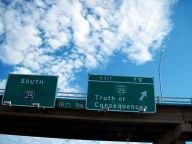
“What’s a spa?”

“It’s sort of like a motel with extra stuff. The ones where I live have hot springs and massages. People go there to relax and get healthy.” She got back to Santa Claus. “Which one? You at the Charles? La Paloma? … I never heard of that one. The Fat Buddha? … Oh. Reckon I wouldn’t see it.”

She explained to the girls, “He’s at a spa for supernatural beings. Regular folks can’t see it.”

Both girls frowned, and Brook asked, “A spa for what?”
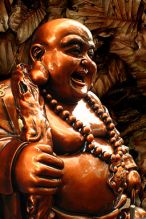
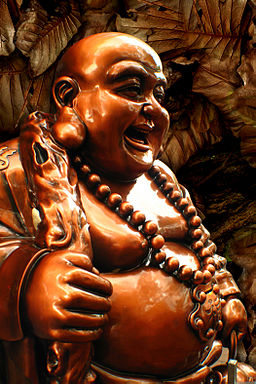
The_Laughing_&_Lucky_Buddha!_A_stroke_of_Luck!_(413428647)    “Supernatural beings. Kinda like ghosts or angels, but not exactly. It’s run by a big fat Buddha. You know who he is?”

Stream nodded. “Granma Sally has his statue on her desk. She says he helps her stay calm when she does taxes.”

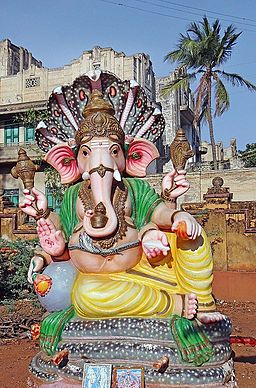
“He’s helping Santa, too. And they’re hanging out with another fat supernatural, Ganesh. He’s this Hindu god with an elephant head.”

“An elephant head?” Stream whooped.

Brook asked, “How come they’re all fat?”Ganesh_2
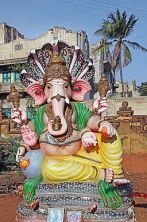
Mae repeated the question to Santa and listened while she worked on an answer.

“He says it’s because they’re supernatural. They don’t have to be in shape to be healthy. Ganesh …” She had to stop and think again. Her neighbors in T or C were into yoga and they had a Ganesh poster in their living room. Finding it strange but beautiful, she’d asked Kenny to explain it. “Ganesh is fat but he’s big and strong, too. People call him the remover of obstacles. Like an elephant can pull a fallen tree off a road but a human can’t.”

Stream looked skeptical. “Do people believe in the elephant-head guy? Like they believe in Santa?”

“Some do, but a lot of people just believe in what they all stand for. Like being generous and happy and enjoying life. Santa says they’re hanging out in the hot spring together and these other guys helped him with something he was worried about. So, you did him a favor, giving him a vacation, but he wants to go back to work next year, and he’ll need kids to believe in him again.”

“We can’t make them.”

“No—but you can keep it to yourselves if some new believers come along. You know why he wants to go back to work?”

Brook asked, “Does he get paid a lot?”

“No—he does it to be kind. And this is what those other fat dudes at the spa told him. He’s been too generous. See, they don’t get as carried away with their roles as he does. They help people by changing their lives, not giving stuff. He’s been giving people way too much expensive stuff, and they’re starting to think Christmas is about getting big, fancy gifts. So next year, he’s gonna cut back. Give stuff that means more and costs less.”

Mae took a deep breath and let it out. She hadn’t known she was going to say that. But as a college student with a part-time job and not much cash, she’d had to buy small gifts this year—child-sized team T-shirts for the College of the Rio Grande Tarantulas and a pair of stuffed toy versions of the mascot. She’d wanted to do more, but the trip east had cost all she could spare, and yet she didn’t want the girls to think she loved them less because she didn’t live with them anymore.

“Like when we make you presents,” Brook said.

“Exactly.” Mae smiled in relief.

“Good,” said Stream, “because we—”

Brook dug a fist into her sister’s arm. “Sh. You can’t tell her.”

“That’s right.” Mae put her phone in her jacket pocket. “Being surprised is part of the fun.”

The girls stared at her pocket. “Mama,” Brook said, “That was rude. You hung up on Santa without saying goodbye.”

“Oops. Look like I’ve been naughty, too. Good thing he’s taking the year off.”

*****

Book one in the Mae Martin Series, The Calling, is on sale for 99 cents through the end of December.

A New Mexico History Review: Deming, New Mexico’s Camp Cody, a World War One Training Camp

This history is detailed and yet never dull. Jim Eckles is a great storyteller, bringing the camp and the town to life through the unique experiences of individuals who trained there. The eventual demolition—the complete vanishing—of this camp in Deming is as interesting as how it came into being. When I told an old friend, a Korean War veteran, about this book, he said that his father—from upstate New York— had trained at Camp Cody when he volunteered for WWI. In numerous visits to Deming. I’d never heard of the camp, so I was intrigued when I found this volume at my local bookstore. As a New Mexico history buff, I thoroughly enjoyed every page. The characters make it worth reading, as well as insights I gained about our country’s entry into World War One through this particular aspect of it in a small New Mexico town. Since his father had been at Camp Cody, I passed the book along to Bob, and he said he was surprised how engaging it was. He couldn’t put it down.

Yoga with Cats

I had watered the plants before I did my practice in the sun, and the one-eyed tom cat slipped under the fence and lapped at the puddle where I’d dragged the hose across the flagstones to water the pomegranates. Part of his tail was missing as well as one of his eyes. I was surprised to see him stay so long. Strangely, he wasn’t timid like he used to be. While I did my yoga practice, paying close attention to my alignment, to my breath, to my presence in the moment, he came closer, stood nearby, and meowed relentlessly. I realized that he, like other cats I’ve known, wanted to be part of this.

I once taught at a yoga studio that had resident cats. During my personal practice there, the one named Shakti would participate in any pose in which she could place herself with a gentle leap onto my body. Without ever using her claws, she would get on the thigh of my front leg in warrior one or on my back while I was in child’s pose, a warm breathing sandbag. When I was in a pose in which she couldn’t participate, she would meow pitifully until she could make contact with me again. (She inspired the scene in Death Omen where Gasser joins Jamie in yoga.)

Another cat with whom I did yoga belonged to my landlords next door when I rented a little house out in the country in Bertie County, North Carolina. (For people who like trivia about my books, the place I rented is Yolanda’s house in Shadow Family, the old one-room schoolhouse.) Fluffy, a long-haired calico, used to come to the porch for yoga. I think cats are drawn to the positive energy, to a human who is serene and grounded and stretching.

One-eyed Tom kept looking at me with his one eye. I tried not to look at the other, thinking, what happened? Don’t your people take care of you? The neighbors had been feeding him, but had they taken him to the vet, done anything for him? I wanted so much to pet him, but I’d read about a man in England who got some horrible rare disease from petting an unfamiliar cat on the street, and after that I vowed that I would stop petting the friendly, half-feral cats that roam T or C.

One-eyed Tom stared. He mewed and coiled to jump up on the chair that I was using as a prop. But I moved just enough to discourage him. He stuck around, though. When I finished my practice, he settled down in the cat loaf position in the sun and did his savasana while I did mine.

I looked at him more closely when I sat up. His face didn’t have the big tom cat look anymore, and his injured eye was no longer leaking and oozing. It was just gone. I think he’s been to the vet finally, and that his people who feed him tamed him enough to care of him. I owed him an apology. Should he try again, I’ll let him join more fully in my yoga.