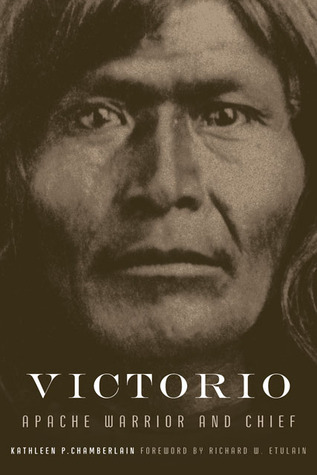
Review: Victorio: Apache Warrior and Chief, by Kathleen P. Chamberlain

I once said—meaning to make a respectful acknowledgement to an Apache friend—that Truth or Consequences, the town where I live “used to be Apache land.” He replied, “It still is.”

Yes.

It still is.

*****

Living in New Mexico, a state with more tribal lands than most, I’m aware of the Indigenous cultures that thrive here. Reading this book made me far more aware of how the rest of us got here—the complexity of the fighting, negotiation, and politics. Geronimo is famous. A mural of his face greets you with a powerful glare as you drive into town. Victorio is less well known. His younger sister, the warrior and seer Lozen, may have more fame. But his story is worth reading. New Mexico’s story is incomplete without him.

The author did extraordinary historical detective work to reconstruct his life and the events that led to his death, his final battle. She explores Apache culture and pre-reservation life, and reveals the misunderstandings, failures, sincere efforts, and also the insensitive ignorance on the part of various agents of the U.S. and Mexican governments that drove Victorio’s band from their sacred land and its springs and drove them to keep fighting. Chamberlain’s analysis of the Apache wars is insightful.

This isn’t light reading, but it’s not dry or difficult, either. History can be a page-turner, even when you know how it ends.

Missing link!

I left this link out of the post about my holiday sale price on multiple paperbacks: https://amberfoxxmysteries.com/buy-paperbacks-direct/

The post has now been updated.

Books Make Good Gifts—Yes, Already

I don’t normally think about the holidays this early. I’m stunned to see that the neighbors two doors down have strings of red lights in their front window, and that the city has wrapped fake spruce branches around the light poles in the plaza as well as tiny white lights around the trunks of the palm trees. I hope this doesn’t herald the return of the inflatable snowmen. I confess I don’t understand the custom of pretending to be northern for winter holidays, when we have perfect winters here. Perfect meaning no snow.

I will be happy to head off to the post office on one of those sixty-degree sunny days with orders of books. I have to mention it this early because book rate is a tad slower than other options, and I include shipping in the price because book rate is inexpensive. Order one book at full price and get a dollar off other books in the same shipment. If you’re buying the whole Mae Martin Series, that would add up.

This offer goes through Dec. 8th.

Bob Stories

My very, very old friend Bob is nearing the last days of his life. He may be gone by the time I publish this, or he may hang on a little longer. In his late eighties, he would joke about death. “I could go at any time. The suspense is killing me.”

He was not only an avid reader, but a great story-teller. I aim to reconstruct a few of his stories now and then. I feel as if I know a huge cast of characters from his long life, people from his childhood in upstate New York, his years in the Marine Corps during the Korean war, his life in Philadelphia after he got out of the Marines, and his move out West. I can’t keep track of all the jobs he’s had. Or all the times he could have died but somehow didn’t.

One evening, we were talking about I-forget-what, and he said, “I’ve lost two wives. That’s hardest thing I’ve ever been through. I know other people who’ve been through worse, with wars and all … I’m lucky. Two good marriages. We had good times.”

He said that if he could have either of his wives alive again and with him, it would be his first wife. Not that he didn’t love the second wife. It’s just how he feels. He says his first wife civilized him. I try to picture their lives when they first met in 1960s Philadelphia. He was a young white man just out of the Marines; she was African American, ten years older than him, and the most beautiful woman he had ever seen. He couldn’t believe she agreed to go out with him, let alone marry him. She was level-headed, practical, and organized. He was adventurous. And from the stories he’s told me, she had a great sense of humor. A city girl, she never understood his need to go camping. “We work this hard to have a nice house, and you go sleep in the woods.” But as long as he came back with fresh-caught fish, she was okay with his camping. After the first fifteen of their twenty-four years, he says, he finally understood just how much he loved her.

Is there an “other side?” Do people meet again? Bob and I agreed on not knowing; we agreed that the transition would be a surprise. I like to imagine the surprise as a reunion with the beloved women who went before him. Who may have met already and been sharing Bob stories.

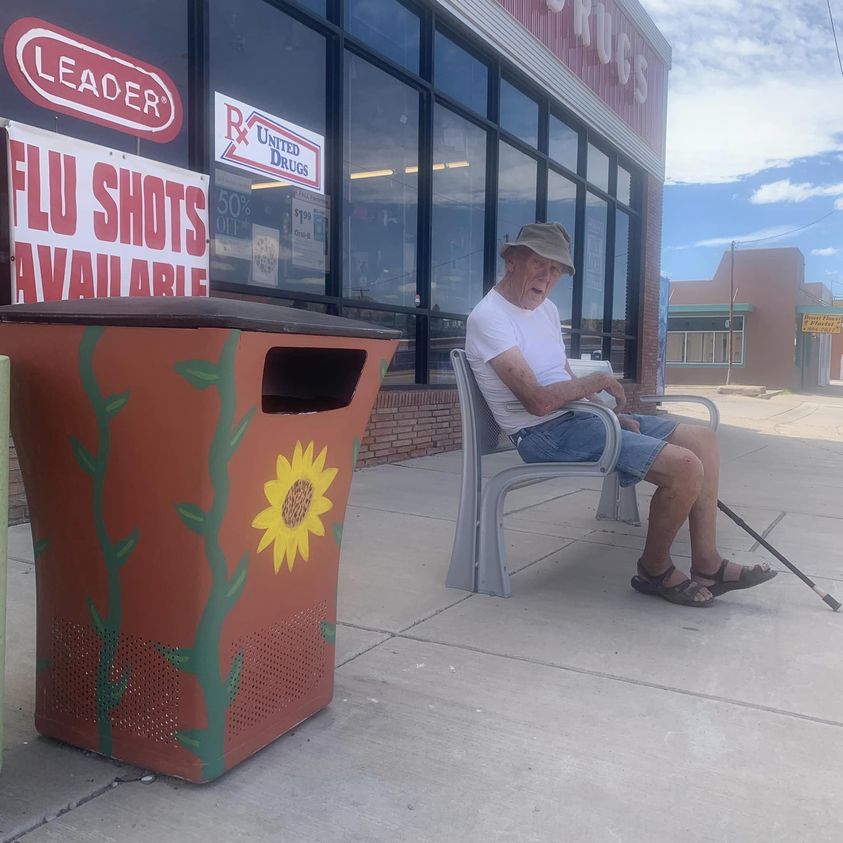
This picture was meant to feature the T or C Litter Pickers’ trash can art project. Bob, pausing to rest on a bench in front of the drugstore, photo-bombed. And I’m glad he did. It may be the last picture taken of him. Age 88, late summer 2023.

Why I now sell paperbacks direct—and not on Amazon

I am now selling my paperbacks on my web site, where they’re priced the same as they were on Amazon, but my price includes tax and shipping. You don’t have to buy extra stuff to get free shipping (or pay to be in Prime). For $16.99 or $10.99, you get the book. Signed, if you like. The books are also available in some in small, independent shops.

Here’s why I took them off Amazon:

Amazon has been manipulating paperback prices in order to lower eBook royalties.

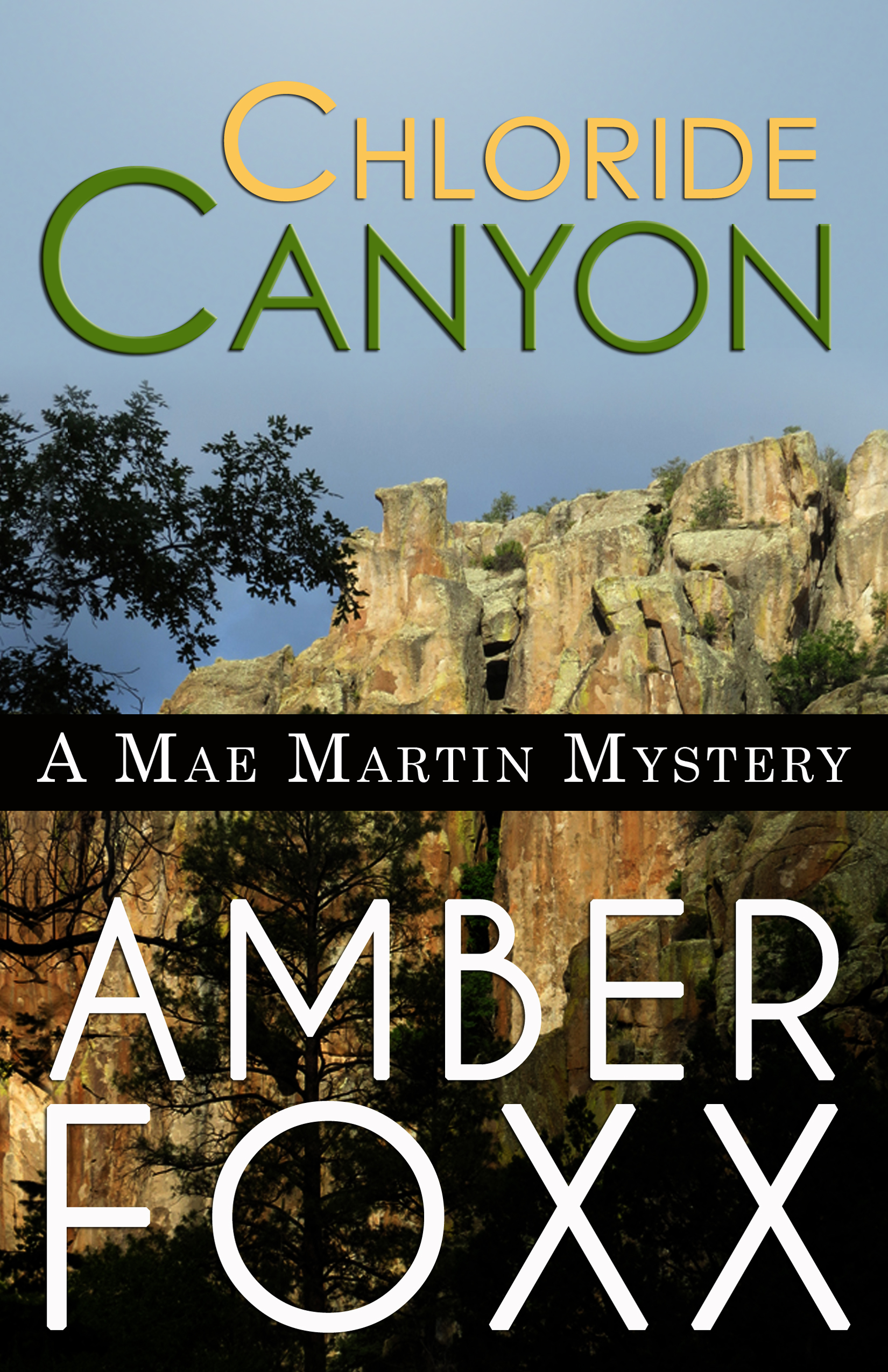
After I ran a hugely successful first-in-series free promotion of the eBook of The Calling, Amazon discounted the paperback of book two, Shamans’ Blues, so steeply that they could discount the eBook. They pay full royalties on the paperback no matter how low the price, but if they “price match” the eBook to the paperback, they reduce the royalties on the eBook. That’s their rule. I did everything I could to fight it, but with no success. The eBook should have been $4.99 and the paperback $16.99, the same prices as the rest of the series, but Amazon dropped both to $3.49—below printing costs—and kept it that way for over a year. Like most indie authors, I sell primarily eBooks. Therefore, I lost significant royalties on sales of book two. I didn’t sell tons of cheap paperbacks. Readers saw both at the same price and still bought the eBook. Amazon’s price also made me feel obligated to keep the eBook at a lower price on other online stores, so customers there wouldn’t be unhappy about paying more. Book eight, Chloride Canyon came down to $4.88, and I had no ability to stop Amazon from lowering it even more and discounting the eBook as long as my paperbacks were on their site. Taking the paperbacks off Amazon was the only way I could get back control of eBook pricing. My one-woman strike for fair pay.

Amazon has been lowering paperback prices to make you buy more stuff in order to get free shipping while undercutting independent stores that can’t afford to discount a book below what they paid for it. I believe in supporting small businesses. They keep local downtowns and communities alive.

I expect I will publish paperbacks again through another print-on-demand printer in a year or so when the next book comes out or when my stock of books is depleted. However, because most of my books are long, the price of all that paper makes them more expensive to sell on any site that isn’t also the printer (like KDP print on Amazon). So, books from D2D Print or Ingram will cost more.

Or I may do a brief republication on KDP to make them less expensive, restock to sell direct, hope to dodge the price-match hassle, and unpublish again.

Of course, you can look for used copies of my work wherever you buy used books.

And a few new paperbacks may remain on Amazon, though not for long. After I thought I’d wrapped everything up and ended the chance of another $3.49  problem, they sent this message:

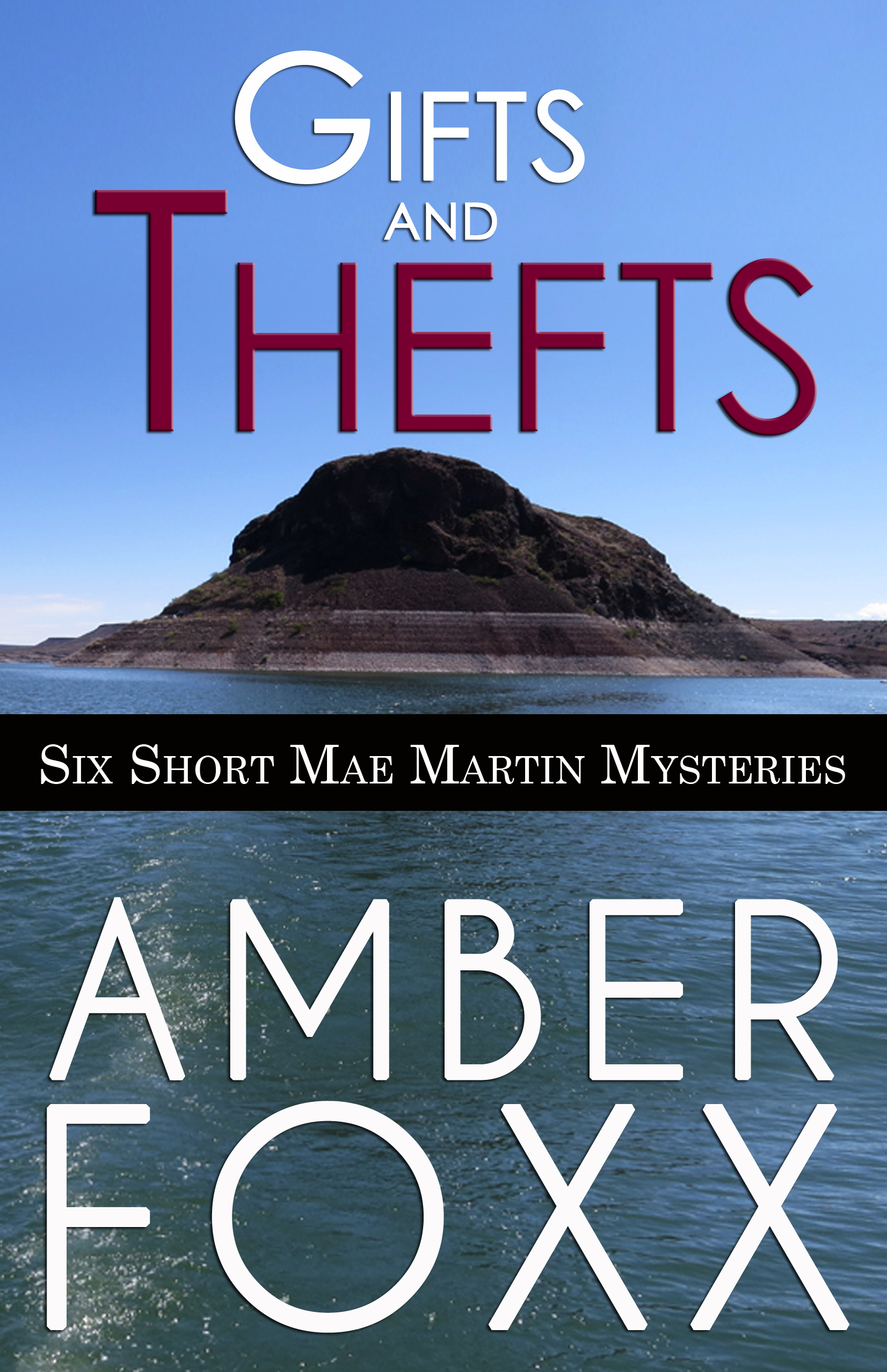
“Upon investigation, I see that your Paperback Book “The Calling”, currently has 1 copy still in Amazon’s inventory. I also see your Paperback Book “Shaman’s Blues” has 3 copies, the Paperback Book “Gifts and Thefts” has 1 copy and the Paperback Book “Small Awakenings” also has 1 copy left in Amazon’s inventory. If you’d like to clear out Amazon’s inventory, you could order those copies.”

Is that a good ending for this chapter?


Look up!

I had my eyes on the sky. The rim of the blue bowl was pink in the east and gold in the west, a cloudless pastel sunset. After a spell of September monsoons, the evenings are cooler, and the Truth or Consequences bats have been keeping normal bat hours again rather than sleeping in until long after sunset like they did in July or trickling out a few at time like they did in August. I walked to the bats’ home, an empty building with a mural on the back next to one of the art galleries. Right on the cusp of sunset, they poured out, the entire corps de ballet taking the stage at once, flowing from the open roof of the old building, dancing toward the Rio Grande.

Two women sitting at an outdoor table at Riverbend Hot Springs across the street kept talking, not looking up. Two men walking a dog remained deep in conversation as they passed the mural, not looking up.

While hundreds of tiny bats passed over their heads. The show was over in less than five minutes.

How to Rescue a Gecko Stuck in a Roach Trap

I’m posting this as a public service to anyone who may in the future find a gecko stuck in a roach motel. You may think you don’t need this information, but next year or five years from now, you might. And you’ll remember. And a gecko may live to hunt bugs for another day.
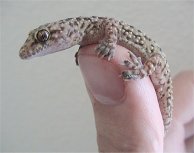
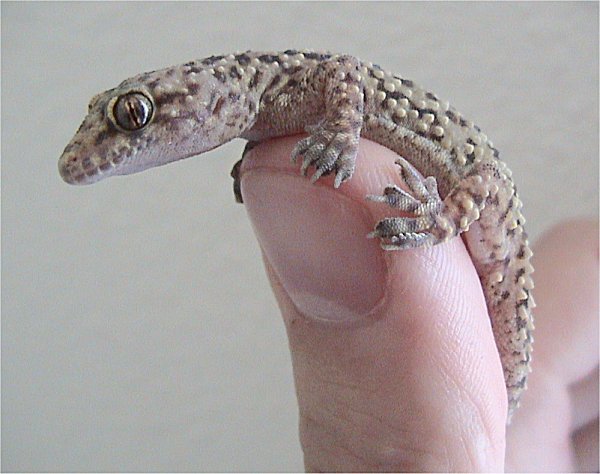
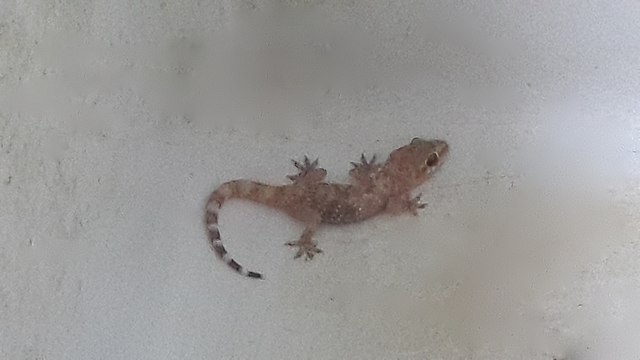
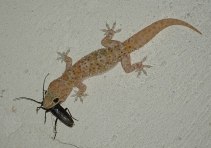
If you live in a warm climate, especially in a city with aging infrastructure like Truth or Consequences, no matter how clean your home is or how diligent your exterminators, roaches sometimes sneak in under door. Hot places also have lizards, including cute little Mediterranean house geckos that eat roaches. Technically, they’re an invasive species in New Mexico, but the bugs seem more like invaders. A tiny nocturnal lizard that dines on the enemy is a good neighbor. I like house geckos. They have important cameos in several of my books, especially the geckos on the window screen at the end of Soul Loss.
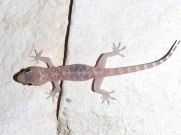
The other day, I opened the door to my apartment, and a gecko dashed inside. It was pink with red spots, enormous eyes, and a long slender black-and-white striped tail. A perfect tail. The sign of a sheltered life. No close encounters with predators had snapped off a single stripe. My first thought was, “No, no, don’t go in the roach motel!” I caught the gecko in my hands, but it escaped and took same path a roach would take. Straight behind the refrigerator and into the trap.

My attempts to free it failed. A neighbor suggested water might soften the glue. I drizzled a little warm water onto the trap, but the glue held firm. The poor gecko died—of exhaustion and stress from struggling against the glue, I could say, or perhaps it died from terror of the humans hovering over it. But the sad truth is, the gecko died from our failure to think of looking up how to save it.

Late at night after this distressing event, when I should have been working on a book, I wondered if I could have saved it. To my amazement, my search immediately turned up an article on saving a lizard stuck in a roach motel.

I was as surprised as the author of the article was when she’d searched for the answer to the same question and found numerous results. She, fortunately, had the presence of mind to do research while her gecko, a volunteer housemate-not-quite-pet, was still alive. She saved him.

Using information from her article, several others, and some videos, I’ve compiled the steps in rescuing a stuck lizard, in case any of these older resources become unavailable.

  1. Stay calm, and maybe your gecko will, too. Geckos can live a long time without food or water. As long they and their rescuers don’t panic, the situation is manageable.
  2. Cut away the trap around the lizard to make it easier to free him, but not so close that you risk cutting him.
  3. Assemble the rescue kit: Q-Tips and vegetable oil and a damp paper towel. Put some oil in a small dish and dip a Q-tip in it, then slowly rub around lizard, so the oil works its way under him. Be careful not to use much pressure. Don’t pour the oil. It’s not good for lizard skin. Use only the Q-tip.
  4. Very gently, move him around, like a subtle wiggle. This unsticking process can take up to an hour. As you free one part, cut the trap out from under that part so he doesn’t get re-stuck. I think you possibly could, as an alternative, stick a piece of paper firmly over the glue once a tail or limb is free, so you don’t have to use scissors or a knife again near the gecko. I found videos in which people used lightly oiled latex gloves to ease their fingers under the lizard once the oil around its perimeter had a chance to work, and then they ended up with the whole lizard on their hand.
  5. Place your liberated lizard on a damp paper towel to rest and get the oil off. Geckos can “drink” by absorbing moisture through their skin, so they should not remain oily. A man in one gecko rescue video actually wiped his lizard down with wet paper and then let the lizard rest and chew on the paper for moisture. (This was a gecko who lived in his home and knew him.)
  6. Either get rid of your roach traps and welcome your new bug-eating roommate, or put the lizard outside.

My neighbor told me the next day that he’d mentioned our gecko tragedy to a friend who immediately told him about the vegetable oil method. Gosh. This apparently happens so often there’s an established rescue technique. I hope I never have to use it, but at least I’ll be ready. And you will be, too. Share this widely with others, even if they think they’ll never need it. You never know.

On behalf of house geckos, thank you.


Revising with Help from My Characters

I finished the second draft of the ninth Mae Martin Mystery. It took two drafts to find out who was the real “villain” was and why they acted as they did. Now I’m reading through the book and taking notes on what works, what needs to be changed, and what might be okay to cut. I find this stage of the revision process absorbing and challenging. I have to get creative within the existing framework and pay even closer attention to my characters’ inner workings. When a scene needs alteration, it’s often because I made someone do what they really wouldn’t do. I’m critiquing and analyzing my book in progress, but the characters are guiding me through it.

Rain Reunion

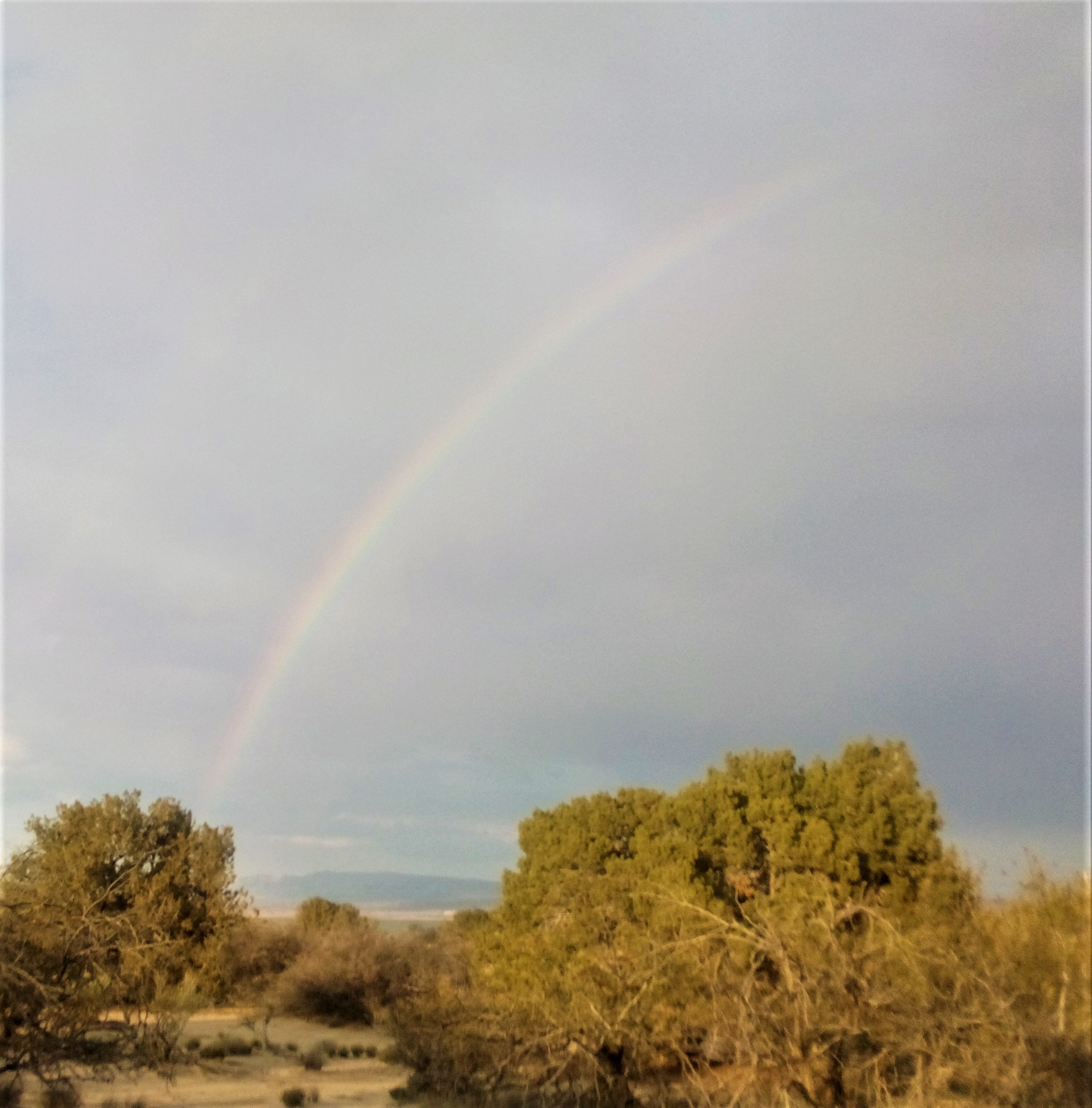
At first, there was only a thin veil over a butte on the far side of the lake. Dream on, I told myself. It’s not coming. As I ran five miles in the desert, blue-gray clouds thickened, and more rain veils hung over the mountains. When I neared the end of my run, the song of thunder rumbled. The wind picked up. The smell—petrichor, the most magical scent in the world—arose. I walked the contemplative rock spiral at the end of the trail, spent time in its center, and the rain grew closer and more promising. By the time I finished stretching, it was falling. I stood outside my car, face lifted to the sky, cherishing a cold drop on my chin. Another on my ear. Each touch was so precious, so longed-for, after five weeks of extraordinary heat, a non-soon season instead of a monsoon season. The reunion with rain was like being in love. The moment when you know you need to go, but you linger for one more kiss. The cool, sweet kiss of rain.

Novelty

I take requests at the beginning of every yoga class. The senior students in Gentle Yoga ask for “the same as last week.” It’s become a running joke, because the class is the same in some ways every week, but it’s also different. They become more capable and aware, so the same asana sequence is a new experience even though familiar. I also introduce novelty on purpose. Not enough to be confusing, but enough to make all of us engage more mindfully. I’m a better teacher when I challenge myself to instruct the basics in varied ways.

During this heat wave, I’ve been waking up ninety minutes earlier than I had been previously. I’d been writing late into the night and early morning, but that meant running in the hottest part of the day. I tolerate heat well, but I’ve drawn the line at a hundred and four. (I used to think ninety-nine was the max I should endure, but then I realized a hundred didn’t feel any different.) Anyway, the point of this story is: the change was not only instantaneous and easy, but it changed my perception.

I began perceiving annoying tasks I’d put off as being easier, and I got around to them. I managed my time better with less attraction to time-wasters. This was not a conscious, will-power based change, but a side effect. I made one alteration because running is important to me, and the other changes followed, as if I’d cleaned the filter on my brain, allowing it to operate more efficiently.

I plan to add something new to Gentle Yoga tomorrow. One new asana. One small yet significant change.