Becoming InTwitterate

I’m sending my last tweet. I avoid places that manifest too much negative energy, and I’m afraid that may be the future of Twitter. This feels like the right time to leave—not that I ever tweeted much anyway. I’ve enjoyed tweets from fellow writers, but we can find each other on Facebook and Goodreads. In fact, I’m already connected with most of them this way.

If you’re reading this on Twitter and want to stay in touch, here are some options:

Looking at all those options, I feel ubiquitous. Which makes me quite comfortable with becoming inTwitterate.

*****

Note: I don’t feel the need to migrate my Twitter contacts to Mastodon, but there are tools you can use to accomplish this before you actually leave Twitter. https://fedifinder.glitch.me/  and https://debirdify.pruvisto.org/

Wishes

I wish for more kindness in the world. For more genuine intellectual curiosity. I wish for open-mindedness, for myself and others. I had a fascinating conversation a few days ago with a woman whose world view was radically different from mine. We didn’t change each other’s minds, but we heard each other with respect and friendliness, not judgment. That took two people willing to listen. Willing to share. I’m glad I met her, and wish for a world full of more such conversations.

Anna

She passed on in February. I still think of her. Still miss her.

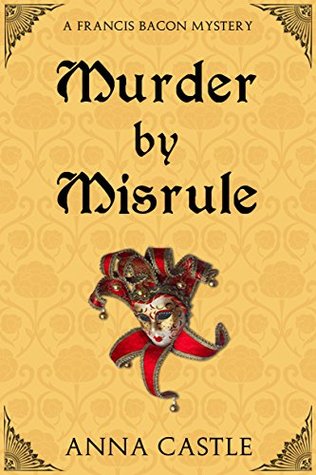
We were critique partners, writers who appreciated each other’s work. Though we knew each other’s real names, we connected and communicated by pen names, Anna Castle and Amber Foxx. We never met. Our friendship, though we shared other interests and agreed on some major issues, was centered on writing. Sharing your work in progress with another writer takes trust and respect. She critiqued my short story suite, Gifts and Thefts. She followed and appreciated my blog post essays. I was honored to critique Anna’s Francis Bacon mysteries, to become a beta reader when I was already a fan of the first books in the series. I love the characters, the historical depth, the wit, the originality, the settings—I could go on and on. To be able to contribute to her next work in any way, when the work was as good as hers was, meant a lot to me. I miss that partnership.

I also miss the social media interactions, the humorous exchanges, even the updates on the progress of the grass paths in her garden. I believe her fictional characters miss her, too. She told me how the Bacon series would progress, what would happen in future books. Books that will never be written. The real Francis Bacon went through difficult periods in his life which were going to make their way into the series. Perhaps the fictional Francis is spared those challenges, but Tom Clarady will never complete one of his great life goals. Perhaps in the world the characters inhabit, they carry on—and he does. Anna planned that he should.

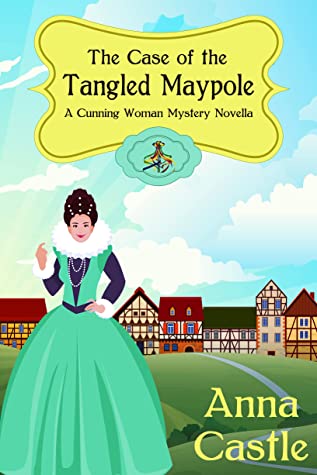
Elizabethan healer and herbalist Jane Moone must miss her author, too. I had an inkling where the Cunning Woman series was going, and was eager to see its fulfillment. These historical paranormal cozies set in a village where magic is real are as fully researched as the Bacon books. I admit the Moriarty series didn’t hook me, simply because I’m not fond of the Victorian period, but the one story I read was as brilliantly crafted as the rest of her work. Her cozies set in Lost Hat, Texas were her only modern mysteries, and I delighted in those.

I may always miss our exchange of creativity as writers. The trust with each other’s words.

This isn’t an anniversary of anything. It’s just something I needed to say, and have needed to say since February. I was prompted by a post on the blog Pleated Stories about friends we meet online and friends we lose.

Note: Alas, Anna’s web site address seems to have been taken over by some strange, rather frantic entity in a language I don’t speak. Her Goodreads page is still there, though. If you have not yet discovered her books, I encourage you to explore. Honor her memory through her characters. They live on.

Farewell, Darling Pomegranates

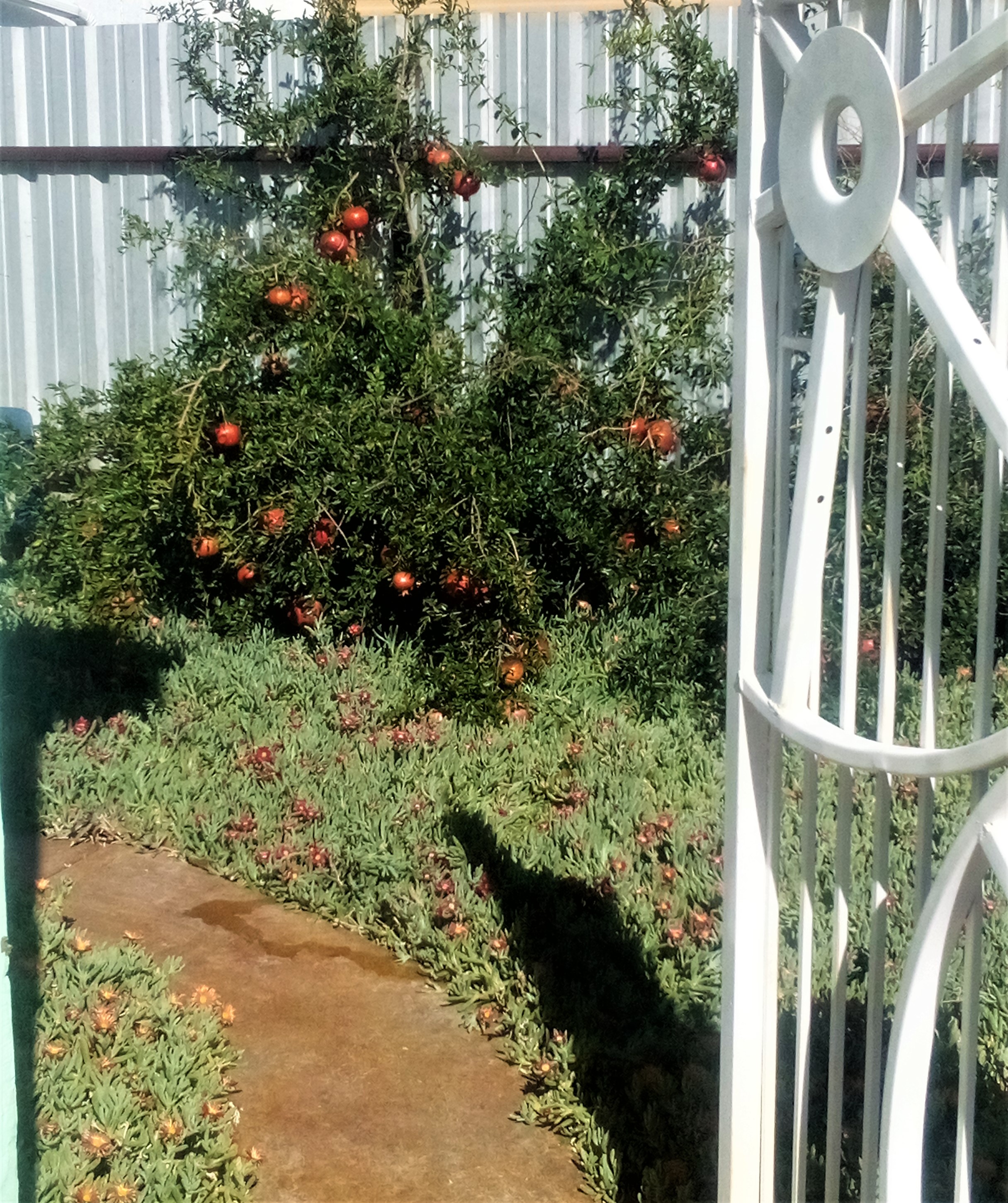
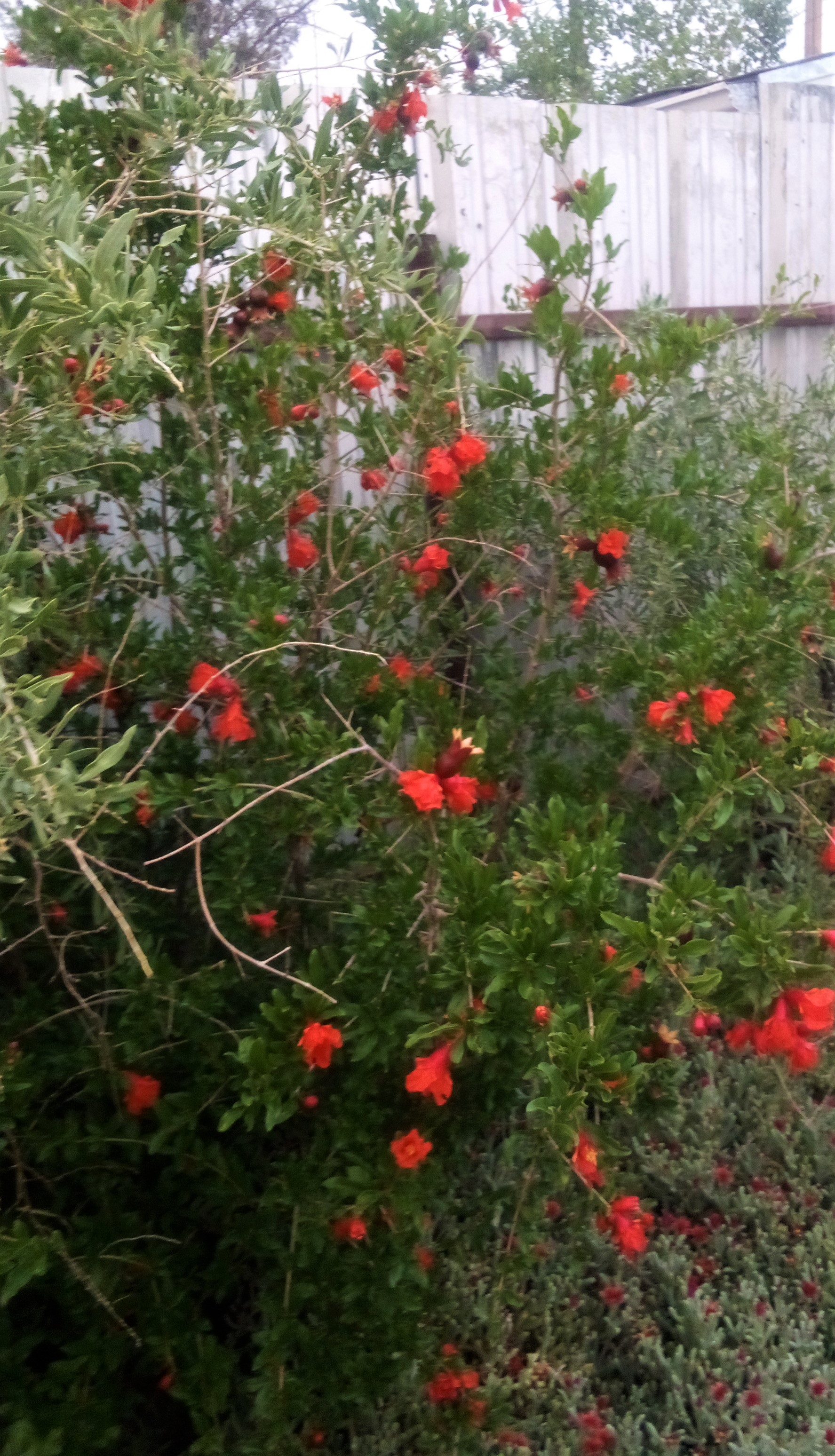
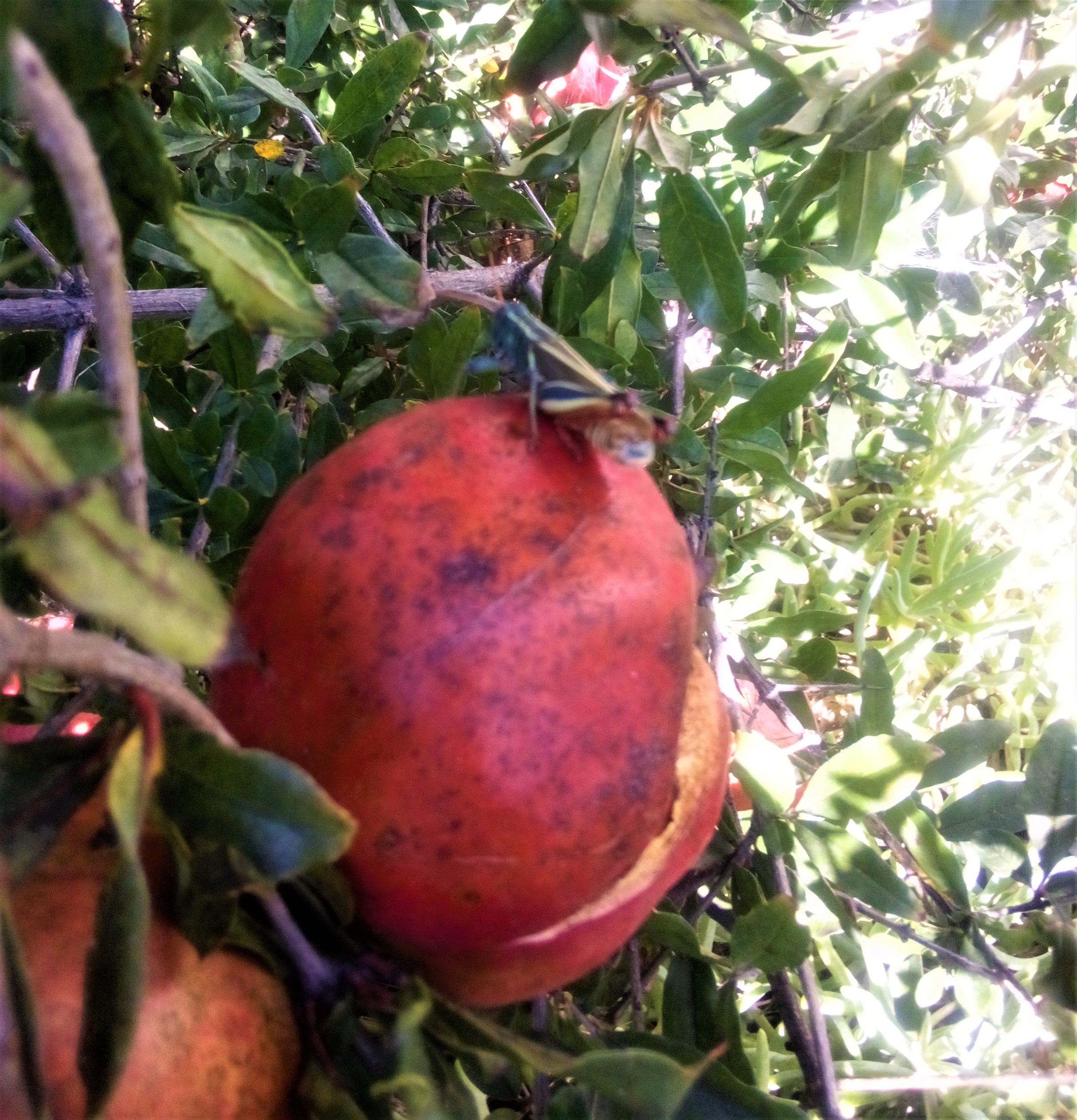
I nurtured them, marveling at their numbers as I watched them change from flowers to fruit. Last year, the two trees produced a total of five pomegranates. This year, I counted seventy-five. It was hard to see them all. Some bunched together in fours, their bottoms mashed flat against each other. I had to prop branches up on chairs to keep them from breaking under the weight of so many fruits and to keep the low-hanging ones from rotting in the bed of succulents below during the rainy season.

This bumper crop happened by accident. One day in the spring, I forgot to turn off the hose. It ran for over twenty-four hours, exactly when the flowers were about to emerge. The trees got excited and flowered like mad. These are not my trees. They live behind some friends’ Airbnb. I water the plants, since the owners reside in Las Cruces. I was proud of the pomegranates, if apologetic about the water bill.

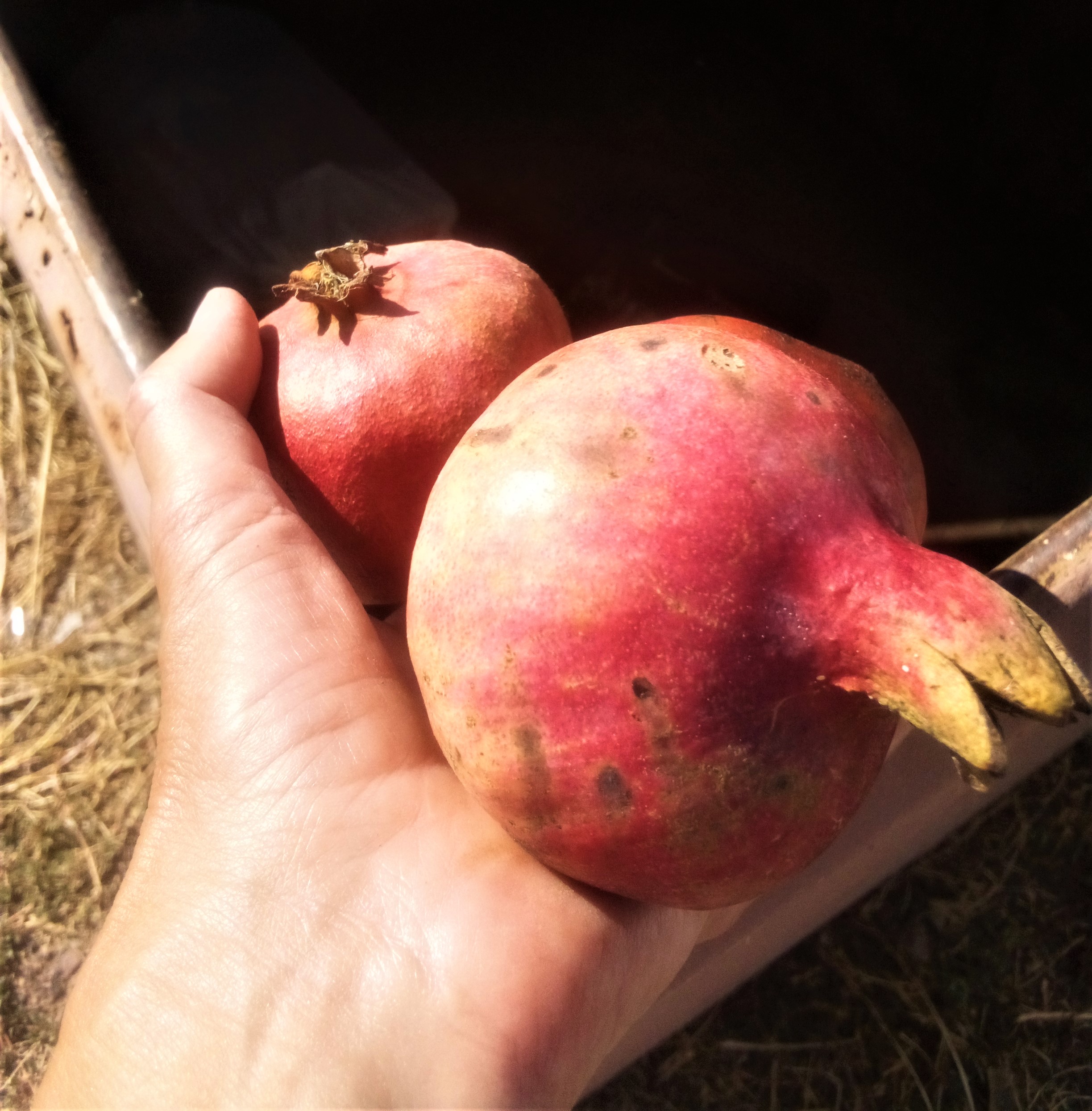
But no one wanted them. Their owners have pomegranate trees at home in Las Cruces. I ate part of one fruit, but I don’t like the taste or texture. I offered them to neighbors and yoga students. No takers. One neighbor did accept one but then confided he was afraid of getting appendicitis from eating seeds. Another friend told me, “No one really likes pomegranates. They just grow them.”

I feel guilty when I throw the perfect ripe fruits away. If I don’t, though, they attract insects. One day, I was heading for the dumpster in the alley with an armful of pomegranates when I noticed a young man walking from the grocery store carrying one small bag. I’d never seen him before in the neighborhood, and guessed he was one of the many the creatives and remote workers who have moved here lately. A Black man of about thirty wearing an old fedora and sporting a goatee, he reminded me of one of my series characters, Jamie. I asked him if he liked pomegranates. He said yes. I gave him some. We made small talk. His accent was Southern, not Australian. Jamie hadn’t come to life off the page. But someone finally wanted some pomegranates.

I’ve discarded more into the dumpster than I’ve ever found homes for. The process reminds me of writing a first draft and then cutting. I nurture the book, but it grows too many subplots and loose ends. Much as I like the look of the glorious full tree, I have to pluck pomegranates and toss them with regret, after gazing at the gleaming red seeds in fruit that cracked itself open in the sun. Such a beautiful achievement for those hard-working trees, those trees I so lovingly cared for. Such unwanted excess. My darlings. The portions of a first draft that I keep are like the fruits I gave to “Jamie.” Not many, but they’re the parts I finally share.


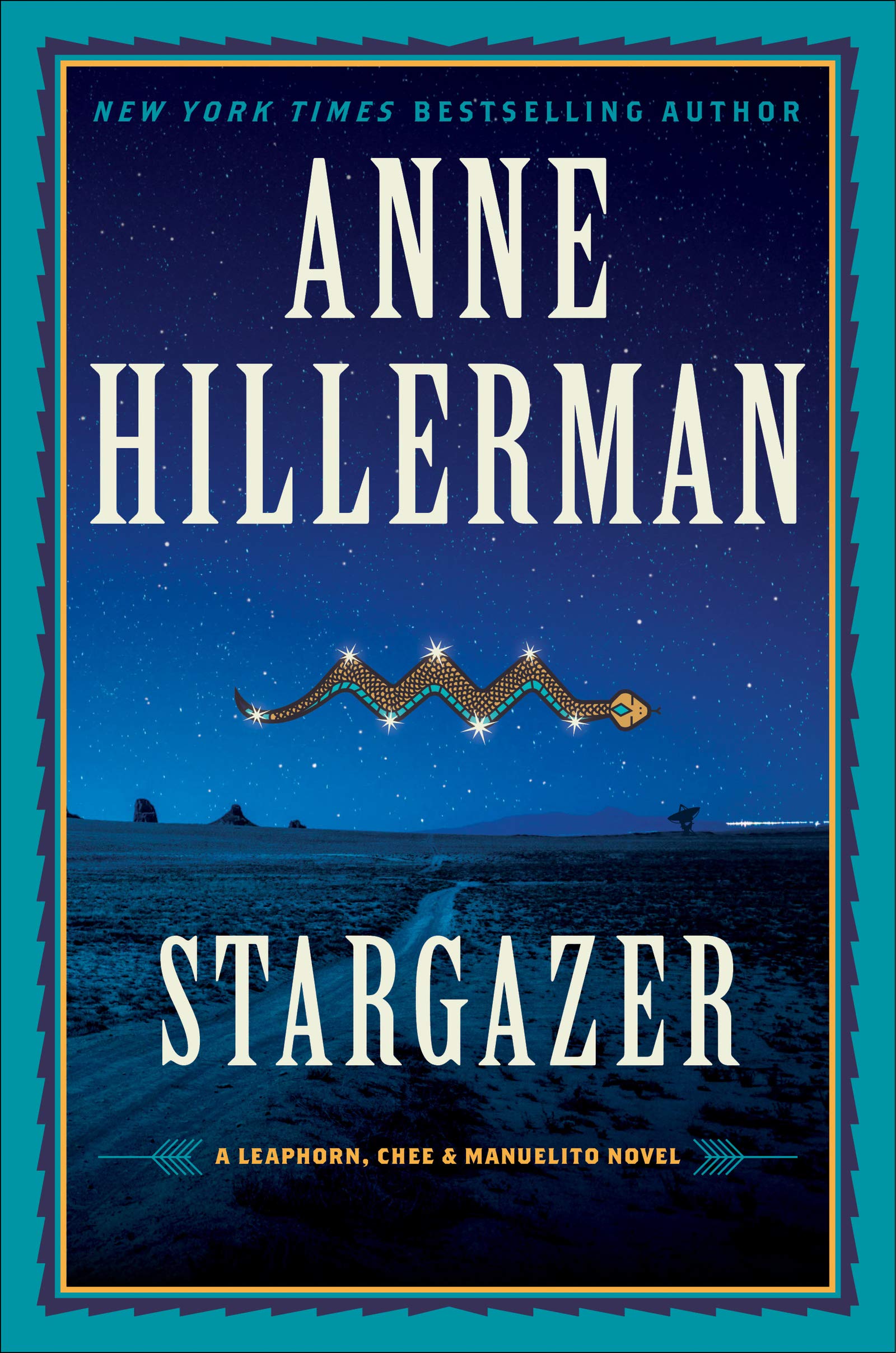
A New Mexico Mystery Review: Stargazer by Anne Hillerman

The protagonists have kept this series strong for years. Hillerman develops them further with each book. As an elder, Joe Leaphorn is still growing and learning. Bernie Manuelito and Jim Chee navigate the challenges of their police work and their marriage. And the new characters are memorable and deep. The multiple suspects in the crime were all plausible, and I was never sure who was responsible until near the end. The settings are intriguing. The Alamo Navajo Reservation near Socorro, New Mexico is a lesser known section of the Navajo Nation, yet still part of the nation and its culture. Also near Socorro is the Very Large Array, the site of high tech studies of the stars. The victim, a scientist who worked there—the star gazer of the title—is revealed in depth as a person.

Anne Hillerman has knack for creating colorful, utterly real, and very regional people as minor characters, also. Bernie’s attempt to serve a warrant on Melvin Shorty presents one of these gems. And how Shorty behaves in the end is true to the way he and Bernie met as human beings, not just as officer and law breaker.

Hillerman gives realistic complexity to the characters’ lives. Leaphorn, Chee and Manuelito are never dealing with just one case. There’s a primary mystery plot, but there are other demands on their professional time as well, including a painfully sad case Bernie stumbles across while attempting to deal with stray cattle. The leads’ private lives are not neglected by the author or the characters. I like having fully functional sleuths. They attend to their relationships and friendships, not just their work.

The author’s prior writing career in nonfiction serves her well. She integrates research  fluidly as needed, resulting in a poetic balance between the science at the Very Large Array and Bernie’s Navajo view of the stars and constellations.

The ending is satisfying. Major issues are wrapped up, yet the reader is left thinking about the characters’ future plans.

No spoilers, but Joe Leaphorn’s encounter with a child who is traveling alone is wonderful. And if you read the author’s notes at the end, that scene gets even better. Hillerman’s notes are as good as the story, as she shares more about the Very Large Array, Navajo cosmology, and her writing process.


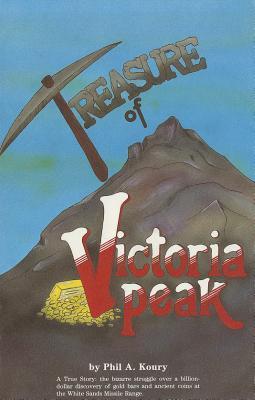
A New Mexico Mystery Review: The Treasure of Victoria Peak

This true story would make a great movie, featuring a hidden treasure and a huge cast of characters trying to get hold of it despite the claim of the stubborn widow of the original finder, Doc Noss.

Doc, a Cheyenne foot doctor of no known medical credentials, had an office in what was then Hot Springs, now Truth or Consequences. He was reputed to be skilled in treating foot ailments, whether or not he was real doctor. Once he found treasure while out deer hunting, his life changed, and not for the better. He had a lot to worry about—more gold and ancient Spanish artifacts than he could remove from the cavern in Victorio Peak. (The mountain is named after Victorio, the Apache war chief. I’m not sure how or why Koury or perhaps his publisher renamed it Victoria.)

The book chronicles Doc Noss’s adventures, his sudden and dramatic death, court case after court case, subsequent treasure searches, and Ova Noss’s years of fighting to retain her right to the treasure and get permission to dig it up. Once the peak was made part of the White Sands Missile Range, Mrs. Noss had to go up against everyone from the U.S. military and F. Lee Bailey to the woman who claimed to be her late husband’s other widow.

Attorney for Mrs. Noss Phil H. Koury has a penchant for detail. As you might expect, he tells his story with an emphasis on the legal battles, but it’s never dull or confusing, and he has a humorous flair. He recounts the treasure hunt scenes he witnessed with apt observations of character and settings. The process of solving this mystery during a time when communication was slower increases the suspense. I rooted for Mrs. Noss all the way. Since this is a true story, the plot doesn’t necessarily turn the way a work of fiction would, but that makes it no less compelling.


Observer

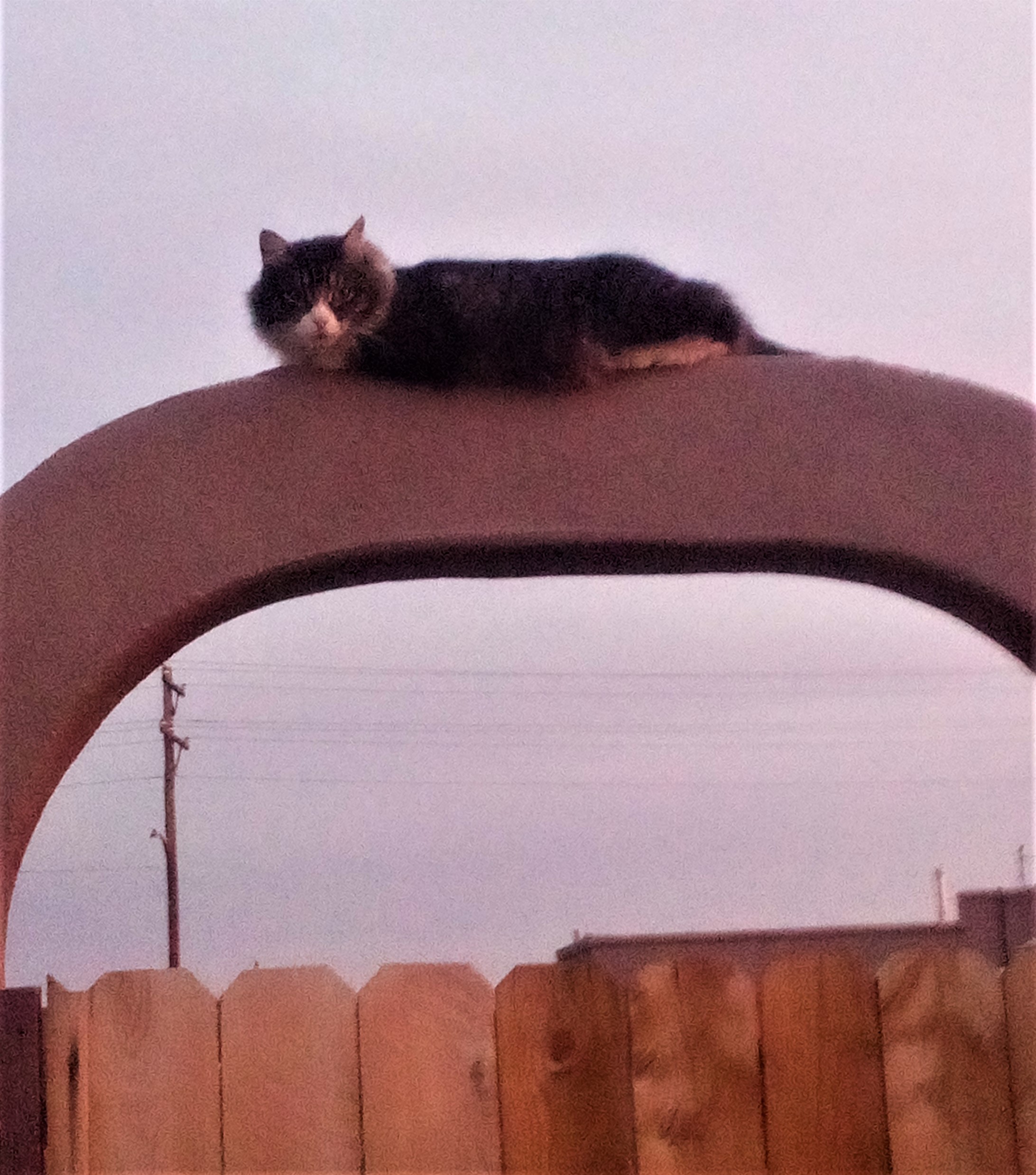
A friend who organizes the T or C Story Lab invited me to be a story teller later this fall. I was honored, but I couldn’t think of an episode in my life that would make a good story. I find listening to others, observing nature, and studying the world more compelling than my personal history. I feel like this cat, perched on an arch overlooking an alley, self-contained and interested. Paying attention, not seeking it.

Another cat in the neighborhood climbs onto parked cars on the street, mewing at the top of her lungs, begging to be petted. I comply with her demands, but I am not that cat. The concept of the Story Lab isn’t to be that cat, either. It’s to share yourself and connect with the community. I love the idea. I’ve appreciated it as a member of the audience. But I still have no story. Yet. Perhaps I’ll jump down and discover one.

Blue Grasshopper

The opening chapter of Work as a Spiritual Practice features a shiny blue grasshopper landing on the head of a statue of the Buddha. I read and reread the book often and finally gave it away when I retired and moved. Since then, I’ve reflected on its lessons, such as awareness of the task itself as meditation, being present to one’s steps and breath even when rushing, and keystroke meditation. But I never saw a blue grasshopper until today.

Silvery blue and coral pink against the gray of a monsoon season sky, it struck me as too beautiful to be real. It also struck me as sign, a reminder to make all my work—writing, yoga teaching, community volunteer work, housework, my to-do list, everything—more of a spiritual practice.

T or sCenery

I do my best to capture the colorful character of my town in my books, describing enough to give a flavor of the setting and to ground the story in a place. For fun, I’m sharing a little more of what makes Truth or Consequences unique. A full tour would take many blog posts. If you enjoy this glimpse, I’ll do another T or sCenery post in the future.

The mural above is in an alley beside the Pink Pelican, a portion of the Pelican Spa. Mae Martin book six, Death Omen, has many scenes set at the Pelican.

New murals pop up all the time, many in unexpected places. This one is an an alley across from the the main Pelican Spa building.The wild fence below is on Riverside Drive, near Niall and Marty’s fictitious house which has an eccentric, art-embellished wall. (The mirror shot is as close as I’ve ever come to a selfie.) The guitars on the fence, and the hats that used to crown it, gave me the idea for the fence and gate at Joe Wayne’s house in Snake Face. (His fence is far tamer than this, though.) One of my neighbors claims this is not the weirdest fence in T or C. He says that his bears that distinction. I’ll have to take its picture and few others for a future post and let you decide.


A New Mexico Mystery Author Interview: Kaye George

I’m a huge fan of the People of the Wind series. It’s a pleasure to have Kaye George as my guest today to talk about the latest book in the series, Death in the New Land, which I recently reviewed.

BIO: Kaye George, award-winning novelist and short-story writer, writes cozy and traditional mysteries and a prehistory series, which are both traditionally and self-published: two cozy series, Fat Cat and Vintage Sweets; two traditionals featuring Cressa Carraway and Imogene Duckworthy; and the People of the Wind prehistory Neanderthal mysteries.  Over fifty of her short stories have also appeared, mostly in anthologies and magazines. She reviews for Suspense Magazine and writes a column for Mysterical-E. She lives in Knoxville TN.

AF: What drew you to writing about prehistory? And about Neanderthals in particular?

KG: I became more and more excited about Neanderthals after the genome was first sequenced and so much was being learned about them, almost every week. About that time, I read something in a short story magazine by a guy who writes an ancient Roman character. Someone asked him why he wrote about Romans and he said that he thinks the further back you go, the better. I remember saying this out loud. “I can go WAY further back than that.” The idea was born and I started working on it.

AF: The language you use in the narration of this series is unique. Simple, a bit formal, and lacking certain constructions normal to English such as “taller.” The Hamapa concept is “more tall.” Did the speech patterns come to you intuitively? Did you construct them consciously?

KG: I had many versions of the language, both in narration and in their communication. At the time, I lived in Austin and had an excellent critique group who met in a book store every week. I brought version after version to them and most did not work.

When I started in on this, the thinking was that Neanderthals could not speak. I also knew that their brains were larger than ours. To solve both those problems, I decided to give them telepathy, using that brain. I was reading Temple Grandin and learned that she thinks in pictures rather than words. She also posits that animals think in pictures. Ms. Grandin is autistic and a renowned animal handler. A cattleman was having trouble getting his animals to enter a narrow, dark passage and he appealed to her for help. She immediately saw that the passage was dark, and had confusing light in it. When the animals could see clearly where they were going, they went with no problems at all.

This made me think that my Neanderthals should communicate solely with pictures. You can imagine how cumbersome that was! It didn’t work at all. Then newer theories came out that they probably could talk. Their voice boxes did not last all those thousands of years to be fossilized, which was the basis for the first theory, but the second one is based on the fact that they did actually have all the structures to be able to speak.

One early reader told me she didn’t want to see modern people dressed as Neanderthals in my books. I didn’t either! I had to give them a language at this point. I studied how children first learn to speak, how people who have trouble speaking are helped, and what the universal sounds are among many languages. I gave them a language with sounds in the front of the mouth, which are easiest to pronounce. But I didn’t have them speaking very much because I still like the telepathy idea.

As for the narrative, I wanted it to convey something of another time, a vastly different time. So I made my own grammar rules. No contractions, nor –er and –est comparatives, and a few more. I wanted it to be slightly stilted, but readable. I hope I accomplished that.

AF: What was the hardest part of writing this book? And what was the most fun?

KG: I guess the research is both, the hardest and the most fun. At least the most rewarding anyway. I do find creating my characters and following them through their lives and adventures satisfying also. But the best of all of this is having fans like you who appreciate the series.

AF: Thank you. Your fictional Neanderthal tribe, the Hamapa, migrate to the place that later became New Mexico. What made you choose this location?

KG: I’m not sure. I did calculations using Google maps to see how far they could get in a day, at my best guesstimate anyway. I found a detailed study of the terrain in that area, around Tucumcari Mountain, so I knew I could portray it accurately, as it was those thousands of years ago. I also liked the idea of the mountain, or mesa, itself, because it’s so distinctive looking. I thought that I could describe it accurately (it hasn’t changed much since then, except for what grows there and lives there) and people could figure out where this was. I actually pictured having it on the cover, but my publisher came up with such a good one, that I let that idea go.

AF: Your research is impressive, and I appreciate the way you share tidbits of it at the beginnings of chapters. Is there anything you learned that you wish you’d been able to fit into a book but couldn’t—some favorite fact or discovery you’d like to share?

KG: I’ve mentioned my love for the mega fauna of the last Ice Age. I have a bare mention of giant beavers in a legend told by the Storyteller, and a meeting with a glyptodont in the new land, but I wish I could cram a lot more of these fascinating animals into the plots. It’s hard to make up reasons to stick them in there! What would be fun would be movies of these with the mega fauna portrayed on a big screen. Or a little one, if people are watching at home.

AF: You’ve blended history with fiction, with deviations from the record in some cases and adherence to the facts in others. How did you choose this blend?

KG: My one main deviation, as I’ve said, it locating the tribe in what is now North America, and locating a bunch of other types of people there also. These all did live concurrently on this planet, but many did not meet each other. I liked to think about what would happen if they did, so I wrote that. My other “invention” isn’t a deviation, since the social structure isn’t known, and probably never will be. But the matriarchal society is my idea, kind of as a feminist, and kind of for logical reasons.

In everything else, I try to stick to the facts as we know them. What their art and dwellings were like, how they hunted, how they lived, what they ate and wore, clothing and burial methods. The ancient flute is controversial, but I took the stance that it was an actual instrument and that they made it and used it.

AF: The Hamapa are a female-led society. Can you share your process in creating the roles they assign to females and to males?

KG: I wanted an elder female for the leader, and she had to have a mate, even though she didn’t always keep the same one. When I decided to give them handed-down folklore, I had to have a person designated to learn it and to tell it, so that’s the Storyteller. It made sense that one person would know the most about healing herbs and practices, so she’s the Healer. Her son may one day succeed her, and none of the other roles aside from leader are gender specific. One guy is the best at flint knapping, one at making clothing, several are the best at throwing spears, and one is innately good at tracking people and animals. And, since fire was probably very important to them, one person is assigned to be the Firetender as his full time job. I tried not to have strict division of labor, but for people to naturally find where their talents lie.

AF: I know you have multiple series to keep up with, but this one is my personal favorite. Will there be another People of the Wind book?

KG: I’m ending this one so it can wrap up and end the series. I’m not saying I won’t write another one, but I’m not planning on it now. These are intense and difficult to pull together and, although I love doing them, I’ll take a break and maybe think about it later.

AF: Is there anything you wish I’d asked you but didn’t? Feel free to answer that question now.

KG: I might mention how hard it was to get this published. When you write the only series in a genre, no one knows what to do with it. I queried every agent on the planet and it was well-received, but no contracts. One agent told me she loved it, it’s “better than Jean Auel” (author of the Clan of the Cave Bear books), but that she had no idea how to sell it (to a publisher). I wanted to tell them to look at Harry Potter and maybe try harder, but I didn’t. I finally found a publisher who loves the series and has done everything they can for me and for these books. I couldn’t be happier than I am at Untreed Reads, unless I could sell a million copies. Somehow.

AF: Thanks for taking the time to answer my questions. I appreciate getting an inside look at these books.

*****

To purchase books by Kaye George, click here.

Visit Kaye’s website