A Tail and a Tale: Bob Can Talk His Way Out of Anything

There’s a lot of wildlife we don’t see. The Rio Grande is low right now, making it easy to cross from the empty desert land on the other side. Tracks in the mud from recent rain showed small hooves trotting around on the mesa near Healing Waters Trail where I was running. I’ve never seen a javelina up there, but those were their little pointy feet. No surprise. We expect them around here. A friend sometimes has them in her yard.

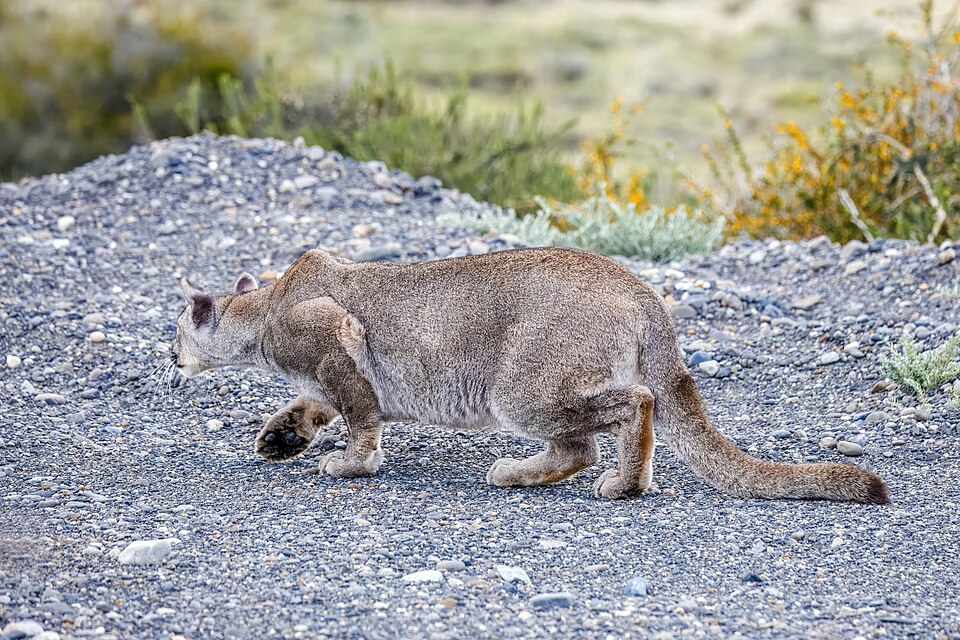
But I never expected to encounter a mountain lion. Its tail was toward me and it was sniffing the ground on the far end of the trail where it gets narrow and steep near the Veterans’ Home—my destination—so I didn’t get a good look at its head. I didn’t need to. Nothing else is that big, that color, and has a tail like that.

About a year ago, my friend Bob told me he’d looked out his window at night and seen a mountain lion. His bedroom window faces the mesa, not the rest of the Veterans’ Home campus. I detoured away from the animal and took an alternate route to go visit Bob. I told him about the sighting. Of course, he had a story.

He was much younger, hiking alone in upstate New York. He loved the woods and often spent hours exploring, but this was the only time he met a mountain lion. They met suddenly, practically face to face, and close enough that the cat could have reached him in a few bounds. Bob didn’t want to back away and look like prey, and he knew better than to approach. Feeling stuck, he improvised. He took his knife from his belt, held it up, and started talking.

“I know you probably want to eat me for lunch, and you could take me if you tried, but I’m warning you, you’re gonna get very scratched up in the process.”

The cat didn’t move, so Bob kept talking. It looked at him as if it was taking in every word. Finally, he took a step back, still holding the knife. Then another slow step. And they went their separate ways.


Bob Stories: A Cup of Coffee at the DMZ

Bob told me this story as he enjoyed a fresh cup of hot black coffee on the patio at the New Mexico State Veterans Home on a ninety-nine-degree day. In the shade. the weather wasn’t bad—dry heat really is quite tolerable—and his coffee stayed hot. Bob loves coffee, and it has to be strong, hot, and black. According to him “there’s no such thing as strong coffee, only weak people.” His favorite beverage led to the story of a welcome cup seventy years ago.

Bob remained in Korea after the armistice. He liked the country and preferred to be there rather than go back to a base in California. On a rainy night, he was one of the men on lookout duty at the edge of the DMZ, lying under some sort of waterproof shelter with his rifle at ready. Rain dripped from a tree nearby, but it just missed him. The ground was rough, “not a place where you would go out for a stroll.” They had to hold still and stay alert “in case hell broke loose.”

One of his fellow Marines was sent out with fresh, hot coffee, not a job the guy delivering it liked, since he had to get wet. Bob was so grateful, though. He found a place in his shelter where the coffee could sit on a rock right within reach, protected by another rock, so the rain wouldn’t get in to cool or dilute the coffee. And then the wind blew a dribbling tree branch directly onto it.

The man who’d been bringing the coffee around came back to check on Bob.

Bob indicated the branch. “Can you do something about this?”

“Better yet. I’ll bring you a fresh cup of coffee.”


Bob Stories—Jobs and a Robber

My eighty-nine-year-old friend Bob has often said that he never had trouble getting a job. He described a job interview he had once as a young man. The employer asked him what kind of work he was looking for, and he said, “Anything you tell me to do.”

The employer said, “I like that attitude. But … what if I asked you to kill someone?”

Bob replied, “Well, I know how.”

The man said, “What?” And Bob explained he’d been in the Marines, trained in hand to hand combat. He assured him he really had no intention of taking that sort of job but was otherwise willing to do anything. That was good news for the employer, because what he needed Bob to do was shovel a lot of horse manure.

After Bob had been working for a while, the barn owner asked, “How do you stand the smell?”

Bob told him that his summer job in high school had been on a farm with sixty cows, so he could get used to anything. If you paid him, he’d do the work.

This leads into the next story. In Philadelphia, shortly after getting out of the Marines, Bob was, as he put it, walking on the wrong side of the street. A man came up close and shoved a gun in his ribs, demanding, “Give me your money.”

The way Bob describes it. “For some reason I wasn’t scared. I felt like I was in control. The robber made a mistake, getting the gun too close. He didn’t know what he was doing.”

Bob twisted the gun back at him and asked, “Why do you want to do that?”

“I need the money,” the would-be robber replied.

“Then get a job.”

“I’m desperate. I don’t have time.”

“Yes, you do. Have you got time for the trouble you’ll get into if you keep doing what you’re doing?”

The guy left.

Two years later, Bob ran into him in a bar. “You gonna stick a gun in my ribs?”

“No, actually, I did what you said. I got a job. I was starving for the first week until I got paid, and then I ate like a hog for the first two days that I had money. But now I’m doing fine. Thank you.”

Or that’s the way the story goes.

A New Mexico History Review: Deming, New Mexico’s Camp Cody, a World War One Training Camp

This history is detailed and yet never dull. Jim Eckles is a great storyteller, bringing the camp and the town to life through the unique experiences of individuals who trained there. The eventual demolition—the complete vanishing—of this camp in Deming is as interesting as how it came into being. When I told an old friend, a Korean War veteran, about this book, he said that his father—from upstate New York— had trained at Camp Cody when he volunteered for WWI. In numerous visits to Deming. I’d never heard of the camp, so I was intrigued when I found this volume at my local bookstore. As a New Mexico history buff, I thoroughly enjoyed every page. The characters make it worth reading, as well as insights I gained about our country’s entry into World War One through this particular aspect of it in a small New Mexico town. Since his father had been at Camp Cody, I passed the book along to Bob, and he said he was surprised how engaging it was. He couldn’t put it down.

The Miracle of Reading

When I was recently visiting my friend Bob at the New Mexico Veterans’ Home, we found ourselves talking about reading. Not only about the book I’d brought him and why I thought he’d like it, but about reading itself, how amazing it was when we first learned to read as children. He’s eighty-nine and I’m seventy, but we both remember the experience. We marveled at how the transition took place from puzzling over words to reading so fluidly we instantly visualize the story, unaware of looking at little figures on a page and translating them into meaning something.

He recalled being very young, excited to read, and bothering all the adults and older siblings around him, running around with a book asking “What’s that word? What does that word mean?” And I remembered not being able to read yet, and my sister pretending she could read by turning the pages of one of our favorite books and reciting the story from memory. Because we wanted to read. To pass through the gateway to stories.

And yet so many people don’t read. According to a Washington Post article, 46% of Americans didn’t read even one book last year. What they’re missing! For those of us who do read, it’s a daily miracle. If I couldn’t read, I don’t know what I would do with myself. I rely on books for information, for escape, for experience, for insight. I think of a wonderful poem by Truth or Consequences poet Beverly Manley called Why I Read Fiction, written to explain to a friend who didn’t understand. If you can find or order her book, Seasons of the Soul, I recommend it, not only for that poem, but for all of them. The last two lines:
“I read to open my heart, my eyes, my mind
I read to feel connection with all mankind.”

Another Bob Story

A resident of the New Mexico State Veterans’ Home, Bob likes to talk about his years in the Marine Corps. I recently asked him to retell this story. It’s one of my favorites.

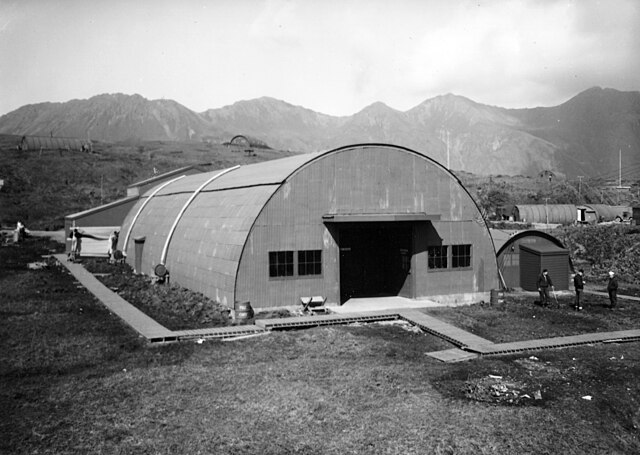
The war was over. Just barely. The troops had occupation duties in Korea. In Bob’s opinion, everything was fine, nothing to complain about as long as he wasn’t getting shot at. But there was the usual inequality between officers and enlisted men when it came to adult beverages. Enlisted men got warm beer. The officers had a new club. It was a Quonset hut, set on uneven ground, with dirt piled up around the edges where it didn’t sit flush to the earth, but it served good liquor. And the bartender was a friend of Bob’s.

The floor of the new club wasn’t finished. The bartender made sure a few boards remained loose. No one noticed since they were covered with a mat. The more remarkable thing is that no one noticed the tunnel. Granted, it was short, from the loose boards to some of the loose dirt at the edge of the Quonset hut, but Bob and his buddies must have dug silently. Men on guard duty at night were in on the plan. That also helped.

When inventory was taken at night in the club, the enlisted men tending bar made sure it all looked fine, then slipped a bottle under the boards into the tunnel. Later, someone would crawl in to retrieve it and hand it off to the guard. Somehow, it then got transported to a cache under a natural-looking pile of rocks. And the enlisted men occasionally got to enjoy as good a drink as the officers did.

The discrepancy in the inventory was eventually noticed. An officer confronted Bob, who assured him he wouldn’t do such a thing. “Risk six months in the brig for a sip of whisky? Not worth it.”

“We know you took it. But we can’t prove a thing, and you won’t crack. All I can say is that if the enemy ever captured you. I’m confident they couldn’t get a word out of you, either.”

Words that Stayed With Me

I had, as usual, inspiring encounters with art and with friends at the January Art Hop. In one gallery, I talked with a very productive artist who said he makes a new list every day to get things done. I had to confess that a few same things have been on each new to-do list I’ve made—for years. He said cheerfully, without judgment, “That’s okay. You did other things.”

In another gallery, I admired the work of a local quilt artist, mentioning how innovative and unconventional her work was. She said, “Unconventional, that’s me. Getting outside my comfort zone grows my comfort zone.”

Later in the week,  I ran the Healing Waters Trail to the New Mexico Veterans’ Home to visit my friend Bob. He used to run to visit a relative when he was a boy, so he appreciated my method of travel. We sat in the sun with a view of the mountains. In the way of the very old, he reflected on his life, acknowledging there had been some hard times. “I learned from them. But I learned the lessons later, when I could. Not while I was living the lessons.”

I’m probably living many lessons now that I will only learn later. Perhaps after I grow my comfort zone by actually doing the perennial to-dos on that list.