A New Mexico Mystery Review: Jemez Spring by Rudolfo Anaya

I wish I could say that Jemez Spring was as good as the rest of the series, but it’s not. I had to finish it because it wraps up the Sonny Baca series, but it doesn’t do the story cycle justice. Even Sonny himself is not as strong a character. He becomes something between a caricature and an archetype. I almost stopped reading early on, when Sonny—a private investigator—and a police detective are in the presence of the murder victim who died in a hot spring bath at Jemez Springs, and they derisively discuss the size of the dead man’s penis. At that point, I no longer liked Sonny. I thought, why is this episode here?

His girlfriend, Rita, was always simply an archetypal female ideal with no depth. None of the women in this book have any dimensionality except Naomi, the Jemez Pueblo potter. She has a personality. She’s original. I love it when she gets in Sonny’s truck and says, “You got spirits in this truck?” (One of the strongest characters is the ghost of Sonny’s late neighbor don Eliseo, riding in Sonny’s truck and giving him advice.) But like other women in the book, Naomi is an object of desire. The power players are all men, unless I slept through a scene that breaks that pattern

Between each important event, there are often three pages of digression on New Mexico politics, history, culture, and food, beautiful descriptions of the land, excessive backstory, discussions of whether or not dogs dream, and reflections on mythology. These side trips are masterful word craft and some could make good essays collected outside of a novel, but keeping track of the plot took patience.

The final confrontation between Sonny and Raven is in an intriguing setting and has some mystical moments, but it’s also full of philosophical discussion at a point when it deflates the tension instead of escalating it.

The outcome of the ongoing threat with the bomb made me feel as if the author had written himself into a corner and couldn’t get out of it, so he wrote it away into a trick. That’s almost as bad as “it was all a dream.”  I found flashes of delight in certain settings, good lines, and the few good characters, like the Green Indians, but I’m still disappointed in this work by an author whose books I normally love.


A New Mexico History Review: The Villista Prisoners by James W. Hurst

The great strength of this book is its emphasis on the ordinary people involved in the international incident at Columbus, New Mexico in 1916. The book is not about Pancho Villa. It’s not about General Pershing. It’s about the men who were captured during Villa’s raid on the small town on the border of New Mexico and Old Mexico. One of the Villistas captured was a twelve-year-old boy. Their stories—how they came to be in Villa’s army, whether or not they knew they were in the United States, whether they wanted to be doing what they were doing—were matters of controversy at the time.

The author is an excellent historical detective, learning everything about these men that he could. Many of were illiterate conscripts who had been forced into Villa’s army; others had joined because they feared the army of his opponent, Mexican President Carranza. They didn’t want to be at war at all, though, and this issue came up in their trials, as did other questions Could the governor of New Mexico pardon them? Shouldn’t unwilling, illiterate conscripts be considered innocent? But there was a precedent set in both the United States and in Scotland that a soldier who follows an illegal order is still guilty of a crime.

I will not tell you how everything turned out them through the twists and turns of their of their trials. The book starts with the raid, not from the point of view of the leaders, but of the town’s people. And it ends with the fate of equally ordinary people entangled in international and national matters. I recommend this book if you have an interest in history and like to understand not only what happened and why, but who was involved and how they were affected.


A New Mexico Mystery Review: Lost Birds by Anne Hillerman

The title refers to Navajo children who were adopted out of the tribe and raised without knowledge of their culture. Joe Leaphorn is hired as a private investigator by such a woman who hopes to find her Navajo family. Another lost bird is a woman nicknamed Songbird, not a lost bird in the sense of an adoptee, but a missing person. She is Leaphorn’s other case, as he’s been hired by her husband. And at the same time, the school where the woman was a music teacher and the husband works as a custodian is struck with an explosion. Bernadette Manuelito is brought in to help investigate.

The weaving of plot threads in this book is extraordinary. Navajo rugs and weaving play an important part—a rug found in the car of the missing woman along with the body of someone who might be her, and a rug in an old photograph that’s a clue to the lost bird, Stella’s, family history.

My sense of the whole book is of a masterpiece of weaving, of stories within the story. There’s the story of Cecil, the custodian, who narrowly escapes the explosion, fearing that someone did it to attack him. He has a terrifying experience, pursued by people to whom he owes money. Then there’s the story of Leaphorn’s beloved friend Louisa and her troubled adult son. When Leaphorn and retired Captain Largo race to be on time for a rescue, I couldn’t stop reading. It’s one of the most intense scenes in a mystery I’ve ever come across.

Though this book is layered with mysteries, chases, and moments of danger, it has none of the clichés, none of the tired tropes, of the mystery genre. It is entirely original.

The characters are, as always, portrayed with great depth. Navajo culture also portrayed with depth and knowledge. The family stories are woven fully into the plot, so you never feel like you’ve gone on a digression. The scenes at a trading post as Leaphorn discovers rugs that may be connected with his client’s Navajo family are quiet but profound and beautiful and just as absorbing as the more intense sections.

I was stunned by the end. I never would have thought that particular person had done that particular crime, and yet, as with any good mystery, it all makes sense.

It was a pleasure to spend so much time with Joe Leaphorn. He’s a character that Tony Hillerman wrote with insight, and Anne Hillerman has gotten to know Leaphorn equally well. I look forward to the next book in the series.

A New Mexico History Review: Deming, New Mexico’s Camp Cody, a World War One Training Camp

This history is detailed and yet never dull. Jim Eckles is a great storyteller, bringing the camp and the town to life through the unique experiences of individuals who trained there. The eventual demolition—the complete vanishing—of this camp in Deming is as interesting as how it came into being. When I told an old friend, a Korean War veteran, about this book, he said that his father—from upstate New York— had trained at Camp Cody when he volunteered for WWI. In numerous visits to Deming. I’d never heard of the camp, so I was intrigued when I found this volume at my local bookstore. As a New Mexico history buff, I thoroughly enjoyed every page. The characters make it worth reading, as well as insights I gained about our country’s entry into World War One through this particular aspect of it in a small New Mexico town. Since his father had been at Camp Cody, I passed the book along to Bob, and he said he was surprised how engaging it was. He couldn’t put it down.

Book Review: Burro Creek Canyon

Joyce White’s memoir of her life on an Arizona Ranch is sheer delight—her sense of humor, her ability to tell a unique and colorful and anecdote in each chapter, her knack for making the most ordinary aspects of her life and work exciting. Her writing style is not the most polished, but I thoroughly enjoyed every page, starting with her first meeting with her future husband, Bob, a divorced rancher living out in the middle of nowhere. She was also divorced, with a young son. She had never been a cowgirl before, but she was a brave woman. They spent their honeymoon on Bob’s remote ranch, the Loving U, in Burro Creek Canyon. She describes how she first learned to ride, to participate in cattle drives, and to cook out on the trail. This was in the 1950s and 60s. Although the house was a fine, solid house, it didn’t have electricity and was so remote she home schooled her son before homeschooling was a thing.

Every animal has character. Dogs and horses were key members of the ranch team. The social life people managed to have in a place where there weren’t any other people around is impressive. The efforts they had to undertake see friends and family in other parts of the Southwest shows how important human connection is. I can see why she loved the place, and how every day of those eight years was an adventure. In a way, I was sad as she was when they sold the ranch and moved to move to Missouri to start cattle farming in a place with more water and more grass. I highly recommend her story. She also provides recipes that one could cook in a ranch house without electricity or out on the trail feeding the cowboys.

A New Mexico Mystery Review: The Sacred Bridge by Anne Hillermann

This is Anne Hillerman’s best book yet, a crime novel but also a book about culture, land, and history, set in various parts of the Navajo Nation in both New Mexico and Arizona. As always, her research is thorough and woven naturally into the flow of the story. The character development is deep, and the plot revolves around the inner workings of people— the victims of the crimes, the perpetrators, and the people solving the crimes.

The beginning of the book is a masterpiece in building tension, suspense, setting, plot, and conflict, when there’s only one character present: Jim Chee hiking alone at Lake Powell, discovering a crime as he’s contemplating what to do with his career. Meanwhile, Chee’s wife, Bernie Manuelito, is investigating another crime that she had the misfortune to witness. This second crime is somewhat based on actual events on the Navajo Nation that I’d read about. I immediately recognized the farm that inspired this story, and its misuse of Chinese laborers. The discovery of the full character and life path of the victims of these two different crimes is a fascinating and integral part of the process of solving them.

Bernie’s career development and Chee’s professional decisions and spiritual explorations are inseparable from the plot. Bernie’s younger sister Darleen’s maturation and use of her talents fit perfectly into the mystery. There’s not a single loose thread. Every subplot is tightly woven into the main plots.

This book kept me awake. When Bernie is coming to the end of her undercover assignment, the pace is intense and full of surprises—surprises that fit.  I like when a mystery hits me this way: Oh wow! I never saw this coming! But yes, of course that’s what happens.

Everything’s wrapped up and yet the book also ends in a way that makes me want to read the next one. Starting immediately.

Book Review: Heroes and Villains of New Mexico by Bud Russo

The short chapters in this historical collection cover times dating back to the Pueblo Revolt all the way up to the early days of space program research. Each character is thoroughly researched and portrayed with color and flair. I can’t possibly summarize all of the stories, but there were several that particularly struck me. Two had to do with a flood of the Dry Cimarron River, so called because it seldom flowed fully.

In the early 20th century, a tremendous monsoon filled the river to overflowing. One of the heroes in this book was a telephone operator named Sally Rook. By staying on the job despite the raging flood, she saved the lives of almost everyone in town as she called them while the storm and the waters closed in. Her courage truly moved me.

The aftermath of that flood allowed a cowboy named George McJunkin to discover what became known as the Folsom Site, with the famous Folsom points. It changed the understanding of prehistory in North America. McJunkin had been enslaved in Texas until age fourteen. After the Civil War, the free young man moved to New Mexico, became a cowboy, and worked in exchange for reading lessons as well as  money. He became a self-educated naturalist. He was riding fence when he found what he was sure were not modern buffalo bones exposed by the recent flood. And he noticed indications of human activity in the area. He tried to get scientists to study what he had found, but they ignored his letters and even the bones he sent. After all, he was just a cowboy. Many years after he died, the site was finally investigated.

The heroes range from people who made great discoveries to people who risked their lives or lost their lives to save others. Chester Nez, author of the outstanding autobiography, Code Talker, is one of those portrayed. I highly recommend his entire book, as well as the chapter about him in this book, I took my time reading it, getting absorbed in each vignette. The writing is a little over the top, but it definitely keeps you engaged. And I haven’t even mentioned the villains!

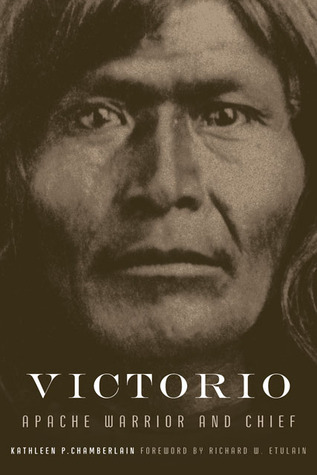
Review: Victorio: Apache Warrior and Chief, by Kathleen P. Chamberlain

I once said—meaning to make a respectful acknowledgement to an Apache friend—that Truth or Consequences, the town where I live “used to be Apache land.” He replied, “It still is.”

Yes.

It still is.

*****

Living in New Mexico, a state with more tribal lands than most, I’m aware of the Indigenous cultures that thrive here. Reading this book made me far more aware of how the rest of us got here—the complexity of the fighting, negotiation, and politics. Geronimo is famous. A mural of his face greets you with a powerful glare as you drive into town. Victorio is less well known. His younger sister, the warrior and seer Lozen, may have more fame. But his story is worth reading. New Mexico’s story is incomplete without him.

The author did extraordinary historical detective work to reconstruct his life and the events that led to his death, his final battle. She explores Apache culture and pre-reservation life, and reveals the misunderstandings, failures, sincere efforts, and also the insensitive ignorance on the part of various agents of the U.S. and Mexican governments that drove Victorio’s band from their sacred land and its springs and drove them to keep fighting. Chamberlain’s analysis of the Apache wars is insightful.

This isn’t light reading, but it’s not dry or difficult, either. History can be a page-turner, even when you know how it ends.

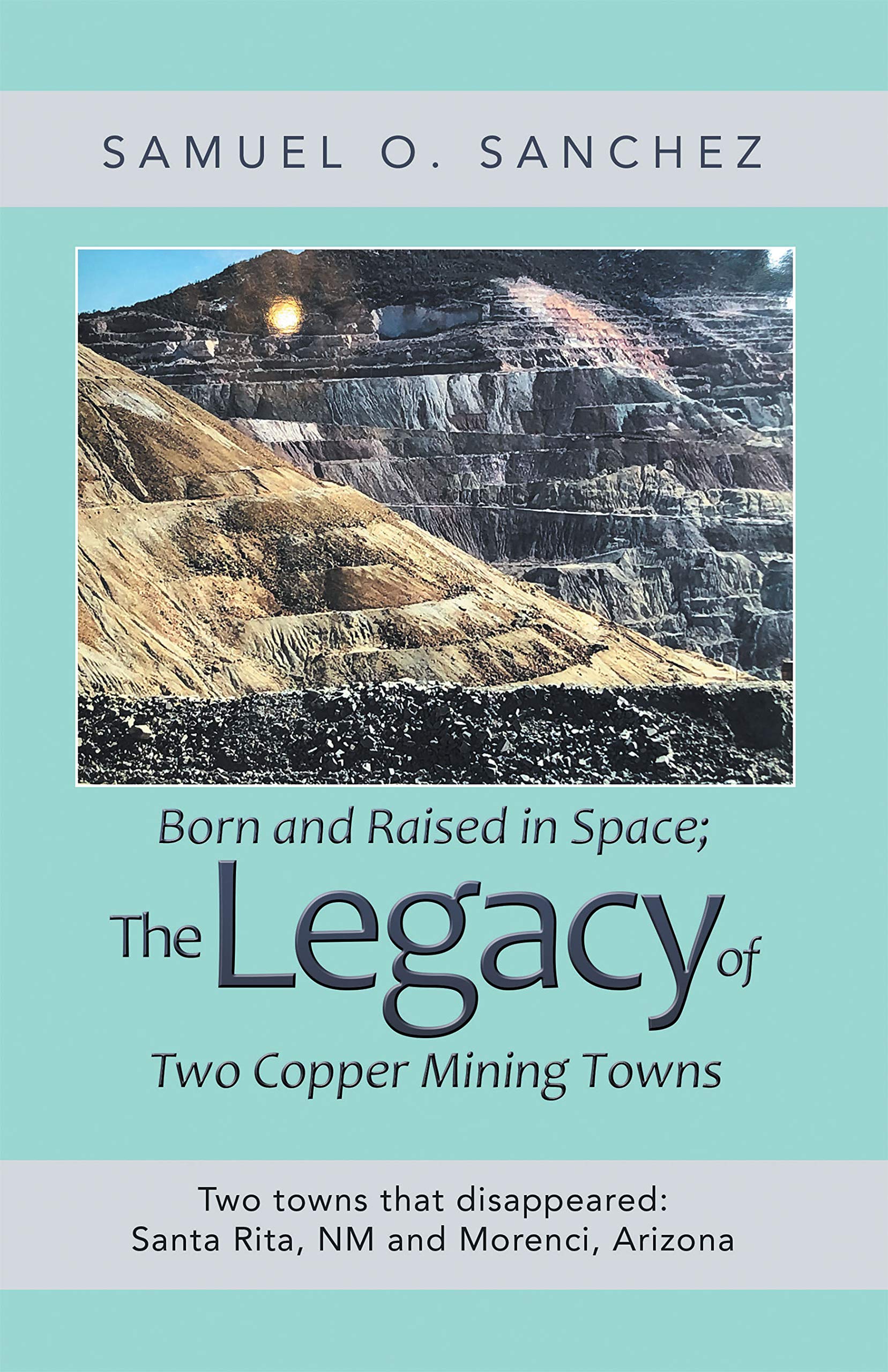
Review: Born and Raised in Space; the Legacy of Two Copper Mining Towns : Two Towns That Disappeared, Santa Rita NM and Morenci AZ

This memoir, told in short vignettes with often humorous lessons at the end of each, is an adventure as well as an intimate exploration of a man’s life from childhood to his elder years. The author portrays the mining towns where he grew up, Santa Rita NM and Morenci AZ, vividly. History is made up the lives of ordinary people, and such a close look at one life makes it clear that no one, really, is ordinary. Regular folks are colorful, original, and unique. This personal history also reminded me how much the world and the state of New Mexico have changed in one lifetime, how different the mid twentieth century was from the early twenty-first century, culturally, socially, and technologically.

Sanchez is fearlessly honest and impressively resilient. If he did something foolish as a boy or as a college student, he tells you. If his career or his love life went well—or not—he tells you. Reading this book is like hanging out with a great raconteur, a man with a long life, a sharp memory, and a willingness to take chances. An electrical engineer, he defies any stereotype of engineers as being on the boring side. I carried this story with me as my EV charging station read, so I was often reading it in public places and laughing out loud.

The author and his wife had the table across from mine at an event for local authors in Las Cruces, NM, and the subtitles and the cover picture on his book fascinated me so much I forgot to ask about the main title. I wish I had, because I don’t know what it means. Born and raised in space? Oh well. If you read the book and figure this out, let me know.

A New Mexico Mystery Review: Stargazer by Anne Hillerman

The protagonists have kept this series strong for years. Hillerman develops them further with each book. As an elder, Joe Leaphorn is still growing and learning. Bernie Manuelito and Jim Chee navigate the challenges of their police work and their marriage. And the new characters are memorable and deep. The multiple suspects in the crime were all plausible, and I was never sure who was responsible until near the end. The settings are intriguing. The Alamo Navajo Reservation near Socorro, New Mexico is a lesser known section of the Navajo Nation, yet still part of the nation and its culture. Also near Socorro is the Very Large Array, the site of high tech studies of the stars. The victim, a scientist who worked there—the star gazer of the title—is revealed in depth as a person.

Anne Hillerman has knack for creating colorful, utterly real, and very regional people as minor characters, also. Bernie’s attempt to serve a warrant on Melvin Shorty presents one of these gems. And how Shorty behaves in the end is true to the way he and Bernie met as human beings, not just as officer and law breaker.

Hillerman gives realistic complexity to the characters’ lives. Leaphorn, Chee and Manuelito are never dealing with just one case. There’s a primary mystery plot, but there are other demands on their professional time as well, including a painfully sad case Bernie stumbles across while attempting to deal with stray cattle. The leads’ private lives are not neglected by the author or the characters. I like having fully functional sleuths. They attend to their relationships and friendships, not just their work.

The author’s prior writing career in nonfiction serves her well. She integrates research  fluidly as needed, resulting in a poetic balance between the science at the Very Large Array and Bernie’s Navajo view of the stars and constellations.

The ending is satisfying. Major issues are wrapped up, yet the reader is left thinking about the characters’ future plans.

No spoilers, but Joe Leaphorn’s encounter with a child who is traveling alone is wonderful. And if you read the author’s notes at the end, that scene gets even better. Hillerman’s notes are as good as the story, as she shares more about the Very Large Array, Navajo cosmology, and her writing process.