None of These Places are Real

I’m living in the middle of a movie set. As a writer, I find the experience fascinating, seeing how storytelling and setting are handled in film production, and also picking up inspirations for my own stories.

The streets on either side of where I live have been closed at times for filming. Most of downtown Truth or Consequences is playing the role of Eddington in a movie of that name, and the many buildings have temporary new fronts and even new interiors, like actors putting on costumes and make-up, getting into character. Tourists find it bewildering, not sure what’s real. Good thing we’re entering the off season. A commercial laundry is a gun shop. The Chamber of Commerce is a DWI program office. The sign on the Geronimo Springs Museum on Main Street is subtly changed to the Eddington Valley Museum, but otherwise the building looks the same as always. There are many more transformations. I won’t list them all, but you get the idea. Downtown is more Eddington than T or C for now. If a town could get an Oscar for best supporting actor, T or C would deserve it.

The street behind my apartment was closed a week ago for filming a scene of a protest march. Peering out my back window and between the buildings, I saw people with signs and heard them chanting and shouting slogans, heading up and down the street, doing the scene over and over.

Sometimes I can’t walk where I want to because of a scene is being filmed, but at other times I can freely explore and look into some of the windows. The ordinary becomes intriguing when it’s a work of art. I admired the perfect realism of the movie sheriff’s office in all its mundane practicality.

During the Saturday night Art Hop in May, townspeople could walk through one of the sets, where a former antique store on Foch Street is playing the role of Garcia’s Bar. (My photo shows the bar’s creation in progress.) Members of the movie crew were in there playing pool and having drinks. Not filming, just using the bar as a bar. I was intrigued by all the detail that’s not necessarily part of the plot but has to be included on a set. Because if it’s not there, the movie won’t feel authentic. Photographs of Truth or Consequences Miss Fiestas from prior years were displayed along one of the walls. If I were writing a scene set in a bar, I might only need to say “a small, dimly lit bar with a pool table.” I wouldn’t need to describe all the glasses and exactly what kind of beer signs or liquor brands were displayed. I probably wouldn’t need to mention the Miss Fiesta portraits unless a prior Miss Fiesta was part of the plot.

I have to highlight sensory information that tells the story, sets the mood, and which gets the attention of my point of view character, and then trust my readers to fill in the rest. A writer can—and should—include tastes, smells, temperatures, and textures, giving more internal depth to fiction than a film can offer. But a film can give you a hundred percent of the visuals. The mix of imagination and thoroughness on the part of the set crew is extraordinary.

The prolonged presence of this movie crew, living among us for March and most of May, reminds me I’d like I to write a book taking place during the making of a film. I thought of the idea years ago when a different movie came to town for just a few days, and I worked as an extra. The extras had a lot of down time together and developed relationships ranging from friendship to massive annoyance. I didn’t care to do such a job again and didn’t apply for Eddington. Walking half-way down the block over and over again for an entire morning was not exactly exciting. But it entertained a friend who watched me from the window of Ingo’s Art Cafe and waved every time I appeared. I can use the experience in a book along with this two-month immersion in a movie set.

The film company bought the town a beer twice, paying for free drinks at the Brewery for “Eddington social hours,” to thank us for enduring all the street closures and other inconveniences, such as simulated gunfire at night. The beer was generous, but residents are enjoying the strange experience more than they object to it. There hasn’t been a lot conflict or drama. In fiction, though, the potential for conflict is great. I’ve got at least two other books to write first, but I don’t think I’ll forget the idea.

Anna

She passed on in February. I still think of her. Still miss her.

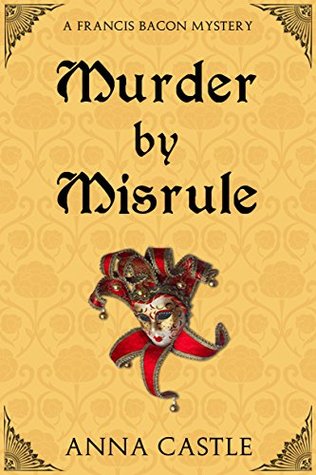
We were critique partners, writers who appreciated each other’s work. Though we knew each other’s real names, we connected and communicated by pen names, Anna Castle and Amber Foxx. We never met. Our friendship, though we shared other interests and agreed on some major issues, was centered on writing. Sharing your work in progress with another writer takes trust and respect. She critiqued my short story suite, Gifts and Thefts. She followed and appreciated my blog post essays. I was honored to critique Anna’s Francis Bacon mysteries, to become a beta reader when I was already a fan of the first books in the series. I love the characters, the historical depth, the wit, the originality, the settings—I could go on and on. To be able to contribute to her next work in any way, when the work was as good as hers was, meant a lot to me. I miss that partnership.

I also miss the social media interactions, the humorous exchanges, even the updates on the progress of the grass paths in her garden. I believe her fictional characters miss her, too. She told me how the Bacon series would progress, what would happen in future books. Books that will never be written. The real Francis Bacon went through difficult periods in his life which were going to make their way into the series. Perhaps the fictional Francis is spared those challenges, but Tom Clarady will never complete one of his great life goals. Perhaps in the world the characters inhabit, they carry on—and he does. Anna planned that he should.

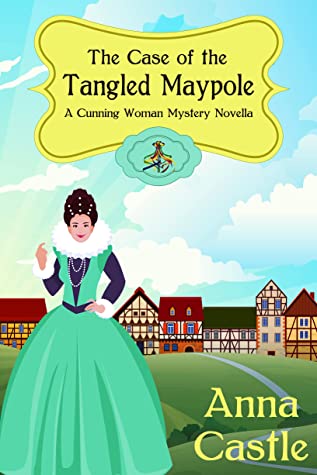
Elizabethan healer and herbalist Jane Moone must miss her author, too. I had an inkling where the Cunning Woman series was going, and was eager to see its fulfillment. These historical paranormal cozies set in a village where magic is real are as fully researched as the Bacon books. I admit the Moriarty series didn’t hook me, simply because I’m not fond of the Victorian period, but the one story I read was as brilliantly crafted as the rest of her work. Her cozies set in Lost Hat, Texas were her only modern mysteries, and I delighted in those.

I may always miss our exchange of creativity as writers. The trust with each other’s words.

This isn’t an anniversary of anything. It’s just something I needed to say, and have needed to say since February. I was prompted by a post on the blog Pleated Stories about friends we meet online and friends we lose.

Note: Alas, Anna’s web site address seems to have been taken over by some strange, rather frantic entity in a language I don’t speak. Her Goodreads page is still there, though. If you have not yet discovered her books, I encourage you to explore. Honor her memory through her characters. They live on.

Music and Writing

I can’t have background music. Either I’m listening, or I’m writing. Music totally absorbs me. I attended a concert of the Southwest Chamber Winds in an art gallery, and the effect on my mind and energy was profound. Pattern itself has energy, and has emotional and intellectual effects. Through pace, implied directions, unexpected transitions that somehow flow, mood changes, and pauses, music can create humor or suspense, can make you  wonder with every note what will happen next, and it has to both surprise and satisfy by the end. If it was predictable, it would be dull, but if it had no pattern or resolution, it would be noise, not music.

The concert made me want to write with the complexity, fire, and subtlety of classical music.


Reversals

The obstacle isn’t necessarily in your path; perhaps it is your path. I took a New Year’s yoga class in which the teacher used this theme. We can’t always remove our obstacles. Sometimes we learn to work with them and learn from them.

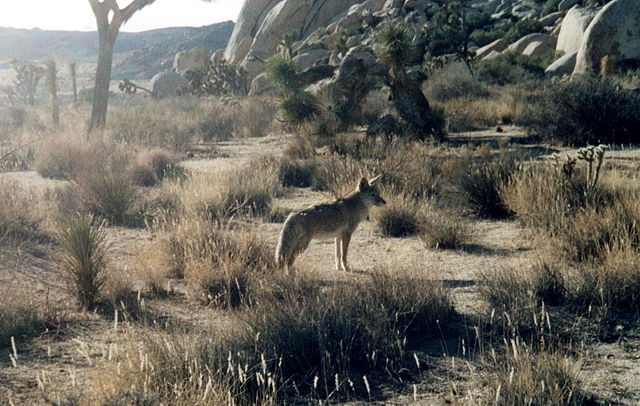
During my run a few days back, I heard coyotes singing.  Then they started yipping and growling, as if there was some kind of scuffle going on. They weren’t far ahead of me, and I remembered that a friend had once been followed by a pack of coyotes when she was hiking alone. Though coyotes almost never attack humans, running past this pack, whatever they were doing, seemed like a bad idea. Maybe there were just two—it’s coyote mating season—but maybe it was a fight with an outsider to their territory.  The noise stopped, and through the gaps between shrubs, I spied them trotting silently toward the section of the trail I was headed for. When in the presence of predators, I told myself, don’t act like prey. I turned around.

Danger is exciting on the page, but even the smallest danger doesn’t appeal to me in real life. Reversals, however, are interesting in both cases. I saw the landscape from a different perspective, since I usually go up the long hill rather than down. The same place can look quite new from the other side. And I ran further, since I had to retrace my steps.

That evening, my work in progress was so stuck it was putting me to sleep. Not a good sign.  I wasn’t sure how to fix it, but I told myself I was going to push through and not go out dancing that night, though there was a musician I would have enjoyed hearing at the Brewery, and I can walk there in five minutes or less. Still stuck, I gave in and went. My favorite dancing partner was there, and an acquaintance who is a mystery fan. I danced a few songs with one, talked story structure with the other, and then headed home, ready to write.

The problem lay in being too linear, telling the story step by step. I need reversals, a surprise, and something as energizing for the reader as a wild dance with a strong partner.