A New Mexico History Review: The Villista Prisoners by James W. Hurst

The great strength of this book is its emphasis on the ordinary people involved in the international incident at Columbus, New Mexico in 1916. The book is not about Pancho Villa. It’s not about General Pershing. It’s about the men who were captured during Villa’s raid on the small town on the border of New Mexico and Old Mexico. One of the Villistas captured was a twelve-year-old boy. Their stories—how they came to be in Villa’s army, whether or not they knew they were in the United States, whether they wanted to be doing what they were doing—were matters of controversy at the time.

The author is an excellent historical detective, learning everything about these men that he could. Many of were illiterate conscripts who had been forced into Villa’s army; others had joined because they feared the army of his opponent, Mexican President Carranza. They didn’t want to be at war at all, though, and this issue came up in their trials, as did other questions Could the governor of New Mexico pardon them? Shouldn’t unwilling, illiterate conscripts be considered innocent? But there was a precedent set in both the United States and in Scotland that a soldier who follows an illegal order is still guilty of a crime.

I will not tell you how everything turned out them through the twists and turns of their of their trials. The book starts with the raid, not from the point of view of the leaders, but of the town’s people. And it ends with the fate of equally ordinary people entangled in international and national matters. I recommend this book if you have an interest in history and like to understand not only what happened and why, but who was involved and how they were affected.


A New Mexico History Review: Deming, New Mexico’s Camp Cody, a World War One Training Camp

This history is detailed and yet never dull. Jim Eckles is a great storyteller, bringing the camp and the town to life through the unique experiences of individuals who trained there. The eventual demolition—the complete vanishing—of this camp in Deming is as interesting as how it came into being. When I told an old friend, a Korean War veteran, about this book, he said that his father—from upstate New York— had trained at Camp Cody when he volunteered for WWI. In numerous visits to Deming. I’d never heard of the camp, so I was intrigued when I found this volume at my local bookstore. As a New Mexico history buff, I thoroughly enjoyed every page. The characters make it worth reading, as well as insights I gained about our country’s entry into World War One through this particular aspect of it in a small New Mexico town. Since his father had been at Camp Cody, I passed the book along to Bob, and he said he was surprised how engaging it was. He couldn’t put it down.

Book Review: Heroes and Villains of New Mexico by Bud Russo

The short chapters in this historical collection cover times dating back to the Pueblo Revolt all the way up to the early days of space program research. Each character is thoroughly researched and portrayed with color and flair. I can’t possibly summarize all of the stories, but there were several that particularly struck me. Two had to do with a flood of the Dry Cimarron River, so called because it seldom flowed fully.

In the early 20th century, a tremendous monsoon filled the river to overflowing. One of the heroes in this book was a telephone operator named Sally Rook. By staying on the job despite the raging flood, she saved the lives of almost everyone in town as she called them while the storm and the waters closed in. Her courage truly moved me.

The aftermath of that flood allowed a cowboy named George McJunkin to discover what became known as the Folsom Site, with the famous Folsom points. It changed the understanding of prehistory in North America. McJunkin had been enslaved in Texas until age fourteen. After the Civil War, the free young man moved to New Mexico, became a cowboy, and worked in exchange for reading lessons as well as  money. He became a self-educated naturalist. He was riding fence when he found what he was sure were not modern buffalo bones exposed by the recent flood. And he noticed indications of human activity in the area. He tried to get scientists to study what he had found, but they ignored his letters and even the bones he sent. After all, he was just a cowboy. Many years after he died, the site was finally investigated.

The heroes range from people who made great discoveries to people who risked their lives or lost their lives to save others. Chester Nez, author of the outstanding autobiography, Code Talker, is one of those portrayed. I highly recommend his entire book, as well as the chapter about him in this book, I took my time reading it, getting absorbed in each vignette. The writing is a little over the top, but it definitely keeps you engaged. And I haven’t even mentioned the villains!

I choose the dirt road

I wonder why running shoes are designed to be pretty. My new ones even have white soles with green and blue treads, as if the person behind me in a race should admire them as I charge ahead. But I run where no one is around to admire my pretty feet.

I meant to take the paved route to the edge of the Elephant Butte dam, but the dirt roads off the side stole my heart and soles. Pavement says nothing to my feet. It slaps back. Dirt has texture and depth. Each step on a dirt road is unlike the step before—soft, rocky, stable, slippery, flat, or uneven. My speed on dirt roads adjusts to the nature of each surface. And underfoot are such amazing finds. A desert flower that tolerates ten percent humidity and the battering of spring winds. In pausing for the flower, I also looked up at the mountains and dared the vertiginous view of the arroyo below.

History lay on both sides of the road. The dirt was dark as if blackened with soot, and in it lay chunks of sturdy white china. Mug handles, mug bottoms, plates, all so thick you could knock your breakfast off the table and nothing would happen to this dinnerware. But something did. One piece had words on the bottom indicating it was made in West Virginia. There was a substantial quantity of it. Friends who know local history think I came across the remains of a Civilian Conservation Corps work camp. If the dishes could talk, they’d have stories, for sure.

Two ravens glided past a red rock cliff, so synchronized I first thought one was the other’s shadow.

My new shoes have now been baptized in dirt.

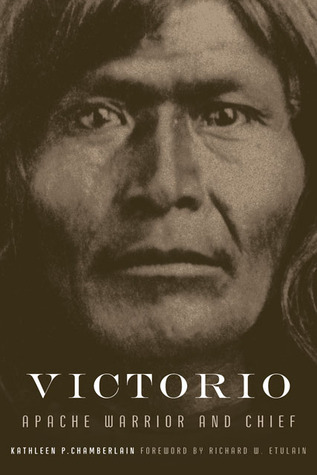
Review: Victorio: Apache Warrior and Chief, by Kathleen P. Chamberlain

I once said—meaning to make a respectful acknowledgement to an Apache friend—that Truth or Consequences, the town where I live “used to be Apache land.” He replied, “It still is.”

Yes.

It still is.

*****

Living in New Mexico, a state with more tribal lands than most, I’m aware of the Indigenous cultures that thrive here. Reading this book made me far more aware of how the rest of us got here—the complexity of the fighting, negotiation, and politics. Geronimo is famous. A mural of his face greets you with a powerful glare as you drive into town. Victorio is less well known. His younger sister, the warrior and seer Lozen, may have more fame. But his story is worth reading. New Mexico’s story is incomplete without him.

The author did extraordinary historical detective work to reconstruct his life and the events that led to his death, his final battle. She explores Apache culture and pre-reservation life, and reveals the misunderstandings, failures, sincere efforts, and also the insensitive ignorance on the part of various agents of the U.S. and Mexican governments that drove Victorio’s band from their sacred land and its springs and drove them to keep fighting. Chamberlain’s analysis of the Apache wars is insightful.

This isn’t light reading, but it’s not dry or difficult, either. History can be a page-turner, even when you know how it ends.

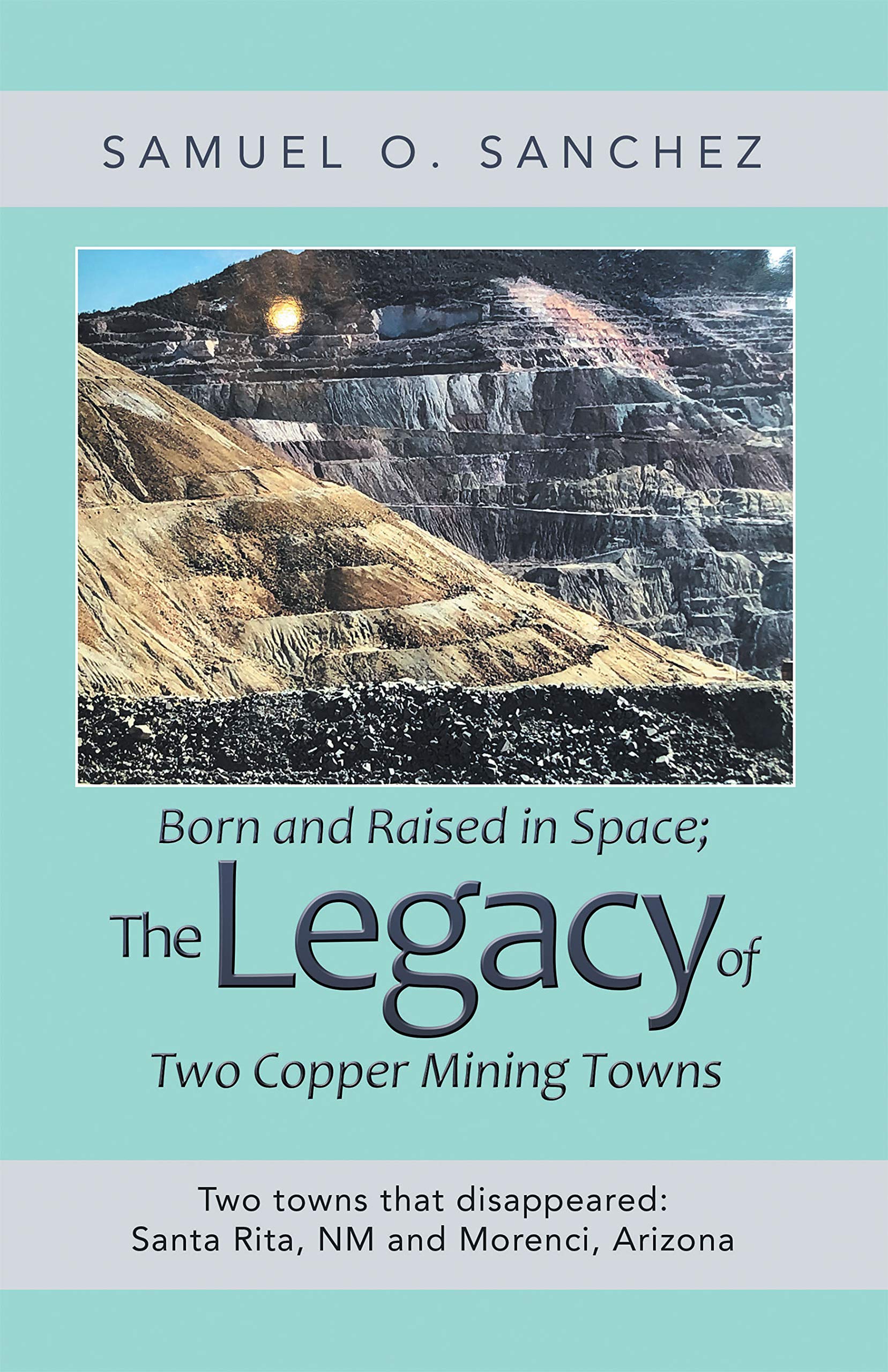
Review: Born and Raised in Space; the Legacy of Two Copper Mining Towns : Two Towns That Disappeared, Santa Rita NM and Morenci AZ

This memoir, told in short vignettes with often humorous lessons at the end of each, is an adventure as well as an intimate exploration of a man’s life from childhood to his elder years. The author portrays the mining towns where he grew up, Santa Rita NM and Morenci AZ, vividly. History is made up the lives of ordinary people, and such a close look at one life makes it clear that no one, really, is ordinary. Regular folks are colorful, original, and unique. This personal history also reminded me how much the world and the state of New Mexico have changed in one lifetime, how different the mid twentieth century was from the early twenty-first century, culturally, socially, and technologically.

Sanchez is fearlessly honest and impressively resilient. If he did something foolish as a boy or as a college student, he tells you. If his career or his love life went well—or not—he tells you. Reading this book is like hanging out with a great raconteur, a man with a long life, a sharp memory, and a willingness to take chances. An electrical engineer, he defies any stereotype of engineers as being on the boring side. I carried this story with me as my EV charging station read, so I was often reading it in public places and laughing out loud.

The author and his wife had the table across from mine at an event for local authors in Las Cruces, NM, and the subtitles and the cover picture on his book fascinated me so much I forgot to ask about the main title. I wish I had, because I don’t know what it means. Born and raised in space? Oh well. If you read the book and figure this out, let me know.

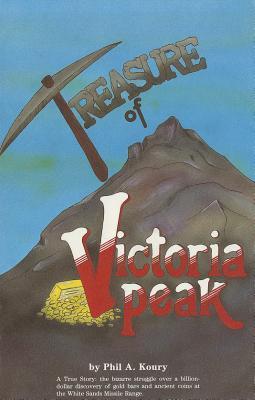
A New Mexico Mystery Review: The Treasure of Victoria Peak

This true story would make a great movie, featuring a hidden treasure and a huge cast of characters trying to get hold of it despite the claim of the stubborn widow of the original finder, Doc Noss.

Doc, a Cheyenne foot doctor of no known medical credentials, had an office in what was then Hot Springs, now Truth or Consequences. He was reputed to be skilled in treating foot ailments, whether or not he was real doctor. Once he found treasure while out deer hunting, his life changed, and not for the better. He had a lot to worry about—more gold and ancient Spanish artifacts than he could remove from the cavern in Victorio Peak. (The mountain is named after Victorio, the Apache war chief. I’m not sure how or why Koury or perhaps his publisher renamed it Victoria.)

The book chronicles Doc Noss’s adventures, his sudden and dramatic death, court case after court case, subsequent treasure searches, and Ova Noss’s years of fighting to retain her right to the treasure and get permission to dig it up. Once the peak was made part of the White Sands Missile Range, Mrs. Noss had to go up against everyone from the U.S. military and F. Lee Bailey to the woman who claimed to be her late husband’s other widow.

Attorney for Mrs. Noss Phil H. Koury has a penchant for detail. As you might expect, he tells his story with an emphasis on the legal battles, but it’s never dull or confusing, and he has a humorous flair. He recounts the treasure hunt scenes he witnessed with apt observations of character and settings. The process of solving this mystery during a time when communication was slower increases the suspense. I rooted for Mrs. Noss all the way. Since this is a true story, the plot doesn’t necessarily turn the way a work of fiction would, but that makes it no less compelling.