A New Mexico Mystery Review: Spider Woman’s Daughter

While continuing the characters and settings from Tony Hillerman’s books, Anne Hillerman has her own style and voice as a writer. I didn’t feel as if I was reading one of her father’s books, but I felt fully at home with her mastery of the series. She has the understanding of Navajo culture that’s central to the stories, and she knows the characters well. Jim Chee, Joe Leaphorn and Bernie Manuelito are familiar and fully developed, with touches ranging from Chee’s off-beat humor to Joe Leaphorn’s meticulously detailed little notebook to Chee and Bernie’s deep spirituality. Even the secondary characters like Captain Largo are immediately recognizable as the same people from the earlier part of the series.

The setting is portrayed vividly— the land, the cities, the small towns, and the people. Accurate details and human touches make the places come alive. The bone-jarring washboard roads going to Chaco Canyon have livestock wandering them. A local can’t give directions for driving in downtown Santa Fe. The groundskeeper Mark Yazzie, a minor character, stood out as delightfully real and original. The tenacious and amusingly ferocious Gloria Benally is another unforgettable supporting character. Even if I weren’t a New Mexican, I think Hillerman’s writing would make me hear the voices, feel the air, and see and smell the place, from the plants in Santa Fe gardens to the hot wind in June before the rains come.

This book kept me awake at night reading it, and I found myself thinking about it between times, wondering what would happen next. The suspense is effectively structured, but it’s depth of the relationships that make the story powerful.  Bernie’s dedication isn’t just to her job, but to people, and that dedication drives the story.

It was intriguing to see characters from Tony Hillerman’s A Thief of Time come back. I hadn’t read it for a long time, and think it would have been fun to re-read it before entering this story. I’m going to rediscover it after instead.

*****

If you’re a regular reader of this blog, you know that I follow a review with an author interview. My interview with Anne Hillerman will come later, paired with a review of her next book, Rock with Wings.

A New Mexico Mystery Author Interview: Rebecca Grace


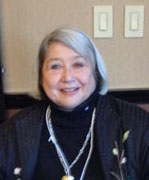
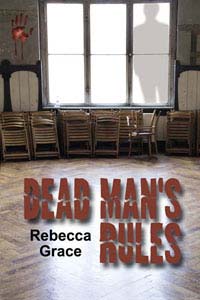
BeckyMartinez-1DeadMansRules-4Last week I reviewed Rebecca Grace’s Dead Man’s Rules. This week I’m happy to have her for an interview about the book and her writing life.

Rebecca Grace is the pseudonym of Becky Martinez, a former broadcast journalist who has worked in TV newsrooms from San Diego to Seattle and from Denver to Los Angeles with a stop in Las Vegas for good measure. After 30 years she left the newsroom for five years in public relations before turning to the world of fiction writing full time. She also teaches writing classes online and has presented workshops at a number of writing conferences.  Her short story, “Trouble in the Rockies” was part of an anthology, The Trouble with Romance, that was a 2006 New Mexico Book Award finalist. Her latest book, is Dead Man’s Rules, was published by The Wild Rose Press. It is the first of a three book series. Her next book will be a humorous cozy mystery, Blues at 11, coming in January 2015 from The Wild Rose Press.

AF: How has your background in journalism has influenced you as a fiction writer? I’m curious about the thinking processes, the writing skills, and the research skills, as well as the authenticity it brings to Cere’s character.

RG: When I first started writing stories at the age of 12, I knew I would always want to write in some form. That turned me to majoring in journalism in college where I worked for the school newspaper, the CSU Collegian, and I never looked back. A lucky break got me into television where I had the opportunity to work with some great news people who helped me with my writing.  Several skills I learned as a journalist have carried over into my fiction writing. One was making certain that each sentence made sense and being willing to edit whatever was written. That made it easier for me when it came time to work with an editor. I always knew things could be written differently and I was willing to improve. Another thing I learned was to re-read my work out loud. It might make people around me crazy to hear me reading my work as I write, but in a TV newsroom lots of us did it so we knew how it would sound on the air. It also helps to pick out awkward phrasing, and it’s great for dialogue.  Being a journalist also made me a slave to deadlines. You couldn’t just say you didn’t feel like writing and you might do it later. You didn’t have the luxury of waiting. You had to write no matter what every single day. And I pretty much do that. If I’m not writing every day, I miss it. When I’m not writing, I’m researching. As a journalist I’m very aware of my surroundings and the people around me and always looking for a story (or book) in almost any situation. That partly influenced my view of Cere. I can see her looking for a story, even in an old newspaper story. But not just any story—a story that helps her career.

AF: How much of you shows up in Cere?

RG: I think a part of me shows up in most of my characters, or perhaps my characters have qualities that I wish I had.  The part of Cere that is like me is that person who is determined to find out the truth and get to the bottom of things. I think, though, that I probably wouldn’t carry things as far as she does—that may be the part I wish I was.

AF: What made you choose the northern New Mexico setting?

I grew up in southern Colorado but three of my grandparents were born in New Mexico and we visited there often. Our family vacations were usually spent in the mountains and towns of northern New Mexico. My uncle worked as a cowboy on the Vermijo Park Ranch for years and we would drive over to see him every summer and sometimes camp outside the cabin where he was working. He’d take my dad and brother fishing while my mom and sister and I went hiking in the hills. It was so beautiful and untouched. The fishing was great and sometimes we’d wake up in the morning and there would be deer right outside. I loved that part of the country. Then we would come down into Cimarron or Raton or drive over to Questa, Eagles Nest or Taos. Later my parents retired in Trinidad, Colorado, which is only ten miles from the state border so their favorite places to drive were northern New Mexico. They’d think nothing of going down to Springer or Maxwell for lunch or over to Folsom, or Capulin.

I still have ties to New Mexico because my older brother retired in Santa Fe several years ago. Just like me he loves the region and the special nature of the people who live there. He spends a lot of time exploring and whenever I visit we always hit the road and just see where we end up. When I was there in November we ended up in Abiquiu because he had never been there and he had been reading about Georgia O’Keefe. But we don’t just do the tourist haunts. We like to get on the back roads and just drive.

AF: Is Marco Gonzales based on any historical figure? If not, what inspired you to create this character? He’s dead throughout the whole book and yet he really came to life.

RG: Marco was one of those characters who just seemed to keep growing in my mind for years. He is totally fictional, but the first time I wrote the story it was partly in his viewpoint. He is a tragic figure who kept speaking to me, sort of like that ghost figure that spoke to Cere.

AF: I loved the ghost tour of the old dance hall. I’d have gone on it for sure, if I’d been a kid in Rio Rojo. Have you ever seen a ghost? What do you believe about them?

RG: I’ve never seen a ghost, though I like to believe that some people see them and they might be out there in the form of a spiritual connection.  My description of the ghost tour of the old dance hall was one of those things that was a real life incident—just not the ghost part. There is an old mining company store right outside one of the Vermijo Park gates that you can’t get to anymore where there is an old handprint on the wall. The story was that the handprint was made by a bloody hand, though I don’t know if the person died. My college friends and I sneaked in one late afternoon to see it, and I think I sort of glorified my memory of that afternoon as I described the building. We did see the handprint, though, and it did give us all a spooky sensation.

AF: Freeda lived on a commune for a while as a child. (I notice her name is spelled Freeda, not the normal Frieda. Nice hippie touch.) What made you decide to include this connection to the Taos area hippie communes?

RG: Back in the late 60s and early 70s, my uncle complained about the hippies who would try to settle at Vermijo and he would have to run them off the privately owned ranch, so I was very aware of the hippies in the area. I also spent my early college years at Trinidad State Junior College and we would go over to the Taos area. We also had several communes that sprang up right outside of Trinidad. A few of my buddies were always threatening to drop out and go live off the land until we went over to visit and they saw the primitive living conditions and how hard people were working to survive.

AF: There’s a fair amount of cooking in Dead Man’s Rules. Two of the important secondary characters are restaurateurs, and their establishments come to life on the page.  Are you a good cook? Are these familiar recipes or did you have to research the food?

RG: Okay, I have to admit that I am not much of a cook, but the one thing I can do is make a mean pot of red chile (I actually won a cook-off once) while my younger brother is great with green. My older brother spends much of his time going from place to place in Santa Fe and sampling both!

As for the restaurants, they are a combination of so many places I have visited. As I mentioned, my mom and dad were always going to different small cafés in the small towns in northern New Mexico and I always loved going with them. The food is always tasty and there is plenty of it. My family still loves to visit those small restaurants and cafés when we are down that way.

AF: Red or green?

RG: How about Christmas?  Or for those unfamiliar with that saying, I like both red and green.  It actually depends on my mood at the time.

AF: Tell me about your writing classes. What do you like best about teaching?

I teach classes on a variety of topics. In the past I have taught regularly for Savvy Authors. This month (January) I am teaching a villain class for Colorado Romance Writers.  Next month I will be teaching a class on writing short stories for Maryland Romance Writers.

For me the best part of teaching is watching my students develop. I enjoy their enthusiasm and get a special feeling of accomplishment when one of them says they made a breakthrough in their writing as a result of my teaching.

At the same time, I enjoy learning from my students. There are times I find myself noticing problems in their work and then I realize I am doing the same sort of thing. Helping others also helps me improve my own writing.

AF: I hope to see a lot of Freeda in the next book. Will I? When does it come out?

RG: You’ve hit the nail right on the head. When I first put Freeda into the book I found that I had fallen in love with her as a character. She was everything I would have liked to be if I didn’t have to worry about anything or had someone around like Cere to take care of me. She was such a joy to write that I found she was taking over the story. The only way to calm her down was to give her a book of her own. And that is the second part of my series, Dead Man’s Treasure, as she continues to look for her Dad and get caught up in a mystery of her own. I am putting the finishing touches on it right now and hopefully it will be available within the year.

AF: I’m looking forward to it. Thanks so much for being my guest.


Buy Links

http://www.amazon.com/Dead-Mans-Rules-Rebecca-Grace-ebook/dp/B00I28UXFY

thewildrosepress.com

On the Web

www.rebeccagrace.com

www.Rebecca-grace.BlogSpot.com

www.rebeccagracewrites.wordpress.com

www.writethatnovel.com   (get help with your writing)

Twitter: @RebeccaGrace55

Facebook: https://www.facebook.com/rebeccagraceauthor


New Mexico Mystery Author Interview: Donnell Ann Bell

Donnell crop 48fd8ca735e9b58e796e7838d475801b

Donnell Ann Bell grew up in New Mexico and today lives in Colorado. A homebody at heart, she leaves the international thrillers to world travelers, and concentrates on suspense that might happen in her neck of the woods – writing SUSPENSE TOO CLOSE TO HOME.  She is the author of The Past Came Hunting, Deadly Recall and Betrayed, all of which have been e-book best sellers. Her fourth release, Buried Agendas, is due out November 6th and is available for preorder on Amazon Kindle. Her books have won or been nominated for prestigious writing awards, including The Epic Award for Best Thriller Suspense, Greater Detroit’s Booksellers Best for Best First Book and Best Single Title, and the Daphne du Maurier Award for Excellence in Mystery Suspense. Along with retired police officer veteran Wally Lind, Donnell co-owns Crimescenewriters, a Yahoo group for mystery/suspense writers. www.donnellannbell.com

Last week I reviewed her book, Deadly Recall. This week I’m happy to have her as a guest to talk about that book and about her writing process.

AF: You have some great turns of phrase. Examples: “the kind of woman who invited a man to look but don’t cross,” “catching her mother’s heat-seeking gaze,” and “looking like a poster child for the uncomfortable.”

Are your good lines like this the outcome of slow labor or sudden inspiration?

DB: These are such great questions, Amber.  It depends. Once in a great while something brilliant comes to me; other times what I think is brilliant falls flat and my editor says, “Huh?”

AF:I love your secondary characters. They are never just extras, but real people with personalities. Where did Father Slater come from?  And Mr. Lucero and The General? Did you plan and construct them, did they pop up whole, or somewhere in between?

DB: Oh, thank you!  I loved these secondary characters in Deadly Recall.  Originally, don’t tell anyone, I had planned to eliminate one of these characters.  They were so compelling, and held firm that they wanted to stick around.  They very much came fully developed.  I just knew that Father Slater was from Boston, and came from a family of cops.  Mr. Lucero was the same, and his cat . . . I knew nothing about Russian Blues. Nothing.  But the General had to be Russian to compete with his namesake.

AF: An influential teacher is a key part of Deadly Recall. Did you have a teacher who inspired you or motivated you at some point in your life?

DB: You caught me.  I had the meanest music teacher ever.  I played the piano by ear. I wasn’t a prodigy, but I could listen to a tune and play it afterward. My music teacher highly discouraged that.  Of course she was a nun.  I wasn’t fortunate to have a Sister Beatrice in my life, but I did have two nuns who came awfully close and discovered my love of writing.  When other kids were writing about space aliens and chocolate Chips Ahoy cookies, I was writing about a Texas town surviving a drought.  My sixth and seventh grade teachers, both Ursuline nuns, gave me improv assignments.  “Let’s see what you can do with this.”  They encouraged me, and to a child, that meant everything.

AF: You are one heck of a plotter. No loose ends, no “deus ex machina” solutions. All the gears mesh beautifully. Do you create the storyline first? What’s your process as a writer?

DB:  I had a firm plan where Deadly Recall was going, and knew who the murderer was from the start in the draft.  Then I attended a Donald Maass seminar in Albuquerque.  He said if you know who your killer is, chances are the reader will, too.  I was determined I was right and he was wrong.  But at the very end of the book, I weakened and a different killer showed up.

As for writing, I’m a linear writer. I wrote Deadly Recall scene by scene, and because I knew this topic so well (I’m Catholic) I knew what types of people would surround Eden, my protagonist. What’s more, I knew their mindsets, so out of the books I’ve written, Deadly Recall came the easiest to me. The police procedure was, of course, rough, but I had Crimescenewriters and a lot of help from law enforcement experts.

I should probably tell you here that I encountered a lot of outside obstacles in writing this book. I finaled in a well-known RWA contest with two perfect scores. The coordinator was so excited, and the published judge who judged me said, “I can’t wait to see this in print.”  I truly had my hopes up. What happened later was that the final editor of the contest, out of six finaling entries, gave Deadly Recall an honorable mention. In other words, I came in dead last.

Later, when I pitched the book, another well-known editor said, “Nice idea, now put it under your bed, and write something else. Catholic stories don’t sell.”

I couldn’t give up on this story, however. It finaled in the 2010 Golden Heart. The book was with a New York publisher at the time, when Bell Bridge Books made an offer on The Past Came Hunting and also Deadly Recall. I was so flattered when the NY editor said, “This is my loss.”  I do feel I made the better choice as a new author. I might have been lost at a larger house.  Bell Bridge Books has really stood behind me and my writing.

AF: As a former New Mexican, what’s your favorite NM memory?

DB: Oh, gosh!  This is probably the hardest question you’ve asked me, Amber.  So many invaluable memories, so many that shaped me.  I grew up in Farmington, New Mexico and attended Sacred Heart Catholic School.  I had so much diversity around me, Hispanic, Navajo, Caucasians. I went roller skating on the reservation in Shiprock, New Mexico. I went out to Navajo Lake to water ski and to swim. I never realized racial tensions existed until I was in high school, which is a terribly sad story and too long for this interview.

I have the utmost respect for the Indian culture, as some of these people were my closest friends. I lived in New Mexico for 18 years. I’ve lived in Farmington, Albuquerque and Las Cruces. My husband grew up in Tucumcari. We’ve traveled every inch of that state in his job. We have family there and it’s home for us. So many wonderful memories.

AF: Tell me about some of the research you did for this book. It seems it must have involved law, police procedures, the Catholic church, music, psychology and medicine.

DB: I am a former court reporter, so I had a good understanding of the law.  I did contact Leslie Budewitz* a time or two and Shaun Kaufman and Colleen Collins.  These people are invaluable resources. I have a dear friend who is psychologist and we talked at length what Eden might have gone through.  Most of it came from experience, though, and from my heart.

AF: Who are your favorite writers? What is it that you like about them?

DB: My favorite writer for International thrillers is Daniel Silva.  I was inspired to write and most probably developed my love of police procedures by Lawrence Sanders of the Deadly Sin series. I love Taylor Caldwell’s epics.  There are so many mystery and romantic suspense authors I probably should quit before I leave someone out.

AF: What are you working on now?

DB: I am writing my first suspense series for Bell Bridge Books.  It’s a challenge and a lot of fun.  I have a romantic suspense release coming out November 6th called Buried Agendas.

AF: Does your husband read your books?

DB: Ha!  He does now that I’m published.  To be fair, I asked him to read my first book, Loving Montana – the one that truly should be, and will continue to be under my bed.  I found it a few hours later on the coffee table, minus a husband.  Later, he returned from the library with “The History of Math.”  I said to him, you would rather read “The History of Math” than my novel?  He said, “You never know what people want to talk about at parties.”  I assumed from there that my work would never be on my chemical engineer husband’s to be read-list. He’s read all of the published books now, and paid me an off-handed compliment, by saying, “Hey, you’ve gotten better.”

AF: Thanks, Donnell. You’ve been a delightful guest.


*Note: Author and lawyer Leslie Budewitz has a blog that will appeal to mystery fans and mystery writers. http://lawandfiction.com/blog/



Deadly Recall - screen

A New Mexico Mystery Review: Deadly Recall

This is the first of a series of New Mexico Mystery features. In true New Mexico fashion, I don’t have schedule, but will post these at random intervals when I find the right books. (If I find a NM book I don’t like, it won’t be featured here, though I may review it elsewhere.) I’ll be following each review with an author interview a week later. The Land of Enchantment is a diverse place, and I hope to share a wide range of stories that highlight its many faces.


Review

 Equal parts mystery and romance, Deadly Recall by Donnell Ann Bell is tightly plotted and suspenseful, and has intriguing three-dimensional characters. With the male lead being a police detective and the female lead a defense attorney, conflict is natural to the plot and situation. (I found this to be a refreshing change after reading a number of romances in which the conflict felt contrived.) Kevin and Eden have a delightful and believable first encounter that sets both the love plot and their interwoven roles in the mystery plot in motion. Their attraction to each other is portrayed with depth, and their relationship in progress is often charming.  Bell has a knack for witty, natural banter between lovers and friends. Eden occasionally makes decisions which made me want to shake her but I could see that was her nature, not a plot contrivance. It made me empathize with Kevin.

The book is set in Albuquerque, showing the city that its residents see. While in some ways the protagonists could be from anywhere, their homes or hobbies have local flair. Eden’s loft near Old Town felt like a real part of the city, and I liked the very Albuquerque detail that Kevin is part-owner of a hot-air balloon. A number of the supporting characters feel like part of the local scene, people who put the quirky in Albuquerque, such as Eden’s client the vegan, tattooed housepainter-and-artist, and her neighbor Mr. Lucero, who thinks his cat is the reincarnation of General MacArthur. The behavior of the chatty, nosy, Chinese food delivery guy struck me as typical of the way people in NM talk to strangers. All of the minor and secondary characters have personalities, even if they are only onstage for a cameo.

The author’s style is sometimes so original and well phrased that I wanted to applaud while reading. Once in a while the wording seems a little hasty or not quite polished, but not often. As a reader who loves the craft of writing, I spent far more time in a state of admiration than I did getting in touch with my inner editor.

The clues and red herrings kept me guessing and thinking in step with the characters as they worked through the layers of mystery. Some romances make it seem as if love is the end of the story. I liked the way this book kept going a little further. Not only the love story and the mystery plot are wrapped up (without a single cliché for wrapping), but also Eden’s inner experience, her rediscovery.

I look forward to reading more of this author’s work. Even if it’s not set in New Mexico.

Coyote on Broadway

Broadway, Truth or Consequences, New Mexico, that is. I saw the little canine trotting past the Bank of the Southwest after Art Hop on Saturday night.  He seemed in a hurry to get out of town, crossing our main drag and hustling down a side street toward the river. I hear his relatives across the river in the desert sometimes. The other night they were singing on Turtleback Mountain. They’re so musical, especially compared to the dogs who try to answer.  A few years ago I used to hear a donkey who tried to sing back—not very melodious either. Wildness has a sweeter voice.

One thing I love about my town is its closeness to the wild, though I’d rather not join the ranks of people who’ve found rattlesnakes in their yards. I can walk to the Rio Grande in a few blocks, the same route the coyote took, and watch the bats come out over the wetlands at sunset, or go into the desert and look for tarantulas coming out of their burrows after a monsoon rain. I only found one once—a velvety multi-legged shadow half-way out of her hole. When I run in the desert at Elephant Butte I encounter quails and lizards and jackrabbits on the trail, and very seldom any of my own species. I once surprised a mule deer that was sleeping under a juniper. With its size and the speed of its explosive take-off, it gave me an equal start, but probably a lot more pleasure than I gave it.

Santa Fe has a little wildlife, too. Gunnison’s prairie dogs are inclined to live there. The city has a relocation program, catching and releasing them into select wilderness areas, but there’s still a little dog town above the almost waterless Santa Fe River on Paseo.  I like walking past them. They’re smart, and have a complex language. I’ve heard that they recognize people and talk about us. Standing upright at the edge of their holes, paws folded on their little bellies, they stare back at me a long time before they scamper and squeak. Maybe to them I’m the wildlife that’s wandered into their city.


A Strange Beauty

New Mexico Magazine has recently been featuring items from its archives on its back pages. This poem from the June 1953 issue was resurrected in the June 2014 issue. There are lines in this poem that ring so true I wish I’d written them and others that sound forced or stilted to me. I’m sharing the whole thing so the gems can shine in their setting.


Where Whisper the Rocks


“Which state is your favorite?” the man asked

            “New Mexico …”

Sharp-clipped the answer came, and positive.

“Which part?”

            “The Southern part, the desert.”

As sharp the syllables, as positive as before.

“I love it. The Northern part, too—

That stretch, now, from Santa Fe to Taos,

The Sangre de Cristos, the Cimarrons—

There’s beauty and grandeur there—

But the desert …

That part from El Paso to Lordsburg,

And up to Santa Rita where

Prays the Kneeling Nun at nature’s rocky altar …

I’ve never known wherein lies its allure

Except that it takes hold of man

Like the spirit of the one woman he cannot do without.

A strange beauty the desert has

And a harshness that’s soft as love itself

To the heart that feels it …

            Yes, I’ll take the desert, friend

            And I’ll take it in New Mexico

            Where Whisper the rocks themselves,

            ‘Vaya con Dios, amigo.’”

By Sam Lesky. New Mexico Magazine Vol. 92, issue 6, p. 72


The words that grabbed me are these:

… it takes hold of man

Like the spirit of the one woman he cannot do without.

A strange beauty the desert has

And a harshness that’s soft as love itself

To the heart that feels it …”

It takes hold of a woman, too.

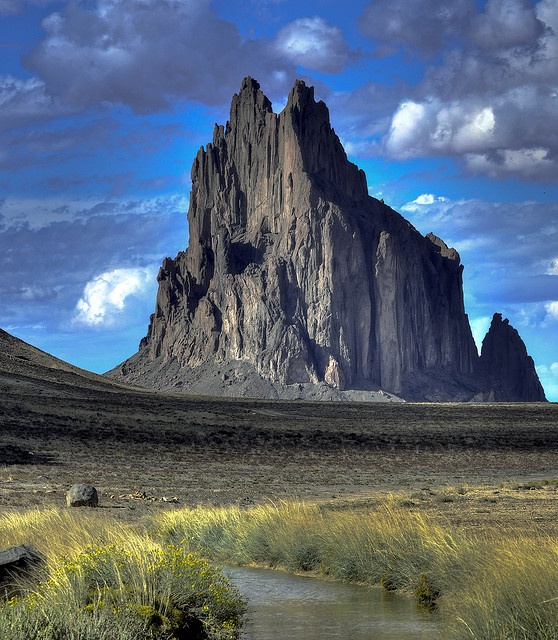
Here’s a picture of the rock formation the poet refers to

http://www.pbase.com/aw11mr2/image/87186372

Virtual Tour of New Mexico, Part Two: Music in Santa Fe, a trip to T or C, and Desert Beauty

This started as a virtual tour of Santa Fe last week, but I decided to expand it to other locations as well.

First stop, music. Santa Fe Bandstand is one of the highlights of my summer. I enjoy the atmosphere and the range of artists, and as a writer of course I especially like watching the audience. Every summer I come up from T or C for a week or a few days, timing my trip for the performers I most want to see and hear.

Bandstand plays a key role in Shaman’s Blues. If you’ve read the book, see if reality matches your imagination.

Photo gallery

http://santafebandstand.org/galleries/bandstand-photos/

Not many videos available right now, but here are a few. My personal favorite among the bands in these videos—Felix Y Los Gatos. Love the blues accordion!

http://santafebandstand.org/videos/

This next stop on the tour is part of the “on location” visit for Shaman’s Blues. New Mexico Magazine recently featured an article on my beloved Truth or Consequences, where Mae moves in the beginning of the book. Read the article and you’ll see how an off-beat artist like Niall fits right in, and how a place like Dada Café just might happen. (I located it on Broadway in a building that has had a high rate of restaurant turnover.)

Turtleback Mountain is prominent in the picture that accompanies this article, and it’s in Mae’s view from her back yard.

http://www.nmmagazine.com/article/?aid=84968#.UxkFLdiYbDA

If my book or this “tour” made you fall in love with New Mexico, I recommend New Mexico Magazine as a way to keep the virtual tour going year round. They cover art, music, books, food, history, recreation, and their photography alone is enough to make the publication worth my subscription.

http://www.nmmagazine.com/

The final part of this tour is immersion in the natural beauty of the state. These pictures are not related to scenes in the book, other than the fact that one can’t drive on the interstate in NM without seeing something breathtaking, and that is part of Mae’s experience in her new home.

I discovered this photographer’s work at an outdoor art show in Santa Fe a few years ago. His way of seeing the world is attentive to grand vistas and subtle details, often in the same picture, and makes me feel the sacredness of the land.  He has a name that somehow suits his work—Amadeus Leitner.

The photo gallery could keep you in a state of exalted bliss for quite some time. Imagine the smells of sage and juniper, the breath of the wind, the texture of a rock heated by the sun, and you’ll be there.

http://www.amadeusleitner.com/

Welcome to the Land of Enchantment.