The Neighbors, Now Gone

Though I was accustomed to the lack of choice, I still resented it. Taking an afternoon walk on Tuesday November 8th, I turned south at the corner where my apartment building sits. North, south, and west were options, but I missed going east, walking down my block. I know almost everyone there, and I used to enjoy spontaneous chats with whoever was on their porch or getting out of their car. But for a year or more, I’d been afraid to do that.

In the middle of the block, in a brown-and-white trailer with a decrepit plank fence, lived a woman who hollered profanities and threats and a teenaged boy who was once taken away in an ambulance. She had three dogs, loud, aggressive, and prone to escaping. They hurled themselves against the fence, barking, when anyone passed by. They chased me twice, and one tried to bite the man across the street from me. They attacked a Great Dane being walked by a young man who had to climb on the hood of a car to avoid being bitten. Everyone in the neighborhood had called animal control repeatedly. We suspected the hostile woman might be a drug dealer. Why else would she keep such dangerous dogs? One neighbor dared return an escaped dog to her yard. She came out and demanded to know what he was doing. He told her, and she called the police on him for trespassing.

The owners of the trailer live in another city. I wrote to them about her and her dogs, but she didn’t move out. After a while, I didn’t see the boy anymore and imagined he’d been taken away from her, perhaps put in foster care or with nicer relatives.

Behind the trailer, on the same property, is a little house. It had a high turnover of tenants—good, quiet people, driven away. The last one to live there was, like the rest, quiet. I take care of the gardens at a friend’s vacation rental place between the problem property and my apartment building, and she spoke to me across the fence a few times as I was watering plants.

“You have such nice wildflowers,” she said, the first time we met. “I promise I won’t pick them.”

I assured her I didn’t think she would. Perhaps she was accustomed to people accusing her, not trusting her. Her skin tone, on the grayish side of white, her unhealthy teeth, and her neglected hair gave me the impression she had a drug problem.

But it didn’t make her a bad neighbor. She was pleasant and friendly. I offered her pomegranates from the garden once. Like everyone else, she didn’t like them and declined, but she thanked me. For safety, I carried pepper spray when I watered plants, and I wanted to ask her if the dogs in the trailer bothered her. But maybe their owner was her dealer.

When I came back from that walk on election day, a state police crime scene investigation vehicle was parked in front of the trailer-and-little-house property. My first thought was that Hostile Woman was in serious trouble. There wasn’t a sound from her dogs. What had happened? Then I realized the workers were going in and out of the little house.

I later learned from neighbors in my building that while I’d been on my walk, detectives went around knocking on doors, asking about the residents of the trailer and little house. One friend said he told the detectives to contact animal control, since they were the ones who’d interacted with Hostile Woman the most. We never knew her name. Or the name of the woman in the little house.

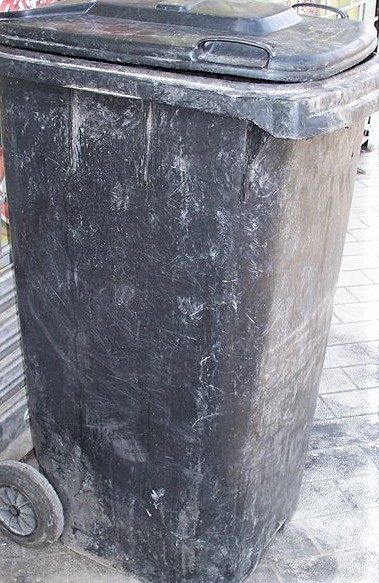
The next day, someone came to clean. They put the belongings of the woman I’d assumed was an addict in a trash bin and on the sidewalk in front of the house where I do plant care, blocking the driveway where a vacation tenant would have to pull in. I cringed, but I moved the stuff to driveway of the little house. I didn’t know what had occurred, but it couldn’t have been good. Then I approached the brown-and-white trailer. A young man was inside cleaning with all the doors and windows open. Stale tobacco stench reached me from twenty feet away. Poor guy—he had his work cut out for him. I asked him to please not put the trash in front of the house next door, he agreed not to, and then I said how good it was to see the trailer empty, to be rid of the scary dogs. He said something noncommittal, and I realized I’d been insensitive, treating the situation as good news. He might have been cleaning up a crime scene.

Still, I was relieved. I could once more enjoy the safe, sociable neighborhood I’d first moved into. I walked east on my block and had a curbside chat with neighbors a few houses down, two brothers, a musician and a plumber. The musician said he’d ventured into the trailer and its yard shortly after it became empty and the crime scene people had left. He found dog droppings everywhere, even indoors. I hate to think what might have happened in there—and still don’t know.

The plumber told me that a woman had been found dead in the middle of a nearby street at two in the morning on Tuesday the 8th. Apparently, she’d knocked on someone’s door, incoherent, and then staggered off. The crime scene investigators had been going in and out of the little house. I guessed the dead woman was the tenant and that she’d died of an overdose. Perhaps the owner of the bad dogs had supplied it.

Thursday, I moved the heap of bedding and the overfilled rolling trash bin from the little house out to the curb. The clean-up man hired by the out-of-town landlords wouldn’t know Friday was trash day. Though I felt strange and uneasy touching a dead person’s belongings, it seemed important to me—respectful, in a way—to have everything picked up. The sheets, blankets, and mattress pad from a single bed, the place where she’d slept, were too personal, too intimate, to be left lying on the pavement. Due to the lack of a county medical investigator, the dead woman herself had been left lying in the street for hours until someone from another county could come examine her. That was more than enough indignity for one soul.

The next morning, her few possessions were gone. I rolled the empty bin to the chain-link gate of the little house and took a moment to wish her rest in peace. Not much of a memorial ceremony. I hope it wasn’t the only one she had, but it might have been.
 

Wishes

I wish for more kindness in the world. For more genuine intellectual curiosity. I wish for open-mindedness, for myself and others. I had a fascinating conversation a few days ago with a woman whose world view was radically different from mine. We didn’t change each other’s minds, but we heard each other with respect and friendliness, not judgment. That took two people willing to listen. Willing to share. I’m glad I met her, and wish for a world full of more such conversations.

Reflections on Commitment, Listening, and Free Speech

On Saturday Jan. 21st, I got up at four-fifteen in the morning to drive through heavy fog to meet a bus with thirty-four other riders on it and found that so many people wanted to travel from this one small Virginia city that there were two buses at this site. More buses loaded at other locations. All over the country, people made trips like this, and many rose earlier and traveled farther.

On the trip, I sat with one of my yoga students, a retired teacher with years of experience herding middle-schoolers on field trips, and she was an inspiring as well as organized and helpful traveling companion. She has coped with her profound sadness about the election outcome by getting active, not only with calls and letters and donations, but by volunteering to help resettle refugees and to help feed the homeless. Every week she does something to remind herself that the world can be made a better place. Wherever we went Saturday, she radiated gratitude. She thanked the police and National Guard who were on security duty. She thanked the employee of the portapotty company who was cleaning a row of units where we stopped. She hugged our bus driver at the end of the trip.

A series of signs quoting Martin Luther King Jr. greeted us in almost all the front yards we passed as we walked from RFK stadium to the national mall. “I have decided to stick with love. Hatred is too great a burden to bear.” “We must accept finite disappointment, but never lose infinite hope.” And many more. People waved from their yards. One played motivating classical music on speakers from upstairs windows. When we were dispersing later in the day, some residents came out in support again. One man brought a keyboard out in front of his townhouse and played for us.

Sometimes people give up and think their vote won’t matter or their voice won’t be heard, but the march was a visual illustration of the fact that every person does count. Hundreds of thousands of people decided, “I’ll show up,” and went to great lengths to do it. A Native Hawaiian group came all the way to D.C. If large numbers of the marchers had had said, “My presence doesn’t count. Someone else will show up and that will be enough,” the impact would not have been the same.

I’ve never seen so many people in one place with the same purpose, moved by their ideals and convictions. The pussycat-ears hats were ubiquitous, on men and women (and one very happy baby). Maybe that’s part of why everything was so upbeat and peaceful. Sending a message by wearing a funny-looking pink hat may keep you from acting like a big bad warrior. The major themes of the signs protesters carried were women’s rights, respect for all people, inclusiveness, opposition to bigotry, support for the Affordable Care Act, reminders that climate science is real, and inspiration and humor.

Inspiration: They thought they buried us, but they didn’t know we were seeds.

Without follow-up action, this is just a parade. No. Today is day one.

Build bridges, not walls.

“Those who can make you believe absurdities can make you commit atrocities.” (A quotation from Voltaire.)

Love trumps hate.

Humor: There’ll be hell toupee.

Putin Free.

I’ve seen better cabinets at Ikea.

My personal favorite: Remember facts?

It can sound clichéd to say how diverse a group is, but this one really was. It included men and women, people of all ages from children to elders, people with disabilities, members of all races, people who were gay, straight, trans—you name it, they were there, and harmonious in each other’s company. I saw no uncivil behavior even when we got stuck in human gridlock on the mall for I don’t know how long—two hours? No violence, no arrests, and an amazing level of patience in a situation that could have brought out the worst in human nature. I was too far from the stage or the Jumbotron to hear a word the speakers said, but those of us on that part of the mall stayed upbeat and engaged. Aside from occasionally chanting “start this march” when we didn’t yet know we were too numerous to do it as planned, we passed our gridlock time making friends, reading the signs around us, singing and dancing and stretching and laughing. A popular call-and-response chant went like this: “Show me what democracy looks like.” “This is what democracy looks like!” This is what America looks like, too.

 People who disagreed with us were civil. Real life isn’t like the hostile land of social media. I didn’t notice any harassment. Non-marchers just walked on by. A group whose banner proclaimed they were Bikers for Trump had set up a small stage on a green off Pennsylvania Avenue. They didn’t have more than twenty people in their audience, mostly young women in the pink pussy hats who had—unwisely, I think—chosen to debate with them. We older and maybe wiser folks observed that the young women should just have left those guys alone. The bikers had as much right to be there as we did and they weren’t attacking us, just having their say. A genuine conversation with them could have been worthwhile, but understanding-focused dialogue is a learned skill.

Unskilled argument digs opponents in deeper. Maybe what the country needs next is a massive rally for listening, in which people from the various political islands can build bridges and have constructive dialogue. It would take courage. Participating in the mean-meme world of Twitter trolls takes no courage at all, no critical thinking, and no real attention, but meeting a fellow human face to face with commitment to show respect and compassion does.

One demonstrator’s sign bore a message I think all sides could agree with: Read More Books. The young man holding it was smiling.