Sparky’s is Real

In my endnotes for my books, I explain few details about settings and research. At the end of Soul Loss, I mention that the other businesses in the story are fictitious, but Sparky’s in Hatch, New Mexico is real. I got an e-mail from a reader who found that fact—quite understandably—hard to believe. Not that she thought I was lying. She was simply marveling that such a place could exist.

For those who have had a similar reaction, or have not yet read the book, here’s an update on that wonderful place from my latest visit to Sparky’s:

In the middle of a 100 degree Sunday afternoon, in a dance hall that serves no alcohol, the Desperadoes played Western swing while couples two-stepped on a dance floor framed by walls full of antique advertising signs and shelves and glass cases crammed with old piggy banks, cookie jars, radios and little robots. High on one wall, a Rajah Motor oil neon sign glowed between a couple of other neon antiques and a mounted deer head with a big hot pink butterfly perched over its right ear. An old metal diving helmet was displayed at the other end of the neon row. The bas-relief of the skeletal rider on a skeletal horse that I mention in the Sparky’s scene in Chapter Two is still there, but there’s always something new or rearranged.

Sparky’s is a living organism of sorts. The interior has expanded to include a third room between the restaurant counter area and the dance hall, and the décor there is Sparky’s best. The skeletons who used to occupy the passage to the restrooms are once again in somewhat piratical garb, and have joined a tableau over the door of the new room along with an old wooden jukebox and a collection of Catrinas, the elegantly clad skeleton ladies of the Day of the Dead.512px-Catrinas_2

You will never run out of “whoa, I didn’t see that!” discoveries at Sparky’s. The giant advertising statues outside have new companions. On top of a monster KFC cup, a green chile wearing lipstick and a bridal veil holds hands with red chile in a top hat as they beam at each other in nuptial devotion—a match made in Hatch. Sparky the robot, his fountain espresso cup ever-flowing, gets new decoration. Sunday he was wearing goggles and some red-white-and-blue stars. Inside, more musicians have autographed the wall behind the stage, where the one thing that never changes is the sign that says, “Do one thing every day that makes you happy.” If you’ve set foot in Sparky’s, you have already done that.

Need pictures? Check out Sparky’s Facebook page.

https://www.facebook.com/pages/Sparkys-BBQ-and-Espresso/74823382942?sk=timeline

Good food and good music in the strangest-best place for both.

*****

Catrina images courtesy of Wikimedia Commons

Ten Things I Love about Truth or Consequences

Conversations. I’ve never been in a situation where anyone was at a loss for words. The line in Bullock’s grocery store, Art Hop, the pool, a drum circle by the Rio Grande at night … it doesn’t matter. People will talk to you anywhere. I met all my friends here through random conversations with strangers.

Passion Pie Café. The place has art on the walls, art on the tables, great tea and coffee, vegan date bars, a free book shelf, and plenty of the above-mentioned conversation.

Hot springs. Of course. That used to be the town’s name. A soak can restore mind and body and spirit.

A history of healing. Magnolia Elis was an important part of the town’s life as a healing destination in the middle of the twentieth century. Her capacities as a healer were reputed to be extraordinary. Her building is a historic landmark now, with her name glowing on the roof in blue neon at night.

Critters. Bats come out at dusk to hunt insects near the Rio Grande, swooping and dancing over the river and the wetlands. If I go to the right spot at the right time, they surround me. Sometimes I’ve seen them crossing the stars as I lay in a hot spring at night. If there’s been rain late in the day, tarantulas emerge from their burrow to seek mates. Lizards seem to be everywhere—scurrying from one patch of shade to the next by day, occasionally sticking to walls and windows in the evening. They look bland at first, but on closer inspection I’ve found that some are pearlescent gray with a subtle peachy glow and others have a delicate brown-and-white checkered pattern with hints of orange. There are hummingbirds, butterflies, and also few of the most impressively vile bugs I’ve ever met, such as big black ants that can bite through your socks and a few summers ago we had a bizarre inundation of skunk beetles. I don’t want them to visit again, but they were interesting.

Stars. Okay, everyone in the desert gets excited about stars. Anyone who has ever come from the humid East to the dry West has had the same dazzling discovery: there are a lot stars up there, and they are really bright.

Rain. It’s so special when it rains in the desert. A big black cloud is not threatening but promising.

Turtleback Mountain. The serene turtle draped gracefully on its crest really looks like a turtle. (I can’t see the elephant in Elephant Butte, can’t even tell which of those gray buttes is supposed to be the elephant)  The turtle is always relaxed, as if he has just done yoga and is now in an amphibian’s version of savasana. With the recent rain he’s looking a little like a chia pet as the red-brown rock fuzzes up with patches of green.

Color. Much I love adobe-brown-pink-beige Santa Fe, I like the way T or C mingles that esthetic with wilder décor (and a lot of trailers). There is a candy-cane striped law office on Main Street. Homes range from adobe-normal to pink, purple, yellow, turquoise, and covered with murals. A shop on Broadway has Lakota-style ledger art on its stucco walls. The next one is bright green with orange and blue turtles parading over the door. An old van drives around town wearing the word “whatever” on its collage-covered side.

This isn’t a rich town; in fact quite the opposite—it’s always struggling. And yet it never collapses in on itself. It’s vibrant, full of art and originality.

 Do you know and love T or C? What’s one of your favorite things about it?

Out of the Office!

I love putting that “out-of-office” automated response on my college e-mail account every summer after the three-week June session ends. It means I’m only a writer for July and half of August. I do all my fall class preparation in June, so I feel free: no pressure or to-do lists hanging over me. It’s not that I dislike my job—I enjoy my interactions with students—but I do have a tight schedule during the academic year, keeping up with two off-campus yoga teaching jobs as well my faculty job. I spent a few days in Santa Fe to celebrate my freedom, and now it feels great to settle back into in Truth or Consequences, 100 degree weather and all. When it got down in the eighties in the middle of my first night here, I went out for a soak in the hot spring under a full moon. When I woke up blissfully late, the first thing I did was write, working on the fifth Mae Martin book during breakfast. That’s my idea of the perfect start to a day.

As I always do in the summer I went out in the heat yesterday. The sign on the Bank of the Southwest said 102, but I’ve been told it’s right over a very hot spot in the hot aquifer and is usually wrong by a few degrees. Convinced it might it be only ninety-nine degrees, I walked to the river. The Rio Grande was full and broad, its waters gleaming with reflected blue and green. The bright notes of a red-winged blackbird perched in a shrub on the bank, the sweet scent of the sunbaked plants and the yellow flicker of a butterfly in front of a vista of pink-red dirt stopped me in my tracks—and stopped time. Nothing existed but the moment itself.

As I headed home, a friend driving past on his way from the pool stopped to talk in the way of small towns, cutting off his engine and rolling down his window. There was no traffic for us to interfere with, not in July, and I stood in the middle of the street for a one of those unexpectedly soul-baring conversations which are the cherished hallmark of our friendship. Later, while I was doing yoga in the shade on the back deck, watching a promising flock of dark clouds being herded in by the wind, a white butterfly against the thick blue-gray stilled me again. Stopping is good. To talk, to see, to be. At night, soft rain fell, touching my face with its cool fingers while I soaked in the hot spring. Water from above, water from below. Doubly blessed.

While I’m in T or C, my internet connection is limited to our wonderful local coffee shop, Passion Pie Café, which closes at three, or a feeble little mobile hotspot, which is sometimes so slow I’m reluctant to waste time dealing with it. This is making me cut back on my social media interactions, so I’m out of the office to Facebook and Goodreads, checking in rarely and saying little when I do. This results in more time for writing. I have no idea what impact my partial absence will have on my social networks on those sites, but it’s having a great effect on the next book.

My summers in T or  are always healing and productive. Immersion in the living world, from butterflies to old friends, is as important for my creativity as the freedom to write.

The Road Not Noticed

Last week I mentioned that one of the delightful digressions in Pot Thief Who Studied Pythagoras is Hubie’s reflection on the superior merits of walking compared to driving. Some of my favorite passages in Edward Abbey’s Desert Solitaire are his rants about tourists who never get out of their vehicles when they visit a national park, and somehow think they have seen it that way. I thought about all this on a recent trip to cold wet rainy Maine, when I discovered a road I’d never noticed before. My sister, who lives there, had never noticed it either. We drove past it.

Sunday, after hours and hours of steady rain, I accepted that I couldn’t go running and did a lot of intense sun salutations instead. And then the sun came out. I’m not taking credit, and it didn’t stay out long, but at least the rain stopped. Since I wear barefoot shoes, I don’t run on pavement, but on grass and dirt, and my usual Maine-visit running route was swamped. So I took off down the verge of Route 1, traffic and all, and immediately spotted a road I’d never noticed before. Left turn into new territory.

It was beautiful, a hilly route through green deep woods, with a few houses set back among the trees. I ran in the narrow strip of dirt between the pavement and the vegetation, and crossed a little bridge over a gleaming silvery wetland that turned into a flowing stream. The road then led to an intersection with a spectacular view of a farm with open fields, well-kept old buildings painted the classic farm red, and a flock of freshly shorn sheep, a dozen white and one black. Their wet skins glistened in the soft light.

Driving, I don’t explore. I go somewhere. Running, I found a place of great beauty I doubt I could have enjoyed so much from the window of a car even if I were inclined toward idle Sunday drives. The sensory experience came from immersion in the outdoors as well as the unexpected. Frogs were bellowing and chirping, calling back and forth with songs as varied as those of the birds, making the Maine woods sound like a jungle.

A New Mexico Mystery Review: The Pot Thief Who Studied Pythagoras

Pot thief 1

There is no sub-genre within the mystery genre that could classify this book, and I mean that as a compliment. Pot thief and pottery shop owner Hubie Schuze is so unlike any other protagonist in a mystery series, I can’t compare this to other books and say “it’s like X.” It’s not.

So what is it like? Albuquerque.

I suspect Hubie might cringe at the phrase “Keep Albu quirky,” but it’s not a bad way to introduce him and his way of looking at the world and loving his city. Orenduff has a knack for describing people with a few clear images that pick out their defining peculiarities, positive or just plain odd, and this seems to be integral to Hubie’s point of view. He sees people as they are—and sees himself as he is, too, with humor and humility despite some strong opinions. His delightful digressions are as essential to the flavor of the book as seasonings are to a good meal. One of his rambles is on the benefits and pleasures of walking in the city compared to driving, and it fit with the way I felt while reading. I had such fun being in the moment with Hubie and his friends that I forgot to try to figure out whodunit.

Hubie figures it out, of course, and the end is surprising. I wouldn’t have seen that coming even if I had been trying to solve the crime. Don’t let my drifting with the Tao of Hubie make you think this book is unstructured. It isn’t. Multiple intriguing subplots—adventures that are sometimes humorous and sometimes simply human—are interwoven with the mystery plot.

Hubie’s capacity for friendship and generosity is on equal footing with his inclination to break a few laws. It’s this combination of rogue and good guy that makes him so engaging. The acts of kindness as well as the minor crimes Hubie commits while solving a major one kept me looking at the scenery, walking, appreciating every step of the way.

 ******

 My interview with J. Michael Orenduff will follow my review of the newest book in the series, The Pot Thief Who Studied Georgia O’Keefe. I’ve had the pleasure of reading it early, before the ARCs come out. Keep an eye out for that review and interview in the upcoming months. Meanwhile, get into the flow with Hubie with this first Pot Thief book.


Time, Space, and Connection

When I teach my college classes on health and wellness, I usually introduce some meditation techniques to give students a taste of managing stress through mindfulness rather than distraction. A few weeks ago a student stopped to talk with me after class with a question about meditation. This student was an experienced meditator, and something she didn’t understand had begun to happen. I don’t understand it, either—I’m not sure anyone really does—but I assured her that it happens to other people, and that it happened to me when I first began to practice meditation regularly many years ago. She had begun to have psychic experiences.

In yoga, these effects are called the siddhis, the extraordinary powers. In most meditation practices, these aren’t so much a goal as a side effect of deeper and higher awareness, though in shamanic cultures they’re considered a gift.

My student wasn’t troubled by her “side effects” at first. Her boyfriend found it amusing when she could tell time precisely without looking at a clock, or knew when her phone was about to ring and who would be calling. But then she had a vision of a car crash, so vivid she could see the color and make of the car as well as the way it spun and flipped. The next day she was driving on a major highway and saw that car ahead of her—and it had the accident she’d foreseen. She found it both terrifying and bewildering, to be able to know something like that and yet be unable to do anything about it.

About ten years ago in a stress management class, I mentioned the tendency for shared dreams, foreknowledge, or other psi phenomena to occur as a side effect of meditation, and student who had initially thought this wasn’t possible later contacted me privately with a story that still moves and stuns me. She dreamed that her best friend got shot, and on the same night, he had the same dream. It was so vivid and frightening, they called each other and she went to his house. They spent hours together and shared how much they meant to each other. The next day, he was shot and killed.

Why one person foresaw a stranger’s car accident and another foresaw the last moment of a friend’s life—and he foresaw it, too—I don’t know. I’ve had precognitive dreams and visions of important events, and also of incredibly trivial but strange ones. I can’t explain it. Time reshapes itself. Sometimes our losses, loves and dangers reach out to us. At other times, we simply slip through for no known reason, foreseeing oddities that grab our attention the next day, as if to remind us that the mind or soul isn’t confined to the linear progress of time. It lives where everything is happening at once—the past, the future, the present, and the possible.

New Mexico Mystery Author Interview: Vanessa A. Ryan

PaletteForMurderFront-(w)V.Ryan copy

Vanessa A. Ryan is an actress in Southern California. She was born in California and graduated from UCLA. When not writing or acting, she enjoys painting and nature walks. Her paintings and sculptures are collected worldwide. At one point, she performed stand-up comedy, so her writing often reflects her love of humor, even for serious subjects. She is the author of A Palette for Murder, A Blue Moon and the trilogy Horror at the Lake. She lives with her cats Dezi, Teger and Riley, and among feral cats she has rescued.

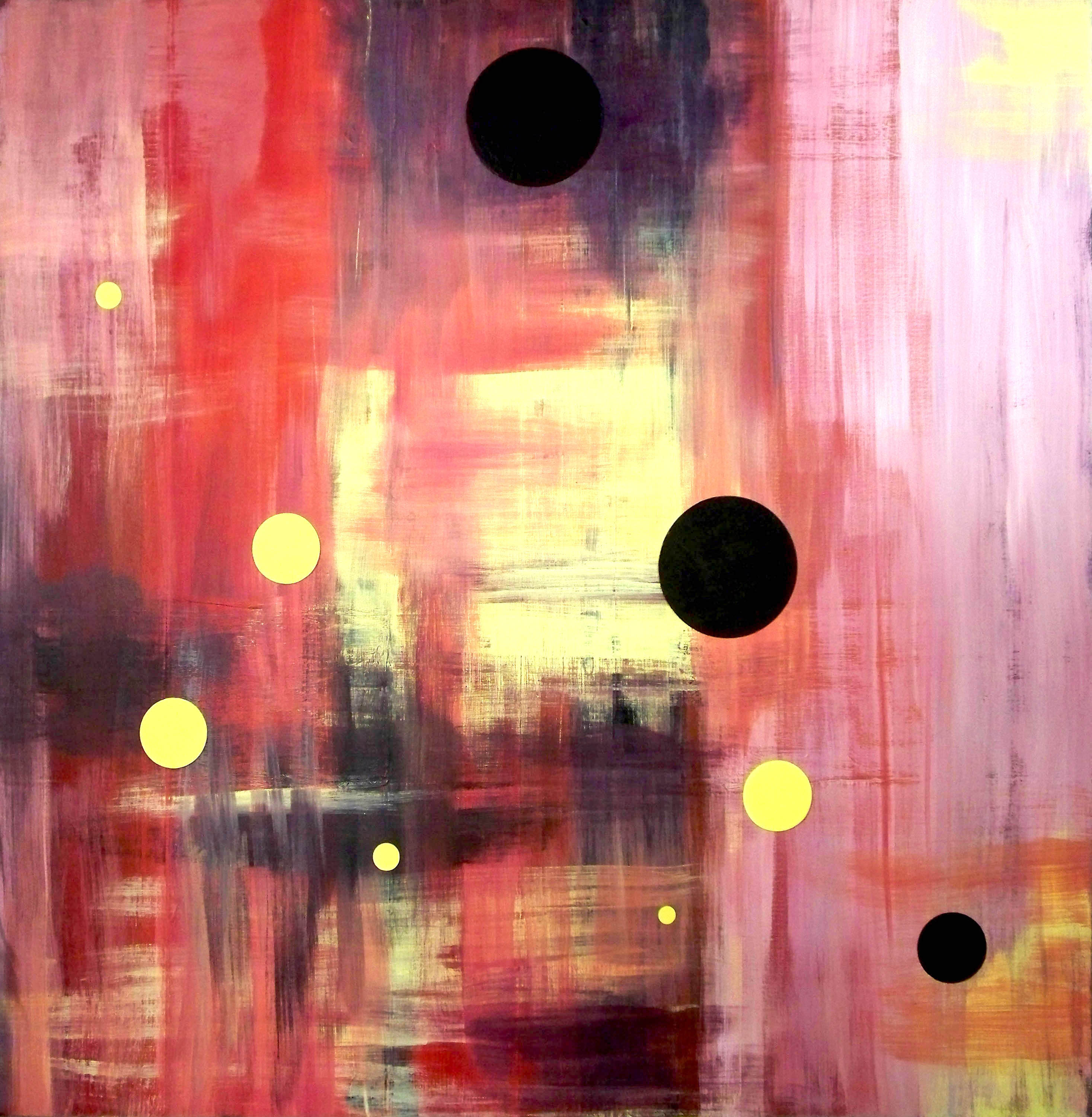
The art works featured in this interview are by Vanessa A. Ryan

AF: How did this book start? Tell me about your creative process.

VAR: The book started with a visit to Santa Fe. Originally, the story took place in Los Angeles but ended up in Santa Fe. But when I moved to Santa Fe, I changed the focus of the story to Santa Fe, with brief forays into California. Regardless, the ending of the story is similar. In fact, when I lived in Santa Fe, my house burned down and I lost the last version of this novel that was in my computer. I found half of an older version of the manuscript on the upper shelf of a coat closet. Everything below the shelf had burned, but the first half of the manuscript was intact, as well as the last page of it. I was overjoyed when I found the manuscript until I realized it wasn’t up-to-date and not all of it was there. I set it aside for quite a few years until I rewrote it last year.

AF: Amazing. It sounds as if this book was meant to be. What’s your relationship with Santa Fe?

VAR: I had visited Santa Fe a few times and then I lived there for several years.

AF: Tell me about your research. Did any of the galleries bring you behind the scenes?

VAR: I have exhibited my work in Santa Fe so I know the art scene. I also have an artist friend who lives there and keeps me informed about the galleries. I didn’t go behind the scenes for the book, though I have on other occasions.

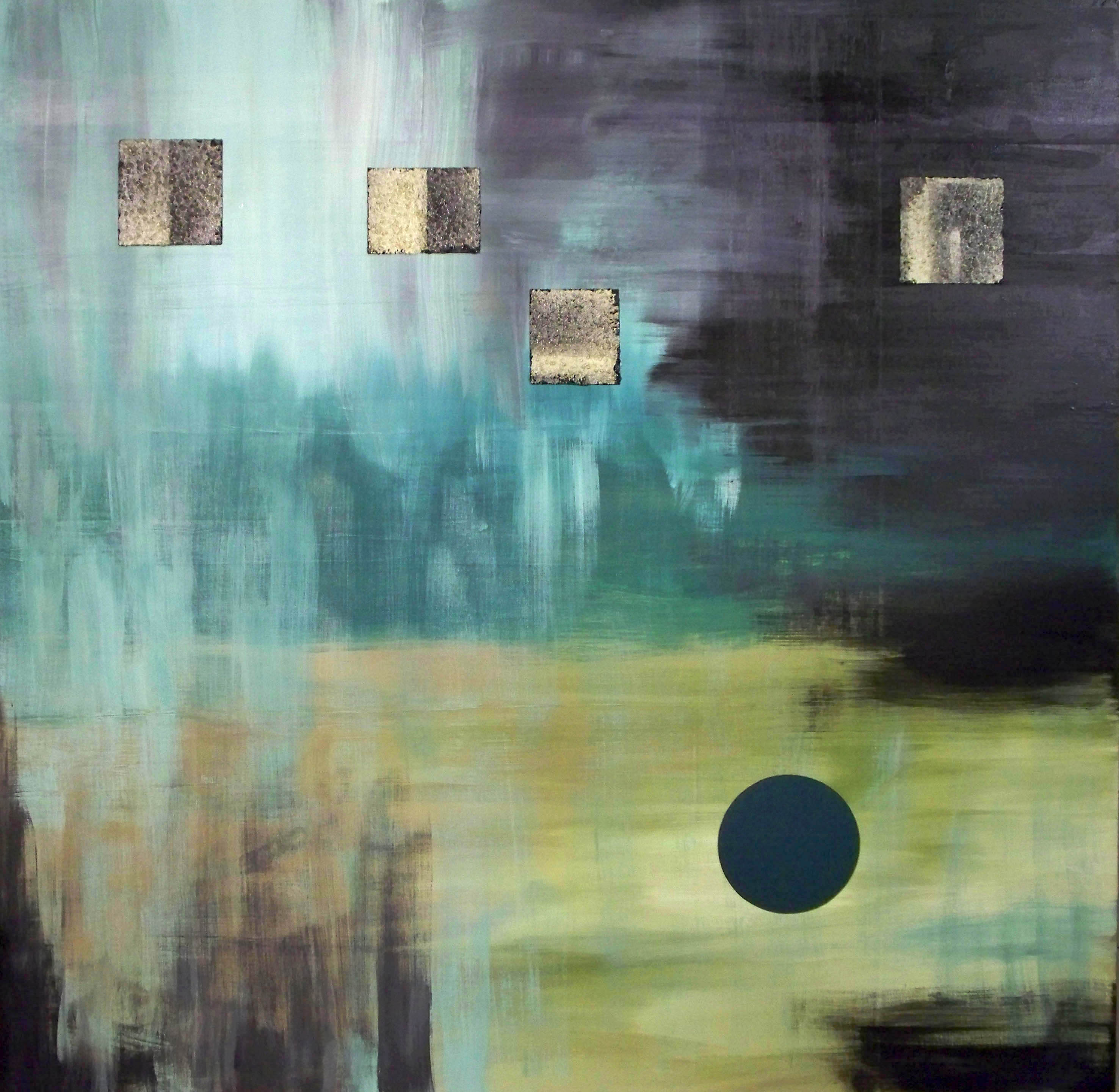
Ryan_Collage Series City Rain 54in x 54in acryl and wood on canvas 2009Ryan_Collage Series The Lake 54in x 54in acryl and wood and canvas collage on canvas 2009

AF: Have you done work like Lana’s job in the insurance industry? You seem to know the business inside out.

VAR: I wrote a series of articles for an insurance correspondence school as a freelance job, which is how I learned about that industry. Also, my first job out of college was a claims examiner for a large insurance company. I didn’t go in the field, but stayed in the office taking statements and writing up claims.

AF: I’m curious about that Picasso. Is this based on an actual or rumored work of his?

VAR: The last Picasso isn’t based on the last painting he did. It’s fiction.

AF: I noticed you used a blend of both real locations and fictitious ones. How did you go about deciding when to fictionalize and when ones to use real names? (Example: Suique Pueblo, fictitious; Canyon Road, real.)

VAR: I did that for legal reasons. My publisher has guidelines on this issue that I had to follow. I didn’t want to write about an actual tribe, but using real streets and towns, as long as they didn’t pertain to an actual address or business, was okay.

AF: Lana is pretty darned fearless, not only about getting hurt but about getting caught. Is she like you? Or is she pure invention?

VAR: She’s more invention than not. What we have in common are blond highlights, a disdain for snobs and a driving curiosity to know things. I wanted a character who is a little gutsy and not afraid to delve into the unknown. While I’m as curious about things as she is, I have a healthy respect for danger and I like to stay away from it. But I am as outspoken as Lana is fearless. And sometimes that gets me into trouble. I guess that’s my version of living dangerously. And if there’s something I want to know, I like doing detective work—just not in person as Lana does—only online, on the phone, or by researching articles and books.

AF: If you could spend a week in Santa Fe doing anything you wanted, what would you do?

VR: I would check out the scenery, the art galleries and hang out in some of my favorite watering holes. Like Lana, I don’t drink but I enjoy being in a crowded bar. More conversation to eavesdrop on for my next book.

AF: Is there anything you’d like to add?

VR: I hope readers will enjoy Lana’s adventures and the strange and haunting landscape of New Mexico.

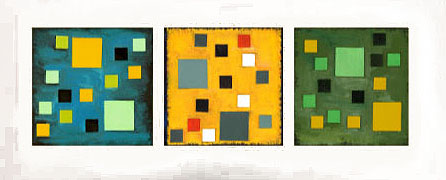
Vanessa Ryan blue, yellow, green triptych 3-12 inch square paintings


Follow Vanessa A. Ryan at

http://vanessaaryan.com

https://twitter.com/Vanessa_a_Ryan

https://www.facebook.com/VanessaRyan33


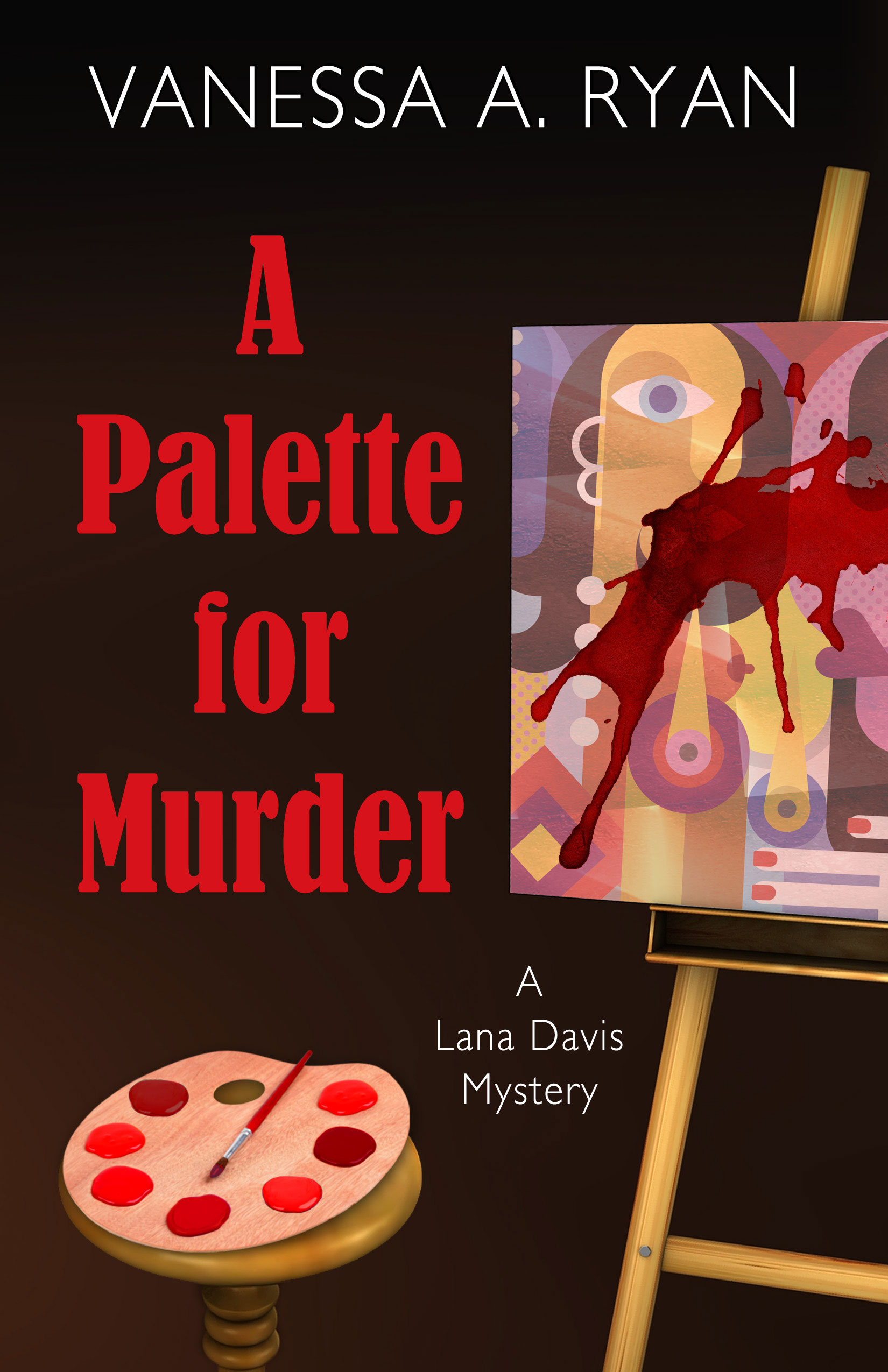
A New Mexico Mystery Review: A Palette for Murder

PaletteForMurderFront-(w)

Vanessa A. Ryan picked the perfect background for a murder mystery in Santa Fe: rich people, not-so rich artists, and crime and corruption in the city’s art world.

First, some relevant local data: In the Santa Fe Reporter’s 2013-14 Annual Manual, the city’s population was given as 68,642 residents. The more recent Manual didn’t give us the population number, but both editions say that the City Different has four art galleries per 1,000 residents. That’s a lot of art. After city government, it’s the primary business in town, aside from tourism. Santa Fe is ranked the number one city for air quality in the country, and has 320 days of sunshine a year, which may be part of the reason it’s the fourth happiest city. I’ll second that. Music and dancing and general festivity are a way of life. The downside? The cost of living in Santa Fe is 17.7% higher than the national average. Maybe that’s why it’s not the happiest city. But without all those wealthy people, the art scene would die. It’s a necessary symbiosis—and central to this story.

Insurance administrator Lana Davis comes to Santa Fe looking for the beneficiary of a life insurance policy. As soon as she starts her search, the plot gets complicated. I can find my way around Santa Fe’s oddly configured streets without a map, but I couldn’t figure out whodunit. This is a classic puzzle type of murder mystery. Everyone’s a suspect, and I mean, everyone.

The behind-the-scenes look at an art gallery was intriguing. A lot of the little details—how important it is to some people to be invited to a benefit auction, the way rich people can tell who’s really one of them but poor artists can’t, and even snobbery about fauxdobe—also give the book an “insider” feel.

Lana is an amusing narrator. She’s basically good but willing to bend rules just enough to take some risks she shouldn’t take, and she’s cool enough not to get as freaked out by death, danger and violence as most people would. If she were an animal, she’d be a cat: independent, self-sufficient, and persistent and clever in the chase. She has nine lives, too, and is good at landing on her feet—at least figuratively. This makes her a good fit for the amateur sleuth role—the personality has to be believable for the premise of the amateur investigator to work. More sensitive or rule-following folks wouldn’t dare get into the situations she does. I think there are two kinds of series protagonists: the ones we identify with, and the ones we would like to be for a day. Lana is the second kind.

Ryan is a polished story-teller. If you like tight plotting, a great setting and a fast pace, this is your book.


*****

Next week, author—and artist—Vanessa A. Ryan is my guest for an interview

Santosha

“Happiness equals reality minus expectations.”

Tom Magliozzi, Car Talk

“I am most happy and content when I cease trying to be happy and content.”

Chuang Tzu

I’ve been busier lately than I like to be. My preference is for open space, both literally and metaphorically. I don’t mean that I like to be lazy, but that the sense of spaciousness is freeing. The feeling that I don’t have to be fast, and that everything can take as long as it naturally takes. A couple of summers ago I took a workshop with yoga teacher and physical therapist Judith Hanson Lasater. It was about yoga and the shoulder joint and rotator cuff, but one of the lessons that stayed with me was when she said “no rushing.” She explained it this way: even when you have to be in a hurry, you can take mental stance of “no rushing.”

One of the philosophical principles of yoga is santosha—contentment. If I object to being busy or having deadlines, those are my expectations getting in the way of happiness. My striving to happy. So be it. I’m busy. But I’m not rushing.