Listening and Light

Listening silences my inner noise. Running on a winter afternoon, I hear my feet. The sound- textures change from hard slapping on dried-mud clay to near-inaudible thudding on soft dust and sand to crunching on gravel and pebbles. A crow caws in flight. A flock of doves rises from the desert brush with alarm calls as fluttery as the rush of their wings. Hikers converse in amiable tones, too distant for me to make out their words. Rather, I receive their voices as part of the music, harmonizing with the cheep of a solitary bird, the hum of something mechanical at the New Mexico Veterans’ Home on the hill above the trails, and the crow of a rooster somewhere across the Rio Grande.

Listening seems to sharpen my vision, enhancing my inner stillness and conscious presence. The light behind cacti brings out gold in the thorns on tall green prickly pears and red in the thorns on little purple pancake cacti. Their flat purple pads soak up the light. A female desert cardinal is little more than silhouette in a mesquite tree. Each pebble stands out like a sculpture. Each crevice in the now-dry rain-cut earth is wrinkled with deep shadows.

Thoughts slip in, but I let them go and come back to listening and light.


The Rainbow of My Dream

I dreamed bright colors. Bands of yellow and green. No story, just colors and a feeling of joy. The following day was sunny and sixty-six degrees. Excited for such a perfect December day, I hit the trail in Elephant Butte Lake State Park. I knew it would be a little windy, but the sand was still damp from two days of steady rain, so it wouldn’t be flying in my face.

After I’d run less than a mile, the wind grew chilly and blew in clouds to cover the sun, and the temperature dropped. I wished I’d worn gloves. This was not the run I’d imagined. I persisted, though, knowing I’d feel like a wimp if I cut it short. The clouds were dramatic, and the weather kept the normal winter tourists off the trail. It was all mine.

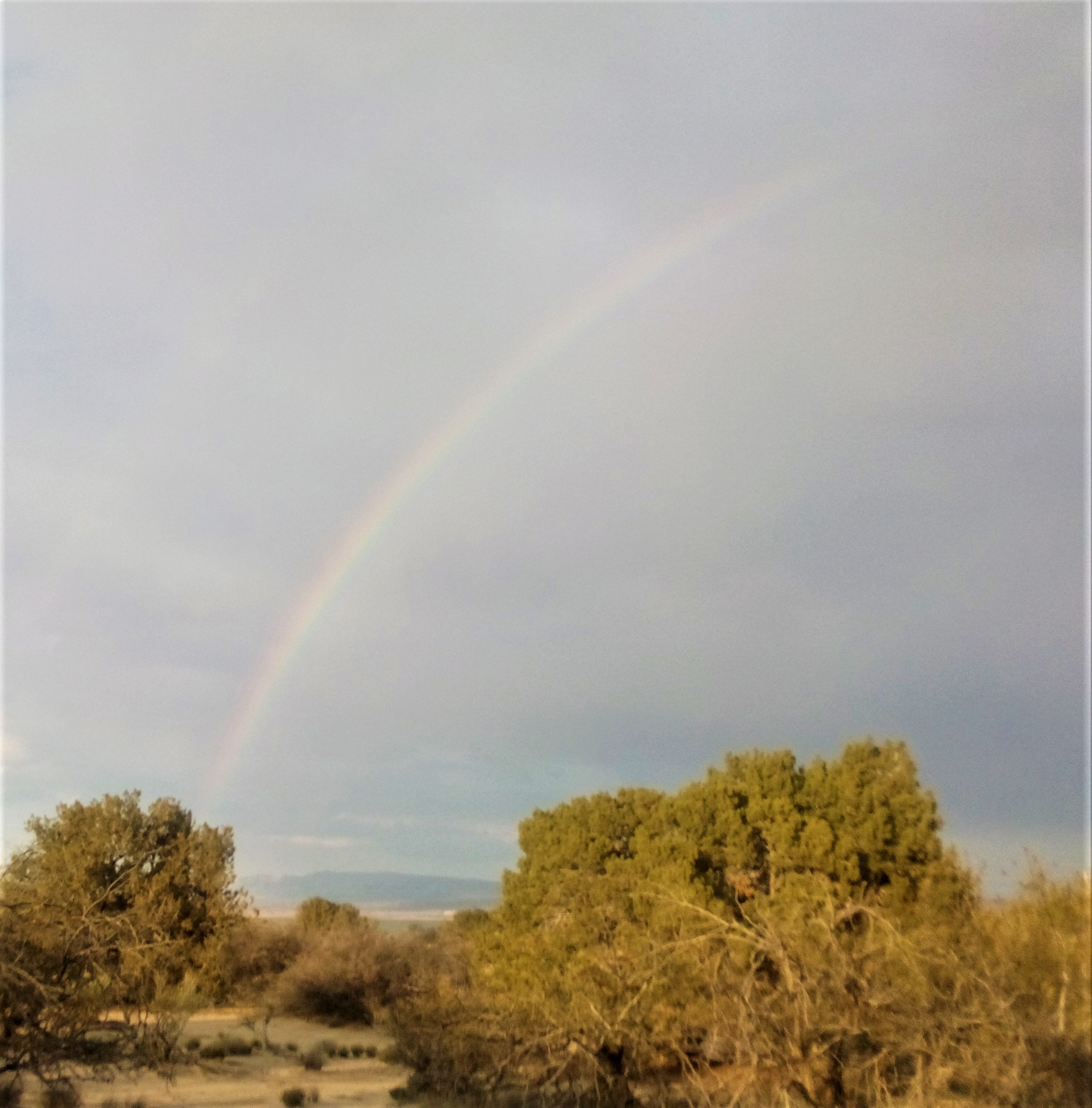
Still, as I committed to the final mile, I asked myself, why is it so important to keep going in the cold? There’ll be plenty of warm, sunny, windless days all winter. As I finished the last stretch, the sun broke through in the west. Golden light flooded the sand and the desert junipers, and half a rainbow woke up in the clouds to the east. It set its jeweled foot softly on the ground and arced into the gray, its trajectory unfinished. My endurance was rewarded: the rainbow of my dream.

The Smashwords Sale

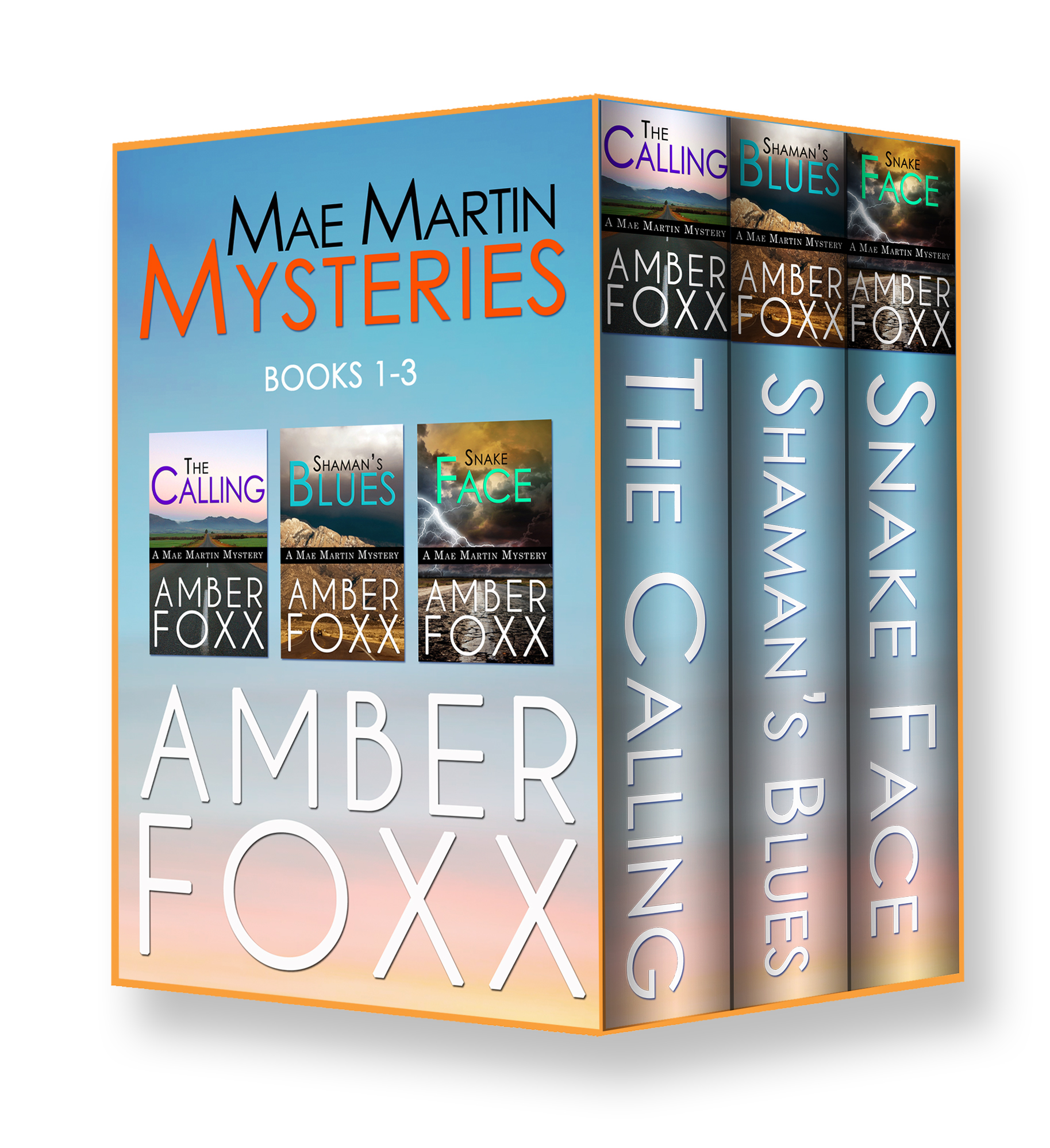
In addition to all the other e-book stores, my books are now available in the Smashwords store, the largest indie bookstore on the internet, and they will all be half price (or free!) as part of the Smashwords 2022 End of Year Sale.

You’ll find big discounts on thousands of indie titles throughout December. Discover your next favorite book at https://smashwords.com/shelves/promos

#SmashwordsEOYSale #smashwords #ebook #sale #books2read #indiebooks

The Neighbors, Now Gone

Though I was accustomed to the lack of choice, I still resented it. Taking an afternoon walk on Tuesday November 8th, I turned south at the corner where my apartment building sits. North, south, and west were options, but I missed going east, walking down my block. I know almost everyone there, and I used to enjoy spontaneous chats with whoever was on their porch or getting out of their car. But for a year or more, I’d been afraid to do that.

In the middle of the block, in a brown-and-white trailer with a decrepit plank fence, lived a woman who hollered profanities and threats and a teenaged boy who was once taken away in an ambulance. She had three dogs, loud, aggressive, and prone to escaping. They hurled themselves against the fence, barking, when anyone passed by. They chased me twice, and one tried to bite the man across the street from me. They attacked a Great Dane being walked by a young man who had to climb on the hood of a car to avoid being bitten. Everyone in the neighborhood had called animal control repeatedly. We suspected the hostile woman might be a drug dealer. Why else would she keep such dangerous dogs? One neighbor dared return an escaped dog to her yard. She came out and demanded to know what he was doing. He told her, and she called the police on him for trespassing.

The owners of the trailer live in another city. I wrote to them about her and her dogs, but she didn’t move out. After a while, I didn’t see the boy anymore and imagined he’d been taken away from her, perhaps put in foster care or with nicer relatives.

Behind the trailer, on the same property, is a little house. It had a high turnover of tenants—good, quiet people, driven away. The last one to live there was, like the rest, quiet. I take care of the gardens at a friend’s vacation rental place between the problem property and my apartment building, and she spoke to me across the fence a few times as I was watering plants.

“You have such nice wildflowers,” she said, the first time we met. “I promise I won’t pick them.”

I assured her I didn’t think she would. Perhaps she was accustomed to people accusing her, not trusting her. Her skin tone, on the grayish side of white, her unhealthy teeth, and her neglected hair gave me the impression she had a drug problem.

But it didn’t make her a bad neighbor. She was pleasant and friendly. I offered her pomegranates from the garden once. Like everyone else, she didn’t like them and declined, but she thanked me. For safety, I carried pepper spray when I watered plants, and I wanted to ask her if the dogs in the trailer bothered her. But maybe their owner was her dealer.

When I came back from that walk on election day, a state police crime scene investigation vehicle was parked in front of the trailer-and-little-house property. My first thought was that Hostile Woman was in serious trouble. There wasn’t a sound from her dogs. What had happened? Then I realized the workers were going in and out of the little house.

I later learned from neighbors in my building that while I’d been on my walk, detectives went around knocking on doors, asking about the residents of the trailer and little house. One friend said he told the detectives to contact animal control, since they were the ones who’d interacted with Hostile Woman the most. We never knew her name. Or the name of the woman in the little house.

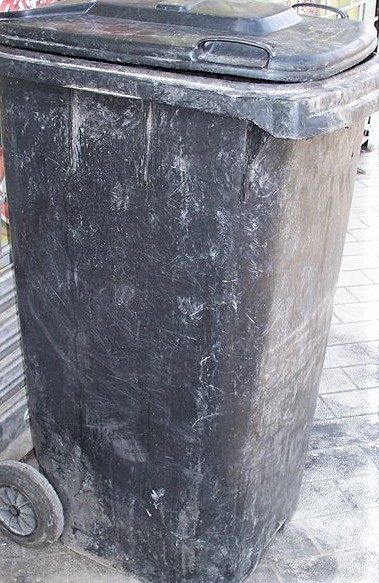
The next day, someone came to clean. They put the belongings of the woman I’d assumed was an addict in a trash bin and on the sidewalk in front of the house where I do plant care, blocking the driveway where a vacation tenant would have to pull in. I cringed, but I moved the stuff to driveway of the little house. I didn’t know what had occurred, but it couldn’t have been good. Then I approached the brown-and-white trailer. A young man was inside cleaning with all the doors and windows open. Stale tobacco stench reached me from twenty feet away. Poor guy—he had his work cut out for him. I asked him to please not put the trash in front of the house next door, he agreed not to, and then I said how good it was to see the trailer empty, to be rid of the scary dogs. He said something noncommittal, and I realized I’d been insensitive, treating the situation as good news. He might have been cleaning up a crime scene.

Still, I was relieved. I could once more enjoy the safe, sociable neighborhood I’d first moved into. I walked east on my block and had a curbside chat with neighbors a few houses down, two brothers, a musician and a plumber. The musician said he’d ventured into the trailer and its yard shortly after it became empty and the crime scene people had left. He found dog droppings everywhere, even indoors. I hate to think what might have happened in there—and still don’t know.

The plumber told me that a woman had been found dead in the middle of a nearby street at two in the morning on Tuesday the 8th. Apparently, she’d knocked on someone’s door, incoherent, and then staggered off. The crime scene investigators had been going in and out of the little house. I guessed the dead woman was the tenant and that she’d died of an overdose. Perhaps the owner of the bad dogs had supplied it.

Thursday, I moved the heap of bedding and the overfilled rolling trash bin from the little house out to the curb. The clean-up man hired by the out-of-town landlords wouldn’t know Friday was trash day. Though I felt strange and uneasy touching a dead person’s belongings, it seemed important to me—respectful, in a way—to have everything picked up. The sheets, blankets, and mattress pad from a single bed, the place where she’d slept, were too personal, too intimate, to be left lying on the pavement. Due to the lack of a county medical investigator, the dead woman herself had been left lying in the street for hours until someone from another county could come examine her. That was more than enough indignity for one soul.

The next morning, her few possessions were gone. I rolled the empty bin to the chain-link gate of the little house and took a moment to wish her rest in peace. Not much of a memorial ceremony. I hope it wasn’t the only one she had, but it might have been.


The Mastodon Post

I’m learning my way around a new (to me) social media site, Mastodon. So far, I have two followers. Not bad. I’m a slow learner, but soon I will follow other people. I like how Mastodon isn’t driven by algorithms but by your interests. I joined a server that is focused on science and the arts.  It should be interesting, once I master it. I suspect it will be like the process of getting acquainted with my electric car. I can drive it, charge it, and interact with it fairly well, but once in a while I still discover a talent it has, a feature I didn’t know about after owning it almost a year.

Becoming InTwitterate

I’m sending my last tweet. I avoid places that manifest too much negative energy, and I’m afraid that may be the future of Twitter. This feels like the right time to leave—not that I ever tweeted much anyway. I’ve enjoyed tweets from fellow writers, but we can find each other on Facebook and Goodreads. In fact, I’m already connected with most of them this way.

If you’re reading this on Twitter and want to stay in touch, here are some options:

Looking at all those options, I feel ubiquitous. Which makes me quite comfortable with becoming inTwitterate.

*****

Note: I don’t feel the need to migrate my Twitter contacts to Mastodon, but there are tools you can use to accomplish this before you actually leave Twitter. https://fedifinder.glitch.me/  and https://debirdify.pruvisto.org/

Wishes

I wish for more kindness in the world. For more genuine intellectual curiosity. I wish for open-mindedness, for myself and others. I had a fascinating conversation a few days ago with a woman whose world view was radically different from mine. We didn’t change each other’s minds, but we heard each other with respect and friendliness, not judgment. That took two people willing to listen. Willing to share. I’m glad I met her, and wish for a world full of more such conversations.

Anna

She passed on in February. I still think of her. Still miss her.

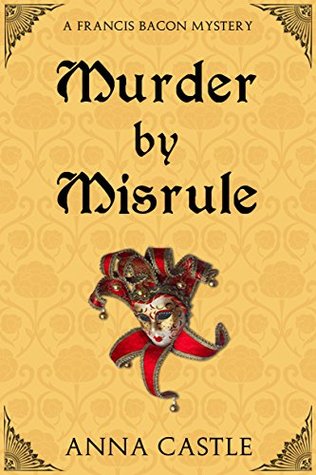
We were critique partners, writers who appreciated each other’s work. Though we knew each other’s real names, we connected and communicated by pen names, Anna Castle and Amber Foxx. We never met. Our friendship, though we shared other interests and agreed on some major issues, was centered on writing. Sharing your work in progress with another writer takes trust and respect. She critiqued my short story suite, Gifts and Thefts. She followed and appreciated my blog post essays. I was honored to critique Anna’s Francis Bacon mysteries, to become a beta reader when I was already a fan of the first books in the series. I love the characters, the historical depth, the wit, the originality, the settings—I could go on and on. To be able to contribute to her next work in any way, when the work was as good as hers was, meant a lot to me. I miss that partnership.

I also miss the social media interactions, the humorous exchanges, even the updates on the progress of the grass paths in her garden. I believe her fictional characters miss her, too. She told me how the Bacon series would progress, what would happen in future books. Books that will never be written. The real Francis Bacon went through difficult periods in his life which were going to make their way into the series. Perhaps the fictional Francis is spared those challenges, but Tom Clarady will never complete one of his great life goals. Perhaps in the world the characters inhabit, they carry on—and he does. Anna planned that he should.

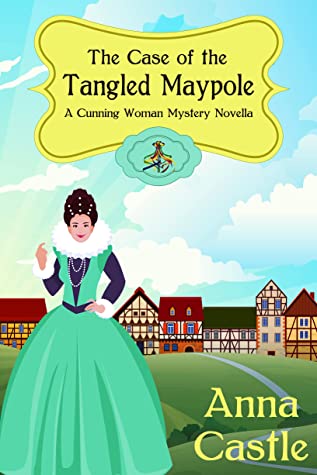
Elizabethan healer and herbalist Jane Moone must miss her author, too. I had an inkling where the Cunning Woman series was going, and was eager to see its fulfillment. These historical paranormal cozies set in a village where magic is real are as fully researched as the Bacon books. I admit the Moriarty series didn’t hook me, simply because I’m not fond of the Victorian period, but the one story I read was as brilliantly crafted as the rest of her work. Her cozies set in Lost Hat, Texas were her only modern mysteries, and I delighted in those.

I may always miss our exchange of creativity as writers. The trust with each other’s words.

This isn’t an anniversary of anything. It’s just something I needed to say, and have needed to say since February. I was prompted by a post on the blog Pleated Stories about friends we meet online and friends we lose.

Note: Alas, Anna’s web site address seems to have been taken over by some strange, rather frantic entity in a language I don’t speak. Her Goodreads page is still there, though. If you have not yet discovered her books, I encourage you to explore. Honor her memory through her characters. They live on.

Farewell, Darling Pomegranates

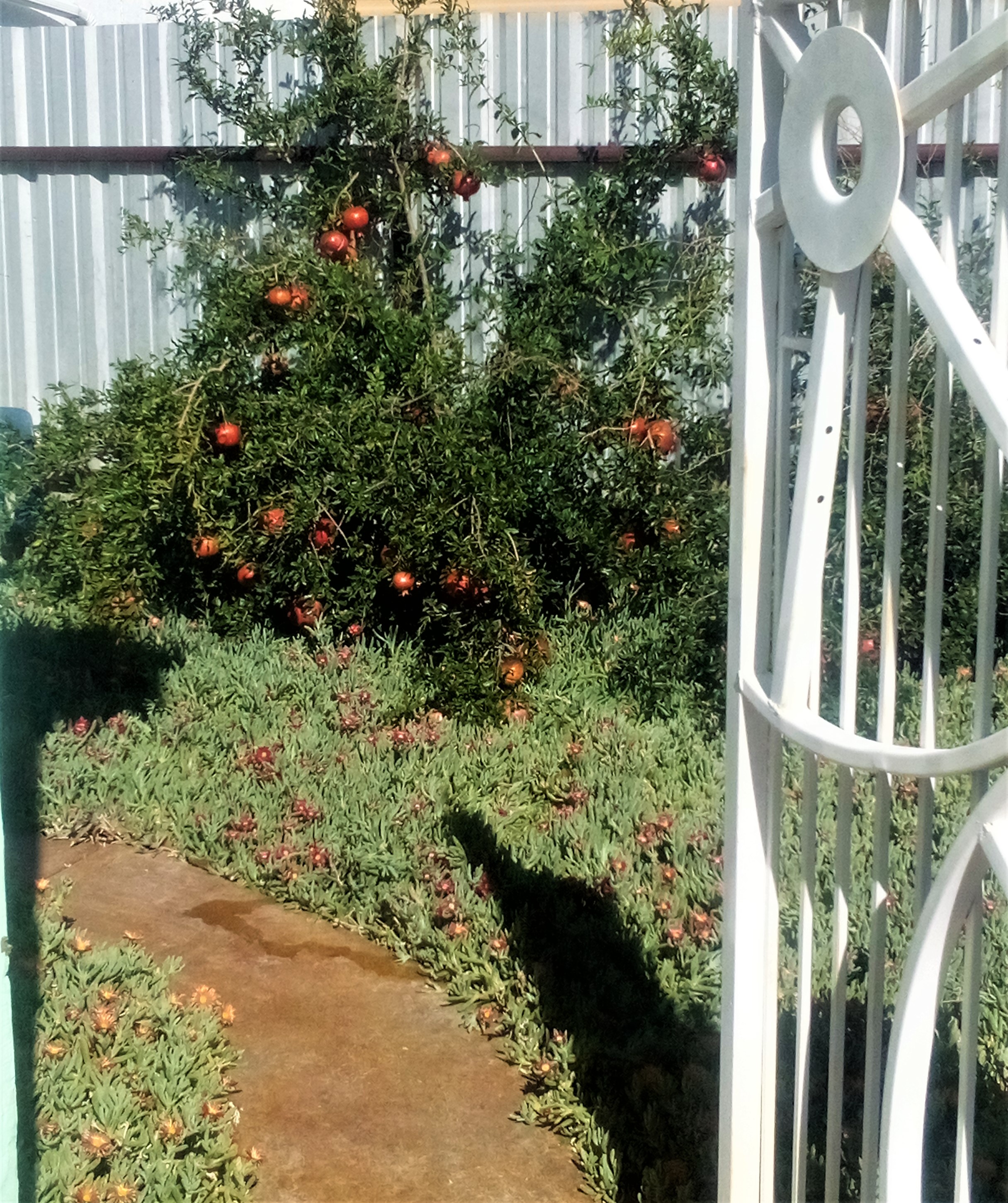
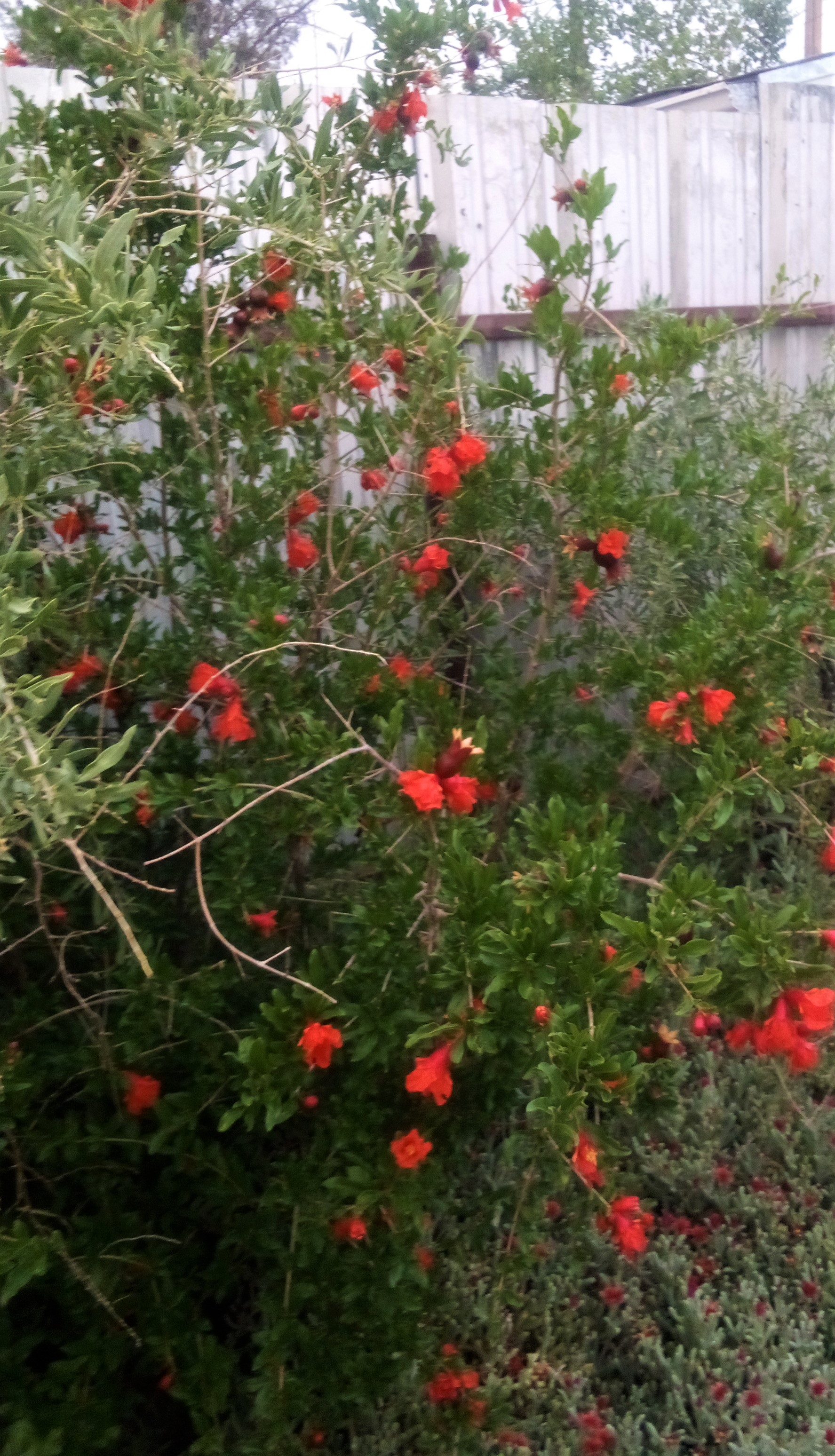
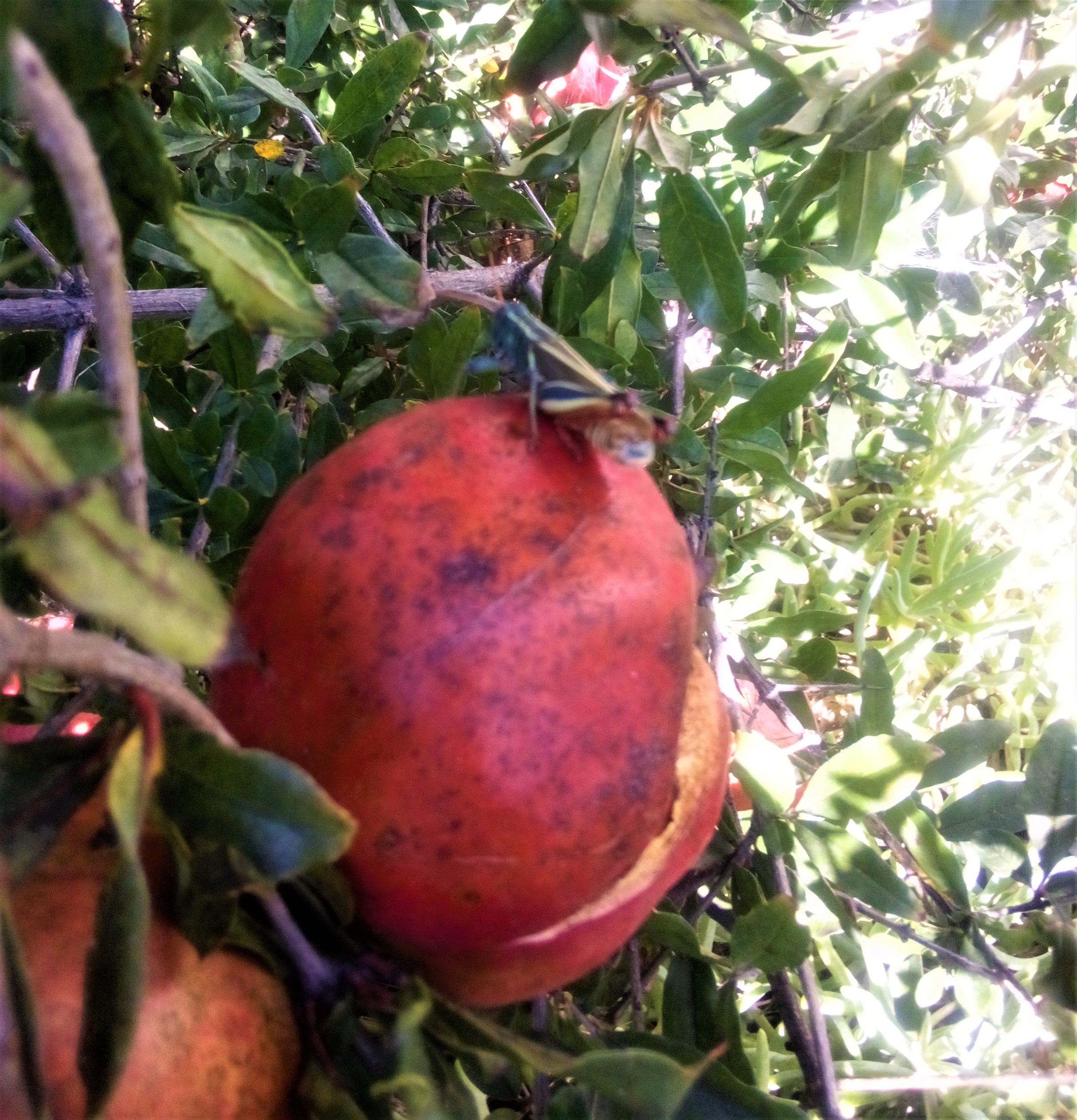
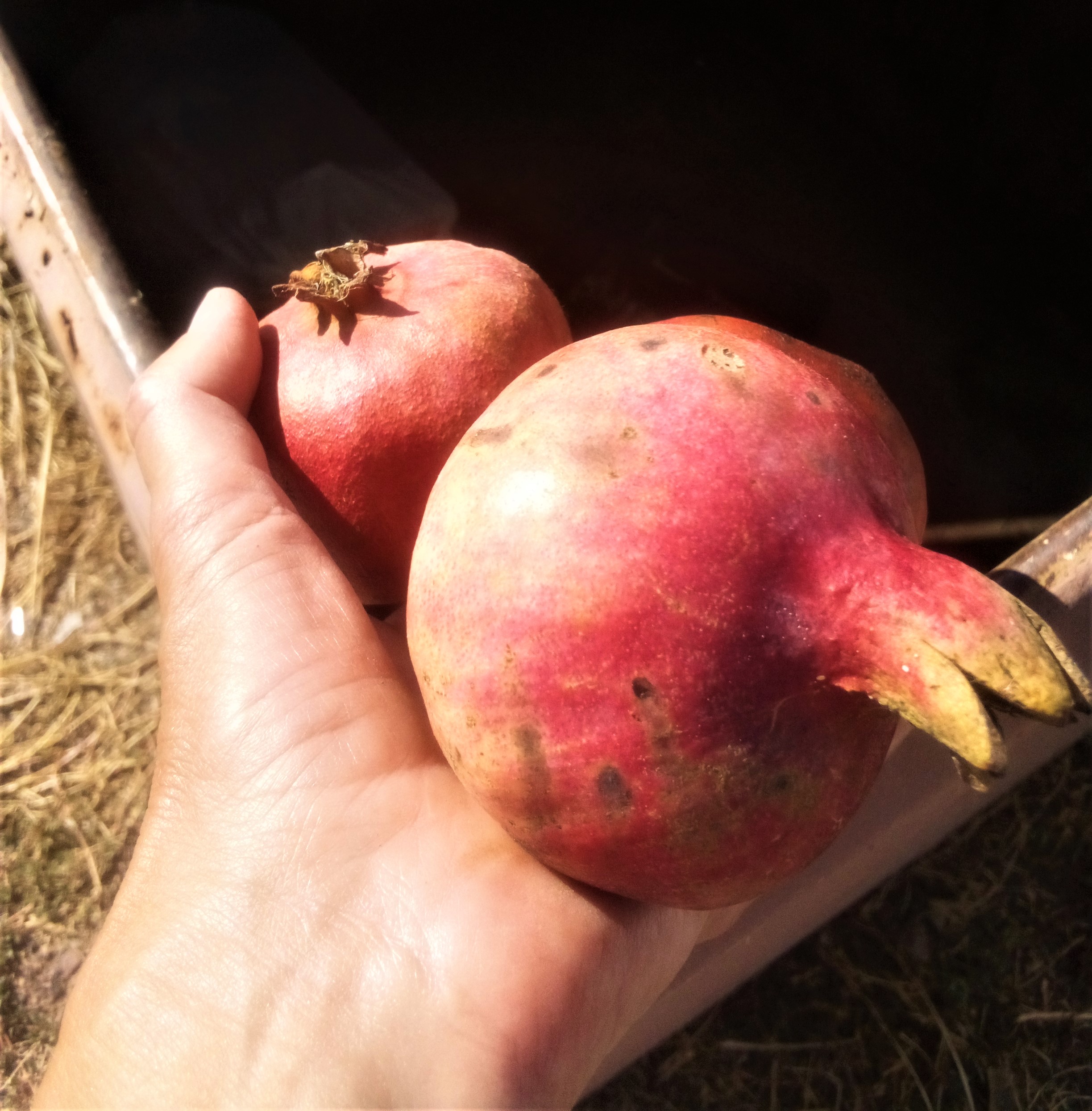
I nurtured them, marveling at their numbers as I watched them change from flowers to fruit. Last year, the two trees produced a total of five pomegranates. This year, I counted seventy-five. It was hard to see them all. Some bunched together in fours, their bottoms mashed flat against each other. I had to prop branches up on chairs to keep them from breaking under the weight of so many fruits and to keep the low-hanging ones from rotting in the bed of succulents below during the rainy season.

This bumper crop happened by accident. One day in the spring, I forgot to turn off the hose. It ran for over twenty-four hours, exactly when the flowers were about to emerge. The trees got excited and flowered like mad. These are not my trees. They live behind some friends’ Airbnb. I water the plants, since the owners reside in Las Cruces. I was proud of the pomegranates, if apologetic about the water bill.

But no one wanted them. Their owners have pomegranate trees at home in Las Cruces. I ate part of one fruit, but I don’t like the taste or texture. I offered them to neighbors and yoga students. No takers. One neighbor did accept one but then confided he was afraid of getting appendicitis from eating seeds. Another friend told me, “No one really likes pomegranates. They just grow them.”

I feel guilty when I throw the perfect ripe fruits away. If I don’t, though, they attract insects. One day, I was heading for the dumpster in the alley with an armful of pomegranates when I noticed a young man walking from the grocery store carrying one small bag. I’d never seen him before in the neighborhood, and guessed he was one of the many the creatives and remote workers who have moved here lately. A Black man of about thirty wearing an old fedora and sporting a goatee, he reminded me of one of my series characters, Jamie. I asked him if he liked pomegranates. He said yes. I gave him some. We made small talk. His accent was Southern, not Australian. Jamie hadn’t come to life off the page. But someone finally wanted some pomegranates.

I’ve discarded more into the dumpster than I’ve ever found homes for. The process reminds me of writing a first draft and then cutting. I nurture the book, but it grows too many subplots and loose ends. Much as I like the look of the glorious full tree, I have to pluck pomegranates and toss them with regret, after gazing at the gleaming red seeds in fruit that cracked itself open in the sun. Such a beautiful achievement for those hard-working trees, those trees I so lovingly cared for. Such unwanted excess. My darlings. The portions of a first draft that I keep are like the fruits I gave to “Jamie.” Not many, but they’re the parts I finally share.


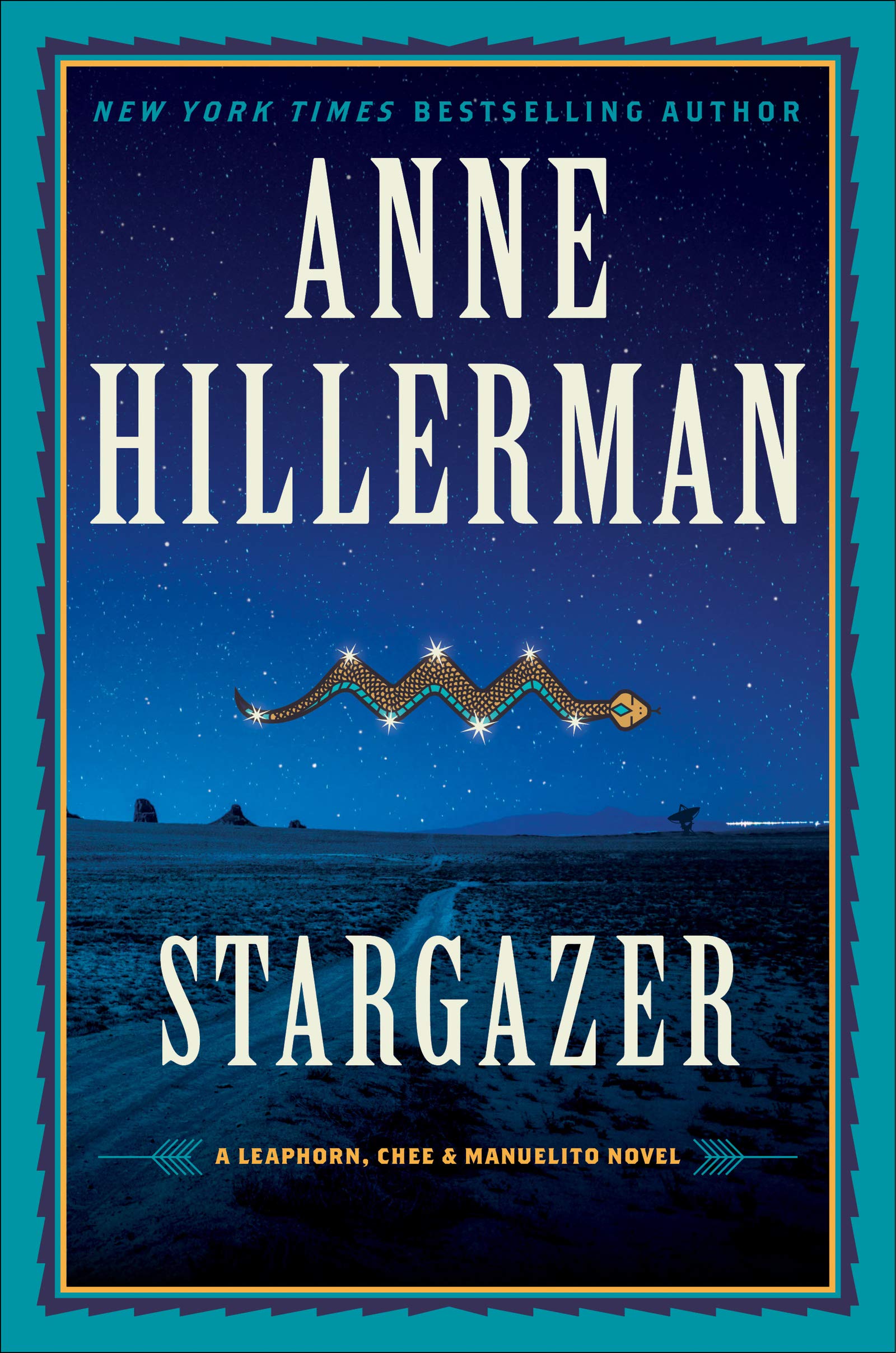
A New Mexico Mystery Review: Stargazer by Anne Hillerman

The protagonists have kept this series strong for years. Hillerman develops them further with each book. As an elder, Joe Leaphorn is still growing and learning. Bernie Manuelito and Jim Chee navigate the challenges of their police work and their marriage. And the new characters are memorable and deep. The multiple suspects in the crime were all plausible, and I was never sure who was responsible until near the end. The settings are intriguing. The Alamo Navajo Reservation near Socorro, New Mexico is a lesser known section of the Navajo Nation, yet still part of the nation and its culture. Also near Socorro is the Very Large Array, the site of high tech studies of the stars. The victim, a scientist who worked there—the star gazer of the title—is revealed in depth as a person.

Anne Hillerman has knack for creating colorful, utterly real, and very regional people as minor characters, also. Bernie’s attempt to serve a warrant on Melvin Shorty presents one of these gems. And how Shorty behaves in the end is true to the way he and Bernie met as human beings, not just as officer and law breaker.

Hillerman gives realistic complexity to the characters’ lives. Leaphorn, Chee and Manuelito are never dealing with just one case. There’s a primary mystery plot, but there are other demands on their professional time as well, including a painfully sad case Bernie stumbles across while attempting to deal with stray cattle. The leads’ private lives are not neglected by the author or the characters. I like having fully functional sleuths. They attend to their relationships and friendships, not just their work.

The author’s prior writing career in nonfiction serves her well. She integrates research  fluidly as needed, resulting in a poetic balance between the science at the Very Large Array and Bernie’s Navajo view of the stars and constellations.

The ending is satisfying. Major issues are wrapped up, yet the reader is left thinking about the characters’ future plans.

No spoilers, but Joe Leaphorn’s encounter with a child who is traveling alone is wonderful. And if you read the author’s notes at the end, that scene gets even better. Hillerman’s notes are as good as the story, as she shares more about the Very Large Array, Navajo cosmology, and her writing process.