Dropping In

When I was a teenager with divorced parents, one of the many things I loved about living with my father was the spontaneous sociability. People dropped in on him, often in the late mornings on weekends, and on summer evenings we would go for walks and drop in on friends. We were in a small town on the Maine coast where he was informally referred to as “the mayor,” though the town was in fact so small it didn’t have one. He was one of the few year-round residents.

Where I live now, spontaneous socializing happens on the streets, in coffee shops, and at the brewery, but I don’t drop in on friends unless they own shops—dropping in on shop-owners is a social custom here. Otherwise, I’ve developed the habit of calling if I want to make short-notice plans. Then my cell phone provider and I had to part ways, due to a series of annoying technical events. I couldn’t make calls. I was in the middle of I-will-not-tell-you-what kind of hassle trying to set up online with the new provider when I heard a knock on my door.

A friend had dropped by to tell me his phone didn’t work.

Needless to say, the timing was perfect. I invited him in. I’d been meaning to call him during my three days of phone problems and couldn’t. We vented about cell phone service, and he said he’s going to get a landline. “Why do I need a phone with me all the time?”

Good question.

I didn’t go quite so far back in tech time as he decided to, but I still don’t have a smart phone. Why do I need a computer with me all the time? I like talking. If friends want to get in touch, I like it if they call and talk, not text. If it’s after eleven a.m., they can even drop in.

Anniversary Sale

Two years ago today, June 2, I was half-way across the country, moving from Virginia to New Mexico. I’d lived in Santa Fe previously and left for a job in northeastern North Carolina, where I found the setting for The Calling. I always knew I’d be back, and when I discovered Truth or Consequences, I was instantly caught in the vortex. I knew I would live here someday.

In Shaman’s Blues, Mae Martin moves to T or C. Unlike me, she’s never seen it before. Never been to New Mexico. Doesn’t know a soul in town except her father. Join her on the adventure and celebrate my anniversary.

Click here for 99 cent sale

Slowness

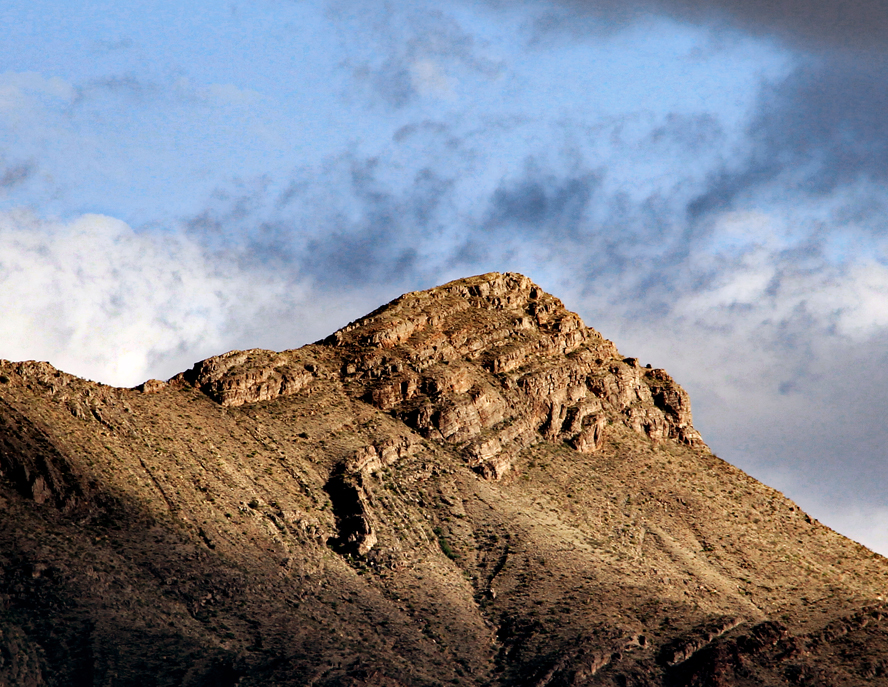
In honor of the Turtle, the local deity of Truth or Consequences who rests atop Turtleback Mountain, I contemplate the virtues of going slowly.

A friend who came in next-to-last in a marathon told me with pride that it took a special kind of endurance to keep on going for such a long time at her slow pace, especially mental endurance. It was a good insight. After all, she had no illusion she could win. Her motivation was personal and internal. She wasn’t competing, just completing.

I’m a slow writer. I write daily and have no shortage of inspirations. What takes time is depth.  I have to know what every character is thinking and feeling, discover the subterranean aspects of my lead characters’ minds, the emotions they themselves might not be touch with, and become aware of potential interactions at that level as well as in the mystery plot.

The style of yoga I study and teach is slow, not flow. The psychological state of flow occurs, but the asanas are explored in depth rather than in a fast-flowing sequence. I’m taking a twelve-week workshop with the teacher who first trained me to teach. In each weekly session, we study two or three asanas that have similar patterns in the body, attending to the subtle organization, the inner details. Seventy-five minutes on just utkatasana, warrior one, and warrior three was fascinating.

It’s not that I don’t enjoy anything fast. I love dancing to fast-paced music and reading fast-paced novels. Sometimes, in my personal yoga practice, I do a vigorous vinyasa. Speed is energizing. To achieve it with skill, though, the writer, dancer, or yogi first has to master slowness.

I look at the mountain and realize there’s more. The Turtle has mastered stillness.

*****

Turtleback image by Donna Catterick, whose photography graces the covers of Death Omen and Small Awakenings.

Snake Appreciation Day

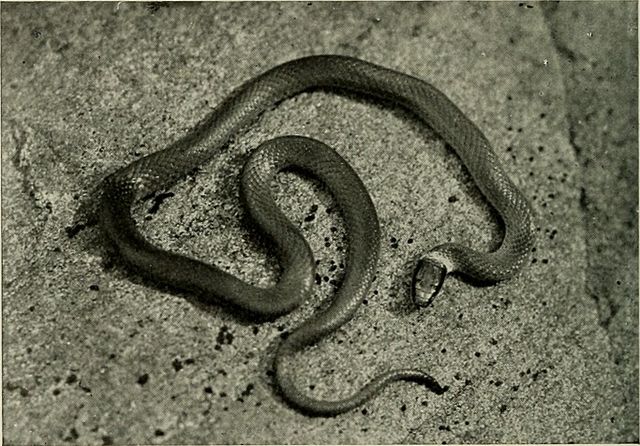
My first sighting, finally, after years of running in the New Mexico desert. A sunny day turned suddenly cool and cloudy, which must be what made this normally nocturnal creature stir.* I slowed down to let the snake cross the trail and go wherever it was going. What an amazing design. Such graceful motion. It was plain gray, not a speckle (or a rattle) to decorate its slender form. Perfectly silent, it disappeared under a bush with its gentle undulations. I crept past the bush, sneaking a look under it. No snake. I didn’t expect it would have stayed. They’re shy, after all.

As I resumed my run, I marveled at the snakeness of the snake, its directness and simplicity. There I was with how many bones in each foot, moving from one set of tarsals, metatarsals and phalanges to the other, using how many muscles in each leg and hip, with hinge joints and ball-and-socket joints in motion, postural muscles at work … I had to ask myself …

Whose locomotion shows more art?

I have so many moving parts.

But Snake can get along just fine

While being nothing but a spine.

*****

*I looked it up and concluded it was a ringneck snake. They are colored like a gray suit with a bow-tie and are rarely seen during the day. Wikipedia describes them as “dainty and inoffensive.”


Desert Encounters


The hind end of an animal I’d never seen before in this stretch of desert silenced my thoughts. Whatever it was, brown and furry and scurrying, stub-tailed and about the size of a rabbit, it made me aware. The novelty of birds with bright yellow feathers broke into my thought-cycle also as I ran—yellow warblers migrating through (at least I think so; I’m not a bird expert, just an admirer). A quail atop a bush, its crest profiled against the blue sky, brought another moment of surprised inner stillness. Quail are usually running on the ground. It’s the lizards who pose.

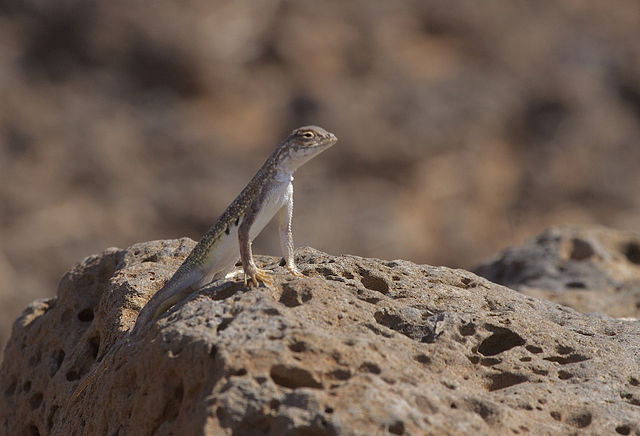
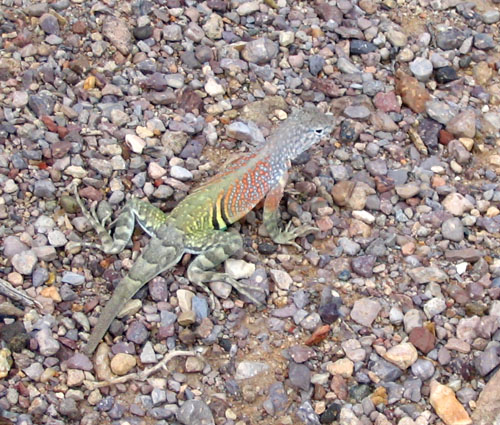
I stop for lizards. A lesser earless lizard, no bigger than my thumb, has little bright eyes and long golden toes, subtle gray-on-gray spotted markings, and tiny arms that enable it to do push-ups with flawless form. Its miniature legs run faster than I can. The greater earless lizards seem to be showing off their green hind legs, their side stripes, their green-and-orange forelegs, and the rose patches on the females’ flanks. I’m sure they’re displaying for each other, but I appreciate the show. Everything else on the ground blends in—brown or gray—but they glow. It seems odd for small, delicate, ground-dwelling creatures not to be camouflaged, but they flourish, maybe because they like the heat and nothing else does (except crazy runners). Their body ideal temperature for activity is 101 degrees. I observed a large one getting brighter the longer he baked. On my third lap of the trail, his orange stripes were radiant, as if he had to be heated properly to light up.

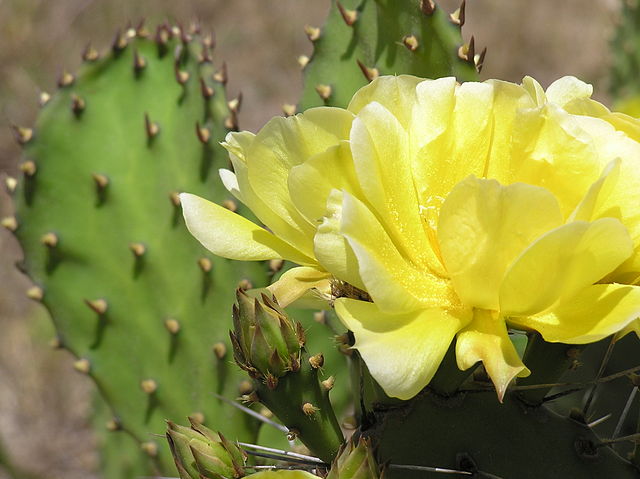
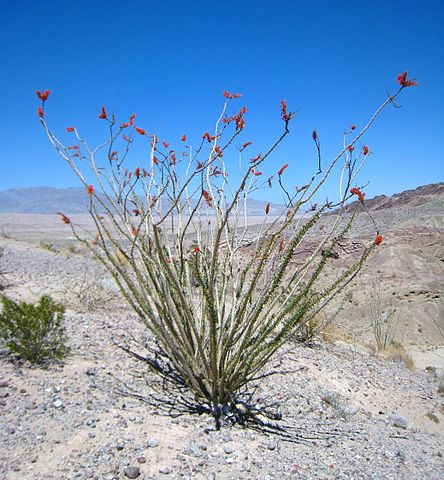
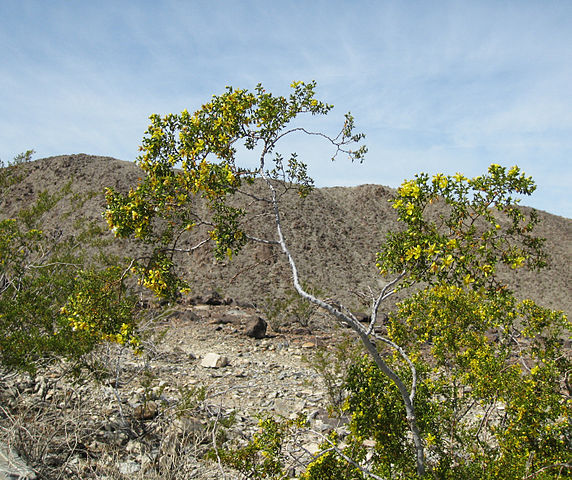
The prickly pear cacti are blossoming, bright yellow. Creosote bushes have small yellow buds. Ocotillo blooms shoot out like red-orange flames on the tips of slender, bare stalks. The yellow birds are posing on them, contrasting with the flowers, and perching among the creosote branches in a yellow-on-yellow match.

The birds-and-flowers encounters make me stop in awe. Yes, I’m running, but there are moments not to be hurried.


Cleaning as a Spiritual Practice

I could have resented the task. I was doing it out of frustration, not from the goodness of my heart. The yoga studio where I teach, which doubles as a walk-in massage clinic twice a week, needed deep and thorough spring cleaning. I’d suggested a group effort, but for various reasons, no one signed on.

It was a hard place to keep clean. The former owner/manager had left a lot of well-meaning clutter three years ago, things she mistakenly thought would be used, and people were reluctant to get rid of her stuff. I excavated in the corner behind the altar that hides the CD player and the massage supplies and found a sword, a goat-toe-shaker, a slide projector screen, and a very dusty massage chair that hadn’t been used for over a year, as well as a variety of colorful markers and odd wooden massage tools. I got permission from the current owner to remove them. One of the massage therapists offered to store them for the former owner. Phew. And one of my students offered to help, saying God put her on earth to clean and organize—that it was her calling.

I think it is. Not just because she got the job done, but because of the way she did it. She was so positive, and I was so grateful, I felt little need to vent. I only did it once, and I was mindful enough to tell her I was going to, and then I was done. It took the two of us five hours of hard work, but we got the dust and desert grit and clutter out, reorganized the space, and did laundry. It’s quite a transformation. The details of the tasks don’t matter. Her attitude does—her genuine, no-strings-attached giving of her time and energy. I offered her some free classes in thanks, but she said no. She’d come a couple of times when she was the only student, and to her those private classes for the price of group classes were more than enough.

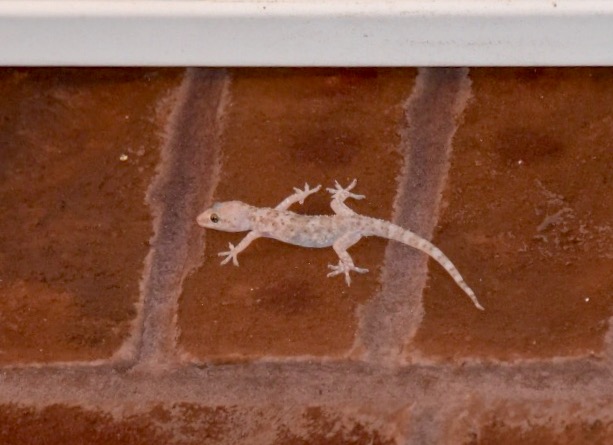
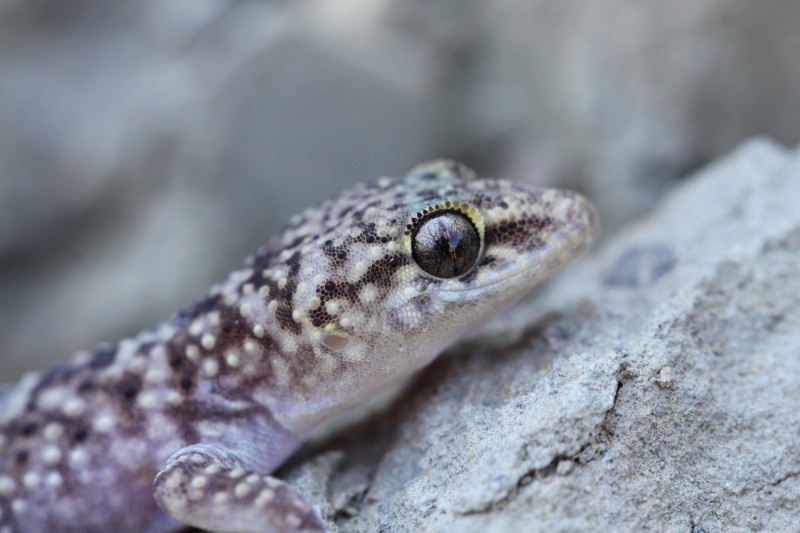
She found a tiny house gecko living behind a large plant. Since we were vacuuming, she tried to hand him to me to put him out. I lost him for a second, and then captured him again, holding his firm yet delicate body with enough of a grip to get him safely outside. I was surprised how sturdy he was for such a miniscule being, and how unafraid of me.

In the sunlight, he was a miraculous being, like gold brocade on an off-white background. Even his eyes seemed golden. I was enraptured by him, glad to be cleaning because we found this treasure in the process. I set him on the outdoor adobe wall. He’s a house gecko, so he’ll probably come back in. The clutter won’t. Now that’s it’s easy to clean, a housekeeper takes care of it. I won’t have to do this again. No resentment necessary, only gratitude for my student’s teachings. Anything done from a place of love can be a spiritual practice.

Spring Break

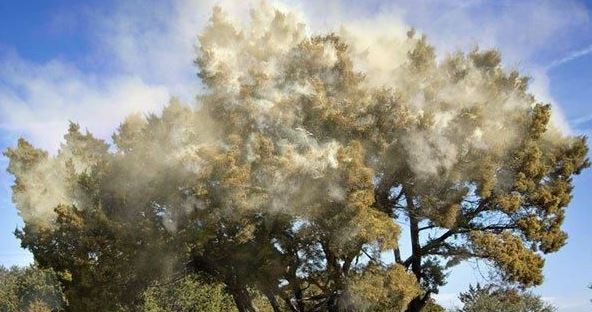
I’m grateful for the ultimate New Mexico April day. It looks nice out the window—warm and sunny, with new green figs on the fig tree. But the wind is blowing at thirty-six miles per hour, the pollen count is eleven point two on a twelve-point scale, and humidity is only nine percent. I think that means there’s more juniper pollen than moisture in the air, and it’s moving faster than a sneeze.  Ten minutes outdoors, and my head felt like it was being squeezed in a vise. Finally, on a day when I have no obligations or appointments, the April-ness of April is so bad I have to stay in.

Why am I grateful for that?

A new acquaintance, recently retired from the Coast Guard, mentioned that she sometimes wished she was working again so she could have vacation time. I understood. When I had an academic job, I had weekends and vacations. I even had snow days once in a great while. Those were intense writing times, and so were my evenings after work. I now live in the place where I used to take my summer and occasional spring and winter vacations. Supposedly, I’m writing full time, but I feel less productive. I used to teach yoga four times a week when I had a regular job. I teach yoga the same number of hours now, and I don’t even have to drive to the studio, but I’m busier than I was before I moved. So what’s taking up all my time?

I thought downsizing to a tiny apartment would save time, but it doesn’t. Everything I do, even cleaning and cooking, is like playing Tetris. I have to move something in order to do anything. There’s no dishwasher. Hand washing takes time. No curbside recycling. Driving it to the recycling center takes time. I don’t live right next to a park anymore, so I drive to one for running. Most medical appointments are in Las Cruces, an hour’s drive each away.

The big factor, though, is that life is so interesting here, far more than it was back east. I’m more engaged in the community, not only with meetings and volunteering, but with social and cultural activities. One thing I love about T or C is how friendly people are. When I was a summer visitor, I had two good friends here. Now I know so many people I feel guilty about not keeping up with them all, and I run into people I know wherever I go, meaning we stop and talk. It can take twenty minutes to get my mail if a neighbor is at his mailbox at the same time. The number of professional artists and musicians residing in such a small town, plus the ones who visit, means there are events I could attend several evenings a week. I’m trying to cut back, but how can I not go to a concert when I know the performers? How can I not support the arts in my community?

Except … I’m part of the arts in my community. A less visible part except in the local authors’ section of a couple of stores, but I’ll be even less visible if I don’t stay home. I know there are people wondering when the next book is coming out. So, blow, winds, blow. I’m in for the day and writing.

The Bats are Back!

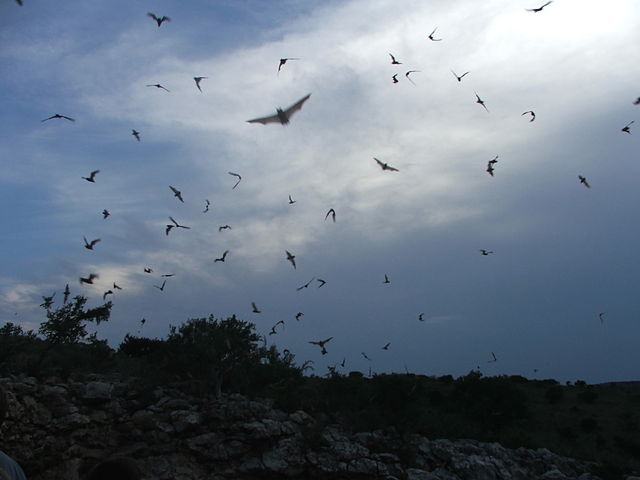
On Sunday last week, my eighty-three-year-old neighbor said, “If I was a bat, I’d be thinking about heading north about now.” We walked down to the icehouse, the roofless building with the mural on the back, where the bats reside most of the year. We were a day early. I could tell our little friends arrived Monday. Not because I went to see them that evening, but because there were no gnats falling onto my keyboard or crawling over my laptop screen.

As of today, it’s been a week since the T or C bat colony came home from their winter trip to Mexico, and I’ve watched them three times already. Their delicate wings are translucent as they flutter out in groups of ten or twenty, emerging into the evening sky from the blue sky of the mural, and then dispersing toward Turtleback Mountain and the Rio Grande. The joy that surges in me with each flight of bats is pure and wordless. Transcendent. My neighbor feels the same way. When bats take off, he sounds like a kid in his delight. On a windy night, he was disappointed to see only a few. Tonight, I was thrilled to witness flight after flight, a seeming infinity of bats.

An out-of-state tourist staying at the Riverbend RV park, right behind the mural, saw me standing and staring at the wall, and I explained I was watching bats. He stopped and watched briefly and said it was good the owner of the icehouse let them live there, but I don’t think he shared the mind-clearing flash of happiness these creatures give me. Nor can I explain it. Perhaps their silent sounds are penetrating my consciousness, sonar bouncing off my inner landscape and attuning me to the present moment in which they, my honored relations, always live.

Vulnerability

After a run at Elephant Butte Lake State Park, I was using the multi-level play structure on the playground near the end of the trail as my stretching station. I soon realized there were children not only climbing and sliding on the structure, but under it, using one of its platforms as a sheltered, shady cave. Remembering how much my friends and I loved secret, cave-like spaces when were around eight or nine like these boys, I hoped my presence didn’t bother them.

“Are you mostly with your dad?” one asked.

Ah. New friends getting to know each other. I suspected the boy who asked had divorced parents and spent more time with one than the other.

“I hardly ever see my mom,” the second boy replied with quiet force. “My mom is the least person in my whole life.”

He went on to talk about his father’s parents, and how he saw them a lot, but his pained and frustrated description of his relationship with his mother was what struck me. So did his new friend’s reaction. He simply listened. No advice, no interruptions, just silence.

When the story was complete, the listener let it rest a while, then exclaimed that they should go on the “zip line,” adding, “I don’t care if I break a bone!” Perfect timing.

They charged off to the part of the play structure where child can grab a sliding bar and zip from one platform to the next. It’s not high enough off the ground that a fall would do more than skin their knees, but the fear element must have made it more exciting, and taking risks together helped grow their friendship. Emotional risks as well as physical ones.

Vulnerability, not just doing things, is what makes friendship possible. Otherwise, you’re just acquaintances.

I’m at a point in my work in progress where my protagonist is going through a deluge of stress and making major decisions about her relationships. She’ll form the strongest bond with the person who can listen and accept her vulnerability without judgment.

The Cart

Whose life story did it tell? And how did it become their story? It didn’t begin that way, with a shopping cart full of garbage and drug paraphernalia parked in the unpaved alley behind my apartment. Parked next to the dumpster, with wads of trash and a small cardboard box containing a disassembled pink plastic item still in the cart.

It’s the windy season. If I didn’t do something, this stuff would soon be flying down the alley and getting snagged on cacti. I put on gloves and emptied the cart, aware that I was throwing away things that someone, for some reason, had hung onto. Someone I never see or hear, yet who lives in my town. Someone who hoards peculiar items and uses meth. No matter where their story started, to reach this point, it was a long way down.

I walked the cart to the grocery store and advised the customer service person that it ought to be cleaned, but by the time we got out the back door to where I’d left it , it had already been taken. A shopper was probably pushing it through the store, putting their groceries in it.

I’d like to imagine that whoever left the cart in the alley is getting help, but I’ll never know. Though I’ve tried to come up with an ending for this story, there isn’t one. I passed through the middle of it.