
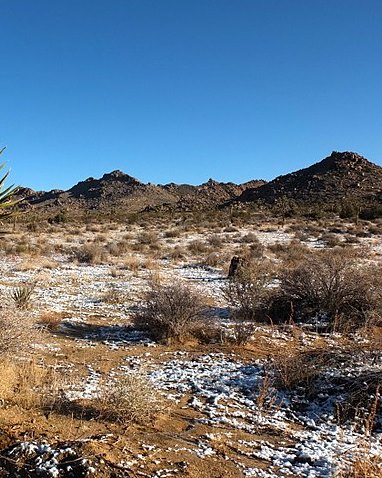
 This is not a normal winter in T or C. It’s cold. So cold a few flakes of snow fell, enough to decorate Turtleback Mountain with white stripes way up near the Turtle. I thought I wouldn’t be able to stand running when the temperature was below forty, but I missed the beauty of the trail, the open space on all sides, and the effect on my creative flow, so I gave it a try, wearing so many layers a northerner would have laughed had one seen me. Not bad after all, thirty-seven degrees. Another day this week was windy, almost like spring. I went out anyway. Half-way through the four miles, I realized I felt good enduring the challenges, better than if I’d done something indoors instead. It was good to be reminded that thinking about doing something difficult is often more stressful than actually doing it.
Category: Behind the Stories: Inspirations and Encounters
Shorter Days
 The sunset was pink, blue, and purple over my neighbors’ blue-and-purple houses as I walked to the yoga studio to teach tonight. One of those odd T or C sunsets where the color was not in the west, but somewhere else. Tonight, the northeast. It was beautiful, but daylight was ending already at five-fifteen.
Waiting until I’ve done all my chores and errands before I do what’s most rewarding is no longer an option. It could be dark by then. I’ve always been the work-first play-later type, the anti-procrastinator, but if I want to walk, run, or do outdoor yoga, I have to take advantage of the sunny hours, the warmest part of the day.
Sometimes I make myself do every tedious task before I free myself to write. Life is short. My days are shorter. I feel young, but I’m not. What am I waiting for? Along with teaching yoga, this is my work and my art. I give myself permission, right this minute, to drop everything else and do it.
Walking to the Lake

Once in a while I need a literal change of pace and take a very long walk instead of a run. Variety is good for the body, mind, and soul, so I explored several miles of Elephant Butte Lake State Park where the surfaces are either too hard (paved roads) or too soft (the beach) for running. Pavement is a great surface for vehicles. Tires don’t tear it up. But walking on it is noisy compared to walking on the natural bare earth, so I started veering off into the desert. To my dismay, it was so churned up by tires that it was hard to find an undisturbed place except in shallow arroyos, firm sandy paths made by October’s heavy rains. It puzzles me why people take their vehicles off the road. The roads are right there, designed for driving. If they want to get out and experience nature—I had an Edward Abbey Desert Solitaire moment—they should get out and experience nature. I can understand using a vehicle if one can’t walk, but otherwise, it doesn’t make sense. And it ruins the landscape. Instead of road runner and quail tracks, deer and coyote tracks, I kept seeing tire tracks. So I went back on the pavement.
I finally reached a dirt road, and when I got to the end of it, I found a patch of undamaged land, too steep for vehicles to intrude upon, with a deep arroyo running through it. It seemed to be guarded by a low-crouching creosote bush that resembled a giant tarantula. Welcome to the wild.
Eventually, I walked down to the water. The lake was stunningly blue under the clear sky, and a few sailboats were gliding across it, none of the noisy motorized craft of summer. The beach has grown due to the reservoir being so low, and the islands look as if they have bathtub rings from the mineral stains marking how high the water once was. The shoreline is a stark landscape, beautiful in its bare way—nothing but sand, rocks, and water, like an alien planet with no plant life. Then it got more alien-looking, and not in a scenic way. I began to notice unnatural shimmers in the sand caught by the low, late-afternoon sun. Half-buried plastic. Snack food wrappers, foam cups, remnants of bags, fishing line, all on their way to the water.
My collection in hand, I reached a small spit of red dirt and dark gravel jutting out into the blue water. On one side of the curve of the spit perched a huge raven. On the far tip, a blue heron huddled with its neck tucked in so much that its beak seemed to poke out from its wing joints. It looked gray again the brighter colors around it. The only sound was the plop of a jumping fish. Then the raven croaked and flew west across the shining lake, a good direction for a raven.
I hiked back to the paved road, collecting more plastic for the dumpster at the top of the hill. Not far at all. Not difficult to do. Unfortunately, I’m pretty sure that on the rest of the vast beach, there’s more plastic slowly traveling down the slope toward the fish and the birds.
What would make people stop and see it? Walking?
Retreat
As a professor, I welcomed the holidays as time off. After the busyness of the fall the semester, what I wanted and needed most was a chance to go inward. When people would ask me, “What are you doing for Thanksgiving?” I’d answer “As little as possible,” and then explain that I used the day as a retreat. I gave the same answer for Christmas. My family long ago stopped buying gifts and switched to supporting each other’s favorite charities. I love visiting them, but not in the winter. That’s not the time to go to Maine. Spring or summer visits are our tradition, not holidays.
My personal tradition of using the major holidays as retreat days carries on in retirement. I’m normally busy, outgoing, and social, not at all the stereotype of the introverted writer, so I still need such days. Aside from walking to the yoga studio to teach a class on Thursday evening (yes, a couple of people chose to come), I didn’t go out. I did my own yoga and meditation practices, and I finished the first draft of a book. Perfect.
The only hard part of this is explaining it to people who think it’s sad or weird, when I’m actually happy not “doing” the holidays. When I do explain, I find quite a few people who like the idea, but others still seem to think it’s a bit pathological. We have Scrooge and the Grinch, after all, among our seasonal archetypes. One Thanksgiving in Virginia, some well-meaning neighbors anonymously left a huge aluminum pan full of turkey and stuffing on my doorstep, not knowing me well enough to realize I’m a vegetarian. I guess they saw that I didn’t go out and felt sorry for me. I never knew which neighbors did it. I wish they had known my day of inwardness wasn’t lonely or depressing, but liberating. Soul-nourishing.
I have friends who do the big family gatherings, and that nourishes their souls. I heard the community pot luck at the brewery was packed, and I imagine it was fun for everyone who went and gave them what they needed from the day, also.
Black Friday passed, and I didn’t shop. However, I hope my friends in T or C who run stores had good sales, and that those who did shop supported small businesses and found meaningful gifts.
My neighbor across the street put up her Christmas decorations before Thanksgiving. Though she intended to make herself wait, she couldn’t resist. She had creative fun, and the display is quite entertaining. (The pink flamingo is wearing a holiday bow.) I don’t own any ornaments and like it that way.
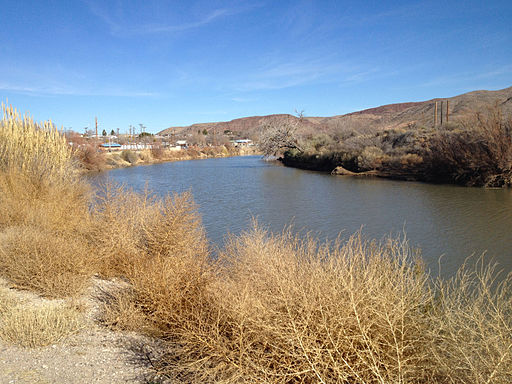
Today, I walked to the river, hoping to see water birds. The cormorants or coots—I still don’t know for sure what they are—have returned, and they were making their odd noises, peeping and croaking as they fished. On the opposite bank, where I’ve never seen any humans before, a man in a plaid shirt and denim shorts sat in a small, sunny clearing, perfectly still. Fishing or contemplating? I couldn’t tell. The sky was New Mexico Blue over Turtleback Mountain, and a blue heron perched on a for sale sign on a piece of land I hope no one ever buys, even though one of my yoga students is the realtor. The man on the bank moved just enough that I could see his fishing line catch the light as a fish stirred his meditation into new awareness, the present moment tugging on his hook.
His attire on a fifty-five degree day made me suspect he was a snowbird, one of the Mainers and Canadians who escape to T or C and think even our cool days are warm. If so, he has escaped to a town without a mall. What better place to spend the season? It was good bird day. Heron, cormorants (or coots), and snowbird.
Pilot Car
 My inner voice told me to drop in on a friend who’d been sick recently. Her shop being open was a good sign, so I went in. While we were chatting at her desk near the front door, a man walked in, making a beeline across the store.
“That’s a man on a mission,” I said. “He knows what he wants.” My friend agreed. A minute or so later, he brought my nonfiction book, Small Awakenings, to the desk, and asked my friend, “Do you know when she’s bringing out the seventh book in the series?” He’d probably come in for another Mae Martin mystery and settled for essays on mindfulness instead.
I was in my running gear, including purple five-finger shoes that clashed with my red pants and my Mescalero T-shirt featuring the Ga’an dancers in bright yellow. I don’t dress to impress the lizards. I’d rather look better for a reader, but he met the real me. I explained that the first draft of book eight was written. It was supposed to be book seven, but my critique partner had so many questions about what happened in between its events and the end of Death Omen, I needed to write the story that covered everything I’d planned to skip. If you’re asking the same question he was: Sorry it took so long. Yes, it’s been a year since Death Omen came out, but that’s why the delay.
He shared his relationship with the series and the characters. Like a lot of my male readers, he’s attached to Mae and has doubts about Jamie, and hopes she may move on in a new direction. Many female readers, on the other hand, love Jamie. They like him better than Mae, in fact. He’s sincere and caring, but troubled. Kind of annoying. A mess with a good heart. The gentleman in the shop acknowledged that Jamie had made progress, but he relapses.
I told him Mae has to decide about her love life, not me. I’m working on the next-to-last chapter of book seven, and she doesn’t know her choice yet, so neither do I. Though I wrap up the mystery plot in each book, the protagonist’s personal life is an ongoing arc. The friend I based her on is a strong woman, both athletically and emotionally, and yet she makes unwise romantic decisions. It’s her blind spot, her weakness.
On my way to Elephant Butte to run in the state park, I was stopped by road work and had to wait for the pilot car. As I finally drove up the hill behind it, gazing at its sign, I sensed it was a sign. Pilot Car Follow Me.
My inner pilot car drove to the shop and put me where I’d meet the next guidance. Talking with my reader made me see how the final chapter will work out in a way that’s true to the characters and their development over time. It will flow perfectly into book eight. And it just might satisfy readers on both sides of the Jamie divide. I’m honored that they care so much about my characters.
Outdoor Yoga and Bushy Neurons

I’m still exploring Hare Brain Tortoise Mind at a tortoise pace, and I came across this concept in it: Animals that live in highly stimulating environments grow bushier neurons in their brains. That is, the neurons develop more dendrites, make more connections with their neighbors, and become capable of new and varied patterns of interaction. They can get out of a rut.
I think of T or C as a bushy neuron kind of place. A friend who visited from Virginia tried to explain what she found so remarkable about it. She said I’d described it well in my books, and yet those descriptions hadn’t captured a certain aspect of its vibe, something she struggled name or explain. Then she finally realized what it was. “There’s no pattern.”
While she was here, she mentioned how odd it was to look down an alley and see not only a dirt alley with dumpsters, but also an explosion of murals—not graffiti, but murals. The town kept surprising her. And it can still surprise me.
She’s right; there’s no pattern, unless the two blue-and-purple houses on my block constitute a pattern. But one has a moon goddess on it and the other has a Kokopelli. On the same block are trailers and the stucco-and-stick-fence gated wall of a spa that will never be built. For some reason, someone bought the lot quite a few years back and began construction, although you can’t build anything that size in this location. It’s a nice wall, though.
Doing some volunteer work that takes me all over town, I recently discovered a section of Juniper Street I never knew existed. The street has three disconnected parts, and I’d only known about two of them. This third part is around a hidden curve. From there it suddenly drops down, becoming so steep no one could ever ride bike up it and so narrow you’d hate to meet another car on it. On one side is a great wall of wind-and-water-sculpted red dirt and on the other side, two residential streets, one with little houses, and below that, one with super-bright crayon-colored trailers. When I’ve looked down at the town from the water tower hill, I couldn’t figure out where the street with those trailers was and how one got to it. That third leg of Juniper was hidden by the wall of dirt.
In other neighborhoods, I’ve food an orange-and-blue building, stone buildings, a yellow house with Lady of Guadeloupe murals, little hidden cottages behind other houses, magical gardens, art gardens, hoarder yards, collapsing houses, yards with so much trash in them I worried how people could live that way, serene little adobe apartments with winding paths and desert gardens, and many of these coexist on the same streets. No pattern. The appeal of T or C to artists and musicians makes sense. It’s not neat, cute, or pretty, but it makes your neurons bushy.
The recent exposure to so many new off-beat places seems to have broken my habitual perceptual patterns. I discovered a perfect spot for outdoor yoga in the courtyard outside my apartment that I never noticed as such, though the small square of bricks was always there. Smooth and flat, partly shaded, it faces the autumn-yellow fig tree and a tall purple aster. Yoga feels more spiritual under the open sky with nature around me, even if it’s nature in the courtyard. And the shapes of the fig tree and the flowers reminded me what the novelty was doing for my neurons.
*****
Read more of Amber Foxx’s essays on this blog and in the collection Small Awakenings: Reflections on Mindful Living.
Undermind at Work

 That’s not a typo. I have not been undermined at work. I’m rereading Guy Claxton’s Hare Brain Tortoise Mind, and he refers to the slow processes of creativity and insight as the undermind—the part of the brain that’s working beneath the level of verbal expression and logic, the part that can detect patterns the conscious surface of the mind misses. The part that creates what the surface mind cannot. I read the book eighteen years ago when it first came out, but I wasn’t writing fiction back then, just academic research papers. I perceive its ideas differently now.
On this reading, I see in it an explanation of how pantsing a plot works. Those of us who write that way often marvel at how we laid clues we didn’t know were there and how we brought in characters whose purpose was unclear at the time, but who later revealed…
View original post 458 more words
Cut off and Connected
Last Sunday, a pleasant, sunny day in the mid-seventies, wasn’t a normal power outage sort of day—no storms, no wind. But around five-thirty p.m., a loud bang was followed by a loss of electrical power to a few blocks of T or C, just the stretch between my side of the street and the Rio Grande. No big deal, when you don’t need heat, lights, or air conditioning, and people right across the street do have power should you desperately need it for something. What the surprise outage did do was kick everyone it affected off their computers or TVs. Nice. I stopped reading a book review online, since the internet connection cut off, and wondered if my neighbor in Apartment 2 knew what was going on. When I arrived, the gentleman from the trailer next door was already there. My landlord soon joined us, and the four of us hung out and talked for a while. It’s not as if we never socialize with each other under normal circumstances, but the way we all went to one man’s apartment intrigued me. Sometimes, when we’re focused on screens, what we really want is a connection, and when the screen goes dark, we realize it. In this corner of T or C, we knew where to go for that human connection. My neighbor’s calm, humorous, welcoming nature made us gravitate toward him. His generosity gave us the assurance he wouldn’t object to our dropping in under the circumstances. He’s quiet, and I might not have met him if we weren’t neighbors, so I’m glad that we are. Simply being himself, at home in his true nature, he has the qualities of a spiritual teacher without claiming the title.
Opening to the Season
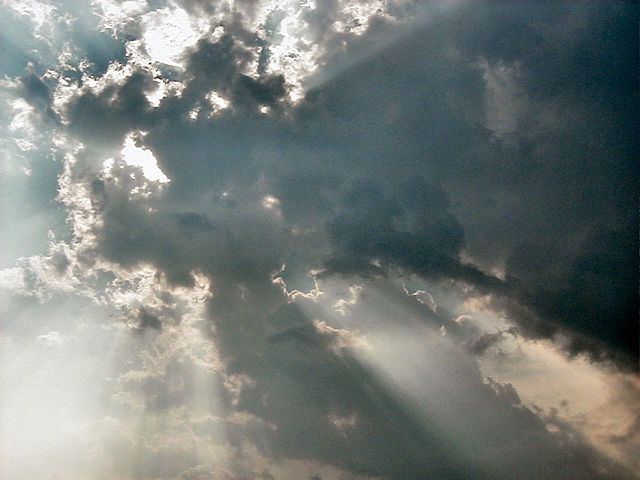 One day it was summer and the next day it was autumn. A deep silence heralded the change. Then, with a sudden wind, the new season flew in, bringing a day of dramatic skies—sunny patches, blue-gray clouds shedding thin sheets of rain, white clouds towering in wild wind-sculpted shapes. The only creatures I met in the desert were quail. The temperature had dropped twenty degrees, and everything that lives in a warm burrow was in it. Even after the weather began moving, my mind remained affected by the strange silence that preceded it, fascinated by sounds and the space between them. The tapping of rain. Nothing. The brushing of wind against rocks and trees. Nothing. A quail peep. Nothing.
I went to City of Rocks state park a week or so ago when friends visited from Virginia, and it was perfectly silent unless we spoke or walked. No cars. No other people. Nothing. 
It’s hard for the human mind to sustain total silence. Openness to the arrival of pure experience can be overwhelming. My head is more at home filled with the chatter of its own products, from the turning point in a plot to my daily plans. But without stillness, none of the activity works as well.
At home, the silence embraces me. After nearly six months of running the air conditioner, I’ve been able to turn it off. On an evening walk, my neighbor and I fell into silence as the bats emerged from their new home, swirling into the sunset sky from behind a broken blue wall with a mural on it. They’ll only be with us for another week or two, and then they’ll migrate to Mexico. We humans, our heads full of words and the sense of time, are aware that when the bats leave, another season has changed. Something has ended. And yet it hasn’t. In the perfect, circular nature of real time, the cycle is eternal.
*****
Read more of Amber Foxx’s essays on this blog and in the collection in Small Awakenings: Reflections on Mindful Living.
Knowledge and Perception
 During the month of August, there were so many events scrolling through the electronic sign over the entrance to Elephant Butte Lake State Park that someone decided to remove the time-temperature-and-welcome from the cycle of reminders and announcements. Once I got used to not seeing those numbers when I rounded a high point on the trail with a view of the sign, I realized how absurdly attached I’d gotten to noting exactly how many minutes it had taken me to reach that spot and whether the temperature had gone up a degree. I enjoyed my runs more without this information snagging my mind. Now that there’s less going in in September, “Welcome to Elephant Butte Lake State Park 1:36 p.m. 87 degrees” is back. It still takes me exactly twenty-four minutes to reach the point where I can see it, and I can tell how warm it is without looking. What is it about numbers and measurement? Or even the desire to know something just because it’s there to be known?
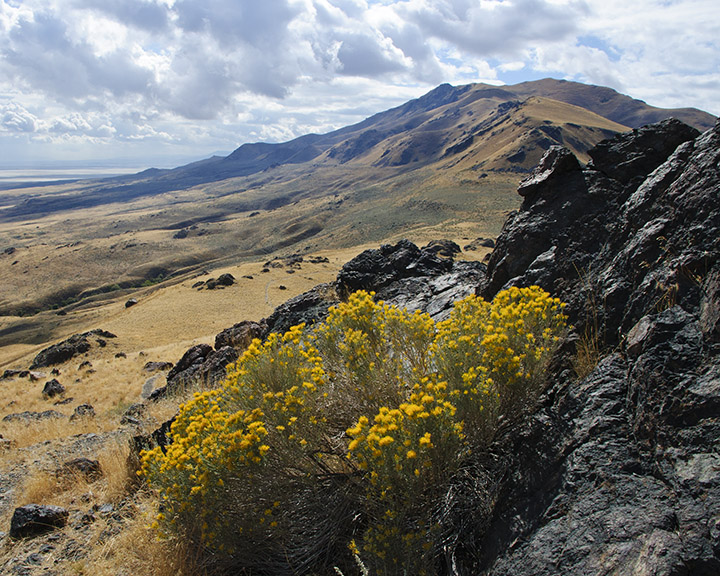
I don’t have anything against knowledge. Practical knowledge enhances life, and useless learning is fun. I spied a large, almost squirrel-sized, New Mexico whiptail today. She did one pushup and disappeared under a bush. My useless knowledge informs me that she was a she because they all are—our state reptile is an all-female species. Trying to identify a delicate purple flower I admired, I searched online in vain, but I learned that among New Mexico wildflowers there are plants called Water Wally, Hairy Five Eyes, Bastard Toadflax, Blue Dicks, Redwhisker Clammyweed, and Bonker Hedgehog. (The last one is a small cactus.) I still don’t know the name of the purple flower. I think its bright yellow companion is snakeweed, but it may be chamisa. Chamisa’s botanical name is Ericameria nauseosa, which makes me want to create an unpleasant character named Erica Maria in some future book. This plant, or its purple friend, smells wonderful, not nauseosa, and that perception is a greater joy than the satisfaction of acquiring a fact such as its name. Globes of yellow blossoms on green stems and taller stalks with tiny purple blooms glow against the pale brown sand, and a rare whiff of floral sweetness surprises me as I run past. At exactly the same speed whether or not I measure myself.
*****
Enjoyed this post? You may also like Small Awakenings: Reflections on Mindful Living. 

