Smashwords Sale is Still Happening

Shop for discounted e-books by author, by genre, or by price in the Smashwords Store.

My books are 25% off, which really adds up if you’re buying the whole series. Use this page to find Mae Martin Series the series in order, and click on the Smashwords links.

The sale runs through the end of July.

Velveteen Wabbit

Stephen Luke David John sighed in despair and turned away from his computer. Still no friends. No friend requests. Despite his best pictures. The ones with his cute pets. The shot with his fancy car. The pics featuring his trim, fit figure in uniform. The close-ups of his handsome face, sometimes clean-shaven with a strong, square jaw, sometimes with a neat gray beard.

Women might find it hard to believe he was real, but he was determined to become real. His distinguished military, medical, and engineering careers might be too impressive to believe. And a man of his striking good looks being so desperate for friends was probably even harder to believe. Not to mention his strange inability to make friend requests work. He awkwardly had to request the request from women he found charming, beautiful, interesting, or fascinating. Nonetheless, he kept at it, day after day, and it was getting less and less rewarding.

Stephen Luke David John did forty push-ups, petted his adorable dog, and gazed out the window of his penthouse overlooking … what city was it today? It changed so often, like his face and his name. He’d been Luke Stephen for a while, and John David Luke. Once he’d been so confused he called himself Luke Duke.

Back when he’d been a real rascal, he’d only needed one name, and no one knew it. His nickname had been Lightning, the fastest purse snatcher and pickpocket in his city. His real city. He missed the adrenaline rush of his former life, the fleeting and almost imperceptible contact with his targets, but he’d aged out of it.

His reflection in the window fluttered like the pages of a magazine, face after face, name after name. If only one woman would believe he was real, he might become real again. Might emerge from the limbo of the in-between world and be a man again. A man who had taken over a woman’s Facebook account and accessed her personal information, yes, but he would be a winner again. Like Lightning.

He sat back down and composed a message to a writer on her professional page. For a few days, he’d been liking her posts. She might be primed to think he was a real fan and thus less likely to block and delete him than on her personal page.

Dear Amber, please pardon my boldness, I don’t wish to intrude, but I find your profile and your posts irresistible. I sent you a friend request, but for some reason it didn’t work. If you would be so kind as to send me a friend request, I would be honored and delighted.

 He reviewed it. Yes. It sounded humble—and educated. He posted, confident in his quest to become real. While waiting for a reply, he finally read her profile. She wrote mysteries about crimes other than murder. Stephen, you dunderhead. Now you’ve done it. She’ll know exactly what you’re up to.

She banned him from her page and deleted his post. And then she turned him into fiction.

A Ramble about Rain

It’s hot here, though New Mexico is cooler than Texas. (Yes, you can take that as a double entendre.) With temps around 100 to 05 for a week, we want rain. Even a light sprinkle smells heavenly, and a small rainstorm invites a bigger one, moistening the air enough that the next time the clouds feel heavy, more rain will reach the ground, not evaporate and hover in shaggy trails of virga.

The following tricks provoke the clouds:

Walking without an umbrella when the sky looks promising. Most people here enjoy getting rained on, so this isn’t a sacrifice.

Watering fruit trees. If my neighbor and I water on the same day, this is even more effective.

Washing cars. This is not a decision to make lightly, since it uses water, and therefore should be done on rare occasions. However, if I get my car washed on the same day my neighbor and I both water fruit trees, rain is almost guaranteed, regardless of the forecast. All cars in New Mexico are covered with a thin layer of desert dust at all times, except immediately after washing. A heavy monsoon will wash one side of your car if the wind is right, but in general, rain will speckle and smear the dust even if you don’t drive through a puddle.

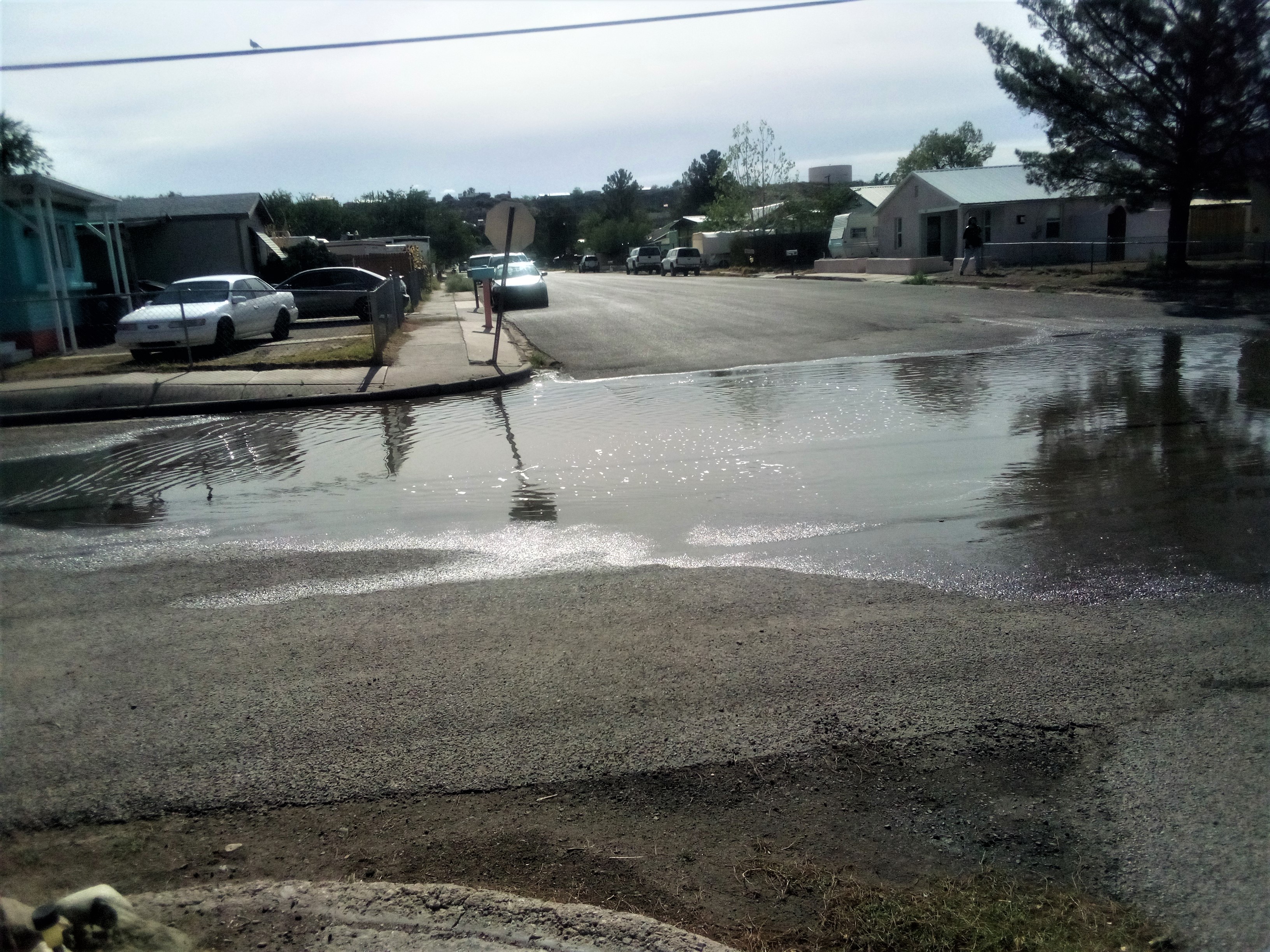
Some people get so excited about rain they drive fast and splash through the giant puddle that fills the intersection of Marr and Clancy in Truth or Consequences.

A big fuzzy blob of orange and pink sunset, hazy with rain, reflected in Lake Clancy tonight. A reward for all those rain provocation tricks.

The Pause

When I catch myself pushing on and on, from one task to the next, I’ve intuitively begun to pause in between and do nothing. A few silent seconds of breathing and gazing at whatever’s in front of me changes everything. Then I carry on with greater equanimity and mindfulness.

Teaching yoga, I bring students back to a neutral pose between more challenging ones,  revisiting tadasana between warrior poses or dandasana between seated twists. In stillness and symmetry, we can feel the aftereffects of the previous asana.

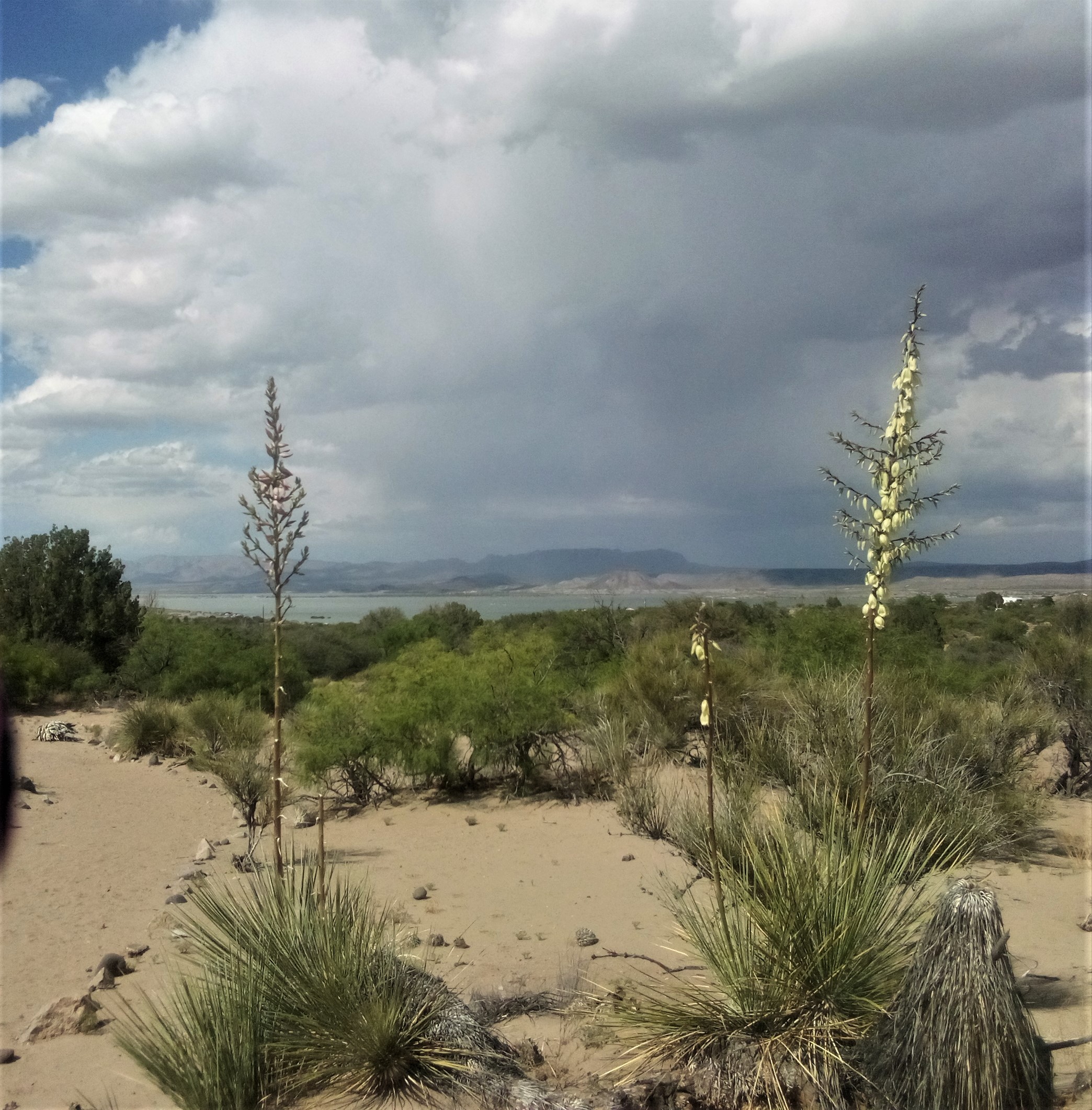
Pausing my run for a sip of water at the top of a hill, I discovered the clouds in the north were no longer distant but moving in and thundering, bringing the imminent blessing of rain to the desert. A multitude of yuccas’ spikes of bell-like blossoms stood out, green-white against the blue-gray sky.

The space between each breath, neither inhalation nor exhalation; the space between each thought, neither this thought nor that; the airborne space between each running step; the pause between lightning and thunder; the line breaks in poems, the rests in music; the dark sky between the stars, the blue sky between the clouds. Sacred space.

More from the Archives of the Little Pink Phone: Character Insight

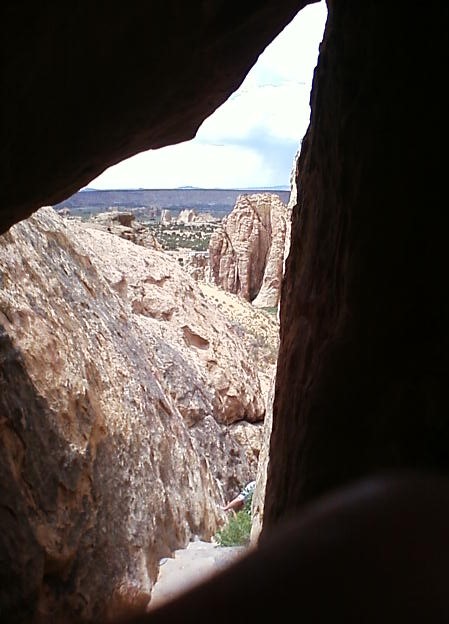
When I found pictures of the stairway descending from the mesa at Acoma, I recognized an image I used in Ghost Sickness, the fifth Mae Martin mystery, and looked for the scene that featured it. In my search for the word “stair,” I assumed I would find the gallery scene with the paintings of the stairway.

 The stairway

I found it, but first, I discovered a connection I hadn’t consciously created. A major character in the book, Acoma Pueblo artist Florencia Mirabal, left her family—one of the last families to live on the high mesa—and eventually settled in Truth or Consequences. For Florencia’s house in T or C, I selected the one that is, like Acoma Pueblo, perched up high, with an extraordinary view … and a stairway. Writing the book, I was unaware of the parallels.

Mae pulled the truck into the weedy patch of dirt that qualified as a side yard, drawing near to the porch’s side steps. The front steps led to a long, winding set of stone stairs set into a steep cliff, giving the little house the feeling of a castle. On their way in, she and Niall paused on the porch, looking down at Main Street and the view of the Rio Grande and Turtleback Mountain beyond the town.

 Mae said, “This is such a perfect place for an artist to live. It must have been hard for her to leave.”

Then, I found the scenes featuring Florencia’s stairway paintings.

  • Several small canvases with what appeared to be drafts of the work she had in mind stood around her, images of a narrow rocky staircase like a crevasse in a mesa.
  • Clemens circled the room again and paused in front of a pair of paintings. Both showed the exact same scene, a stone stairway winding between steep rock walls. The perspective was slightly distorted, suggesting multiple parts of the twisting path seen from different angles. A shadow of someone’s legs and a foot lifted to take a step fell on the stairs, but no human figure was shown. One version of the painting was in shades of yellow, brown, and gold, the other in shades of blue.

Much of the mystery centers around Florencia’s art and her separation from her family. I knew I was writing that part. But I didn’t realize how her choice of a home reflected the one she left but never let go of in her paintings. And since I didn’t realize it, I think it was her choice, not mine.

The view from the stairway

Inspirations: From the Archives of the Little Pink Phone

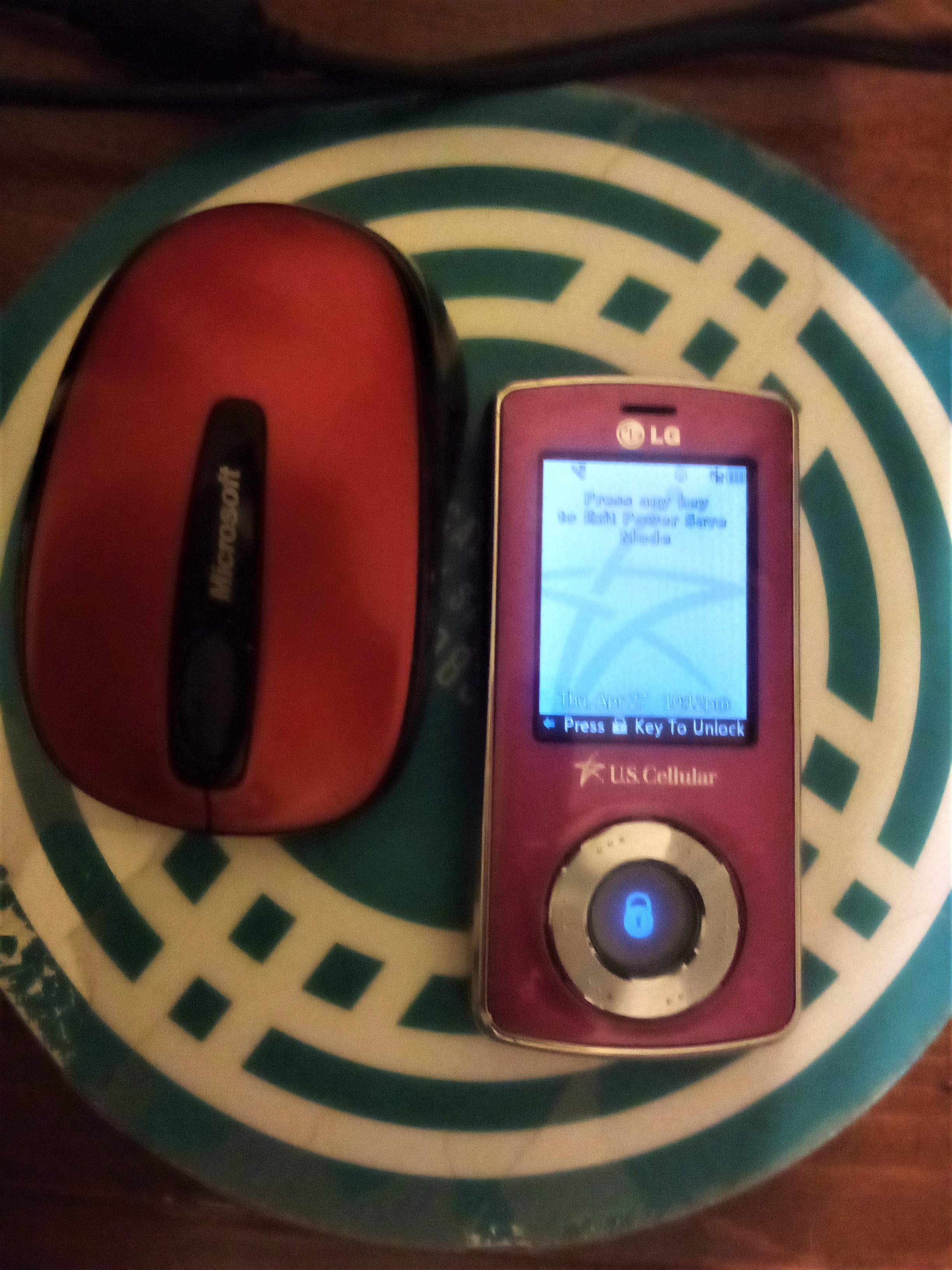
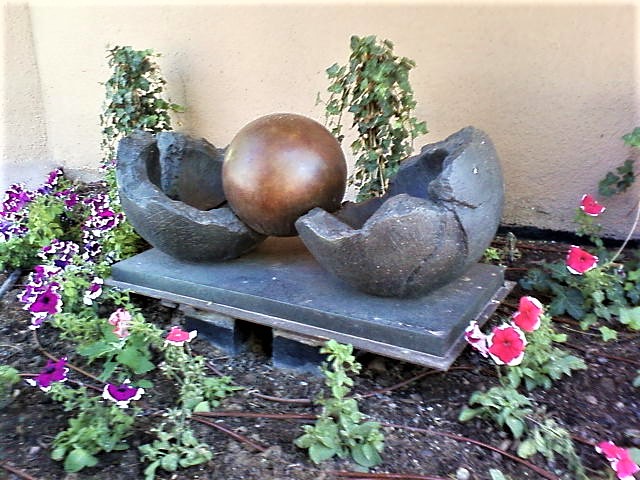
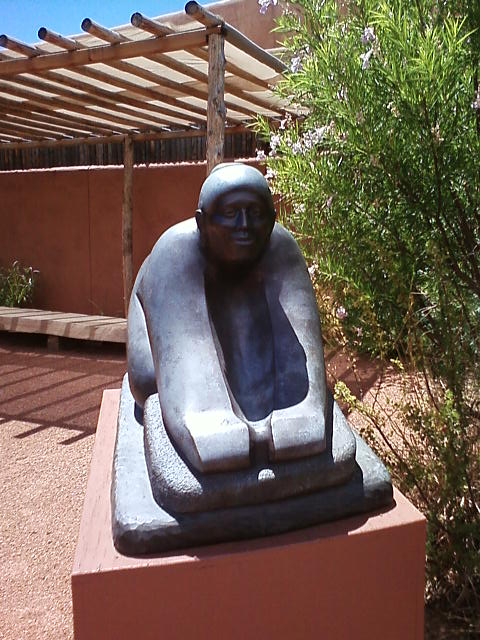
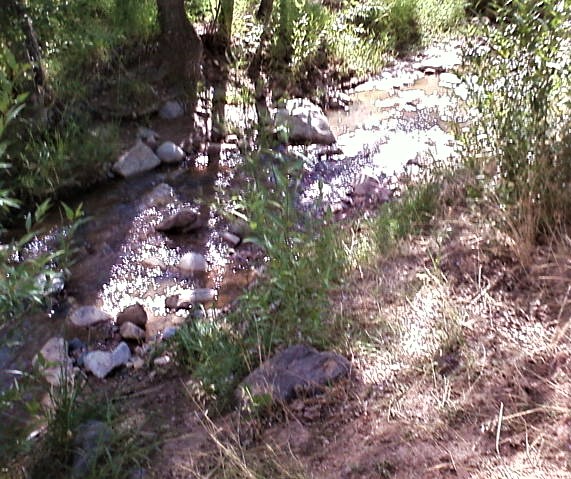
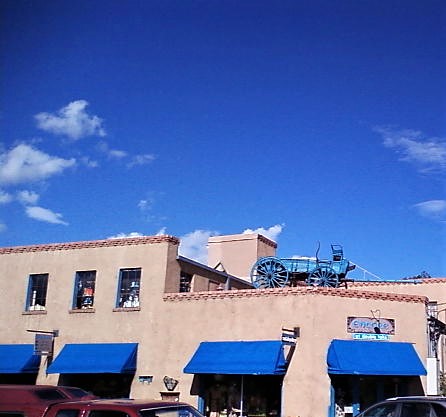
My sister called it a Barbie phone. It’s tiny and pink, circa 2009. I used it through 2019. I’d given no thought to the pictures on it for years, and had never downloaded them while it was my working phone, so I’m not sure why I finally did—but I’m glad I did. On it, I found pictures of Truth or Consequences and Santa Fe in the years during which my books are set. The work in progress, book nine, takes place in 2013.

When I took these photos, I was collecting material for my books. I chose the settings through Mae Martin’s eyes, her delight and awe in discovering New Mexico, and the feeling of deep change and emergence that her new home gives her.

In Shaman’s Blues, Mae is often struck by the intensity of the light in Santa Fe. Encounters with outdoor art trigger key moments for her, for Jamie, and for the boy Jamie tried to help.

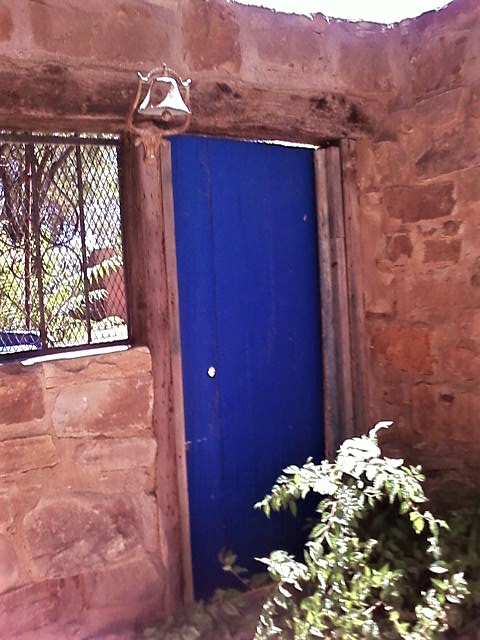
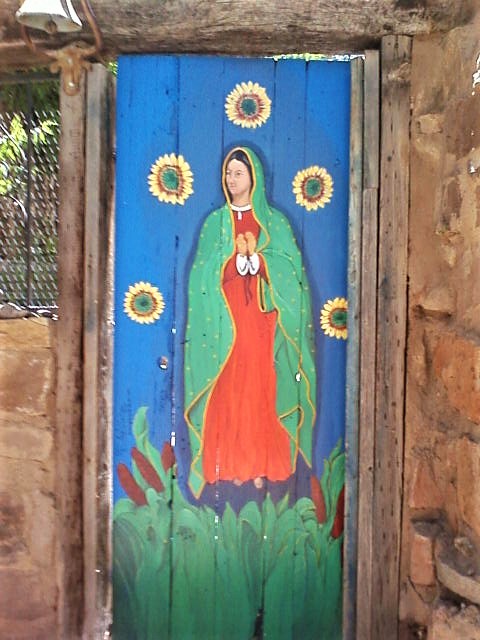
The nearly-dry Santa Fe River plays an important role, as does the image of the Lady of Guadalupe. I took a picture of this blue door in Santa Fe one year, and the next year the Lady had been painted on it.

As I look at the colors in my old pictures, the book’s title echoes them. Blues.

I’ve also photographed settings that had meaning to other characters or played roles in later books, and will share some in future posts.

Images in Words

A member of my book club mentioned that she skips speech tags and descriptive passages when she reads. I was amazed. Sometimes, I might be able to keep track of who’s talking without tags, but I always want to know where the scene is set. In a mystery, especially, any aspect of the layout of a house or the geography of a canyon might be essential to the plot. Also, I feel that setting affects characters. I read for immersion as well as for the plot.

I’ve read a book by one currently popular author that featured too much description of upholstery and curtains, but that same author also said too much about the food, about the details of love-making, about the clothes characters wore—about everything—for my liking.

I’m now considering how I choose what to describe and what to let readers imagine. Is the setting so ordinary that “small town” or “café”  will suffice, or is it so off-beat that readers would never imagine it without help? Does the image have symbolic or evocative meaning? Does it reveal something deeper about the story? Does it help the reader enter the character’s experience? Is it necessary to give the scene form and grounding? Smell and sound can touch emotions. And while I find excessive food description gratuitous, taste is part of the sensory wholeness of certain scenes. So is weather. There are writers who scarcely describe characters, but how we look—both naturally and through self-presentation—affects how we interact with the world.

Now I’m curious. Do you skip descriptions when you read? If you’re a writer, how do you choose what to describe?

Boxed Set Sale, Book Club Discussion Questions, and Work in Progress

The boxed set of the first three Mae Martin Psychic Mysteries is on sale for $2.99 through April 26th.

Is your book club reading either The Calling or Shaman’s Blues? These have become book club choices, I think, because of their genre-spanning qualities, with elements of women’s fiction, mystery, and the mystical/paranormal. After discovering how much my book club likes using the suggested questions for books, I’ve created a Book Club Discussion Question page on my web site. (I’ll eventually get around to adding the link to the end matter of the books. So far, I’ve added the task to my to-do list.)

Book nine in the Mae Martin series is in progress. I’m a slow writer, so it will probably take another year to bring it to its final form. Using the almost-finished first draft and an earlier, unfinished half draft as foundations, I’m creating anew while revising and recycling the earlier material. Always an adventure—following where the characters lead me.

One Perfect Day

Spring in New Mexico is pretty rough. The humidity feels like it’s below zero and wind averages twenty miles per hour, day after day. Some days are windier, and things fly around that were never meant to fly, along with a lot of dust and sand. It started early this year, in mid-February, cutting off a good two weeks of our beautiful, gentle winter.

Suddenly, a winter day appeared in March. Fifty-nine degrees. No wind. When I started my run, there was hint of petrichor in the air, the scent of rain. None fell, but it was a sweet moment. The clouds parted, the sun beamed warmth between them, and spring beauty I tend to overlook when distracted by enduring the wind emerged to my attention. Small green plants pushing up in the desert despite lack of rain. Quail and doves and roadrunners calling out to their kind, and quail darting across the trail. A little beige ground squirrel running at full speed, its tail flying out behind it.

Every step and every breath was pure delight. Neither hot nor cold. No strain, no suffering. Just bliss and beauty. The touch of the sun brought pleasure with no “in spite of.”

Then I did my plant care chores as no chore at all, watering fruit trees and garden plants for neighbors who are often away. The plum tree was in full bloom. Bees buzzed in it and in the blossoms of the cottonwood trees. Spring-like pleasure without the stress of normal spring. The wind was due back the next day, and knowing this, I basked in every second. One perfect day.

Can I cherish every day the same way?

Writers Don’t Work Alone

My first completed manuscript was awful. I’ve saved it, but shared it with no one. It was an exercise is completing a plot and proving to myself I could do it. My second completed manuscript was awful, too, but I thought it was better, and I shared it with my first writing critique partners, fellow members of the Guppies (Great Unpublished) subgroup of Sisters in Crime.

I was so lucky. One person hated it and didn’t finish it, and her harsh critique was pretty accurate. The other found the strengths in the mess, the gems in the muck, and supported me. She loved my characters so much she took an incredible amount of time to graciously point out my beginner writing mistakes and to explain why they were mistakes. She was under no obligation to work that hard for no pay. Yet she did. She was more experienced, and she saw promise in this beginner.

My first book, The Calling, emerged from that manuscript a few years later. It has many of the same characters. It has the same theme. But not the same plot. My style and structure improved. I read books on writing, took classes on writing, and worked with additional critique partners. With all that the help over the years of revision and polishing, I crafted a solid, favorably-reviewed book.

This week, I finished a critique of a first-time novelist’s manuscript. I’ve read three versions of it, investing in this book the way my early critique partner invested in mine. The author is gifted. She made newbie errors, but I could see the gems beneath them, as could her other beta readers. She had an original idea, fascinating characters, and outstanding research. I’ve been a published author for going on ten years now. It felt good to “pay it forward.” I may be alone at my desk tonight, but not a single book I’ve published has truly been written alone.