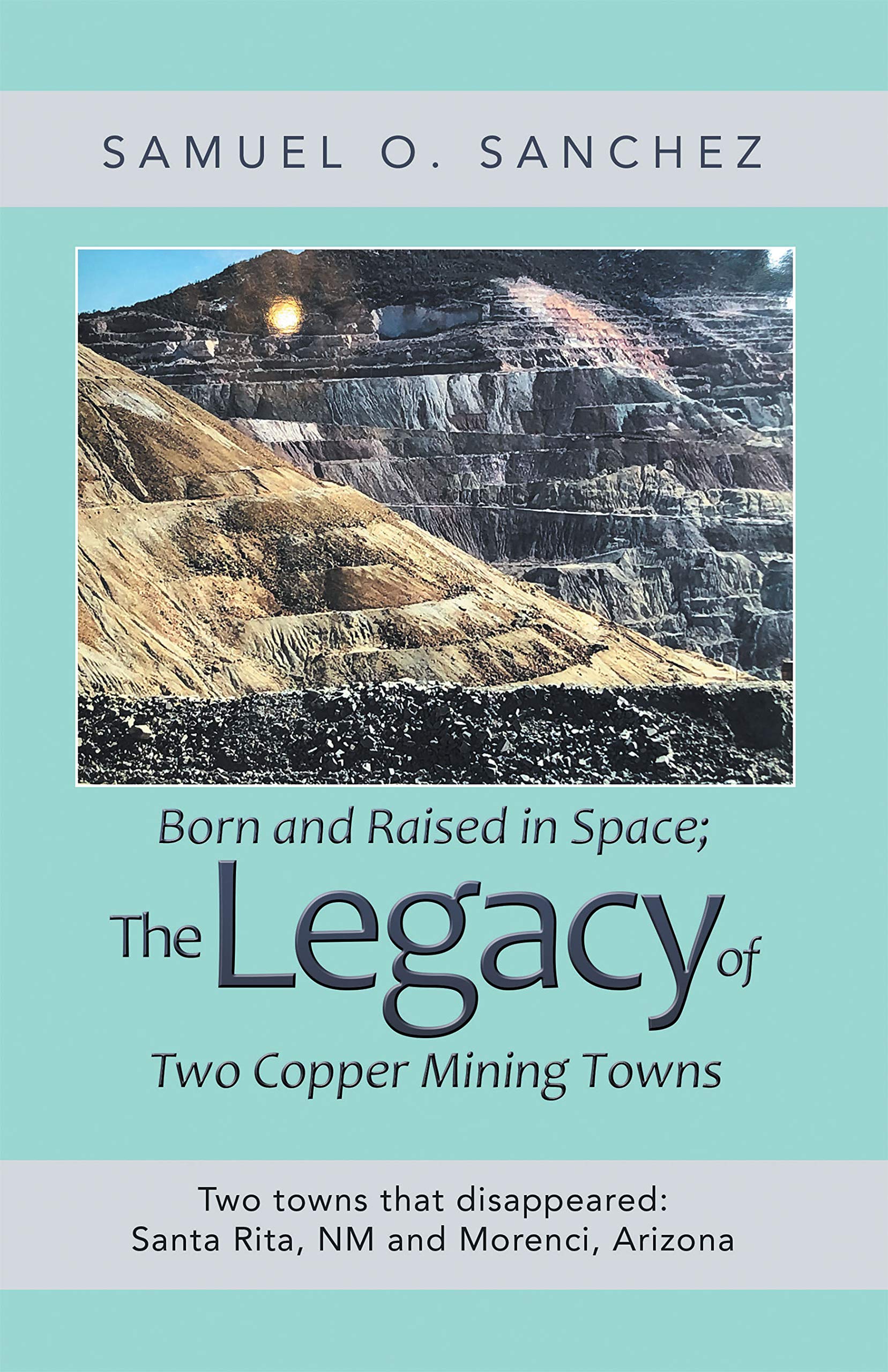
Review: Born and Raised in Space; the Legacy of Two Copper Mining Towns : Two Towns That Disappeared, Santa Rita NM and Morenci AZ

This memoir, told in short vignettes with often humorous lessons at the end of each, is an adventure as well as an intimate exploration of a man’s life from childhood to his elder years. The author portrays the mining towns where he grew up, Santa Rita NM and Morenci AZ, vividly. History is made up the lives of ordinary people, and such a close look at one life makes it clear that no one, really, is ordinary. Regular folks are colorful, original, and unique. This personal history also reminded me how much the world and the state of New Mexico have changed in one lifetime, how different the mid twentieth century was from the early twenty-first century, culturally, socially, and technologically.

Sanchez is fearlessly honest and impressively resilient. If he did something foolish as a boy or as a college student, he tells you. If his career or his love life went well—or not—he tells you. Reading this book is like hanging out with a great raconteur, a man with a long life, a sharp memory, and a willingness to take chances. An electrical engineer, he defies any stereotype of engineers as being on the boring side. I carried this story with me as my EV charging station read, so I was often reading it in public places and laughing out loud.

The author and his wife had the table across from mine at an event for local authors in Las Cruces, NM, and the subtitles and the cover picture on his book fascinated me so much I forgot to ask about the main title. I wish I had, because I don’t know what it means. Born and raised in space? Oh well. If you read the book and figure this out, let me know.

Flimflam, Thimblerig, and Bunko—Don’t Let Them Happen to You.

Every unpublished author wants to be published. Smart people can be persuaded by schemes designed to exploit that desire when they don’t know what to look out for in order to protect themselves,

The first and most important step in avoiding such missteps is to join a professional organization for writers, preferably one for your genre. I joined Sisters in Crime, an organization for mystery writers, before I finished my first book. I spent five years working on it while getting acquainted (online) with established authors, both traditionally published and self-published, as well as other newbies. Through SinC’s Guppies group (The Great Unpublished), I joined critique groups and did manuscript swaps. Many successful authors stay in the Guppies to mentor newcomers and give guidance. I found my editor and my cover designer through the group. And I learned much that enabled me to avoid trouble on the path to bringing the first book out.

This article examines areas where trouble may lurk and also where it can be avoided: Publishers, Agents, Self-Publishing, and Contests and Anthologies

Publishers:

Characteristics of legitimate, traditional publishers

This type of publisher doesn’t charge you anything. They make money selling your book. Most pay advances, and most require submission from agents. A few small presses take direct submissions, and some don’t pay advances. But they don’t charge the author any fees. A traditional publisher is selective and invests in you. They take care of editing, cover design, and marketing—though you’ll probably have to supplement the marketing.

Read the fine print in a contract with a traditional publisher. When do the rights to a book revert to you? If it goes out of print or is never published, do you get it back? You can sign with a great small press, do well with them, and then they close their doors. Find out what would happen in that case. A number of currently self-published authors were formerly trad pub and got their rights back after their publisher dropped their series or went out of business.

Characteristics of questionable publishers

Any of the following can be a red flag: They require you to buy or to presell a contracted number of copies of your book before you can earn royalties, or you only earn royalties after X number of books have sold—despite being paid no advance. They charge for editing, formatting, cover design, or other work that would be provided by a traditional publisher. You are pressured to buy add-ons such as marketing services. They run ads or send emails inviting you to submit your work and become a published author.

These publishers make money off author fees, not book sales. They often do no marketing. In some cases, you never even get the copies of your book they required you to purchase.

If you do get them, it can be hard to sell fifty—or two hundred—copies of a paperback by an unknown author. Chain stores get their stock from distributors which carry books that are predicted to sell. Small, independent stores have more flexibility, but if they choose to carry your books, most will take them on consignment, not buy them from you. Best case scenario: a store buys a few from you and then sells them.

Vanity Presses

These publishers will produce books such as a memoir to share with family or a poetry collection for your local poetry club to sell for charity. There’s no pretense of creating something for stores or for national sales. This is a reasonable business model, as long as you know you’re dealing with a vanity press. If all you want is small number of books for family and friends, and the prices are moderate, a vanity press may be suitable. Problems occur when businesses operate like vanity presses and try to pass for traditional publishers.

Agents

They are go-betweens who work to get a traditional publishing house to consider your book. The agent only earns a commission if they sell your book. They don’t charge upfront fees. Like traditional publishers, literary agents are highly selective. It takes time and effort to get one to represent you. Some flimflammers have been impersonating well-known literary agents and soliciting authors’ business. Make sure you’re working with a reputable agent who has a record of selling books, and that they are who they say they are.

Self-Published Authors: what you do and don’t need

What you need: an editor—possibly a structural or developmental editor— and definitely a line editor, a proofreader, a cover artist, and several critique partners or beta readers.

Get recommendations for all of the above from the author group you joined. Don’t pick someone from Goodreads or from an ad. I’ve read books by indie authors who’d paid $2,000 to an “editor” who did nothing more than fix the typos. Proofreading is not editing. It’s done after editing.

Wide distribution is in your long-term best interest: Most of your sales will be eBooks. You set the prices, decide when to offer discounts, or when to give away an eBook for free, etc. It’s best to distribute and publish to all eBook platforms, not just Amazon. Don’t put all your eggs in that one basket. While Amazon generally sells more books, their customer service for authors is limited, and if you accidentally trigger some rule that gets your book unpublished or your reviews removed, you don’t want to vanish entirely. Also, I’ve had months when my sales on Apple exceeded my sales on Amazon. Some authors will put a book in KDP Select and Kindle Unlimited for three months in order to get reviews and then distribute widely. You can upload a book directly to Kobo, Barnes and Noble, and Apple or go through an aggregator like Draft2Digital. (They merged with Smashwords, which used to be the other option for distribution and still has its own eBook store.) Draft2Digital/Smashwords will distribute to library services like Overdrive, Hoopla and others, as well Kobo, Barnes and Noble, Apple, Scribd, and a number of international eBook stores.

What you don’t need and why:

A stock of hundreds of paperbacks. Paperback sales in stores are minimal for authors who aren’t traditionally published, as noted above. KDP Print, Ingram Spark, and Draft2Digital Print are POD (print on demand). You only need to keep a few copies of each book on hand for local sales and books signings.

 A marketing service. You don’t need a professional helper to purchase ads. Paid advertising is one of the simpler things you’ll do. Your social media accounts and your newsletter should be in your own voice. Marketing services may claim to offer search engine optimization or make other dubious promises like a Bookbub Featured Deal. Learn to do the marketing yourself. Read a book on how to do it. Subscribe to newsletters from David Gaughran, https://davidgaughran.com Dave Chesson https://kindlepreneur.com , and others who give free advice (as well as sell books or products). Read the Bookbub blog and the Kobo Writing Life blog. Learn from fellow authors in that group you joined.

A formatter. If you self-publish the way most authors do, you only have to do some basic things related to font size and white space to set up a Word document that Draft2Digital /Smashwords can format. There’s no charge for formatting. If you use them to distribute your eBooks (and/or publish paperbacks), they take a small commission from your royalties for all the services they provide. Even if you upload directly to Amazon or some other stores, you’ll probably want D2D /Smashwords for library distribution, so you might as well format there as well. Then upload your formatted book elsewhere as needed.

A fee-based full-scale self-publishing service. There are services that package the needs of self-publishing, such as editing, cover design, formatting, printing, and distribution. They’re likely to cost more than DIY indie publishing, and you may have less control over your choice of an editor or cover designer than if you hire your own. Everything the self-pub service company does for you can be done for the same or lower costs with more control when you hire free-lance. Shop around. Get recommendations from that group you joined. If you do everything yourself instead of through a self-pub service, you’ll be ready and able when you want to update anything from the backmatter to the cover to correcting two typos an alert reader told you about.

Contests, Awards, and Anthologies

Many contests are money-makers for those who run them, but of little to no benefit to those who enter. If you have to pay more than twenty dollars to enter a contest or be considered for an award, if you lose the rights to your short story or essay even if it’s never published or goes into an obscure volume that’s never marketed, or if you have to buy copies of the anthology in which it’s published, don’t enter.

The Ultimate Resource: Writer Beware

This web site will give you far more detail than I can. Click on every link and read in depth.

https://www.sfwa.org/other-resources/for-authors/writer-beware/

A good article from an author’s blog, one of the best blogs for writers to follow:

https://annerallen.com/2015/12/5-scams-target-new-writers-spot/

Pirate Flags in the Book World

A member of my book club asked how she could tell if a web site was offering pirated books. If such an avid reader didn’t know, it’s likely that she’s not alone. So here’s a brief summary of eBook pirate flags. For your safety, steer clear when you see them.

If you find a site that offers eBooks and PDFs of books free, and nothing but free, you have probably found a pirate site. If they offer best sellers and new releases free, you can be sure it’s not legit. If they have only a few of the books in a long series, that’s also a pirate flag. (They have not succeeded in stealing all seven or eight.) A real online bookstore will usually carry the whole series. And if later books in a series are free, not just the first one, that’s almost certainly a sign of piracy.

Pirates steal book files and cover images, or in some cases only excerpts of books. Pirates sometimes don’t really have the books at all. If the grammar and sentence structure on the web page seem a tad off, as if the site’s creator is working in English as a second language, that can be a hint that this site is housed in a country like Russia that tolerates cyber criminals. Think about it. What profit is there is giving away pirated books? There has to be an angle. That angle is exploiting the “customer” through credit card info theft, multiple types of malware, and email harvesting.

Some people share book files, thinking it’s like giving a friend a paperback after you’ve read it, but a paperback can’t reproduce forever, and there’s a risk in participating: malware. Instead of file-sharing, use the lending option on legitimate eBook platforms. I’ve known people who have two e-readers to loan one out so a friend can read what’s on it.

I found my three of my books—including the one that’s free in genuine online stores—on two pirate sites. My McAfee anti-virus program identified the sites as risky, so anyone who goes there may run into cyber trouble. If you’re an author, be careful as you check to see if your work is pirated. Just search, don’t click on links.

Pirates make it very hard to contact them or send a Digital Millennial Copyright Act take-down notice without clicking on a potentially risky link. To get around this, some authors go to the trouble of contacting the web host or asking Google to stop indexing the site in search results. If you do contact the pirate sites by email, keep in mind they may simply be harvesting email addresses to sell to spammers who will then try to sell you dubious products like paid reviews.

If you want to buy books safely, buy from legitimate, reputable outlets such as Amazon, Kobo, Barnes and Noble, Apple, and Smashwords. If you can’t afford even low-priced $3.99 and $4.99 indie titles, go the free and 99 cent sections on eBook retail sites. I’ve shopped for free Nook books that way on B&N and found a large—and safe—selection. You can also check out an eBook from your library if they have Hoopla or Overdrive or another such system. Authors deserve to get paid. And readers need to avoid risky web sites.

Avoiding and Connecting

There are two kinds of social interactions I find easy. One: conversations with special friends, people with whom I have a relationship so close and genuine that I know we’re not judging each other. Two: spontaneous chats with strangers. It’s the in-between situations that are complicated. Parties—which I leave as soon as I politely can—and large meetings. Dreading the tedium of one of those meetings, I opted to attend it by Zoom even though I could have walked to it. I was rewarded for my avoidance by getting a call during the meeting from a friend in Virginia, one of those close friends with whom everything flows. We’d been phone tagging but hadn’t connected in many months, having different schedules and living in different time zones. I spent most of the meeting off camera talking with her instead of paying attention to the agenda. I’ve never felt so good about not showing up.

The Annual Whole Series Sale

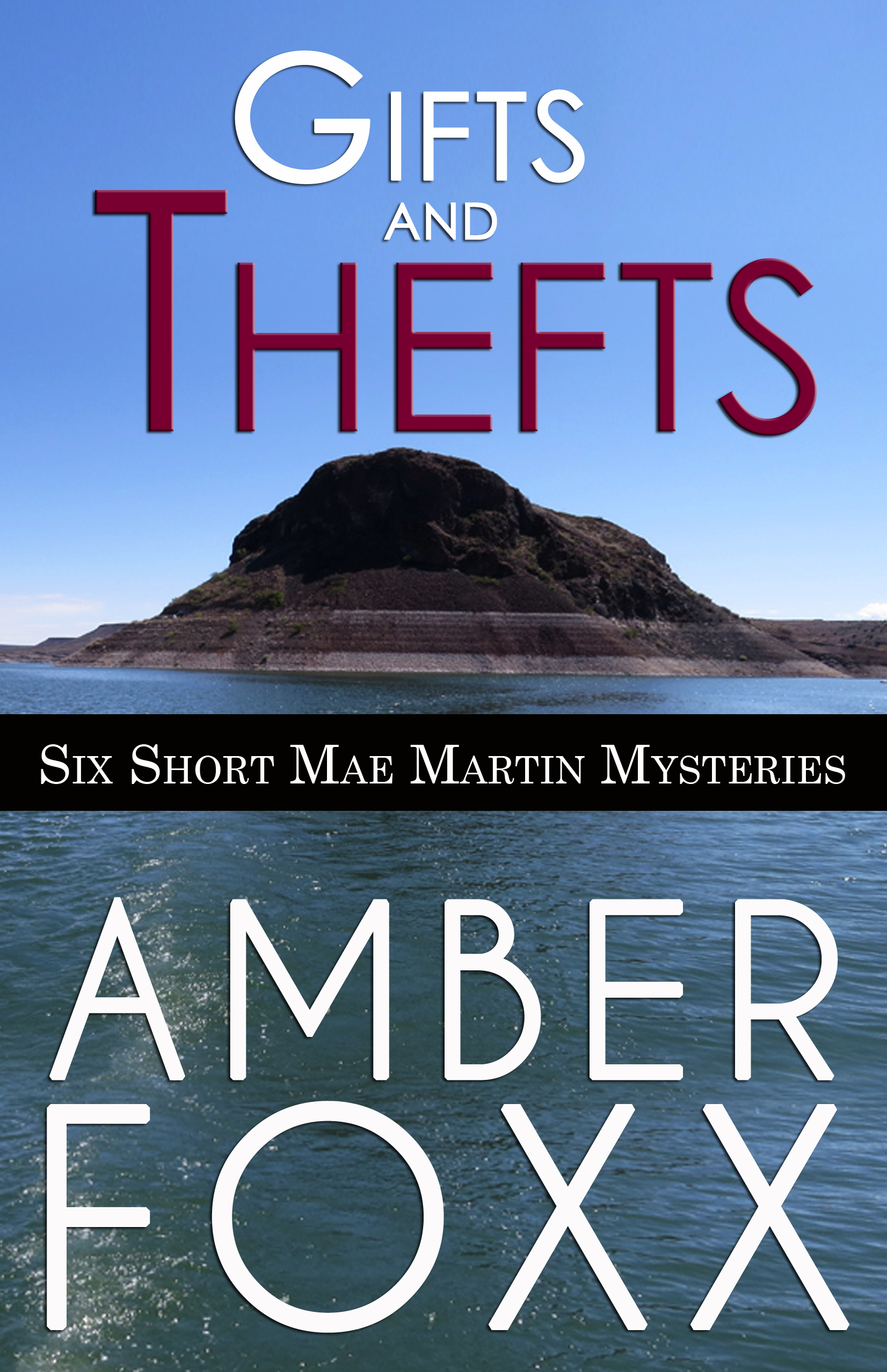
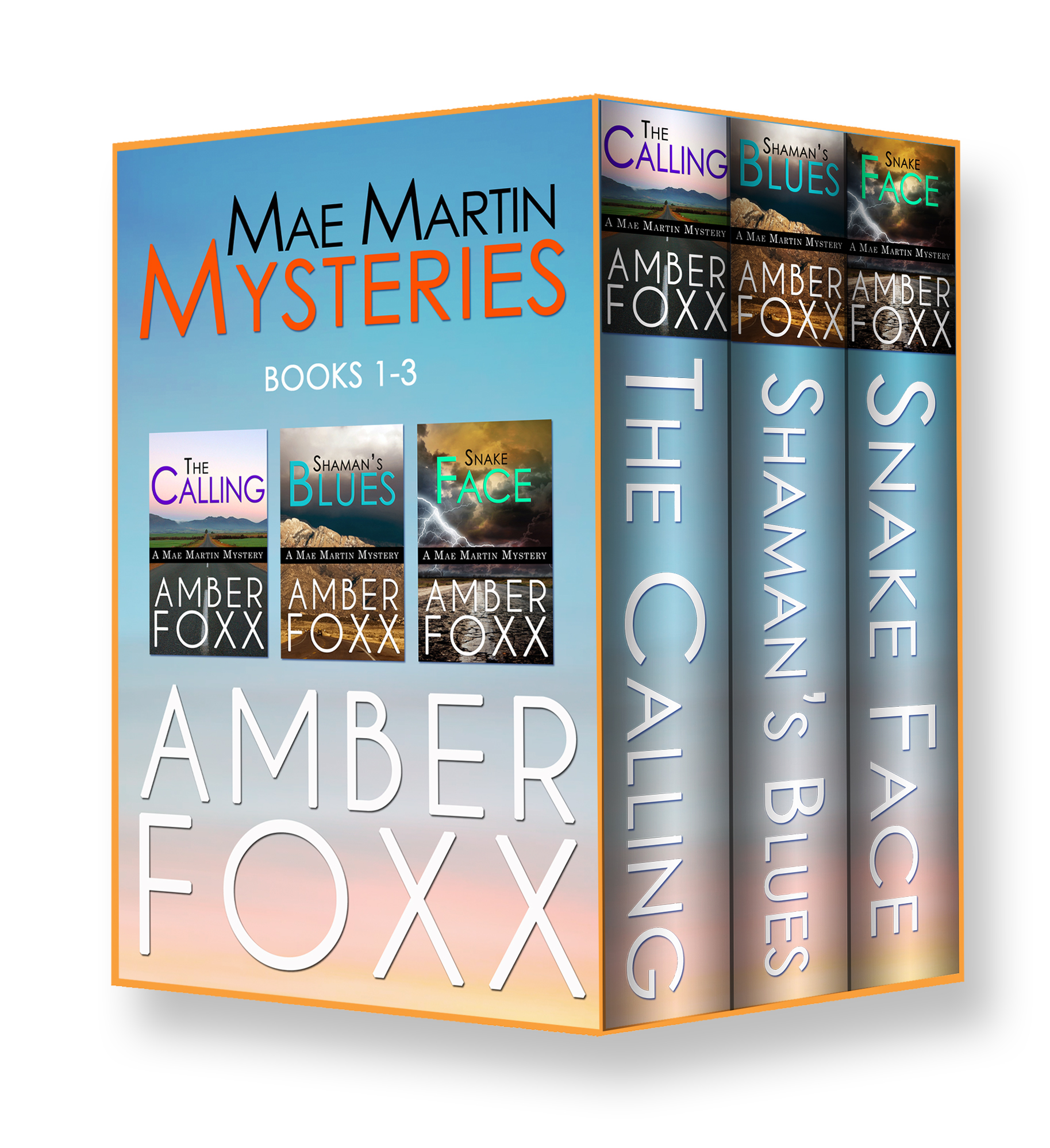
All books in the Mae Martin Series are discounted through the end of January, on sale for $3.99 each .  Book one, The Calling, is free. The prequel, The Outlaw Women, is 99 cents, and book 7.5, the short story suite Gifts and Thefts, is $2.99. No murder, just mystery. No inflation, either. Available through all major eBook stores.


Listening and Light

Listening silences my inner noise. Running on a winter afternoon, I hear my feet. The sound- textures change from hard slapping on dried-mud clay to near-inaudible thudding on soft dust and sand to crunching on gravel and pebbles. A crow caws in flight. A flock of doves rises from the desert brush with alarm calls as fluttery as the rush of their wings. Hikers converse in amiable tones, too distant for me to make out their words. Rather, I receive their voices as part of the music, harmonizing with the cheep of a solitary bird, the hum of something mechanical at the New Mexico Veterans’ Home on the hill above the trails, and the crow of a rooster somewhere across the Rio Grande.

Listening seems to sharpen my vision, enhancing my inner stillness and conscious presence. The light behind cacti brings out gold in the thorns on tall green prickly pears and red in the thorns on little purple pancake cacti. Their flat purple pads soak up the light. A female desert cardinal is little more than silhouette in a mesquite tree. Each pebble stands out like a sculpture. Each crevice in the now-dry rain-cut earth is wrinkled with deep shadows.

Thoughts slip in, but I let them go and come back to listening and light.


The Rainbow of My Dream

I dreamed bright colors. Bands of yellow and green. No story, just colors and a feeling of joy. The following day was sunny and sixty-six degrees. Excited for such a perfect December day, I hit the trail in Elephant Butte Lake State Park. I knew it would be a little windy, but the sand was still damp from two days of steady rain, so it wouldn’t be flying in my face.

After I’d run less than a mile, the wind grew chilly and blew in clouds to cover the sun, and the temperature dropped. I wished I’d worn gloves. This was not the run I’d imagined. I persisted, though, knowing I’d feel like a wimp if I cut it short. The clouds were dramatic, and the weather kept the normal winter tourists off the trail. It was all mine.

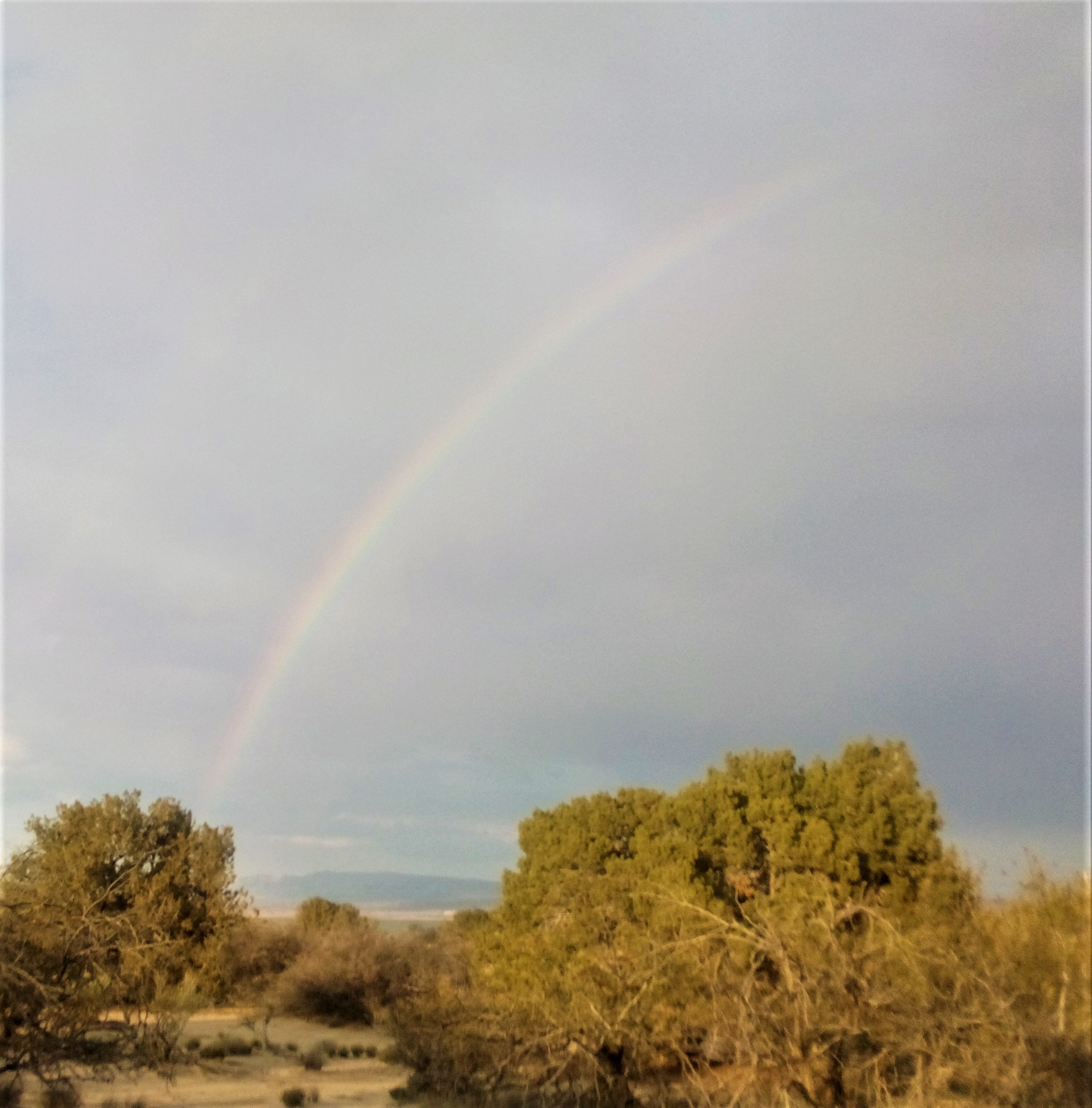
Still, as I committed to the final mile, I asked myself, why is it so important to keep going in the cold? There’ll be plenty of warm, sunny, windless days all winter. As I finished the last stretch, the sun broke through in the west. Golden light flooded the sand and the desert junipers, and half a rainbow woke up in the clouds to the east. It set its jeweled foot softly on the ground and arced into the gray, its trajectory unfinished. My endurance was rewarded: the rainbow of my dream.

The Smashwords Sale

In addition to all the other e-book stores, my books are now available in the Smashwords store, the largest indie bookstore on the internet, and they will all be half price (or free!) as part of the Smashwords 2022 End of Year Sale.

You’ll find big discounts on thousands of indie titles throughout December. Discover your next favorite book at https://smashwords.com/shelves/promos

#SmashwordsEOYSale #smashwords #ebook #sale #books2read #indiebooks

The Neighbors, Now Gone

Though I was accustomed to the lack of choice, I still resented it. Taking an afternoon walk on Tuesday November 8th, I turned south at the corner where my apartment building sits. North, south, and west were options, but I missed going east, walking down my block. I know almost everyone there, and I used to enjoy spontaneous chats with whoever was on their porch or getting out of their car. But for a year or more, I’d been afraid to do that.

In the middle of the block, in a brown-and-white trailer with a decrepit plank fence, lived a woman who hollered profanities and threats and a teenaged boy who was once taken away in an ambulance. She had three dogs, loud, aggressive, and prone to escaping. They hurled themselves against the fence, barking, when anyone passed by. They chased me twice, and one tried to bite the man across the street from me. They attacked a Great Dane being walked by a young man who had to climb on the hood of a car to avoid being bitten. Everyone in the neighborhood had called animal control repeatedly. We suspected the hostile woman might be a drug dealer. Why else would she keep such dangerous dogs? One neighbor dared return an escaped dog to her yard. She came out and demanded to know what he was doing. He told her, and she called the police on him for trespassing.

The owners of the trailer live in another city. I wrote to them about her and her dogs, but she didn’t move out. After a while, I didn’t see the boy anymore and imagined he’d been taken away from her, perhaps put in foster care or with nicer relatives.

Behind the trailer, on the same property, is a little house. It had a high turnover of tenants—good, quiet people, driven away. The last one to live there was, like the rest, quiet. I take care of the gardens at a friend’s vacation rental place between the problem property and my apartment building, and she spoke to me across the fence a few times as I was watering plants.

“You have such nice wildflowers,” she said, the first time we met. “I promise I won’t pick them.”

I assured her I didn’t think she would. Perhaps she was accustomed to people accusing her, not trusting her. Her skin tone, on the grayish side of white, her unhealthy teeth, and her neglected hair gave me the impression she had a drug problem.

But it didn’t make her a bad neighbor. She was pleasant and friendly. I offered her pomegranates from the garden once. Like everyone else, she didn’t like them and declined, but she thanked me. For safety, I carried pepper spray when I watered plants, and I wanted to ask her if the dogs in the trailer bothered her. But maybe their owner was her dealer.

When I came back from that walk on election day, a state police crime scene investigation vehicle was parked in front of the trailer-and-little-house property. My first thought was that Hostile Woman was in serious trouble. There wasn’t a sound from her dogs. What had happened? Then I realized the workers were going in and out of the little house.

I later learned from neighbors in my building that while I’d been on my walk, detectives went around knocking on doors, asking about the residents of the trailer and little house. One friend said he told the detectives to contact animal control, since they were the ones who’d interacted with Hostile Woman the most. We never knew her name. Or the name of the woman in the little house.

The next day, someone came to clean. They put the belongings of the woman I’d assumed was an addict in a trash bin and on the sidewalk in front of the house where I do plant care, blocking the driveway where a vacation tenant would have to pull in. I cringed, but I moved the stuff to driveway of the little house. I didn’t know what had occurred, but it couldn’t have been good. Then I approached the brown-and-white trailer. A young man was inside cleaning with all the doors and windows open. Stale tobacco stench reached me from twenty feet away. Poor guy—he had his work cut out for him. I asked him to please not put the trash in front of the house next door, he agreed not to, and then I said how good it was to see the trailer empty, to be rid of the scary dogs. He said something noncommittal, and I realized I’d been insensitive, treating the situation as good news. He might have been cleaning up a crime scene.

Still, I was relieved. I could once more enjoy the safe, sociable neighborhood I’d first moved into. I walked east on my block and had a curbside chat with neighbors a few houses down, two brothers, a musician and a plumber. The musician said he’d ventured into the trailer and its yard shortly after it became empty and the crime scene people had left. He found dog droppings everywhere, even indoors. I hate to think what might have happened in there—and still don’t know.

The plumber told me that a woman had been found dead in the middle of a nearby street at two in the morning on Tuesday the 8th. Apparently, she’d knocked on someone’s door, incoherent, and then staggered off. The crime scene investigators had been going in and out of the little house. I guessed the dead woman was the tenant and that she’d died of an overdose. Perhaps the owner of the bad dogs had supplied it.

Thursday, I moved the heap of bedding and the overfilled rolling trash bin from the little house out to the curb. The clean-up man hired by the out-of-town landlords wouldn’t know Friday was trash day. Though I felt strange and uneasy touching a dead person’s belongings, it seemed important to me—respectful, in a way—to have everything picked up. The sheets, blankets, and mattress pad from a single bed, the place where she’d slept, were too personal, too intimate, to be left lying on the pavement. Due to the lack of a county medical investigator, the dead woman herself had been left lying in the street for hours until someone from another county could come examine her. That was more than enough indignity for one soul.

The next morning, her few possessions were gone. I rolled the empty bin to the chain-link gate of the little house and took a moment to wish her rest in peace. Not much of a memorial ceremony. I hope it wasn’t the only one she had, but it might have been.


The Mastodon Post

I’m learning my way around a new (to me) social media site, Mastodon. So far, I have two followers. Not bad. I’m a slow learner, but soon I will follow other people. I like how Mastodon isn’t driven by algorithms but by your interests. I joined a server that is focused on science and the arts.  It should be interesting, once I master it. I suspect it will be like the process of getting acquainted with my electric car. I can drive it, charge it, and interact with it fairly well, but once in a while I still discover a talent it has, a feature I didn’t know about after owning it almost a year.