Anniversary Sale

Two years ago today, June 2, I was half-way across the country, moving from Virginia to New Mexico. I’d lived in Santa Fe previously and left for a job in northeastern North Carolina, where I found the setting for The Calling. I always knew I’d be back, and when I discovered Truth or Consequences, I was instantly caught in the vortex. I knew I would live here someday.

In Shaman’s Blues, Mae Martin moves to T or C. Unlike me, she’s never seen it before. Never been to New Mexico. Doesn’t know a soul in town except her father. Join her on the adventure and celebrate my anniversary.

Click here for 99 cent sale

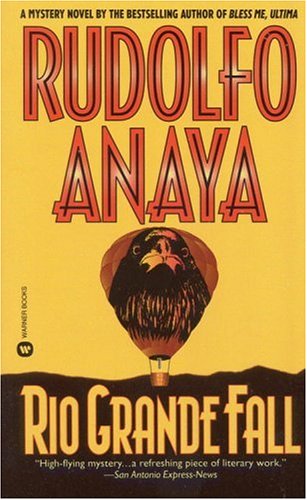
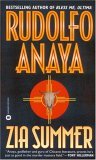
A New Mexico Mystery Review: Rio Grande Fall by Rudolfo Anaya

The second Sonny Baca novel is not just a sequel, but a continuation of a journey through the four seasons and the four sacred directions that began in book one, Zia Summer. Sonny, the great-grandson of legendary New Mexico lawman Elfego Baca, grows as heir to his bisabuelo’s role and also in his spirituality and capacity for love.

To recover from the soul sickness caused by a murder he dealt with in the first book, Sonny seeks healing from a curandera. The healing is his initiation into the spirit world and shamanic experiences, and it introduces the most compelling aspects of the story.

This private investigator character far from noir. Sonny is colorful, a flawed but basically virtuous young man strongly connected to his family, culture, and community. He’s realistic in many ways and yet also a larger-than-life hero who has mythic-scale adventures in his archetypal battle with Raven, the cult leader and domestic terrorist he pursued in the first book.

Sonny is hired by the Alburquerque International Balloon Fiesta when a balloonist who could have been a witness in a case involving Raven dies. (Get use to that extra r in Albuquerque as you read the series. It’s not a typo. Anaya restored it, though it fell off the city’s name a long time ago.) An intriguing aspect of the crime plot is the time period, in the aftermath of the Iran-Contra scandal and the arms-and-drugs deals of that era. One of the themes is corruption.

The balloon fiesta itself, the city’s diverse neighborhoods, and the glory of October in New Mexico, are as central to the story as the characters. The author is so passionate about them he gets carried away sometimes, re-describing them more often than necessary. He also restates his themes a bit too often. I guess his editor didn’t dare tell the master cut, but these repetitions slow the pace. A reflection on autumn in the Rio Grande valley isn’t needed when lives are at stake. The book overall is still powerful. I mean this as praise when I say it has an occasional comic book quality—a fight scene with a leap off a balcony, a mad scientist scene, the invocation of special powers—because myths, archetypes, and superheroes are closely related.

The most complex characters aren’t the good ones or the evil ones, but two women who are torn between: Madge, the balloon fiesta director, and Tamara, Raven’s former follower. The Good Women aren’t filled out as well. Though their roles in Sonny’s life differ, his lover, Rita, restaurateur and herbalist, and the curandera, Lorenza, are virtually identical. This may be due to Sonny’s idealization of them—or the author’s.

Lorenza is Sonny’s new spiritual teacher. His neighbor don Eliseo, a traditional elder, was his teacher in the first book and remains one in this. I’ll be interested to see if each book in the series adds another teacher and how these teachers balance his spiritual wholeness by the end. Despite some excess verbiage, I’ll follow the rest of the series. After all, it’s excess verbiage by Anaya.


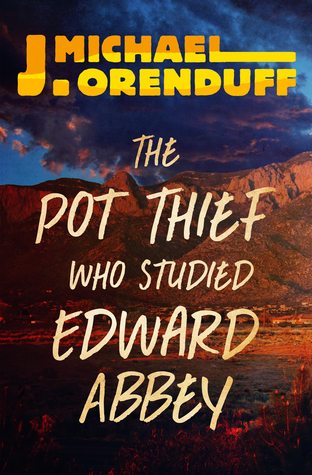
A New Mexico Mystery Review: The Pot Thief Who Studied Edward Abbey

As always in this series, the opening is brilliant, followed by a colorful and intriguingly circuitous journey. If you’ve not yet discovered the pot thief books, think of them as off-beat cozies with an intellectual bent: nonviolent, humorous, character-centered, with a lot of cooking (some of it very funny—yes, recipes can be funny), and a romantic subplot. Unusual in the cozy mystery genre  are the male protagonist and the illegal nature of some of his activities.

In this book, for once Hubie is not stealing ancient pots (rescuing them, in his opinion) but teaching students how to make copies of them, and he’s doing it at the college that kicked him out of graduate school for digging up pots where he wasn’t supposed to be digging.

The portrayal of students, faculty, and administrators is satirical but rings true. Hubie, long out of touch with academic life, has a lot to learn to get back into it. He’s kind, but he’s also a tad opinionated and not a stickler for rules, so he gets off on the wrong foot with a few people—something Edward Abbey would understand.

The department meeting is hilarious (and made me glad I no longer have to attend them), but the best comic scene is the culmination of one of the romance subplots. A few of the discussions over drinks ramble on a bit, but they’re still entertaining.

Hubie’s reading of Edward Abbey assists his thinking, as the pot thief’s topic of study in each book does. I especially liked how his friend Susannah’s background in art history plays a key role in solving the murder. The mystery plot keeps turning. Each time I thought it had wrapped up, another twist came around.

Although this is basically a humorous book, it has some serious moments, and they’re handled with grace, in both the subplots and the mystery plot. The victim of the crime is given a place of honor in the story.

A new reader of the series could start here and not feel lost, but I recommend beginning with The Pot Thief Who Studied Pythagoras and getting to know Hubie and his friends from the beginning.

*****

Click here for my 2016 interview with the author.


Pilot Car

My inner voice told me to drop in on a friend who’d been sick recently. Her shop being open was a good sign, so I went in. While we were chatting at her desk near the front door, a man walked in, making a beeline across the store.

“That’s a man on a mission,” I said. “He knows what he wants.” My friend agreed. A minute or so later, he brought my nonfiction book, Small Awakenings, to the desk, and asked my friend, “Do you know when she’s bringing out the seventh book in the series?” He’d probably come in for another Mae Martin mystery and settled for essays on mindfulness instead.

I was in my running gear, including purple five-finger shoes that clashed with my red pants and my Mescalero T-shirt featuring the Ga’an dancers in bright yellow. I don’t dress to impress the lizards. I’d rather look better for a reader, but he met the real me. I explained that the first draft of book eight was written. It was supposed to be book seven, but my critique partner had so many questions about what happened in between its events and the end of Death Omen, I needed to write the story that covered everything I’d planned to skip. If you’re asking the same question he was: Sorry it took so long. Yes, it’s been a year since Death Omen came out, but that’s why the delay.

He shared his relationship with the series and the characters. Like a lot of my male readers, he’s attached to Mae and has doubts about Jamie, and hopes she may move on in a new direction. Many female readers, on the other hand, love Jamie. They like him better than Mae, in fact. He’s sincere and caring, but troubled. Kind of annoying. A mess with a good heart. The gentleman in the shop acknowledged that Jamie had made progress, but he relapses.

I told him Mae has to decide about her love life, not me. I’m working on the next-to-last chapter of book seven, and she doesn’t know her choice yet, so neither do I. Though I wrap up the mystery plot in each book, the protagonist’s personal life is an ongoing arc. The friend I based her on is a strong woman, both athletically and emotionally, and yet she makes unwise romantic decisions. It’s her blind spot, her weakness.

On my way to Elephant Butte to run in the state park, I was stopped by road work and had to wait for the pilot car. As I finally drove up the hill behind it, gazing at its sign, I sensed it was a sign. Pilot Car Follow Me.

My inner pilot car drove to the shop and put me where I’d meet the next guidance. Talking with my reader made me see how the final chapter will work out in a way that’s true to the characters and their development over time. It will flow perfectly into book eight. And it just might satisfy readers on both sides of the Jamie divide. I’m honored that they care so much about my characters.

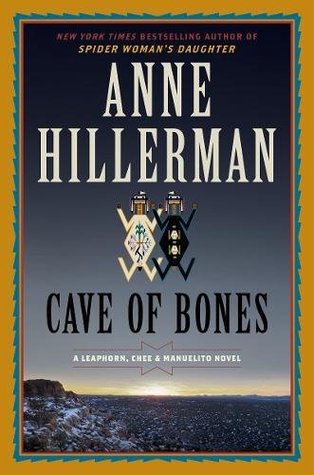
A New Mexico Mystery Review: Cave of Bones by Anne Hillerman

I mean this as praise when I say this book reads more like a slice of life than a standard mystery novel. Anne Hillerman sustains suspense while avoiding the familiar ruts of the genre. I liked the fact that there was no “dead body by chapter three,” one of the conventions of mysteries. And since the book doesn’t start with a murder or the discovery of a dead body, the mystery gets its impetus from figuring out what happened and why. Not from figuring out who killed someone. Navajo police offer Bernie Manuelito shows courage and persistence as she becomes involved in several related problems: the puzzling disappearance of a man who worked for a program helping youth through wilderness experiences, a tribal council member’s demands that the program’s accounts be investigated, and the possible looting of ancient grave sites. Bernie’s husband, Jim Chee, is also looking into the fate of a missing man.

I was every bit as compelled to keep turning the pages as I would have been in a more conventional mystery, maybe more so, because I couldn’t guess where the story was going. I was curious about many people’s motives and deeply concerned about whether or not the missing men would be found. I wanted to know why they vanished and what might have become of them. Both of them became real and likeable while entirely offstage, as shown through the eyes of those who knew them—including one’s cranky mother-in-law and another’s disgruntled, critical coworker as well as those who loved them.

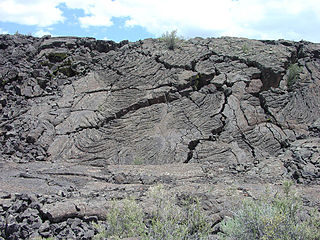
As always, I enjoyed the fullness of the story, the family life, and the friendships that make Bernie a whole person. The settings, from the Malpais lava lands  to the Institute of American Indian Art in Santa Fe, are vivid. The land itself is a powerful part of the story.

There’s no closing cliché, for which I am grateful. I hope it isn’t a spoiler to congratulate Hillerman on not having her protagonist held at gunpoint by a killer as a way of wrapping up the final questions. Instead, she provides a more original drama that triggers the key revelations, and also more a realistic conclusion.

I thought I caught a timeline glitch relating to some seeds in a drawer, but I might have been reading too fast and missed something. Otherwise, polished and intriguing.

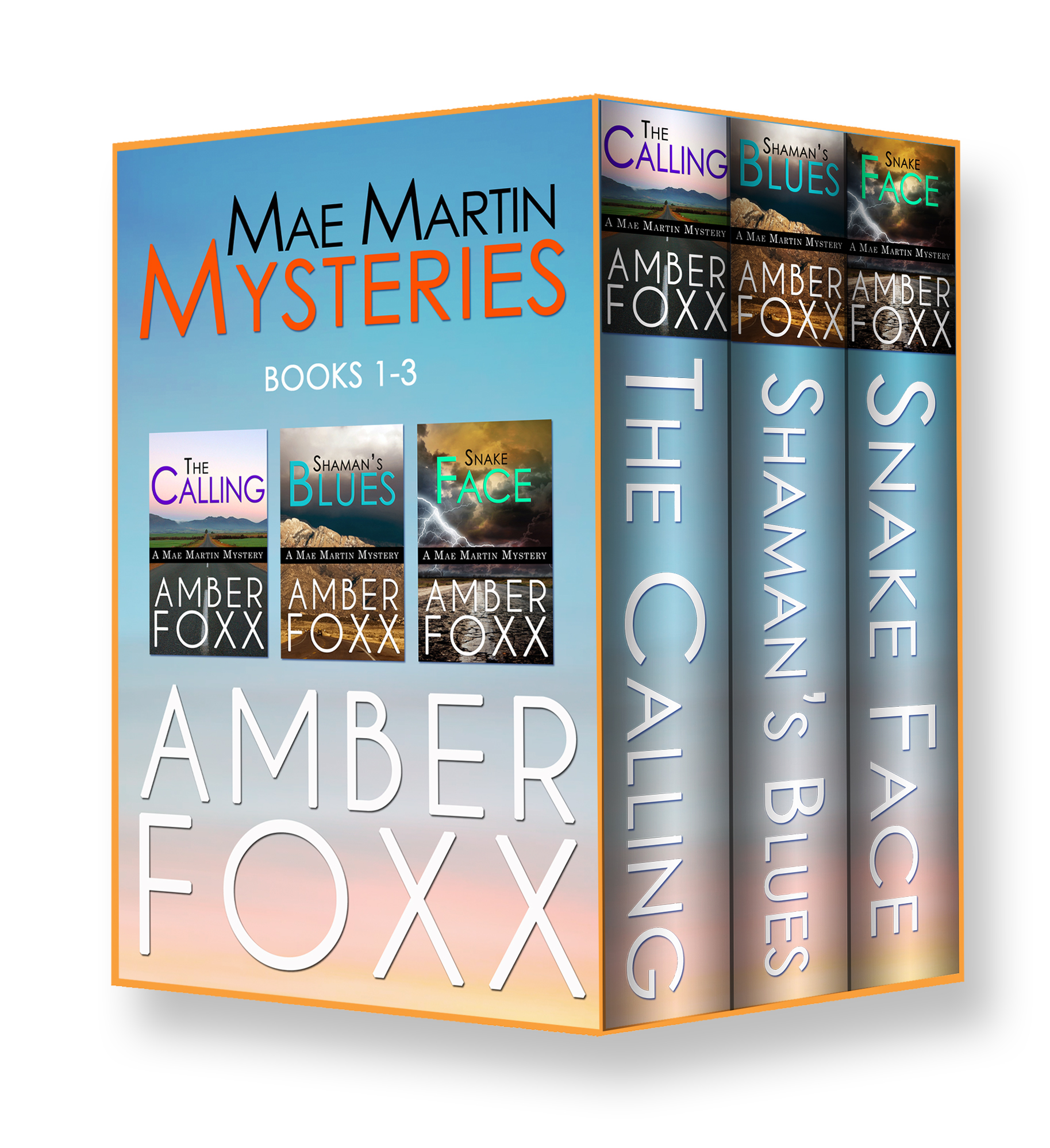
Mae Martin Mysteries Books 1-3 Boxed Set

The Calling

A missing father. A mother with a secret. A professor who might be a shaman—or a fraud. As Mae discovers her gift of “the sight,” she overturns her own life and the lives of those around her.

Shaman’s Blues

A gifted musician disappears. A questionable seer vanishes, to Santa Fe or another dimension. Finding two missing people proves easier for Mae than learning the truth about either—or getting one of them, once found, to go away again.

Snake Face

Musician Jamie Ellerbee needs Mae’s psychic aid. His tour is being trailed by bad luck, an anonymous fan, and a strange new friend—who may not be a friend after all.

 No murder, just mystery. Every life hides a secret, and love is the deepest mystery of all.

Three full-length e-books for $5.99.

Amazon   Barnes and Noble   Kobo   iTunes Bookstore

Happy Coincidences

Dear Susan,

First, happy birthday. I’m honored that you wanted to treat yourself to my books to celebrate. Second. I want to thank you for telling me why. You said reading The Calling had a positive impact on your life. Writing it had a positive impact on my life, too, as I explored healing and loss, friendship and enmity, and the lessons learned from all of them. When you said the book had an effect as you were making changes in your place, working with its energy, I understood. I’m part-way through book seven in the series, which introduces a character who is a house healer, so this was an intriguing coincidence.

Your call to Black Cat Books to order the rest of the series was another synchronicity. My neighbor and I had gone there for tea and book shopping before the store takes its summer vacation. (The off-season in T or C starts after Memorial Day. It’s already in the upper nineties.) Your birthday happens to fall right before the store closes up for three months. I was just about to head out the door when I heard Rhonda, the store owner, mention my name. So I stayed and had the opportunity to talk with you and then signed the books dedicated to you.

Authors don’t often get to talk with readers. I hugely appreciate those who review or get in touch, but I don’t expect it of the majority. All I want is for them to read, enjoy, and repeat. Hearing how you connected with The Calling at a psychological and spiritual/energetic level meant a lot to me. Your input reminds to keep taking my protagonist on her healing journey, through mysteries that challenge her emotionally and ethically and require her to learn (often the hard way).

Thank you for supporting a small, independent bookstore and for making an author’s day—not only by buying my books, but re-grounding me in the reasons why I write them. Next time you visit T or C, perhaps the book with the house healer will be in Black Cat for you.

Amber

Flawed

At first, she didn’t show them to anyone. But she admitted to fellow artists and creative people who would understand, “I’ve been making devils.” An art therapist, she trusted her muse and followed it. The devils finally came out on gallery walls months later, small blue or red ceramic masks with a wild variety of expressions. I especially like a red one with curved horns and a crooked grin full of sharp teeth that remind me of red chiles. It’s so gleefully wicked. The little devils sell, and I can see why. We all have our shadow side, our mischievous side, our tired-of-being-perfect side. Even the weather gets devilish. I’m not talking about the New Mexico’s summer heat and monsoons—we love the storms. I’m talking about the wind. It’s already started, a couple of weeks too early, and it’s going to be blowing for months. To live with it, you learn to wear goggle-type sunglasses, even on a cloudy day, to keep the grit out of your eyes, and the constant blowing sound either gets as normal as an air conditioner in the summer—or drives you crazy. E. Christina Herr, a gifted New Mexico songwriter, sums it up in her song “Devil Wind.”  If you love New Mexico, though, you take it as it is, wind and all. It’s not perfect. Tourist images of our state don’t show visitors chasing their fly-away hats or sneezing with a face full of dust and juniper pollen, but the cowboy’s bandana was, among many other things, a dust mask. Imperfection has its charms.

In my work in progress, I’m developing an antagonist character who’s obsessed with being smarter and more capable than anyone else, which of course, makes her anything but perfect; and the antagonist character in Shaman’s Blues likes to give bizarre advice, with the assurance, “ I’m always right.” My favorite fortune cookie message: The greatest of all faults is to be conscious of none.”

I’ve been pleasantly surprised how many readers love Jamie Ellerbee, the flawed and troubled character I first introduced in Shaman’s Blues four years ago. When I wrote the book, I was experimenting with turning as many conventions of romance around as I could, while still writing about love. He’s a mess, though he struggles not to be. Not exactly a conventional romantic lead. The book’s original title as a work on progress was Samskaras, the Sanskrit word for the residue of our actions and emotions that creates new cycles of karma. One of my spiritual teachers said a good English translation for it was “Some scars.” Jamie has a lot, and he’s not skilled at hiding them. But then, hiding doesn’t bring people closer to each other. Kindness does.

Happy Valentine’s day.

*****


Shaman’s Blues is on sale for 99 cents .

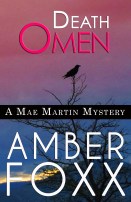
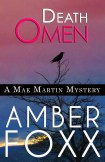
Behind the Scenes: Writing Death Omen, the Sixth Mae Martin Mystery

Now that the book has been out a little over a month, and readers have had a chance to get into it, I thought it would be interesting  to share some of the background for the story and the setting.

The idea for the plot first came to me when I was reading a book I reviewed in depth almost two years ago, The Healing Path by Marc Ian Barasch. In it, the author chronicles his search for healing, and the choices he made when he was seriously ill. He also interviews people who took a variety of alternative, conventional or combined paths. Some were healed in body and spirit; some were healed only in spirit. He visited one healer who was so tactless and blaming, her words stunned me. My antagonist character was born, blended with aspects of a director I worked with in my theater days, a gifted young woman with control issues who could be domineering and aggressive in her methods of getting actors to find their feelings.

When I read a book review describing some unusual ideas about reincarnation, it added other ingredients into my mental stew, along with several articles on Tibetan traditional medicine in a medical journal on alternative therapies. It was the healer who made me angry that got the ball rolling, though. I live in a place where alternative healing is popular, and I would hate to see sincere seekers misdirected.

Another component of the story was the stress of being a medical mystery. No one wants to be one, and yet all illnesses and treatments have an element of the unknown. When symptoms show up, some people put off getting the mystery solved. They’re like the people who would call in to Car Talk and say their car was doing something terrifying but they managed to drive it home. Click and Clack always marveled at these callers. “If it could kill you, why do you feel like you have to drive it home?” We can be that way with our bodies, too. There’s such fear of what the symptom means, it’s an incentive to avoid the diagnosis. We go into denial. Or we don’t trust our doctors and go to alternative practitioners—some good and helpful, some not.

Midway through writing the book, I had an injury that an orthopedic doctor assumed was a labral tear in my hip joint—something that would require major surgery and time in a wheelchair for recovery. It was scary, wondering what was coming. However, suspecting he hadn’t listened to me very well, if at all, I postponed the MRI for a suspenseful month, observed my symptoms, then wrote him a letter thoroughly covering all the facts. He gave me a referral for physical therapy, and I’m well now, no surgery. Not all medical mysteries turn out this well, but the experience helped me understand some of my characters who are dealing with frightening prognoses.

Earlier in the writing process, I resided in one of the suites at the Pelican Spa. It was the summer of 2016, my last summer as a part-year resident of T or C before moving here. I got the idea to have the antagonist characters offer their healing retreat at the Pelican, and asked the manager if it would be okay to write a book in which some wacky people from Santa Fe rent the Red Pelican portion of the spa for a weekend program. She said, “That’s really happened.” The staff was incredibly generous, giving me tours of the Red Pelican rooms that summer and again this year, when I wanted to get the finishing touches right. The setting with an Asian flair turned out to be perfect, since a Tibetan traditional doctor plays a role in this mystery. The Pelican Apartment Motel, the section of the spa where I spent that summer, is where Jamie stays during the retreat, and I lived in the in the green-walled room he is given.

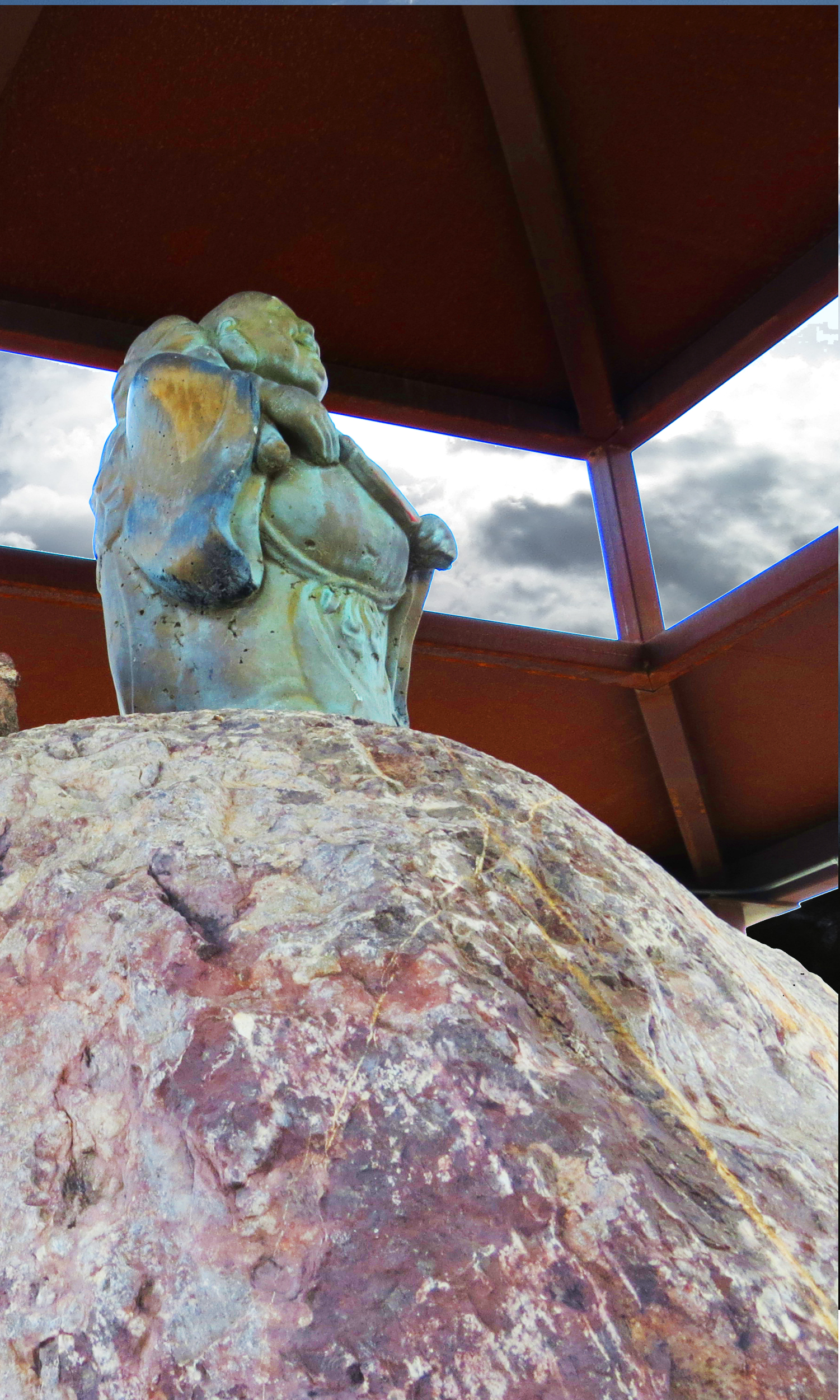
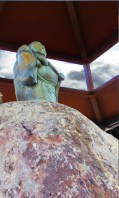
The bright laundry line visible from Jamie’s room is one of the features of the setting I couldn’t resist using. The laundry shot was taken by Donna Catterick, who took the picture for the cover, and was originally posted on her blog. I also like this picture of the Red Pelican’s courtyard rock and Buddha that Donna took. My characters often gather on the benches around that rock.
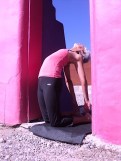
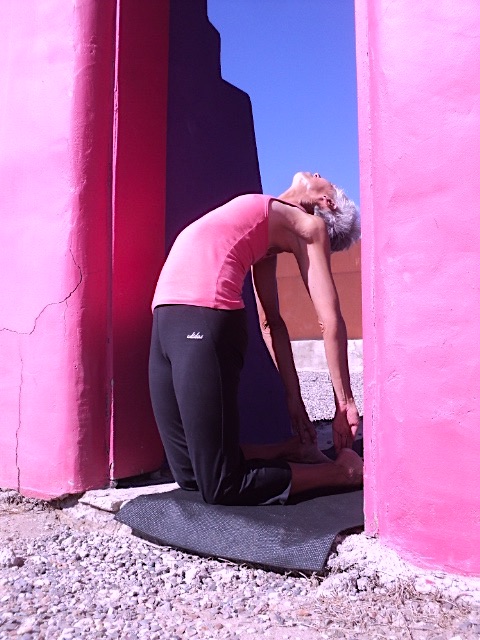
I didn’t tell my cover designer anything about the Pelican. I considered asking her to incorporate something of its color schemes and then decided to trust her judgment. She considered many options but found she kept coming back to the pink lettering. If you look at the cover next to this picture that a friend took of me doing ustrasana, camel pose, for a yoga  studio web site (I teach at a studio attached to the Pelican), you’ll see that the colors match remarkably. The archway where I’m posing is at the back entrance to the Red Pelican Courtyard that my characters often use.
A second real location in Truth or Consequences that I used is The Charles, another classic hot springs spa. When I arrived in T or C in June this year, I asked the owner if she would be willing to fictionally employ Mae Martin as an energy healer at the Charles. This was a healing modality they hadn’t offered in the past, though they’d had massage and reflexology there for years. She told me they’d recently added an energy healing room, and urged me to talk with her manager. I did, and he not only gave me permission to use the space in my book, but encouraged me to take pictures and make sure I got it just right. When I saw the room painted as a healing cave with blue sky in the ceiling, and crystals on the shelves, even lamps made from crystals, I knew Mae was meant to work there. Sometimes reality and fiction line up perfectly.

A New Mexico Mystery Review: Zia Summer by Rudolfo Anaya

A mystery with many layers, the first of Anaya’s Sonny Baca novels is crime fiction and also literary fiction with mythical depths. At one level, it’s the story of a young private detective’s search for his cousin’s killer; at the other level, it’s the story of his spiritual development and reconnection with his traditional culture and his ancestors. The story also reflects on the ecological and ethical challenges facing New Mexico as some seek to develop it and others to preserve and protect it. The sacredness of earth, sun and water, and their spiritual place in human hearts, is as important as the question of who committed the crime, and even inseparable from it.

Sonny Baca, great grandson of the famous Elefgo Baca, is—like his bisabuelo—a flawed hero. Sonny is still maturing as a man and in his profession, learning from his mistakes, but at the same time he’s smart, perceptive, and courageous, and he thinks a lot about both the world around him and the struggles within him. For a reader used to the pace of most crime fiction, this occasional descent into deep wells of thought may feel digressive, but Sonny’s insights are part of the story. Most of the time, the pace is intense and the story flies along.

One way Anaya sustains the flow is that he never translates or explains the Spanish words and phrases his characters sprinkle throughout their conversation. This not only kept the pace and the authenticity, but taught me. I began to understand them as I read. (If you’re not a Spanish speaker, notice how you figured out bisabuelo already.)

Though they have full personalities, there’s an archetypal quality to the characters. Sonny’s neighbor don Eliseo is the Wise Old Man, human and believable, not idealized. His spirituality is both transcendent and earth-bound. Rita, Sonny’s girlfriend, comes close to seeming too perfect, a strong, loving, nurturing goddess, but she’s written as seen by a man in love with her. The villains of the story are the inversions of these benevolent archetypes, making them some of the most disturbing criminals I’ve come across in a mystery.

The writing is engaging, as one would expect from a literary master like Anaya. The first chapter, however, is the weakest, heavy with backstory. Don’t let the slow start deter you. After that, the story comes alive. While the crime is horrific, the fullness of Sonny’s life and circle of friends balance this element with humor, love, and mystical wisdom.

*****

New Mexico Magazine recently profiled Anaya in a wonderful and thorough article, linked here.