Undefeated, the flowers came back.


Perhaps you remember my post about a man squirting weedkiller on unwanted plants. He explained that if they weren’t eradicated, they would take over. I’m happy to report they have done exactly that—only a few weeks after their apparent demise. Welcome back!

Disobeying Orders

The state park employee walked slowly with a small tank and a squirt nozzle he aimed onto each unwanted bit of vegetation on the playground. I hoped he was only getting rid of silver nightshade. It’s prickly and toxic, though it has pretty flowers. But there wasn’t much of it. There were many tiny, tough yellow flowers.

I asked the man with the tank how he chose which plants got to stay and which plants had to go.

“They all have to go,” he replied.

All of them? I like the little yellow flowers. I just watered one of them.” Encouraging its survival in the desert heat, I’d given it what was left in the water bottle I take on runs.

With an air of apology, he added, “We don’t do weed control except in the developed areas.”

Of course not, because a wildflower isn’t a weed in the wild. I didn’t say what I thought, but he kept explaining while he squirted. “If we let them go, they take over.”

“Yes. You’d have a meadow.” I smiled at the memory. One year, the flowers did take over. There were so many, I sometimes accidentally picked them with my five-fingers running shoes, snagging yellow blossoms between the toes when I crossed the playground to stretch on the equipment.

He kept squirting. I felt sad for the flowers, but finished stretching and went home. A few days later, I was back, and all the flowers were gone, sprayed to death and shriveled away. Except one. He saved the one I’d watered.


There is still beauty.

As I watered the forsythias, a soft, humming fountain of bees rose up from the flowers. The plants are hardy and ask for little, but they’re working hard now, the first to flower at the end of what passes for winter here. The bees gave me joy. Certain flighted creatures silence my mind into bliss—bees, bats, sandhill cranes circling with their purring, gargling songs. They sound like crows who took voice lessons from doves.

The internet did me a favor and cut off, waiting exactly until the end of a Zoom yoga class I was taking. I missed sharing “Namaste” with my teacher and classmates, but after that, I was free from listening to the news online or reading the news or my email.

When I needed a break from writing in the evening. I took a walk. Jupiter was glowing in the West, huge and pale gold. Straight overhead, Saturn shone. Further east was Mars, a steady red dot. The streetlights are weak and few in my neighborhood, and the night sky glitters. I invited a neighbor out to share the planet-and-star show. Disconnected from the world, we reconnected with the universe and each other.


Uphill Against the Wind

High winds. No rain.
Hot air blows. A dangerously early spring.
This land I love could burn before it blooms.
I run on desert sand so dry
it slips beneath my feet.
I’m going nowhere.
Firm ground tempts me to linger
on a sheltered stretch of trail.
Jogging back and forth. Going nowhere.
A parhelion glows, an opalescent shell in the cloudy sky.
Rose, violet and mango hues surround a turquoise eye.
I change my stride, long and low, and lean into the gusts.
I can do this.
Uphill against the wind.

Never Tired of Miracles

Yes, I’m writing about rain again. Rain in the desert. I never tire of miracles.

I ran, despite the thunder, despite the lightning, daring the storm to get closer to me. The air was so soft, so cool, barely drizzling, not really a storm yet. Above, there was a blue hole in the clouds. The birds seemed excited, a pair of desert cardinals chattering and flying from bush to bush. Something in another bush made a loud ticking sound like someone running a stick across the slats of a wooden fence. I stopped in surprise, trying to see the source, but all I got was another noisy round of clicks. The temperature dropped down from the 80s to the 70s. I ran until the thunder moved in, and the sheer wall of gray across the lake became dark and solid, rain driving straight down from the sky as the gloriously cold wind grew stronger.

I finished my run a little sooner than I would have liked. I wanted to stay out on the trail, but the last time I’d lingered thinking, “Oh, that cloud sliding across the lake is just mist,” it turned into a storm that suddenly whipped through and drenched me. So this time, I left a little early, and the storm got stuck just behind the turtle on Turtleback Mountain. Still beautiful. Still a miracle.


Pictures I Didn’t Take

I often get a powerful urge to stop and take a picture. Then I don’t do it, for many reasons, but primarily because it takes me out of the moment. Instead of experiencing where I am and what I’m seeing, feeling, hearing, and smelling, I’ll get wrapped up in composing a picture to post. Granted, I would love to share the experience, but this urge usually occurs when I’m by myself out in the desert on a long run. If I pull out my camera and try to find some shade where I can actually see my screen and then make adjustments, I’m missing part of part of the joy of running. If I were a photographer, this would be joy to stop and take a picture. I admire and deeply appreciate the work of gifted photographers.  But that’s not my creative form. Words are. So, here are the words.

A fox den that lasted two days. I think the fox realized it had dug in too close to a well-used trail. So much work for a couple of busy nights, and now there’s a cobweb draped over the entrance. It’s been there for a long time. Sometimes location is everything. The shade of that big juniper, alas, was a bad location.

The bats. At sunset, they come pouring out from behind the mural on a roofless building. I met a friend on the way there one evening. She also loves the bats. As we watched them emerge in an erratic cloud, a complex aerial ballet, she laughed in delight. They have that effect on me too, as if their sonar is vibrating something positive deep inside us that creates pure happiness.

Other things I haven’t taken pictures of are odd moments where something looks out of place on the street, and I think “I should take a picture of that. That’s strange.” Maybe nobody else would think it was odd or interesting. I don’t take the picture. I have my moment and keep going.

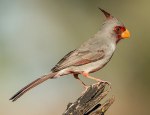
I often think of a friend who told me about being near the edge of a woodland with her father when a herd of deer exploded from the trees. Her father was scrambling in the car for his camera so he could get a picture of the deer while she watched them leaping past. By the time he got his camera out, the deer were gone. Pictures I haven’t taken are moments that I lived. I’ll share them some other way. Some will show up in my stories. I’ll remember them when I need them. A pyrrhuloxia, a desert Cardinal, perched atop of a half dead tree in the desert has a place in the book that I’ve just started. He’s going to show up near the end as a significant and meaningful sight, with his brown-gray body and his red crest and his three different songs pouring out. I saved him in my memory, but I didn’t take his picture. (Someone on Wikipedia did.)

I choose the dirt road

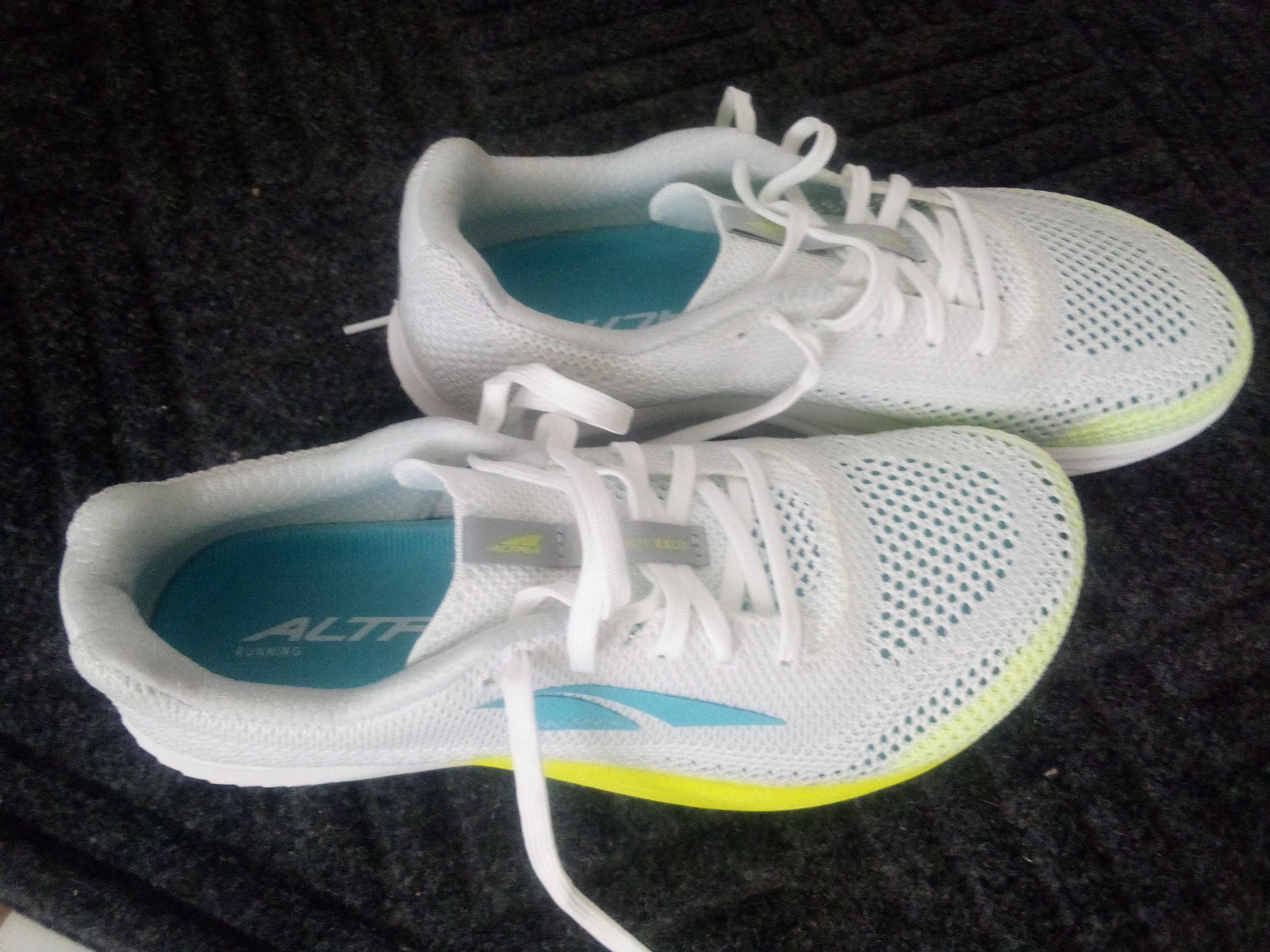
I wonder why running shoes are designed to be pretty. My new ones even have white soles with green and blue treads, as if the person behind me in a race should admire them as I charge ahead. But I run where no one is around to admire my pretty feet.

I meant to take the paved route to the edge of the Elephant Butte dam, but the dirt roads off the side stole my heart and soles. Pavement says nothing to my feet. It slaps back. Dirt has texture and depth. Each step on a dirt road is unlike the step before—soft, rocky, stable, slippery, flat, or uneven. My speed on dirt roads adjusts to the nature of each surface. And underfoot are such amazing finds. A desert flower that tolerates ten percent humidity and the battering of spring winds. In pausing for the flower, I also looked up at the mountains and dared the vertiginous view of the arroyo below.

History lay on both sides of the road. The dirt was dark as if blackened with soot, and in it lay chunks of sturdy white china. Mug handles, mug bottoms, plates, all so thick you could knock your breakfast off the table and nothing would happen to this dinnerware. But something did. One piece had words on the bottom indicating it was made in West Virginia. There was a substantial quantity of it. Friends who know local history think I came across the remains of a Civilian Conservation Corps work camp. If the dishes could talk, they’d have stories, for sure.

Two ravens glided past a red rock cliff, so synchronized I first thought one was the other’s shadow.

My new shoes have now been baptized in dirt.

Indirect Effects: The Beauty of the Partial Eclipse

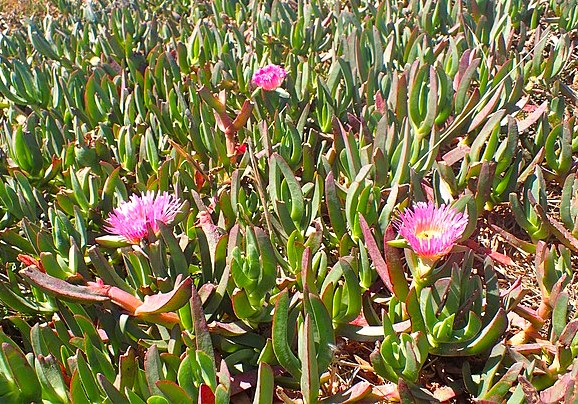
Seventy-six percent eclipsed, the New Mexico sun was still bright. Of course, I didn’t look at it, but the blue-skied day seemed to have barely dimmed at all. I went as I do every Monday to teach an outdoor yoga class. The garden around the patio where we practice is carpeted with the blooming succulents in pink, red, and orange. Class is ordinarily accompanied by the gentle drone of bees. But the ice plants had closed their flowers tight, and not a single bee lingered. A sudden cold breeze came up.

As the hour-long class progressed, warmth returned. At the end, I guided deep relaxation and then sat in silence, focusing on a single flower to see if I could detect its petals opening. I couldn’t. Yet when I looked away and glanced back few seconds later, the petals’ position had subtly changed.

After class, I watered the fruit trees in the garden. The ice plant flowers were wide open, their yellow centers shining back at the sun, welcoming the bees.

Stone and Light

First, look at the art. Take your time. Explore.

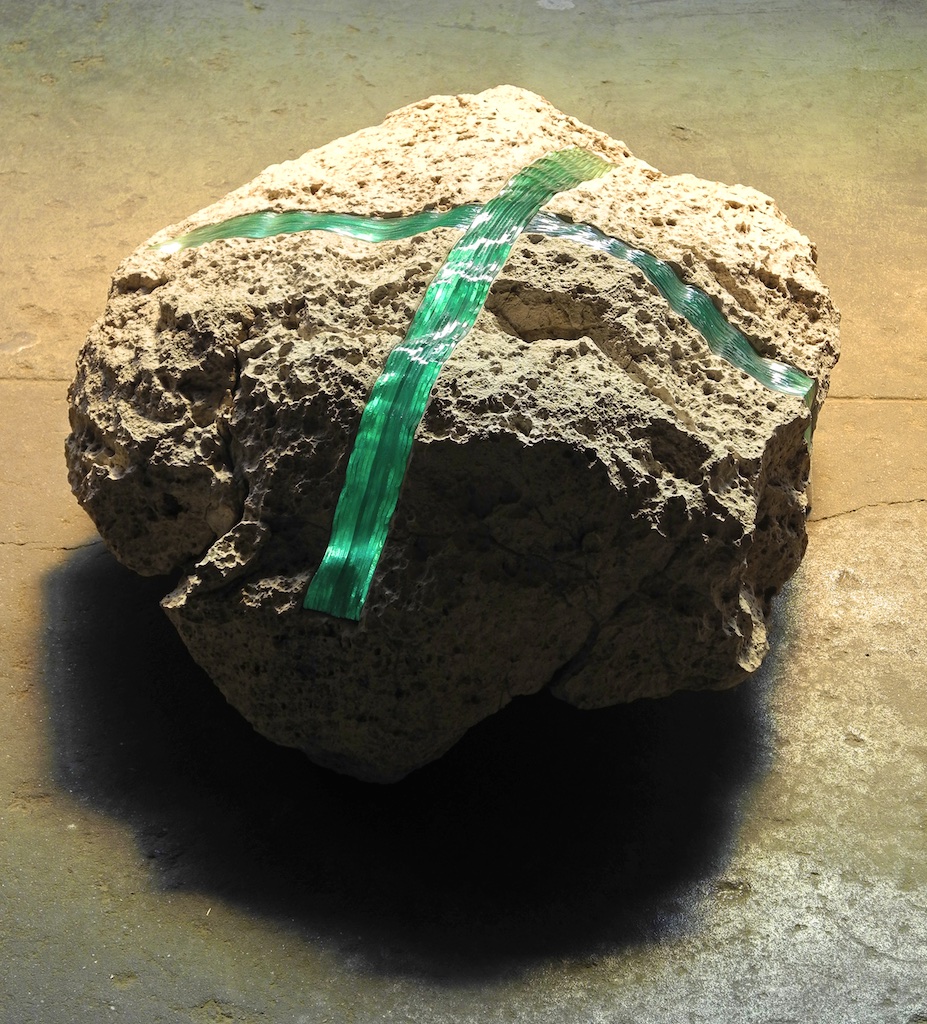
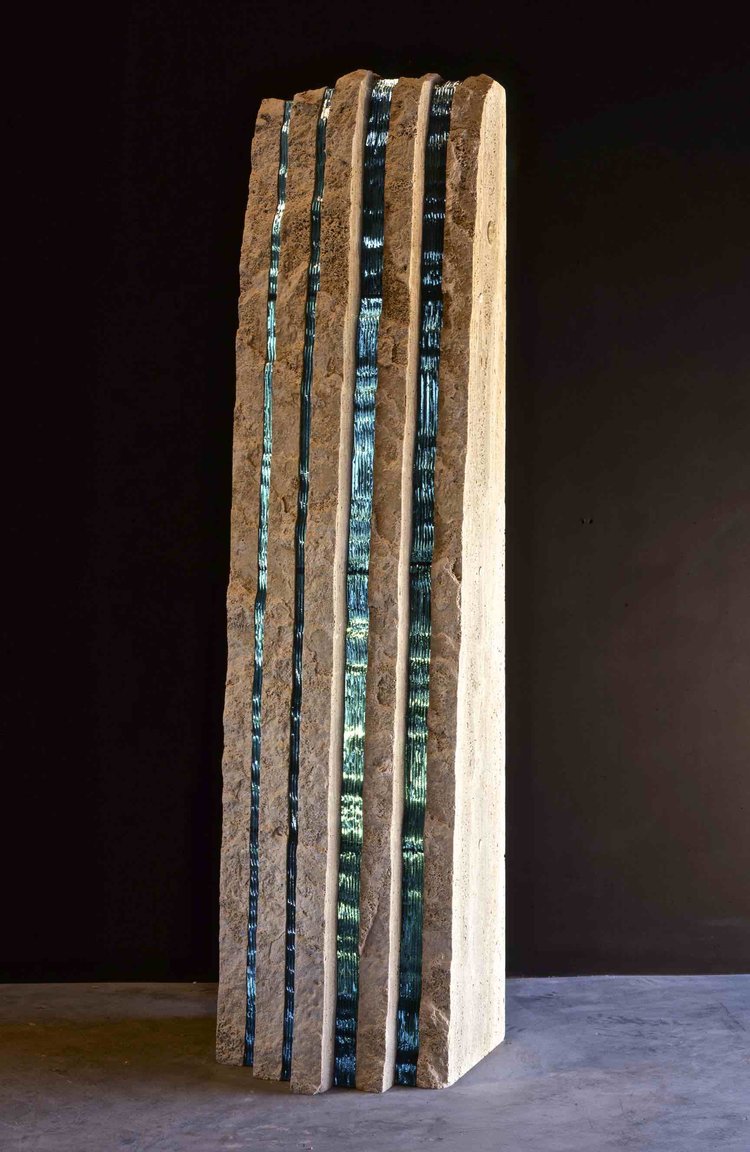
Then you may understand the effect it had on me. I attended an Art Talk by Otto Rigan at Rio Bravo Fine Art, spending over an hour immersed in images of his work and stories of how he came to this unique form of expression.

After his talk, I ran on a desert trail I’ve known for years, a place so familiar I know where to step, where I’ll meet rough ground or soft sand or the perfect surface, and it looked entirely different. I saw the light, literally. Light glinting on grains of sand like tiny mirrors. Light shining back at the sun from smooth, flat stones. Light flaring from bits of reflective minerals in otherwise dull-surfaced rocks. The textures and shapes of every rock and pebble came to life. My mind went quiet in awe. A spiritual experience of stone and light.

More Rainbow than Rain and Another Bob Story: Two Small Miracles

I headed to Elephant Butte Lake to run on the trails on a sixty-degree day. I didn’t expect rain, but it arrived before I got the park, and it dropped the temperature a good ten or twelve degrees.  I don’t chicken out on a run because of rain, though. And for the first time in my life, I saw the foot of a rainbow. The place where the pot of gold should be. The bright arc stood with its right foot on the lake, not far from the shore. I’ve never been that close to a rainbow. They’re always out there somewhere, over the mountains.

I ran and kept an eye on it. It faded when the rain stopped. But then a patch of shaggy gray virga on the eastern horizon lit up with a full spectrum of colors. Not really a rain bow, more like rain fur, but still beautiful. It faded. Drizzle came down, and a new rainbow appeared, this one in the normal place in the distance. Gone again. Another soft blaze of rain fur followed. The ground didn’t even get wet, and yet I was treated to four displays of amazing color. Well worth sticking out the cold for the full five miles.

It gave me something to tell Bob when I dropped by after my run.

Yes, that’s right. Bob. He didn’t die, though his doctors were sure he would when he got pneumonia at his age. His stepdaughter from his second marriage came all the way from New York to see him when he was in the hospital, and he perked right up. He’s not a hundred percent well, but he wasn’t before all this. His personality, his intelligence, and his wit are intact as are many portions of his memory, but not all. And he has balance problems. He’s moved to residential care, where I visit him often.

One of the first times I arrived to visit him, I found him sitting in a wheelchair in a hallway, appearing to nod off.  On seeing me, he said, “I feel like should know you.” I identified myself and mentioned that we had often gone bat watching together. “Bat watching …” He frowned. I said we’d watched sunsets together, too. He still frowned, muttering that he should know me, then suddenly he smiled, and his eyes twinkled. “You thought I was out of my mind, didn’t you?”

To have partial memory loss and pretend it’s worse for a laugh—and to act the part so well—that says a lot about the guy. He may live to be ninety. And still make jokes.