
 On April 26, Independent Bookstore Day, I had the pleasure of doing a reading and signing at Black Cat Books and Coffee in Truth or Consequences. There were fresh flowers on the table where I was set up in the back room.
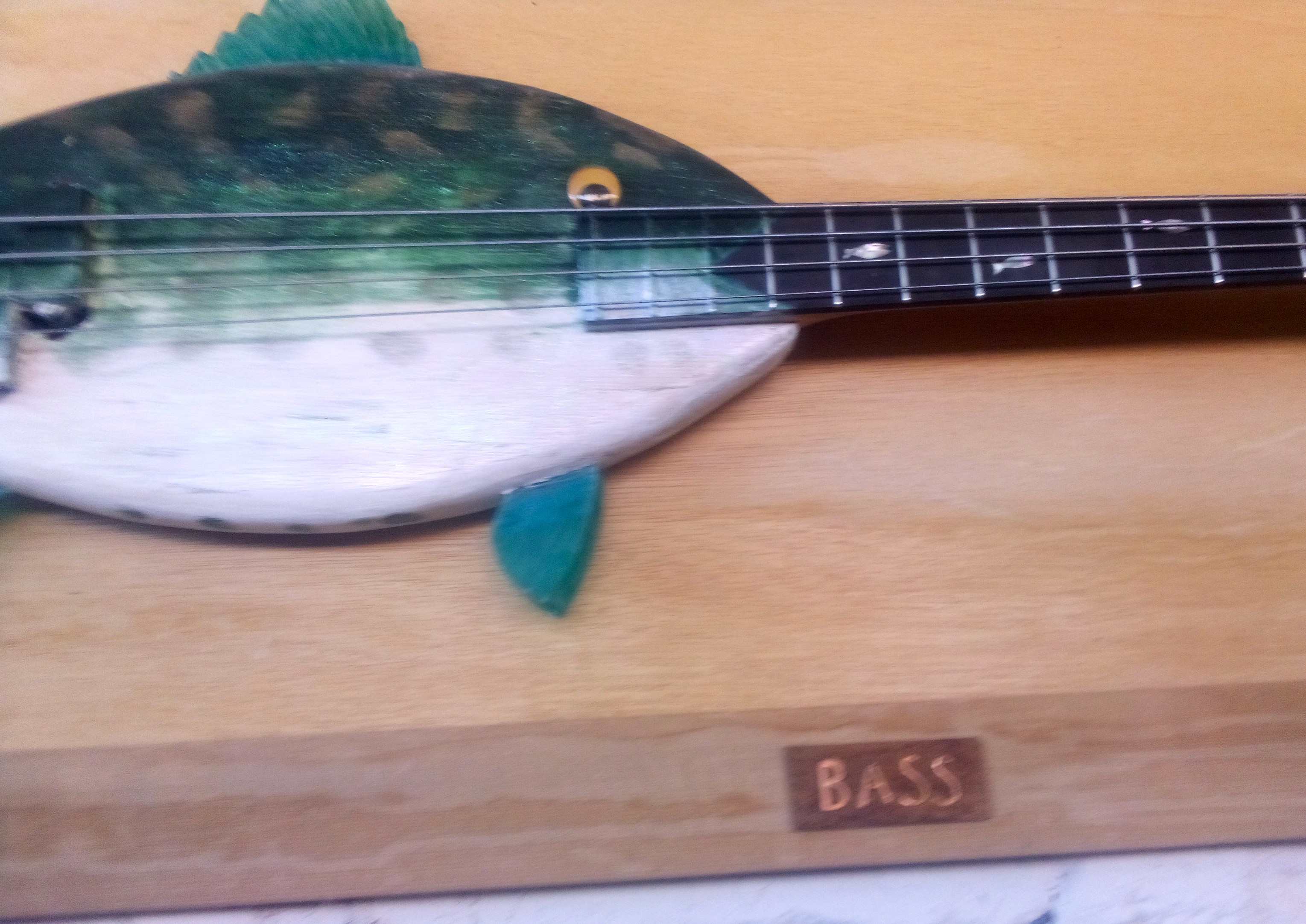
  To my surprise, the room was like a museum honoring a beloved Sierra County musician and luthier, the late Bill Bussman. He and his wife lived out in the middle of nowhere beyond Hillsborough, one of our living ghost towns, but people throughout this area and all over the country knew him because of his musicianship and the instruments he created. He was truly an original—warm and funny with irresistible charm. To learn more, read this article about him and this thread of posts from other musicians acknowledging his passing and sharing their memories of him. One of them mentions him playing the stand-up bass that had an Elvis head and a little red sneaker on its foot that tapped in time to the music. I heard him play that bass many times over the years. The bass wasn’t at Black Cat with me, but a number of his quirkiest creations were: the red chiles, the watermelons, and the bass bass. (Note the knives in the watermelons.)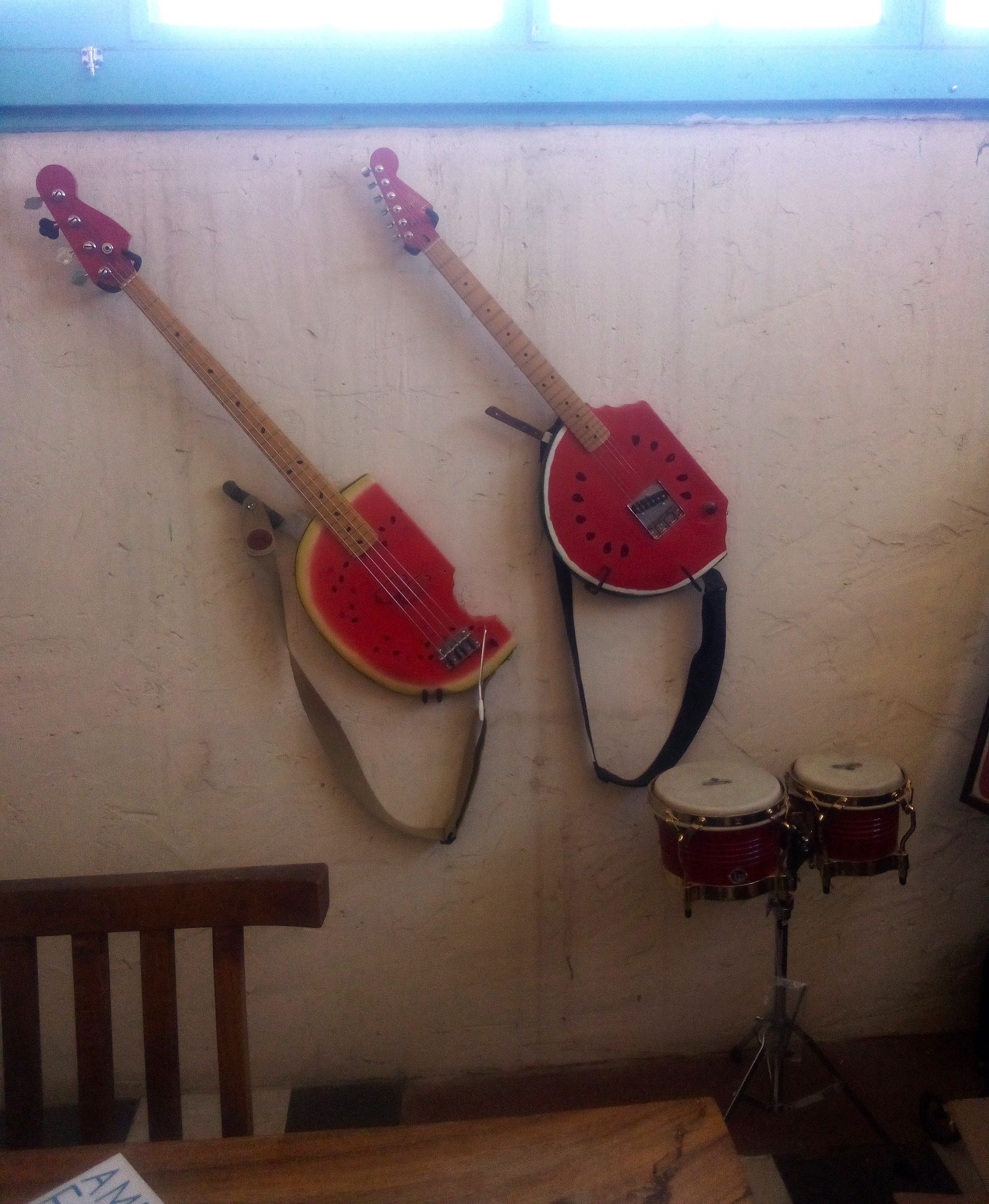
While I was there, I had the pleasure of meeting fascinating people. Some were buying my books. Some of were there to talk—about my writing, about their writing, about their travels and families, and more. A retired New Age pastor told me about the life she left behind in California and some behind-the-scenes tales of famous spiritual teachers—a bit like something out of one of my books. When people tell me stories, it helps me write stories. And surely, the spirit of Bill Bussman lent light and delight to us all.

Tag: humor
Senior Woman Seen Doing Flips!
An ad for one of the national EV  charging networks shows a woman doing tree pose while her car charges. It seemed like a good idea to me, except for standing beside the charger. The charging station at the Dona Ana County Government office center in Las Cruces is right next to a busy street and in full sun. I plugged in my car and found a quiet, shaded place for yoga, a large, recessed area between the county offices and the sheriff’s department. I took off my hat and left it on the paved floor, then did basic standing poses (Warrior One, Warrior Two, and related poses), then some one-legged standing balance poses. I was right side up, which matters later. For seated poses, I moved to a bench, since I didn’t want to sit on the pavement. Then I collected my hat and returned to my car, relaxed and refreshed, but sneezing.
I was sitting with the door open taking a stinging nettle capsule for allergies when suddenly there were people outside my car. Two sheriff’s deputies, a young woman and a very large man.
The woman wanted to know what I was doing. I thought, “Oh my gosh, do they think I’m using drugs?” Alarmed, I said, “I’m taking my allergy medication.” I’d already swallowed it and couldn’t show it was a harmless herb.
“Someone reported that you were doing flips, and they wanted to know that you were all right.”
Flips? I got out of my car. “I was doing yoga. I was stretching. I didn’t flip.”
“This person was worried about you. You left your bag.”
“I didn’t have a bag. I’d put my hat down.”
“We needed to check that you’re okay.”
So, I executed a deep forward bend with straight knees, hands flat on the ground, then repeated the three one-legged balances in sequence, never putting the second foot down as I made the transitions. “I did that. I think that means I’m okay, right?
The female deputy said, “Yeah, I can’t do that.”
“Okay, then?”
They allowed that I was and left.
Words that Stayed With Me
I had, as usual, inspiring encounters with art and with friends at the January Art Hop. In one gallery, I talked with a very productive artist who said he makes a new list every day to get things done. I had to confess that a few same things have been on each new to-do list I’ve made—for years. He said cheerfully, without judgment, “That’s okay. You did other things.”
In another gallery, I admired the work of a local quilt artist, mentioning how innovative and unconventional her work was. She said, “Unconventional, that’s me. Getting outside my comfort zone grows my comfort zone.”
Later in the week, I ran the Healing Waters Trail to the New Mexico Veterans’ Home to visit my friend Bob. He used to run to visit a relative when he was a boy, so he appreciated my method of travel. We sat in the sun with a view of the mountains. In the way of the very old, he reflected on his life, acknowledging there had been some hard times. “I learned from them. But I learned the lessons later, when I could. Not while I was living the lessons.”
I’m probably living many lessons now that I will only learn later. Perhaps after I grow my comfort zone by actually doing the perennial to-dos on that list.
More Rainbow than Rain and Another Bob Story: Two Small Miracles
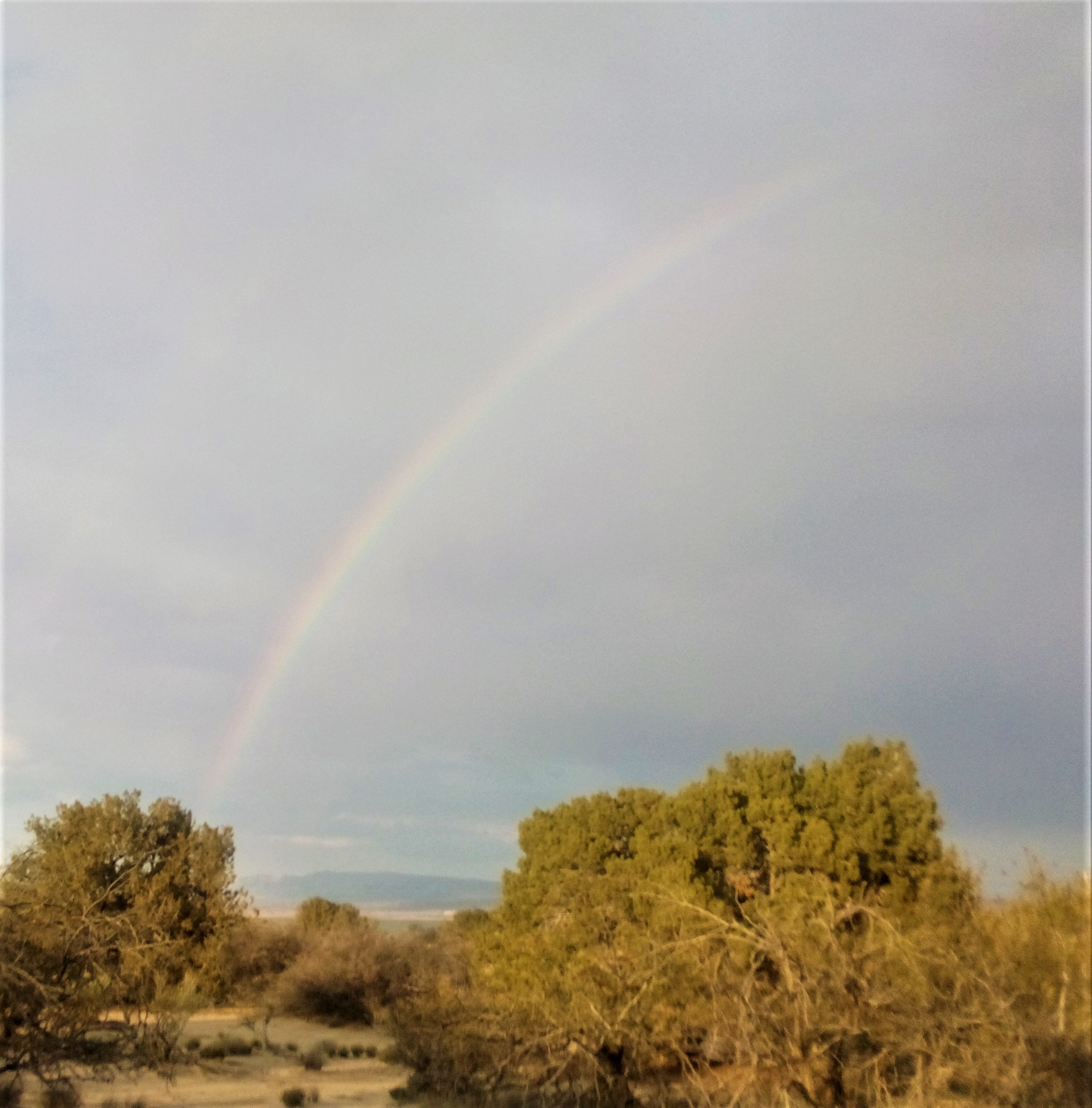
I headed to Elephant Butte Lake to run on the trails on a sixty-degree day. I didn’t expect rain, but it arrived before I got the park, and it dropped the temperature a good ten or twelve degrees. I don’t chicken out on a run because of rain, though. And for the first time in my life, I saw the foot of a rainbow. The place where the pot of gold should be. The bright arc stood with its right foot on the lake, not far from the shore. I’ve never been that close to a rainbow. They’re always out there somewhere, over the mountains.
I ran and kept an eye on it. It faded when the rain stopped. But then a patch of shaggy gray virga on the eastern horizon lit up with a full spectrum of colors. Not really a rain bow, more like rain fur, but still beautiful. It faded. Drizzle came down, and a new rainbow appeared, this one in the normal place in the distance. Gone again. Another soft blaze of rain fur followed. The ground didn’t even get wet, and yet I was treated to four displays of amazing color. Well worth sticking out the cold for the full five miles.
It gave me something to tell Bob when I dropped by after my run.
Yes, that’s right. Bob. He didn’t die, though his doctors were sure he would when he got pneumonia at his age. His stepdaughter from his second marriage came all the way from New York to see him when he was in the hospital, and he perked right up. He’s not a hundred percent well, but he wasn’t before all this. His personality, his intelligence, and his wit are intact as are many portions of his memory, but not all. And he has balance problems. He’s moved to residential care, where I visit him often.
One of the first times I arrived to visit him, I found him sitting in a wheelchair in a hallway, appearing to nod off. On seeing me, he said, “I feel like should know you.” I identified myself and mentioned that we had often gone bat watching together. “Bat watching …” He frowned. I said we’d watched sunsets together, too. He still frowned, muttering that he should know me, then suddenly he smiled, and his eyes twinkled. “You thought I was out of my mind, didn’t you?”
To have partial memory loss and pretend it’s worse for a laugh—and to act the part so well—that says a lot about the guy. He may live to be ninety. And still make jokes.
Velveteen Wabbit
Stephen Luke David John sighed in despair and turned away from his computer. Still no friends. No friend requests. Despite his best pictures. The ones with his cute pets. The shot with his fancy car. The pics featuring his trim, fit figure in uniform. The close-ups of his handsome face, sometimes clean-shaven with a strong, square jaw, sometimes with a neat gray beard.
 Women might find it hard to believe he was real, but he was determined to become real. His distinguished military, medical, and engineering careers might be too impressive to believe. And a man of his striking good looks being so desperate for friends was probably even harder to believe. Not to mention his strange inability to make friend requests work. He awkwardly had to request the request from women he found charming, beautiful, interesting, or fascinating. Nonetheless, he kept at it, day after day, and it was getting less and less rewarding.
Stephen Luke David John did forty push-ups, petted his adorable dog, and gazed out the window of his penthouse overlooking … what city was it today? It changed so often, like his face and his name. He’d been Luke Stephen for a while, and John David Luke. Once he’d been so confused he called himself Luke Duke.
Back when he’d been a real rascal, he’d only needed one name, and no one knew it. His nickname had been Lightning, the fastest purse snatcher and pickpocket in his city. His real city. He missed the adrenaline rush of his former life, the fleeting and almost imperceptible contact with his targets, but he’d aged out of it.
His reflection in the window fluttered like the pages of a magazine, face after face, name after name. If only one woman would believe he was real, he might become real again. Might emerge from the limbo of the in-between world and be a man again. A man who had taken over a woman’s Facebook account and accessed her personal information, yes, but he would be a winner again. Like Lightning.
He sat back down and composed a message to a writer on her professional page. For a few days, he’d been liking her posts. She might be primed to think he was a real fan and thus less likely to block and delete him than on her personal page.
Dear Amber, please pardon my boldness, I don’t wish to intrude, but I find your profile and your posts irresistible. I sent you a friend request, but for some reason it didn’t work. If you would be so kind as to send me a friend request, I would be honored and delighted.
He reviewed it. Yes. It sounded humble—and educated. He posted, confident in his quest to become real. While waiting for a reply, he finally read her profile. She wrote mysteries about crimes other than murder. Stephen, you dunderhead. Now you’ve done it. She’ll know exactly what you’re up to.
She banned him from her page and deleted his post. And then she turned him into fiction.
Review: Born and Raised in Space; the Legacy of Two Copper Mining Towns : Two Towns That Disappeared, Santa Rita NM and Morenci AZ
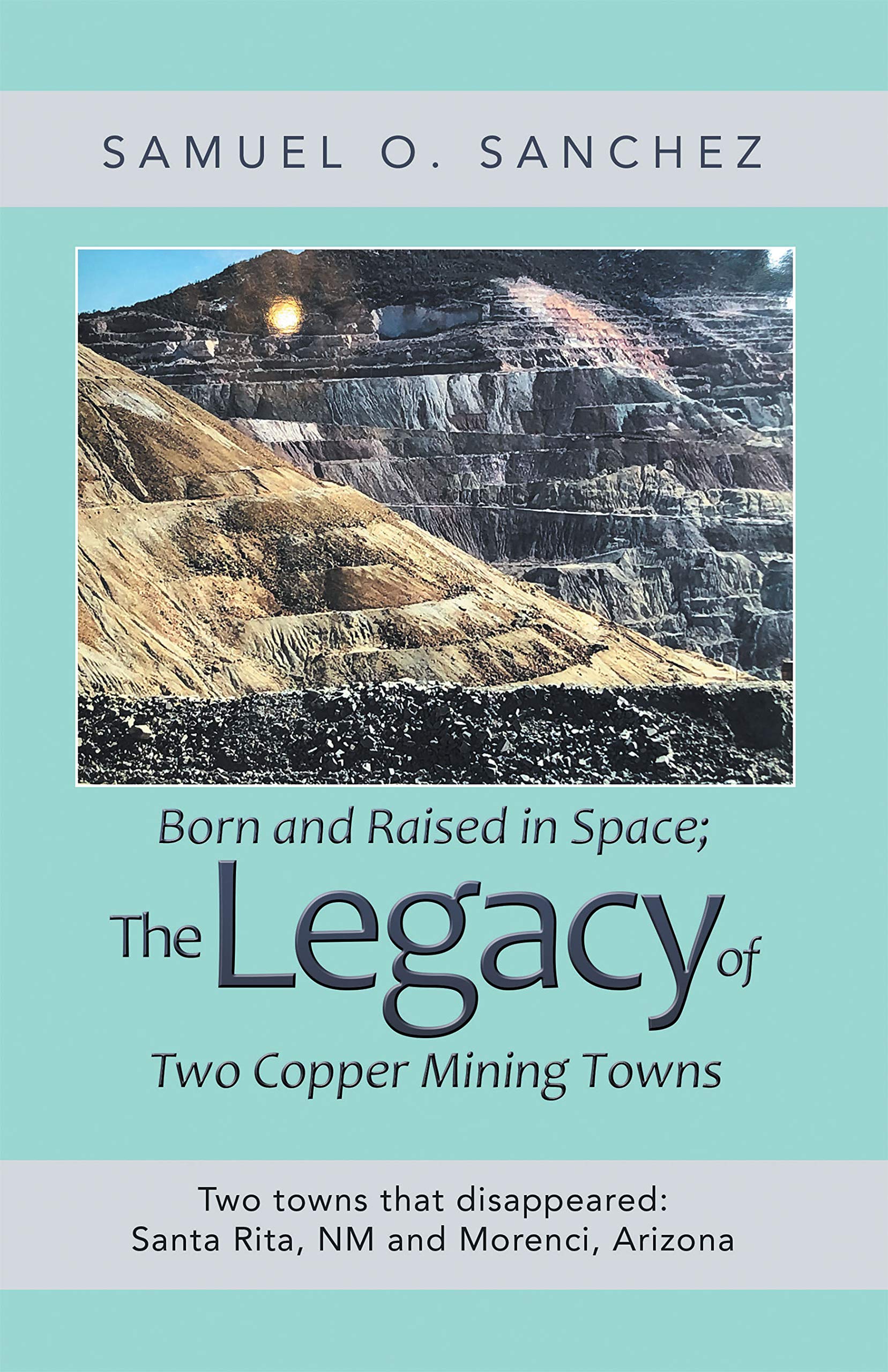
This memoir, told in short vignettes with often humorous lessons at the end of each, is an adventure as well as an intimate exploration of a man’s life from childhood to his elder years. The author portrays the mining towns where he grew up, Santa Rita NM and Morenci AZ, vividly. History is made up the lives of ordinary people, and such a close look at one life makes it clear that no one, really, is ordinary. Regular folks are colorful, original, and unique. This personal history also reminded me how much the world and the state of New Mexico have changed in one lifetime, how different the mid twentieth century was from the early twenty-first century, culturally, socially, and technologically.
Sanchez is fearlessly honest and impressively resilient. If he did something foolish as a boy or as a college student, he tells you. If his career or his love life went well—or not—he tells you. Reading this book is like hanging out with a great raconteur, a man with a long life, a sharp memory, and a willingness to take chances. An electrical engineer, he defies any stereotype of engineers as being on the boring side. I carried this story with me as my EV charging station read, so I was often reading it in public places and laughing out loud.
The author and his wife had the table across from mine at an event for local authors in Las Cruces, NM, and the subtitles and the cover picture on his book fascinated me so much I forgot to ask about the main title. I wish I had, because I don’t know what it means. Born and raised in space? Oh well. If you read the book and figure this out, let me know.
Surprising Myself
Multiple times in the past few months, I dropped my car key while running. My new Amphipod water bottle has a smaller pocket on the hand strap than the old one did, so I couldn’t fit the key with its great big head in the pocket anymore. It was either poking half-way out or dangling from my little finger. When I shifted the bottle from one hand to the other, it was easy to drop the key. After each drop, I told myself I would pay more attention. But I don’t run to pay attention to my key. I’m either brainstorming a scene in a book, admiring nature, or doing both.
I sometimes a route that doesn’t go in laps of a circular trail but along a stretch of sand above Elephant Butte Lake and back.  I’ve never measured it, but it takes as long as five miles did on another trail. Not a great distance for marathoners, but it’s my usual. I changed the bottle from right hand to left at the turnaround point and didn’t notice my key was missing until I got back to my car. My phone and spare key were locked in the trunk.
No point in fretting or in objecting to reality. I had no choice but to run back. After a windstorm, the sand was freshly rearranged, and my tracks were easy to retrace. But the sand was soft in places where the key could have vanished. I could have dropped it into a lizard hole. Or a well-meaning person could have picked it up.
Seeing a park ranger’s truck on the dirt road above the beach, I pulled up my mask, waved, and ran to him. He loaned me his phone to call my roadside assistance club, and then I ran on, in case I could find the key.
It lay exactly where I’d turned around and switched hands on the water bottle. I ran back to my car, speeding up so I could get to my phone and cancel the lock-out service.
I did it! Success!
Almost. I was in the middle of the call when the ranger showed up, escorting the wrecker to my car.
Insights from this adventure:
- I can make the same mistake five times before I learn from it.
- I can be creative with what I have on hand: I crafted the world’s smallest fanny pack using the pocket from my old Amphipod bottle. My key will go in it.
- And I can run double my usual miles.
You never know what you’re capable of until you do it.
Another Reason to Read the Classics
 In my work in progress, the seventh Mae Martin mystery, Mae’s ex mother-in-law is running for office again in North Carolina. I didn’t become a campaign volunteer to do research, especially since I’m door-knocking in New Mexico, but I’ve gathered a few good stories which may have a future in this book or another. FYI: Though this post does involve a political campaign, it’s non-partisan. If you suffer from political burnout, relax. I don’t even mention names or parties.
Today’s story:
In a pleasant neighborhood of one-story stucco and adobe houses with a view of the open desert beyond, I walked up to the second-to-last house on my canvassing list. On the street where the incumbent representative in our NM house district lives, I was volunteering for the opposing candidate. I’ll call them Incumbent and Challenger. Incumbent’s neighbors tended to support her, even if they were members of my party and not hers, and even though Challenger might better represent their views. They like Incumbent. That’s local politics. In another neighborhood a few weeks earlier, I met a woman who had never heard of Challenger, but said, “Is she running against Incumbent?” I said yes. The woman replied vehemently, “Then she’s got my vote.” It was obviously personal. She added, “Am I awful?” I smiled and said we were happy to have her vote.
Back to today’s second-to-last house. I’d been through a thunderstorm earlier, was now walking in heat and sun, and was ready to wrap things up. A black pick-up truck with Harley-Davidson bumper stickers pulled into the driveway just as I approached. A man with a long shaggy white beard sat at the wheel.
“Hi,” I began my perky canvasser bit. “Are you Mr. X?”
He was. And my list of voters to contact said he was a member of my party. I went on with my introduction, telling him who I was and that I was volunteering for Challenger. I asked, as I always do, if he had heard of her. People are often unfamiliar with a new name at the bottom of the ticket.
“I don’t vote. All politicians are liars.” Still sitting in his truck with the door open, he nodded meaningfully toward Incumbent’s house. The politician her other neighbors liked so much they’d vote for her even when they generally disagreed with her party.
Not sure how to handle his blanket aversion, I offered him Challenger’s flyer. “In case you should decide to vote, you can read about what she stands for.”
He actually read it, right then and there. “Hm. Social work.” He’d noticed her career field. “I studied social work in Colorado.” He told me what jobs he’d had, working with youth and then with drug users, and then informed me that “My wife, who is not a citizen, made me vote in 2016. But that’s the only time I’ve voted in decades.”
“That’s a powerful woman, if she could get you to vote when you’re so turned off by it.”
“She is. A powerful woman.” But, he told me, he’d moved to New Mexico alone because his wife didn’t understand why he had to have his motorcycle.
His way of getting involved in the community wasn’t political, he continued, but rather volunteering at the new animal shelter. “I don’t have any animals.” With a half-smile, he inclined his head toward the pair of dogs barking behind his fence.
“We all have our ways of trying to make the world a better place. You’ll take care of the animals, and I’ll knock on doors for Challenger.”
I was about to say goodbye and wish him a good day when he got out of his truck, revealing long skinny legs in shorts and knee-high black socks. “Let me show the motorcycle. So you’ll understand.”
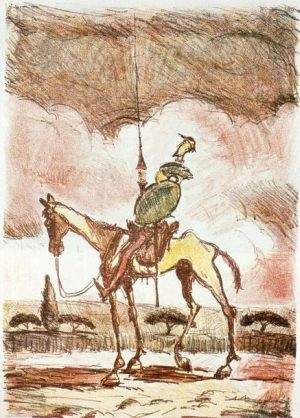
There was a black Harley in the driveway. Apparently this was not The Motorcycle. He opened the garage and revealed a bigger bike with ivory fenders. It looked like a vintage machine, and I sincerely admired it. He said, “That’s Rocinante,” then paused. “You know who that is?”
“Don Quixote’s horse.”
Mr. X beamed. “Not many people know that. I’m gonna vote for Challenger. She’s got good people working for her.”
I felt as if I’d just won Jeopardy as well as Incumbent’s neighbor’s vote.
“Where’s Your Baby?”
 As I charged up the last stretch of hill with a final burst of speed, I heard a shout of excitement from the playground at the end of the trail. A little boy, his dark face just visible above the stone wall, had spotted me. He must have been staring out into the landscape of cacti and junipers and sand, and been startled to see a human being—and one running, at that. I heard more happy shouts, and as I rounded the bend I saw four little heads flying along within the confines of the wall. The boy had an older sister, her hair in beaded braids that swung wildly as she ran. When I did a cooldown lap of the last little stretch, the children tracked me, and then they met me as I entered the parking lot. In an SUV parked nearby, I could see a young Hispanic woman with long hair and glasses, nursing a small baby in the back seat. Two of the kids looked like they were hers, and I wondered if the two black children were stepchildren in a blended family or if they were friends, perhaps out-of-town guests. In other words, what’s their story?
The boy who’d started the excitement of running with me was curious about me, too. I guessed him to be five at most, a handsome little guy with fine features and a runny nose. He asked me how far I ran and how often. He asked where I lived, and then followed up with questions that made me think he didn’t understand age yet.
“Where’s your mommy and daddy?”
“They passed away a long time ago.”
“Why did they pass away?”
I didn’t feel like telling a child at play about my parents’ end-of-life health problems, so I simply said, “They were very old.”
“My mommy’s still alive.”
“Of course. You’re young. That’s normal at your age, but not at my age.”
He followed me to my car as I got my water bottle. “Where’s your grandma and grandpa?”
“They passed away, too. They were even older.”
“Where’s your baby?”
“I don’t have one.”
This stumped him, and he asked again, saying everyone has a baby, and then added, “I have a baby.” He was carrying a toy in one fist, some kind of bristly green creature. Ah. His baby.
While I stretched at a picnic table, his sister, who was around eight or nine, joined us. They inquired about my age, which I gave as sixty-three. The girl told me their father is “six nine.” I asked, “Is that his height or his age?” She said, “He’s that tall and he’s that old. Do you know him?” I was sure I didn’t, if he’s really that tall. And was he really that old, with children so young? She had to be pulling my leg.
The two black kids and the Hispanic boy ran off to the swings, and the Hispanic girl, who was also about eight years old, stayed with me while I finished my stretches. Even while she’d been running and playing, she held onto a notebook with a pink cover that matched her pink sun dress. Perhaps she’s a future writer. Without my asking, she told me, “Those kids are from Arizona. They visit us every year. Usually once, but they came twice this year. The other one is my brother.” She intuited that people want to understand each other’s stories, but did not enlighten me as to whether her friends’ father really was sixty-nine years old and six-feet and nine inches tall.
It makes a better story if I’m left wondering.
Karma and Creativity
I woke up with an attitude today. Tuesday I had to start the day with a divisional meeting and today I had to start the day with a faculty assembly. It wasn’t the event that was the problem, but my reaction to it: a negative thought.
Goswami Kriyananda’s book, The Laws of Karma, says that karma isn’t punishment or retribution, but cause and effect. The subtle aspects of the causes often get overlooked. I keep contemplating this line from the book: “If a negative thought enters your head, know the first law of freedom: Don’t feed it.” On the next page, he says, “Knowledge is greatest eradicator of negative karma.”
To me, this means that when I have a negative thought, I need to notice and transform it, not smother it. If I suppress and ignore it I could still feed it—dig a hole for it and plant it and water it with my other unsolved problems and cranky attitudes. Talking about it can go two ways: I can vent to a friend and transform the negative, or I can vent to friend and magnify the negative. Writing about it can go in various directions, too, from pointless rumination to logical, problem-solving analysis to creative transformation.
In one of his talks, Kriyananda said something along these lines: “If I’m meditating in a cave, I have no problems. But as soon as I have a student, I have a problem.” This made me laugh—it’s so true.
Humor is one way of transforming the negative. Some professors have little pottery jars in their offices labeled, “Ashes of Problem Students.” The meeting this morning suddenly became amusing when I saw it through the filter of my critique partner’s work in progress, a comic paranormal mystery in which life after death has not fire and brimstone but meetings—bureaucracy and rules and meetings. I listened to the speech about new committees for assessment being formed and could see it as a scene in that book. With that shift in perspective, I stopped feeding the negative thought and started to smile.
I know writers who transform annoying people into murder victims in their stories. That’s not a choice for me, since I write murder-less mysteries. However, I have used people who troubled me as the inspiration for oppositional characters—and a funny thing happened when I did it. I developed compassion for them. Though the characters’ roles are antagonistic in the stories, I have to understand these difficult people and feel my shared humanity with them or they’ll be cardboard villains. The process gives my protagonist some complicated and interesting enemies, while it changes my resentment into insight. One of my students told me he transforms his stress into poetry, and that it’s the best therapy he’s ever experienced. It’s working. I’ve known him for a year and seen him change to become gentler and more open-minded. He used to rant on and on about things that bothered him. Now he makes poetry with them, understands himself more, and complains less.
I suspect we’re so attentive to our negative thoughts because they are alarms going off, telling us that something needs to change. That’s also what makes them so uncomfortable, and such fertile material for art and humor.
*****
The give-away posted last week is still open for entries.
 Amber Foxx Mysteries