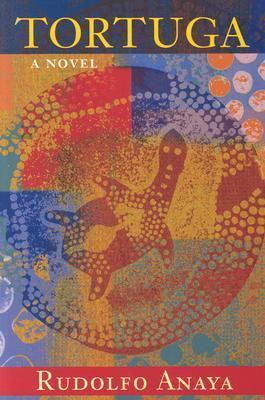
A New Mexico Book Review: Tortuga by Rudolfo Anaya

Though far from new, this book is timely. It takes place when kids were still sent to institutions, and the polio vaccine was not yet available. Discussions are currently occurring about the possible institutionalization of disabled children again, after years of integrating them in schools and giving them full opportunities.

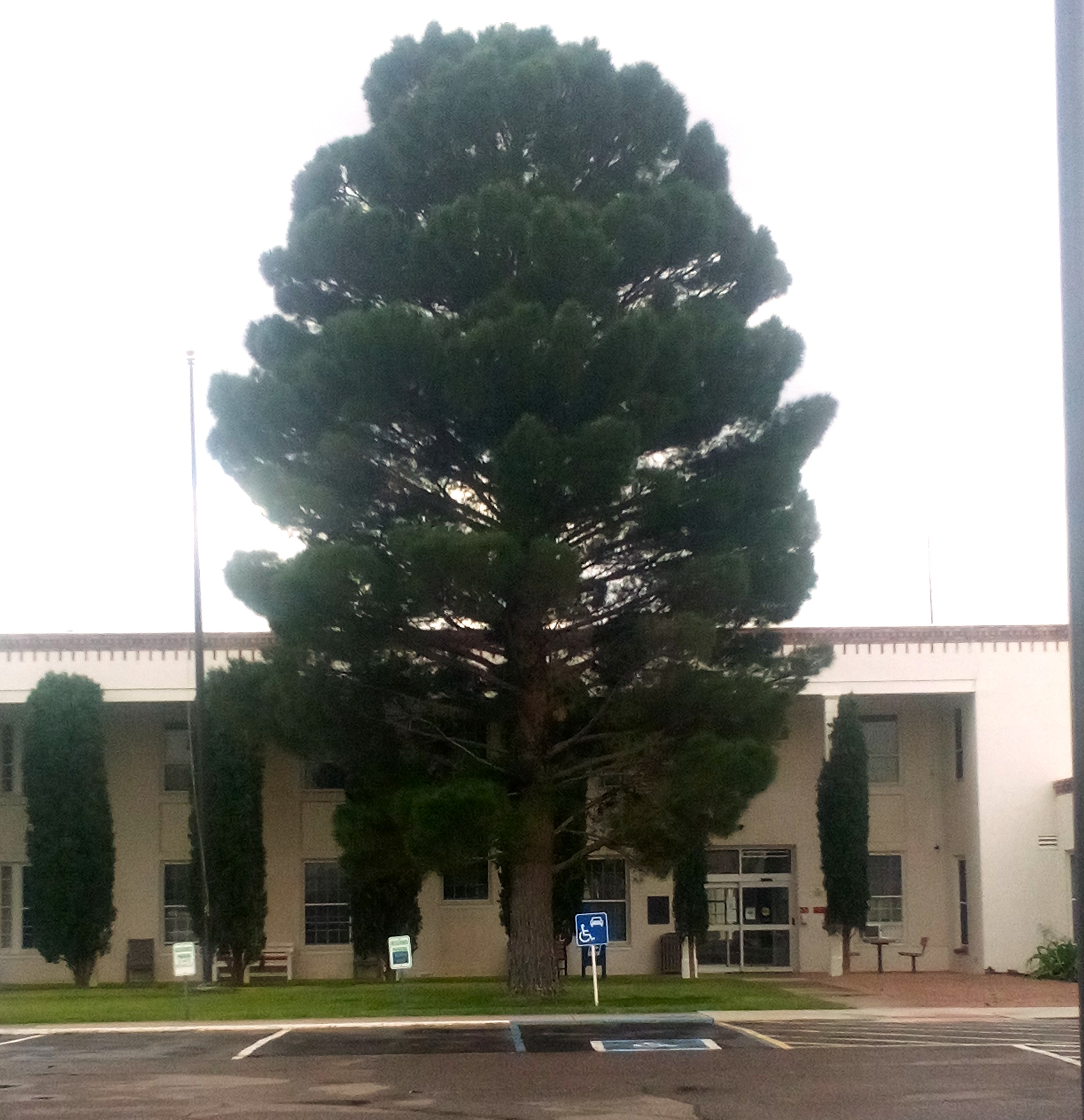
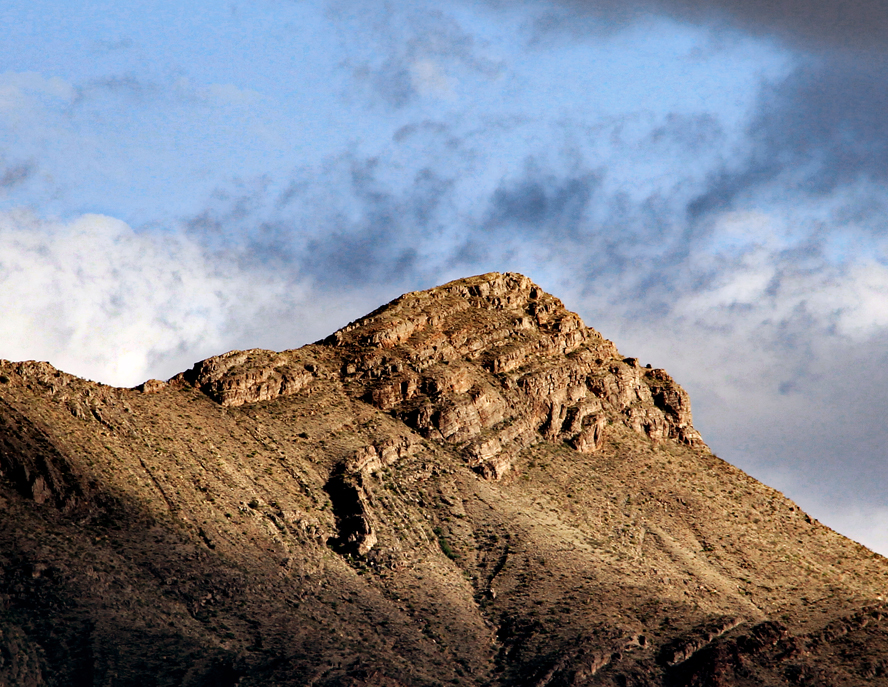
The characters in the book are children with various disabilities ranging from being kept alive with iron lungs to treatable conditions caused by serious accidents. They’re housed in the Carrie Tingley Hospital for Crippled Children. It’s not named, but it’s obvious to someone who knows southern New Mexico. The Tortuga of the title is both a boy in a body cast and the turtle formation on Turtleback Mountain in Truth or Consequences. The town was still named Hot Springs back then, and the building, which has now expanded and become the New Mexico State Veterans’ Home, was smaller and more isolated. Anaya spent time there is in his childhood after fracturing vertebrae in a diving accident when swimming in an irrigation ditch.

The book is not quite autobiographical, but he used his experience to create an intense and important story. The narrator is a sixteen-year-old boy with a severe injury like Anaya’s, gradually recovering while his entire spinal column, even his neck, is encased in a cast—thus he’s the turtle, and he chooses Tortuga as his nickname. He shares a ward with other boys who have significant injuries and a boy with progressing ichthyosis. The girls are on another ward. The polio victims in iron lungs are referred to by these more able-bodied boys as the vegetables. One older boy among them is left alone to read, the only thing he is capable of doing, but he becomes a philosopher.

As in many of Anaya’s books, the male characters are complex and fully developed while most of the female characters are not. The nurse’s aide, Ismelda, is essentially the same healing feminine archetype seen in his other books. Ultima is the elder version, Rita in the Sonny Baca novels the womanly version, and Ismelda the girl of eighteen. She is loving, giving, nurturing, beautiful, understanding, and wise, demanding nothing.

Tortuga falls in love with her, and they develop a relationship modern standards would consider inappropriate, as Ismelda gives him baths and appreciates his arousal at her touch when he cannot yet move more than his fingers and toes.

The physical therapist KC seems to relish her close contact with the boys as she manipulates their limbs, and being teenaged boys, they don’t object, but to a modern reader, KC seems to cross a line. She also shows appreciation of Tortuga’s arousal. I had a sense of the staff unthinkingly reacting this way without considering the impact of the boys’ disabilities and their isolation from normal female companionship. The wildness of a boys-and-girls field trip to the movies (Frankenstein, a great choice for the plot) only emphasizes how deprived of a normal life the kids are.

They get an education. They have a swimming pool, they have the hot spring waters in a special bath, and they have an excellent surgeon who genuinely cares. But they don’t have a full life. Jerry, a Navajo boy, personifies the urgent need for family and culture and connection.

As always, Anaya’s language is poetic and vivid, sweeping dreams into reality. The Turtle on the mountain is made into a myth that I’ve never heard in this town. I think it’s Anaya’s invention, but it works for the story—except for the hot spring water being the stone turtle peeing down through the mountain. Yuck. But teenaged boys—hey, they like this. And this book is fully in the mind and heart of a boy, a boy of his time.
Anaya also take a novelist’s liberty with our seasons for poetic purposes. In his Sonny Baca series, the seasons play significant symbolic roles. In Tortuga, the author gives southern New Mexico a cold, snowy winter with gray clouds and icy streets. He describes summer as a time of hot dry wind, and makes spring green and refreshing. Our mild, sunny winters, dry springs with high winds and dust storms, and summers of thunderstorms greening the mountain don’t fit the story’s needs.

A tragic twist near the end truly surprised me.  I was expecting something more predictable to go wrong. It doesn’t. The unexpected turn is perfectly prepared, however, and all the stronger for not being what I thought would happen.

I recommend this book to anyone who wants to explore Anaya’s work in depth and to examine an aspect of twentieth century history. It’s not a light read, and yet it has luminous moments.

*****

The picture of Turtleback Mountain is by Donna Catterick, whose work is seen on the covers of many of my books. I took the pictures of the original building at the New Mexico State Veterans’ Home, the portion that was once the Carrie Tingley Hospital.  I wonder how small those trees were when Anaya was a patient.
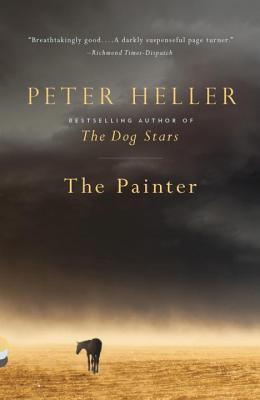
A New Mexico Mystery Review: The Painter

While this is a novel about crime at one level, a nerve-stretching, page-turning suspense story, it’s also the story of a man’s soul, his deepest loves, his darkest corners, his inner light, his passions, and his art. Heller gets inside the process of Jim Stegner’s whole being. When you read this book, you, feel as if you are Jim. You wade into his favorite fishing streams with him, experience his blinding rages with him, fall into the flow of creative inspiration with him, and feel every twist and turn in the road with him, as he navigates his grief over his teenaged daughter’s death, his fame, and his conflict with a dangerous man whose family doesn’t forgive or forget. Ever.

Jim is no saint, but he stands up for the weak, and he does it with fists. When he sees a man beating a horse, Jim fights with him in front of witnesses, breaks the man’s nose and liberates the horse. And so begins Jim’s trip to hell. There are stops in brief but intense heavens of love, painting and fishing, but this time Jim’s inner demons have pulled in some real ones, and they won’t leave him alone.

The landscape of northern New Mexico and southern Colorado is so alive as seen through this painter and fisherman’s eyes that it’s virtually a character in the book. The people in Jim’s life—his model Sofia, his friends, his oft-remembered late daughter, the police who question him—are vivid and multi-dimensional, and even the passing minor characters are so finely portrayed they seem to have lives beyond the story. The scenes revolving around art in Santa Fe are drawn from life: the wealthy collectors, the galleries, and the lionizing of the famous man. As scandal and suspicion grow around Jim, so does the value of his art. The confluence of the public pressure for pictures and interviews with the inner pressure from his emotions and the sense of being hunted like prey come together in an explosive and unexpected conclusion.

For an interview with the author about this book, go to

http://www.peterheller.net/media/peter-in-the-media/

and click on the video for The Painter. The story behind the book is as fascinating as the book itself.

About the artist who inspired the author to create Jim Stegner:

Article

Images

Breaking the Genre Barrier

I’ve claimed genres because Amazon and Goodreads and other web sites require it, but I am a genre-blender. I once described my genre as “platypus.” The platypus looks like a mammal, a bird, and a reptile, blended into one animal. I write with elements of general fiction, mystery, romance, suspense and paranormal, but I don’t fit in any genre. I use the “paranormal” category, so readers who are interested in a mystical element to their mysteries can find me. I use the mystery category because my protagonist, a psychic, looks into the whereabouts of a missing people or animals, or why strange spiritual phenomena have occurred, or what secrets people are hiding. The mystery in my books is not always related to crime or death, though sometimes it is.  So far, none of the books are about murder. I simply wasn’t drawn to writing about murder.

Many years ago I read a mystery in which the central puzzle to be solved related to an art heist. It was non-violent. I loved it, and never forgot the concept of the murder-less mystery, even though I have long since forgotten the author and the title. Another murder-less example is the Number One Ladies’ Detective Agency series. Precious Ramotswe is a private detective investigating such things as workplace thefts, infidelities, missing heirs, etc. There are plenty of mysteries in real life that do not involve killing someone. People are very strange, and often dishonest. I knew a man who kept it secret from his “wife” that they were not legally married, so he could honestly tell his mistress that he wasn’t married, since she would have broken off with him if he was. (I will not tell you how he did it. I may yet use it in a book.)

When it comes to paranormal fiction, I don’t care for anything with vampires or werewolves or other such creatures. I like books where the mystical kind of mysterious steps into the ordinary. Linda Hogan’s Power and Mean Spirit are two of the best books I’ve ever read. She crosses the bridge into the spiritual realm through ordinary reality in a way that makes the extraordinary somehow more believable. Her books are general fiction, or literary fiction, although they have a strong supernatural element. I don’t claim to write like Hogan, but this is the kind of “paranormal” that appeals to me as reader. I’ve had a number of psychic experiences, and have researched various elements of the mystical experience, and alternative healing, and found that this is an area full of mystery in its other sense—the inexplicable.

My characters, not the genre, seem to be the element that draws readers in. I may have to make that my brand.

                             READ OUTSIDE THE BOX WITH AMBER FOXX

The Mae Martin Psychic Mysteries

Paranormal fiction for people who don’t like paranormal fiction.

And for those who do.

No murder, just mystery.

Love is a mystery. Every person is a mystery.

Somewhere in every life there is a secret.