A New Mexico Mystery Author Interview: Amy M. Bennett

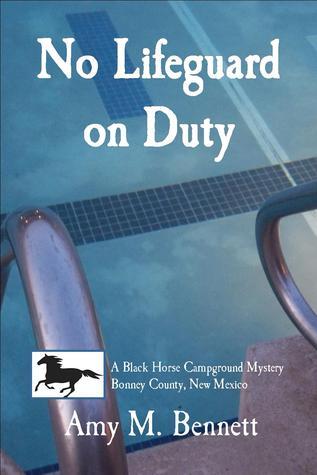
Last week, I reviewed No Lifeguard on Duty, and today I have the pleasure of welcoming the author for an interview.

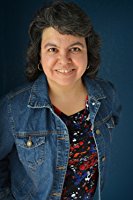
Bio: Amy M. Bennett, author of the Black Horse Campground mystery series, has worked as a cake decorator, vino-slinger, and retail worker in preparation for writing murder mysteries. She consumes way too much coffee, New Mexico wine, and true crime documentaries to be considered normal, but her husband and son love her anyway. She lives in Bent, New Mexico, and is always thinking about, if not actively writing, the next book.

AF: Were you always a mystery writer, or did you start with another genre? I ask because you have such a knack for the romantic elements in a mystery.

AMB: I have always loved mysteries, ever since I was a kid and grew up reading… The Three Investigators! Yes, you probably thought I was going to say Nancy Drew, but she was unrelatable to me, an awkward pre-teen with no illusions about being a pulled-together “titian-haired” 18-year-old with her own convertible! But three young teenage boys with a secret junkyard headquarters and the use of a vintage limo they won in a jellybean guessing contest? Okay, maybe still far-fetched, but more relatable to me! That’s what I’ve always wanted to do: create characters that are relatable. I tried to write mainstream romance, was even encouraged to write for Harlequin, but the mystery-lover in me kept going back to my roots.

AF: I may be able to guess the answer, but I’d like to hear it from you. Why did you choose a campground as the setting? Your background as professional cake decorator and your work at a winery offer more conventional cozy setting possibilities.

AMB: There are SOOOO many mystery series that are centered around food and wine (restaurants, cafes, bakeries, wineries, etc.) that I wanted to think of some setting that wasn’t overdone. After a camping trip with my husband and son to Silver City (NM) where we stayed in a very well-run KOA Campground, I realized I had my setting. I took a lot of notes on that trip and any subsequent vacation we took where we stayed in a campground. Also, my concern about having “Cabot Cove syndrome” was dispelled in part by the fact that campgrounds allowed my characters to interact with strangers from other places instead of the people they encountered in their day-to-day life, so a wider range of suspects and victims. (Incidentally, I’d have been eyeing Jessica Fletcher with a lot more suspicion with all the bodies dropping dead in Cabot Cove and she being the common denominator!)

AF: Do you have connections in local law enforcement in your area? If so, what did you learn from them? The scenes with the sheriff and deputies feel authentic and natural. You seem comfortable writing about them. If this is all from research, it’s good research.

AMB: I know a few police officers but, believe it or not, I’ve never taken advantage of them to do a “ride along” or an interview or anything like that. Back when NaNoWriMo was in its prime, they had a few forums where experts—law enforcement, legal, medical, etc.—would offer to answer questions about almost everything you could think of, so I did ask a lot of questions there. I also did a lot of research online about questions pertaining specifically to New Mexico law enforcement. Having a very small-town setting helps, because law enforcement is a lot more likely to be involved with the locals than in a big city.

AF: Where do you start when writing a book? Do you begin with a plot premise? A situation into which you put your characters to see what they do? A blank page and inspiration? Something else?

AMB: I started my series with a setting and a vague idea of who my characters were. That, and I knew I wanted to write a mystery! Now that I’ve established my setting and characters, I just say, “Okay, guys, now what?” Sometimes, when in the midst of a book, I get an idea that really doesn’t fit in the story I’m writing, I set it aside for a future book. Then I tell myself to throw that situation at my characters and see where it goes.

AF: What is the greatest challenge for you in writing a series, and what is the greatest satisfaction?

AMB: I had so many people tell me, at first, that they HATED love triangles in a mystery because the reasons were always so dumb. I think I was able to pull off the love triangle in a believable manner but I also knew when it was time to settle it and move on. The challenge is in coming up with a mystery that isn’t too easy to solve but also not so difficult that it confuses the reader. I also have to do better at keeping notes … I’m always having to revise names I’ve already used in previous stories!

AF: Is there anything I should have asked you that I didn’t think of? Answer that missing question.

AMB: I do have a story I love to share, and it has to do with getting recognition for my writing in a most unexpected way! I work for a local winery, Noisy Water, based out of Ruidoso. One of their best-selling and best known wines is a sweet white blend called Jo Mamma’s White. One time, my husband and I were working a wine festival in Tularosa and our booth had big banners advertising our wines and one of them had the Jo Mamma’s label printed on it. A woman was walking up to us excitedly and she said, “Oh, my gosh, IT’S REAL! I can’t believe it’s real! There really IS a Jo Mamma’s wine!” She went on to say, “I read a mystery book where the main character drank a wine called ‘Jo Mamma’s White’ and I honestly thought it was made up! I can’t believe there really is a Jo Mamma’s White!” Well, when I told her that I was the author of the book she read, she got so excited, she bought a bottle of the wine and asked me to sign it for her! I think that was the first time I and my books were better known than my workplace and their wines!

AF: Thank you for a delightful interview!

*****

To learn more about Amy’s books, go to

https://www.amymbennettbooks.com/books


A New Mexico Mystery Review: No Lifeguard on Duty by Amy M. Bennett

I accidentally started with book two in this series, and once I realized what I’d done, I was already hooked and didn’t want to stop and go back to book one (though you should start there to get acquainted with the cast). It was a pleasure to get the essence of the cozy mystery—an amateur sleuth allied with law enforcement: no onstage violence; a tight-knit community; natural, unforced humor; and strong interpersonal relationships—without cliches or cuteness. The setting at a campground is a change of pace for the genre, with great potential for variety in the series.

The plot is tight and full of surprises. I could only figure out half of whodunnit until a twist near the end revealed the rest. And I loved the characters. They are the lifeblood of the series. The relationships among Corrie and Rick and JD carry a thread of romantic rivalry and competition, and yet the two men with an interest in Corrie respect each other and work well together. There are lighter scenes, such as Corrie’s attempt to aid the investigation by going out to dinner with yet another law enforcement officer. (They dine at a real place that I recognized, the Inn of the Mountain Gods in Mescalero, which added to the fun.) Overall, though, this is not a comedic type of cozy, but a slice of life, an empathic portrayal of loss, healing, and friendship as well as crime in a small New Mexico town.

*****

Next week, I’ll post my interview with the author. That gives you time to start reading the series! https://www.amymbennettbooks.com/books

Whole Series Price Drop


Book one in the Mae Martin Mystery Series, The Calling, is now $2.99, and the other books are now $3.99. Buy from your favorite store and stock up your e-reader.

Need to keep track of your place in the series? Here’s a guide to the dates and settings and sequence. Follow psychic and healer Mae Martin from North Carolina, where she first discovers her gifts, to her new life in New Mexico. Happy reading!

A New Mexico Mystery Review: The Sacred Bridge by Anne Hillermann

This is Anne Hillerman’s best book yet, a crime novel but also a book about culture, land, and history, set in various parts of the Navajo Nation in both New Mexico and Arizona. As always, her research is thorough and woven naturally into the flow of the story. The character development is deep, and the plot revolves around the inner workings of people— the victims of the crimes, the perpetrators, and the people solving the crimes.

The beginning of the book is a masterpiece in building tension, suspense, setting, plot, and conflict, when there’s only one character present: Jim Chee hiking alone at Lake Powell, discovering a crime as he’s contemplating what to do with his career. Meanwhile, Chee’s wife, Bernie Manuelito, is investigating another crime that she had the misfortune to witness. This second crime is somewhat based on actual events on the Navajo Nation that I’d read about. I immediately recognized the farm that inspired this story, and its misuse of Chinese laborers. The discovery of the full character and life path of the victims of these two different crimes is a fascinating and integral part of the process of solving them.

Bernie’s career development and Chee’s professional decisions and spiritual explorations are inseparable from the plot. Bernie’s younger sister Darleen’s maturation and use of her talents fit perfectly into the mystery. There’s not a single loose thread. Every subplot is tightly woven into the main plots.

This book kept me awake. When Bernie is coming to the end of her undercover assignment, the pace is intense and full of surprises—surprises that fit.  I like when a mystery hits me this way: Oh wow! I never saw this coming! But yes, of course that’s what happens.

Everything’s wrapped up and yet the book also ends in a way that makes me want to read the next one. Starting immediately.

Reading a Series: In Order or All Over the Place?

Usually, I read series in order. I want to get to know the characters the way the author developed them. It’s like growing close to friends over many years of shared experiences. Starting late in the series doesn’t let me build the same relationships. Once in a while, I’ve borrowed an audiobook from the library that was far along in a series I’d not yet read, and while I enjoyed the books, I often didn’t go back to the beginnings. Some authors write their series so there are virtually no spoilers if you discover the books out of sequence. A few others provide what I feel is such an excess of backstory that I turn off that audiobook and lose interest in how the series began.

Needless to say, this makes me cautious with backstory, trying to give as little as possible. With each new book, I find a new beta reader to join the team, one who hasn’t yet read my other books. That person’s fresh perspective helps me present the small doses of necessary backstory at the moment they’re needed—for new readers, for readers who’ve forgotten elements of earlier books, and for those who are zigzagging around in the series.

I’ve heard from people who started my series somewhere after book one, The Calling. One wanted to start with Shaman’s Blues, because it’s the book in which Mae Martin moves to New Mexico. Another started with Ghost Sickness because of the setting on the Mescalero Apache reservation. Others started with book six, Death Omen, because of its theme—fraud and exploitation in spiritual healing. And they liked the books out of order. I never asked if they went back to book one, though.

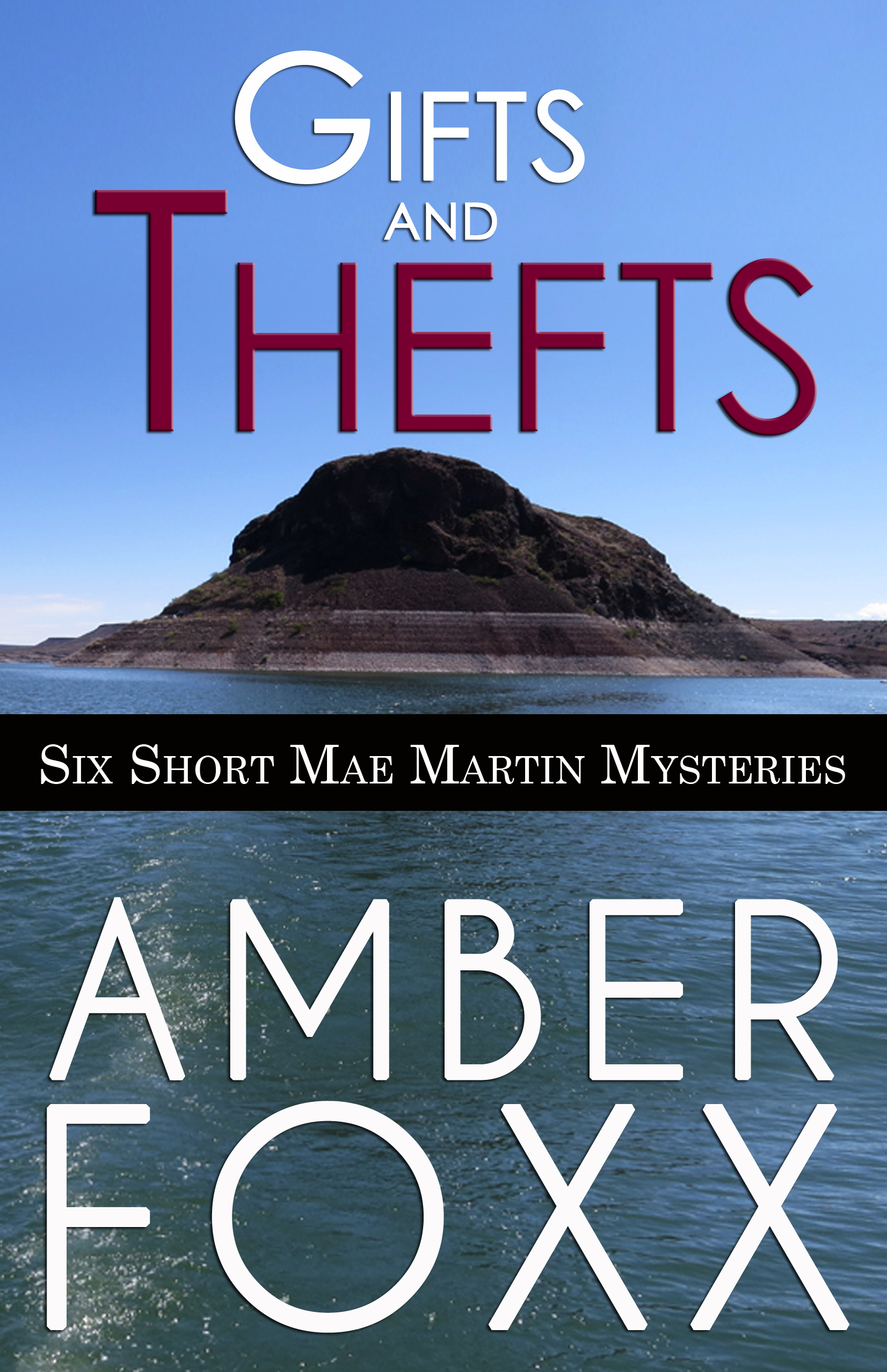
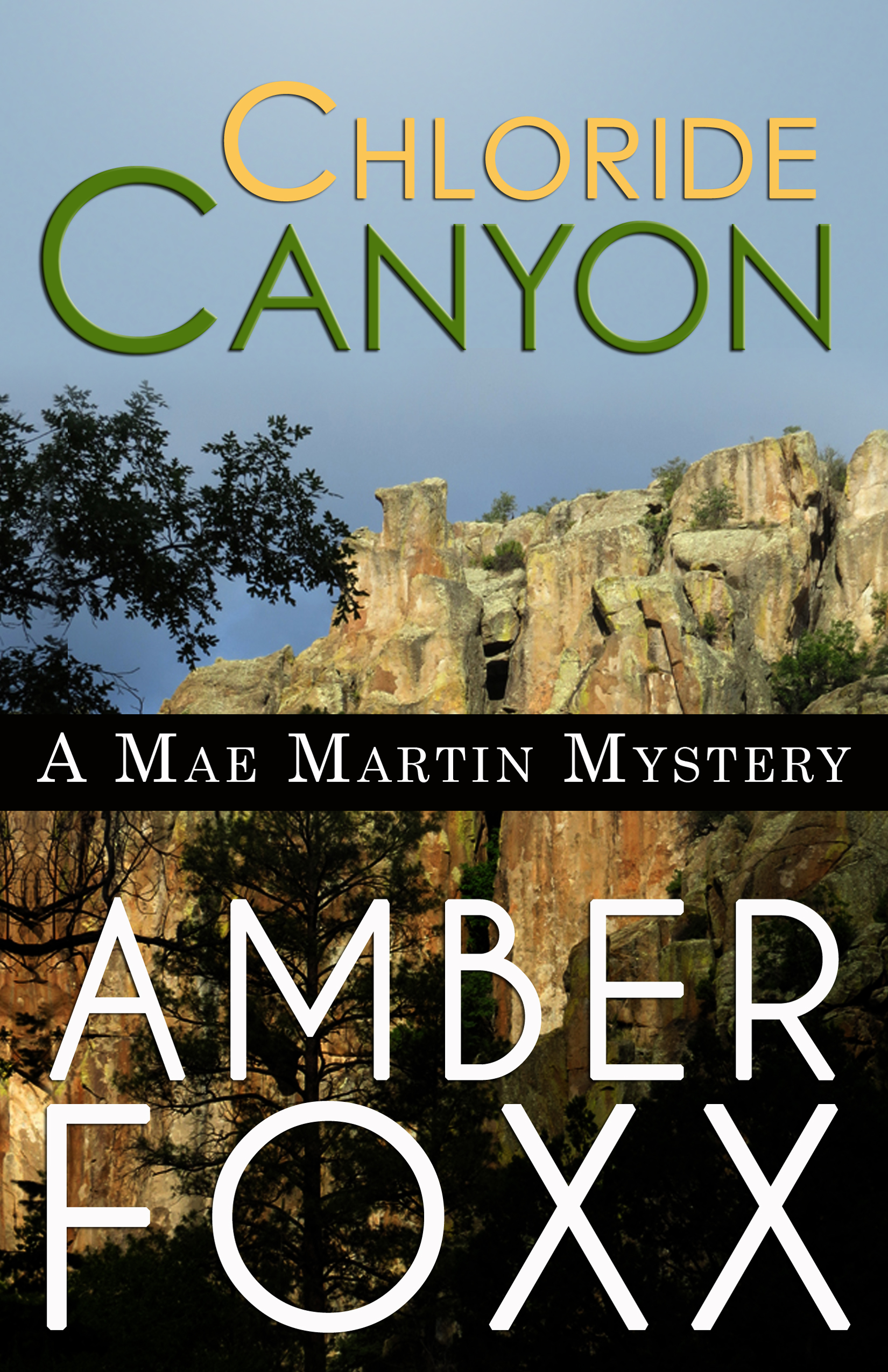
I wrote the suite of six short mysteries, Gifts and Thefts, to bridge the year and a half between the end of Shadow Family and the beginning of Chloride Canyon. Because it’s numbered book 7.5, Amazon doesn’t list this book on my series page. They have Gifts and Thefts off by itself as it were a stand-alone book. The other major online bookstores, Kobo, Barnes and Noble, and Apple, are more flexible about numbering and include book 7.5 on the series page. So, if you are a read-it-in-order person and buy from Amazon, heads up. There’s a book between seven and eight. It’s short, and you can finish it before book eight, Chloride Canyon, comes out at the end of the month.

Do you only read series in order? If you start with a later book, do you go back to the beginning? I’m curious how others relate to series.


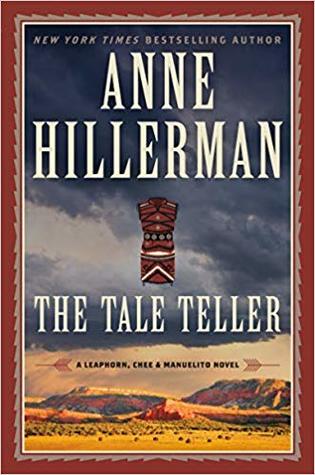
A New Mexico Mystery Review: The Tale Teller by Anne Hillerman

Anne Hillerman took her time to get to know retired Navajo Police Lieutenant Joe Leaphorn before writing a book that spends at least half its pages in his point of view, and her study of the character her father created pays off. The interwoven crime stories—a case Leaphorn works on as a private investigator and one Bernie Manuelito and Jim Chee work on for the tribal police—are told with excellent attention to police and PI procedures as well as the personal experiences of the investigators. I appreciate the realism of Bernie’s work days—she’s never just devoted to one case, but is pulled in various directions by minor crimes as well interacting with the FBI on a homicide.

The individual stories of the crime victims and the people around them are as intriguing the process of solving the crime. Hillerman skillfully weaves Bernie’s family and Leaphorn’s life situation into the plot. I grew so involved in his and Louisa’s relationship, it was as if old friends were having these difficulties. And for me, they practically are old friends. Hillerman writes as if readers already know her primary characters—what they look like, how old they are, and their history with each other. This far into a series, I prefer it that way. Little to no backstory.

The final scene with the killer was, as in so many mysteries, more confessional than struck me as likely, but on the plus side, the context was plausible. Overall, the pace and the complexity were excellent. And the threads of history and culture woven throughout are never dumped, but crafted into the scenes.

I’m curious what the next book will bring. No one managed to get through to the overconfident, misogynistic rookie, Wilson Sam. Is he going to get in trouble? And will it be Jim Chee’s turn for a lead role? I love how Anne Hillerman writes his dialogue, especially his humor, but in the latest book she doesn’t get inside his head quite as deeply she does with Bernie and with Leaphorn. But I think she could, and I would love to see such a book.

Digression: A minor thing confused me. The Navajo custom of not naming the dead doesn’t seem to be observed consistently by anyone in this book. In any culture, there are variations from person to person in adherence to traditions. The museum director Mrs. Pinto says outright she doesn’t believe in chindis, so her naming the deceased fits with her beliefs. Later in the narration the author mentions that the particularly sensitive time after a death, the time during which one doesn’t speak of the dead, has passed. But I thought the name still wasn’t spoken for a longer time after those four days, and characters I thought were more traditional, like one victim’s father, do speak her name. I know Hillerman does her research, so I was puzzled why this seemed different from the way the practice is portrayed in other books in the series. Or maybe it really wasn’t, and this is just my perception, my need for one little piece of backstory.

Note: This book, like all of Hillerman’s, is set not exclusively in New Mexico, but on the Navajo Reservation, part of which is in New Mexico.

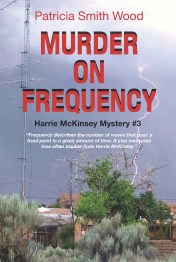
A New Mexico Mystery Review: Murder on Frequency by Patricia Smith Wood

murder-on-frequency

A New Mexico man long missing and presumed dead seems to have come back to broadcast on ham radio, only to fade out as if something terrible has happened to him.

Patricia Smith Wood has crafted another tight puzzle of a mystery in this third in the Harrie McKinsey series, once again blending multiple mystery genres—a touch of cozy, a touch of police procedural, and now a touch of the PI story as well. Amateur sleuths Harrie and Ginger, the Albuquerque police department, and the FBI come together on a complex case with help from a new character, private investigator Bernie Thomas, a former member of the APD. His role as a liaison between the professionals and the amateurs is an effective device. The amateurs take some risks, and they use their brains and their ability to gain trust and talk with people, but they don’t do what’s better done by the pros.

Harrie and Ginger, who are studying to become amateur radio operators, are naturally and believably drawn into investigating the apparent broadcast from the missing Alan Whitney. I like a mystery that gives me glimpse into a hobby or occupation I previously knew little about, and this book provides a fascinating exploration of amateur radio without ever losing the pace. Wood slips the exposition into the energetic dialog as part of a page-turning plot.

 Much of the detective works, realistically, takes place through interviews, asking the right people the right questions, and through research and the use of creative intelligence to understand the clues. Most of the violence takes place offstage, though there are suspenseful scenes in which danger threatens characters the reader comes to care about. While this isn’t in the category of a humorous mystery, there is humor in the characters’ banter, and one of the criminals was an incredibly amusing diversion. He’s a bit like someone who walked out of a 1940s black-and-white movie in a way, and yet also wholly original.

 Wood is the master of the chapter-ending hook that makes you want to keep going. Surprises kept coming around the corner right to the very end. If you like to challenge your brain to solve a mystery, Patricia Smith Wood is an author you’ll come back to again and again.

To read more about this author, see my interview with her and my reviews of her first two books, The Easter Egg Murder and Murder on Sagebrush Lane


A New Mexico Mystery Author Interview: Pari Noskin

Clovis_frtRecently I reviewed The Clovis Incident, the first Saha Solomon mystery, and today I’m happy to have the author, for an interview. Pari Noskin (aka Pari Noskin Taichert) garnered two Agatha Award nominations for her first mystery series originally from the University of New Mexico Press. Like her New Mexico heroine, Sasha Solomon, Noskin is a multi-year veteran in the PR industry. Her first three books are: The Clovis Incident, The Belen Hitch and The Socorro Blast. She is also founder of the Anthony-nominated blog, Murderati.com, and a national award-winning freelance features writer. In her new series, featuring television personality and psychic Darnda Jones, Pari leaves the comforts of the familiar and explores what it means to be truly connected to the natural world, to understand other creatures’ perspectives. That’s because Darnda is much more interested in communicating with non-humans than most people she knows. Don’t worry, Pari isn’t anti-social. She enjoys hearing from her readers whenever they take the time to send her a line!

*****

AF: I noticed in your notes at the end of the The Clovis Incident that many people in Clovis helped you witthe book. What it was like bringing this idea to them? Any favorite stories from your research?

PN: People ranged from amused to moderately concerned. One of the things that really has struck me through writing the first three Sasha books and working on the fourth is that my ideas about PR and marketing, of the places about which I write, often mirror what city councils and local tourism departments are already discussing. This was true a bit in Clovis; some people really wanted to cash in on the UFO angle. It has been even more striking with my subsequent books.

A favorite research story? Hmm. I learned a lot during the writing of this first book in the series. One important thing was that it takes time and knowing the right people to get at the kinds of information I wanted. I was fortunate enough to speak with some city leaders and influencers who were quite frank with me. I don’t know if they liked the final product, however. It seems to be much more popular with people who have either lived in and moved away from Clovis or live close by but not in the city itself. That said, it has sold very well there.

AF: I know nothing about the PR field so I found Sasha’s work fun to read about. She comes across as a creative risk-taker, someone who enjoys the gamble of bidding for a free-lance job over the security of something steady. Has your PR experience helped you as an author in addition to making it Sasha’s profession?

PN: My PR experience spans well over 30 years and it has been tremendously helpful in my professional and writing life. PR forces one to always consider the perspective of the audience. I don’t write to audience, per se, but I think about how my words and stories’ structure affect the end product… the telling of the tale.

I did work as a freelancer for several years. It was a great experience in forcing organization and nurturing a continual moxie when it came to thinking about projects — how to get them done and what angles would be most effective.

AF: I have a partially-formed urge to visit Clovis after reading this book, though I’m not sure why. If I follow up on it, what would you recommend?

PN: I don’t know if I’d recommend going there nowadays. One challenge in writing about local restaurants and other businesses is that things change. Life rolls on. The Clovis Incident was published long enough ago that I suspect there are far more changes than constants in that city. Roswell has changed quite a bit too.

AF: The next books in the series feature Socorro and Belen. What made you choose these locations? And Clovis?

PN: This may sound strange, but I write about places that have an identifiable personality and human center: a there there!  I can tell pretty quickly if a town or area will yield the kind of spirit and flair that will intrigue me and make a great location for a story. I also always start with a much deeper theme than what many readers ever perceive — with a big question that I want to explore. Some people never realize what I’m doing because they focus on the humor and the speed of the story. Other’s “get it.”

Belen with its artistic center and great aspirations for tourism made me look at questions around “What is art?” “Who has the right to define it?” And Socorro, with NM Tech there, was a fabulous place to explore the themes of interpersonal as well as national prejudice and intolerance …

I always fall in love with the places about which I write, too.

AF: What is your favorite place in New Mexico and why?

PN: Not fair. I love many places here. I’m a native through and through—born and raised in NM—and I know there are so many locations to discover. You know what my favorite place (characteristic) is in NM? It’s the space … the ability to drive for just a few minutes outside of ABQ or any other town and be in the middle of all of this glorious, stunning, gorgeous land. I love the colors of this often parched land, the hues of yellows, browns, pinks, reds, blues … I love that we can be right next to ancient history without expending much effort: the ruins of old pueblos, Tres Piedras’ petroglyphs, old towns, plazas, wonderful old cemeteries.

Driving around NM, I always wonder about the people who passed before. When I see a solitary road going off into the distance, I wonder who might live there, what life would be like in the middle of this possibility in a basically harsh environment. I find all of New Mexico, especially outside the cities, incredibly inspiring and intriguing.

AF: This is off the wall, but then the whole book is (in a good way). Do you speak Cantonese? I may have taken more interest in this than some readers, but I studied Mandarin for a year and had no idea how different it was from Cantonese until I read the scenes in which Sasha brushes off her language skills. From this and from the way you blended Buddhist beliefs about the dead into the story, I got the impression you were well-acquainted with Asian cultures. What’s your background in this area?

PN: That’s a fun question. Thanks for asking. I earned my undergraduate degree at the University of Michigan in Asian Studies and lived in Hong Kong for almost a year as a college student. Asian philosophy has interested me for decades; it also helps that my mother collected Asian antiques so I grew up learning about these cultures. Also, I’ve always been interested in other languages as windows into the way other cultures think and perceive the world. I’ve studied seven so far.

AF: In The Clovis Incident, Sasha meets some apparently sane, coherent, functional people (as well as some who are more on the fringes) who claim to have encountered aliens. Tell me about your sources for this material.

PN: All of the characters came straight out of my odd imagination. I study people and so some did remind me of folks I met along the way. But I made every single one of them up — from cell to cerebellum.

AF: When you start a book, do you know how it ends? What’s your creative process like?

I never know the ending. I really admire people who outline and know where their writing is going. I’ve tried. Believe me, I’ve tried. But I have to just jump in and start writing and see where the story and characters take me. It’s not a very efficient way to write and I end up throwing away a lot of words and concepts — far too many — but no other way works for me. I love the process of discovery and am grateful that I enjoy editing too.

AF: What are you currently working on?

PN: I’m actively working on the second book in my Darnda Jones series. The first one, Stung, is available electronically and will be, eventually, in print. Darnda was born in the Sasha series and I liked her so much I wanted to know her better. She is a psychic/telepath who works as a professional “pest controller” and has a television show doing just that. What makes her especially interesting is that she cares far more for insects, animals and most plants — and for the natural world and health of our planet — than she does for most human beings. She’s a deep and wonderful character. I really wish I knew someone like her.

Does it say something weird that I’ve actually created one of my own best friends?

Also, I’m part of a writers’ collaborative now, Book View Café, and we serve as a publishing house for each other. All of us are multi-published, so the quality of all of our work is very high. I like the independence of this model — rather than more traditional models — and the fact that I can write what I want rather than what might be expected. I’m also working on the next Sasha book. It is located in Las Cruces, NM and explores the chile pepper industry and organic vs big agriculture.

AF: Thanks for being my guest. I look forward to discovering Darnda.

*****

Follow Pari Noksin on Goodreads  and on Facebook .