A Tail and a Tale: Bob Can Talk His Way Out of Anything

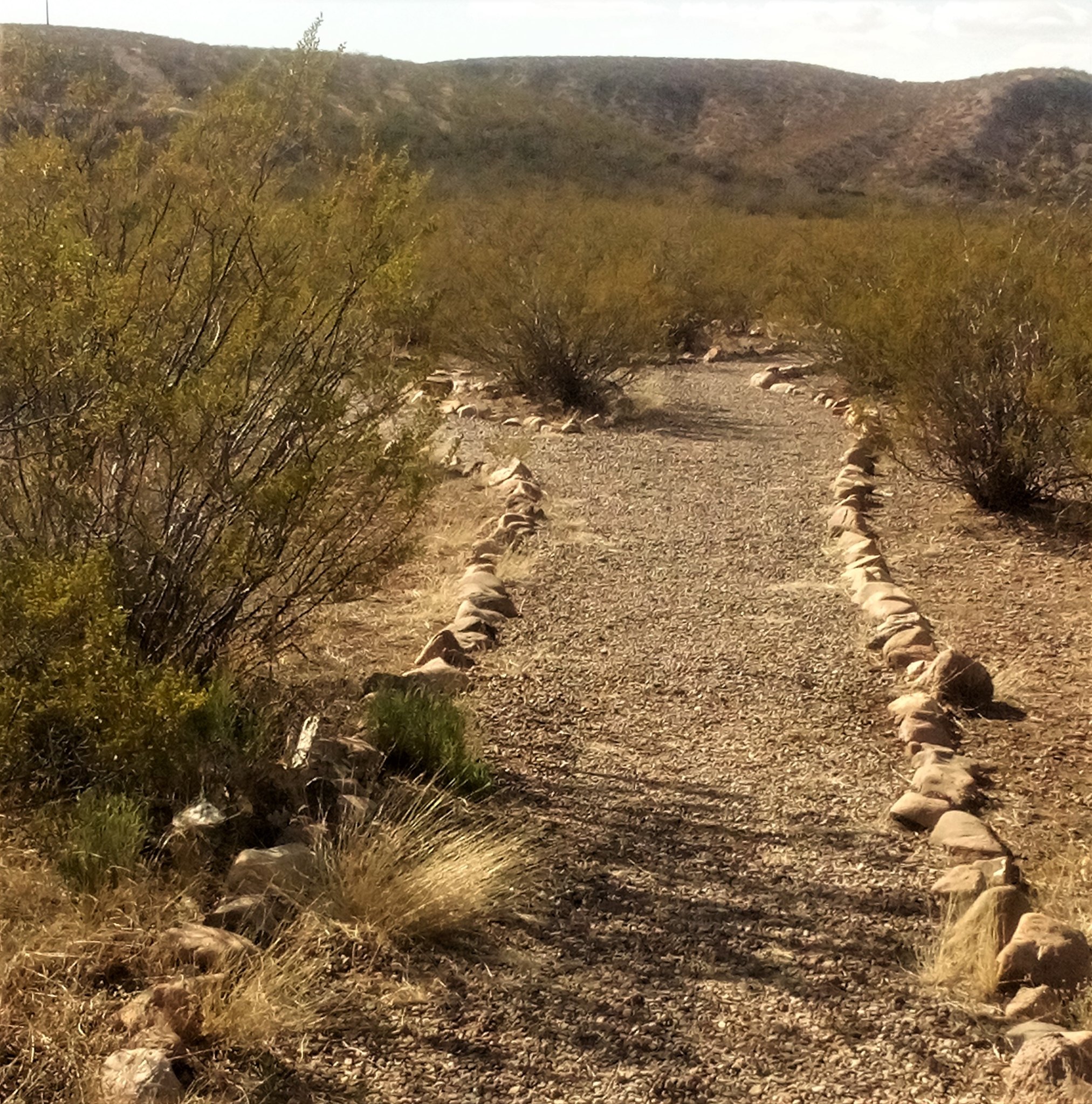
There’s a lot of wildlife we don’t see. The Rio Grande is low right now, making it easy to cross from the empty desert land on the other side. Tracks in the mud from recent rain showed small hooves trotting around on the mesa near Healing Waters Trail where I was running. I’ve never seen a javelina up there, but those were their little pointy feet. No surprise. We expect them around here. A friend sometimes has them in her yard.

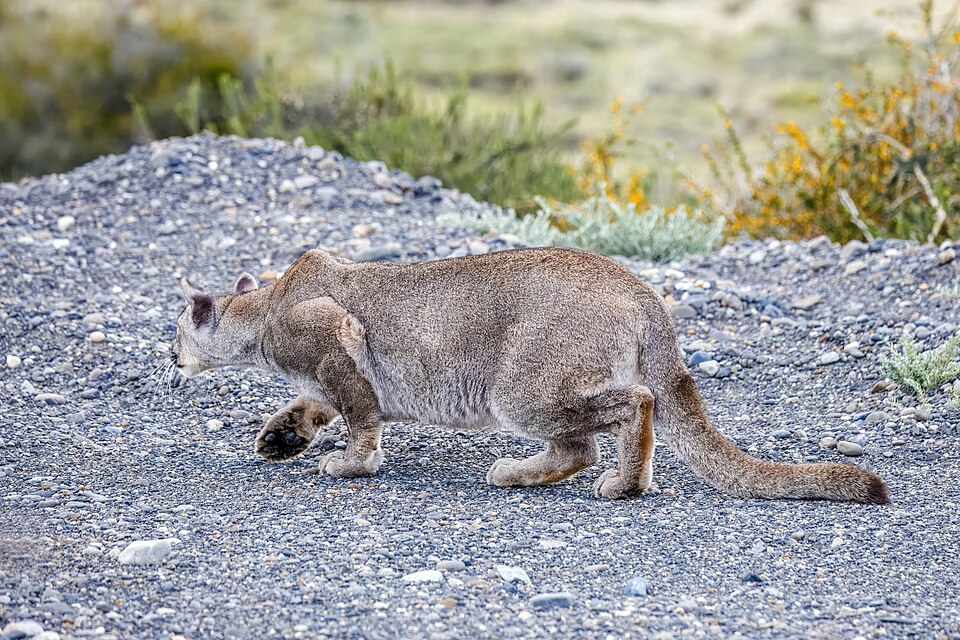
But I never expected to encounter a mountain lion. Its tail was toward me and it was sniffing the ground on the far end of the trail where it gets narrow and steep near the Veterans’ Home—my destination—so I didn’t get a good look at its head. I didn’t need to. Nothing else is that big, that color, and has a tail like that.

About a year ago, my friend Bob told me he’d looked out his window at night and seen a mountain lion. His bedroom window faces the mesa, not the rest of the Veterans’ Home campus. I detoured away from the animal and took an alternate route to go visit Bob. I told him about the sighting. Of course, he had a story.

He was much younger, hiking alone in upstate New York. He loved the woods and often spent hours exploring, but this was the only time he met a mountain lion. They met suddenly, practically face to face, and close enough that the cat could have reached him in a few bounds. Bob didn’t want to back away and look like prey, and he knew better than to approach. Feeling stuck, he improvised. He took his knife from his belt, held it up, and started talking.

“I know you probably want to eat me for lunch, and you could take me if you tried, but I’m warning you, you’re gonna get very scratched up in the process.”

The cat didn’t move, so Bob kept talking. It looked at him as if it was taking in every word. Finally, he took a step back, still holding the knife. Then another slow step. And they went their separate ways.


Undefeated, the flowers came back.


Perhaps you remember my post about a man squirting weedkiller on unwanted plants. He explained that if they weren’t eradicated, they would take over. I’m happy to report they have done exactly that—only a few weeks after their apparent demise. Welcome back!

Disobeying Orders

The state park employee walked slowly with a small tank and a squirt nozzle he aimed onto each unwanted bit of vegetation on the playground. I hoped he was only getting rid of silver nightshade. It’s prickly and toxic, though it has pretty flowers. But there wasn’t much of it. There were many tiny, tough yellow flowers.

I asked the man with the tank how he chose which plants got to stay and which plants had to go.

“They all have to go,” he replied.

All of them? I like the little yellow flowers. I just watered one of them.” Encouraging its survival in the desert heat, I’d given it what was left in the water bottle I take on runs.

With an air of apology, he added, “We don’t do weed control except in the developed areas.”

Of course not, because a wildflower isn’t a weed in the wild. I didn’t say what I thought, but he kept explaining while he squirted. “If we let them go, they take over.”

“Yes. You’d have a meadow.” I smiled at the memory. One year, the flowers did take over. There were so many, I sometimes accidentally picked them with my five-fingers running shoes, snagging yellow blossoms between the toes when I crossed the playground to stretch on the equipment.

He kept squirting. I felt sad for the flowers, but finished stretching and went home. A few days later, I was back, and all the flowers were gone, sprayed to death and shriveled away. Except one. He saved the one I’d watered.


The Heist

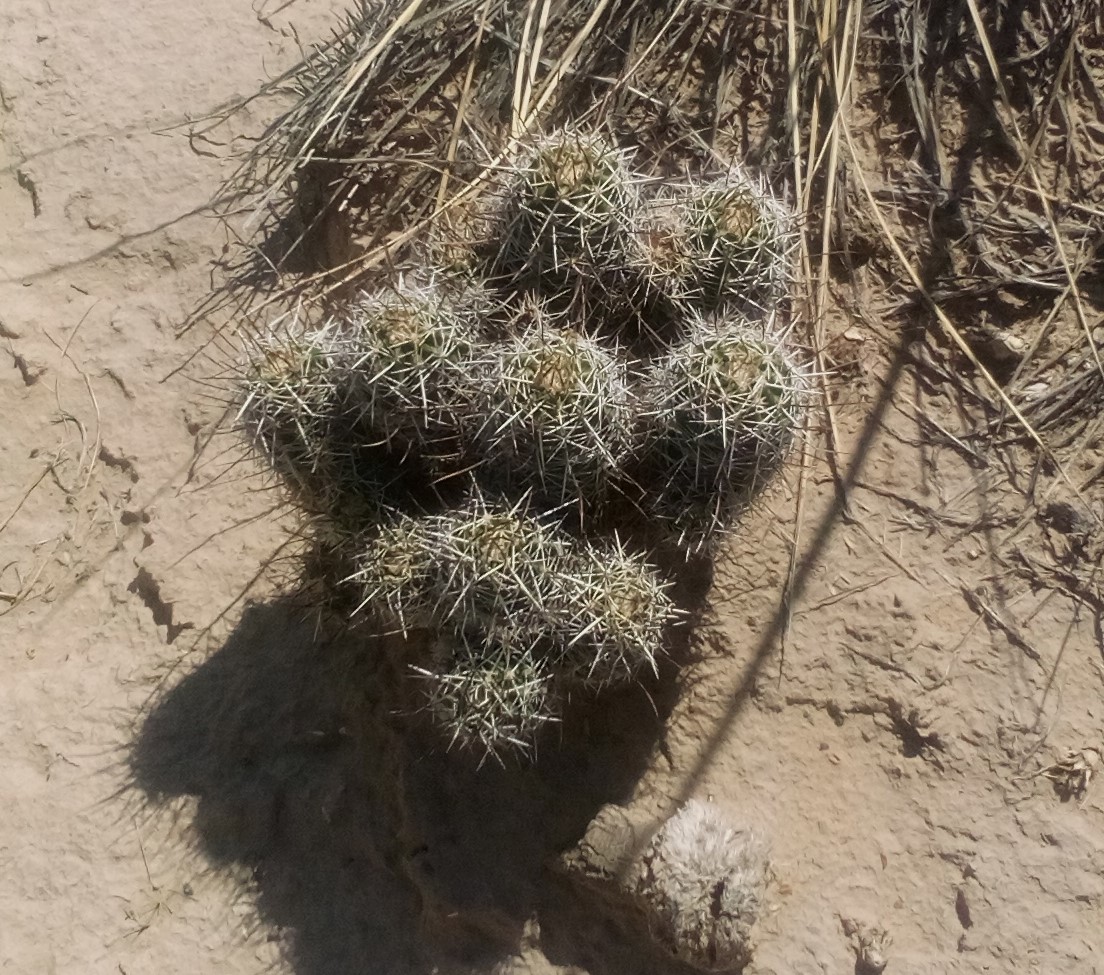
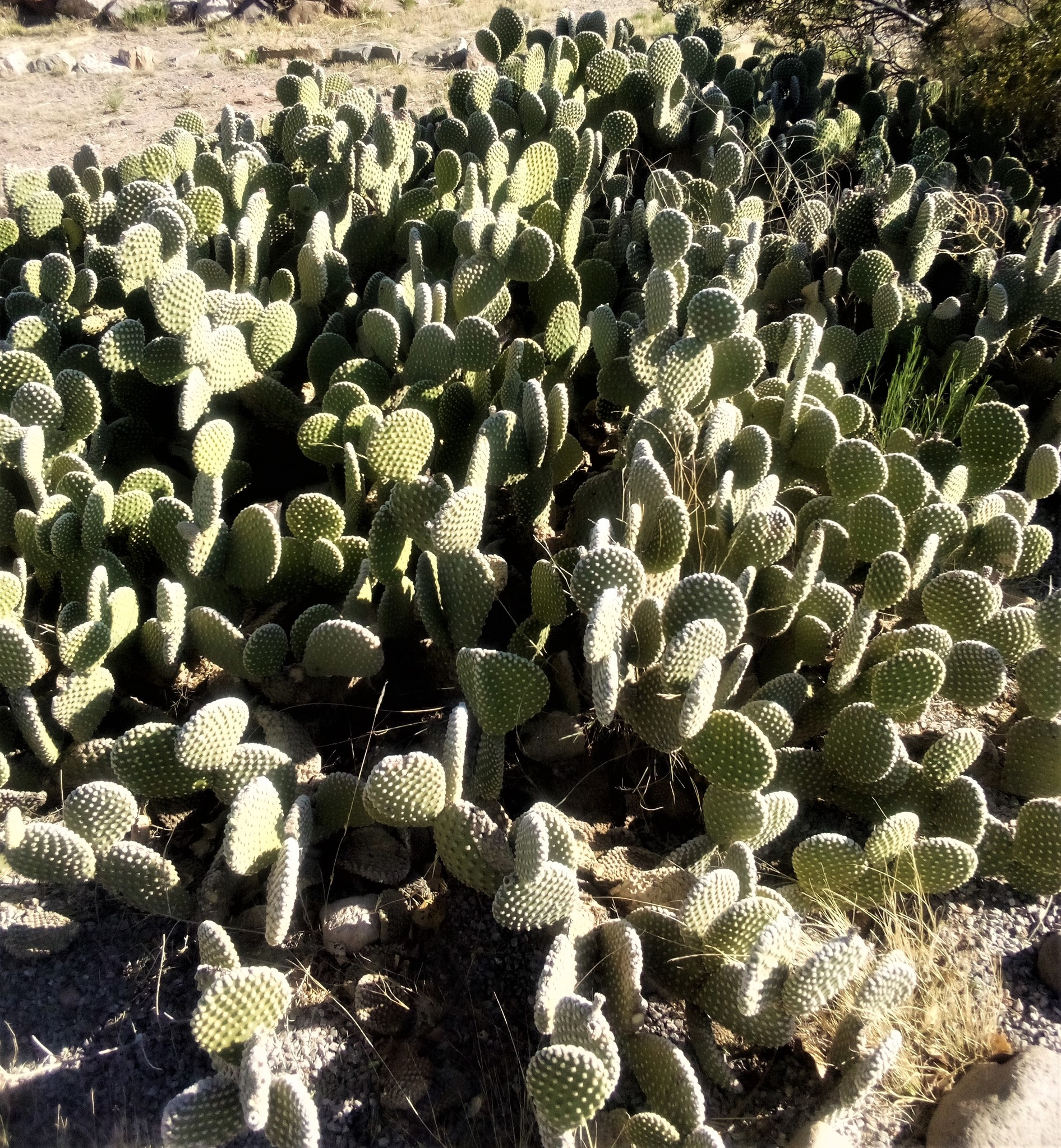
 I don’t know that it technically was a heist, but it felt like one. Is it illegal to rescue a rare plant from city property if the city is considering selling that land for development? The open space has been torn up by all-terrain vehicles that created rutted gullies, much rougher than the official marked hiking trail that runs along the edge of the bluff above the Rio Grande. The city wouldn’t sell the hiking trail, but they might sell the rest of the mesa. Despite the damage, it’s a cactus garden.

In the spring a few years back, I took to running in the gullies created by ATVs to escape the wind. As a result, I discovered an unusual, stubby little cactus with hot pink flowers and starry- patterned thorns. They were unobtrusive the rest of the year, and I could hardly find them when they weren’t in bloom.

Once the city decided they might sell the land. I worried about the little cacti. I put their picture on a New Mexico native plants website’s discussion board, and the unanimous reaction was “Save them!” Though not endangered, they’re rare and special. An expert in desert plants volunteered to rehome them to the arboretum she manages.

She drove all the way to T or C. We met on a road near the trail, I escorted her in, and she dug them up. I’d worried about how to do that, afraid I would hurt them or myself. She didn’t even use gloves, just stuck the shovel in the ground as if she could see through the soil to the exact span of the first plant’s roots, picked it up by those roots, and put it in a paper bag. Then she dug up the next one and laid it on its side on top of the first one’s bag in a plastic bucket with another bag on top. The third one was bigger, so I held a large tote bag open, and with flawless shovel management she slid the stoutest of the little cacti in.

As we returned to her car, the cactus I carried poked and scratched at my left leg through the plastic side of the tote bag, as if to say, what are you doing to me? I’ve lived here for years. We’ve been friends. You’ve admired me every spring, even brought me water once. What’s going on? How do you explain to a cactus that you’re trying to save its life in case its habitat gets razed for houses?

Anyway, off they went in bags and a bucket in the back of her car, and now they have a new home where rare desert plants are cared for and where visitors can admire them. I’m happy for these little cacti, even though I won’t see them on a regular basis anymore. I plan to visit them in the spring when they flower in their new home. And I will say no more about exactly where that is, in case this rescue really was a heist.


Never Tired of Miracles

Yes, I’m writing about rain again. Rain in the desert. I never tire of miracles.

I ran, despite the thunder, despite the lightning, daring the storm to get closer to me. The air was so soft, so cool, barely drizzling, not really a storm yet. Above, there was a blue hole in the clouds. The birds seemed excited, a pair of desert cardinals chattering and flying from bush to bush. Something in another bush made a loud ticking sound like someone running a stick across the slats of a wooden fence. I stopped in surprise, trying to see the source, but all I got was another noisy round of clicks. The temperature dropped down from the 80s to the 70s. I ran until the thunder moved in, and the sheer wall of gray across the lake became dark and solid, rain driving straight down from the sky as the gloriously cold wind grew stronger.

I finished my run a little sooner than I would have liked. I wanted to stay out on the trail, but the last time I’d lingered thinking, “Oh, that cloud sliding across the lake is just mist,” it turned into a storm that suddenly whipped through and drenched me. So this time, I left a little early, and the storm got stuck just behind the turtle on Turtleback Mountain. Still beautiful. Still a miracle.


Pictures I Didn’t Take

I often get a powerful urge to stop and take a picture. Then I don’t do it, for many reasons, but primarily because it takes me out of the moment. Instead of experiencing where I am and what I’m seeing, feeling, hearing, and smelling, I’ll get wrapped up in composing a picture to post. Granted, I would love to share the experience, but this urge usually occurs when I’m by myself out in the desert on a long run. If I pull out my camera and try to find some shade where I can actually see my screen and then make adjustments, I’m missing part of part of the joy of running. If I were a photographer, this would be joy to stop and take a picture. I admire and deeply appreciate the work of gifted photographers.  But that’s not my creative form. Words are. So, here are the words.

A fox den that lasted two days. I think the fox realized it had dug in too close to a well-used trail. So much work for a couple of busy nights, and now there’s a cobweb draped over the entrance. It’s been there for a long time. Sometimes location is everything. The shade of that big juniper, alas, was a bad location.

The bats. At sunset, they come pouring out from behind the mural on a roofless building. I met a friend on the way there one evening. She also loves the bats. As we watched them emerge in an erratic cloud, a complex aerial ballet, she laughed in delight. They have that effect on me too, as if their sonar is vibrating something positive deep inside us that creates pure happiness.

Other things I haven’t taken pictures of are odd moments where something looks out of place on the street, and I think “I should take a picture of that. That’s strange.” Maybe nobody else would think it was odd or interesting. I don’t take the picture. I have my moment and keep going.

I often think of a friend who told me about being near the edge of a woodland with her father when a herd of deer exploded from the trees. Her father was scrambling in the car for his camera so he could get a picture of the deer while she watched them leaping past. By the time he got his camera out, the deer were gone. Pictures I haven’t taken are moments that I lived. I’ll share them some other way. Some will show up in my stories. I’ll remember them when I need them. A pyrrhuloxia, a desert Cardinal, perched atop of a half dead tree in the desert has a place in the book that I’ve just started. He’s going to show up near the end as a significant and meaningful sight, with his brown-gray body and his red crest and his three different songs pouring out. I saved him in my memory, but I didn’t take his picture. (Someone on Wikipedia did.)

I choose the dirt road

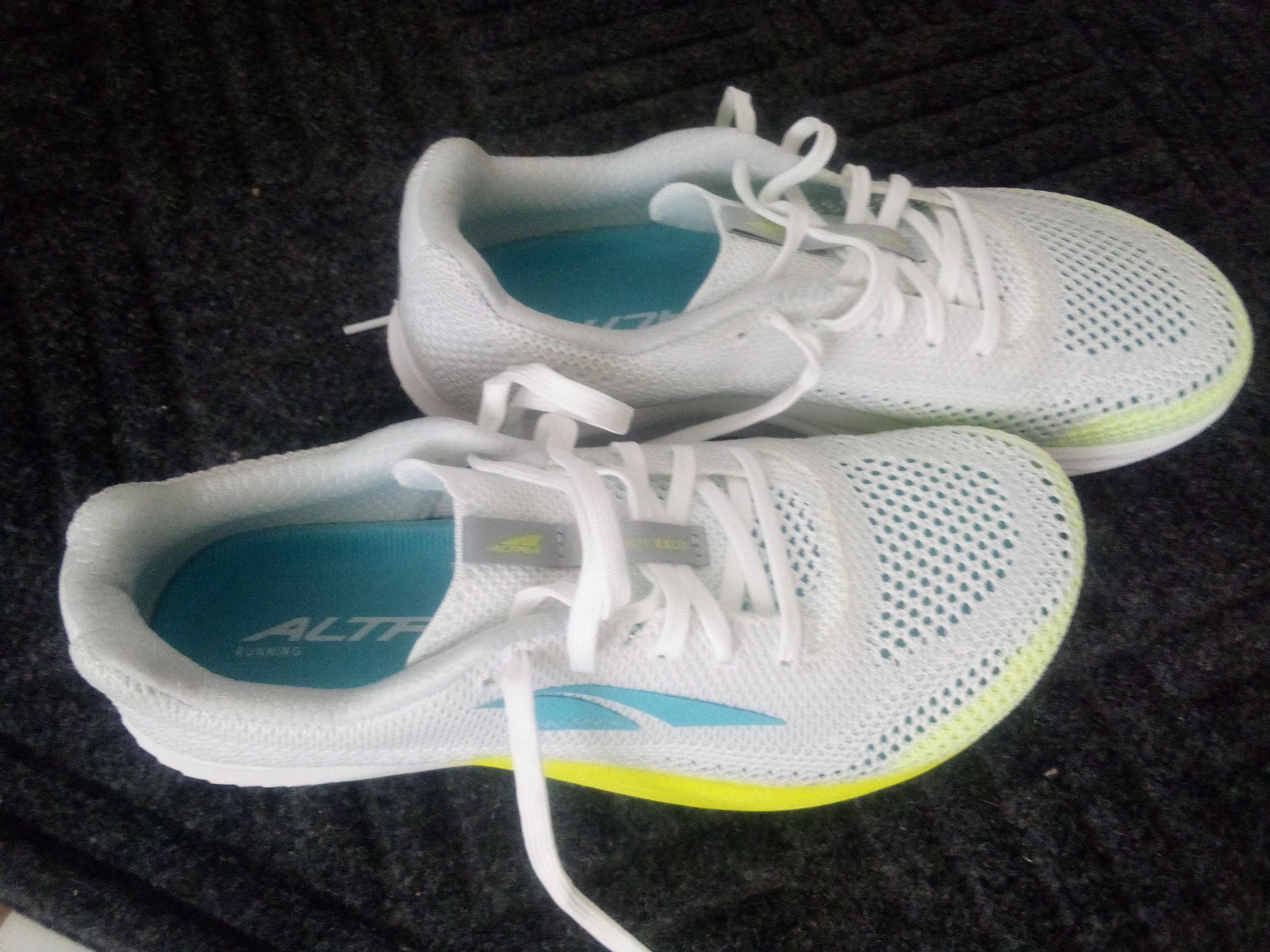
I wonder why running shoes are designed to be pretty. My new ones even have white soles with green and blue treads, as if the person behind me in a race should admire them as I charge ahead. But I run where no one is around to admire my pretty feet.

I meant to take the paved route to the edge of the Elephant Butte dam, but the dirt roads off the side stole my heart and soles. Pavement says nothing to my feet. It slaps back. Dirt has texture and depth. Each step on a dirt road is unlike the step before—soft, rocky, stable, slippery, flat, or uneven. My speed on dirt roads adjusts to the nature of each surface. And underfoot are such amazing finds. A desert flower that tolerates ten percent humidity and the battering of spring winds. In pausing for the flower, I also looked up at the mountains and dared the vertiginous view of the arroyo below.

History lay on both sides of the road. The dirt was dark as if blackened with soot, and in it lay chunks of sturdy white china. Mug handles, mug bottoms, plates, all so thick you could knock your breakfast off the table and nothing would happen to this dinnerware. But something did. One piece had words on the bottom indicating it was made in West Virginia. There was a substantial quantity of it. Friends who know local history think I came across the remains of a Civilian Conservation Corps work camp. If the dishes could talk, they’d have stories, for sure.

Two ravens glided past a red rock cliff, so synchronized I first thought one was the other’s shadow.

My new shoes have now been baptized in dirt.

Stone and Light

First, look at the art. Take your time. Explore.

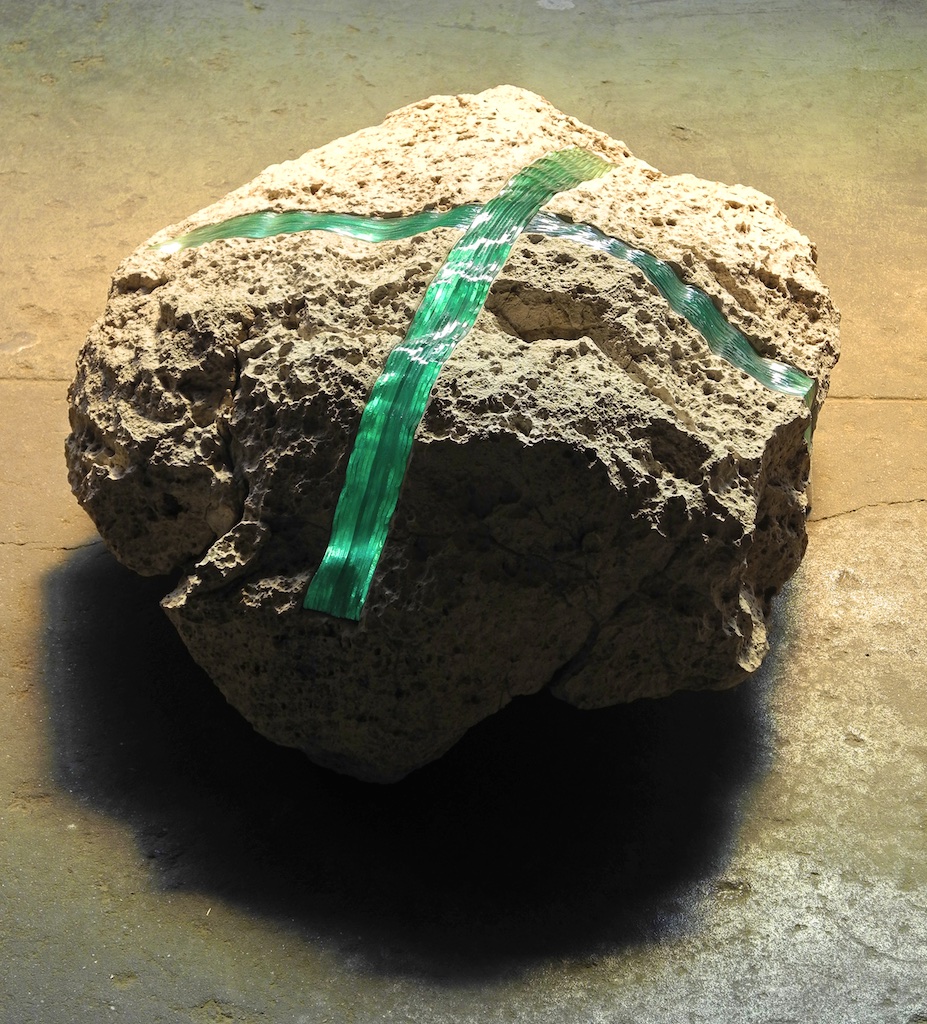
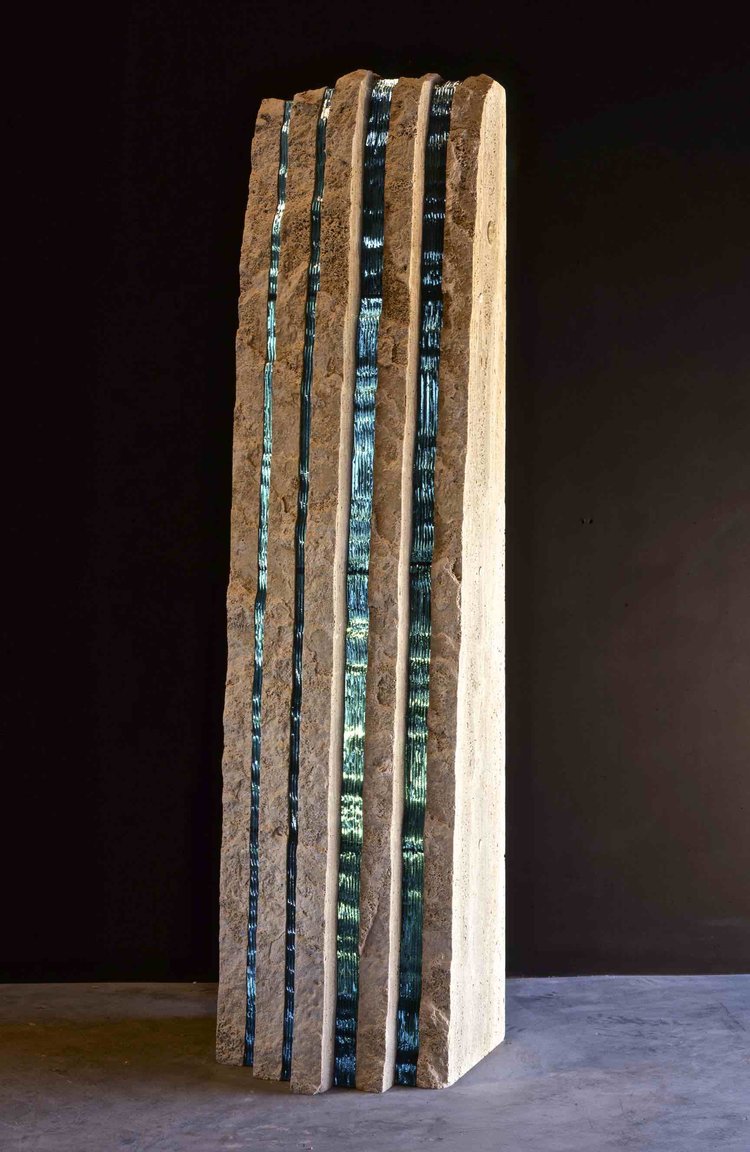
Then you may understand the effect it had on me. I attended an Art Talk by Otto Rigan at Rio Bravo Fine Art, spending over an hour immersed in images of his work and stories of how he came to this unique form of expression.

After his talk, I ran on a desert trail I’ve known for years, a place so familiar I know where to step, where I’ll meet rough ground or soft sand or the perfect surface, and it looked entirely different. I saw the light, literally. Light glinting on grains of sand like tiny mirrors. Light shining back at the sun from smooth, flat stones. Light flaring from bits of reflective minerals in otherwise dull-surfaced rocks. The textures and shapes of every rock and pebble came to life. My mind went quiet in awe. A spiritual experience of stone and light.

A Mistake—or Was It?

I meant to go shopping in Las Cruces, an hour away. I was waffling about stopping at Caballo Lake State Park, a short way from home on my way south. It was such a beautiful day, I gave in to the urge. At the park’s EV charging station, I looked for my Charge Point card and found … no wallet. I’d left it at home. One of the perils of changing purses too often.

If I’d driven straight to Las Cruces, and not stopped to indulge in outdoor beauty and top off my charge, I’d have wasted my day. I might not have discovered the missing wallet until I had all my items at the checkout. I don’t even want to imagine that scenario. I considered going home for my wallet, but that would be twenty minutes each way. I gave up.

There’s a number on the station to call for starting a charge, so I called it, changed into my running shoes, and enjoyed the winding trails. Then I walked down to the lake. Smooth and blue, it was speckled with white pelicans, gliding along with gentle pumping and pulsing motions of their necks. A few men were fishing on the shore. A restful view.

I strolled back up to the area near the visitors’ center and found a sheltered place for stretching out with yoga, then sat on a bench near my car to relax in the sun.

A park ranger stopped by to chat about electric cars, one of those incredibly nerdy conversations only of interest to current or prospective EV owners, but fascinating to us. Charge completed, I drove home even more carefully than usual because I didn’t have my license with me—and far more refreshed than if I’d gone shopping.


Look up!

I had my eyes on the sky. The rim of the blue bowl was pink in the east and gold in the west, a cloudless pastel sunset. After a spell of September monsoons, the evenings are cooler, and the Truth or Consequences bats have been keeping normal bat hours again rather than sleeping in until long after sunset like they did in July or trickling out a few at time like they did in August. I walked to the bats’ home, an empty building with a mural on the back next to one of the art galleries. Right on the cusp of sunset, they poured out, the entire corps de ballet taking the stage at once, flowing from the open roof of the old building, dancing toward the Rio Grande.

Two women sitting at an outdoor table at Riverbend Hot Springs across the street kept talking, not looking up. Two men walking a dog remained deep in conversation as they passed the mural, not looking up.

While hundreds of tiny bats passed over their heads. The show was over in less than five minutes.