Moments

In Jon Kabat-Zinn’s classic on mindfulness, Full Catastrophe Living, he quotes an elderly woman reminiscing. I can’t find my copy of it to cite the passage precisely, but she says something along the lines of, “Oh, I’ve had my moments. And if I had it to do over again, I’d have more of them. Because that’s all we have, really. Moments.”

Writing this made me stop and perceive my apartment in a new way. There’s no sound but the faint hum of the humidifier gently battling the total dehydration that is April in New Mexico. I look at my furniture, the quality of early evening light—all beautiful for being so ordinary.

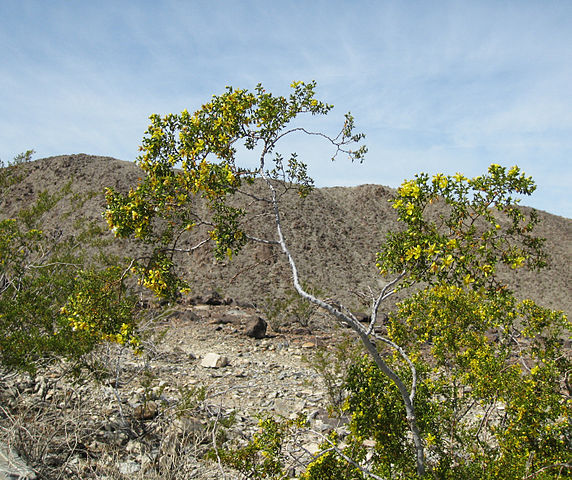
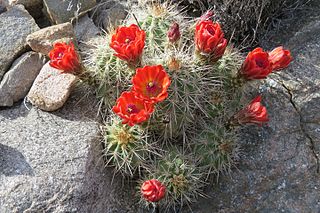
Despite the shrivelingly-low humidity and frequent high winds, the desert smells like flowers. I can’t figure out which ones produce the scent, but I run through it in delight. Tiny yellow flowers grow wherever they can, in hard soil, in dust, in pavement, between rocks. Creosote bushes and claret cup cacti are blooming.

One day on my run, I noticed a peculiar shadow in motion near me and looked up to see a trio of huge black shiny bees flying in a sloppy little V. Another day, another trio. A bee-o. My inner Dr. Seuss can’t help rhyming this: Big black bees/ fly in threes.

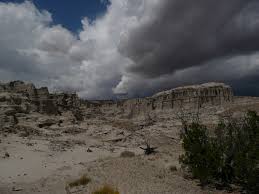
I took my car out for her weekly workout to keep her battery charged. I drove her to a trail just outside of Elephant Butte Lake State Park, as close to my beloved park as I could get while it’s closed, and took a walk to see if it was a potential running trail. It wasn’t—too much lose gravel and then extremely soft sand—but it was a lovely walk. The deep soft sandy part of the trail was partially overgrown with flowers I’ve never seen before, purple clusters that sometimes curl over like fiddlehead ferns. The unique landscape of Elephant Butte is quite different from Truth or Consequences, just a few miles away. More gray rocks than red. More twisted, shaggy-barked junipers, fewer creosote bushes. Greater earless lizards rather than checkered whiptails. Sand rather than dust and dirt. The trail dropped off sharply into a dry arroyo, and I turned around, content with my exploration

On the days I would normally teach yoga, I’ve been doing my practice as if teaching, talking to myself with the cues I would give students, treating my own need for alignment , relaxation, and engagement as those of a student I was observing. It sounds crazy, but it makes me pay full attention. I can’t think about anything but the moment, as my body and my words meet in my focused awareness.

After today’s yoga immersion, I gazed out my screen door at the waving, rustling green leaves at the top of the tree that invaded our water line back in February. It’s a beautiful tree. And I have water.

*****

The entire Mae Martin Series is currently discounted. Book one, The Calling is free and will be through June 13. Shaman’s Blues is 99 cents through the end of April. The other books are $2.99, and when the promotions end, the first two books will be only $2.99 for the rest of the summer.


Exploring My New Normal

I’m grateful for so much open space and beauty around me. It means I can still get out and run while doing some extreme social distancing. One new trail I’ve tried is steeper and rockier than anything I’ve run in years. It reminds me of places I used to run decades ago. Since I’m decades older, I told myself I had to find a safer way up the hill, one that didn’t involve a narrow path of loose gravel on the edge of a cliff. The hospital doesn’t need some crazy old runner full of cactus thorns coming in with a broken leg. Nor do I need to be that person.
I never saw the better route until the day I determined I would find one. Then suddenly, it was in plain view. All I’d seen before was the marked trail, but this other one was always there. Still steep, but not on a cliff side, and not so unstable underfoot. Funny what we can perceive when we open our views to alternate options.

I’ve modified where I go once I climb the hill as well, deviating onto the trails used by off-highway vehicles—trails I also failed to perceive until I realized I needed them. I’ve never been a fan of OHVs, but for now, I’m grateful they made the tracks—softer and wider than the hiking trail, and utterly random. They don’t go from point A to point B like the marked trail. They zigzag, loop, meet in sharp Y intersections, or turn into dead ends, giving me the sense of being in a desert maze. I can run with no goal and no sense of time, on and off the OHV tracks and the hiking trail, avoiding the stretches that are potential ankle-sprainers. I found a kind of rough amphitheater where I think the OHV people may play in mud when it rains. For me it was liberating and unconfined, a place where I could sprint in circles.

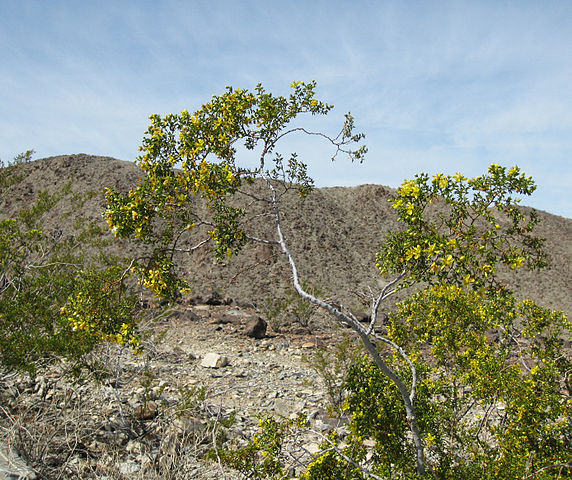
With so many surprises and no familiarity with the terrain, I can’t get lost in thought. I can only be present to the act of running and the earth under my feet, dodging the little bonsai-like creosote bushes popping up in the track, daring to look up now and then at the view of Turtleback Mountain.

By the time I got home from my first no-destination run, everything seemed brighter and also quieter. I stretched in the courtyard of the apartment building and then sat on a bench, in awe of the sky, the cooing doves, and the wild mustard taking over the yard with its slender, swaying stalks and yellow flowers. It’s a weed. Doves are nuisance birds we try to chase away. But I was in a state of suspended judgment, aware and immersed, with no likes or dislikes, only life and light.

Vacation Mind

On a sunny, sixty-degree day, the kind that tourists from cold places come here to enjoy, I asked myself, how would I feel, think, and act if I was on vacation?

Truth or Consequences used to be my vacation destination. As a full-time resident, I do the same things I did as a summer visitor. I live in a smaller, simpler space than I did back in Virginia. I soak in hot springs, run in the desert at Elephant Butte Lake State Park, I write, I go to Albuquerque to study yoga, I hang out with friends … It’s the same life, only busier.

I have a schedule. Teaching yoga three days a week is not what anyone could call a full schedule, though it does limit my spontaneity. I’m more involved in the community. I know more people. But the biggest difference is my mindset. I don’t feel the looming return to the academic calendar reminding me to make the most of my freedom. So I don’t.

I let my head get cluttered. After I encountered a number of vacationers hiking the trail where I ran yesterday, I switched to vacation mind, appreciating the moment as if I might have to leave any day. Wow. Isn’t this amazing? It’s so warm. The sky is so bright. The lake is so still and blue. I noticed the light striking one of the bare, rocky hills on the shore making it look golden, though the land in Elephant Butte is basically gray, and how the dried blossoms atop a yucca stalk held their bell shapes months after their blooming ended.

While I stretched at the playground, a spider web glinting in the sun caught my attention, its near-invisible threads turning iridescent. The weaver, a tiny dirt-beige spider with red-striped legs and two rows of dots down its back, clung to a green metal ladder on the play structure.

Yellow stripey things—bees or wasps, I’m not sure which—nuzzled around my ankles and inspected me. I rolled my pants legs tight so the inspections wouldn’t go wrong. Their soft buzzing was the only sound.

Spaciousness. Present moment. Vacation mind

Cold Day Run

It was thirty-nine degrees today, with wind at fifteen miles per hour. In the spring, when it blows at twice that speed on a regular basis, I would call that a light wind. But it’s not cold in the spring. It’s normally not cold in the winter, either, for which I’m grateful. I have a low tolerance for low temperatures. Still, I had to get out and run. The weather had been even less inviting for the previous two days. A third day without prolonged outdoor time would have been far worse than wearing the winter running gear I’ve so seldom needed since moving to Truth or Consequences. My mind and body crave nature, light, and movement.

It would have been easier to stay indoors, but less rewarding. The sky was brilliant New Mexico blue, and no one else was out on the trail. No humans, that is. On my third loop, there were fresh deer tracks, signs they had been there just before me. By the end of my run, my face was cold, and my fingers and wrists deeply chilled through my gloves, but I’m glad I braved the weather. It was uncomfortable at times, but whenever I turned a curve that took me out of the wind, I cherished the reprieve and communed with the winter sun.

I have a list of unpleasant tasks I’ve been crossing off, one by one, but a few remain—and they’ve remained on that list a long time. I have to remind myself that the actual doing of the difficult thing is less stressful than thinking about doing it.


Disconnect

Snowbirds visiting southern New Mexico are showing up on the desert trails where I run. I’ve noticed some of them are still plugged in. Sitting on a bench staring down into a phone. Walking with earbuds in or with music playing aloud. Sitting on a rock under a juniper tree with talk radio crushing the silence.

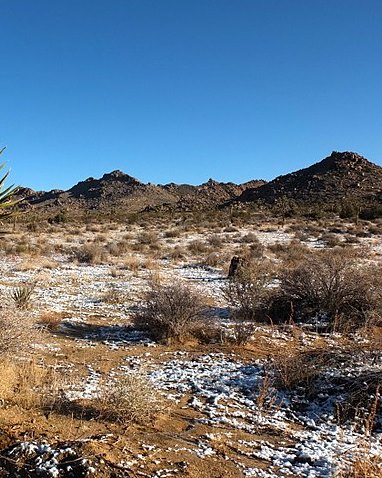
Their avoidance of the unbroken experience of nature makes me pay more attention to it. On a cloudless blue day, it was so quiet I could detect the soft sound of the breeze across my ears and the flutter of a quail taking flight. After a wonderfully long and heavy rain, the sandscape was dramatically repainted in soft, curving streaks of beige and brown where new rivulets had run to the lake. There was even a little mud. Not to mention deer tracks, a roadrunner, and a jackrabbit.

On a warm day, I even spied a few snake tracks. They like the sun as much the human visitors do.

Given the choice to disconnect from something, I’d choose the phone.

Relief and other updates

The relief feels wonderful and yet disorienting. It’s hard to adapt. I have my life back. Book seven in the Mae Martin Psychic Mystery Series, Shadow Family, is with my editor now. I sent it off last night—actually, at around 3:30 in the morning. I know my editor will be sending me sections to revise, but today, I can think about the next book. I can even write a blog post.

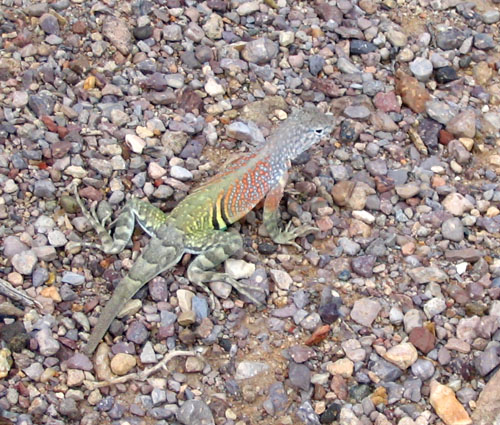
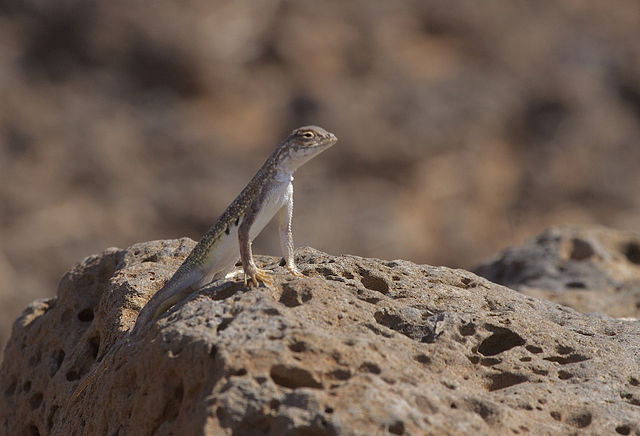
Relief came with rain as well. September is still summer, the grand finale of the monsoon season, with temperatures in the eighties, cooler than August by a long shot. It’s rained three times—one drizzle, one thunderstorm with hail and two inches of rain in two hours, and one nice steady all-night rain. Wow! The jewel-colored greater earless lizards need to sunbathe and get warm. When it’s cloudy, they hug the rocks with their wee limbs, seeking every last bit of sunbaked heat from the surface. The baby lizards are out, flawless miniatures of the adults, no bigger than a bug with a tail. I marvel at their toes, and at their orange stripes and green legs, their little eyes blinking up at me. Desert plants are in bloom, yellow chamisa and something purple—maybe some kind of sage. And with all the rain, Turtleback Mountain is more green than red.

The other night I went for a walk with a friend and his dog, hoping to see bats over the wetland by the river, but it was too windy for them. As we were leaving Rotary Park, which is right on the Rio Grande, a coyote started yipping and singing on the bank directly below where we’d been standing a minute earlier while my friend took a dead bird away from his dog. The dog, strangely, wasn’t interested in the coyote, only the dead bird. A whole coyote chorus started across the river as the one on our side would sing and the others would answer. The dog still didn’t care.

White rabbit update. First, her former owner said he only had females, so I’m now calling her “she.” Second, she’s been chased by dogs and by a cat, and someone sprayed weed killer on all the plants she used to nibble on in the yard of the empty trailer across the alley. Fortunately, she finds shelter in our yard. I decided to feed her nightly after all, because I’m going to try a new way to catch her. Her future owners brought a live trap, and we baited it with sliced pears and fresh greens. It may be shocking for her to go to her usual buffet and have a door close behind her, but she’ll escape predators and poisons to be loved and petted. And then it’ll be her turn be relieved. If all goes well, her new owner will show her in the county fair. Because she is so beautiful.


Snake Appreciation Day

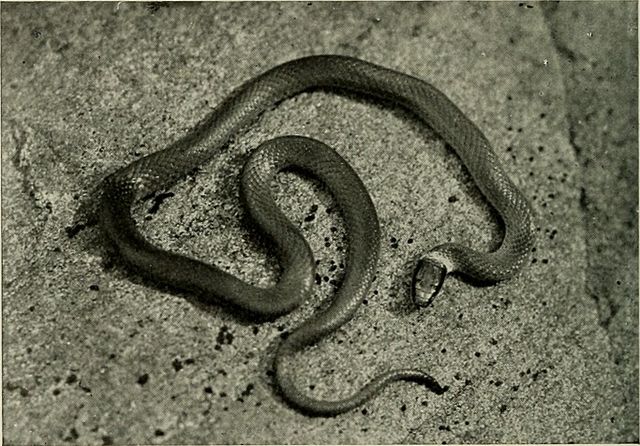
My first sighting, finally, after years of running in the New Mexico desert. A sunny day turned suddenly cool and cloudy, which must be what made this normally nocturnal creature stir.* I slowed down to let the snake cross the trail and go wherever it was going. What an amazing design. Such graceful motion. It was plain gray, not a speckle (or a rattle) to decorate its slender form. Perfectly silent, it disappeared under a bush with its gentle undulations. I crept past the bush, sneaking a look under it. No snake. I didn’t expect it would have stayed. They’re shy, after all.

As I resumed my run, I marveled at the snakeness of the snake, its directness and simplicity. There I was with how many bones in each foot, moving from one set of tarsals, metatarsals and phalanges to the other, using how many muscles in each leg and hip, with hinge joints and ball-and-socket joints in motion, postural muscles at work … I had to ask myself …

Whose locomotion shows more art?

I have so many moving parts.

But Snake can get along just fine

While being nothing but a spine.

*****

*I looked it up and concluded it was a ringneck snake. They are colored like a gray suit with a bow-tie and are rarely seen during the day. Wikipedia describes them as “dainty and inoffensive.”


Desert Encounters


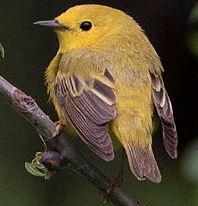
The hind end of an animal I’d never seen before in this stretch of desert silenced my thoughts. Whatever it was, brown and furry and scurrying, stub-tailed and about the size of a rabbit, it made me aware. The novelty of birds with bright yellow feathers broke into my thought-cycle also as I ran—yellow warblers migrating through (at least I think so; I’m not a bird expert, just an admirer). A quail atop a bush, its crest profiled against the blue sky, brought another moment of surprised inner stillness. Quail are usually running on the ground. It’s the lizards who pose.

I stop for lizards. A lesser earless lizard, no bigger than my thumb, has little bright eyes and long golden toes, subtle gray-on-gray spotted markings, and tiny arms that enable it to do push-ups with flawless form. Its miniature legs run faster than I can. The greater earless lizards seem to be showing off their green hind legs, their side stripes, their green-and-orange forelegs, and the rose patches on the females’ flanks. I’m sure they’re displaying for each other, but I appreciate the show. Everything else on the ground blends in—brown or gray—but they glow. It seems odd for small, delicate, ground-dwelling creatures not to be camouflaged, but they flourish, maybe because they like the heat and nothing else does (except crazy runners). Their body ideal temperature for activity is 101 degrees. I observed a large one getting brighter the longer he baked. On my third lap of the trail, his orange stripes were radiant, as if he had to be heated properly to light up.

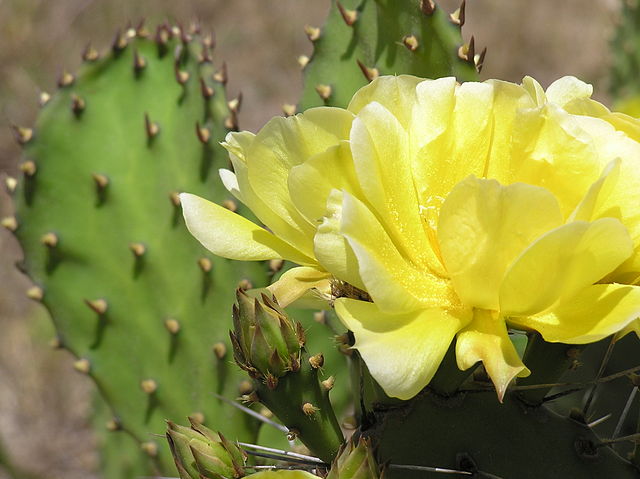
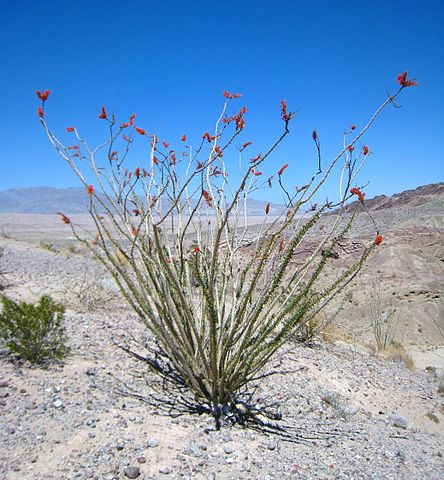
The prickly pear cacti are blossoming, bright yellow. Creosote bushes have small yellow buds. Ocotillo blooms shoot out like red-orange flames on the tips of slender, bare stalks. The yellow birds are posing on them, contrasting with the flowers, and perching among the creosote branches in a yellow-on-yellow match.

The birds-and-flowers encounters make me stop in awe. Yes, I’m running, but there are moments not to be hurried.


Green Earth

Alone in a wild place, I gradually began to sense to earth as a living being, a relative. Like us, she breathes and has fluids and bones. We have our microbiome; she has us and our fellow creatures.

The wild place where I stood, the dirt dam road at Elephant Butte, isn’t entirely wild. The road is paved, though no vehicles have been allowed on it for years. You’re greeted by a sign that warns you to do no damage, because this is property of the United States. (It’s Bureau of Reclamation land.) People respect that sign. There’s no trash. Everywhere else around here, litter abounds, but those who walk the dirt dam road honor it. Maybe the sign reminds visitors that we the people are the owners. Or perhaps those who come there are a special breed, the seekers of silent, isolated places.

The earth along the road has a green tone, shifting from gray-green to yellow-green. The vegetation is sparse: tiny stubborn, ground-hugging white flowers, cacti with inch-long thorns, spiky shrubs, and brown grasses. The space between them looks alive because of the green dirt. Pink and purple rocks glow against it, pebbles that might look dull in another setting seeming as bright as jewels.

Walking to the Lake

Once in a while I need a literal change of pace and take a very long walk instead of a run. Variety is good for the body, mind, and soul, so I explored several miles of Elephant Butte Lake State Park where the surfaces are either too hard (paved roads) or too soft (the beach) for running. Pavement is a great surface for vehicles. Tires don’t tear it up. But walking on it is noisy compared to walking on the natural bare earth, so I started veering off into the desert. To my dismay, it was so churned up by tires that it was hard to find an undisturbed place except in shallow arroyos, firm sandy paths made by October’s heavy rains. It puzzles me why people take their vehicles off the road. The roads are right there, designed for driving. If they want to get out and experience nature—I had an Edward Abbey Desert Solitaire moment—they should get out and experience nature. I can understand using a vehicle if one can’t walk, but otherwise, it doesn’t make sense. And it ruins the landscape. Instead of road runner and quail tracks, deer and coyote tracks, I kept seeing tire tracks. So I went back on the pavement.

I finally reached a dirt road, and when I got to the end of it, I found a patch of undamaged land, too steep for vehicles to intrude upon, with a  deep arroyo running through it. It seemed to be guarded by a low-crouching creosote bush that resembled a giant tarantula. Welcome to the wild.

Eventually, I walked down to the water. The lake was stunningly blue under the clear sky, and a few sailboats were gliding across it, none of the noisy motorized craft of summer. The beach has grown due to the reservoir being so low, and the islands look as if they have bathtub rings from the mineral stains marking how high the water once was. The shoreline is a stark landscape, beautiful in its bare way—nothing but sand, rocks, and water, like an alien planet with no plant life. Then it got more alien-looking, and not in a scenic way. I began to notice unnatural shimmers in the sand caught by the low, late-afternoon sun. Half-buried plastic. Snack food wrappers, foam cups, remnants of bags, fishing line, all on their way to the water.

My collection in hand, I reached a small spit of red dirt and dark gravel jutting out into the blue water. On one side of the curve of the spit perched a huge raven. On the far tip, a blue heron huddled with its neck tucked in so much that its beak seemed to poke out from its wing joints. It looked gray again the brighter colors around it. The only sound was the plop of a jumping fish. Then the raven croaked and flew west across the shining lake, a good direction for a raven.

I hiked back to the paved road, collecting more plastic for the dumpster at the top of the hill. Not far at all. Not difficult to do. Unfortunately, I’m pretty sure that on the rest of the vast beach, there’s more plastic slowly traveling down the slope toward the fish and the birds.

What would make people stop and see it? Walking?