A New Mexico Mystery Review: Feliz Navidead

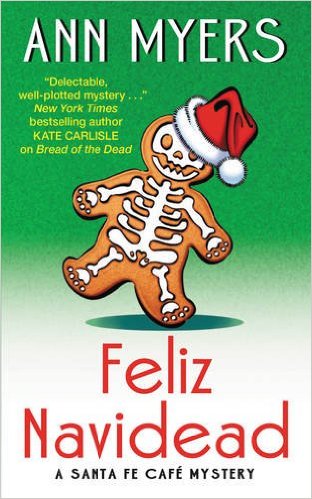
feliznavidead-cover

This third installment in the Santa Fe Café mystery series is tightly plotted, funny, and as full of local color and eccentric characters as the others. Ann Myers does a great job with the flow of the series—neither too much nor too little backstory. It’s a delicate balance that not all series authors have mastered. A new reader could pick this up and not be lost, and someone who has followed the series can enjoy it without any sense of interruption.

Protagonist Rita Lafitte’s rather conventional mother is visiting her in the City Different, encountering Rita’s eccentric friends and colleagues, hot chiles, devils in a Christmas pageant, and of course, Rita’s odd luck—if one can call it that—of running into murder scenes. There is some dark humor in the choice to set a murder in the middle of Christmas festivities, but it works. There’s also plenty of light humor, character-based and authentic.

The mystery revolves in part around the process of repatriating an old family collection of Native artifacts to their tribes. The conflicts in the wealthy heiress’s family—which includes Rita’s ultra-Santa-Fe-spacey-spiritual neighbor Dalia—and between the experts hired to help with the collection lead down some twisting paths, while several intriguing side plots make for more suspects and more motives. I was right in step with Rita in trying to solve the mystery, which to me means it was set up well.

Rita and café owner Flori’s amateur sleuthing is written to effectively make the reader suspend disbelief, an important aspect of this genre of mystery. Their interaction with Rita’s ex, Manny, who is so often the cop on the case when she’s investigating on her own, is well done. Manny isn’t all bad, and neither is his police work. He comes across as a competent if sometimes annoying officer, and a caring father as well as the kind of man you wouldn’t want for a husband. Celia, Rita’s artistic teenaged daughter, gets involved in the sleuthing this time, a fun change of pace. I love the relationships in this series, so it was great to meet another member of Rita’s family with her mother’s visit. It was also good to see how her romance with criminal defense lawyer Jake Strong develops. Jake’s character is given more depth and flair in this story. I got to know him better and therefore liked him better.

One thing I especially enjoyed about this book is that it gets outside of the downtown area into some other neighborhoods of Santa Fe, while still giving a view of holiday events around the Plaza and Canyon Road. (I expect it will make quite a few readers want to schedule a Christmas vacation there.) The diverse characters include one of Flori’s old schoolmates—another peculiar octogenarian—and her grandson. To avoid spoilers, I will say no more about them, but they were my favorite new additions to the cast of this series. And Flori’s latest weird hobby is her best yet. As always, there are recipes for some of the foods that are served up during the course of the story. I enjoyed the plot so much I tended to forget the culinary theme, but readers who love to cook will not. (Actually, the fact that I hate to cook and still enjoy these books so much says a lot.)

Other books in the series include Bread of the Dead and Cinco de Mayhem. Click on the titles to see my reviews, and on the author’s name for my interview with Ann Myers.


Wobbly

I had to share this wonderful image of Truth or Consequences. There’s a scene in Ghost Sickness that takes place right here, on this sidewalk in front of Passion Pie Café. And I wanted readers who haven’t been to T or C to get a glimpse of my town. I highly recommend the photography blog this came from, Always Backroads.

Donna Catterick's avatarAlways Backroads

wobblyMain Street, Truth or Consequences, New Mexico, USA.

View original post

Walking into a Story in Santa Fe

Inside an old bowling alley in Santa Fe lives a multi-dimensional work of art. The House of Eternal Return blends written word, video, sculpture, paintings, textiles, and architectural space to immerse visitors in a mysterious story. When you go through the doors of a Victorian house built inside the former bowling alley, you find evidence of a family’s seemingly ordinary life, but as you explore you find that something strange has happened to the people, and to nature of time and space and reality. The characters and their story have to be discovered through the artifacts in the house, ranging from photographs to drawings to journals. For example, if you open the pages of a diary in a child’s room, you learn more about the mystery. If you don’t, you find clues elsewhere.

Behind the refrigerator is another world. If you open the fridge, you leave ordinary reality. Or you might exit another way. The upstairs goes in and out of altered worlds. Some are serene, some adventurous, some disturbing though not terrifying, just intensely strange. The psychedelic nature of this art installation is hard to describe. There’s so much to explore, so many aspects to the story—moving, transcendent, bizarre—that I can see why people buy a year’s pass. One visit isn’t enough for a full discovery. I crawled through a hole in a closet to find a piano under a glass ceiling like a starry sky. I clambered down a winding narrow staircase to a mystical cave full of music and crystal-like forms. Much of the art is interactive. You can play pianos and unique percussion instruments built into the sculptural walls; you can turn pages and decide if you’ll leave that journal open or closed; and you can press buttons to get sound and light effects. There are hidden nooks with video screens showing episodes of the residents’ past. Some videos only start if you choose to sit in the chair in front of them, and they seem to react when you get up to leave.

I recommend this art space to anyone who loves to play with reality, and who will not be overwhelmed by occasional flashing lights, moments of chaotic sound, tight narrow spaces, spiral staircases, and a general sense of being unmoored, floating in a sea of dreams. After spending a few hours in it, I found that meditation after my yoga practice was deep and blissfully silent. The chains of thought-to-thought busyness had been broken and my inner space was open wide.

Later, when my left brain came back online, I reflected on the story-telling genius of The House of Eternal Return. The objects in the normal-time-and-space rooms hint at the inner life of the characters and at the events that happened to them, and visitors end up collaborating at uncovering clues. One person notices a document and reads it. Another discovers a crawl space. Another emerges from an unexpected place—like the refrigerator. It’s like sharing a 3-D novel—part science fiction, part mystery—with other readers.

When I write a book, I can improvise the plot as I go. More often, I know where it ends and then try out different routes to get there. Free-flowing as the initial process is, however, the end product is a linear narrative, with a beginning, a middle and an end. The story in The House of Eternal Return is told in a nonlinear way, with multiple options for how visitors experience it, but the process of creating this vast, multi-chambered work of art had to be as precise as the design of an aircraft. If you’re a story-teller, this aspect of it may intrigue you as much as the interactive masterpiece itself.

Petrichor—An Ode to New Mexico Rain

Dominguez-Escalante_NCA_(8930993249)

The smell of rain in the desert is so special it has a name: petrichor. As moisture touches rocks and soil that have been hot and dry, they release a scent of minerals and plant oils and something else I can’t place. It’s the smell of life, I think.

When I crossed the state line from Texas into New Mexico last week it was pouring, with lightning so intense it flashed pale purple. At the same time, the last faint light of evening shifted through rain on the horizon like a pale gray aurora borealis. I parked at the rest area at Glen Rio and got out and danced in a backward spin, softly singing Michael Hearn’s lovely sweet song “New Mexico Rain,” not caring or noticing if anyone saw or heard me. It was that good to be back and to have my homecoming blessed with a storm.

Today we had a long, gentle rain, the kind the Navajos call female rain. I went running in it, on a favorite trail at Elephant Butte Lake State Park. Quails peeped, crickets chirped, and there were no other sounds but the rain, my steps and my breath. The sand was firm under my feet, the lake glowed silver-blue, and low puffs of clouds floated across the flat cone-top of an extinct volcano, making it look as if it had come back to life. The subtle greens of plants whose names I don’t know—feathery and blue-tinged, needle-like and yellow-green—glowed in the diffuse light. Wet lava rocks shone black or red as their pores soaked up the water. At each curve in the trail, the rain scent varied, mingling with juniper at times, stronger when the rain increased, fainter when it faded. Normally, I work on plot problems, writing scenes in my head as I run, but today my mind was quiet, my attention captured by sounds, textures colors and petrichor.

There’s not one special memory linked to this scent, just a sense of place. Of the earth itself within the borders that delineate New Mexico, a place where the Pueblo people are dancing for the rain. When that rain touches me, I feel as though something is released in me as well from the rocks. My heart knows who I am.Siler_pincushion_cactus_(6002291928)

A New Mexico Mystery Author Interview: J. Michael Orenduff

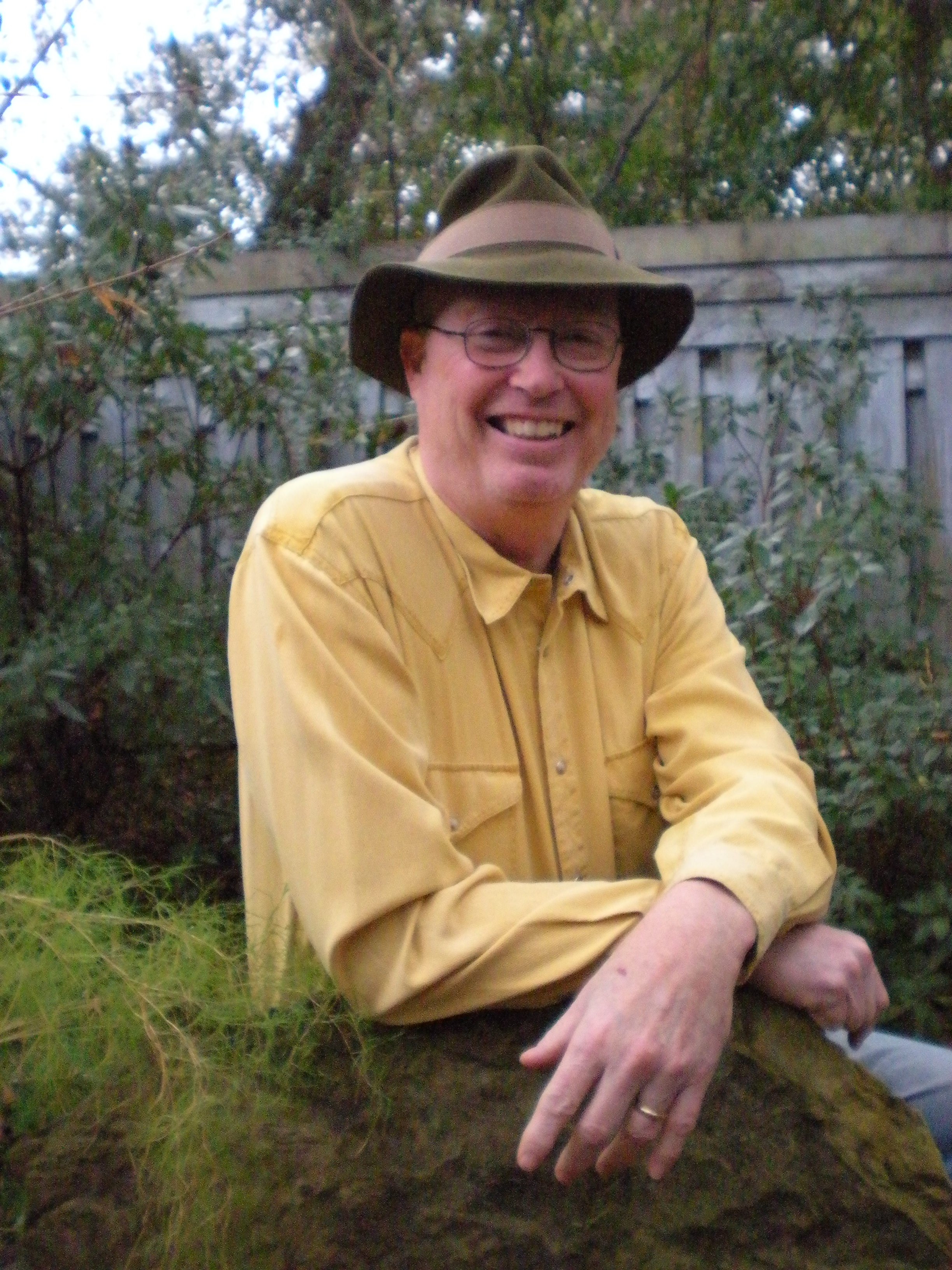
author 1.53mbO'Keeffe cover 3

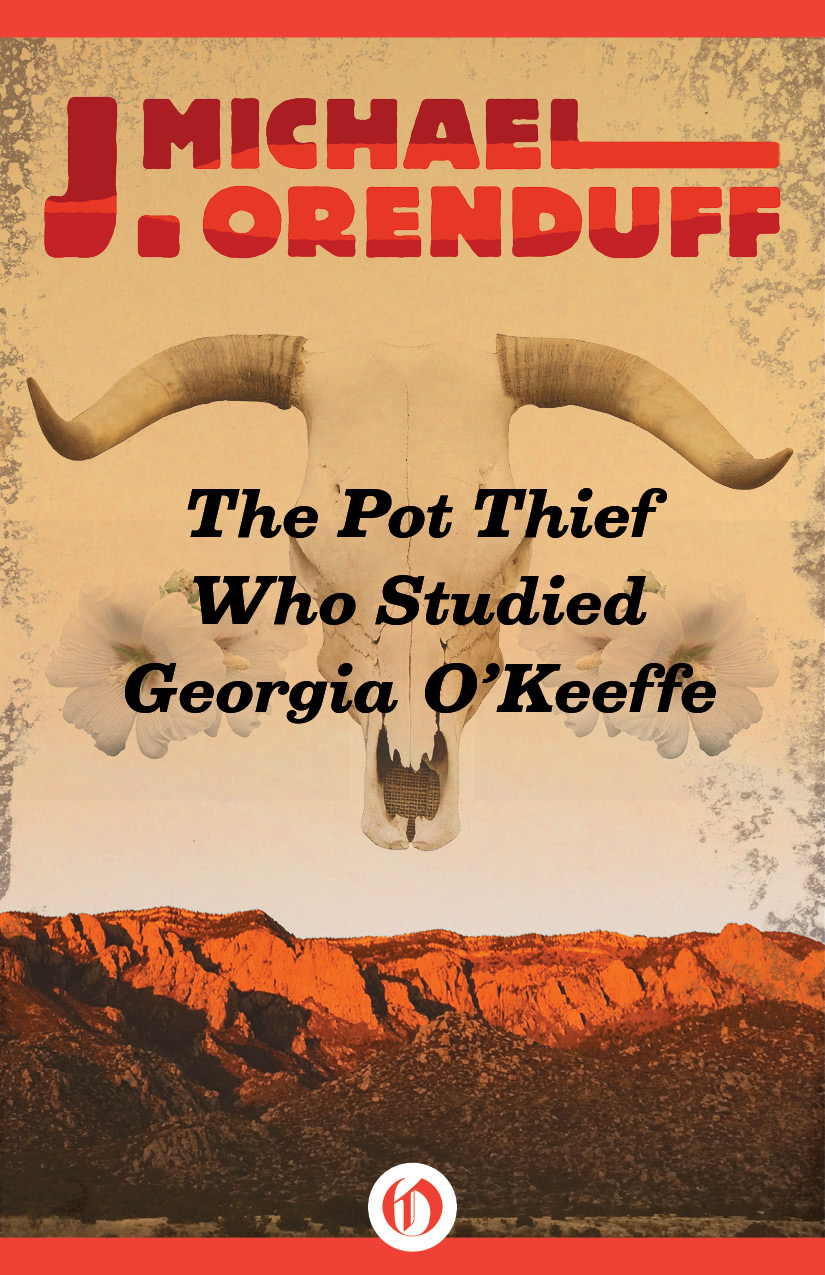
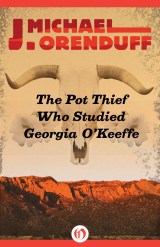
Last week I reviewed the Pot Thief Who Studied Georgia O’Keefe.

https://amberfoxxmysteries.wordpress.com/2016/01/01/a-new-mexico-mystery-review-the-pot-thief-who-studied-georgia-okeefe

I’m delighted to have the author as my guest today.

 Bio: Mike Orenduff grew up in a house so close to the Rio Grande that he could Frisbee a tortilla into Mexico. A former president of New Mexico State University, he took early retirement from higher education to pursue his career as a fiction writer. His many accolades as an author include the Lefty Award for best humorous mystery, the Epic Award for best mystery or suspense e-book, and the New Mexico Book Award for best mystery or suspense fiction.

AF: You’ve been a professor at various colleges. What did you teach? Which class did you most enjoy teaching and why?

JMO: I taught philosophy (primarily logic courses) and mathematics. The mathematics courses were what are now called developmental. They used to be called remedial, but someone decided that’s politically incorrect. That may be, but remedial is a more accurate description. It is no blot on students who are not skilled at math. Good math teachers are rare in the public schools, so students often show up at college unprepared for college level math courses. My courses were a remedy. My favorite teaching experience was the pre-algebra courses I taught at Central Wyoming College. Many of my students were from the Wind River Reservation. The most rewarding thing about teaching is not standing at the blackboard writing the steps of some arcane proof. It is having a student say, “I thought I couldn’t do math. But now I can.”

AF: What’s your favorite place you’ve lived outside of New Mexico? Could you share an anecdote or memory from that place?

JMO: I lived in La Serena, Chile for a summer while my wife was teaching at La Universidad de la Serena. It was an idyllic life. I shopped each day at the market for food and fresh flowers, both of which were waiting when my wife arrived home from work. La Serena is in the northern desert area of Chile, so it was like New Mexico except it’s on the Pacific Ocean. Albuquerque with a beach. And even more Spanish being spoken. Two of my favorite memories from northern Chile are seeing the southern cross in the beautiful clear skies and being stranded in a small fishing village twenty miles north of La Serena after travelling there in a collectivo (a taxi into which six people are crammed to go to a place with no bus service). It was easy to find a collectivo in La Serena, a large city. But Las Casetas was a village and had no collectivos. Hence, no means to return. As we stood by the road wondering what to do, a man in a small Japanese pickup pulled over and asked us if we wanted to go to La Serena. We crowded into a bench seat designed for two people and had a delightful conversation with him on the ride south. I offered to pay him. He declined. I offered to at least pay for his gasoline. He declined again, saying he was going there anyway, so no extra gas was being burned. He told us about his wife whom he obviously adored. When we arrived in La Serena, I finally coaxed him into accepting money by holding out enough pesetas to buy flowers and saying, “This is for flowers for your wife.”

AF: Your books make me want to pay more attention to very old Native pottery. What would be the best places to go for a (legal) pottery tour of New Mexico?

JMO: Of course the shops and museums in Santa Fe are the places most people associate with ancient Native pottery, but my favorite place is Western New Mexico University in Silver City. Their museum has the largest collection of prehistoric Mimbres Mogollon pottery and artifacts in the world, including pottery and artifacts of the Upland Mogollon, Casas Grandes, Salado, and Anasazi. And as an added benefit, you can tour the Gila Cliff Dwelling just north of town and see artifacts in situ and where the people lived who made them.

AF: You share my love of T or C. I noticed that every place you mention there is real. What about the places in Albuquerque? I found myself guessing that every location except Hubie’s shop might also be a real place, but I seldom dine out in Albuquerque so I’m not sure. Are they? What’s behind your decision to use actual places rather than fictitious versions of them?

JMO: You guessed it. Every place is real. The only fictional ones are Hubie’s shop and Dos Hermanas. All the other places are real, even Sharice’s condo. Georgia O’Keeffe said that she preferred painting flowers instead of models because flowers, “are cheaper and they don’t move.” I prefer real places because it’s easier to describe them than to make up new ones. And I like to give them free publicity.

 AF: What made you choose the White Sands Missile Range for Hubie’s latest pot thieving adventure?

 JMO: There were several reasons. Perhaps the most interesting one is a real event that happened there is 2001. A man hunting Oryx found a Chupadero black-on-white water jug dating back to around 1300. Where else could that happen? Especially the Oryx part.

AF: Why Georgia O’Keeffe in the title?

 JMO: After starting out with a bunch of dead white males with no connection to New Mexico, I finally tumbled to the realization that I should use people with NM connections such as D. H. Lawrence. Then I decided a woman in the title would be good. And I chose O’Keeffe because she is strongly identified with NM but also because I had a small personal connection with her. In 1985, I was serving as the academic vice president at West Texas State University, known as West Texas State Normal College when Georgia O’Keeffe taught there from 1916 to 1918. We were celebrating the 75th anniversary of the school’s founding and looking for something to make the event special. I decided we should ask O’Keefe to grant us the right to make prints of a painting she had done while teaching there and allow us to sell those prints to fund scholarships. I gave the task of approaching Ms. O’Keeffe to my wife, whose charm and grace were best suited to the task. And it helped that she is also an artist and an art historian. O’Keeffe granted her request. So Georgia O’Keeffe helped me raise scholarship funding and also inspired me to write the latest book in the series.

 AF: Who are your favorite mystery writers? What is it that makes them stand out?

JMO: In no particular order and with apologies to the many others whom I like but didn’t pop to mind: Simon Brett, Michael Bond, John Mortimer, Mary Jane Maffini, Aaron Elkins, Carl Hiaasen, Leann Sweeney, Lawrence Block (but only his Bernie Rhodenbarr series), and Tim Hallinan (especially his Junior Bender series). What makes them stand out is clever humor.

AF: Did you know you were going to write a series when you wrote the first Pot Thief book? Which book in the series was the most challenging for you to write and why?

JMO: I knew it was to be series, but I didn’t know the titles would all start with The Pot Thief Who Studied…. In fact, the working title of the second one was The Pot Thief Who Gazed at the Stars. What was I thinking?

The first was the most challenging because I had to create everything from scratch. The rest somewhat less so, but I try to have the characters grow and develop as people do in real life.

AF: Any idea what the pot thief will study next?

 JMO: Edward Abbey. Like Hubie (and me), he was a graduate of the University of New Mexico.

AF: One of my favorite writers—and a good match with Hubie. I look forward to it.


A New Mexico Mystery Review: The Pot Thief Who Studied Georgia O’Keefe

O'Keeffe cover 3

This is not an interstate kind of a story; it’s a back road drive with a raconteur at the wheel. There’s a wonderful pot in a remote place, and it takes a bit of a hike and some excavation to find it. Brush off another layer, and there it is, an intact marvel of original workmanship. The old pots which the narrator, Hubie Schuze, admires were made by hand, not on a wheel, and their shape shows it. Not perfect—and not meant to be. That’s part of their character. This book is not shaped like a standard mystery novel, either. Don’t expect it to be. Just ride the back road. Hubie knows where he’s going (though you may wonder about that at times).

The prologue takes off like a rocket. Then, during the first few chapters, new readers may go through what I’ll call “orientation to Hubie,” getting used to the flow of his entertaining and often educational ramblings on topics historical, artistic, culinary, and unclassifiable. (Established fans of the series already enjoy this as much as solving the mysteries.) If you’re new to the Pot Thief and decide to start here, don’t worry, keep reading. Once Hubie gets out in the desert to illegally “rescue” an ancient pot, the story, his character, the setting and his deep reverence for the artifacts he finds and sells come together into a lively, colorful tale that’s both a clever mystery caper and a sweet, delightfully off-beat love story. There’s a lot of wordplay, for fans of that type of wit. However, the humor I liked most in this book was that which came authentically from characters and situations, and there’s plenty of it. Hubie’s sincere and awkward attempt to put his girlfriend at ease in a delicate situation is hilarious, all the more so because it comes from his heart. A sudden turn of events near the end is so perfectly timed and phrased for comic effect, I think my neighbors heard me laugh when I read it.

The New Mexico landscape and locations—from Albuquerque to Truth or Consequences to the vast emptiness of the White Sands Missile Range—are portrayed well. Hubie’s idiosyncratic meanderings are part of the New Mexico feel of the book. I can easily see him in the mini-park in the median in Truth or Consequences across from Black Cat Books and Rio Bravo Fine Art. I can’t decide if he would get on my nerves or amuse me if I sat with him—probably both—but he fits perfectly. (There seem to be a lot of smart, eccentric, single, middle-aged men in T or C.) Orenduff has created a unique character in Hubie, and his own style of mystery—intelligent, non-violent, and funny, with the murder aspect secondary to other puzzles. The red herrings are effective, the clues are laid well, the solution is surprising, and the end is satisfying.

If you haven’t yet discovered the earlier books in the series and want to start at the beginning, the titles, in order, are:

The Pot Thief Who Studied Pythagoras

The Pot Thief Who Studied Ptolemy

The Pot Thief Who Studied Escoffier

The Pot Thief Who Studied Einstein

The Pot Thief Who Studied D.H. Lawrence

The Pot Thief Who Studied Billy the Kid

The Pot Thief Who Studied Georgia O’Keefe (release date: Jan. 26, 2016)

 Next week I’ll have an interview with the author, J. Michael Orenduff.


The Thorn in my Soul

In July in Truth or Consequences I got a mesquite thorn in my flip-flip. It burrowed in deep and I couldn’t get it out, so I set those shoes aside and wore others. This week, in Virginia, I decided that the thorn wouldn’t come though, that it was simply buried in the sole somewhere, and I wore the shoes walking back and forth across campus. Little by little the thorn began to poke me. Not painfully, but it was there.

New Mexico is there. In my soul. The need to change my life so I don’t thave to keep coming back to Virginia to work is always there. The thorn is the craving to be my true self, the writer and yoga teacher, not the professor. I tell myself this job is not a bad way to earn a living, and compared to most jobs it isn’t, and yet the thorn is always prodding me. Go back. Go home. For good.

I’ve been reading Virginia King’s The Second Path, a novel that defies categories—though I’d say visionary fiction is the best fit. It’s a mystery, but like mine, it’s not about a murder. King’s books are about inner mysteries, psycho-spiritual discoveries. In this one, the protagonist Selkie Moon dreams clues to solving her own life’s mysteries and follows them into an extraordinary adventure. I read it before bed and it provokes me to have message dreams.

Preface: A student recently dropped my health class because the emphasis on positive psychology and a “no upper limits” personal vision of wellness upset him. He confided that he felt he didn’t have control and choice in his life, and though he was in counseling, this approach to the class was too distressing for his present state of mind—one in which he felt confined and powerless.

A few nights ago I dreamed that this young man had stolen a valuable rose-gold antique watch from me. I was chasing him across the campus of the college where I got my undergraduate degree and saw him heading for a bike rack. I knocked his bike over and he headed for a van instead, pausing to read a text message before he opened the door. He gave me smug smile. “I just got a higher bid on it.” End of dream.

Belief in “I can’t” is stealing my precious time. I’m still puzzling over the bike, the van, and that higher bid. Higher self? Higher income in a new life? Higher values? Selling my time to the highest bidder instead of taking it back? I guess I’ll have to be like Selkie in the book, following my clues to see where they lead.

It’s possible to ignore spiritual discomforts for a while, but they don’t let go. I can try to change who I am and what I value, but that doesn’t work. My first book, The Calling, is about this theme in my protagonist’s life, and now I need to take that lesson into my life. Change is calling me. How long will it take? Maybe a few years. How hard will it be? Not easy. Staying in a familiar but unsuitable place or situation can feel easier than the effort it takes to get out of the rut, but I know from the effort I’ve put into other life changes, the view from outside the rut is worth the climb.

https://www.goodreads.com/book/show/25754726-the-second-path

The Sacred Lands

New Mexico’s Native peoples have sacred places on their land. The idea that the earth itself is a holy thing may resonate with people of all cultures—especially once they’ve experienced the spaciousness and silence of the desert. I often blog about the joys and beauties of the Land of Enchantment, but of course there are conflicts and challenges here as well. The hardest choices are not those between good and evil but between two goods. Between short-term benefits and long-term preservation. Between much-needed money today and clean water and untainted land in the future.

The following article from the Santa Fe Reporter describes the effect of fracking for oil and gas in Navajo communities—places that some of you may know personally and that others may know through Tony and Anne Hillerman’s books. I usually write about things that that move toward the positive—whether through the enjoyment of an experience or a good book or through the practice of mindfulness—so this topic may seem like a detour, but I don’t see it that way. Sometimes, moving through conflict constructively is the only way forward. I felt admiration for Daniel Tso when I read this story and wanted to share it. It takes courage to speak up and bear witness.

http://www.sfreporter.com/santafe/article-10976-fractured-communites.html

Sparky’s is Real

In my endnotes for my books, I explain few details about settings and research. At the end of Soul Loss, I mention that the other businesses in the story are fictitious, but Sparky’s in Hatch, New Mexico is real. I got an e-mail from a reader who found that fact—quite understandably—hard to believe. Not that she thought I was lying. She was simply marveling that such a place could exist.

For those who have had a similar reaction, or have not yet read the book, here’s an update on that wonderful place from my latest visit to Sparky’s:

In the middle of a 100 degree Sunday afternoon, in a dance hall that serves no alcohol, the Desperadoes played Western swing while couples two-stepped on a dance floor framed by walls full of antique advertising signs and shelves and glass cases crammed with old piggy banks, cookie jars, radios and little robots. High on one wall, a Rajah Motor oil neon sign glowed between a couple of other neon antiques and a mounted deer head with a big hot pink butterfly perched over its right ear. An old metal diving helmet was displayed at the other end of the neon row. The bas-relief of the skeletal rider on a skeletal horse that I mention in the Sparky’s scene in Chapter Two is still there, but there’s always something new or rearranged.

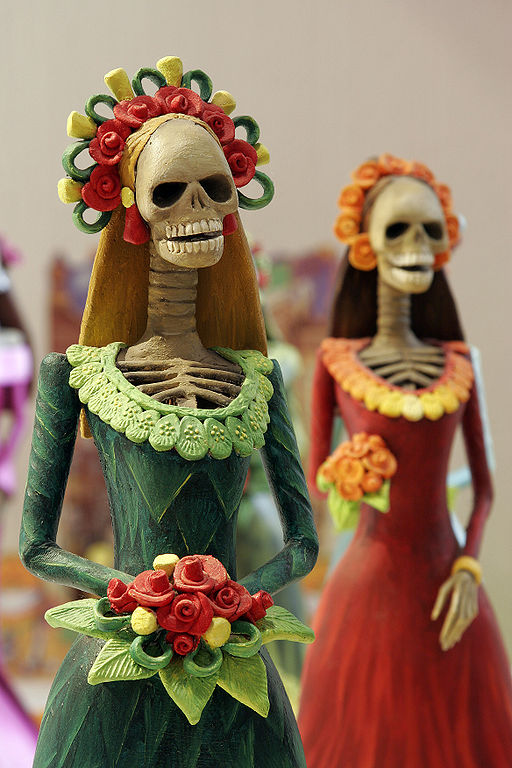
Sparky’s is a living organism of sorts. The interior has expanded to include a third room between the restaurant counter area and the dance hall, and the décor there is Sparky’s best. The skeletons who used to occupy the passage to the restrooms are once again in somewhat piratical garb, and have joined a tableau over the door of the new room along with an old wooden jukebox and a collection of Catrinas, the elegantly clad skeleton ladies of the Day of the Dead.512px-Catrinas_2

You will never run out of “whoa, I didn’t see that!” discoveries at Sparky’s. The giant advertising statues outside have new companions. On top of a monster KFC cup, a green chile wearing lipstick and a bridal veil holds hands with red chile in a top hat as they beam at each other in nuptial devotion—a match made in Hatch. Sparky the robot, his fountain espresso cup ever-flowing, gets new decoration. Sunday he was wearing goggles and some red-white-and-blue stars. Inside, more musicians have autographed the wall behind the stage, where the one thing that never changes is the sign that says, “Do one thing every day that makes you happy.” If you’ve set foot in Sparky’s, you have already done that.

Need pictures? Check out Sparky’s Facebook page.

https://www.facebook.com/pages/Sparkys-BBQ-and-Espresso/74823382942?sk=timeline

Good food and good music in the strangest-best place for both.

*****

Catrina images courtesy of Wikimedia Commons

Ten Things I Love about Truth or Consequences

Conversations. I’ve never been in a situation where anyone was at a loss for words. The line in Bullock’s grocery store, Art Hop, the pool, a drum circle by the Rio Grande at night … it doesn’t matter. People will talk to you anywhere. I met all my friends here through random conversations with strangers.

Passion Pie Café. The place has art on the walls, art on the tables, great tea and coffee, vegan date bars, a free book shelf, and plenty of the above-mentioned conversation.

Hot springs. Of course. That used to be the town’s name. A soak can restore mind and body and spirit.

A history of healing. Magnolia Elis was an important part of the town’s life as a healing destination in the middle of the twentieth century. Her capacities as a healer were reputed to be extraordinary. Her building is a historic landmark now, with her name glowing on the roof in blue neon at night.

Critters. Bats come out at dusk to hunt insects near the Rio Grande, swooping and dancing over the river and the wetlands. If I go to the right spot at the right time, they surround me. Sometimes I’ve seen them crossing the stars as I lay in a hot spring at night. If there’s been rain late in the day, tarantulas emerge from their burrow to seek mates. Lizards seem to be everywhere—scurrying from one patch of shade to the next by day, occasionally sticking to walls and windows in the evening. They look bland at first, but on closer inspection I’ve found that some are pearlescent gray with a subtle peachy glow and others have a delicate brown-and-white checkered pattern with hints of orange. There are hummingbirds, butterflies, and also few of the most impressively vile bugs I’ve ever met, such as big black ants that can bite through your socks and a few summers ago we had a bizarre inundation of skunk beetles. I don’t want them to visit again, but they were interesting.

Stars. Okay, everyone in the desert gets excited about stars. Anyone who has ever come from the humid East to the dry West has had the same dazzling discovery: there are a lot stars up there, and they are really bright.

Rain. It’s so special when it rains in the desert. A big black cloud is not threatening but promising.

Turtleback Mountain. The serene turtle draped gracefully on its crest really looks like a turtle. (I can’t see the elephant in Elephant Butte, can’t even tell which of those gray buttes is supposed to be the elephant)  The turtle is always relaxed, as if he has just done yoga and is now in an amphibian’s version of savasana. With the recent rain he’s looking a little like a chia pet as the red-brown rock fuzzes up with patches of green.

Color. Much I love adobe-brown-pink-beige Santa Fe, I like the way T or C mingles that esthetic with wilder décor (and a lot of trailers). There is a candy-cane striped law office on Main Street. Homes range from adobe-normal to pink, purple, yellow, turquoise, and covered with murals. A shop on Broadway has Lakota-style ledger art on its stucco walls. The next one is bright green with orange and blue turtles parading over the door. An old van drives around town wearing the word “whatever” on its collage-covered side.

This isn’t a rich town; in fact quite the opposite—it’s always struggling. And yet it never collapses in on itself. It’s vibrant, full of art and originality.

 Do you know and love T or C? What’s one of your favorite things about it?