A Tail and a Tale: Bob Can Talk His Way Out of Anything

There’s a lot of wildlife we don’t see. The Rio Grande is low right now, making it easy to cross from the empty desert land on the other side. Tracks in the mud from recent rain showed small hooves trotting around on the mesa near Healing Waters Trail where I was running. I’ve never seen a javelina up there, but those were their little pointy feet. No surprise. We expect them around here. A friend sometimes has them in her yard.

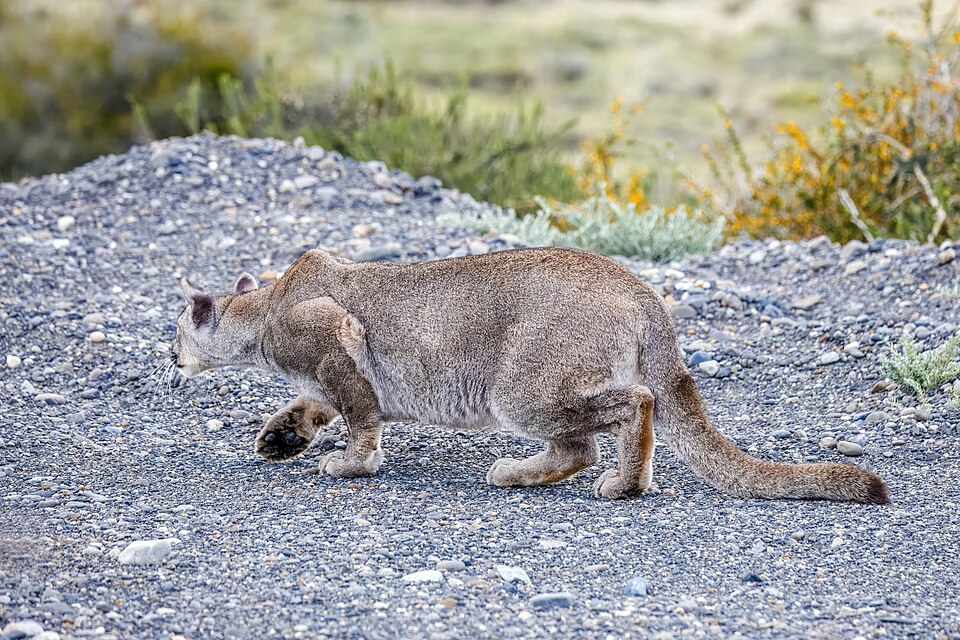
But I never expected to encounter a mountain lion. Its tail was toward me and it was sniffing the ground on the far end of the trail where it gets narrow and steep near the Veterans’ Home—my destination—so I didn’t get a good look at its head. I didn’t need to. Nothing else is that big, that color, and has a tail like that.

About a year ago, my friend Bob told me he’d looked out his window at night and seen a mountain lion. His bedroom window faces the mesa, not the rest of the Veterans’ Home campus. I detoured away from the animal and took an alternate route to go visit Bob. I told him about the sighting. Of course, he had a story.

He was much younger, hiking alone in upstate New York. He loved the woods and often spent hours exploring, but this was the only time he met a mountain lion. They met suddenly, practically face to face, and close enough that the cat could have reached him in a few bounds. Bob didn’t want to back away and look like prey, and he knew better than to approach. Feeling stuck, he improvised. He took his knife from his belt, held it up, and started talking.

“I know you probably want to eat me for lunch, and you could take me if you tried, but I’m warning you, you’re gonna get very scratched up in the process.”

The cat didn’t move, so Bob kept talking. It looked at him as if it was taking in every word. Finally, he took a step back, still holding the knife. Then another slow step. And they went their separate ways.


The Back Room at Black Cat Books

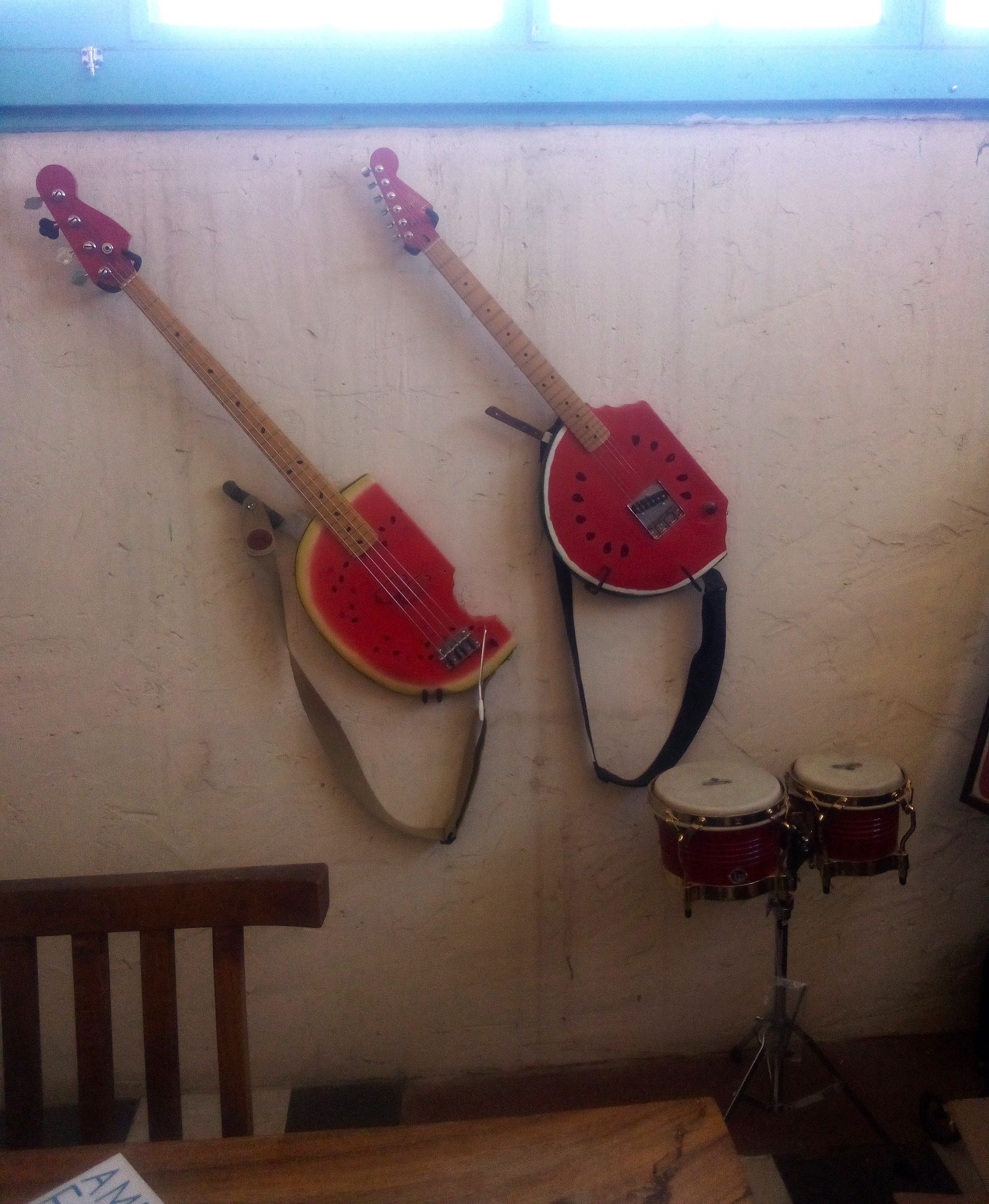
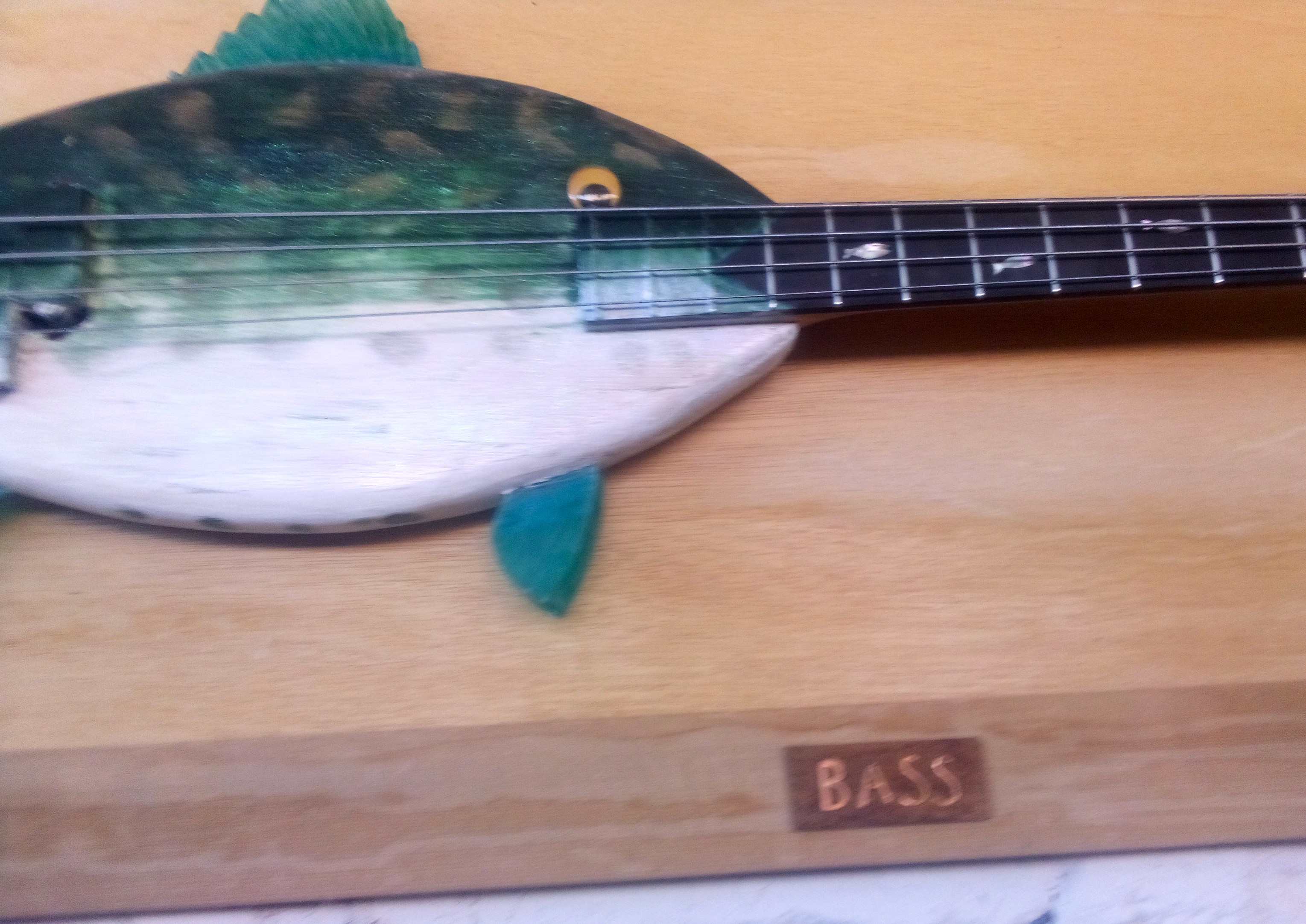
On April 26, Independent Bookstore Day, I had the pleasure of doing a reading and signing at Black Cat Books and Coffee in Truth or Consequences. There were fresh flowers on the table where I was set up in the back room. To my surprise, the room was like a museum honoring a beloved Sierra County musician and luthier, the late Bill Bussman. He and his wife lived out in the middle of nowhere beyond Hillsborough, one of our living ghost towns, but people throughout this area and all over the country knew him because of his musicianship and the instruments he created. He was truly an original—warm and funny with irresistible charm. To learn more, read this article about him and this thread of posts from other musicians acknowledging his passing and sharing their memories of him. One of them mentions him playing the stand-up bass that had an Elvis head and a little red sneaker on its foot that tapped in time to the music. I heard him play that bass many times over the years. The bass wasn’t at Black Cat with me, but a number of his quirkiest creations were: the red chiles, the watermelons, and the bass bass. (Note the knives in the watermelons.)
While I was there, I had the pleasure of meeting fascinating people. Some were buying my books. Some of were there to talk—about my writing, about their writing, about their travels and families, and more. A retired New Age pastor told me about the life she left behind in California and some behind-the-scenes tales of famous spiritual teachers—a bit like something out of one of my books. When people tell me stories, it helps me write stories. And surely, the spirit of Bill Bussman lent light and delight to us all.

Street Solos

She staggered and wove, her steps crossing each other as she traversed the steep sidewalk, aiming uphill toward Main Street in her irregular style. Heading downhill on my way home after teaching yoga, I tried not to stare at the poor drunk on the opposite side of Foch Street. And then, from seeming unable to walk a straight line, she transformed into a dancer. She spun, both arms extended, her balance perfect despite holding a large cloth bag. Then she staggered on, and then spun again.

Okay, I thought. This is Truth or Consequences. What the heck. You can express yourself.

I continued across Healing Waters Plaza and reached Broadway. While I paused for traffic, a man passing down Daniels along the side of the drug store stopped and posed, casting his shadow on the white wall of the building. He wore a backpack, and his pose resembled the position of the Turtle formation atop Turtleback Mountain,. He stood on one leg, his torso horizontal, his other leg flexed and lifted in an attitude derriere, his arms in front cupping the unseen mountain. Or so it looked to me, having struck that pose a few times to help people see the Turtle. He jogged a few steps and posed again, casting his shadow, repeating the move until he was past the streetlight and out of sight.

What was going on? People alone dancing in the streets. And not the sort of dances you’d do if the music in your head or through your earbuds inspired you to move with the beat. Was it an art event? A random coincidence? A pact or dare between friends? No one was watching or filming. I seemed to be the only audience. I can invent a story, for sure. Reading this, you may be inventing your own. Perhaps that’s what they wanted.

Observer

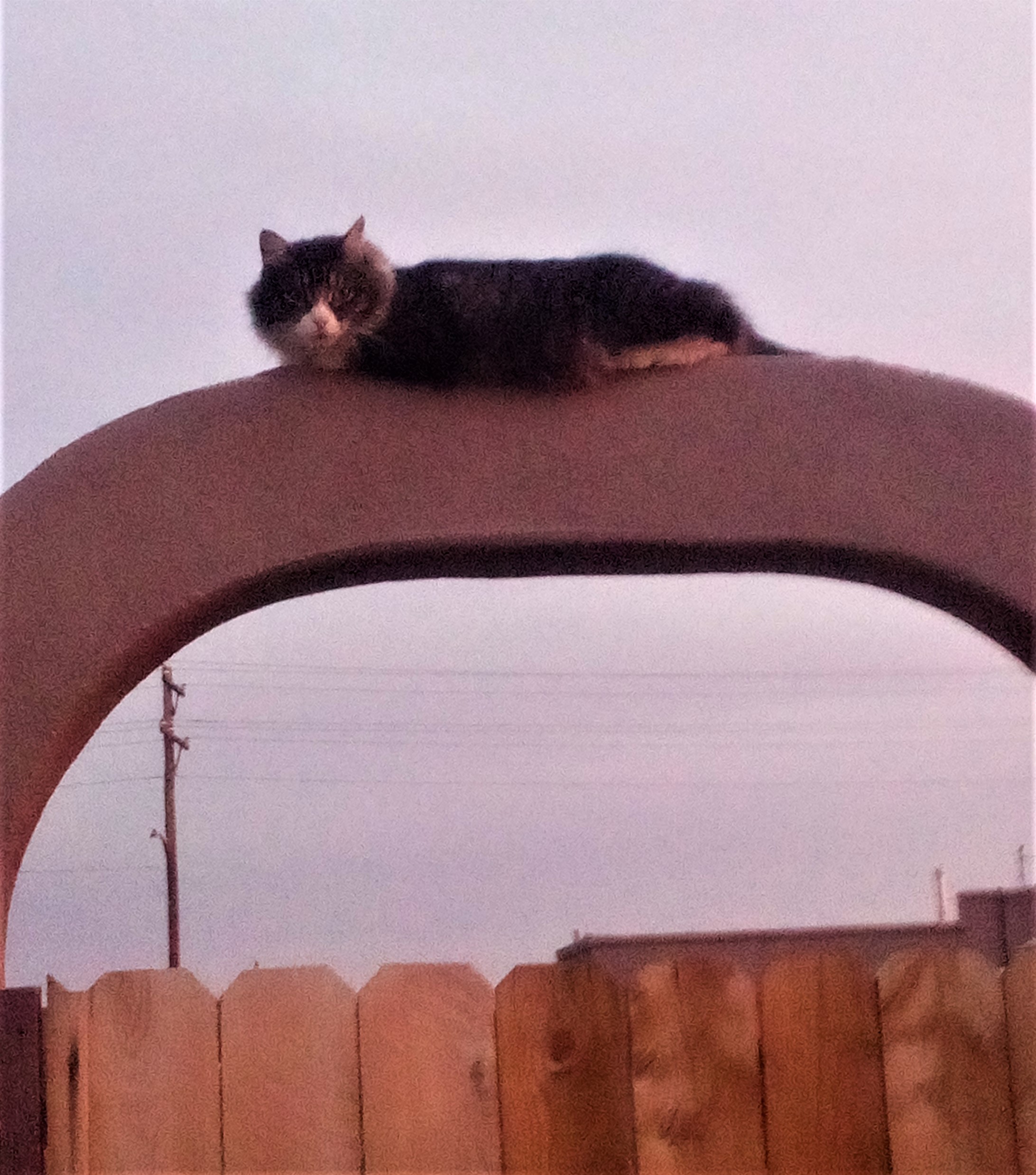
A friend who organizes the T or C Story Lab invited me to be a story teller later this fall. I was honored, but I couldn’t think of an episode in my life that would make a good story. I find listening to others, observing nature, and studying the world more compelling than my personal history. I feel like this cat, perched on an arch overlooking an alley, self-contained and interested. Paying attention, not seeking it.

Another cat in the neighborhood climbs onto parked cars on the street, mewing at the top of her lungs, begging to be petted. I comply with her demands, but I am not that cat. The concept of the Story Lab isn’t to be that cat, either. It’s to share yourself and connect with the community. I love the idea. I’ve appreciated it as a member of the audience. But I still have no story. Yet. Perhaps I’ll jump down and discover one.

Conversations and Story-Telling


My eighty-two-year old neighbor hasn’t been able to walk his dog since he fell off his bike and injured his shoulder. His dog is strong and energetic, and his balance isn’t as good as it once was. We worked out an arrangement where I hold the leash, and the three of us walk together. He’s there to give his dog commands as needed and pull occasional thorns out of her paws, and I’m there for a steady grip and good balance. One reason I offered to do this is because I knew we’d have great conversations. In an hour-long walk, we never ran out of interesting topics. With eighty-two years of engaged, thoughtful life plus a great sense of humor, my neighbor is a delightful story-teller, and I was happy to prompt him to keep going.

At a popular fishing spot on the curve of the Rio Grande, we ran into another gentleman of advanced years with his dog, and the men immediately struck up a conversation about fishing, dogs, and various other things. Normal T or C behavior—talking to strangers.

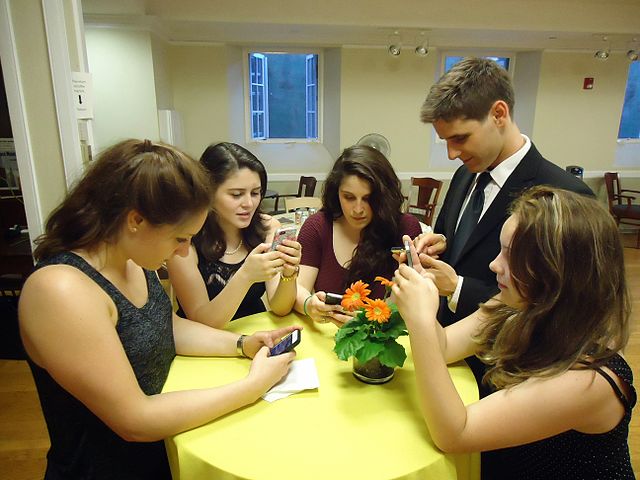
Later in the day, I went out to dinner with a friend, and when the server came to check if we were okay, since our meals hadn’t arrived yet, we’d been so busy getting caught up with each other we hadn’t noticed the kitchen was a bit slow. A young couple came in and was seated across the room from us. I had a view of them in profile, each hunched over a phone, heads bowed, making no eye contact and no conversation. They looked like a satire on smart-phone addicts. I wondered about the state of their relationship. First date and painfully shy? Together too long and bored? Or was this, to them, normal?

Maybe they’ll stay in T or C a while and put the phones down. I’ve seen local young people doing things like skateboarding the wrong way down the middle of Broadway, earbuds hanging loose and blasting music to passersby (I can use that for one of my characters—Misty Chino would do that), but so far I’ve never seen them doing the blind-to-the world phone-walk my college students so often did. I imagine the young tourists, phone-walking, bumping up against a cluster of locals yakking on the sidewalk with someone who pulled a truck over to the curb to join the conversation. And the couple makes eye contact with the strangers. They answer friendly questions and tell their stories, and go on their way, talking with each other.


What is Pleasant to Live Through …

… seldom makes a good story. I was reminded of this as I searched for something interesting to say in an e-mail to a friend. I wanted to stay in touch and to hear from him, but my sane, steady, enjoyable life provided little material. Hello. I’m happy. My students are great this semester. My yoga classes are going well. I’m reading good books and I’m writing. In conversation, a lot could flow from any of this, but in writing, not much.

A few years ago, I was talking with a new acquaintance at a faculty holiday party, and he mentioned that he was reading The Lord of The Rings for the first time. I had read it my freshman year in high school. Yet, when he mentioned the passage that stood out most strongly for him, it was one that I’d often thought of in the decades since reading it. Tolkien sums up the passage a long and pleasant time for the travelers in his story in one or two lines, then adds that things that are agreeable to live through are often dull to tell about, but things that are hard or even terrible to live through make marvelous tales. Authors tend to feel affection for their characters, and yet to make good stories, we have to put them through challenges. No life would remain pleasant if it didn’t require us to do something difficult. And that’s where the story is—growth through pain or danger.

At the last meeting of my book club, each us got the others caught up on her summer. One person was getting divorced, another had seen a friend through a major crisis, and another had taken her peace studies students to Hiroshima, a place that literally went through hell to become what it now is, a city dedicated to peace. And I … had been on vacation. Needless to say, the most compelling narrative wasn’t mine.

I had tons of fun, but my friends had more questions about a medical weirdness that took place shortly before I left for New Mexico. Because what makes a better story? “I went on vacation and it was great,” or “I had a posterior vitreal detachment?” They were fascinated by the phenomenon of having the gel in my eyeball partially detach and getting flashes of light and a giant floater in one eye. “How big is it? Like, the size of blueberry? Is it always there? Do you have to have surgery?” (Smaller than a blueberry, in case you care, and no, and no.) Ah, we humans. We love icky, scary stuff, and you can’t get much ickier than eyeballs.

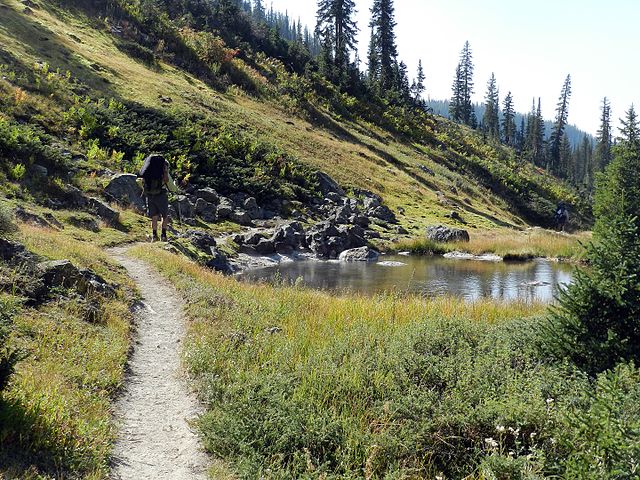
I thought the divorce story was amazing, a much better story. Not for the conflict but for the grace. The couple who are parting ways took a long-planned backpacking trip together even though they had decided they would end their marriage. I’ve talked to each of them about it and they’re glad they had this final adventure together. backpacking_bechler_canyon_18430518468It’s their story, so I won’t tell any more of it here, but I can see in it the qualities that make the best stories. In a way, it ties in with the peace studies story and the helping-a-friend-in-crisis story. It had value and purpose, and took strength and courage. It made them grow and change. And in its difficulty shines its beauty.