
Author: Amber Foxx
Author of Mae Martin psychic mystery series.
New Mexico Mystery Author Interview: Vanessa A. Ryan
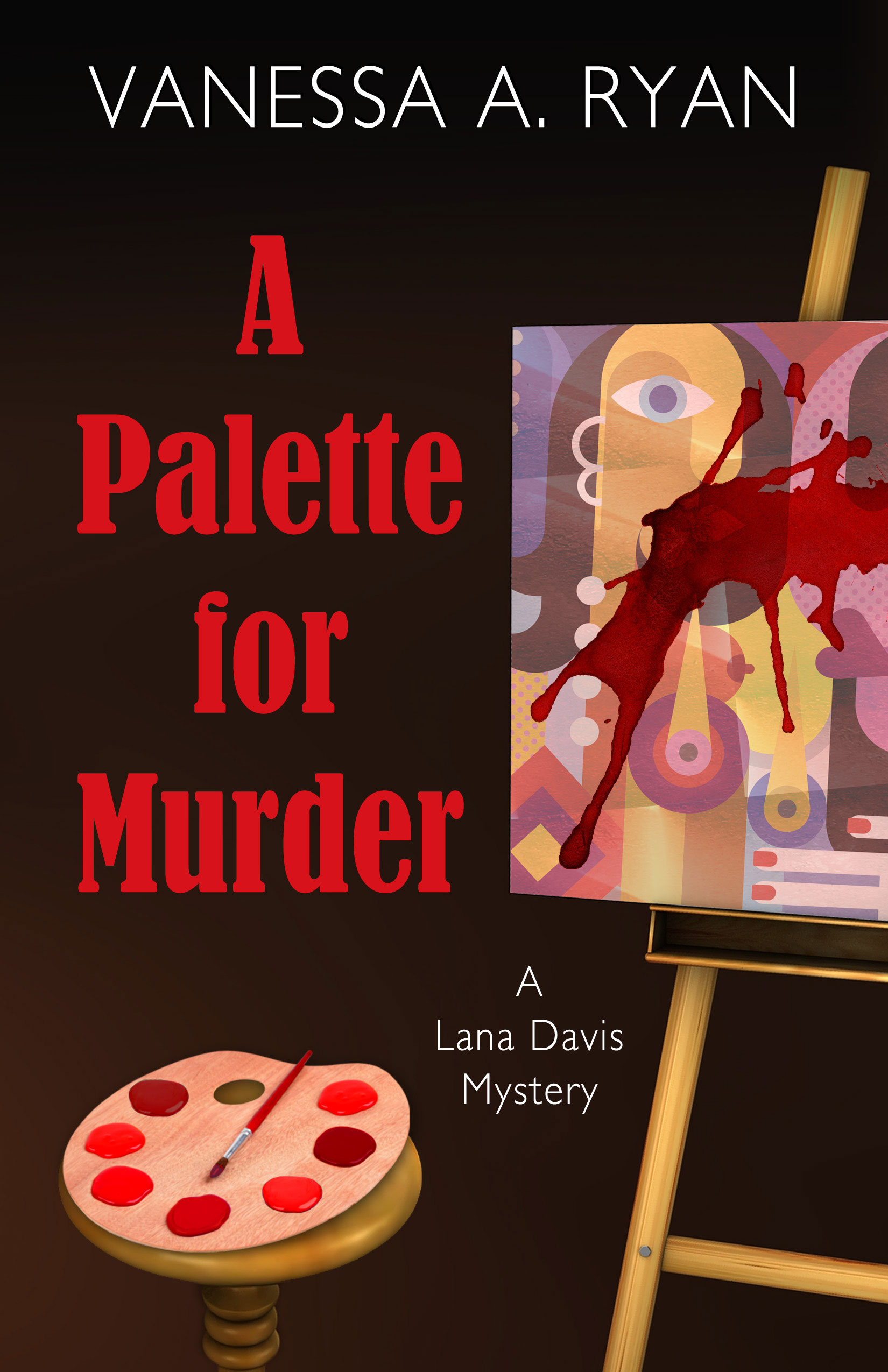

Vanessa A. Ryan is an actress in Southern California. She was born in California and graduated from UCLA. When not writing or acting, she enjoys painting and nature walks. Her paintings and sculptures are collected worldwide. At one point, she performed stand-up comedy, so her writing often reflects her love of humor, even for serious subjects. She is the author of A Palette for Murder, A Blue Moon and the trilogy Horror at the Lake. She lives with her cats Dezi, Teger and Riley, and among feral cats she has rescued.
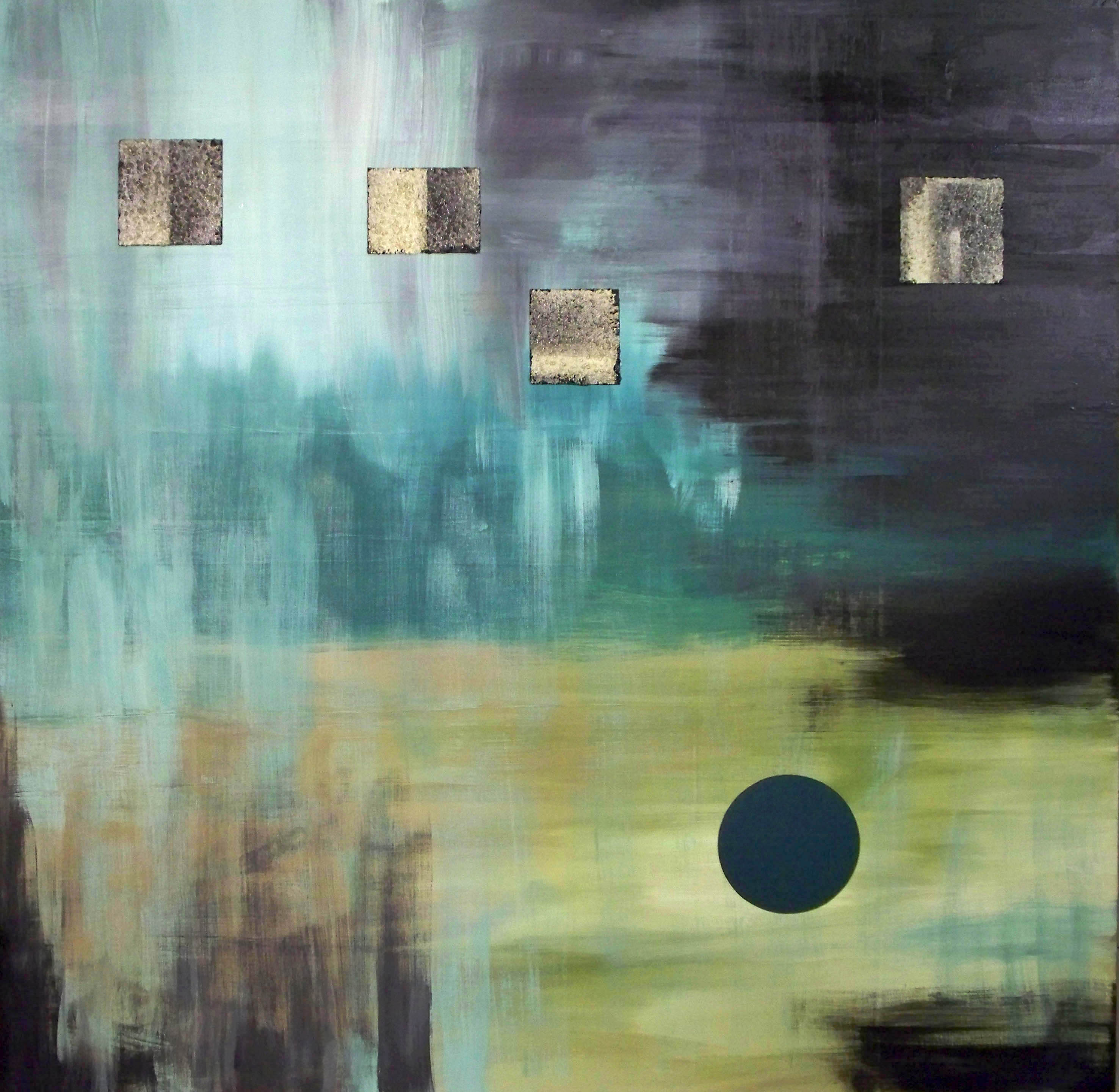
The art works featured in this interview are by Vanessa A. Ryan
AF: How did this book start? Tell me about your creative process.
VAR: The book started with a visit to Santa Fe. Originally, the story took place in Los Angeles but ended up in Santa Fe. But when I moved to Santa Fe, I changed the focus of the story to Santa Fe, with brief forays into California. Regardless, the ending of the story is similar. In fact, when I lived in Santa Fe, my house burned down and I lost the last version of this novel that was in my computer. I found half of an older version of the manuscript on the upper shelf of a coat closet. Everything below the shelf had burned, but the first half of the manuscript was intact, as well as the last page of it. I was overjoyed when I found the manuscript until I realized it wasn’t up-to-date and not all of it was there. I set it aside for quite a few years until I rewrote it last year.
AF: Amazing. It sounds as if this book was meant to be. What’s your relationship with Santa Fe?
VAR: I had visited Santa Fe a few times and then I lived there for several years.
AF: Tell me about your research. Did any of the galleries bring you behind the scenes?
VAR: I have exhibited my work in Santa Fe so I know the art scene. I also have an artist friend who lives there and keeps me informed about the galleries. I didn’t go behind the scenes for the book, though I have on other occasions.

AF: Have you done work like Lana’s job in the insurance industry? You seem to know the business inside out.
VAR: I wrote a series of articles for an insurance correspondence school as a freelance job, which is how I learned about that industry. Also, my first job out of college was a claims examiner for a large insurance company. I didn’t go in the field, but stayed in the office taking statements and writing up claims.
AF: I’m curious about that Picasso. Is this based on an actual or rumored work of his?
VAR: The last Picasso isn’t based on the last painting he did. It’s fiction.
AF: I noticed you used a blend of both real locations and fictitious ones. How did you go about deciding when to fictionalize and when ones to use real names? (Example: Suique Pueblo, fictitious; Canyon Road, real.)
VAR: I did that for legal reasons. My publisher has guidelines on this issue that I had to follow. I didn’t want to write about an actual tribe, but using real streets and towns, as long as they didn’t pertain to an actual address or business, was okay.
AF: Lana is pretty darned fearless, not only about getting hurt but about getting caught. Is she like you? Or is she pure invention?
VAR: She’s more invention than not. What we have in common are blond highlights, a disdain for snobs and a driving curiosity to know things. I wanted a character who is a little gutsy and not afraid to delve into the unknown. While I’m as curious about things as she is, I have a healthy respect for danger and I like to stay away from it. But I am as outspoken as Lana is fearless. And sometimes that gets me into trouble. I guess that’s my version of living dangerously. And if there’s something I want to know, I like doing detective work—just not in person as Lana does—only online, on the phone, or by researching articles and books.
AF: If you could spend a week in Santa Fe doing anything you wanted, what would you do?
VR: I would check out the scenery, the art galleries and hang out in some of my favorite watering holes. Like Lana, I don’t drink but I enjoy being in a crowded bar. More conversation to eavesdrop on for my next book.
AF: Is there anything you’d like to add?
VR: I hope readers will enjoy Lana’s adventures and the strange and haunting landscape of New Mexico.

Follow Vanessa A. Ryan at
https://twitter.com/Vanessa_a_Ryan
https://www.facebook.com/VanessaRyan33
A New Mexico Mystery Review: A Palette for Murder
Vanessa A. Ryan picked the perfect background for a murder mystery in Santa Fe: rich people, not-so rich artists, and crime and corruption in the city’s art world.
First, some relevant local data: In the Santa Fe Reporter’s 2013-14 Annual Manual, the city’s population was given as 68,642 residents. The more recent Manual didn’t give us the population number, but both editions say that the City Different has four art galleries per 1,000 residents. That’s a lot of art. After city government, it’s the primary business in town, aside from tourism. Santa Fe is ranked the number one city for air quality in the country, and has 320 days of sunshine a year, which may be part of the reason it’s the fourth happiest city. I’ll second that. Music and dancing and general festivity are a way of life. The downside? The cost of living in Santa Fe is 17.7% higher than the national average. Maybe that’s why it’s not the happiest city. But without all those wealthy people, the art scene would die. It’s a necessary symbiosis—and central to this story.
Insurance administrator Lana Davis comes to Santa Fe looking for the beneficiary of a life insurance policy. As soon as she starts her search, the plot gets complicated. I can find my way around Santa Fe’s oddly configured streets without a map, but I couldn’t figure out whodunit. This is a classic puzzle type of murder mystery. Everyone’s a suspect, and I mean, everyone.
The behind-the-scenes look at an art gallery was intriguing. A lot of the little details—how important it is to some people to be invited to a benefit auction, the way rich people can tell who’s really one of them but poor artists can’t, and even snobbery about fauxdobe—also give the book an “insider” feel.
Lana is an amusing narrator. She’s basically good but willing to bend rules just enough to take some risks she shouldn’t take, and she’s cool enough not to get as freaked out by death, danger and violence as most people would. If she were an animal, she’d be a cat: independent, self-sufficient, and persistent and clever in the chase. She has nine lives, too, and is good at landing on her feet—at least figuratively. This makes her a good fit for the amateur sleuth role—the personality has to be believable for the premise of the amateur investigator to work. More sensitive or rule-following folks wouldn’t dare get into the situations she does. I think there are two kinds of series protagonists: the ones we identify with, and the ones we would like to be for a day. Lana is the second kind.
Ryan is a polished story-teller. If you like tight plotting, a great setting and a fast pace, this is your book.
*****
Next week, author—and artist—Vanessa A. Ryan is my guest for an interview
Santosha
“Happiness equals reality minus expectations.”
Tom Magliozzi, Car Talk
“I am most happy and content when I cease trying to be happy and content.”
Chuang Tzu
I’ve been busier lately than I like to be. My preference is for open space, both literally and metaphorically. I don’t mean that I like to be lazy, but that the sense of spaciousness is freeing. The feeling that I don’t have to be fast, and that everything can take as long as it naturally takes. A couple of summers ago I took a workshop with yoga teacher and physical therapist Judith Hanson Lasater. It was about yoga and the shoulder joint and rotator cuff, but one of the lessons that stayed with me was when she said “no rushing.” She explained it this way: even when you have to be in a hurry, you can take mental stance of “no rushing.”
One of the philosophical principles of yoga is santosha—contentment. If I object to being busy or having deadlines, those are my expectations getting in the way of happiness. My striving to happy. So be it. I’m busy. But I’m not rushing.
New Mexico Mystery Author Interview: Anne Hillerman
Last week I reviewed Rock with Wings by Anne Hillerman. She is an award-winning reporter, the author of several non-fiction books, and the daughter of New York Times bestselling author Tony Hillerman. She lives in Santa Fe, and this is her second novel. This week I’m delighted to have her as my guest for an interview.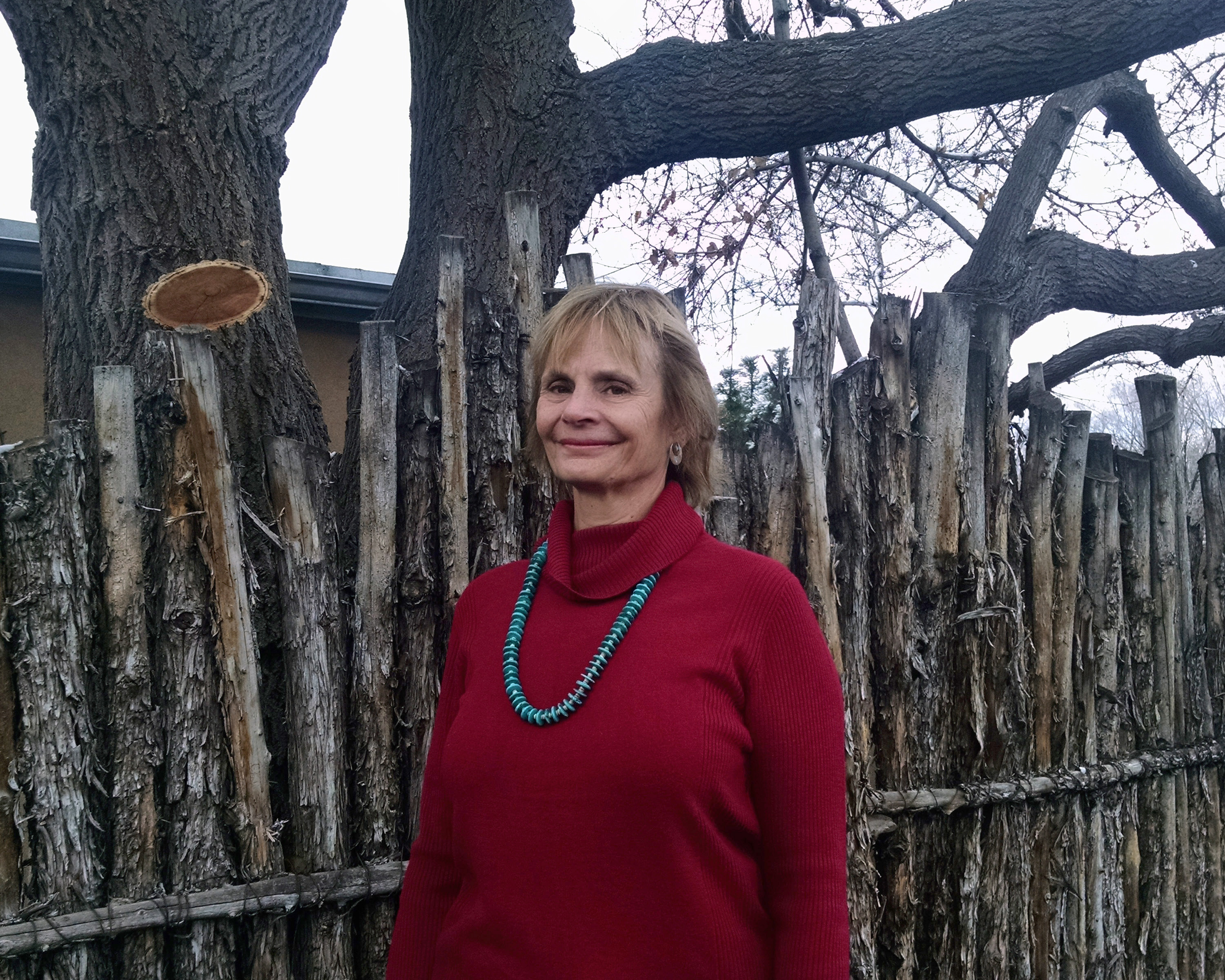
AF: I appreciate the Navajo glossary in the back of Rock with Wings. I’ve heard the language spoken, and I cannot begin to reproduce the sounds even when I know a word and what it means. Do you speak Navajo?
AH: Just a very few words.
AF: Which language do Chee and Bernie speak at home? Do they slip back and forth—English and Navajo for different kinds of topics?
AH: Yes, they slip back and forth—English when they are talking about work and financial discussions; Navajo for more important matters of the heart.
AF: One of things I enjoy in your books is the way you portray family and friendships. Several years ago I read your father’s wonderfully titled autobiography, Seldom Disappointed, and I recall that you grew up in a large family. Remind me how many siblings.
AH: I have two sisters and three brothers.
AF: Would you say this has affected your writing? In what way?
AH I believe almost everything you experience in life helps you in some way as a writer (and a person, for that matter), although you may not realize its value at the time. Growing up as the big sister to such a diverse group of siblings helped me learn how to negotiate and compromise—skills I later discovered I needed in the world of commercial publishing. Also, because we were a busy, lively household, I learned how to focus despite chaos. The amazing and unexpected things that happen in a large family certainly honed my sense of humor. And, of course, the diverse personalities I shared dinner with each night might have given me ideas for a few characters.
AF: You’ve attended citizens’ police academies and learned from members of the Navajo Nation police and other police forces in northern New Mexico. What are some of the most surprising things they taught you? The most useful for you as a writer?
AH: The most surprising, and most useful too, was their absolute willingness to let an outsider civilian like me into the club. I was humbled by the openness of the officers I spoke with who shared their insights into both law enforcement and human nature. I was swept away by their passion for and commitment to their work, especially officers who were involved with the very difficult assignments relating to domestic violence. I never appreciated the dichotomy in basic police work, where officers can go from static boredom to high adrenalin situations in a matter of seconds. I enjoyed learning about technology used in law enforcement but getting some insight into how cops size up suspects, witnesses, and victims and how they can usually tell when people are lying helped me even more.
AF: Both your books are set in June, the hot windy time before the rains. Are you one of those people who loves the windy season?
AH: No, no, no. Wind is not my friend! It makes me restless, stirs up the pollen from the juniper trees that surround my Santa Fe house, and rolls the tumbleweeds across the highways, creating traffic trouble. I used June as a setting in both those books because it’s a season of suspense here in the dry Southwest. Temperatures spike in June. If we’re lucky, late June eventually and after much anticipation and broken promises, brings the start of summer rain.
AF: Do you have a favorite time of year, and what makes it special in your part of the world?
AH: I enjoy the change of seasons and Santa Fe is great for that. I love the transition from winter to spring, the discovery of those early hyacinths in my garden when the nights are still way below freezing, and the way daffodils survive April snow and keep smiling. Summer’s long days and beautiful crimson sunsets remind me of why our mountains, the Sangre de Cristos and the Sandias, are named for blood and watermelon. I enjoy the contrast between summer days in the 90s and nights cool enough to require a blanket. July’s dramatic thunderstorms, usually more sound and light than moisture, sometimes create enough rain to turn the arroyos into running streams. Fall brings more eye-popping contrasts, the brilliant yellow of the shimmering aspen leaves against the deep blue sky. Crisp days scented with apples and pungent smoke of pinon and cedar in the fireplace—and a big pot of green chile simmering for dinner. I love winter, too. Unlike many places, Santa Fe seldom goes two days in a row without sun. I love the diamond sparkle of fresh snow, the quiet discovery of rabbit and bird tracks along the road, and those crystal-clear winter nights with millions of stars, each with a story to tell.
AF: Tell me about your favorite trading post, roadside restaurant, or other out-of-the way place in the Four Corners Region that most people might not have heard of.
AH: So many places, I hardly know where to start, but I’ll give it a try. I love the old trading post at Toadlena, N.M. with its beautiful setting at the base of the mountains. The owners and the staff reflect an attitude of hospitality that’s hard to beat. I always try to stop at Teec Nos Pos, N.M. and the Keems Canyon, Az. trading posts when I’m out that way. They always have some surprises. The Hubble Trading Post in Ganado, Arizona always makes me smile. I try to talk advantage of tours to visit the Hubble home when I’m there. It’s like a step into the past. I enjoy the Tuba City Trading Post (also in Arizona) with its wonderful collection of books, and the Code Talker Museum that shares the building. Across the walk is another of my favorite places, Navajo Interactive Museum. It’s filled with wonderful exhibits and videos in which the Navajo people tell their own history starting with their creation stories. I love to stop for lunch at Earl’s on old Route 66 in Gallup, N.M. The food good, and you can shop while you eat because the restaurant invites native artists sell their jewelry, pottery, sculpture, etc. from table to table. I like the restaurant at the Quality Inn in Window Rock (AZ) with its sweet little patio garden, and the eclectic food at The Junction in Chinle (AZ).
AF: In continuing the series your father wrote, you’ve mastered the inner worlds of Bernie Manuelito and Jim Chee, and I found the glimpse into the workings of Joe Leaphorn’s mind in his little notebook in Spider Woman’s Daughter strangely touching—the intimacy of the ordinary. That orderly little book, without an emotional or private word in it, often just numbers and sketches, still made me think you knew him inside-out. Do you plan to use him as a point-of-view character in the future?
AH: Yes. I’m looking forward to writing about him. He was the character my Dad loved best, and I needed a few novels under my belt before venturing into his complex mind.
AF: What was the greatest challenge in making the transition from writing nonfiction to writing fiction? How has your earlier background helped you as a novelist?
AH: For Spider Woman’s Daughter, my greatest challenge was making the little voice that kept telling me “you’re not Tony Hillerman” understand that I could continue the series without being my Dad. That some changes and my own voice would be OK as long as I was true to the spirit of his work. I knew there were many, many people who loved Dad’s work and would be highly skeptical of a new kid taking on his characters. I’ve been touched and humbled by the notes I’ve received from many of them, telling me they were glad to see their favorite Navajo detective back on the job. The research I did for the non-fiction book I wrote about Dad and his work, Tony Hillerman’s Landscape, On the Road with Chee and Leaphorn, was enormously helpful. I didn’t realize when I wrote it that I would write a novel, but it paved the way. That book gave me an excuse to re-read all of Dad’s novels closely and to travel to places he loved in Navajoland and elsewhere in our beautiful Southwest. Also, because I had completed book-length manuscripts before, I know what to expect in terms of time commitment on a big project. Having dealt with New York editors before, I had some insight into the business end of publishing. All that helped with the transition.
AF: I particularly liked the role of certain plants in Rock with Wings. One of your nonfiction books is on the Gardens of Santa Fe. Your protagonist Bernie Manuelito is interested in plants; she studied botany in college. I’m looking for the roots, pardon the pun, of this synchronicity.
AH: I loved writing Gardens of Santa Fe and the gardeners I interviewed taught me to appreciate plants in a new way. Luckily for me, Dad had established and developed Bernie’s interest in botany and the natural world in several of his novels. I’m glad he did, because it gave me a nice hook for Rock with Wings. The little cactus I mention is real, by the way, and actually is an endangered species.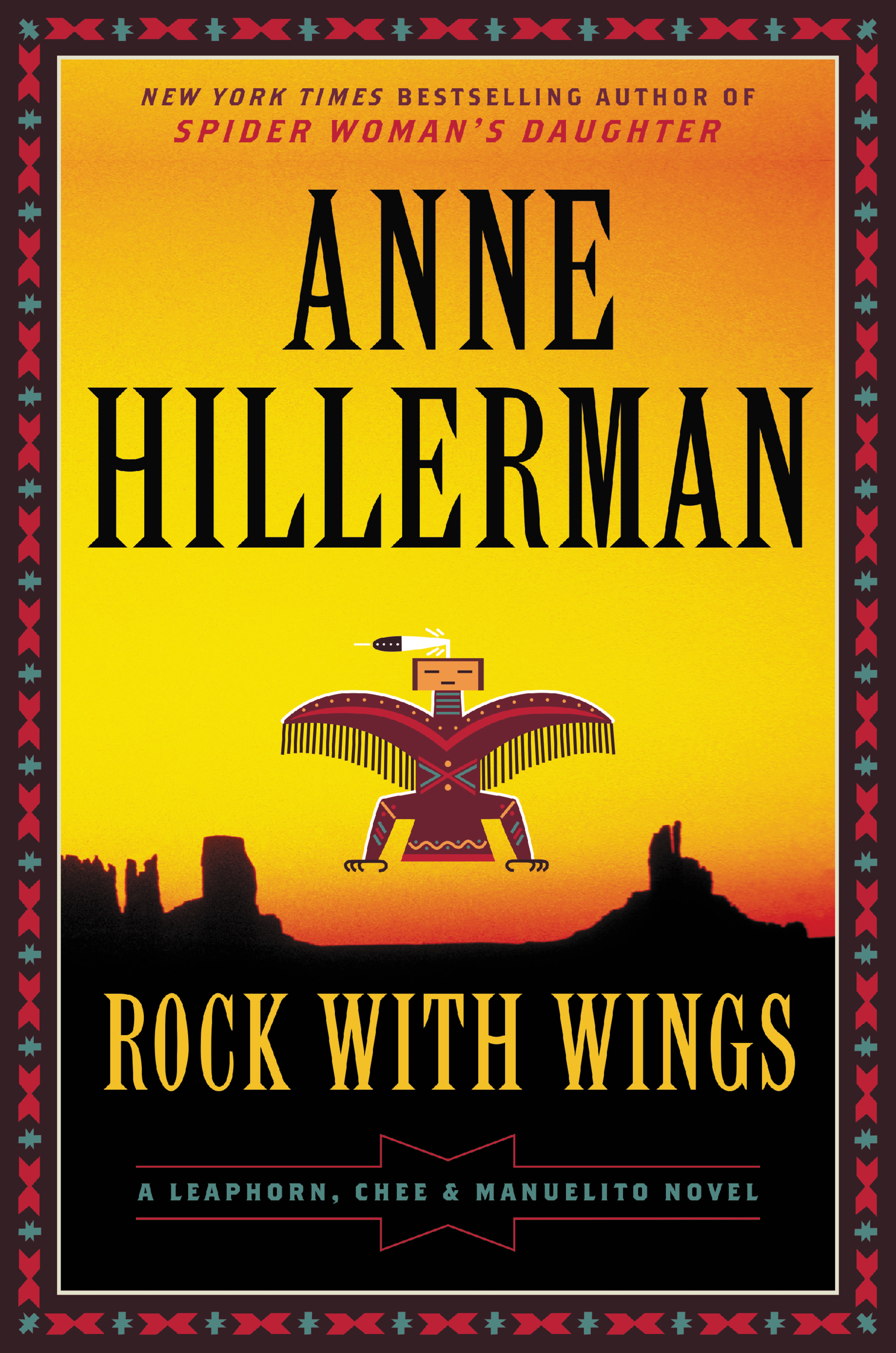
AF: Some writers start with a plan, others improvise, and some work with a blend of structure and free play. Tell me about your process of creating a story.
AH: For me, it’s a conglomeration of trying to plan, trying to be organized and efficient, and listening to inspiration when it comes, even if it means major revisions. With Spider Woman’s Daughter, I was guided by the knowledge that Bernadette Manuelito needed to solve the crime and that the crime had to be a big deal. I knew I wanted to use Chaco Canyon as one of my settings, so that led me to consider a plot that involved archaeology. Archaeology in turn, led me to use Santa Fe as another setting because the city is filled with museums stuffed with artifacts, and I knew it would provide a nice contrast to the rural reservation substations and to isolated Chaco Canyon. In Rock with Wings, I wanted to build on Bernie’s interest in plants. Then, I decided to take the reader to Monument Valley, a beautiful setting Dad never used. The story grew from there.
AF: The colorful supporting characters give so much life to your stories. Do these characters just show up? Do they surprise you? Do you intentionally build them?
AH: I’d like to stretch the truth and say I’m smart enough to build my supporting cast based on a long-range plan for the series, but, mostly, they just show up. A couple minor characters in Spider Woman’s Daughter come back in Rock with Wings.
AF: Do you have an idea for the setting of your next book?
AH: Yes. I think it will open at a big basketball game in Shiprock, and then move to Tuba City, an interesting town on the border of Hopiland and a good place to stop on the way to the Grand Canyon. The Grand Canyon may get in there, too.
AF: Thank you for such thoughtful answers. I look forward to the next book.
A New Mexico Mystery Review: Rock with Wings
The opening scene of Anne Hillerman’s new mystery hooked me immediately. When Officer Bernie Manuelito stops a driver for speeding, the man’s peculiar behavior, and the rifle and two boxes of dirt in his trunk, set up the first pieces in a complex puzzle. Two related mysteries seem separate at first, linked only by the fact the Bernie is working on one case and her husband Jim Chee on the other—which takes place on the set of a zombie movie being filmed in Monument Valley. The plot is well crafted, with plenty of twists and red herrings, but there’s more to this book: the characters, their relationships, and the settings.
The author has a gift for portraying vivid personalities and writes with insight into family and friendships. It’s not easy to write a happy marriage and keep it interesting for a reader—conflicted relationships provide a lot more material—but she does it well with Chee and Bernie. The ongoing stories of Bernie’s aging mother and troubled sister are woven into the mystery plot in a natural and effective way. Joe Leaphorn remains a powerful presence. Though nothing is written in his point of view, readers who’ve known him for many years and many books can feel his continuity and integrity. He may be in the background, but his dignity, determination and astuteness haven’t faded, nor has his importance to the younger officers he mentored.
As in Spider Woman’s Daughter, Hillerman peoples this book with memorable secondary characters, such as Chee’s entrepreneurial clan relative Paul, and the very traditional Mr. Tso.
Navajo culture and language are integral to the story and the protagonists’ lives and world views. I liked the way Bernie relates to Mr. Tso as an honored elder, not just a potential witness. The dialogue in English that represents conversation in Navajo is respectful even when intimate, as if every word is framed in a space of meaning and thought.
The sense of place is perfect, from the movie-making, tourism and geologic beauty in Monument Valley to Mr. Tso’s little house near Ship Rock. This couldn’t be set anywhere else.
Midway through the book, Bernie’s mother’s neighbor, Mrs. Darkwater, is working on crossword. A clue in the puzzle provides a clue not only to an element of the plot, but to a deeper theme in the book. The word could be applied to Mr. Tso as well as to something Bernie discovers in those boxes of dirt, as progress and preservation, old ways and new, intermingle or collide. This is a mystery with substance, true to the Hillerman tradition, a strong addition to the series.
*****
Look for my interview with Anne Hillerman next week.
Old and Gray: Joy Grows Deeper Day by Day
During my Southeast months, I teach yoga for a fitness and recreation program called “Fifty and Wiser.” The name has always struck me as comical. At fifty and older, I hope we’re wiser than at twenty or thirty, but that’s not why there’s a whole set of exercise programs for that age group. Apparently it was not good marketing to say fifty and older, though.
In one of my online writing groups, a member asked for feedback on her new web site. Most people talked about the design and content in comparison to her old one. One person, however, addressed her sunny, smiling, middle-aged picture. He was adamant that an author should not post a picture unless he or she looked like a professional model, and said he wasn’t about to post his own picture, because he didn’t want his readers to know he was old but to think he was as young as the characters he writes about.
In honor of that comment, I’m updating my picture. In the one I’ve been using, taken indoors in black and white, my salt-and pepper hair looks only half gray. In bright sunlight, the gray shines and it looks totally silver. I like it—I’m like a little bitty silver-back gorilla. In humans, females get that honor as well as the males.
At the present progress of the Mae Martin Series, she hasn’t turned thirty yet. Starting with a young character allows me to keep the series going for decades if I choose, and the tumult and challenge of that stage of life make for good stories, but at that age I didn’t have either the patience or the perspective to write them.
Yeats published this poem in 1893, a young man imagining his beloved’s aging.
When You Are Old
When you are old and grey and full of sleep,
And nodding by the fire, take down this book,
And slowly read, and dream of the soft look
Your eyes had once, and of their shadows deep;
How many loved your moments of glad grace,
And loved your beauty with a love false or true,
But one man loved the pilgrim soul in you,
And loved the sorrows of your changing face;
And bending down beside the glowing bars,
Murmur, a little sadly, how Love fled
And paced upon the mountains overhead
And hid his face amid a crowd of stars.
***
When he was old, he wrote The Apparitions.
(I’m only including the final verse; you can read the rest at http://www.poemhunter.com/best-poems/william-butler-yeats/the-apparitions/ )
When a man grows old his joy
Grows more deep day after day,
His empty heart is full at length
But he has need of all that strength
Because of the increasing Night
That opens her mystery and fright.
Fifteen apparitions have I seen;
The worst a coat upon a coat hanger.
***
Who will we become when our empty coat is left behind? Aging. The heart grows full, while the hair grows hollow, light passing through it like a halo.
Remembering his Radiance
One of my meditation teachers from my first yoga teacher training died this week. The message from his yoga center informed students that Goswami Kriyananda had left his body, suggesting the next stage of his soul’s journey rather than an end. I knew he was so far along in years that the parting was inevitably close, but I still felt sad. And then, strangely, I felt closer to him. The touch of his compassion and joy stays with me, reaching deeper than his words. He had the sweetest, sincerest, most humble and loving smile, glowing with both the playfulness of a child and the wisdom of an elder. I can access his teaching through books he wrote and recordings of his talks, but the lesson that affected me most was the heart-sense of his radiance.
*****
http://yogachicago.com/2014/02/sitting-down-with-goswami-kriyananda
This is an interview from 2008. It’s long, but it tells some of his story and outlook, if you’re interested.
http://www.yogakriya.org/php/archives.php
The video on death, dying and rebirth is quite cheerful and uplifting. Regardless of your view of the nature of life after death, which may not be the same as his, you might appreciate the encounter with his personality and his philosophy. I watched it right before going to teach a college class and I think I was a happier and kinder person and a better teacher for having done so.
Namaste.
Giveaway and First-in-Series Sale

Leading up to the give-away, I’ve introduced my “mystical mystery sisters” from across two oceans, Australian Virginia King and British Marion Eaton. We’re fans of each other’s work and have grown from fans into friends. In the spirit of sharing new series we’ve enjoyed, we’ve teamed up for a giveaway and over a week of discounts from April 21 – 30.
Enjoy a touch of the mystical and an innovative take on mystery from a trio of B.R.A.G. Medallion recipients. Buy each e-book for only $1.99 US. Enter the drawing to win a paperback copy of the first book in each author’s series.
When the Clocks Stopped
The Mysterious Marsh Series, Book One
When lawyer Hazel Dawkins decides to write some wills while she waits for the birth of her first child, she unwittingly triggers dramatic consequences. Mysteriously, she encounters Annie, a woman whose tempestuous life took place more than two centuries earlier when Romney Marsh was a violent place, dominated by smugglers. Soon that past collides with the present, and Hazel finds herself pitted against an evil that has stalked the marsh for centuries. As her destiny intertwines with Annie’s in the shifting time-scape, Hazel confronts a terrifying challenge that parallels history—and could even change it. If she survives.
Sales links:
http://www.amazon.com/When-Clocks-Stopped-Time-slip-Mysterious-ebook/dp/B00DTV52PK
https://www.smashwords.com/books/view/530153
The First Lie
Selkie Moon Mysteries Book One
Selkie Moon is a woman on the run. In a mad dash for freedom she’s escaped her life in Sydney to start over again in Hawaii. But her refuge begins to unravel and she’s running from something else entirely. A voice in a dream says that someone is trying to kill her. Not that she’s psychic, no way. But the messages and threats escalate until she’s locked in a game of cat and mouse with a mysterious stalker. Entangled in Celtic and Hawaiian mythologies, the events become so bizarre and terrifying that her instinct is to keep running. But is she running from her past? Or her future?
Sales link: http://www.amazon.com/First-Selkie-Moon-Mystery-Book-ebook/dp/B00K1VC20Y
The Calling
The first Mae Martin Psychic Mystery
Obeying her mother’s warning, Mae Martin-Ridley has spent years hiding her gift of “the sight.” When concern for a missing hunter compels her to use it again, her peaceful life in a small Southern town begins to fall apart. New friends push her to explore her unusual talents, but as she does, she discovers the shadow side of her visions— access to secrets she could regret uncovering.
Gift or curse? When an extraordinary ability intrudes on an ordinary life, nothing can be the same again.
The Mae Martin Series
No murder, just mystery. Every life hides a secret, and love is the deepest mystery of all.
Sales links: https://amberfoxxmysteries.wordpress.com/buy-books-retail-links
Enter the drawing to win paperback copies of all three books.
The raffle starts on April 21 and ends 12:00 midnight Eastern U.S. time April 26, 2015. When you click on the Rafflecopter link you’ll be able to choose which series you would like to learn more about. After that, you’ll be entered in the drawing. To get an additional entry, click on the option to tweet the give-away. A random winner will be chosen by Rafflecopter. The winner will be announced on April 27.
To enter, click here: http://www.rafflecopter.com/rafl/display/eb0a35092/
To learn more about the other authors and their series:
Virginia’s guest post: https://amberfoxxmysteries.wordpress.com/2015/04/16/virginia-king-mything-in-action/
Interview with Marion: https://amberfoxxmysteries.wordpress.com/2015/03/24/interview-with-m-l-eaton-the-mysterious-marsh/
And an interview with me on one of my favorite WordPress blogs: http://saintsandtrees.wordpress.com/2014/02/27/interview-with-author-amber-foxx/
Virginia King: Mything in Action
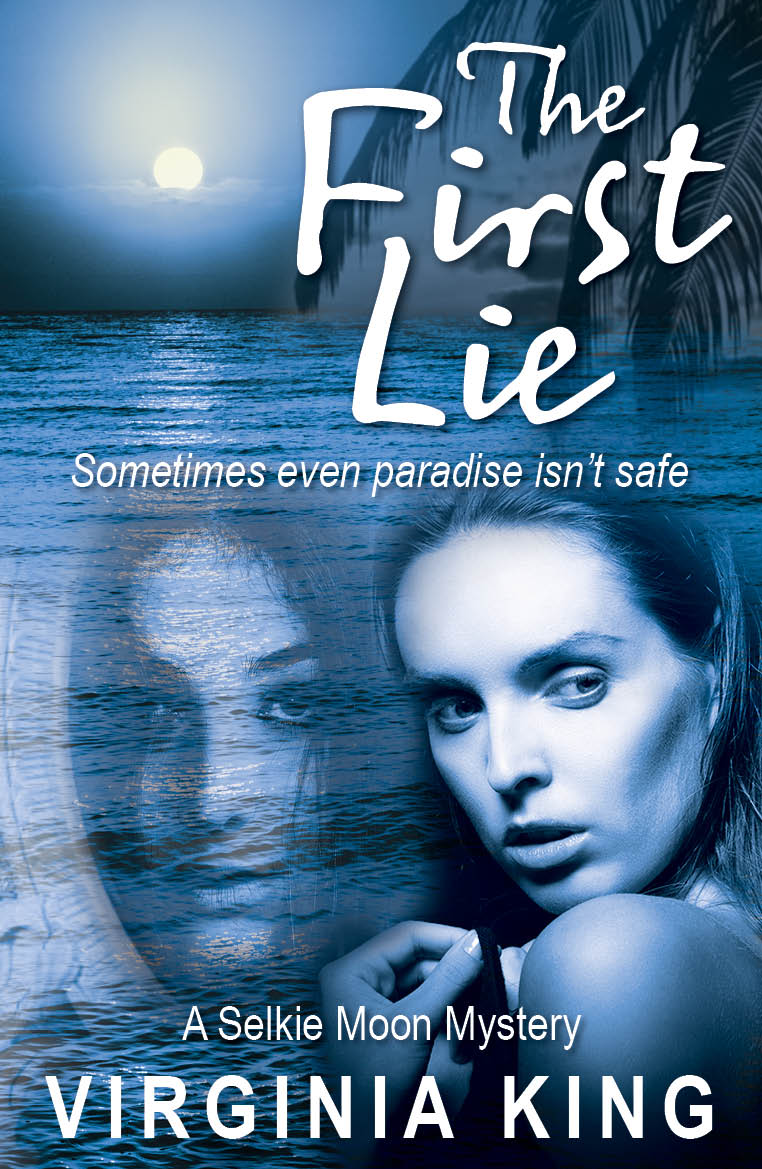
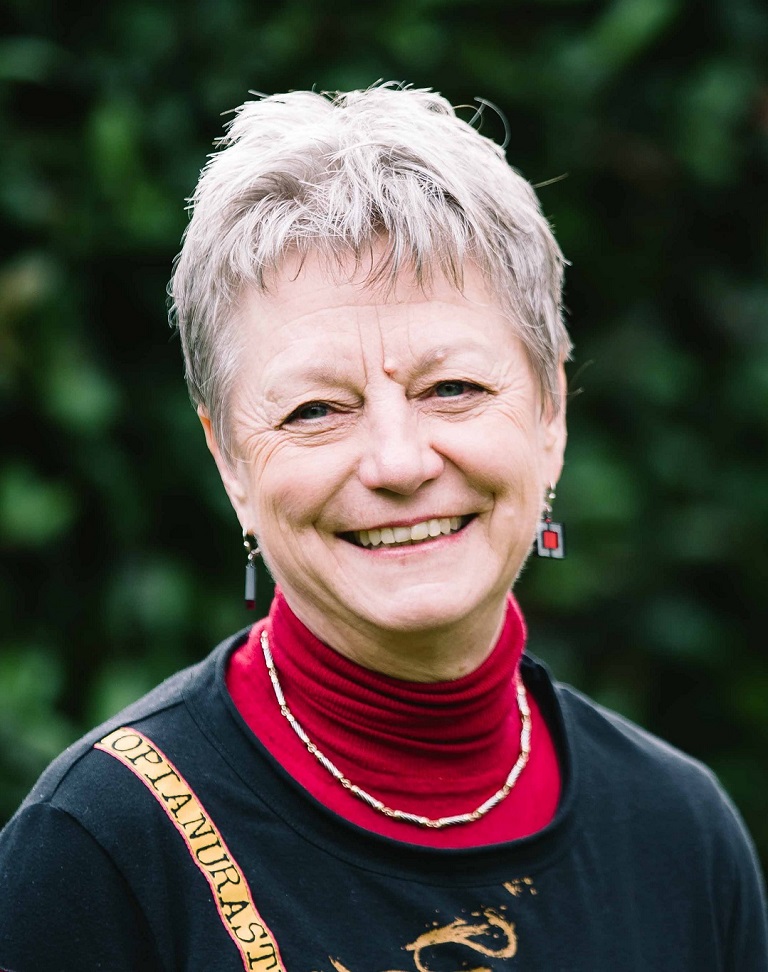
Intrigued by the blend of world mythologies in Virginia King’s mystical psychological mystery, The First Lie, I asked her to write a guest post on how she wove mythical elements into her fiction. Virginia’s answer to that question follows.
*****
Everyone, soon or late, sits down to a banquet of consequences. Robert Louis Stevenson
In The First Lie, Australian girl Selkie Moon has run away to Hawaii to escape a destructive relationship but she’s landed herself in the middle of a mythical nightmare. Her name already has mythic origins – her mother named her after the selkies, the Celtic seal people who peel off their skins and dance in the moonlight on human legs. Ironic, since Selkie almost drowned as a toddler and has been afraid of the sea ever since.
Now that she’s arrived in Hawaii, with mythical symbols lurking under every lava rock, a series of bizarre events beset her. It all begins when a voice wakes her from a dream: Someone is trying to kill you.
The First Lie was originally set in Sydney, my home town. The writing was going through a flat patch so I decided to re-energize by grabbing a camera and visiting all the locations in the story—a whole day on the road. The outcome of that fateful excursion wasn’t what I expected. I came home and burst into tears. None of the places spoke to me.
In desperation I dropped Selkie into a whole new location, Hawaii, and the story came to life. She was now a stranger in a strange place, so I was on a journey of discovery too. My editor wasn’t too sure about it: You’ve got an Australian main character in a Hawaiian setting, but you’re drawing on Irish/Scottish mythology (selkies); it’s difficult to make those disparate elements fit together cohesively. She suggested moving the story to Ireland or giving Selkie a Hawaiian name, but I did the opposite. I made it work.
I mingled the mythical elements across the cultures to see what happened. I don’t plan when I write because it stifles psychological layers emerging in the story. Instead, if I get an idea— no matter how bizarre—I drop it into the manuscript and let it ride, let it niggle away at me until something pops. It’s incredible how connections form—usually in the middle of the night—each time adding another layer of depth. I wake most mornings and decipher the notes I’ve scribbled while half asleep.
In Chapter One, Selkie sees something strange in a mirror. It once belonged to a Kahuna and has special powers. Mirrors feature in many real Hawaiian encounters with the supernatural and they drip with symbolism in fairy tales—remember the queen in Snow White. I allowed aspects of these elements to create their own consequences. The mirror inspires some mythic scenes later in the book.
The First Lie is not a retelling of the selkie myth, but selkies create their own psychological thread. The myth involves a fisherman stealing a selkie’s pelt as the selkies dance in the moonlight. When one selkie can’t find her skin, she has to go with him and be his wife. Then seven years later, she finds where he’s hidden it and returns to the sea without looking back. This is an issue of identity, of theft, of soul. I used these concepts to add depth to this modern mystery.
Pele, the volcano goddess, has been encountered by many real Hawaiians. She’s associated with warnings of danger, such as house fires and other mishaps. Selkie is being stalked by a mysterious woman. Could she be Pele? Then there’s the landslide on the highway that sends Selkie and her friends in the opposite direction. Or could the stalker be warning Selkie about one of her new friends?
For a Celtic connection, I created a fictional Hawaiian beach named by a homesick Irishman—only to remember in the middle of the night that there’s a place in Sydney with the same name, just near Selkie’s childhood home. Spooky! And there are monk seals in Hawaii—they’re aumakuas or animal spirit guides that look out for the living. Meanwhile in Europe, scientists have theorised that the sirens in The Odyssey, who lured sailors to their deaths with their singing, may have been based on the moaning of monk seals. Greek mythology too? Yes, because the oceans are interconnected. Add another layer.
Just to make my editor’s head spin, Selkie has a fondness for Chinese food. Chinese mythology adds another thread to the mystery. Cowry shells, hugely symbolic in the islands and around the world, were used to create the Chinese symbol for money—survival in a strange place is an element in the story. And the cooks in Selkie’s favourite noodle bar see something in her aura that no-one else can see—old friend from far away—the Chinese phrase for a memory. It plunges Selkie into a deep investigation of her past.
I had no idea how The First Lie would end until all the mythical layers and threads collided in the last chapter. I just had to trust that the banquet of consequences would be—as the Irish might describe it—grand.
*****
Bio:
Virginia King has lived most of her life in Sydney, but has travelled to many places. Sheʼs been a teacher, an unemployed ex-teacher, a producer of audio-books, a writer of fifty-plus childrenʼs books, and an award-winning publisher. These days sheʼs a full-time writer who paints a bit, living in the Blue Mountains west of Sydney with her husband.
Web site: http://www.selkiemoon.com
Sales link: http://www.amazon.com/First-Selkie-Moon-Mystery-Book-ebook/dp/B00K1VC20Y
*****
Next week, Virginia King and Marion Eaton and I will be doing a give-away for the first book in each of our series. Details will be posted Tuesday. (Marion was featured in an interview last month. https://amberfoxxmysteries.wordpress.com/2015/03/24/interview-with-m-l-eaton-the-mysterious-marsh ) We are fans of each other’s work and want to share that enjoyment with other readers who enjoy a touch of the mystical in a mystery.
 Amber Foxx Mysteries