“Stop Talking and Shoot the Guy!”

Over the years, the rules and conventions of the mystery genre have changed, and they’re still evolving. In the process of questioning a couple of the current conventions, I looked back at some old ones: the “ten commandments” of detective fiction set out by Ronald Knox in 1929, and the Twenty Rules for Writing Detective Stories that S.S. Van Dine published in the American Magazine in September 1928. Van Dine’s list is long, so I’ve placed it at the end of this post.  Here are Knox’s commandments:

  1. The criminal must be mentioned in the early part of the story, but must not be anyone whose thoughts the reader has been allowed to know.
  2. All supernatural or preternatural agencies are ruled out as a matter of course.
  3. Not more than one secret room or passage is allowable.
  4. No hitherto undiscovered poisons may be used, nor any appliance which will need a long scientific explanation at the end.
  5. No Chinaman must figure in the story.
  6. No accident must ever help the detective, nor must he ever have an unaccountable intuition which proves to be right.
  7. The detective himself must not commit the crime.
  8. The detective is bound to declare any clues which he may discover.
  9. The “sidekick” of the detective, the Watson, must not conceal from the reader any thoughts which pass through his mind: his intelligence must be slightly, but very slightly, below that of the average reader.
  10. Twin brothers, and doubles generally, must not appear unless we have been duly prepared for them.

I imagine you’re laughing at some of these. Number five is glaringly dated, of course, an artifact of the biases and stereotypes of Knox’s times. The rule about the sidekick’s intelligence is irrelevant as well as comical, since mystery fiction seldom includes sidekicks anymore. Most recent books lack secret passages, also, so limiting the number isn’t an issue. And in the rare book that has them, the author might legitimately use more than one. I recently enjoyed M.L. Eaton’s When the Clocks Stopped, a well-crafted book that breaks that rule as well as the supernatural one. Historically, the Romney Marsh area of England, where the story is set, had a lot of smugglers and secret passages, and this aspect of the past shows up when a village seems to be haunted. This novel breaks one of Van Dine’s rules as well—there simply must be a corpse— providing plenty of mystery without one.

Van Dine’s rule number three—there must be no love interest—hasn’t held up as well as the corpse rule has. In almost every current mystery series, the main character’s love life is woven into overall arc of the books. In the past, the protagonist might be an eccentric like Nero Wolfe or Hercule Poirot, making a love story unlikely, and focusing the plot on the puzzle of “whodunit.” Those books are great, but the genre would have stagnated if writers had kept trying to reproduce that model of a mystery.

A convention in many recent mysteries breaks both Knox’s first rule—showing the criminal’s thoughts—and Van Dine’s second: “No willful tricks or deceptions may be played on the reader other than those played legitimately by the criminal on the detective himself.” I’m referring to the anonymous bad person’s point of view. All the other characters in the book have names, faces and identities, but then the author delivers information about a crime through scenes featuring a character who is only a pronoun. I’m not a fan of this device, even though some excellent writers have done it. James D. Doss wrote some creative variations on this kind of scene by using the point of view of a prairie dog, a deer, or a mouse. With Ute mysticism and vivid descriptions of nature integrated into his plots, and his mastery of the omniscient third person, he could pull it off, and it flowed more naturally for me than the faceless criminal’s viewpoint.

A convention that seems to be almost a rule now is the confrontation-and-confession. The criminal has the protagonist at gun point, or knife point, or on the edge of a cliff at gunpoint or knife point. He could kill her. But he delays. She gets him to talk. He brags about how he executed those last little details of his crime that she couldn’t figure out. He might even tell her why he did it. This buys her time to either come up with a way to disarm him, or for her colleagues—the cavalry—to come in.

Sometimes when I read a scene like this, it this drives me crazy. Sometimes I read one and it works. As a writer, I look for ways to get around it or to make it different and more natural. Of course, since I break the corpse rule and don’t have murders in my books, there’s never going to be a killer holding Mae at gunpoint, but I do have characters who do bad things, and I have to wrap up the mystery of how and why they did them. I asked fellow mystery writers what they thought of the confession convention, and I learned that I’m not alone in trying to reshape it.

One writer said she’d found the convention so unrealistic she didn’t use it, but then her editor told her to revise the book and put it in. The editor’s logic: It’s like a ritual, a catharsis, and readers may feel short-changed without it. They want to know motives, have a climactic scene, and have closure on the mystery.

Writers want to deliver that without using the same ending over and over, and without stretching their readers’ suspension of disbelief to the point that it crashes. When do we have satisfying endings, believable suspense, a kind of mythic pattern of danger and redemption, and when do we have a cliché?

One fellow writer who calls herself a recovering lawyer said that in real life the bad guy tells his lawyer, not the sleuth who caught him.  Another mentioned that before they’re caught, criminals sometimes boast to drinking buddies and family members. Anyone who thinks he or she got away with something clever may feel the need to share it. Criminals convicted of one crime may tell cell mates about another crime that was never solved, feeling they have nothing to lose. In fiction, the bad guy (or gal) more often feels proud and safe boasting to the sleuth he thinks he’s about to kill. This urge to display one’s success is one of the motives writers have used to make this convention—sometimes—effective and believable.

 A writer who had attended several citizens’ police academies said she’d learned that criminals often confess once they realize there’s a convincing amount of evidence against them, but they seldom do so with the insight into their motives that we get in these mystery novel confessions. Many of us law-abiding folks don’t know why we do what we do. We lie to ourselves, fool ourselves, and rationalize and justify. It’s more believable when the fictional criminal does that, too, if and when he explains his motive.

My favorite response to my question about the confession-confrontation was from a writer who said she and her husband see it done all the time on TV and find themselves yelling at the screen, “Stop talking and shoot the guy! For gosh sake!”

Van Dine’s rules:

  1. The reader must have equal opportunity with the detective for solving the mystery. All clues must be plainly stated and described.
  2. No willful tricks or deceptions may be played on the reader other than those played legitimately by the criminal on the detective himself.
  3. There must be no love interest. The business in hand is to bring a criminal to the bar of justice, not to bring a lovelorn couple to the hymeneal altar.
  4. The detective himself, or one of the official investigators, should never turn out to be the culprit. This is bald trickery, on a par with offering someone a bright penny for a five-dollar gold piece. It is false pretenses.
  5. The culprit must be determined by logical deductions—not by accident or coincidence or unmotivated confession. To solve a criminal problem in this latter fashion is like sending the reader on a deliberate wild-goose chase, and then telling him, after he has failed, that you had the object of his search up your sleeve all the time. Such an author is no better than a practical joker.
  6. The detective novel must have a detective in it; and a detective is not a detective unless he detects. His function is to gather clues that will eventually lead to the person who did the dirty work in the first chapter; and if the detective does not reach his conclusions through an analysis of those clues, he has no more solved his problem than the schoolboy who gets his answer out of the back of the arithmetic.
  7. There simply must be a corpse in a detective novel, and the deader the corpse the better. No lesser crime than murder will suffice. Three hundred pages is far too much bother for a crime other than murder. After all, the reader’s trouble and expenditure of energy must be rewarded.
  8. The problem of the crime must he solved by strictly naturalistic means. Such methods for learning the truth as slate-writing, Ouija-boards, mind-reading, spiritualistic séances, crystal-gazing, and the like, are taboo. A reader has a chance when matching his wits with a rationalistic detective, but if he must compete with the world of spirits and go chasing about the fourth dimension of metaphysics, he is defeated ab initio.
  9. There must be but one detective—that is, but one protagonist of deduction—one deus ex machina. To bring the minds of three or four, or sometimes a gang of detectives to bear on a problem, is not only to disperse the interest and break the direct thread of logic, but to take an unfair advantage of the reader. If there is more than one detective the reader does not know who his coeducator is. It is like making the reader run a race with a relay team.
  10. The culprit must turn out to be a person who has played a more or less prominent part in the story—that is, a person with whom the reader is familiar and in whom he takes an interest.
  11. A servant must not be chosen by the author as the culprit. This is begging a noble question. It is a too easy solution. The culprit must be a decidedly worth-while person—one that wouldn’t ordinarily come under suspicion.
  12. There must be but one culprit, no matter how many murders are committed. The culprit may, of course, have a minor helper or co-plotter; but the entire onus must rest on one pair of shoulders: the entire indignation of the reader must be permitted to concentrate on a single black nature.
  13. Secret societies, camorras, mafias, et al., have no place in a detective story. A fascinating and truly beautiful murder is irremediably spoiled by any such wholesale culpability. To be sure, the murderer in a detective novel should be given a sporting chance; but it is going too far to grant him a secret society to fall back on. No high-class, self-respecting murderer would want such odds.
  14. The method of murder, and the means of detecting it, must be rational and scientific. That is to say, pseudo-science and purely imaginative and speculative devices are not to be tolerated in the roman policier. Once an author soars into the realm of fantasy, in the Jules Verne manner, he is outside the bounds of detective fiction, cavorting in the uncharted reaches of adventure.
  15. The truth of the problem must at all times be apparent—provided the reader is shrewd enough to see it. By this I mean that if the reader, after learning the explanation for the crime, should reread the book, he would see that the solution had, in a sense, been staring him in the face—that all the clues really pointed to the culprit—and that, if he had been as clever as the detective, he could have solved the mystery himself without going on to the final chapter. That the clever reader does often thus solve the problem goes without saying.
  16. A detective novel should contain no long descriptive passages, no literary dallying with side-issues, no subtly worked-out character analyses, no “atmospheric” preoccupations. Such matters have no vital place in a record of crime and deduction. They hold up the action and introduce issues irrelevant to the main purpose, which is to state a problem, analyze it, and bring it to a successful conclusion. To be sure, there must be a sufficient descriptiveness and character delineation to give the novel verisimilitude.
  17. A professional criminal must never be shouldered with the guilt of a crime in a detective story. Crimes by housebreakers and bandits are the province of the police departments — not of authors and brilliant amateur detectives. A really fascinating crime is one committed by a pillar of a church, or a spinster noted for her charities.
  18. A crime in a detective story must never turn out to be an accident or a suicide. To end an odyssey of sleuthing with such an anti-climax is to hoodwink the trusting and kind-hearted reader.
  19. The motives for all crimes in detective stories should be personal. International plotting and war politics belong in a different category of fiction — in secret-service tales, for instance. But a murder story must be kept gemütlich, so to speak. It must reflect the reader’s everyday experiences, and give him a certain outlet for his own repressed desires and emotions.
  20. And (to give my Credo an even score of items) I herewith list a few of the devices which no self-respecting detective story writer will now avail himself of. They have been employed too often, and are familiar to all true lovers of literary crime. To use them is a confession of the author’s ineptitude and lack of originality. (a) Determining the identity of the culprit by comparing the butt of a cigarette left at the scene of the crime with the brand smoked by a suspect. (b) The bogus spiritualistic séance to frighten the culprit into giving himself away. (c) Forged fingerprints. (d) The dummy-figure alibi. (e) The dog that does not bark and thereby reveals the fact that the intruder is familiar. (f) The final pinning of the crime on a twin, or a relative who looks exactly like the suspected, but innocent, person. (g) The hypodermic syringe and the knockout drops. (h) The commission of the murder in a locked room after the police have actually broken in. (i) The word association test for guilt. (j) The cipher, or code letter, which is eventually unraveled by the sleuth.

 Sources:

Thanks are due to my fellow members of Sisters in Crime who answered my question about the Confrontation/Confession

http://www.writingclasses.com/InformationPages/index.php/PageID/303

http://gadetection.pbworks.com/w/page/7932401/Van-Dine’s-Twenty-Rules-for-Writing-Detective-Stories

Crystals

DSCN1219crystalsglow

This post is a short summary of what I’ve so far learned as a novelist incorporating the use of crystals in my books. I have more to learn about the subject, but I thought it would be interesting to share my explorations.

When I researched energy healing, I easily found twenty-six articles in the archives of just one peer-reviewed medical journal. In another, I found a meta-analysis of healing studies, including those done with subjects other than “whole humans”—healing done on animals, plants, and cell cultures, which are presumed not to experience placebo effects. A number of years ago, I read a study on Qi Gong done in China with pigs as the targets of healing by emitted chi. I can’t remember what their malady was, but I recall that they improved at a statistically significant level. Healers have measurably affected fungi, seeds, plants and mice. When researching the use of crystals in healing, I looked for a similar level of scientific investigation and couldn’t find it. However, I found anthropological literature on the subject as well as modern books on crystals.  My reading gave me the impression that the primary use of crystals historically has been for strengthening psychic ability rather than for healing.

 In North and South America and in Australia, shamans have used quartz crystals to enhance their ability to see into spirit worlds and other places and times, as well as into a sick person’s body. For example, Navajo crystal gazers use quartz crystals perceive the nature of an illness. One crystal gazer I read about also used his visions to find lost sheep and lost children. In Australian Aboriginal traditions, quartz crystals were used to make ritual cuts as part of a shaman’s initiation and sometimes embedded into a finger or under the skin. The crystals also become spirit forms or energy centers in the shaman’s head or belly.

Quartz—sometimes called a “wild stone” or a “live stone” by indigenous people—has the most uses in shamanism, but other stones have been seen as powerful. In ancient Taoist alchemy, jade was considered to enable one to fly up to heaven, which sounds like a shamanic journey. In European folk magic, any clear surface like a mirror or water as well as a crystal could be used for scrying. The Druids are said to have used beryl crystals when seeking visions.

The present-day practice of crystal healing has grown up from a mixture of influences from the East and the West. In the American colonies, European folk healers met Native healers, and their practices began to cross cultures. This blend is the root from which my character Rhoda-Sue Outlaw Jackson’s idiosyncratic folk healing springs. With the introduction of yoga in the West, color symbolism from India relating to the chakra system was integrated with the shamanic use of crystals. In The Calling, when Mae starts working with crystals, a book on this contemporary East-West approach is her primary resource.  She uses crystals in both the traditional shamanic way as a seer and in the modern way as a healer.

Practitioners of crystal healing ascribe specific influences to certain stones, referring to effects of their harmonious structures and their unique vibrations or frequencies. Crystals grow; they have a kind of vitality or life force, and yet they are also stable. An interaction is assumed to take place between the vibration of the person being healed and that of the crystal. Skeptics assume that any results are due to the placebo effect, or that hypnosis is somehow involved in healing with crystals. This latter guess makes sense to me. Trance states affecting both healer and patient are part of the shamanic tradition. **

I first encountered crystal healing at the home of some friends in Santa Fe. After running a five-K race, I’d been experiencing pain in my left ankle, which had developed a ganglion cyst. My friend Jon held an enormous clear quartz point and made circles with it over the painful part of my ankle for about twenty minutes. I was skeptical but open-minded, willing to test out his belief that he could help. That was in July 1999. My ankle didn’t hurt again until June 2013. When I went to the foot and ankle doctor in Santa Fe to have the cyst taken care of, I told him this story. We joked about my getting it treated again with another giant crystal, but I wasn’t sure I could get another fourteen years of relief from just any healer, and Jon and his giant crystal had moved away.

When I lived in Norfolk I met a young woman who used crystals in energy healing. I can’t say if they had an actual effect or contributed to a mutual trance, but the sense of lightness and peace I felt from her work was strong.

While preparing to write the Mae Martin series, in addition to reading about crystals I acquired a collection of them to experiment with. Sometimes I’d try leaving different ones next to my bed at night, in the space between the lamp’s curved legs on the bedside table, to see if they affected my dreams. One night I placed sodalite in that spot—it’s supposed to be good for perception and creative expression, among other things—and I dreamed that people were sitting at a bar playing a gambling game with crystals, shaking them like dice and throwing them. I woke up in the morning and reached to the table to get my glasses—and noticed that the blue-and-white stone, which had been a smooth solid oval the night before, was now broken as neatly as if the end had been sliced off with a saw. Sodalite does fracture easily. If any crystal was going to break, this was the one, but I doubt I picked it up and threw it in my sleep, acting out the dream. If I had, I probably would have knocked over the lamp, and I don’t have any history of parasomnias. The stone lay right where I’d left it. Maybe it already had a crack it in and quietly fell apart while I dreamed it was being thrown. This is one of those strange little things that I could explain away, but that’s different from actually explaining it.

Sources

Harner, Michael, The Way of the Shaman, Harper, 1990

Benz E and Luckert K, The Road of Life: Report of a Visit by a Navajo Seer, Ethnomedicine II 3/ 4, 1973

Cowan, J. Wild Stones: Spiritual Discipline and Psychic Power Among Aboriginal Clever Men,        Studies in Comparative Religion, V. 17 no. 1&2, Winter-Spring, 1985

Permutt, Philip, The Crystal Healer, Cico Books, 2007

Knight, S., Pocket Guide to Crystals and Gemstones, Crossing Press, 1998

* I use the male pronoun because my sources focused on male shamans. Female healers’ and seers’ roles in traditional societies often differ from the men’s.

**If I understand correctly, people in shamanic cultures who use crystals don’t feel the need to differentiate between placebo, trance, and spiritual effects, or between power objects and symbols of power, or between the crystals the shaman carries in his belly or forehead (spirit objects) and the ones in his medicine bundle (physical objects). Their world view is of a whole system, not separated by the veil modern people place between the spiritual and the material.


A New Mexico Mystery Review: Spider Woman’s Daughter

While continuing the characters and settings from Tony Hillerman’s books, Anne Hillerman has her own style and voice as a writer. I didn’t feel as if I was reading one of her father’s books, but I felt fully at home with her mastery of the series. She has the understanding of Navajo culture that’s central to the stories, and she knows the characters well. Jim Chee, Joe Leaphorn and Bernie Manuelito are familiar and fully developed, with touches ranging from Chee’s off-beat humor to Joe Leaphorn’s meticulously detailed little notebook to Chee and Bernie’s deep spirituality. Even the secondary characters like Captain Largo are immediately recognizable as the same people from the earlier part of the series.

The setting is portrayed vividly— the land, the cities, the small towns, and the people. Accurate details and human touches make the places come alive. The bone-jarring washboard roads going to Chaco Canyon have livestock wandering them. A local can’t give directions for driving in downtown Santa Fe. The groundskeeper Mark Yazzie, a minor character, stood out as delightfully real and original. The tenacious and amusingly ferocious Gloria Benally is another unforgettable supporting character. Even if I weren’t a New Mexican, I think Hillerman’s writing would make me hear the voices, feel the air, and see and smell the place, from the plants in Santa Fe gardens to the hot wind in June before the rains come.

This book kept me awake at night reading it, and I found myself thinking about it between times, wondering what would happen next. The suspense is effectively structured, but it’s depth of the relationships that make the story powerful.  Bernie’s dedication isn’t just to her job, but to people, and that dedication drives the story.

It was intriguing to see characters from Tony Hillerman’s A Thief of Time come back. I hadn’t read it for a long time, and think it would have been fun to re-read it before entering this story. I’m going to rediscover it after instead.

*****

If you’re a regular reader of this blog, you know that I follow a review with an author interview. My interview with Anne Hillerman will come later, paired with a review of her next book, Rock with Wings.

Healing Hands

uttabodhi mudrakalaswari mudramatangi mudraapana mudra

Energy healing or healing through touch is practiced in many forms and many cultures. Some people seem to have a natural gift for hands-on healing, with no special training. Reverend Rosalyn Bruyere had the ability first and then studied how to enhance it. She has been studied extensively, too, as she collaborates with scientists in research on healing. Dr. Barbara Brennan started out in atmospheric physics but she found she had a gift for hands-on healing. Both have now created modern systems for training healers. I say modern, but both use the chakra system from Ayurveda and yoga.

Traditional medicine in India, China and Japan includes a sort of energy anatomy and concepts of prana, chi, or ki (all meaning life force or energy) as part of the health of the mind-body complex.  The Chinese qi gong (or chi kung) and the Japanese Reiki are probably the best known traditional energy healing methods.

It may be surprising to think of yoga as a form of energy healing, but it is, and it even has healing hands. I use Uttabodhi Mudra as my image when I comment on other WordPress blogs, and someone may have seen it and wondered about it. What you’re seeing is my hands doing yoga. In addition to being a writer and professor, I’m a yoga teacher. All yoga poses not only move prana through channels in the mind-body complex called nadis, and they also work like antennae to draw prana in. Mudras work the same way. They can be integrated into asanas (poses), practiced in a series for a particular effect, or held during meditation.

I first realized mudras were powerful medicine in my yoga therapy training. We had an early morning class in mudra practice, and I had not had coffee. Sleep clung to me like cobwebs. Then we did Vajrapradama Mudra. (Spread the hands and fingers, like a “jazz hand” and interlace the fingers right over left, palms facing but not touching the heart.) Suddenly, I was awake. This mudra was like espresso.

Uttabodhi Mudra (1) balances and energizes the whole body and all of the chakras.

Kaleswara Mudra (2) is a strong self-healing mudra, affecting the first, third and fourth chakras, with an emphasis on the fourth—the heart. Its shape looks heart-like.

Matangi Mudra (3) revitalizes strength and energy at the third chakra. It can be used to enhance creativity and shake off lethargy.

Apana Mudra (4) is grounding— good for letting go and for balancing energy at the root chakra.

Sometimes in a class where everyone is in a mudra, I see all the hands with my eyes closed. I’m not sure what that means, but it feels blissful.

Translations of the Sanskrit: Vajrapradama, unshakeable confidence; Uttabodhi, highest wisdom; Kaleswara, Goddess of time. Matangi , Goddess of inner power. Apana, the downward current.

A great resource for this practice is the book Mudras for Healing and Transformation, by Joseph and Lillian LePage. (These are the only two editions I could find.) I studied with the authors and they are wonderful teachers.

https://iytyogatherapy.com/product/mudras-healing-and-transformation

http://www.amazon.com/Mudras-Healing-Transformation-Joseph-Page-ebook/dp/B00I11P6VS

Research on energy healing can be found under the research projects links on

http://www.rosalynlbruyere.org

and on

http://www.centerforreikiresearch.org

There are also numerous scholarly articles published in

http://www.explorejournal.com

and

http://www.alternative-therapies.com

Other links: Barbara Brennan School

http://www.barbarabrennan.com


Hug

I have a friend whose favorite saying is “Be yourself. Everyone else is taken.” He’s a wonderfully eccentric and open man, the one who walked into the Little Sprout in his bathrobe on his way to water aerobics and struck up a conversation with me. (See post on Talking to Strangers, link below.) Some people have the gift of fearlessly being their true selves in public without any worry about what others will think.

I love it when people don’t try to be cool. Enthusiasm, eccentricity and honesty are all so much more appealing. I was walking with another professor today, about to cross a street through the middle of the campus, when I saw a student who’d been in my freshman seminar last semester running toward me from a block away with open arms and a glowing smile. Of course, I stopped. He hugged me and said he missed me. Wow. You don’t get that often when you teach a required first-year course. Faculty members don’t get a lot of hugs for teaching, period. It made my day. We talked about what he’s currently studying, hugged again, and I caught up with my colleague, who had been dealing with a disgruntled student who’s fighting a failing grade. We often hear more from the dissatisfied few than from the happy ones, so my day was set alight by this happily “uncool” young man. Now I feel like going around showing other people how much I appreciate them.

Anyone who takes the time to read anything I write—books, reviews, blog posts—thanks. Fellow bloggers that I follow—thanks. I appreciate you. Everyone who surprised someone with a hug today—thanks. Keep on hugging, reading and writing.

https://amberfoxxmysteries.wordpress.com/2014/09/11/talk-to-strangers/

Reading over a Character’s Shoulder

Readers who picked up Snake Face when it came out in November may have had time to finish it by now. I thought it would be interesting to share this while the book is fresh in those readers’ minds.  In the scene where Joe Wayne Brazos is reading Yeats, the poem he’s reflecting on is The Mask, a dialog between a man and a woman.

“Put off that mask of burning gold

            With emerald eyes.”

            “O no my dear, you make so bold

            To find if hearts be wild and wise

            And yet not cold.”


            “I would but find what’s there to find,

            Love or deceit.”

            “It was the mask engaged you mind

            And after set your heart to beat,

            Not what’s behind.”


            “But lest you are my enemy,

            I must inquire.”

            “O no my dear, let all that be;

            What matter so is there is but fire

            In you, in me?”

It would break up the scene to have him say what he read, and I don’t use his point of view. If you’ve read the book I think you’ll understand how the poem fits. And if you haven’t, I’m sure you’ll enjoy this lesser-known Yeats work on its own.

A New Mexico Mystery Author Interview: Rebecca Grace


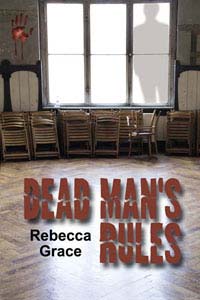
BeckyMartinez-1DeadMansRules-4Last week I reviewed Rebecca Grace’s Dead Man’s Rules. This week I’m happy to have her for an interview about the book and her writing life.

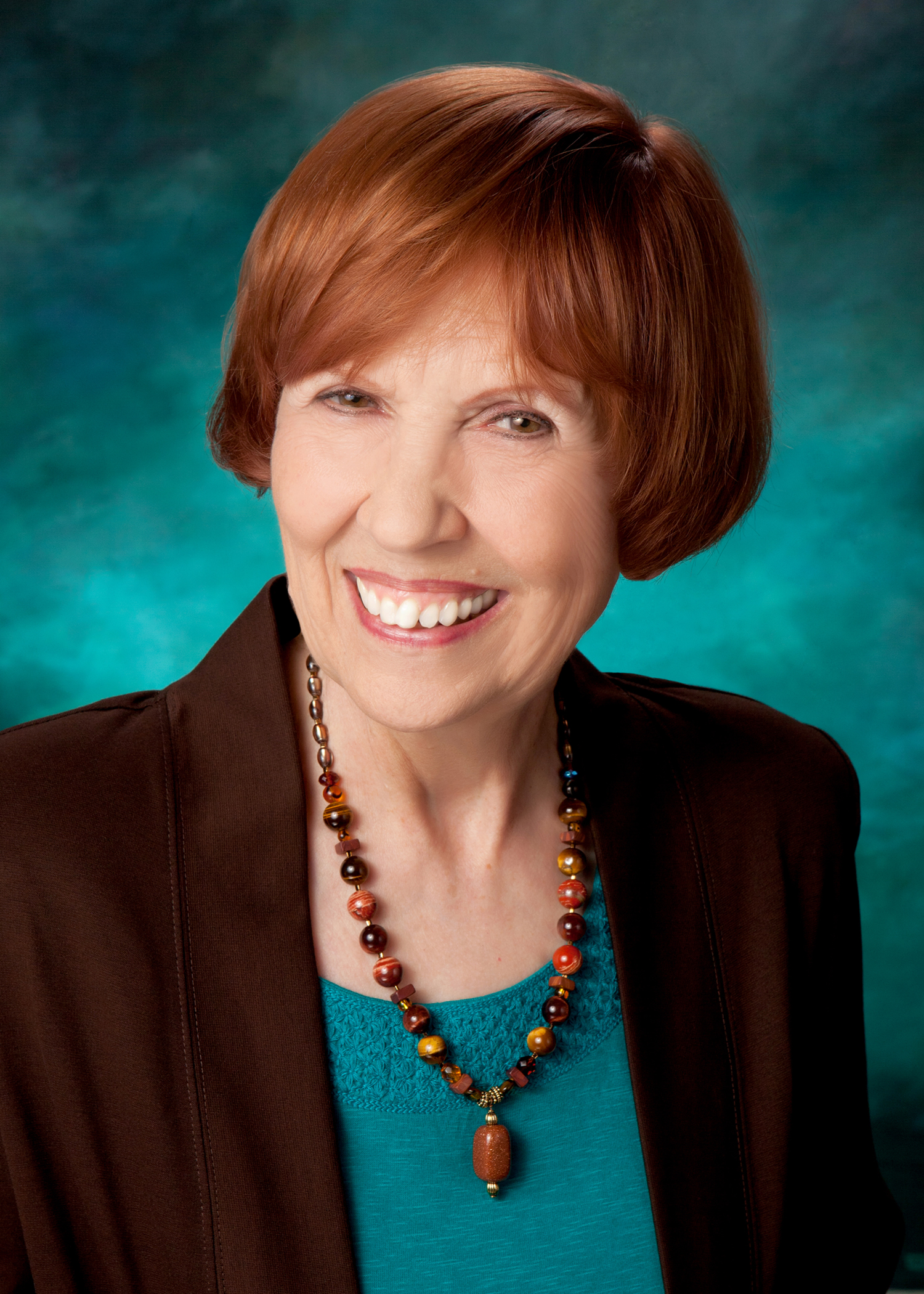
Rebecca Grace is the pseudonym of Becky Martinez, a former broadcast journalist who has worked in TV newsrooms from San Diego to Seattle and from Denver to Los Angeles with a stop in Las Vegas for good measure. After 30 years she left the newsroom for five years in public relations before turning to the world of fiction writing full time. She also teaches writing classes online and has presented workshops at a number of writing conferences.  Her short story, “Trouble in the Rockies” was part of an anthology, The Trouble with Romance, that was a 2006 New Mexico Book Award finalist. Her latest book, is Dead Man’s Rules, was published by The Wild Rose Press. It is the first of a three book series. Her next book will be a humorous cozy mystery, Blues at 11, coming in January 2015 from The Wild Rose Press.

AF: How has your background in journalism has influenced you as a fiction writer? I’m curious about the thinking processes, the writing skills, and the research skills, as well as the authenticity it brings to Cere’s character.

RG: When I first started writing stories at the age of 12, I knew I would always want to write in some form. That turned me to majoring in journalism in college where I worked for the school newspaper, the CSU Collegian, and I never looked back. A lucky break got me into television where I had the opportunity to work with some great news people who helped me with my writing.  Several skills I learned as a journalist have carried over into my fiction writing. One was making certain that each sentence made sense and being willing to edit whatever was written. That made it easier for me when it came time to work with an editor. I always knew things could be written differently and I was willing to improve. Another thing I learned was to re-read my work out loud. It might make people around me crazy to hear me reading my work as I write, but in a TV newsroom lots of us did it so we knew how it would sound on the air. It also helps to pick out awkward phrasing, and it’s great for dialogue.  Being a journalist also made me a slave to deadlines. You couldn’t just say you didn’t feel like writing and you might do it later. You didn’t have the luxury of waiting. You had to write no matter what every single day. And I pretty much do that. If I’m not writing every day, I miss it. When I’m not writing, I’m researching. As a journalist I’m very aware of my surroundings and the people around me and always looking for a story (or book) in almost any situation. That partly influenced my view of Cere. I can see her looking for a story, even in an old newspaper story. But not just any story—a story that helps her career.

AF: How much of you shows up in Cere?

RG: I think a part of me shows up in most of my characters, or perhaps my characters have qualities that I wish I had.  The part of Cere that is like me is that person who is determined to find out the truth and get to the bottom of things. I think, though, that I probably wouldn’t carry things as far as she does—that may be the part I wish I was.

AF: What made you choose the northern New Mexico setting?

I grew up in southern Colorado but three of my grandparents were born in New Mexico and we visited there often. Our family vacations were usually spent in the mountains and towns of northern New Mexico. My uncle worked as a cowboy on the Vermijo Park Ranch for years and we would drive over to see him every summer and sometimes camp outside the cabin where he was working. He’d take my dad and brother fishing while my mom and sister and I went hiking in the hills. It was so beautiful and untouched. The fishing was great and sometimes we’d wake up in the morning and there would be deer right outside. I loved that part of the country. Then we would come down into Cimarron or Raton or drive over to Questa, Eagles Nest or Taos. Later my parents retired in Trinidad, Colorado, which is only ten miles from the state border so their favorite places to drive were northern New Mexico. They’d think nothing of going down to Springer or Maxwell for lunch or over to Folsom, or Capulin.

I still have ties to New Mexico because my older brother retired in Santa Fe several years ago. Just like me he loves the region and the special nature of the people who live there. He spends a lot of time exploring and whenever I visit we always hit the road and just see where we end up. When I was there in November we ended up in Abiquiu because he had never been there and he had been reading about Georgia O’Keefe. But we don’t just do the tourist haunts. We like to get on the back roads and just drive.

AF: Is Marco Gonzales based on any historical figure? If not, what inspired you to create this character? He’s dead throughout the whole book and yet he really came to life.

RG: Marco was one of those characters who just seemed to keep growing in my mind for years. He is totally fictional, but the first time I wrote the story it was partly in his viewpoint. He is a tragic figure who kept speaking to me, sort of like that ghost figure that spoke to Cere.

AF: I loved the ghost tour of the old dance hall. I’d have gone on it for sure, if I’d been a kid in Rio Rojo. Have you ever seen a ghost? What do you believe about them?

RG: I’ve never seen a ghost, though I like to believe that some people see them and they might be out there in the form of a spiritual connection.  My description of the ghost tour of the old dance hall was one of those things that was a real life incident—just not the ghost part. There is an old mining company store right outside one of the Vermijo Park gates that you can’t get to anymore where there is an old handprint on the wall. The story was that the handprint was made by a bloody hand, though I don’t know if the person died. My college friends and I sneaked in one late afternoon to see it, and I think I sort of glorified my memory of that afternoon as I described the building. We did see the handprint, though, and it did give us all a spooky sensation.

AF: Freeda lived on a commune for a while as a child. (I notice her name is spelled Freeda, not the normal Frieda. Nice hippie touch.) What made you decide to include this connection to the Taos area hippie communes?

RG: Back in the late 60s and early 70s, my uncle complained about the hippies who would try to settle at Vermijo and he would have to run them off the privately owned ranch, so I was very aware of the hippies in the area. I also spent my early college years at Trinidad State Junior College and we would go over to the Taos area. We also had several communes that sprang up right outside of Trinidad. A few of my buddies were always threatening to drop out and go live off the land until we went over to visit and they saw the primitive living conditions and how hard people were working to survive.

AF: There’s a fair amount of cooking in Dead Man’s Rules. Two of the important secondary characters are restaurateurs, and their establishments come to life on the page.  Are you a good cook? Are these familiar recipes or did you have to research the food?

RG: Okay, I have to admit that I am not much of a cook, but the one thing I can do is make a mean pot of red chile (I actually won a cook-off once) while my younger brother is great with green. My older brother spends much of his time going from place to place in Santa Fe and sampling both!

As for the restaurants, they are a combination of so many places I have visited. As I mentioned, my mom and dad were always going to different small cafés in the small towns in northern New Mexico and I always loved going with them. The food is always tasty and there is plenty of it. My family still loves to visit those small restaurants and cafés when we are down that way.

AF: Red or green?

RG: How about Christmas?  Or for those unfamiliar with that saying, I like both red and green.  It actually depends on my mood at the time.

AF: Tell me about your writing classes. What do you like best about teaching?

I teach classes on a variety of topics. In the past I have taught regularly for Savvy Authors. This month (January) I am teaching a villain class for Colorado Romance Writers.  Next month I will be teaching a class on writing short stories for Maryland Romance Writers.

For me the best part of teaching is watching my students develop. I enjoy their enthusiasm and get a special feeling of accomplishment when one of them says they made a breakthrough in their writing as a result of my teaching.

At the same time, I enjoy learning from my students. There are times I find myself noticing problems in their work and then I realize I am doing the same sort of thing. Helping others also helps me improve my own writing.

AF: I hope to see a lot of Freeda in the next book. Will I? When does it come out?

RG: You’ve hit the nail right on the head. When I first put Freeda into the book I found that I had fallen in love with her as a character. She was everything I would have liked to be if I didn’t have to worry about anything or had someone around like Cere to take care of me. She was such a joy to write that I found she was taking over the story. The only way to calm her down was to give her a book of her own. And that is the second part of my series, Dead Man’s Treasure, as she continues to look for her Dad and get caught up in a mystery of her own. I am putting the finishing touches on it right now and hopefully it will be available within the year.

AF: I’m looking forward to it. Thanks so much for being my guest.


Buy Links

http://www.amazon.com/Dead-Mans-Rules-Rebecca-Grace-ebook/dp/B00I28UXFY

thewildrosepress.com

On the Web

www.rebeccagrace.com

www.Rebecca-grace.BlogSpot.com

www.rebeccagracewrites.wordpress.com

www.writethatnovel.com   (get help with your writing)

Twitter: @RebeccaGrace55

Facebook: https://www.facebook.com/rebeccagraceauthor


A New Mexico Mystery Review: Dead Man’s Rules

DeadMansRules-4

This is a true genre blend, as much romance as it is mystery. The multiple layers of the plot—ghost story, new love, old loves, a new murder, and a cold case—are woven into a web that keeps tugging on the reader’s curiosity.

I found the primary setting in the small town of Rio Rojo in northern New Mexico authentic, with its mix of Anglo and Hispanic residents and its close village life that is touched but not changed by nearby Taos. In this town with few newcomers and many generations of history, everyone has some kind of connection and many know fragments of each other’s secrets.

Los Angeles-based television reporter Cere Medina and Rafe Tafoya, the sheriff who is her mother’s neighbor in Rio Rojo, come into conflict over her investigation of a cold case on his turf—conflict complicated by attraction. These are people who challenge as well as charm each other. Their exploration of the case integrates all the threads of the story and forces both Rafe and Cere to reexamine some of their choices.

Both the major and minor characters have good reasons to care about the mysteries—those keeping the secrets and those trying to uncover them. The large cast of secondary characters is handled well, giving the town its personality and giving meaning to the friendships and family ties that affect the murder plots. Both the murder victims are complex people who remain fascinating long after death. Even the businesses in Rio Rojo have personalities, especially the Matador, the casual, home-style restaurant where locals hang out. I could see it, hear it, and smell it.

A nice New Mexico touch is the way Cere’s connection with the ghost of Marco Gonzales is handled. A few people are skeptical, and others accept it readily. Her experience is subtle as well as powerful, not overblown. It’s treated fittingly for the Land of Enchantment. Spirits happen.

Dead Man’s Rules is part one of a three-part story. Author Rebecca Grace handled closure on part one well. The major plot lines all get wrapped up. Subplots revolving around some intriguing secondary characters are left open. These are strong and interesting enough to make the sequel appealing, but not central enough to leave gaping holes to frustrate the reader at the end of part one. I understand that Grace teaches some writing skills classes. The way she finessed this difficult balancing act inclines me think she’d be a good teacher.

The Fifth Soul

In Charles Hudson’s Conversations with the High Priest of Coosa, a fictionalized ethnography of the early Native people of the American South, the priest explains the four souls to the Spanish narrator. The Coosa, the ancestors of the Creeks, Seminoles and other Southeast tribes, believed that a human had four souls. The life soul, residing in the crown of the head, was the first to depart the body after death, and also the one that could linger as a ghost; the liver soul, which lingered for seven days after death and then dissipated; the heart soul, which lingered for a month and then went into the earth; and the bone soul, which stayed for year, and still connected with the feelings of loved ones. It wasn’t a ghost, but an awareness that could recognize when the living honored its memory. The people who had this belief were my ancestors on my mother’s side.

In modern world, I think we have a fifth soul. The word soul. It lives on even longer than the bone soul. It resides in papers, letters and books. A few years after my father’s passing, my sister and I finally sorted through a huge box of family pictures and papers he’d left us so we could donate them to the state archives. They dated from the civil war through to the twentieth century. The letters written in World War II were touching and charming, and the vacation pictures from the nineteen-twenties, in those modest swimming costumes, delightful.  Among those papers were two short stories I’d written. I’d forgotten about them. One had been published in a teen magazine when I was twelve. The other was one I’d written when  I was in high school.

I felt my father’s word soul with me, not only in his letters that were in the box, but also in the love of words that made him save other people’s letters and my stories.  That box was what made me get serious about writing. I had novels in progress and a head full of ideas and characters, but hadn’t thought about trying to get published. In retrospect, I realize it did it to honor my father’s word soul. He loved theater, especially Shakespeare, and he also loved a good mystery series. (His favorite was the Brother Cadfael series by Ellis Peters.)

By writing books and short stories, blogging and reviewing, I’m honoring the word souls of other ancestors as well. My mother was an English professor. She taught mostly freshman English—my sympathies are strong now that I teach freshman health and intro-to-college seminars—but her pet project was a course on the development of mystery novel. She loved Sherlock Holmes, and Dorothy Sayers’ Lord Wimsey novels. I grew up surrounded by mystery books. When we were too young to read them, my sister I used to pull them off the shelves and look at the scary covers. If I’d kept any of those old paperbacks, I think I’d meet my mother’s word soul in them.

Her father was also an English professor, and a poet. Through some bizarre coincidence, the college where I now teach has his papers. His word soul is in its museum, though he was a professor at another college altogether. I wonder if, like the bone soul, it knows when it’s being honored, and feels the nearness of a descendent.