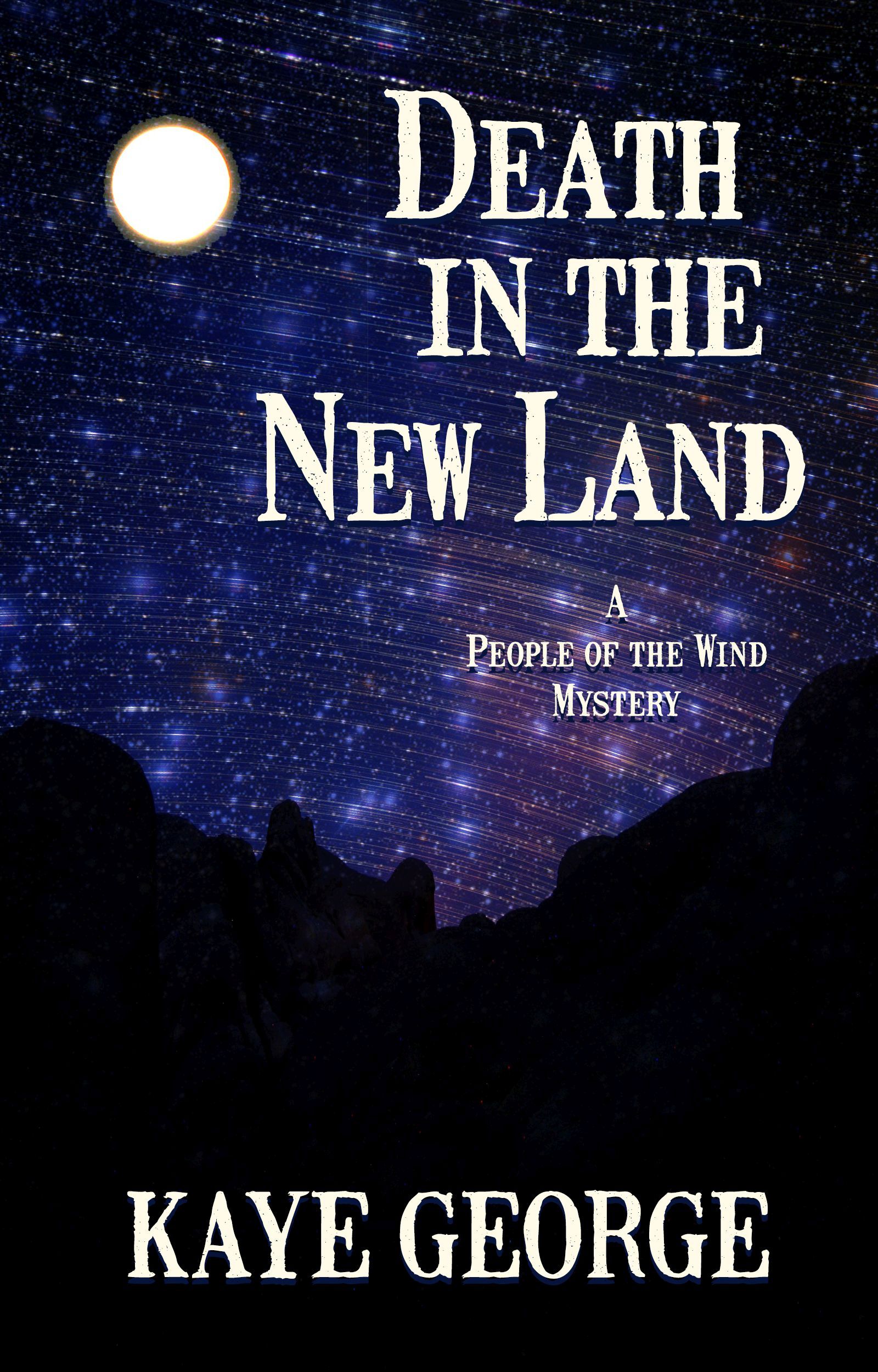
I’m a huge fan of the People of the Wind series. It’s a pleasure to have Kaye George as my guest today to talk about the latest book in the 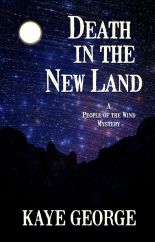 series, Death in the New Land, which I recently reviewed.
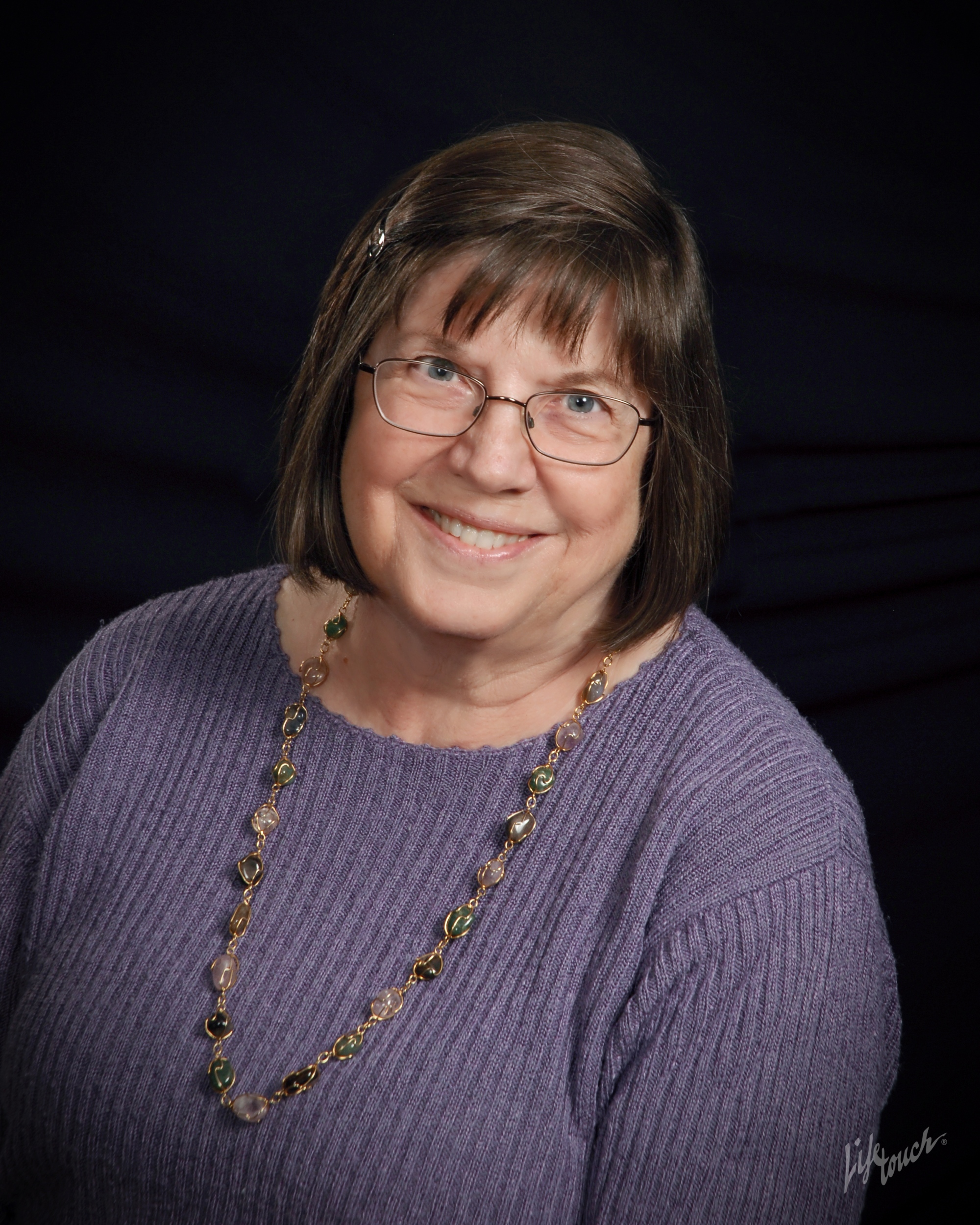
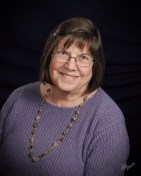 BIO: Kaye George, award-winning novelist and short-story writer, writes cozy and traditional mysteries and a prehistory series, which are both traditionally and self-published: two cozy series, Fat Cat and Vintage Sweets; two traditionals featuring Cressa Carraway and Imogene Duckworthy; and the People of the Wind prehistory Neanderthal mysteries. Over fifty of her short stories have also appeared, mostly in anthologies and magazines. She reviews for Suspense Magazine and writes a column for Mysterical-E. She lives in Knoxville TN.
AF: What drew you to writing about prehistory? And about Neanderthals in particular?
KG: I became more and more excited about Neanderthals after the genome was first sequenced and so much was being learned about them, almost every week. About that time, I read something in a short story magazine by a guy who writes an ancient Roman character. Someone asked him why he wrote about Romans and he said that he thinks the further back you go, the better. I remember saying this out loud. “I can go WAY further back than that.” The idea was born and I started working on it.
AF: The language you use in the narration of this series is unique. Simple, a bit formal, and lacking certain constructions normal to English such as “taller.” The Hamapa concept is “more tall.” Did the speech patterns come to you intuitively? Did you construct them consciously?
KG: I had many versions of the language, both in narration and in their communication. At the time, I lived in Austin and had an excellent critique group who met in a book store every week. I brought version after version to them and most did not work.
When I started in on this, the thinking was that Neanderthals could not speak. I also knew that their brains were larger than ours. To solve both those problems, I decided to give them telepathy, using that brain. I was reading Temple Grandin and learned that she thinks in pictures rather than words. She also posits that animals think in pictures. Ms. Grandin is autistic and a renowned animal handler. A cattleman was having trouble getting his animals to enter a narrow, dark passage and he appealed to her for help. She immediately saw that the passage was dark, and had confusing light in it. When the animals could see clearly where they were going, they went with no problems at all.
This made me think that my Neanderthals should communicate solely with pictures. You can imagine how cumbersome that was! It didn’t work at all. Then newer theories came out that they probably could talk. Their voice boxes did not last all those thousands of years to be fossilized, which was the basis for the first theory, but the second one is based on the fact that they did actually have all the structures to be able to speak.
One early reader told me she didn’t want to see modern people dressed as Neanderthals in my books. I didn’t either! I had to give them a language at this point. I studied how children first learn to speak, how people who have trouble speaking are helped, and what the universal sounds are among many languages. I gave them a language with sounds in the front of the mouth, which are easiest to pronounce. But I didn’t have them speaking very much because I still like the telepathy idea.
As for the narrative, I wanted it to convey something of another time, a vastly different time. So I made my own grammar rules. No contractions, nor –er and –est comparatives, and a few more. I wanted it to be slightly stilted, but readable. I hope I accomplished that.
AF: What was the hardest part of writing this book? And what was the most fun?
KG: I guess the research is both, the hardest and the most fun. At least the most rewarding anyway. I do find creating my characters and following them through their lives and adventures satisfying also. But the best of all of this is having fans like you who appreciate the series.
AF: Thank you. Your fictional Neanderthal tribe, the Hamapa, migrate to the place that later became New Mexico. What made you choose this location?
KG: I’m not sure. I did calculations using Google maps to see how far they could get in a day, at my best guesstimate anyway. I found a detailed study of the terrain in that area, around Tucumcari Mountain, so I knew I could portray it accurately, as it was those thousands of years ago. I also liked the idea of the mountain, or mesa, itself, because it’s so distinctive looking. I thought that I could describe it accurately (it hasn’t changed much since then, except for what grows there and lives there) and people could figure out where this was. I actually pictured having it on the cover, but my publisher came up with such a good one, that I let that idea go.
AF: Your research is impressive, and I appreciate the way you share tidbits of it at the beginnings of chapters. Is there anything you learned that you wish you’d been able to fit into a book but couldn’t—some favorite fact or discovery you’d like to share?
KG: I’ve mentioned my love for the mega fauna of the last Ice Age. I have a bare mention of giant beavers in a legend told by the Storyteller, and a meeting with a glyptodont in the new land, but I wish I could cram a lot more of these fascinating animals into the plots. It’s hard to make up reasons to stick them in there! What would be fun would be movies of these with the mega fauna portrayed on a big screen. Or a little one, if people are watching at home.
AF: You’ve blended history with fiction, with deviations from the record in some cases and adherence to the facts in others. How did you choose this blend?
KG: My one main deviation, as I’ve said, it locating the tribe in what is now North America, and locating a bunch of other types of people there also. These all did live concurrently on this planet, but many did not meet each other. I liked to think about what would happen if they did, so I wrote that. My other “invention” isn’t a deviation, since the social structure isn’t known, and probably never will be. But the matriarchal society is my idea, kind of as a feminist, and kind of for logical reasons.
In everything else, I try to stick to the facts as we know them. What their art and dwellings were like, how they hunted, how they lived, what they ate and wore, clothing and burial methods. The ancient flute is controversial, but I took the stance that it was an actual instrument and that they made it and used it.
AF: The Hamapa are a female-led society. Can you share your process in creating the roles they assign to females and to males?
KG: I wanted an elder female for the leader, and she had to have a mate, even though she didn’t always keep the same one. When I decided to give them handed-down folklore, I had to have a person designated to learn it and to tell it, so that’s the Storyteller. It made sense that one person would know the most about healing herbs and practices, so she’s the Healer. Her son may one day succeed her, and none of the other roles aside from leader are gender specific. One guy is the best at flint knapping, one at making clothing, several are the best at throwing spears, and one is innately good at tracking people and animals. And, since fire was probably very important to them, one person is assigned to be the Firetender as his full time job. I tried not to have strict division of labor, but for people to naturally find where their talents lie.
AF: I know you have multiple series to keep up with, but this one is my personal favorite. Will there be another People of the Wind book?
KG: I’m ending this one so it can wrap up and end the series. I’m not saying I won’t write another one, but I’m not planning on it now. These are intense and difficult to pull together and, although I love doing them, I’ll take a break and maybe think about it later.
AF: Is there anything you wish I’d asked you but didn’t? Feel free to answer that question now.
KG: I might mention how hard it was to get this published. When you write the only series in a genre, no one knows what to do with it. I queried every agent on the planet and it was well-received, but no contracts. One agent told me she loved it, it’s “better than Jean Auel” (author of the Clan of the Cave Bear books), but that she had no idea how to sell it (to a publisher). I wanted to tell them to look at Harry Potter and maybe try harder, but I didn’t. I finally found a publisher who loves the series and has done everything they can for me and for these books. I couldn’t be happier than I am at Untreed Reads, unless I could sell a million copies. Somehow.
AF: Thanks for taking the time to answer my questions. I appreciate getting an inside look at these books.
*****
To purchase books by Kaye George, click here.
Visit Kaye’s website

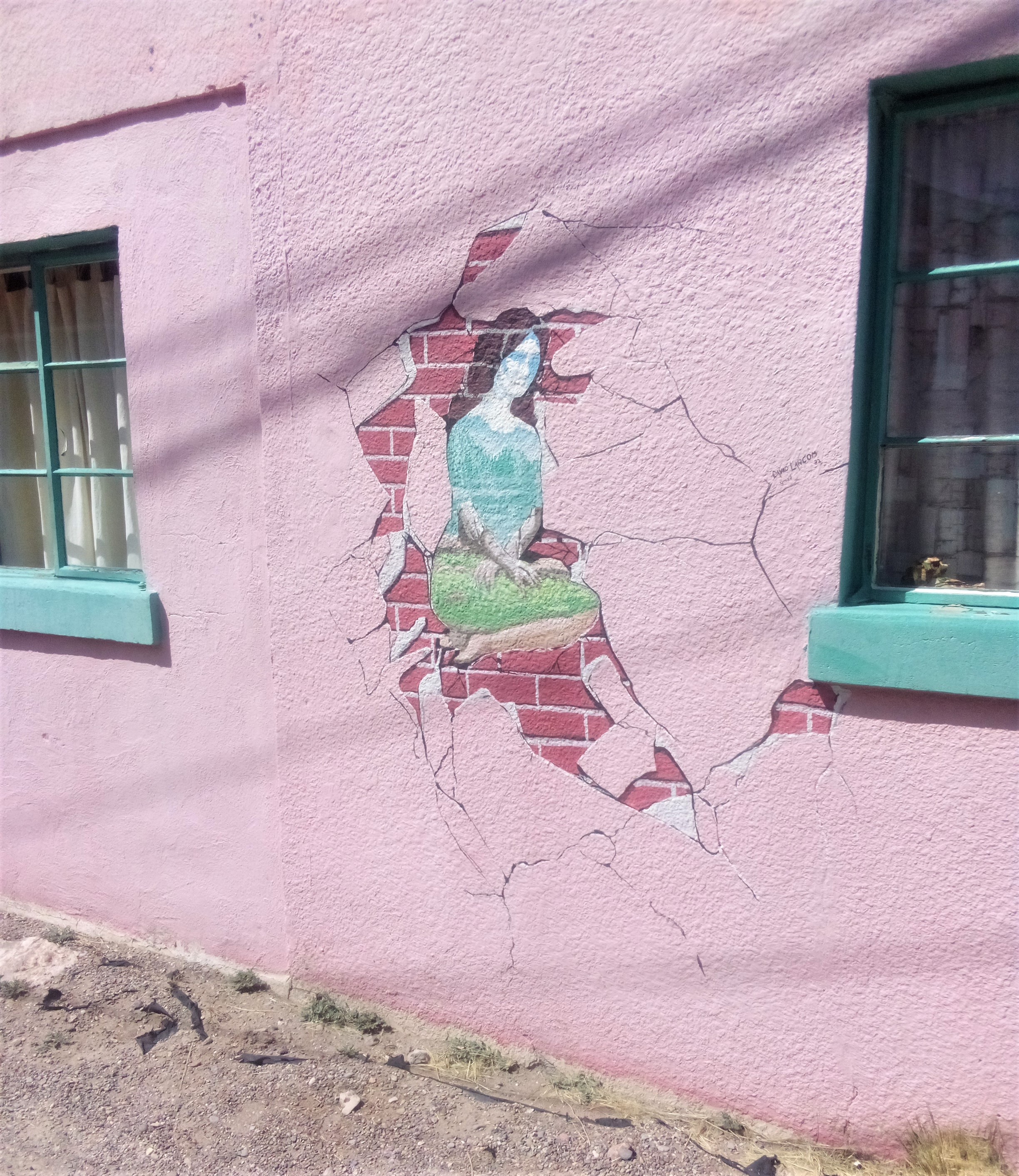 I do my best to capture the colorful character of my town in my books, describing enough to give a flavor of the setting and to ground the story in a place. For fun, I’m sharing a little more of what makes Truth or Consequences unique. A full tour would take many blog posts. If you enjoy this glimpse, I’ll do another T or sCenery post in the future.
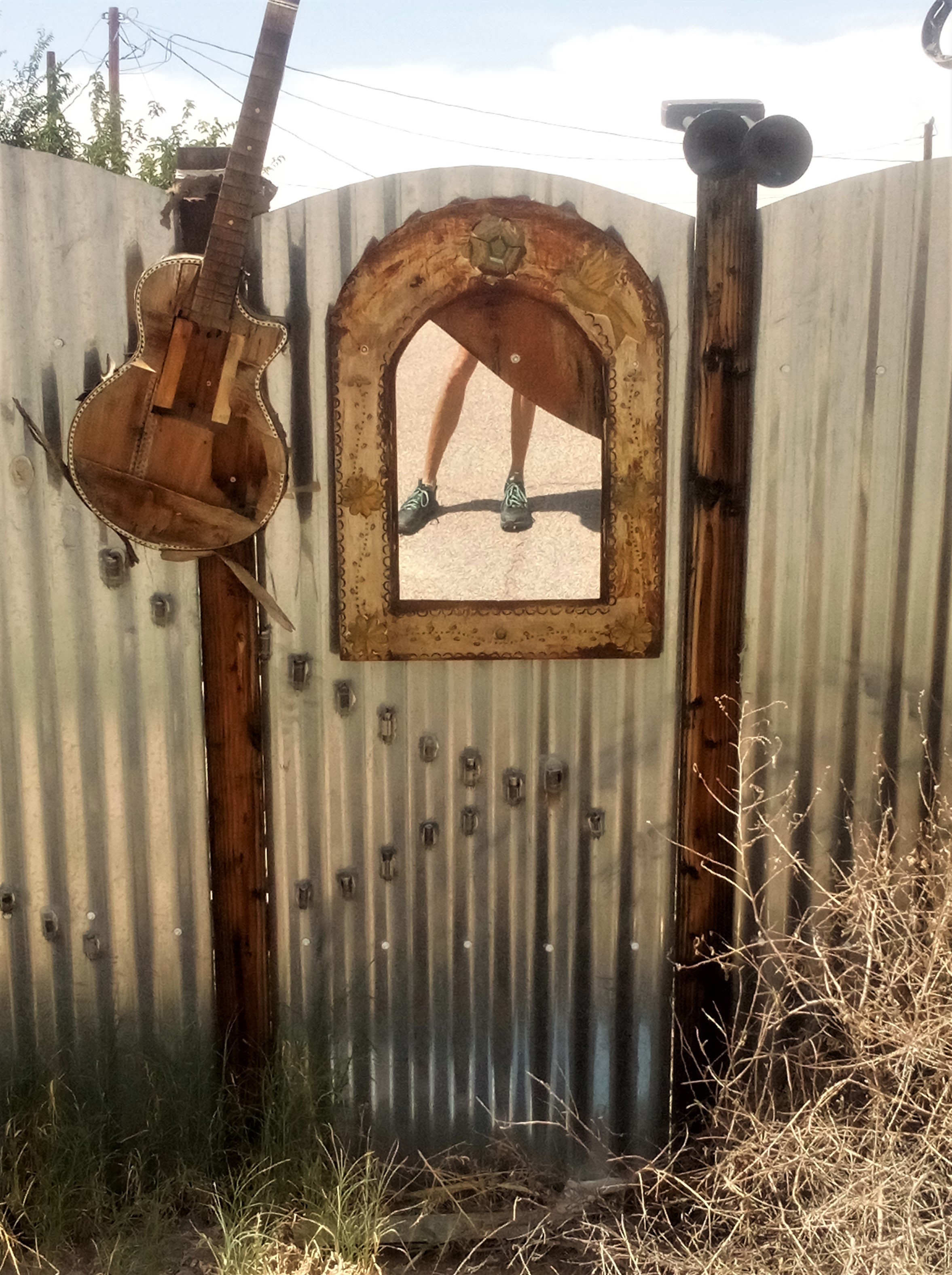
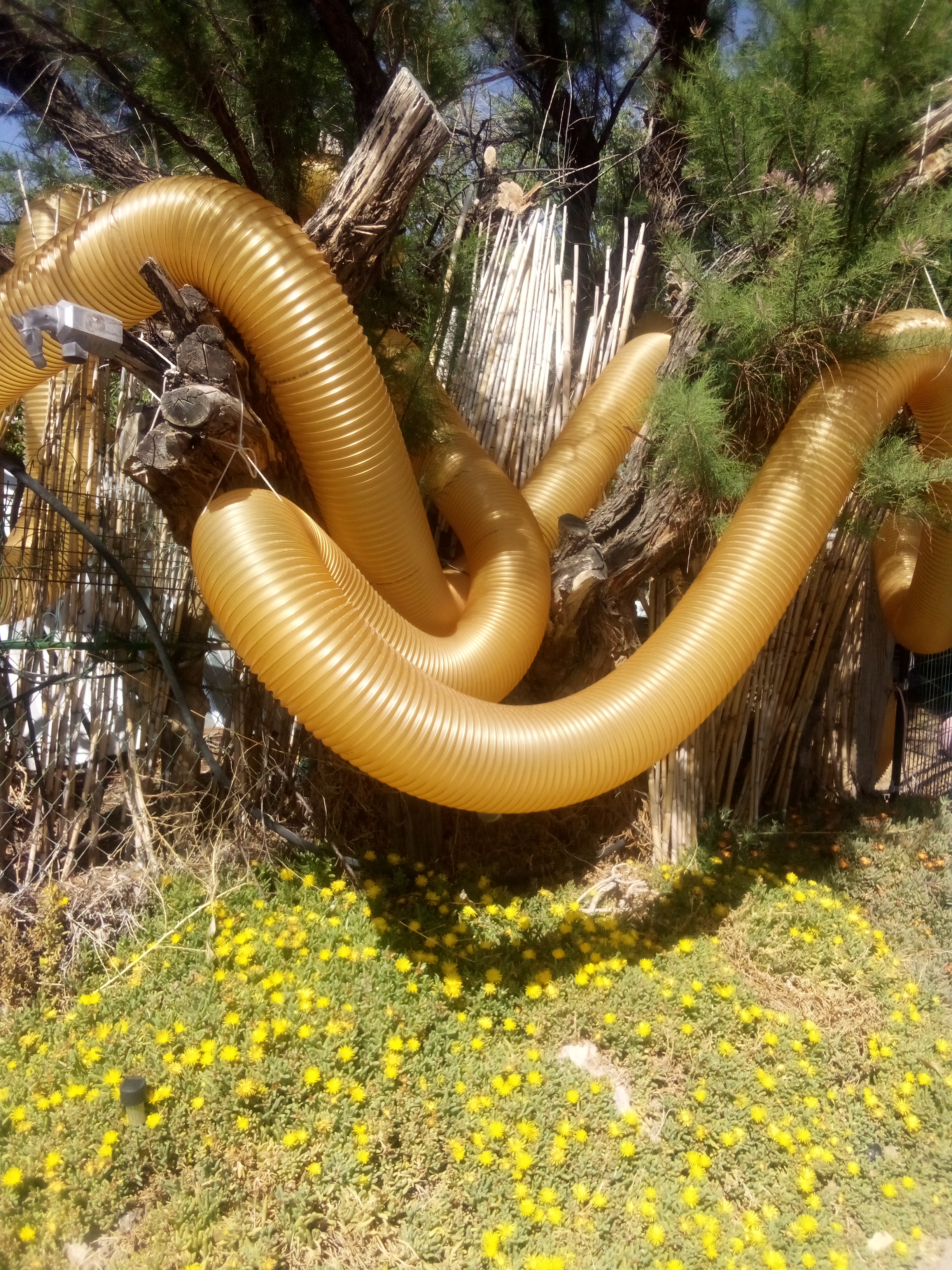
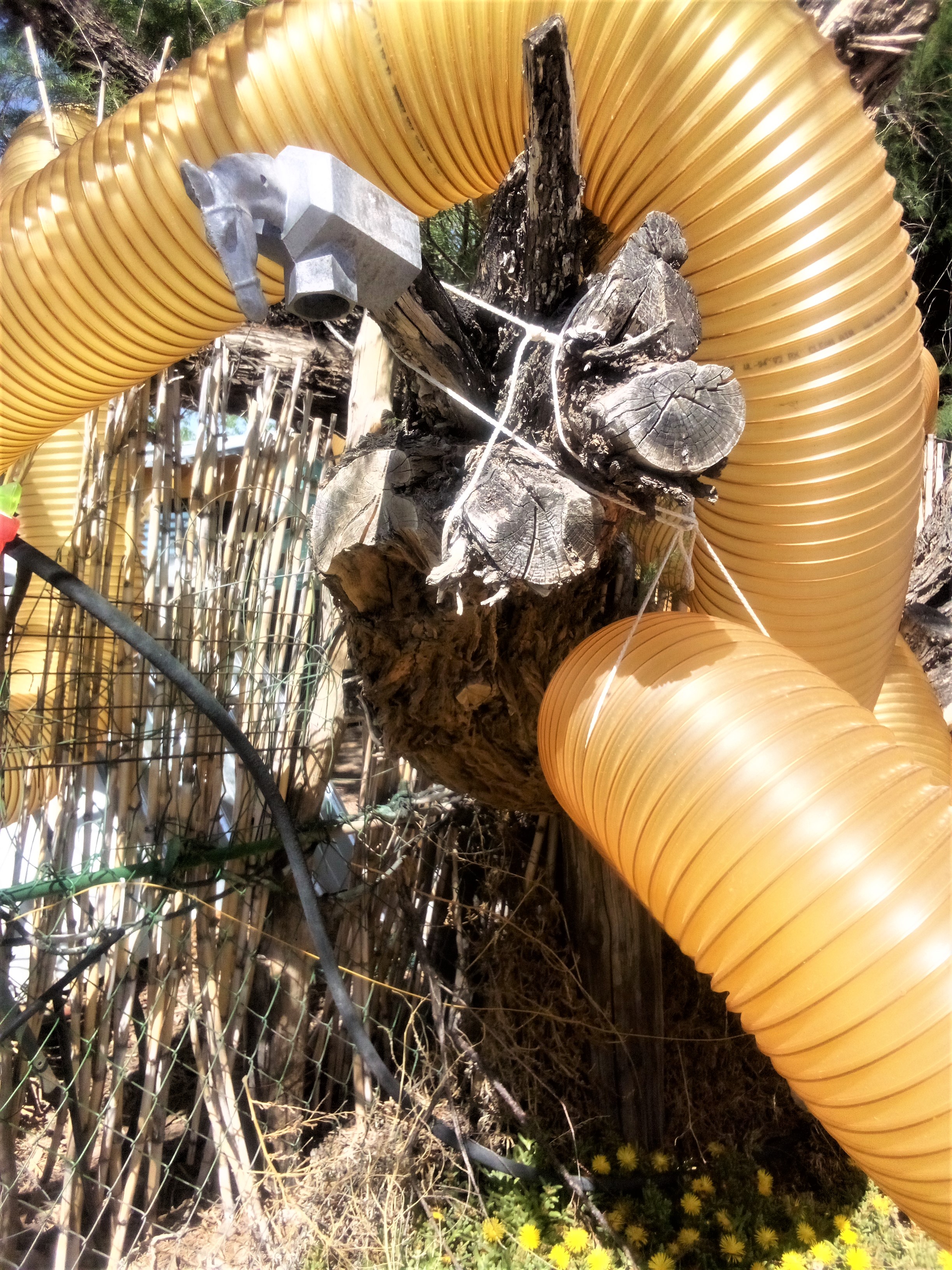
 The wild fence below is on Riverside Drive, near Niall and Marty’s fictitious house which has an eccentric, art-embellished wall. (The mirror shot is as close as I’ve ever come to a selfie.) The guitars on the fence, and the hats that used to crown it, gave me the idea for the fence and gate at Joe Wayne’s house in Snake Face. (His fence is far tamer than this, though.) One of my neighbors claims this is not the weirdest fence in T or C. He says that his bears that distinction. I’ll have to take its picture and few others for a future post and let you decide.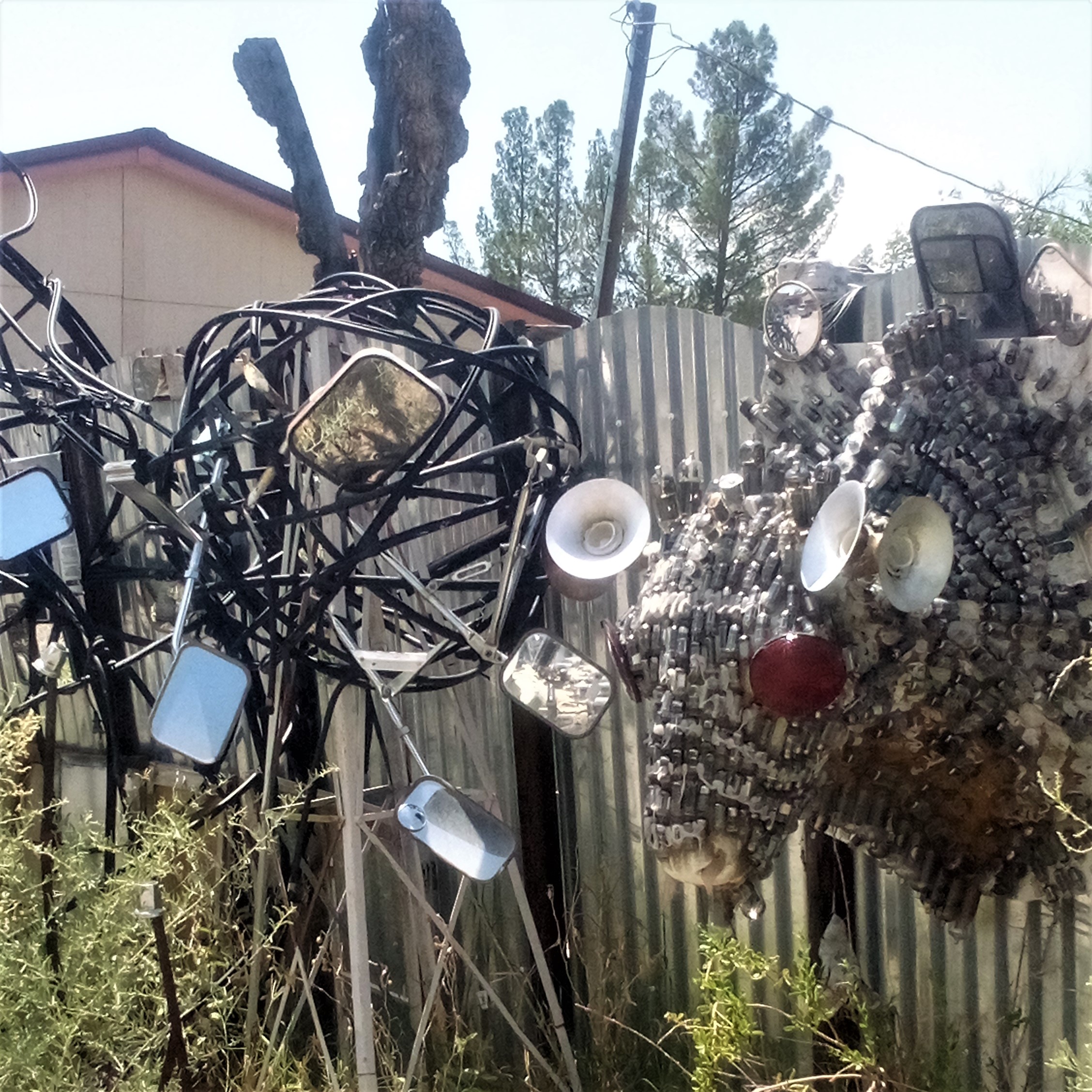




 Amber Foxx Mysteries