Winners, Santa Fe Reporter Writing Contest

I don’t usually post twice in one week, but the Santa Fe Reporter published the winners in its annual writing contest today. I’m honored to be in some excellent company among the winners.

http://www.sfreporter.com/santafe/article-9560-fiction.html

Reflections on Mythologies

I’m in the middle of rereading a book I’ve owned for so long that it’s a $3.95 trade paperback. In Mythologies, W.B. Yeats collected the stories of Irish country people who believed in ghosts, visitations from the devil, strange spirit animals in the woods, and of course, those incomprehensible Others, the faeries. The convictions of those who have seen such apparitions seem profoundly unlike the modern mind, and yet Yeats collected these tales in 1902. Not that long ago. Just a few generations.

The mythical way of seeing the world is still alive.

Many American Indian tribes had—and in some cases still have—relationships with small, magical people. In James D. Doss’s Charlie Moon mystery series, shaman Daisy Perika communicates often with the Utes’ little man, the pitukupf. At an Art Hop in Truth or Consequences back in August I struck up a conversation with an Indian woman—I’ve forgotten her tribe—who was a strong believer in the Little People. She was pleased to meet someone who else knew about them.

I was introduced to them a number of years ago when I had a student who was Mohegan from Connecticut. She gave me a book, Medicine Trails, about her great aunt, Gladys Tantaquidgeon, a tribal leader and educator and a keeper of Mohegan traditions, including the relationship with the Makiawisug, the Little People. I was so intrigued, I located a beautifully illustrated children’s book about them, Makiawisug: The Gift of the Little People. In Mohegan beliefs, the health of the earth is interdependent with the care and wellbeing of the Makiawisug. Respect for them is one with respect for the mother earth.

North American Little People are more benevolent than the Irish faeries, who tend to cause mischief, or steal people away to their world. They can be beautiful, yet sometimes frightening. When they are helpful, it’s as puzzling as when they’re harmful. In Yeats’s book, woman of the faeries is described as having a face as calm as that of an animal. It’s a reminder of their otherness. They are neither good nor evil, and all the more mysterious because if it. Their motives are inscrutable, and they ask mortals not to look too closely or inquire too much. I love his description of their world as the dim kingdom.

I was stretching after a run a few days ago and the autumn wind and leaves and water seemed to be breathing with a layer of lives unseen. The idea of another world interwoven with ours, sometimes visible, sometimes not, is somehow most compelling at this time of year, when the days grow short and dreams grow long.

A friend who has no religious beliefs at all told me that when she was a child, she saw a fairy. She doesn’t say she imagined it, or thought she saw it, but says—with conviction— that she did.

Art that Inspired Me

The Bull

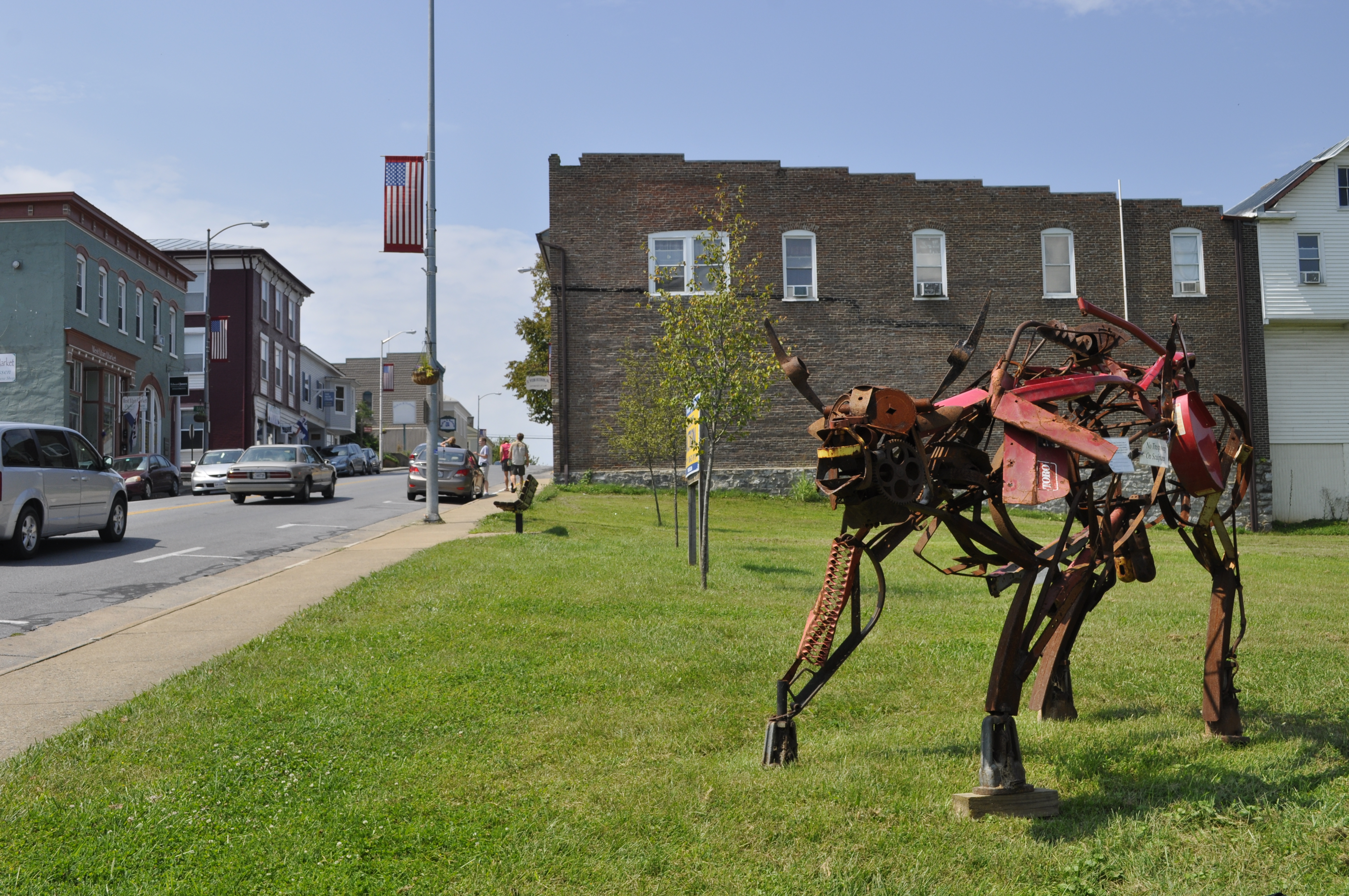
I can’t take full credit for the images of Niall Kerrigan’s sculptures. If you’ve read Shaman’s Blues you know the art I’m talking about—rusted metal, parts of old tools and machines recycled into creatures or people. Take a look at the art that inspired the art in my book. Sculptor Alexandra Soler’s work amazed me when I encountered it in person. Her animals aren’t just inventive, but practically alive. They seem to be filled with some inner vitality, ready to move, supported by anatomically believable muscles and bones—and yet they are made from recycled metal scraps. She finds parts that are shaped like the parts of the animals and reuses them with perfect fits. I have no idea how long it takes her to create these sculptures, but even finding the right materials must be challenging, not to mention the process of building them. My favorite is the bull made from Toro lawnmower parts. He is every inch the bull. I wish you could stand face to face with him. It makes you feel as if he’s making a turn to charge you.

See more of her work on Art by Alex. The horse made of horseshoes is startlingly real. The chicken made me smile.

https://www.facebook.com/ArtbyAlex

Behind the Scenes

For quite a few years I worked in theater, as an actor and choreographer. I loved the early rehearsals, while the creative process was first getting underway— seeing how a dance looked when done by the cast rather than as plotted in my head, or exploring characters with other actors. The hardest part, for me, was tech rehearsal. Did the revolving stage work? Did the dancers’ costumes look right under the lights? Performers spent hours holding their positions on the stage while the techies fine-tuned lights, sound, and scene shifts. Tedious, but without it, the play would be a disaster. If that revolving stage messed up, my choreography would quite literally topple. If the lighting cues were off, my dancers wouldn’t look their best. These long tech nights were hard, but social. The whole cast and crew went through it together.

Dress rehearsals were a relief, and they felt exciting. They were followed by the director’s final and sometimes strong critiques as well as encouragement and praise. If I was the choreographer, it was my last chance to get every detail polished.

And then the play opened, was seen, enjoyed (or not) and reviewed, and sooner or later, it closed.   Getting a book ready is the same only different. The early process—the improv, finding a character, getting plot inspiration—is exciting. The sharing of that process with critique partners makes it more so—getting feedback, going back and changing things, seeing how others react. I revise through a series of critique partners and beta-readers. It’s a lot like the rehearsal process, refining the way the play will be performed. I like to print the book out at some point in the process and mark it up—like a director giving an actor notes— making sure I’m clear with for the characters’ goals and conflicts in every scene, and the inner work in their “soliloquies.”

Then, there’s tech. I read the edited copy to make sure my editor and I agree on all the changes. I get professional proofreading and fix the errors. And then, there’s that final, perfectionistic proof, proof and re-proof. Day after day of it. Tech rehearsal, all by myself. Fixing that last imperfect sentence that didn’t bother anyone else—beta readers, editor, proofreader—and that last little typo no one could see. I like to think no one saw it because the scene was so compelling, but I think it’s also related to the way an e-pub page looks compared to a Word document. It’s like the way the costumes look under the lights. The colors and textures change. It’s unfamiliar. I look at the e-pub document the way I look at a book I’m reading, rather than a book I wrote.

Of course, after the fourth upload and double-check, I may have gotten used to the e-pub page’s appearance. My fear: I may have induced an error while being a perfectionist. Then I finally stop fussing over it and hit publish. This is not the dress rehearsal, this is it. Unlike a play, though, there is no striking the set, no closing night party. No closing night. As long as my performance is well received, it can run as long as I live. Phew! Snake Face is available for pre-order, and will be released Nov. 1.

The best part of being finished? I have time to read other people’s books again!

The Souls of Ordinary Things

Going through back issues of Alternative Therapies in Health Medicine, I came across one of Dr. Larry Dossey’s profound and intricate essays that he called editorials—they were far more than that—when he was the editor of that journal.  It’s  called “When Stones Speak: Toward a Reenchantment of the World.”

I wish I could link it the way I can a web site, but it’s in a scholarly journal you’d have to get through an academic library database. It would be worth the effort to look it up if you can. It’s in Vol. 2 #4, pp 8-13 and 97-98, July 1996.

Dossey examines the possibility that consciousness can move beyond human minds—that it pervades all things, from fish to musical instruments to the implements a physician uses again and again in the practice of medicine. He suggests that we share traces of our souls with our objects, and cites scientists who consider seriously that inanimate things are “rich with pattern and information.”

If you’re a regular listener to Car Talk on NPR, you’ve already thought about this, of course. The discussion of whether cars have souls has been going on for some time. The callers and the hosts seem to agree that some cars have souls and some don’t. There have been some fascinating conversations about detecting the presence of a car’s soul. I remember a neighbor who had to part with his ancient VW Rabbit when it was beyond repair. He went down to the parking lot of our apartment building and sat with the Rabbit late at night, as if it was a dying friend. To him, that car had a soul. They had a relationship.

My new Environmental Defense Fund thanks-for-contributing water bottle arrived in the mail today. Shiny brushed aluminum decorated with the EDF logo and the face and front paws of a polar bear happily basking on the edge of some ice, it’s a replacement for the one I lost. Identical bear. But no soul. The old bottle was dented and scratched from being dropped on the cement at Santa Fe Bandstand. The Robert Mirabal concert was in one dent, a memory in the soul of the thing. Another dent remembers me waltzing to Michael Hearne’s rendition of “New Mexico Rain.”

My psychic protagonist Mae Martin could pick up an object like that bottle and read the stories in its soul, if she had a reason to look for them. Many years ago I heard John Sebastian sing a song about lying back on the bed in some hotel and listening to the stories it could tell. I think it replayed for me subconsciously when I wrote the prologue of The Calling, and the scene in which Mae realizes, with some dismay, that she can listen to the stories an old bed can tell.

The energy carried by ordinary things can be negative as well as positive, haunting and dark, not always nostalgic. Something clings to a murder weapon, and to a house where violence took place. In some indigenous traditions the names of the dead leave the world with them. Saying the name can call back the ghost. Relatives may give away everything that belonged to the dead, sending the spirit on its way. Our things may not only trigger our memories, they may have memories of their own. Would that explain famous “cursed” objects that carry bad luck?

My Zuni fetishes were created to have spirits. My barefoot running shoes have acquired their souls with time. My yoga mats have energy in them, but not souls. Which things do you own that have souls?

The Snake Face Man

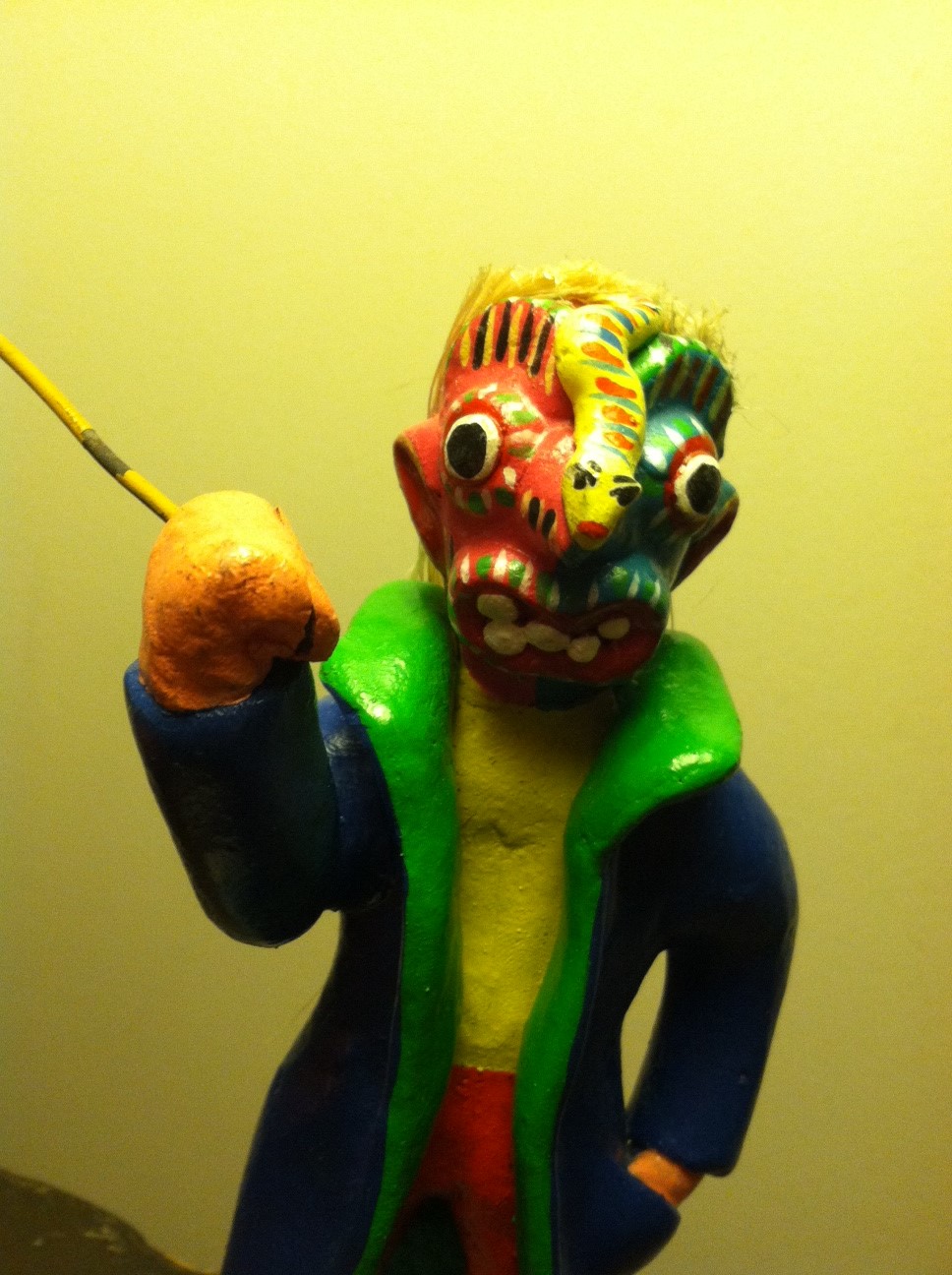
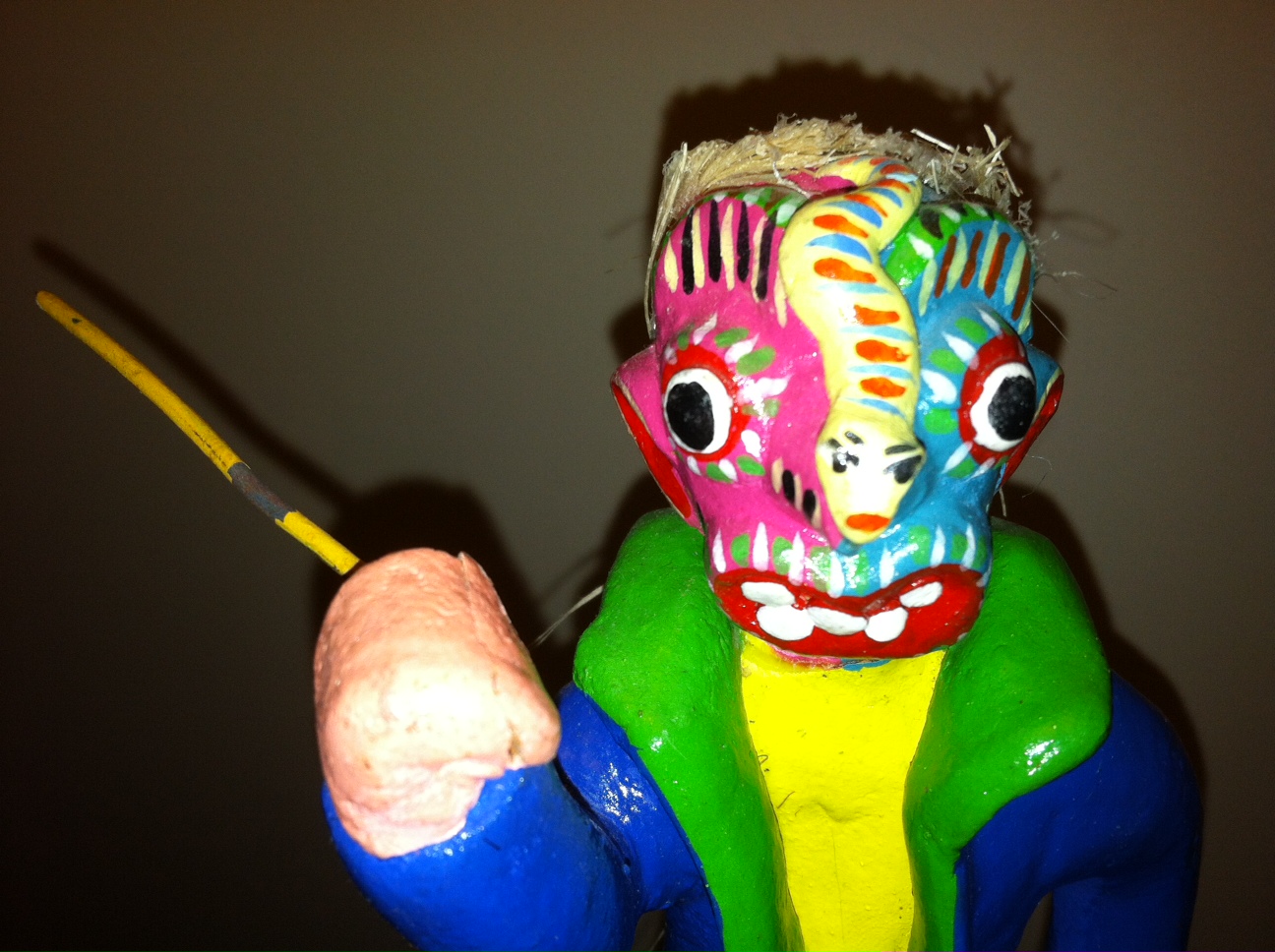
I’ve added the cover of Snake Face to the home page of Amber Foxx Mysteries. You may wonder what the title of the book means. You’ll find out by chapter two. Here is the brave little snake face man, fighting them off as best he can. He is a piece of Mexican folk art I bought in Mesilla, NM a few years ago.snakeface1snakeface2

Sisters in Crime Blog Hop

Sisters in Crime invited members to answer a few questions as part of a blog hop. SinC provides a wonderful opportunity for a mystery writer to polish her (or his) craft in a supportive professional group. After you read my answers, you can check out my fellow SinC members in the links at the end of the post, and also some other blogs I recommend.

Which authors have inspired you?

James D. Doss is at the top of my list. His Southwest setting, his mix of mystery, humor and mysticism, and his off-beat colorful characters set a standard I want to live up to.

Which male authors write great women characters?

Alexander McCall Smith’s gentle and wise Mma Ramotswe in the Number One Ladies’ Detective Series makes a woman’s way of thinking and connecting an asset as a detective. McCall Smith writes about women’s friendships and women’s attitude towards men in what feels to me like an authentically female viewpoint. Another male author who does an amazing job with his female protagonist is Martyn V. Halm, in his Amsterdam Assassin Series. Katla Sieltjes, professional assassin, defies female role expectations in every way. She is a compelling and complex character. Doss wrote female children brilliantly in the best book in his Charlie Moon series, The Night Visitor.

Which female authors write great male characters?

In the mystery genre all the female writers I like write men well, but they almost all have female protagonists. J.L. Simpson has a male-female pair solving crimes in her comic mysteries. I found Solomon, the experienced PI who is paired with disaster-prone newbie Daisy Dunlop, to be a solid equal to the female lead. His friendship with Daisy’s husband is written well and is an important part of the story. Solomon is an alpha male with a heart.

What’s the best part of the writing process for you? What’s the most challenging?

It’s hard to identify one best part. I enjoy the seat-of-the pants improv of the first draft, but the big revisions sometimes feel just as creative and inspired. And I love the craft of getting the words to work just right. The blurb is the most challenging. It’s hard for me to come up with that tight paragraph that works as hook without being a spoiler and yet still gives a sense of what the book is about. It can take me a year to get the blurb right, and two years to write the whole book. The ratio of time to words is a little skewed.

Do you listen to music while writing? What’s on your playlist?

Music is important to my writing–I guess that’s obvious since one of my major characters is a musician—but I don’t listen while I write. Music absorbs my whole being. It can’t be background. As for my playlist: my personal number one song is Michael Hearne’s New Mexico Rain. Favorite musicians include Bill Miller and Robert Mirabal. Miller’s lyrics are poetic short stories with vivid characters, and he has a tenor voice that goes straight to my heart. His music has a spiritual undercurrent—not overwhelming, but it’s there, in a love song, a story-telling song or a Native flute solo. Mirabal also has a spiritual energy in his music. He a flutist, drummer, singer and dancer—an incredible, radiant performer. He’s from Taos Pueblo, and I’ve seen him a few times live in Santa Fe. The man can play didgeridoo standing up, balancing the instrument and his body in a way that has to take amazing strength, breath and flexibility. I listen to classical music the most—whatever comes on the classical station. I let it surprise me. I do a lot of imagery related to writing while I listen, but I can’t shift into the part of my brain that puts fingers to a keyboard and organizes sentences until I have silence. While I run I sometimes compose the songs for my musician characters. Though you’ll never hear them, there are melodies to go with every song in  Shaman’s Blues and Snake Face (book three, coming out in November).

What books are on your nightstand right now?

I’m almost finished with Gutenberg’s Apprentice by Alix Christie, a historical novel about Peter Schoeffer, the lesser known contributor to the famous Gutenberg Bible. The research is impressive. I had no idea how much politics and religion could interfere with a tradesman’s honest work back then. The controversy over making books with metal letter instead of written by hand, and making books more readily available, ran deep. Who was to be allowed to control books? We are all Shoeffer’s heirs, as readers and writers. I’m also close to finishing John McPhee’s Control of Nature, nonfiction about people living in places where nature is in a state of constant change, and the extraordinary lengths they go to try to control the ultimately uncontrollable forces. (By the time I get this posted to my blog there will be new books on the nightstand.)

Links:

Visit SinC at http://www.sistersincrime.org/

Visit J.L. Simpson’s blog at http://jlsimpson.com/ I can’t say enough good things about Lost Cause, the first fast-paced and funny Daisy Dunlop book. I look forward to the next.

Another SinC member whose blog I enjoy is Nancy Adams. Her Saints and Trees blog   explores poetry, nature, spirituality, and books. Nancy and I meet at the intersection where mystery meets mystical. http://saintsandtrees.wordpress.com/

Martyn V. Halm’s blog: https://amsterdamassassin.wordpress.com/author/amsterdamassassin/ (Not a Sister in Crime, though some men are members.)

The next is unrelated to mysteries, but it’s my favorite blog.

Stuff Jeff Reads explores Shakespeare, Yeats, and Blake, Joyce’s Ulysses, and more. Literally, it’s the stuff Jeff reads. And he reads broadly. I love this blog. It’s not  about the latest release, but poems that have been moving hearts for decades or centuries, brought back to you with Jeff’s insights and choices of accompanying art. Jeff makes me a better reader, which makes me a better writer. http://stuffjeffreads.wordpress.com

Talk to Strangers

In Truth or Consequences and in Santa Fe, I find it normal to strike up conversations with strangers, and to say hello on the street to people in passing, whether or not we’re acquainted. No one seems to think it odd. I’ve never had a rebuff, nor have I been offended when someone randomly started talking to me.

A few years ago I was sitting in the now-closed and much-missed Little Sprout juice bar in Truth or Consequences when a man in a white terrycloth bathrobe came in and asked me if a certain bumper sticker he found wonderful might be mine. (It said Coexist, with the symbols of various religions forming the letters.) It wasn’t mine, but we talked a while anyway. He was on his way to water aerobics and had seen the bumper sticker, seen me in the window wearing my sun hat against the glare, and decided the Woman in the Hat looked like someone who wanted to spiritually Coexist. We became friends, and until he moved away last year he was my best sunset-walking and philosophical-talking friend in T or C. Another conversation with a stranger in the Sprout led to my meeting my dancing buddy the same year, and we still go dancing together four years later.

Unlike some more frequent fliers, I don’t mind people on planes talking to me. Good book recommendations and good stories have come from these encounters, or just good lines. I remember being on a plane about to leave Albuquerque for a job interview in Northeastern North Carolina, and was talking to my seatmate about my eventual destination. The long-haired young man in front of me turned around when he heard the name of the town and said, “Turn your clock back twenty years.” He was right. I ended up needing that job and moving east for a few years, and the town is now fictionalized as Cauwetska in The Calling.

Another stranger on a plane entertained me when I was unhappy after the breakup of a relationship. I didn’t tell her, but maybe she sensed it and wanted to be cheerful, or else she wanted to say what she had to say to someone she would never see again. Imagine a Texas accent for this. “I’m a dog breeder. And you know, I’m a Christian, and I’m supposed to think certain things are wrong, but I know homosexuality can’t be a sin, it has to be genetic, because I’ve got a lesbian Chihuahua.”

Back in July in Santa Fe, waiting in the shade at the Railyard Plaza while the Bill Hearne Trio set up, I ended up talking to my shade-mates about the Santa Fe Opera while we waited for country music. I have no idea how we got into this conversation but it felt normal. They told me one of the apprentices was going to have to play a lead that night, and sing in Chinese. An ongoing character in my series, Jamie Ellerbee, was once an apprentice with the Santa Fe opera. If I ever write the details of the crisis he had during that period of his life, a pressure like that could be part of it.

In previous academic years I’ve usually seen students in the classroom ten minutes early, heads down, engaged with screens instead of each other. This year for some wonderful and mysterious reason, they’re different. I come in and find them having real live face-to-face conversations, even the freshmen who don’t really know each other yet. I’m glad they aren’t missing out on the pleasure of talking to strangers.

Renewal Through Disruption

Disruption is good for the soul. In yoga, inversions and backbends can be scary or confusing at that transition point when they flip our perspective, and that’s part of their value. I seek disruption in everything from handstands to migrating across the country seasonally. The process of packing and leaving and resettling and coming back and doing it again never gets easy, but it in itself it does me good. Not just the travel, but the upheaval. The process always reminds how little stuff I really need.

The disruptions we don’t choose are different from the ones we seek. I wonder if I’m unconsciously trying into stay in shape for the unexpected, like keeping air in an emotional spare tire. Fiction centers on disturbances that knock characters’ lives off balance. Love, death, illness, loss, success, relocation, a new neighbor—every story begins with a disturbance. It may end up being the central theme of the story, or it may be the first raindrop in a flood of challenges. Characters’ attempts to handle these shake-ups determine the plot. Some are damaged by the events that up-end their lives. Others are strengthened as well as wounded. As a reader I tend to identify with characters whose resilience is imperfect, people who can handle some difficulties better than others.

One of my favorite mystery series is Nevada Barr’s Anna Pigeon series. Anna can handle the hardships of nature and of law enforcement work in the national parks sometimes better than she can cope with her inner life. She’s tough, and then her flaws and weaknesses make her whole and sympathetic. I root for her to get through all of the obstacles, internal and external. I discovered Barr, as I have many of my favorite mystery writers, through an audiobook I checked out for one my Southeast to Southwest journeys. (I prefer the excitement on the interstate to be fictional, and the trip itself uneventful.)

A few months ago at a party a friend who had just discovered Tolkien said his favorite line by this author was the same one that I had noticed years ago. I’m not sure if it’s in The Hobbit or in The Fellowship of the Ring but the idea stuck with me long after I’d forgotten which book it came from. The narrator’s voice states that the travelers had a nice stay and that there was not much else to say about it, because things that are very pleasant to live through are dull to tell about, but events that are difficult to live through make fascinating stories.

Though I seek a certain level of disruption with my long road trips and annual migrations, I like them best when the most dramatic stories I come back with are the ones I wrote.