Sisters in Crime Blog Hop

Sisters in Crime invited members to answer a few questions as part of a blog hop. SinC provides a wonderful opportunity for a mystery writer to polish her (or his) craft in a supportive professional group. After you read my answers, you can check out my fellow SinC members in the links at the end of the post, and also some other blogs I recommend.

Which authors have inspired you?

James D. Doss is at the top of my list. His Southwest setting, his mix of mystery, humor and mysticism, and his off-beat colorful characters set a standard I want to live up to.

Which male authors write great women characters?

Alexander McCall Smith’s gentle and wise Mma Ramotswe in the Number One Ladies’ Detective Series makes a woman’s way of thinking and connecting an asset as a detective. McCall Smith writes about women’s friendships and women’s attitude towards men in what feels to me like an authentically female viewpoint. Another male author who does an amazing job with his female protagonist is Martyn V. Halm, in his Amsterdam Assassin Series. Katla Sieltjes, professional assassin, defies female role expectations in every way. She is a compelling and complex character. Doss wrote female children brilliantly in the best book in his Charlie Moon series, The Night Visitor.

Which female authors write great male characters?

In the mystery genre all the female writers I like write men well, but they almost all have female protagonists. J.L. Simpson has a male-female pair solving crimes in her comic mysteries. I found Solomon, the experienced PI who is paired with disaster-prone newbie Daisy Dunlop, to be a solid equal to the female lead. His friendship with Daisy’s husband is written well and is an important part of the story. Solomon is an alpha male with a heart.

What’s the best part of the writing process for you? What’s the most challenging?

It’s hard to identify one best part. I enjoy the seat-of-the pants improv of the first draft, but the big revisions sometimes feel just as creative and inspired. And I love the craft of getting the words to work just right. The blurb is the most challenging. It’s hard for me to come up with that tight paragraph that works as hook without being a spoiler and yet still gives a sense of what the book is about. It can take me a year to get the blurb right, and two years to write the whole book. The ratio of time to words is a little skewed.

Do you listen to music while writing? What’s on your playlist?

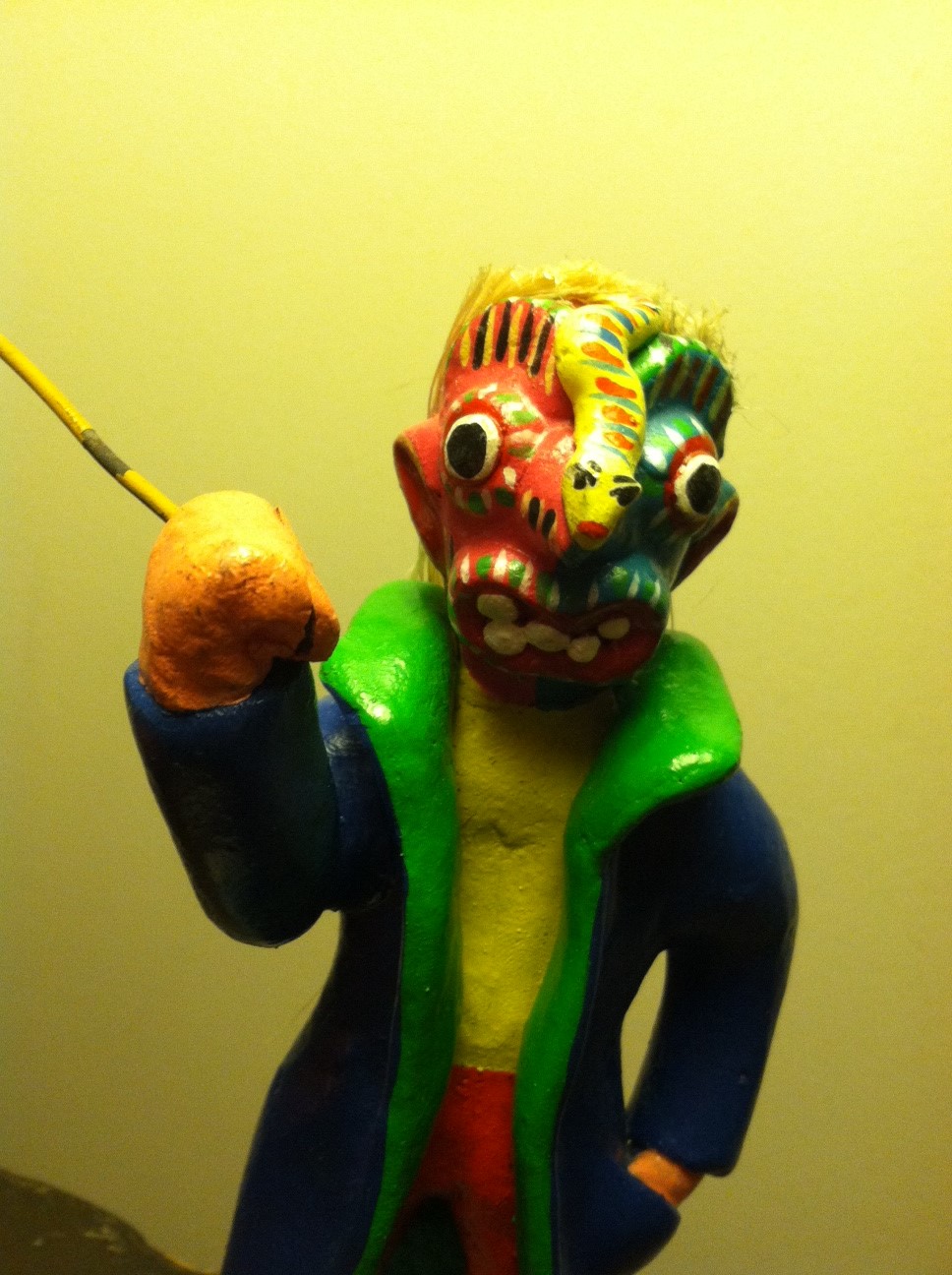
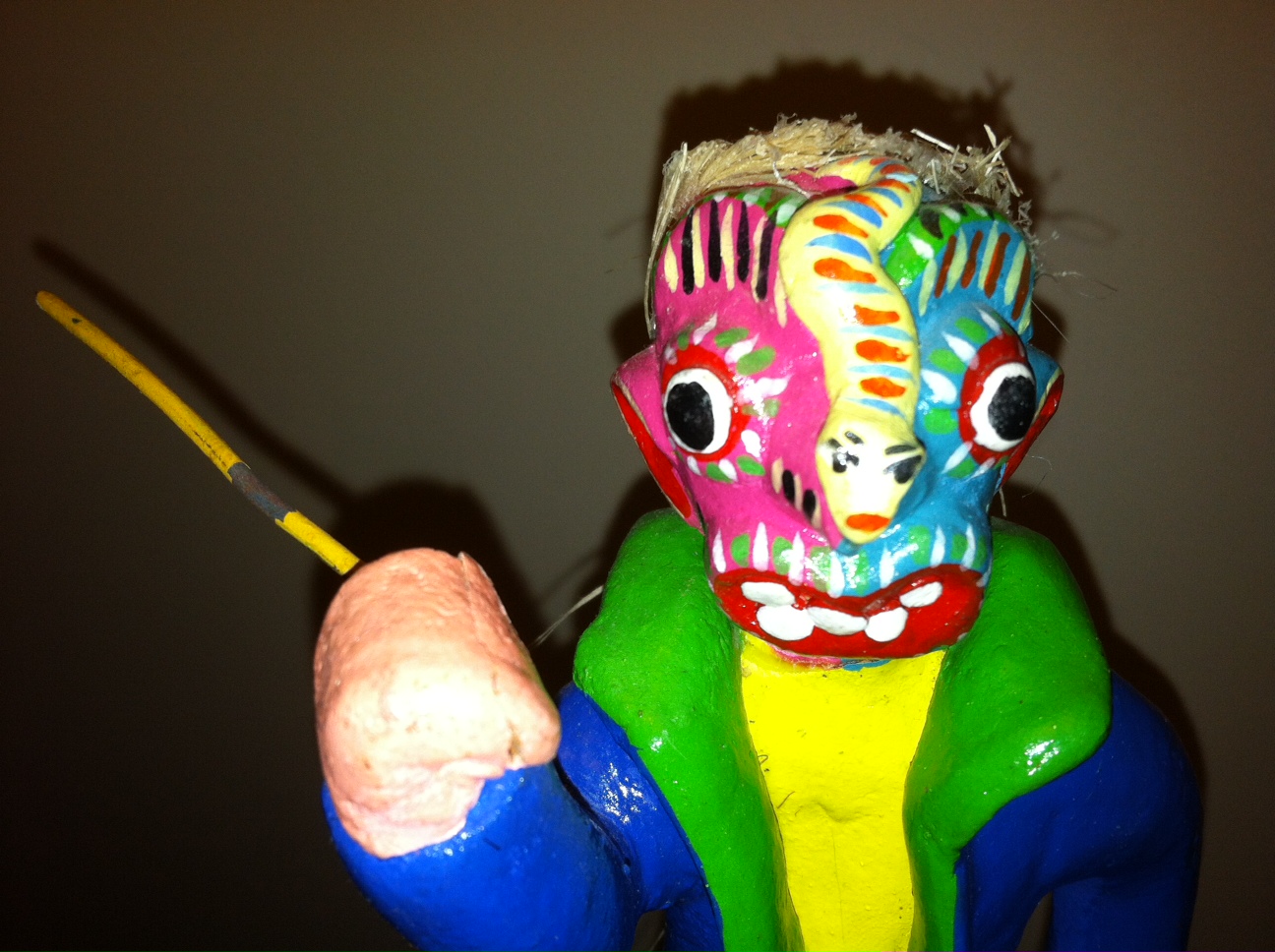
Music is important to my writing–I guess that’s obvious since one of my major characters is a musician—but I don’t listen while I write. Music absorbs my whole being. It can’t be background. As for my playlist: my personal number one song is Michael Hearne’s New Mexico Rain. Favorite musicians include Bill Miller and Robert Mirabal. Miller’s lyrics are poetic short stories with vivid characters, and he has a tenor voice that goes straight to my heart. His music has a spiritual undercurrent—not overwhelming, but it’s there, in a love song, a story-telling song or a Native flute solo. Mirabal also has a spiritual energy in his music. He a flutist, drummer, singer and dancer—an incredible, radiant performer. He’s from Taos Pueblo, and I’ve seen him a few times live in Santa Fe. The man can play didgeridoo standing up, balancing the instrument and his body in a way that has to take amazing strength, breath and flexibility. I listen to classical music the most—whatever comes on the classical station. I let it surprise me. I do a lot of imagery related to writing while I listen, but I can’t shift into the part of my brain that puts fingers to a keyboard and organizes sentences until I have silence. While I run I sometimes compose the songs for my musician characters. Though you’ll never hear them, there are melodies to go with every song in  Shaman’s Blues and Snake Face (book three, coming out in November).

What books are on your nightstand right now?

I’m almost finished with Gutenberg’s Apprentice by Alix Christie, a historical novel about Peter Schoeffer, the lesser known contributor to the famous Gutenberg Bible. The research is impressive. I had no idea how much politics and religion could interfere with a tradesman’s honest work back then. The controversy over making books with metal letter instead of written by hand, and making books more readily available, ran deep. Who was to be allowed to control books? We are all Shoeffer’s heirs, as readers and writers. I’m also close to finishing John McPhee’s Control of Nature, nonfiction about people living in places where nature is in a state of constant change, and the extraordinary lengths they go to try to control the ultimately uncontrollable forces. (By the time I get this posted to my blog there will be new books on the nightstand.)

Links:

Visit SinC at http://www.sistersincrime.org/

Visit J.L. Simpson’s blog at http://jlsimpson.com/ I can’t say enough good things about Lost Cause, the first fast-paced and funny Daisy Dunlop book. I look forward to the next.

Another SinC member whose blog I enjoy is Nancy Adams. Her Saints and Trees blog   explores poetry, nature, spirituality, and books. Nancy and I meet at the intersection where mystery meets mystical. http://saintsandtrees.wordpress.com/

Martyn V. Halm’s blog: https://amsterdamassassin.wordpress.com/author/amsterdamassassin/ (Not a Sister in Crime, though some men are members.)

The next is unrelated to mysteries, but it’s my favorite blog.

Stuff Jeff Reads explores Shakespeare, Yeats, and Blake, Joyce’s Ulysses, and more. Literally, it’s the stuff Jeff reads. And he reads broadly. I love this blog. It’s not  about the latest release, but poems that have been moving hearts for decades or centuries, brought back to you with Jeff’s insights and choices of accompanying art. Jeff makes me a better reader, which makes me a better writer. http://stuffjeffreads.wordpress.com

Talk to Strangers

In Truth or Consequences and in Santa Fe, I find it normal to strike up conversations with strangers, and to say hello on the street to people in passing, whether or not we’re acquainted. No one seems to think it odd. I’ve never had a rebuff, nor have I been offended when someone randomly started talking to me.

A few years ago I was sitting in the now-closed and much-missed Little Sprout juice bar in Truth or Consequences when a man in a white terrycloth bathrobe came in and asked me if a certain bumper sticker he found wonderful might be mine. (It said Coexist, with the symbols of various religions forming the letters.) It wasn’t mine, but we talked a while anyway. He was on his way to water aerobics and had seen the bumper sticker, seen me in the window wearing my sun hat against the glare, and decided the Woman in the Hat looked like someone who wanted to spiritually Coexist. We became friends, and until he moved away last year he was my best sunset-walking and philosophical-talking friend in T or C. Another conversation with a stranger in the Sprout led to my meeting my dancing buddy the same year, and we still go dancing together four years later.

Unlike some more frequent fliers, I don’t mind people on planes talking to me. Good book recommendations and good stories have come from these encounters, or just good lines. I remember being on a plane about to leave Albuquerque for a job interview in Northeastern North Carolina, and was talking to my seatmate about my eventual destination. The long-haired young man in front of me turned around when he heard the name of the town and said, “Turn your clock back twenty years.” He was right. I ended up needing that job and moving east for a few years, and the town is now fictionalized as Cauwetska in The Calling.

Another stranger on a plane entertained me when I was unhappy after the breakup of a relationship. I didn’t tell her, but maybe she sensed it and wanted to be cheerful, or else she wanted to say what she had to say to someone she would never see again. Imagine a Texas accent for this. “I’m a dog breeder. And you know, I’m a Christian, and I’m supposed to think certain things are wrong, but I know homosexuality can’t be a sin, it has to be genetic, because I’ve got a lesbian Chihuahua.”

Back in July in Santa Fe, waiting in the shade at the Railyard Plaza while the Bill Hearne Trio set up, I ended up talking to my shade-mates about the Santa Fe Opera while we waited for country music. I have no idea how we got into this conversation but it felt normal. They told me one of the apprentices was going to have to play a lead that night, and sing in Chinese. An ongoing character in my series, Jamie Ellerbee, was once an apprentice with the Santa Fe opera. If I ever write the details of the crisis he had during that period of his life, a pressure like that could be part of it.

In previous academic years I’ve usually seen students in the classroom ten minutes early, heads down, engaged with screens instead of each other. This year for some wonderful and mysterious reason, they’re different. I come in and find them having real live face-to-face conversations, even the freshmen who don’t really know each other yet. I’m glad they aren’t missing out on the pleasure of talking to strangers.

Renewal Through Disruption

Disruption is good for the soul. In yoga, inversions and backbends can be scary or confusing at that transition point when they flip our perspective, and that’s part of their value. I seek disruption in everything from handstands to migrating across the country seasonally. The process of packing and leaving and resettling and coming back and doing it again never gets easy, but it in itself it does me good. Not just the travel, but the upheaval. The process always reminds how little stuff I really need.

The disruptions we don’t choose are different from the ones we seek. I wonder if I’m unconsciously trying into stay in shape for the unexpected, like keeping air in an emotional spare tire. Fiction centers on disturbances that knock characters’ lives off balance. Love, death, illness, loss, success, relocation, a new neighbor—every story begins with a disturbance. It may end up being the central theme of the story, or it may be the first raindrop in a flood of challenges. Characters’ attempts to handle these shake-ups determine the plot. Some are damaged by the events that up-end their lives. Others are strengthened as well as wounded. As a reader I tend to identify with characters whose resilience is imperfect, people who can handle some difficulties better than others.

One of my favorite mystery series is Nevada Barr’s Anna Pigeon series. Anna can handle the hardships of nature and of law enforcement work in the national parks sometimes better than she can cope with her inner life. She’s tough, and then her flaws and weaknesses make her whole and sympathetic. I root for her to get through all of the obstacles, internal and external. I discovered Barr, as I have many of my favorite mystery writers, through an audiobook I checked out for one my Southeast to Southwest journeys. (I prefer the excitement on the interstate to be fictional, and the trip itself uneventful.)

A few months ago at a party a friend who had just discovered Tolkien said his favorite line by this author was the same one that I had noticed years ago. I’m not sure if it’s in The Hobbit or in The Fellowship of the Ring but the idea stuck with me long after I’d forgotten which book it came from. The narrator’s voice states that the travelers had a nice stay and that there was not much else to say about it, because things that are very pleasant to live through are dull to tell about, but events that are difficult to live through make fascinating stories.

Though I seek a certain level of disruption with my long road trips and annual migrations, I like them best when the most dramatic stories I come back with are the ones I wrote.

But I HAVE to Finish It: Cleaning One’s Literary Plate

My book club met last night and one member was debating whether or not to complete a Pulitzer Prize winning modern classic that was last month’s selection. A good book, but it didn’t engage her. We all admitted to our discomfort about not finishing a book. I’m the only one in the club who writes reviews, so the other members’ reluctance has nothing to do with that. It’s the relationship with the book. We respect them, and feel guilty about giving up on them.

 This came up on the same day I posted what I think may be my last two star review. I don’t regret reading the other books I rated that low because they had strengths that made me care, and made me want to critique them like a beta reader. This last one exhausted me. I never should have made myself finish reading it, and reviewing took hours of self-torment about how to say what I thought without being cruel or snarky. The only thing that kept me going was that I had agreed to review it. Even though the group I was reviewing for says it’s okay to stop reading, no questions asked, I felt obligated due to a shortage of reviewers.

Other people have liked this book. I didn’t. How important is that, compared to the stress of reading it and the greater stress of reviewing it? I think there are some people who take pleasure in writing bad reviews, but I’m not one of them.  If I’d cut loose and verbally torn the book up, that would have been easy but self-indulgent, and no use to readers in deciding if they might like the book or not. I revise reviews obsessively for days, especially the bad ones. I enjoy polishing the good ones and the in-between ones, but the bad ones are torment, out of proportion to their importance. My opinion is not that valuable, and I’m not being paid. Reviews are useful, but I can stop reading and write “did not finish and be done with it. If everyone did that, though, no one would ever get a bad review, just a “did not finish”, which is uninformative to prospective readers. Some get distrustful when an author has only good reviews. They think that the writer must have bought them, or had friends and family write them, even if the good reviews are genuine.  Also, I’ve read many posts on Goodreads in which people say that the things a reviewer disliked in a critical review made them want to read a book. The mean, vitriolic reviews get disregarded. The thoughtful bad reviews don’t.

Still, I hate writing them. It’s much worse than getting them. I can read a critical reaction to my own work and be done with it. I decide if I see a valid problem pointed out that can make me a better writer in future books, a perception so at odds with most reviews that it’s not important, or simply an expression of taste for a different kind of book. It takes a minute. But when I’m reviewing I don’t think of it as something the author or potential reader will move through that way. Maybe I take it too seriously. For now, I’ll review what I finish, and I’ll only finish what I find valuable to read, whether it’s for pleasure and entertainment or for making me think and learn, deepening my perspective. If I don’t like a book, I’m letting it go. I need to spend my time writing, and reading other books.

How do you feel about not finishing a book?


The Ruler in the River

It was six feet deep today. At this time last summer I didn’t even want to look. The river was more empty space, dirt and algae than a Rio Grande. The powers that control its flow from the dam at Elephant Butte had shut it off early. This summer it’s wide, fast flowing and full, reflecting blue sky and the green of the narrow band of thick vegetation that clings to its banks. In the powerful heat, the trail smelled like sage, and butterflies and dragonflies floated by.

So did noise, and trash. I normally like my fellow humans, but I like nature better without them, except for the silent, contemplative fishermen standing on the banks. The rafters, with plastic water bottles and sunscreen bottles spilling out of their bobbing crafts, were such an obvious source of litter, even if unintentional, that I didn’t want them there. The rope swing crowd whooping, splashing, floating a ways downstream, and going back to the swing by land, scared away the wildlife. I didn’t see a single heron or even a lizard.

I found a spot halfway between the fishermen and the rope-swingers, and waded knee deep. The water isn’t very cold. But I could see how incredibly fast it was further out. Gazing at the stillness of the desert  hills on the other side, I had the dizzying feeling of being the one moving while the river held still, like being on a train and watching the land fly by.

In other parts of the country this wouldn’t be a grand river, even when it’s six feet deep. The ruler goes up to ten feet ten inches, at which point the trail would be partly submerged, making the river a little wider and no longer walkable. Still, it could only be a major body of water in the parched Southwest. I remember coming to the east and crossing the James River Bridge in Newport News and being stunned, almost terrified, that a river could be that enormous and deep and blue. It wasn’t that I thought I could fall off the bridge or anything like that, it was just the strangeness of such a river. In Snake Face Jamie gets lost and crosses that bridge by accident, and being prone to panic attacks, it troubles him far more. If there was ruler in that river, it would be a deity, some god of water, not a stick.

And then there’s the Santa Fe River, whose empty bed is a major location in Shaman’s Blues. Sometimes it has no water at all.  I get excited when I see water in it, especially when there’s enough to flow, not just trickle. Other times, I can walk in the riverbed as easily as on the trails along the banks. It’s a river of memory then, the path made by a river that once was deep enough to measure

Dancing In New Mexico Part Three

Hillsboro New Mexico is one of the many barely-there towns in the southern part of the state. A former mining town, it’s now a self-described “living ghost town” with little more than a main street, some historical sites, beautiful scenery, and a lively community center. In the middle of nowhere, people come out for the arts, from wherever these culture-lovers hide in the desert. I took the winding mountain road into the town, and found the community center by looking for a place with cars in front of it. There were no signs, not even one naming the street.

I could hear the music already rolling through the adobe walls. When I came in, the audience was seated, except of course for my ever-ready dancing buddy. He was standing, a fit early-sixties white guy wearing a sort of African-ish shirt, and as soon as we saw each other, we cut loose. At first we had the whole back of the community hall to ourselves. West African drum group Agalu was sending out a song so exciting, so energizing, I don’t know how anyone could sit through it, but they did. The publicity had said, “this is music that will make you want to dance.” More than want—I don’t know if I could have chosen to hold still.

At last, a graceful, well-dressed woman, youthful in every way except her salt and pepper hair, joined us, and I told her my friend was now in heaven—two women to dance with. My relationship with him is platonic, and he always tells me all about his latest attempts to break the dry spell in his love life. She seemed to flirt with him, and he later claimed the man she’d been sitting with kept giving him dirty looks, but maybe that added to the fun, a little sense of risk and adventure.

The music was frenzied with joy, and yet it took a few more songs to break the dry spell in Hillsboro’s dancing life. And when it did, it was like a monsoon cloudburst. From the audience came a wave of women, all but one of them gray-haired, most of them full-figured. Pardon my sudden shift of imagery—the ladies caught fire. They waved and shook and swayed and stomped. It made the music seem even more vibrant, as inhibitions fell away and people merged with the beat. The happiness level in the room skyrocketed.

I have a painting at home of an African village dance, showing a line of women proudly shaking everything they’ve got. These joyous elders reminded me of it. The musicians must get their energy up when the audience responds to the music. Something seemed to build.  One song made me feel absolutely possessed, as if the drums were dancing me. Agalu means “spirit of the drum” and that spirit took over. In my forthcoming third book Snake Face, during one of Jamie’s performances on his troubled tour, he gets respite from his problems when he has that experience of being “propelled by a kind of electricity in his spine, hips, and feet, driven by a dance that danced him.” If you’ve ever felt that, you know what I mean, and now you know the word for it. Agalu.

I caught the attention of the only under-forty woman in the crowd as she danced near me, and suggested we circle the room. The women—and my dancing buddy— followed us, each dancer improvising a solo at the front near the stage, honoring the drummers, thanking them.

Outdoors during the break between sets my friend told me he sincerely believes the way he will die is to be shot by a jealous husband. A friendly stranger, a man with long dark hair, didn’t look up from taking a picture of the artwork in front of the community center, as he said, “I hear you. Always look at the man she’s with.” I’d noticed he walked with a cane, and imagined an injury received from the man he hadn’t looked at, the one who taught him to check first.

After the break several men joined the dancing. One gentleman of about seventy, a small trim white-bearded man, looked amazed and a little confused, as if his own public dancing was the most surprising thing he’d experienced in a long time. Am I really doing this? It’s fun, but… He kept dancing. The man whose female companion danced in trio with my friend and me never did get up and join the fun. Of all the people in the room, that couple and the photographer with the cane are most likely to end up as characters in a story. I already have a fictitious African drum group based in Santa Fe in my books. They could play in Hillsboro. The possibilities are endless for what could happen next.

From Agalu’s web site:

Agalu is led by Akeem Ayanniyi, who is the ninth generation of his family to play the traditional Yoruba talking drum. Ayanniyi, from the Western Nigerian town of Erin Oshun near the historic art center of Oshogbo, has been performing since the age of five and has toured much of Africa as well as Germany, Brazil, Sweden and the United States as a performer and teacher. He settled in Santa Fe, New Mexico, in 1993 and founded Agalu in 1998.

Music:

http://www.agalu.com/music.html


Dancing in New Mexico Part Two

Sacred dance is part of the indigenous culture of this place, from the sunlit feasts on the Pueblos, and to the starlit dances of the mountain gods and the girls’ coming of age ceremony on the Mescalero Apache reservation. In two works in progress I’ve written about these dances as seen by Mae Martin, in a psychic vision of a feast at Cochiti Pueblo, and as a first-time visitor to Mescalero, her friend Bernadette Pena’s home reservation. To stay on topic and avoid spoilers, I’ve cut the dialogue and plot material, leaving only the imagery of the dances. When you get to these dances in the books, there will be a lot more mystery going on. For now, I’m sharing only the mystical.

The corn dance at Cochiti, from Soul Loss, work in progress, to be Book Four in the series:

Women in one-shouldered black dresses with colorful sashes and turquoise and coral jewelry danced across from men in white kilts with red and green trim and foxtails down the back. Heavy necklaces and strands of shells bounced on the men’s bare turquoise-painted chests. Tufts of parrot feathers waved on their heads. Shaking rattles and waving pine branches, the lines moved in unison in an elaborate weaving pattern except for small confused children shuffling at one end. On the far side of the plaza, a fat man painted with black and white stripes, wearing a black vest-like drape and a belted loincloth with a turtle shell on the back, seemed to guide and care for the group. Feet keeping the rhythm set by a single huge drum, he lifted a woman’s long hair off her neck as if to cool her, and then retied a child’s loose legging. 

             A thin man in the same striped body paint and turtle-backed loincloth, his whitened hair in high pigtails stiff with cornhusks, danced between the lines of dancers in the opposite direction of their progress around the plaza, as if he were invisible to them. His movement had an eerie, floating quality. Squared black lines around his eyes and mouth gave his face an otherworldly expression.

             The pounding of the big blue and yellow drum sounded like a giant heart echoing off the walls of the pueblo. The drummer turned it on its side, and then over, never losing the beat. A chorus of men in bright shirts sang with it, in a slow, subtly rotating procession. A stout man swept a banner over the dancers, on a pole so long it looked impossible to handle, and yet he did so with grace. On the banner were symbols of corn, sun, clouds, lightning, and rain.

The Mescalero Apache Ga’an dancers, from Haunted, work in progress, to be Book Five in the series.

Masked men in leather kilts, their bodies painted black with lightning bolts on their chests, wore towering multi-pronged headdresses balanced on their heads. Boys, painted ashy white, wore strange masks like a cross between a bucket and bird.

            Mae left the bleachers to join a small cluster of people standing behind the singers and drummers who sat on the red benches in front of the big tipi. The dancers nearest to the musicians began to smack their lighting-painted sticks against their kilts as they initiated a vigorous jogging-in-place dance step. The rest began to move, and glorious chaos broke loose. The four groups circled the fire together, each man dancing to his own inner spirit. A lean, muscular, youthful dancer, his face masked in smooth black fabric with glittering shells above the eye holes, began to leap side-to-side, swaying his torso in deep lateral bends, holding his lightning sticks up, and rattling his towering multi-pronged headdress.

            His athleticism and physical power was so extraordinary, and the surge of life force through him so raw and electric, Mae felt it in her body. Jamie had said, lighting will strike your bones. It did. She was mesmerized. Each dancer who passed in front of the singers danced with a burst of force and passion, as if the spirits they personified possessed them.

            The boy clowns in ragged shorts, ranging from scrawny little fellows of seven or eight to a big, fat lad of around twelve, also moved with greater vitality when they neared the drummers, comically exaggerating their steps. The fat boy was good, and he made a few people laugh with some secret joke he conveyed in mime. On the edge of the crowd, two tiny children with sticks in their hands imitated the dancers, serious in their endeavor, as absorbed as the men and boys in the ceremony.

            From the direction of the long arbor and the family tipis, a procession silently appeared, the beginning of the girls’ coming of age ceremony. The medicine men, the four young women in beaded, fringed white deerskin dresses, and their godmothers walked slowly into the big tipi behind the drummers. The moment made Mae catch her breath. She was in the presence of something sacred, archetypal and outside of time.

Part three to come: an African village dance—of sorts—in Hillsboro, New Mexico.

Dancing in New Mexico Part One

This is going to take two or three posts to cover, because dancing has roles in both social life and spiritual life here. It plays a big part in my books, too, because dancing is how Jamie communicates when he experiences life at its highest intensity, as in the Santa Fe Bandstand scene in Shaman’s Blues. I’m a barely adequate ballroom dancer myself, but I enjoy it anyway, especially the flow when I have a partner who can lead, and I love to watch people who are better at it than I am.

Part one: The perfect partners.

No matter what kind of music is playing, there are people who will dance to it, and dance well, whether the Santa Fe Chiles are playing Dixie jazz and swing dancers from the Rhythm Project are cutting loose in creative kinetics at Bandstand, or the Bill Hearne Trio is playing “alt country” at the Best of Santa Fe block party, inspiring older couples to dance in the elegant flow that embodies a whole history of partnership.

Sometimes at Sparky’s in Hatch it takes an icebreaker to people out on the floor, or the right kind of music—Western Swing. Then those couples who dance the way old married couples finish each other’s thoughts start moving their boots. When the Renegades played a couple of weekends ago, I enjoyed one man’s smile even more than I enjoyed dancing with my dancing buddy. We took to speaking of this tall, gray-bearded, Hispanic cowboy as The Smile. He bowed over his lady, cradling her in the shade of his body, with a look of radiant bliss glowing over her shoulder. If only she could have seen that look.

When I left the Best of Santa Fe block party Saturday to go pick up my car at the Firestone place on St. Francis, the man who’d taken care of my car knew where I’d been and he came dancing out of the garage with a smile on his face as if there were music. I danced too. Why not?

This is my new favorite song:

https://www.youtube.com/watch?v=96UkbM6cII4

Picture the older guy, Bill Hearne, and the two guys to his right, as a trio, outdoors under a mixed cloudy-sunny monsoon season sky, the Railyard water tower to one side, and the free food and coffee and books and other festivities to the other side, and in front of them those perfect partners swaying along.

Next installment, sacred dances.

Coyote on Broadway

Broadway, Truth or Consequences, New Mexico, that is. I saw the little canine trotting past the Bank of the Southwest after Art Hop on Saturday night.  He seemed in a hurry to get out of town, crossing our main drag and hustling down a side street toward the river. I hear his relatives across the river in the desert sometimes. The other night they were singing on Turtleback Mountain. They’re so musical, especially compared to the dogs who try to answer.  A few years ago I used to hear a donkey who tried to sing back—not very melodious either. Wildness has a sweeter voice.

One thing I love about my town is its closeness to the wild, though I’d rather not join the ranks of people who’ve found rattlesnakes in their yards. I can walk to the Rio Grande in a few blocks, the same route the coyote took, and watch the bats come out over the wetlands at sunset, or go into the desert and look for tarantulas coming out of their burrows after a monsoon rain. I only found one once—a velvety multi-legged shadow half-way out of her hole. When I run in the desert at Elephant Butte I encounter quails and lizards and jackrabbits on the trail, and very seldom any of my own species. I once surprised a mule deer that was sleeping under a juniper. With its size and the speed of its explosive take-off, it gave me an equal start, but probably a lot more pleasure than I gave it.

Santa Fe has a little wildlife, too. Gunnison’s prairie dogs are inclined to live there. The city has a relocation program, catching and releasing them into select wilderness areas, but there’s still a little dog town above the almost waterless Santa Fe River on Paseo.  I like walking past them. They’re smart, and have a complex language. I’ve heard that they recognize people and talk about us. Standing upright at the edge of their holes, paws folded on their little bellies, they stare back at me a long time before they scamper and squeak. Maybe to them I’m the wildlife that’s wandered into their city.


A Visit to my Old Home, the City Different, Santa Fe

My favorite statue of St. Francis in the royal city of his holy faith is the one near City Hall where he’s shown as a lean, bearded monk standing and looking down at a prairie dog, while the little creature looks up at him in that curious, fearless way they have, paws on belly, making eye contact. I spent a little time with this sculpture while waiting for the street party in front of City Hall that never materialized on June 28th—or maybe it did, but every time I wandered back in hopes of free music, there was still only a block of Marcy Street closed with orange cones, security people on the corners, and a lone man break dancing to recorded hip hop. I suppose the live music eventually showed up, but I went to Blue Rain to look at new works there, came back—no party—and wandered off and discovered the new RC Gorman gallery. Still a lovely evening, being a tourist where I used to live.

One of my goals on this trip—along with a workshop and classes at Yoga Source—was to see the Judy Chicago exhibit at the New Mexico Museum of Art. Chicago has lived in New Mexico for twenty years. With her husband, photographer Donald Woodman, she has created some powerful, thought-provoking images in Nuclear Wasted, and in the Holocaust Project, some portions of which are in the NMMA exhibit. http://www.judychicago.com/gallery.php?name=Holocaust+Project+Gallery

This article in New Mexico Magazine made me want to see it, and it describes the nature of her work so well, I won’t try to do it over. She’s astoundingly versatile, and  can shake you up, charm you, or touch your spirit.

http://www.nmmagazine.com/article/?aid=85934#.U7DWKNhOXMw

After leaving the museum, I walked around town letting intuition guide me. The local artists’ show behind the bank downtown is always good. I acquired a tiny print by Joseph Comellas that is so radiant and deep I could fall into it. I’ve loved his work for years, and wish I could find images online to share. His style is unlike anyone else’s. I could try saying O’Keefe-like for colors and landscapes, but he uses shapes very differently. Each of his paintings is an experience, a moment in light and land so intense it’s like he found the true nature of the place in colors seen by the soul.  I kept turning around to look at the print as I wrote this. It makes my heart glow.

When I stopped by Whole Foods, the small one on St. Francis, I noticed a bookshelf on my way out. It was labeled Good Reads for a Good Cause. Donated books are sold to support something charitable—Whole Planet Foundation projects, I think. I felt compelled to put a copy of Shaman’s Blues on that shelf. (I happened to have books in my trunk.) If you’re in Santa Fe you can grab it for a very low price if it’s still there. When I donated the book I wasn’t thinking about the fact that a scene in it takes place in that store. I like to imagine the reaction of the reader who snags that bargain when they get to that part.

I ended the long weekend with Country Night at Bandstand on Monday. As the crowd warmed up, dancers of all ages and ethnicities and shapes and sizes gradually filled the dance space in front of the gazebo on the Plaza, partners’ arms weaving a pattern of twists and turns in time with the music. I got a kick out of three little girls in red cowgirl boots, and their mother who had apparently taught them how to dance. The children partnered with each other, or with Mom, who looked like the happiest woman on the planet that night. If I still lived in Santa Fe, I’d go to just about every Bandstand show all summer.

Check out these acts:

http://www.jamescarothers.com/

https://www.youtube.com/watch?v=Zn2aDfsKqRc

The YouTube video is last year’s performance by Sim Balky and the Honky Tonk Crew, and it’s the whole show. You can see the dancers, the Plaza, and of course one heck of a good band.