Street Solos

She staggered and wove, her steps crossing each other as she traversed the steep sidewalk, aiming uphill toward Main Street in her irregular style. Heading downhill on my way home after teaching yoga, I tried not to stare at the poor drunk on the opposite side of Foch Street. And then, from seeming unable to walk a straight line, she transformed into a dancer. She spun, both arms extended, her balance perfect despite holding a large cloth bag. Then she staggered on, and then spun again.

Okay, I thought. This is Truth or Consequences. What the heck. You can express yourself.

I continued across Healing Waters Plaza and reached Broadway. While I paused for traffic, a man passing down Daniels along the side of the drug store stopped and posed, casting his shadow on the white wall of the building. He wore a backpack, and his pose resembled the position of the Turtle formation atop Turtleback Mountain,. He stood on one leg, his torso horizontal, his other leg flexed and lifted in an attitude derriere, his arms in front cupping the unseen mountain. Or so it looked to me, having struck that pose a few times to help people see the Turtle. He jogged a few steps and posed again, casting his shadow, repeating the move until he was past the streetlight and out of sight.

What was going on? People alone dancing in the streets. And not the sort of dances you’d do if the music in your head or through your earbuds inspired you to move with the beat. Was it an art event? A random coincidence? A pact or dare between friends? No one was watching or filming. I seemed to be the only audience. I can invent a story, for sure. Reading this, you may be inventing your own. Perhaps that’s what they wanted.

Words that Stayed With Me

I had, as usual, inspiring encounters with art and with friends at the January Art Hop. In one gallery, I talked with a very productive artist who said he makes a new list every day to get things done. I had to confess that a few same things have been on each new to-do list I’ve made—for years. He said cheerfully, without judgment, “That’s okay. You did other things.”

In another gallery, I admired the work of a local quilt artist, mentioning how innovative and unconventional her work was. She said, “Unconventional, that’s me. Getting outside my comfort zone grows my comfort zone.”

Later in the week,  I ran the Healing Waters Trail to the New Mexico Veterans’ Home to visit my friend Bob. He used to run to visit a relative when he was a boy, so he appreciated my method of travel. We sat in the sun with a view of the mountains. In the way of the very old, he reflected on his life, acknowledging there had been some hard times. “I learned from them. But I learned the lessons later, when I could. Not while I was living the lessons.”

I’m probably living many lessons now that I will only learn later. Perhaps after I grow my comfort zone by actually doing the perennial to-dos on that list.

Surprising Myself

Multiple times in the past few months, I dropped my car key while running. My new Amphipod water bottle has a smaller pocket on the hand strap than the old one did, so I couldn’t fit the key with its great big head in the pocket anymore. It was either poking half-way out or dangling from my little finger. When I shifted the bottle from one hand to the other, it was easy to drop the key. After each drop, I told myself I would pay more attention. But I don’t run to pay attention to my key. I’m either brainstorming a scene in a book, admiring nature, or doing both.

I sometimes a route that doesn’t go in laps of a circular trail but along a stretch of sand above Elephant Butte Lake and back. I’ve never measured it, but it takes as long as five miles did on another trail. Not a great distance for marathoners, but it’s my usual. I changed the bottle from right hand to left at the turnaround point and didn’t notice my key was missing until I got back to my car. My phone and spare key were locked in the trunk.

No point in fretting or in objecting to reality. I had no choice but to run back. After a windstorm, the sand was freshly rearranged, and my tracks were easy to retrace. But the sand was soft in places where the key could have vanished. I could have dropped it into a lizard hole. Or a well-meaning person could have picked it up.

Seeing a park ranger’s truck on the dirt road above the beach, I pulled up my mask, waved, and ran to him. He loaned me his phone to call my roadside assistance club, and then I ran on, in case I could find the key.

It lay exactly where I’d turned around and switched hands on the water bottle. I ran back to my car, speeding up so I could get to my phone and cancel the lock-out service.

I did it! Success!

Almost. I was in the middle of the call when the ranger showed up, escorting the wrecker to my car.

Insights from this adventure:

  • I can make the same mistake five times before I learn from it.
  • I can be creative with what I have on hand: I crafted the world’s smallest fanny pack using the pocket from my old Amphipod bottle. My key will go in it.
  • And I can run double my usual miles.

You never know what you’re capable of until you do it.

The Sunset Was Free

I just sent a book to my beta readers, the third or fourth or maybe fifth revision of Shadow Family, the seventh Mae Martin Mystery.  There are a couple of characters in it who feel good about themselves as thieves. They smile a lot, acting the role of good guys. The theme in the book is self- justification. How we dig in and commit more and more deeply to our mistakes and bad judgments to justify our behavior to ourselves, and how people who are doing something ethically wrong convince themselves it’s actually right.

After a yoga workshop in Albuquerque Sunday, I stopped by Whole Foods to pick up some organic groceries. While I was in the bulk foods section filling a bag with pecans, a fit, cheerful-looking bearded man of about thirty, carrying a plastic bag of produce, pulled the lever on the bulk bin of chocolate covered peanuts, dumping a large serving into his hand. He flashed me a bright smile and ate from his handful as I stared at him, giving him the “WTF?” look, too startled to speak. We made eye contact. He smiled again and swaggered on up the aisle toward frozen foods, munching away. I put my bag of pecans in my cart and proceeded to get walnuts. A skinny teenaged boy with stylishly eccentric glasses walked up and grabbed a yogurt-coated pretzel from a bin and began to eat. This time I found my voice.

“Does everyone do this? You’re the second person in five minutes to just take stuff and eat it.”

He smiled and walked away. I once saw a little girl furtively sneak one raisin from a bulk bin at the same store. She realized I saw her, and she ducked her head, apparently feeling guilty.

The guys’ smiles bothered me more than the petty theft. I told myself it must have been a study with actors playing the role of thieves, and someone was watching, observing how others reacted. I didn’t want this to be normal. They looked right at me and assumed my complicity and approval. It reminded me of the way colleagues at a job I had way back in the early eighties would look around, see that all the employees in the break room were white—you can tell the look—and then make a racist joke. I would get up and walk out, telling them it was not okay with me. Racism is a huge wrong. Stealing a pretzel, pretty small. Assuming everyone agrees with you is troubling in both cases, because you think you’re not violating moral norms.

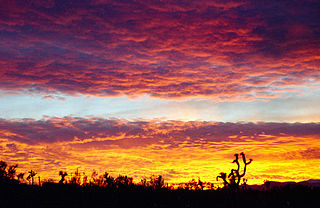
While I was on my way home Sunday, I stopped for gas in Socorro at exactly the moment the sunset was at its most spectacular. Orange and purple in the west, pink in the east, and pink and orange in the north layered with thin, swirly, magenta wisps. Above was a ceiling of pink clouds. A woman in the parking lot of the gas station was taking pictures. I walked all over the lot and into the space next to the adjoining business, seeking the best view of the clouds and the mountains. When I finally went in to pay for gas,  it was hard to let go of the beauty for even a few minutes. The picture-taker urged the young woman minding the store to come out and look at the miracle. She did, but she couldn’t linger. After all, sad to say, someone might go in and steal something.

Walking to the Lake

Once in a while I need a literal change of pace and take a very long walk instead of a run. Variety is good for the body, mind, and soul, so I explored several miles of Elephant Butte Lake State Park where the surfaces are either too hard (paved roads) or too soft (the beach) for running. Pavement is a great surface for vehicles. Tires don’t tear it up. But walking on it is noisy compared to walking on the natural bare earth, so I started veering off into the desert. To my dismay, it was so churned up by tires that it was hard to find an undisturbed place except in shallow arroyos, firm sandy paths made by October’s heavy rains. It puzzles me why people take their vehicles off the road. The roads are right there, designed for driving. If they want to get out and experience nature—I had an Edward Abbey Desert Solitaire moment—they should get out and experience nature. I can understand using a vehicle if one can’t walk, but otherwise, it doesn’t make sense. And it ruins the landscape. Instead of road runner and quail tracks, deer and coyote tracks, I kept seeing tire tracks. So I went back on the pavement.

I finally reached a dirt road, and when I got to the end of it, I found a patch of undamaged land, too steep for vehicles to intrude upon, with a  deep arroyo running through it. It seemed to be guarded by a low-crouching creosote bush that resembled a giant tarantula. Welcome to the wild.

Eventually, I walked down to the water. The lake was stunningly blue under the clear sky, and a few sailboats were gliding across it, none of the noisy motorized craft of summer. The beach has grown due to the reservoir being so low, and the islands look as if they have bathtub rings from the mineral stains marking how high the water once was. The shoreline is a stark landscape, beautiful in its bare way—nothing but sand, rocks, and water, like an alien planet with no plant life. Then it got more alien-looking, and not in a scenic way. I began to notice unnatural shimmers in the sand caught by the low, late-afternoon sun. Half-buried plastic. Snack food wrappers, foam cups, remnants of bags, fishing line, all on their way to the water.

My collection in hand, I reached a small spit of red dirt and dark gravel jutting out into the blue water. On one side of the curve of the spit perched a huge raven. On the far tip, a blue heron huddled with its neck tucked in so much that its beak seemed to poke out from its wing joints. It looked gray again the brighter colors around it. The only sound was the plop of a jumping fish. Then the raven croaked and flew west across the shining lake, a good direction for a raven.

I hiked back to the paved road, collecting more plastic for the dumpster at the top of the hill. Not far at all. Not difficult to do. Unfortunately, I’m pretty sure that on the rest of the vast beach, there’s more plastic slowly traveling down the slope toward the fish and the birds.

What would make people stop and see it? Walking?