Knowledge and Perception

During the month of August, there were so many events scrolling through the electronic sign over the entrance to Elephant Butte Lake State Park that someone decided to remove the time-temperature-and-welcome from the cycle of reminders and announcements. Once I got used to not seeing those numbers when I rounded a high point on the trail with a view of the sign, I realized how absurdly attached I’d gotten to noting exactly how many minutes it had taken  me to reach that spot and whether the temperature had gone up a degree. I enjoyed my runs more without this information snagging my mind.  Now that there’s less going in in September, “Welcome to Elephant Butte Lake State Park 1:36 p.m. 87 degrees” is back. It still takes me exactly twenty-four minutes to reach the point where I can see it, and I can tell how warm it is without looking. What is it about numbers and measurement? Or even the desire to know something just because it’s there to be known?

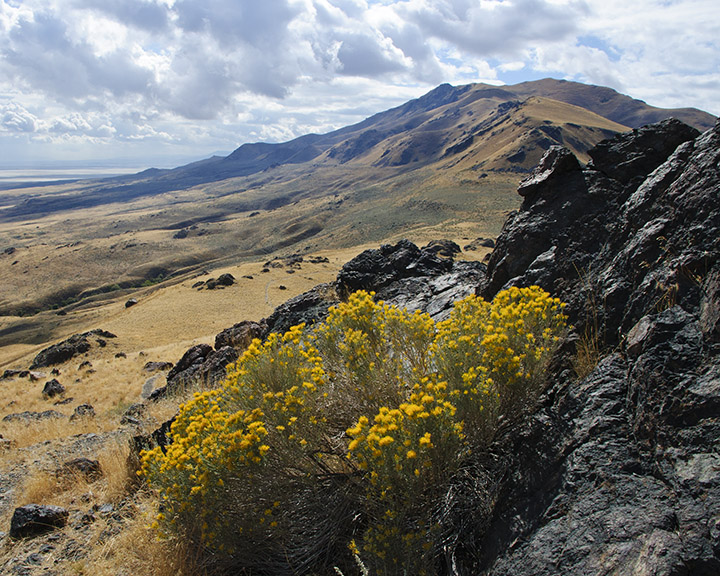
I don’t have anything against knowledge. Practical knowledge enhances life, and useless learning is fun.  I spied a large, almost squirrel-sized, New Mexico whiptail today. She did one pushup and disappeared under a bush. My useless knowledge informs me that she was a she because they all are—our state reptile is an all-female species.  Trying to identify a delicate purple flower I admired, I searched online in vain, but I learned that among New Mexico wildflowers there are plants called Water Wally, Hairy Five Eyes, Bastard Toadflax, Blue Dicks, Redwhisker Clammyweed, and Bonker Hedgehog. (The last one is a small cactus.) I still don’t know the name of the purple flower. I think its bright yellow companion is snakeweed, but it may be chamisa. Chamisa’s botanical name is Ericameria nauseosa, which makes me want to create an unpleasant character named Erica Maria in some future book. This plant, or its purple friend, smells wonderful, not nauseosa, and that perception is a greater joy than the satisfaction of acquiring a fact such as its name. Globes of yellow blossoms on green stems and taller stalks with tiny purple blooms glow against the pale brown sand, and a rare whiff of floral sweetness surprises me as I run past. At exactly the same speed whether or not I measure myself.

*****

Enjoyed this post? You may also like Small Awakenings: Reflections on Mindful Living.

Eight plus Eight Equals Awareness

The dread of being stuck with an inconsiderate neighbor plagued me while I ran, as my mind rehearsed all the ways the problem could get worse and all the steps I might have to take to get it resolved. After all, there was only one good scenario: him moving out. But the bad ones seemed endless, and my mind seemed compelled to explore all of them, including having to move to get away from him. For me, his worst disruption of our previously serene little community in our building has been smoking (and stinking up my apartment!) although smokers are required to go off the property, not even in the courtyard, to light up. Worry clings to the mind in pursuit of a solution, even if there’s none possible at the time. Granted, this can be a preparation for coping, but I don’t go out in nature to worry, so I started counting the negative thoughts. Once I notice a pattern, it’s an effective way to interrupt it and make a particular worry into a practice rather than a torment. It came back eight times in four miles. With each return, I was no further along in solving the problem, but I was more aware of clinging to it and could let it go more quickly, to return to awareness of my movement and my surroundings. After all, if I can focus that intently on a negative, I apparently have the capacity to focus equally on something else if I chose to do so.

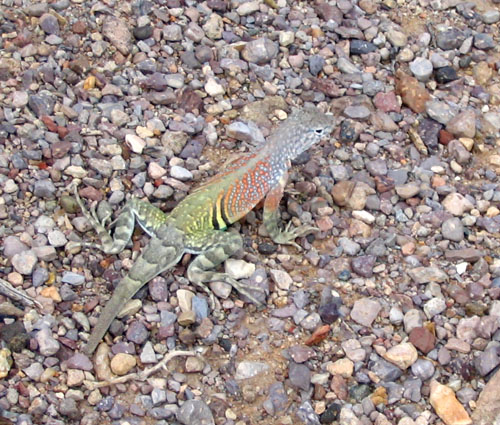
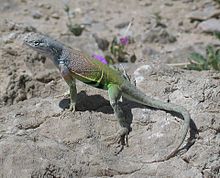
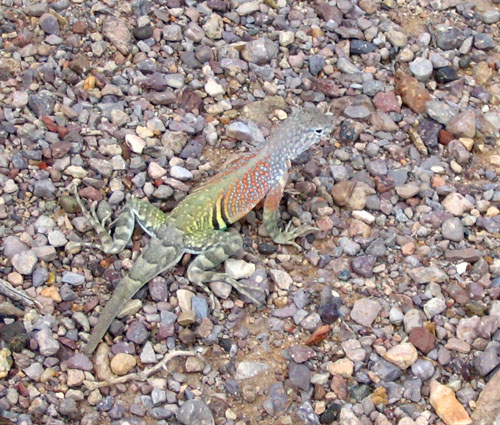
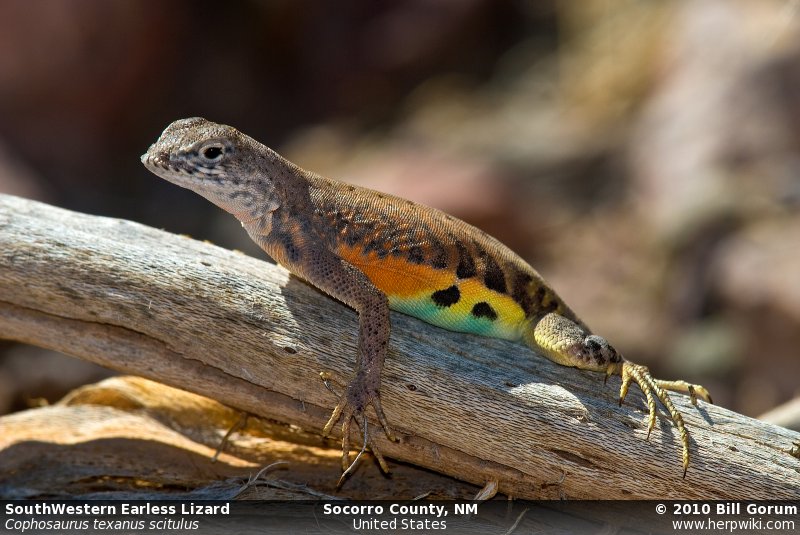
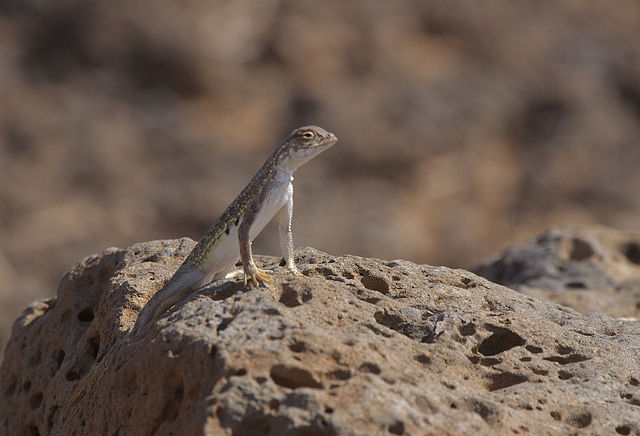
It was the day after a big rain, a cool eighty-two degrees, and that brought out the lizards. I saw eight greater earless lizards, evenly distributed along the trail, one about every half mile, and I paused to admire each of them. Their sleek gray heads and necks. Their glowing orange sides with diagonal black stripes. Their orange upper arms and radiant blue-green forearms. Their green hind legs and tail that seem lit from inside like a stained glass lamp. (The pictures don’t do justice to their true colors.) Most of them posed or did push-ups, as if showing off their jewel-like skins. Normally, I feel lucky to see just one, so this was an extraordinary bounty.

When I got home, my landlord let me know he was giving the smoker a thirty-day notice to vacate the premises. I wish the guy would leave sooner, but the point is, I hadn’t needed to keep thinking about it. I’m glad I was able to pop the worry bubble often enough to enjoy the weather and the lizards.


Coffee, Caution, and Thunder

I was puzzled when a stranger knocked on my door and asked if I had any coffee grounds. To my mind, coffee grounds are the wet, used-up stuff left in the filter. I asked if he needed them for his compost, but no, he had run out of coffee. My next question: Why he didn’t buy some? The grocery story is quite close, he had walked from wherever he lived, and he was apparently fit and healthy, a lean man in his late forties or early fifties, clean, sober and normal—or as normal as T or C residents get. “I’m poor,” he said, cheerful and unembarrassed. What could I say? In a neighborhood of retirees, artists, musicians, and low-wage workers, most people are kind of poor.

He’d tried neighbors he knew first, but no one was home, so he progressed further down the street. Since he knew my former landlady, he explained, he felt all right trying for coffee here. Deciding this made him reasonably okay, I ground some beans, and he hunkered down in the yard. At 2:20 in the afternoon, he was wearing a T-shirt and pajama pants and had only now discovered that he’d run out of both cash and coffee. Had he just woken up? I sleep pretty late, since I write until two or three a.m., but it is still morning when I get up. Perhaps he was an artist, so he might keep late hours, too, and occasionally run out money. I gave him a zip lock bag full of freshly ground coffee and told him to go get caffeinated, he thanked me and left, and that was that. But while I ground the coffee, I was aware of the presence of an unfamiliar man outside my door. Though he seemed safe, my guard stayed up.

The next day, I got caught in a thunderstorm. Weather is unpredictable here in the monsoon season. A big blue-gray cloud could hover and do nothing or explode with lightning, thunder and rain. Tiny storms sail through like one slender woman in a long gray dress sweeping through a crowd of larger women in short skirts, only hers touching the earth as she dances past. A tumultuous-looking sky isn’t a reason to stay in. But one patch of clouds got productive while I was running, and I was on the midpoint of the loop of the trail. There was no shorter route back unless I cut through the desert off-trail, dodging thorny plants and various critters’ holes. So, I sped up.

At first, I was fast and attuned to the storm. Then, on the last little uphill stretch, I realized I had gotten so used to the thunder that I’d relaxed my pace as if I couldn’t hear all that rumbling. Funny how the mind works.

Warnings are useful, yet we can get so accustomed to them we stop reacting. With a stranger at my door for five minutes, I stayed alert. With a storm all around me for a longer time, though, I got comfortable. When alarm signals begin to feel normal—alarms about public or private behavior, the state of the planet, or feedback from our own minds and bodies that we need to change—the situation gets more dangerous.


Sit Still

Permission given. You can sit perfectly still. You don’t have to do anything right now.

Ahh. A breath of relief.

This is what’s real. Being. Breathing. Seeing the patterns of light and colors, hearing the wind outside my windows, feeling my body release tension, letting the inner chatter fall away.

Yes, I have a to-do list. Appointments, commitments. Some are fun, some are just part of being a modern human in a somewhat inefficient society. But my first obligation is to my being. My stillness. My awareness.

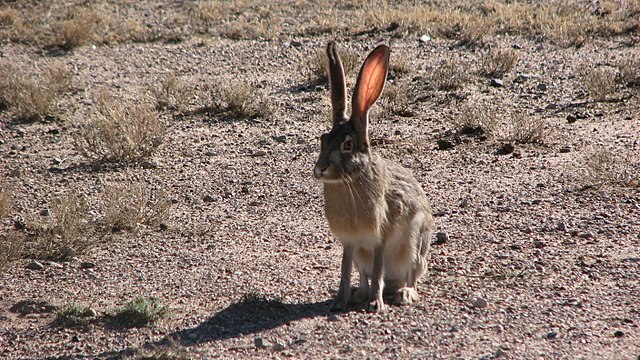
The other day, I ran in this mind-state, attending to the sound of my steps and to the sights around me. Though I kept coming back to solving plot problems in my work in progress, I did spend more of my run noticing. As a jackrabbit ducked under a shrub, I saw the exact second that its big ears folded back to avoid the branches as it scampered. Life is full of those perfect moments, these ordinary wonders.

Without them, how can I write? Or enter all my busyness and commitments with an open heart?


Road Trip

I recently took a week and a few days to go back to Virginia and North Carolina to visit friends and collect some art I’d stored in one friend’s house. I enjoyed the reconnections with people, and the brief exposure to snow and cold and to architecture that was neither adobe nor trailer. T or C, with a population of a little over 6,000—it’s been shrinking—seems tiny next to Harrisonburg, Virginia (pop. 52,000), though it’s also considered a “small town” by some people. To me, Harrisonburg felt downright urban. So many ethnic restaurants with healthy choices, so many building over two stories tall, and so many traffic lights. (T or C has one.)

I dropped in on former colleagues, and due to snow, I was grateful that retired faculty have access to the college fitness facility. Running on an indoor track takes mental endurance, and if there hadn’t been so many students playing basketball to keep me amused, I wonder if I could have managed my usual distance. I taught a couple of yoga classes at the studio where I used to work in Harrisonburg, and it was a special and meaningful opportunity.

Part two of my road trip took me to Asheville, NC, where I found myself wondering what a trip to the mountains of North Carolina would be like for Mae Martin, my series’ protagonist.  (I was visiting the friend who inspired  the character.) Mae grew up in that area and she has connections in Asheville. What it would feel like for her to go back, after living in New Mexico? Asheville is a lot like Santa Fe and T or C in some ways, with its artists and yoga teachers and massage therapists, but in many ways it’s entirely different. The mountains are old and green. And the smaller towns beyond the city, such as the place where Mae’s grandparents lived, are another world, culturally and spiritually as well as physically, from the funky, eccentric town where she’s made a new home. (I moved her to T or C years before I made the permanent move myself.)

And what about a road trip itself as part of a story? Travel is inherently challenging. I drove through rain in the Blue Ridge on my way in, and on my way back through wind that started to peel the rubber rain-channel seal off my windshield, wind that made it hard to open the car door when I stopped for gas, wind that made big truckers struggle to open and close the doors of the truck stop. There were two wildfires on the outskirts of Amarillo and the flames and smoke mingled weirdly with the sunset. Any events in a story that I could set in weather like that would be doubly difficult for my characters, and it’s my job as a writer to make their lives difficult.

The outcome of all this? I’m glad to be home in this peculiar town with its colorful people and murals, its hot springs, and its art and music scenes. I was glad to see my T or C yoga students, to run in the desert again with the lizards and jackrabbits and roadrunners, and to go out dancing at the T or C Brewery. The art I brought back is either consigned for sale or on my walls, and I feel even more at home now with the pieces I chose to keep all around me. More complete, focused and inspired to create, with new ideas for the work in progress.

“Where’s Your Baby?”

As I charged up the last stretch of hill with a final burst of speed, I heard a shout of excitement from the playground at the end of the trail. A little boy, his dark face just visible above the stone wall, had spotted me. He must have been staring out into the landscape of cacti and junipers and sand, and been startled to see a human being—and one running, at that. I heard more happy shouts, and as I rounded the bend I saw four little heads flying along within the confines of the wall. The boy had an older sister, her hair in beaded braids that swung wildly as she ran. When I did a cooldown lap of the last little stretch, the children tracked me, and then they met me as I entered the parking lot. In an SUV parked nearby, I could see a young Hispanic woman with long hair and glasses, nursing a small baby in the back seat. Two of the kids looked like they were hers, and I wondered if the two black children were stepchildren in a blended family or if they were friends, perhaps out-of-town guests. In other words, what’s their story?

The boy who’d started the excitement of running with me was curious about me, too. I guessed him to be five at most, a handsome little guy with fine features and a runny nose. He asked me how far I ran and how often. He asked where I lived, and then followed up with questions that made me think he didn’t understand age yet.

“Where’s your mommy and daddy?”

“They passed away a long time ago.”

“Why did they pass away?”

I didn’t feel like telling a child at play about my parents’ end-of-life health problems, so I simply said, “They were very old.”

“My mommy’s still alive.”

“Of course. You’re young. That’s normal at your age, but not at my age.”

He followed me to my car as I got my water bottle. “Where’s your grandma and grandpa?”

“They passed away, too. They were even older.”

“Where’s your baby?”

“I don’t have one.”

This stumped him, and he asked again, saying everyone has a baby, and then added, “I have a baby.” He was carrying a toy in one fist, some kind of bristly green creature. Ah. His baby.

While I stretched at a picnic table, his sister, who was around eight or nine, joined us. They inquired about my age, which I gave as sixty-three. The girl told me their father is “six nine.” I asked, “Is that his height or his age?” She said, “He’s that tall and he’s that old. Do you know him?” I was sure I didn’t, if he’s really that tall. And was he really that old, with children so young? She had to be pulling my leg.

The two black kids and the Hispanic boy ran off to the swings, and the Hispanic girl, who was also about eight years old, stayed with me while I finished my stretches. Even while she’d been running and playing, she held onto a notebook with a pink cover that matched her pink sun dress. Perhaps she’s a future writer. Without my asking, she told me, “Those kids are from Arizona. They visit us every year. Usually once, but they came twice this year. The other one is my brother.” She intuited that people want to understand each other’s stories, but did not enlighten me as to whether her friends’ father really was sixty-nine years old and six-feet and nine inches tall.

It makes a better story if I’m left wondering.

Smashing Clichés

Movies featuring things blowing up are popular. People like to watch demolitions, from buildings to demolition derbies. And then there is art-to-be burned, such as Burning Man and Zozobra. When I lived in Virginia, I used to clean the park where I ran and sometimes enlisted the help of several boys who played there. One day, they found a large toy firetruck in the stream and pulled it out—and proceeded to smash it to pieces with rocks. This was obviously more fun than playing with it.

Someone has been making faces on the trail where I run in the desert. Not walking along being silly, but arranging pebbles in smiley-faces on top of the rocks that mark the edge of the trail. The first one didn’t annoy me, but then they multiplied. I don’t mind intriguing, meaningful art made among the desert rocks. A labyrinth. A miniature Stonehenge-like creation. A rounded lava rock that looks like a fertility goddess surrounded by a little maze and an altar. A small rock nestled in a hollow in a large rock just because it fits so perfectly. Such arrangements fall over gradually or get covered with sand, and nature looks natural again. Someone left a small painted rock near the trail, red white and blue with the Texas flag’s star, the name of a soldier who died in combat, and few words of love and honor. It means something. No one moves it. Perhaps he used to love this trail and used to hike it with the person who left the rock. But smiley-faces? Twenty or more of them? That’s nineteen clichés too many.

On a lovely, sunny, seventy-degree winter day, I got tired of them and gave a swipe at one as I passed. No effect. The pebbles had been glued to the trail-marker rock. What the heck? Did the face-maker think this stuff should be permanent? I soon found that a quick kick could dislodge most features of the glued-on smiley-faces, and it felt good. Can I justify it? Maybe not, but to me, gluing all those faces along the trail was arrogant. If they’d been arranged lightly, without attachment, I might have knocked one aside and been content, had my fun like the boys smashing the toy firetruck, and forgotten about it. Nature would have blown them away eventually.

Writers are regularly advised to “kill your darlings,” those scenes we love that weigh down the pace, or those wonderful (to us) witty lines that don’t serve the story. We have to weed out clichés and our favorite over-used words. They can have an effect on readers like seeing twenty-plus smiley faces, an intrusion on the flow of enjoyment. Today I noticed that someone else had destroyed smiley-faces. There were face-pattern glue marks on some rocks with branches laid over them, as if my fellow self-appointed curator of trail art was saying, “Don’t even think about putting that back.”

Sometimes I store my cut scenes and lines for a while, in case I want to put them back, but ninety-percent of those darlings never return. Nothing in the first draft is glued in place. I have to destroy in order to create. Fortunately, I enjoy revision. It’s a lesson in non-attachment, and almost as much fun as smashing a smiley.

Alternate Routes

While my car has been away on an extended health retreat, recovering its ability to recognize its own key, I haven’t been able to drive to the nearby state park where I like to run the trails, so I’ve been running on a dirt road along the Rio Grande instead. It has a flatter terrain, a harder surface, and not as much wildlife, but it offers a view of the river and of T or C’s magnificent landmark, the sleeping turtle formation atop Turtleback Mountain. For a second choice, it’s not bad.

On an unfamiliar route, though, I don’t know where all the lumps and soft spot and other hazards are, and I can get distracted by the scenery—and yet it totally surprised me that I tripped and found myself scraping my knees and elbows in the dirt and gravel before I’d even gone half a mile.

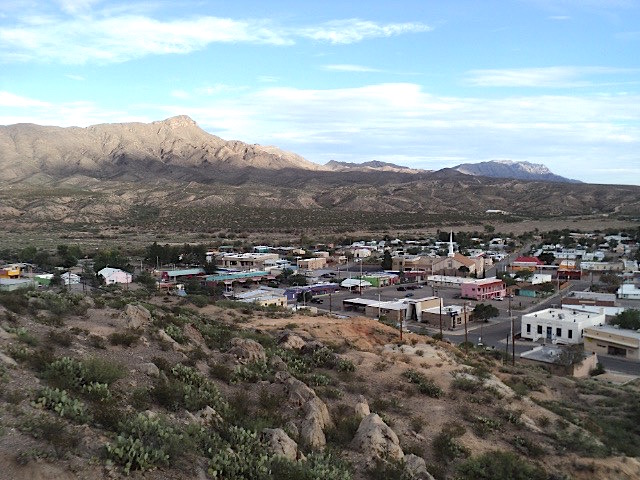
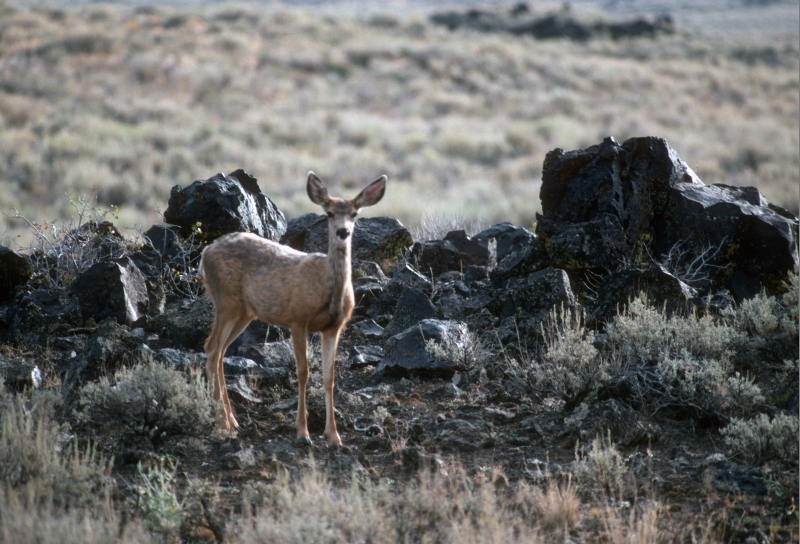
I jogged back home, cleaned up, bandaged my gashes, and decided to take a walk rather than sit around getting stiff from the fall or frustrated about not running. The route I chose took me to the highest point in town, the hill crowned by the water tank, where you can see to the edge of town in all directions. The tank features one of the town’s best murals, an image of Apaches on horseback coming to their traditional healing place, the hot springs along the Rio Grande. When I descended to downtown, I continued on to Ralph Edwards Park, one of our two riverfront parks. On the opposite bank, in the wild area across the river, a mule deer stood with her feet planted on the steep slope, her head lowered to the water, drinking in a position that would have caused a human to flop head first. She sustained her balance at such an angle it was like getting aerial view, revealing the subtle brown stripe on her back, a marking I’d never been able to see on a deer before. Four legs and hooves, I thought. It would be nice to have hooves. Her fine pointy feet enabled her to turn on a camber in a tight little clearing and angle herself uphill to browse the shrubs without a stumble. If my big ol’ size nines hadn’t stumbled, though, I wouldn’t have seen her. I’d have been somewhere else.

If my personal training business in Santa Fe hadn’t crashed, I wouldn’t have taken a job as health educator at a fitness center in Northeastern North Carolina. While I was working there, they needed a yoga teacher and none was available, but I had decades of yoga practice and offered to go to teacher training. It changed my life as well as serving their needs. Teaching has deepened my yoga practice profoundly and brought me in contact with some of my most valued friends. I found the setting for The Calling in that North Carolina town, and met the young woman who inspired the character of Mae Martin. If I’d stayed in Santa Fe, where there’s an excess rather than a shortage of yoga teachers, none of this would have happened. I can’t regret the alternate route. It was better than the one I’d planned on.

Grateful for Beauty

The world we see through headlines seems to be falling apart, filled with violence and dysfunction, and ordinary life can be full of petty hassles. I need to get out in the natural world where life is more in balance than in the man-made one, and do it daily. Before the temperature goes over a hundred and after it goes down.

 The same conditions that make June in New Mexico so challenging during the day—no humidity, no clouds, hot winds clearing the sky—make it spectacular after dark. Even just standing in an alley, a short way from the streetlights, I can look up and see not only the bigger, closer stars, but the background billions and billions sparkling like a beach of diamond sand behind them.

 Heat and all, I still run, heading out while the temperature is only in the nineties. As I was about to start a run a few days ago, I encountered a grasshopper longer than my index finger. Yes, it held still and let me measure. Its head was marbled, its body striped and speckled, and it had golden antennae that looked like strands of broom straw. Beautiful, in its own buggy way. Along the trail, pearlescent gray lizards with radiant orange bands on their sides perched on rocks then ran away. Another species displayed glowing blue-green hind legs that appeared lit from within. I think it’s some kind of collared lizard or perhaps a type of earless lizard, but I couldn’t find one quite like it when I searched on web sites. Whatever it’s called, it’s a miracle. So is having vision to see to it and a mind to appreciate it. For all of this, I am grateful.


*****

Southwestern earless lizard photo courtesy of the New Mexico Herpetological Society.

Inner Beauty

I’m a people-watcher. My fellow humans are endlessly fascinating and the fragments of their lives that I observe have the seeds of stories in them, maybe even new characters. They also give me an opportunity to practice what Buddhist teacher Jack Kornfield describes in his book The Wise Heart as seeing the inner nobility in in others.

On a recent run in a park, I noticed a romantic young couple setting up a hammock, and they asked a man who was walking his dog to take their picture in front of it. The man had a pair of hot pink headphones parked on his neck. He was around six foot three, wearing a baggy old T-shirt over a broad chest and prominent belly and khaki shorts that revealed thick, powerful calf muscles. They thanked him and he walked on with his stubby-legged little white mutt, a comical creature that looked all the smaller and stubbier for being his dog. As I finished one lap, I encountered the dog sitting patiently while the man fiddled with his MP3 player, pink headphones now attached to his head. On my next lap, he and his dog were in the middle of the green space, and he faced away from the couple in the hammock, who had vanished deep into its blue embrace. The man was singing. I realized the headphones were providing him with his accompaniment, and he was … rehearsing? Creating? He had a huge soaring tenor voice, classically trained, sweet yet strong and passionate, filling the air with a song about lost love.

You never know what’s inside another person. The pink headphones were a hint that music mattered to him, but the sound of his voice, the feeling and beauty with which he sang, expressed far more than anything on the outside. The inner depth, the inner nobility.