Curiosity and Openness

park

The boy braked his bicycle on the bridge over the creek and stood straddling the frame. “What are you doing here?”

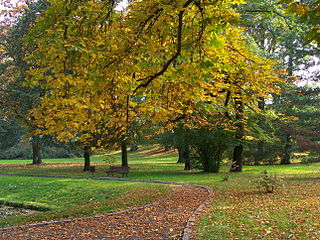
As I adjusted out of the mildly altered consciousness that comes from a long, peaceful run, I continued stretching my calf muscles, listening to the stream’s soft burbling, the autumn trees rustling, and studied my interrogator. He was about ten years old, with a stocky build, short hair and wire-rimmed glasses. His question wasn’t unfriendly—not as if he owned the park, but more of an inquiry into what other people came here for.

“I just ran four miles,” I said, “and now I’m stretching my legs.”

Four miles?” His eyebrows shot up. “I can’t even run one.”

“It took me a while to build up to four. I didn’t run that far when I first started running.”

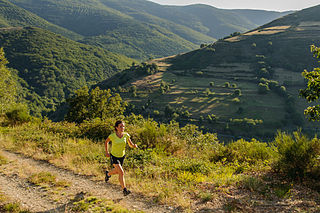
The boy asked what it felt like to run four miles and I said it was beautiful, being outdoors and quiet, moving through nature. It’s hard to describe the spirituality of running and I didn’t do a very good job of it. He said it must be a good workout. I agreed. He rode around a little while I finished stretching, and then pedaled beside me as I walked through the parking lot toward my neighborhood.

“What was it like the first time you ran?” he asked.

I told him a shortened version of the story that follows.

I’d been visiting the Apache reservation in Mescalero, New Mexico. A friend informed me that there would be a five-K and 10-K race the next morning, then looked me in the eyes and said “See you there.”

He and his girlfriend would be running, but I could tell he didn’t mean I would be there to cheer them on. He meant I would be running. I took the challenge and ran the five-K. At the time, I lived at sea level in the Tidewater region of Virginia, and Mescalero is 7,500 feet above that. Being an aerobics teacher, I was in good shape, but until that day I wasn’t a runner. I struggled uphill at that altitude, but the singer for the Navajo Nation Dancers kept cheering me on. His group had come for the powwow, and we had met briefly and chatted while waiting for the race to start. He couldn’t remember my name, only where I was from, so he shouted, “Go, Virginia! You can do it!”

I came in second for my age group, and I was hooked. Not on racing, but on the Apache concept of spiritual running. This race was not just any race, but a community event to promote health and traditional culture, timed to go with the four-day Dances of the Mountain Gods and the girls’ coming of age ceremony. My friend who convinced me to run had told me about spiritual running when we first met, and before the race started I got to know a number of other people who ran for cultural reasons. That was almost twenty years ago. and I never lost my love for running.running
The boy in the park listened to the short version of this story attentively. We chatted a little longer. He concluded that he would still prefer bicycling and then pumped his way up the steep hill, wishing me a good day and saying, “See ya.”

There was a synchronicity to this encounter. Back in 1998, I made friends with the man who got me to run that first race by striking up a conversation with a stranger. I was stuck in an airport due to a delayed flight, and as I walked to pass the time, I noticed him sitting cross-legged on the floor rather than in a chair in one of the gate areas, and was intrigued by the writing on his T-shirt. It read: All Apache Nations Run Against Substance Abuse. I was doing research in graduate school about using traditional culture to combat modern health problems in Native communities. The idea of people running all the way from the various Apache nations, from Oklahoma and Arizona and New Mexico, to gather at one chosen reservation, was inspiring. We talked a while, and he invited me to visit Mescalero later that year and put me in touch with a medicine woman who could help with my research.

On subsequent trips, I ran the five-K several more times. At the time, I was thinking about writing an ghost sickness ebookacademic paper, not fiction, but years later these races, the powwows, and the ceremonies inspired many of the scenes in Ghost Sickness. By the time I wrote the book, I had a lot of experiences to draw from.

My new young acquaintance’s friendly curiosity makes me think he has what it takes to be a writer. He has his own view—prefers biking to running—but he wanted to know what I thought and felt as a runner, and not because he planned to start running. He simply wanted to know. That’s a writers’ mind, or an actor’s or a psychologist’s. He asks: What’s it like to be someone who is not like me?

Recompressing

Half-way between New Mexico and Virginia, my tire pressure goes down. It happens every year. Nothing is wrong with the tires. It’s just that I go to mechanics in Santa Fe and they make sure the pressure is normal for that altitude, and then I descend to the lowlands.

When I unpack in Virginia, I always find that my shampoo bottle and other plastic containers have collapsed inward, folding in around the empty spaces inside them. When I run, I feel the heaviness of the air—the dampness as well as the low altitude. It’s hard work, like plowing through used teabags. Talk about coming down!

It’s time to recompress. I’ll readapt to the climate, to the busyness of the academic year, and to the green campus, so conventional and normal. I’m in the transitional phase, now though. I miss the colors and textures of the desert, the people in T or C, the eccentric personality of the town itself, the spaciousness of my life there and all the open space around it—so delightfully situated in the middle of nowhere. The challenge now is stay spacious inside when my surroundings aren’t, and as external demands become like the air, an unseen weight leaning on me. I did yoga on my back deck today, and two tiny bees sat peacefully on my shoulder through several poses. I was grateful to have this practice of active mindfulness. It left me feeling whole and bright. My outer life has to recompress, but my soul doesn’t.

Cross-Training—in the Lake and on the Laptop

During the summer, I like to mix up my usual weight-lifting routine with water exercise. The physics of water are such that you can use it for resistance training if you push against it. The technique is the opposite of lifting weights on dry land, where the more slowly you move the weight the harder you work. The faster you try to “lift” the water, the more it pushes back. Momentum doesn’t exist, and every movement is a concentric contraction, so the workout can be intense and efficient at the same time, a dual-purpose strength and cardio activity. It’s great cross-training, challenging my body to adapt to different demands and stimuli, and makes me less likely to get injured or over-train. Also, the variety enhances my awareness of what I’m doing. It keeps me out of a rut.

Today I was surprised to find the Truth of Consequences town pool closed for employee training, but I was in my suit and motivated, so I drove to Elephant Butte Lake State Park and did my workout in the lake. The change of scenery was invigorating. The water felt alive, and the people-watching opportunities were infinite.

This experience reminded me to cross-train as a writer. I do two things regularly: short essays such as blog posts and book reviews, and long, complex novels. I seldom write short fiction. It’s great cross training, though. The tight focus helps me in structuring scenes and chapters in my longer fiction. I get an especially tough writing workout when I enter short fiction contests, whether or not I win. The word limits and the required themes force me to sharpen my skills. So, I challenged myself to write a short story based on my people-watching at the lake today. Polishing it will be the next workout. I have to give it rest days between revisions. If I get it into shape worth sharing, I’ll post it here. Even if it doesn’t turn out to be publishable, though, it will have been worth the effort. There will be other results. The way my water workouts make me a better runner, my short fiction workout will make me a fitter and more flexible novelist

*****

For short fiction that I have published, go to the free downloads link.

Re-Bodying: Movement and Play

runningI’m reading Full Catastrophe Living again. I don’t know how many times I’ve read this wise book, but every time, it makes me more awake and aware. The chapters on mindfulness of the body inspired this blog post. The author, Jon Kabat-Zinn, reflects on how the words remind and remember can be interpreted as re-mind—come back home to your own mind, and re-member—become a member of your own consciousness, and then he suggests we may need the word “re-body.”

Children and animals know: it feels wonderful to move around. It’s not natural to hold still and sit for hours. I recently took a trip to visit friends in North Carolina and in Georgia, and the long drive left me craving movement. My friends are walkers and yogis, not runners. Walking and yoga sustained me for a while, but by the last day of the trip I was craving full flight. My Atlanta friend brought me to a trail along the Chattahoochee, and she walked while I took off in an explosion of delight, faster than I normally run. The novelty of the trail added to my energy. I had no idea what was around each curve or over each hill, and had to stay one hundred percent in the present moment to dodge roots and rocks and poison ivy and still take in the beauty of the woods and water. The speed and surprises were part of my joy, along with the sensation of my feet connecting with the earth, the springy strength in my legs.

We don’t all take joy from the same things, but whether we walk, run, dance, practice yoga, lift weights, do tai chi or go ballroom dancing, it doesn’t matter. We’re designed to move. And when we find the movement that matches our spirit, it’s like coming home every time we do it. I like to think that people who say they hate “exercise” haven’t discovered the kind of movement that will make them happy. They’ve been made to do activities incompatible with their nature. However, somewhere in every human is that child who had to be told to hold still. That child loved to jump, skip, run, and climb. It was play. For me, that new trail was play, the game of finding the next footfall on an unpredictable landscape. Yoga is play in the field one’s self, exploring the organization and sensation of each asana, the interaction of the posture and the breath. After decades of practice, I still find even the most basic poses fascinating.

For some people, the word exercise takes the play out of movement. Years ago, I read a study on why women exercise and why they quit. Reasons for starting: weight loss and looking better. Reasons for sustaining exercise: the discovery that it reduces stress. Reasons for skipping exercise or quitting: time pressures and stress. In other words, movement reduces stress, but when women are stressed (and I would guess this is true for men, too) they tend to forego it, as if it were a luxury. It can feel like one, in either the negative sense of an extra that can be cut from the time budget or in the positive sense of deep pleasure. It can be a luxuriant sensation to move, to be fully embodied, present and in motion.

When I’m writing and the story gets stuck, I find that if I stand up and walk around, ideas come to me. It’s as if the stuckness of sitting starts to affect my brain, and the energy of movement clears it. Movement is as essential to mental and emotional health as physical health, but “it’s good for me” is the last thing on my mind when I’m enjoying a run or a yoga practice or just getting up from my desk and re-bodying for a few minutes. I’m playing, following my movement bliss. What’s yours?

*****

Image by Robin McConnell originally posted on Flickr

The Road Not Noticed

Last week I mentioned that one of the delightful digressions in Pot Thief Who Studied Pythagoras is Hubie’s reflection on the superior merits of walking compared to driving. Some of my favorite passages in Edward Abbey’s Desert Solitaire are his rants about tourists who never get out of their vehicles when they visit a national park, and somehow think they have seen it that way. I thought about all this on a recent trip to cold wet rainy Maine, when I discovered a road I’d never noticed before. My sister, who lives there, had never noticed it either. We drove past it.

Sunday, after hours and hours of steady rain, I accepted that I couldn’t go running and did a lot of intense sun salutations instead. And then the sun came out. I’m not taking credit, and it didn’t stay out long, but at least the rain stopped. Since I wear barefoot shoes, I don’t run on pavement, but on grass and dirt, and my usual Maine-visit running route was swamped. So I took off down the verge of Route 1, traffic and all, and immediately spotted a road I’d never noticed before. Left turn into new territory.

It was beautiful, a hilly route through green deep woods, with a few houses set back among the trees. I ran in the narrow strip of dirt between the pavement and the vegetation, and crossed a little bridge over a gleaming silvery wetland that turned into a flowing stream. The road then led to an intersection with a spectacular view of a farm with open fields, well-kept old buildings painted the classic farm red, and a flock of freshly shorn sheep, a dozen white and one black. Their wet skins glistened in the soft light.

Driving, I don’t explore. I go somewhere. Running, I found a place of great beauty I doubt I could have enjoyed so much from the window of a car even if I were inclined toward idle Sunday drives. The sensory experience came from immersion in the outdoors as well as the unexpected. Frogs were bellowing and chirping, calling back and forth with songs as varied as those of the birds, making the Maine woods sound like a jungle.