Social Distancing, Reading, and Writing

Seriously, I want to hug someone. Not touching is strange, and it makes me feel a bit disoriented, not quite myself. I socialize by taking walks with friends rather than going to coffee shops, restaurants, or the brewery. No blues dancing on crowded dance floors for now. A friend I hadn’t seen for two years came to Truth or Consequences for a few days of camping and bird-watching. We met—and parted—with elbow-bumps.

I’ve been teaching yoga without using touch for guidance, and now the studio is going to close for the rest of the month. Art events, music events, the life-blood of my town … I’m not going. It’s difficult, but I can see the wisdom in doing things this way. Prevention.

Fortunately, running in the desert is still an option. And since I have less of a schedule and less of a social life, I can do more reading. E-books don’t even involve going to a store. I can’t run out of them.

And of course, I’ll get more writing done. I’ll probably be writing scenes in which people hug.

*****

The Calling is free on all e-book retailers though April 23rd

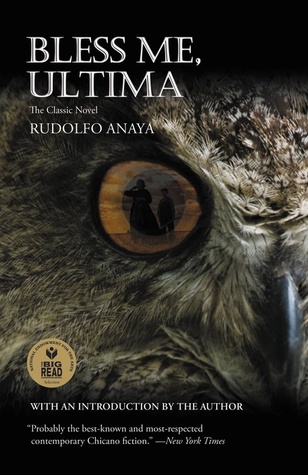
Book Review: Bless Me, Ultima by RudolfoAnaya

The narrator, Antonio, is an intelligent, spiritually-inclined boy, the youngest of a large family in rural New Mexico. The villages and the land around them are drawn with depth and beauty. That’s the strongest aspect of this book: the spirit of the place. Trees, river, lake, sky, and soil are alive.

The tensions between farming and the restless life, between Christianity and earth-based spirituality, between compassion and cruelty, dark magic and healing magic, make up the drama of the book. Though the protagonist is a child, this is in no way a children’s book. Tony witnesses adults at their violent worst several times, as well as at their courageous best. The scenes of healing and of curses are extraordinary. Anaya’s portrait of the culture he grew up in is masterful.

Tony’s spiritual maturation is true to the ways of childhood, as he searches for answers to questions about the nature of God, of justice, and of mysterious things. The friendships of childhood, and the cruelties and sheer awfulness of some children, are real and vivid. A number of the characters are one-dimensional—Tony’s mother, his sisters, and most of the girls at school—but this is how they’re seen through the eyes of a young boy. Ultima, the curandera, is idealized, the essence of her kind of spirituality, and the tavern-owner Tenorio is the opposite, the dark force. In between is Tony’s friend Cico, who introduces him to a mystical divinity in nature. Cico is just another boy, but he’s one who knows a sacred secret.

The dream sequences are long though beautifully written. The children’s Christmas play runs on a bit, too, with no real contribution to the story—I think the author must have found it funnier than I did. All in all, though, the story is intense and compelling except for those sections, and made me feel even more deeply connected with this place I live, this place I love, New Mexico.

Wisdom on Wheels

A pair of large RVs came rolling down the hill on the back road between Truth or Consequences and Elephant Butte as I was driving up it. Across the front of the first vehicle, where the sleeping quarters rose above the truck cab, was written Solitude. On the second vehicle was the word Reflection.

Good advice. Thank you. I needed the reminder.

Water Appreciation Week

The puddle bewildered me. The weather was cloudy, but it hadn’t rained. I returned from a walk to find water in the yard of our apartment building. The direction of flow seemed to come from next door. I alerted my landlord to the puddle and climbed over the chain-link fence to the currently unoccupied neighboring rental property, snagging the seat of my oldest and most disreputable sweatpants in process. I’d wondered why I actually left my apartment dressed like that. I try not to go out looking too awful. Sometimes we just plan right by accident.

Anyway, my trespassing (which was oddly fun, by the way, after the stuck moment) led me to water that trickled through the yard as far as the cement slab of the side deck next door.  Was the source in the house? The water was warm-ish. I called the owner. He came all the way from Las Cruces, thinking his rental house’s water heater had leaked.

Nope. It was fine. He dug around in our yard and found the problem. It was bubbling up from deep underground, from a pipe that runs to the Airstream trailer in the yard, the trailer my former landlady once fantasized living in when she retired. When my current landlord took over the property, he was told all those pipes were no longer connected to the apartments. No longer connected at all. Wrong.

A tree root found a pipe. The tree had water. We whose pipe it was do not.

Despite two days of trying, my landlord and one of my neighbors in our building were unable to make the repair. A professional is coming Tuesday. That will give us a full week of water appreciation.

I marvel at the simplicity of life with running water. How easy it is to wash your hands and your dishes, how uncomplicated it is to brush your teeth. Everything takes longer when you’re juggling jugs. But the jugs make me measure what I use. Even a frugal human uses a lot of water.

Our landlord bought us a week’s worth of soaking and showering at a spa two blocks away. I relish the hot mineral spring soaks along with my showers. Water. It’s sacred and healing as well as necessary and cleansing. The sensation of sinking into a hot tub when you have no water at home is doubly miraculous.

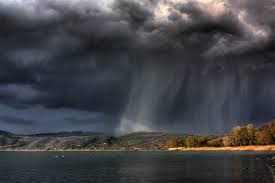
Today it rained twice, a long, quiet rain in the morning and a wild thunderstorm in the evening with intervals of hail. As I write this, the third rainstorm of the day is approaching, thundering gently as it comes. It hasn’t rained for a month, so, like all desert rain, this is welcome. Tomorrow it may even snow, after a spell of sixty-to-seventy degree weather, complete with the winds and pollen of spring. The water washed the air and calmed it down. And nourished the tree that no longer can drink from our pipe.

Vacation Mind

On a sunny, sixty-degree day, the kind that tourists from cold places come here to enjoy, I asked myself, how would I feel, think, and act if I was on vacation?

Truth or Consequences used to be my vacation destination. As a full-time resident, I do the same things I did as a summer visitor. I live in a smaller, simpler space than I did back in Virginia. I soak in hot springs, run in the desert at Elephant Butte Lake State Park, I write, I go to Albuquerque to study yoga, I hang out with friends … It’s the same life, only busier.

I have a schedule. Teaching yoga three days a week is not what anyone could call a full schedule, though it does limit my spontaneity. I’m more involved in the community. I know more people. But the biggest difference is my mindset. I don’t feel the looming return to the academic calendar reminding me to make the most of my freedom. So I don’t.

I let my head get cluttered. After I encountered a number of vacationers hiking the trail where I ran yesterday, I switched to vacation mind, appreciating the moment as if I might have to leave any day. Wow. Isn’t this amazing? It’s so warm. The sky is so bright. The lake is so still and blue. I noticed the light striking one of the bare, rocky hills on the shore making it look golden, though the land in Elephant Butte is basically gray, and how the dried blossoms atop a yucca stalk held their bell shapes months after their blooming ended.

While I stretched at the playground, a spider web glinting in the sun caught my attention, its near-invisible threads turning iridescent. The weaver, a tiny dirt-beige spider with red-striped legs and two rows of dots down its back, clung to a green metal ladder on the play structure.

Yellow stripey things—bees or wasps, I’m not sure which—nuzzled around my ankles and inspected me. I rolled my pants legs tight so the inspections wouldn’t go wrong. Their soft buzzing was the only sound.

Spaciousness. Present moment. Vacation mind

La Vieja Lets Go

A large cloth figure stuffed with shredded newspaper, adorned with long scraggly hair and pink-painted nails, she spent December in the women’s bathroom at the Truth or Consequences Brewery as the interactive art installation for the season. Women, local and visiting, could write notes to pin to La Vieja naming what they wished to release, and then take gift of a small stone or shell from a basket sharing the table with the Old One.

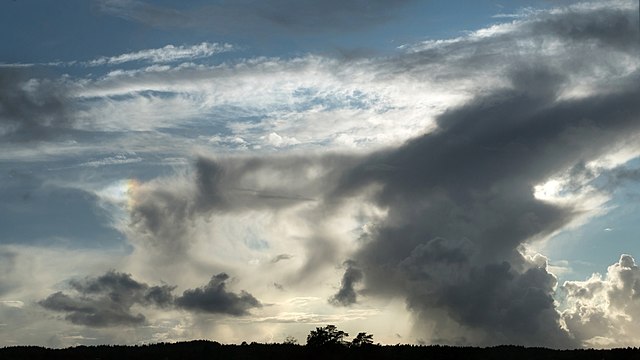
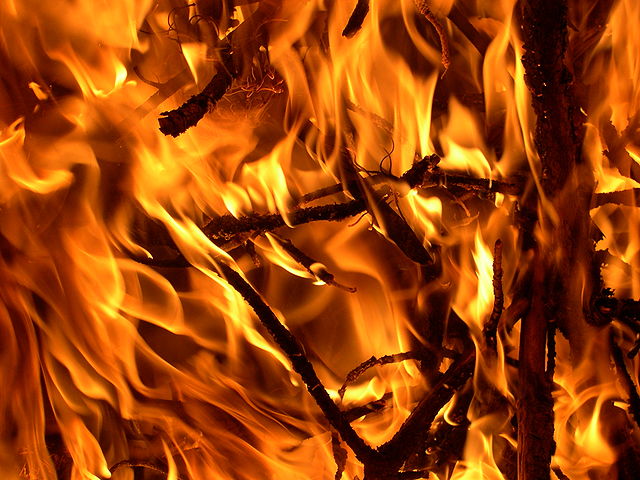
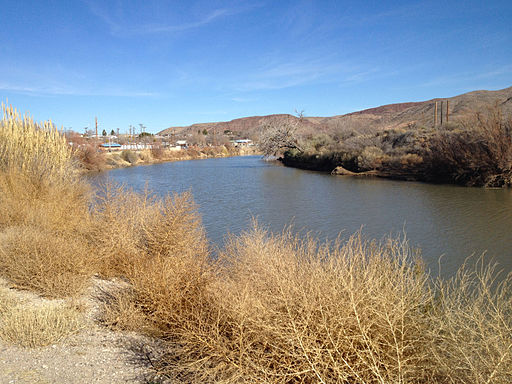
Today, La Vieja moved from the Brewery to a fire pit in Rotary Park on the Rio Grande, where a young woman who is a professional wildland firefighter arranged a safe set up for the ritual burn. A circle of women of all ages and a few men gathered. Poetry and stories were shared while the setting sun cast bright linear sunbows in the gray clouds on either side. Our firefighter lit La Vieja, and the blaze was warming and bright, the gentle sister of the fires she fights in the wilderness.

The Old One arched back with grace, and her legs moved into a posture reminiscent of an artist’s model reclining in the nude. As the words that clung to her burned, her heart seemed to open. Her arms fell back, her legs softened, and when she released her limbs one by one they seemed to let go with relief, until nothing was left but a heart-heap of smoldering ashes.

The ceremony was silent at times, social at others. I saw a friend who is moving to another part of the state. She’s letting go of T or C, feeling called to a new place without quite knowing why. Not in her head, anyway. Her heart knows.

Part Two: Not Quite Letting Go

 I found myself thinking of that famous Maine story in which a tourist asks a local for directions. The local muses and makes some attempts to find a route, but his final answer is, “Come to think of it, you can’t get there from here.” Travel from Truth or Consequences to Baton Rouge for the electric car I wanted was kind of like that. I have an eye condition that makes flying inadvisable, so my choices were either to drive my Fiesta, adding 1,000 miles to her odometer, and then trade her in for next to nothing, or take a train or a bus—the lowest carbon options.

Amtrak’s answer when I tried to plan the trip: no such route. I would have had to go a very long way out of my way and then take a bus from a place the train does go. Or I could have spent thirty-two hours on a bus one way, after getting to nearest Greyhound station in Las Cruces. I couldn’t just leave the Fiesta at the station and drive back in the new car, so I’d have to get a friend to drive me there. Or take the Mexican Bus.

I’ve never seen the Mexican Bus. It has no published schedule that I could find. You just have to know someone who knows. As in, “Ask Davey. He took it to Albuquerque once. I think it stops at the McDonald’s in T or C.” We’re not that far from the border. I can see why a Mexican bus line would come here, but it’s a strange state of mass transportation in rural New Mexico that your only option is a mystery bus from across the border.

I reached the cusp of having the electric car shipped to me, but some troubling errors in the paperwork the dealer sent and some red flags in the fine print made me cancel the purchase. (I hope I can use all this in a book. I think the objectionable sales contract has disaster potential for one of my characters who wouldn’t read the fine print.) My attachment to the Cajun Spice Red 2017 Chevy Bolt with only 10,000 miles was brief, not meant to last, but I didn’t pin “electric car” to La Vieja. I’ll drive one eventually. It may not be perfectly convenient—I’ll have to charge it at an RV park and buy a portable charging station to adapt to the plugs—but I still want to do it. Maybe, by the time I find another affordable dream car, much closer to home, T or C will have public charging for non-Tesla cars. I’ve proposed that the city or some entrepreneur convert at least one of our town’s abandoned trailer parks to EV charging stations. The infrastructure is partly there, and the lots are close to both downtown and the river. People could recharge their cars while they recharged their bodies and spirits with art, music, hiking, and hot springs. And there’s something so T or C about a recycled trailer park.


Feeling the Change, from Painful to Positive: My Small Part Matters

Generally, we humans don’t change our lifestyles unless staying the same is more painful. Change, after all, is uncomfortable and difficult. If nothing bad has happened yet as a result of what we do, we’re inclined to believe it never will. Delusional, yes, but that’s human nature.

I suspect that those of us who regularly do things others think of a disciplined actually have powerful imaginations, experiencing future consequences vividly in the present. If this, then that, and it will feel terrible. Or wonderful. Or conflicted.

I do some slightly disagreeable things because I’d feel worse if I didn’t do them. For example, every time I see plastic litter lying in the street or snagged on a thorny plant, I picture that piece of trash floating down the river, choking birds and fish and turtles, and I visualize the trash islands in the Atlantic and the Pacific. The problem is tangible and ugly. It’s also easy to act. All I have to do is pick the thing up and either recycle it or throw it in a trash can. A minor inconvenience.

It’s been different for me with climate change, though. I grasped it intellectually and as matter of principle, but I never felt personally responsible the way I do when it comes to keeping plastic out of the Rio Grande. I can’t see my CO2 output or instantly clean it up. Denial was easy. After all, I drive a fuel-efficient car, and live in a really small apartment. I’m not wasteful.

But I drive that little car a lot. Everyone in small towns in New Mexico does—if they have cars. We accept it as part of life that we have to drive one to three hours for specialty medical care and for a lot of our shopping. Truth or Consequences has plenty of music and art, but we don’t have sports medicine orthopedists or dermatologists. So we drive. And I never questioned it.

Until Australia started burning. People I knew were in the middle of a climate-related disaster. I saw pictures of the orange skies, heard news stories of people huddling on beaches, trapped between the fire and the ocean. And then there was the firefighter I heard on the radio describing how he had to take a break after six weeks on the fire line because he was so overwhelmed by hearing the screams of the koalas and finding their little dead bodies “curled up like babies.” I felt that. Deeply. I’m part of the problem. No excuses. Those are my koalas. It’s an emergency, and it’s today, not ten years down the road.

I can’t put out the fires. I can’t do a lot of things. Can’t make medical specialists move here, or alter our local retail offerings. But I can buy a modestly priced used electric car and cut my driving-related carbon footprint substantially, doing my small part.

I felt inspired, committed to participating in a positive future when I made that decision. New Mexico is headed for a clean energy transition. The process is complicated and flawed, but we’re making a start. We use enough clean energy now that an electric vehicle is the equivalent of a car that gets 60 miles per gallon. Even my 40 mpg Fiesta doesn’t match that. And as the energy mix gets cleaner and cleaner, EVs will contribute less and less to greenhouse gases. I’ve contacted people at all levels of state and local government about the need for better EV charging infrastructure. And I found my dream car online.

Working out the details of actually acquiring it and owning it is proving more challenging. Much more challenging. The car is long way off. More about that later, as I deal with RV parks, The Mexican Bus, all kinds of cords and plugs, and the possibility of having to cave in and get a smart phone. Yep. Change is uncomfortable. But so is staying the same. I have to do something. It may turn out to be an adventure.

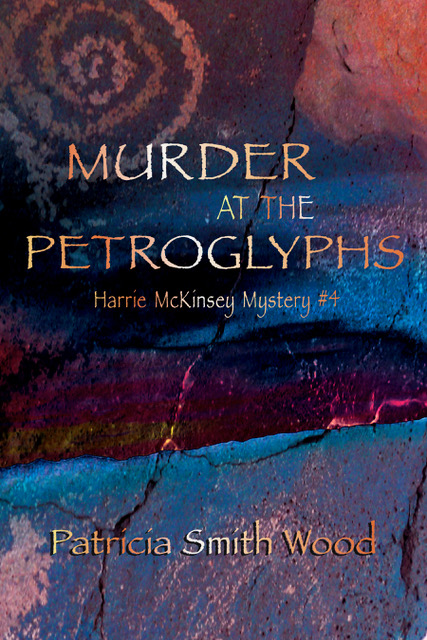
A New Mexico Mystery Review: Murder at the Petroglyphs by Patricia Smith Wood

Once again, Patricia Smith Wood has crafted an intricate puzzle of a mystery. In short, tight chapters, she reveals the discovery of a death, and the process of solving how a body came to be where it was—but this is no simple question of who done it. The twists and surprises keep coming. Wood’s books always give my brain a good workout trying to follow the clues. The relationships among her cast of professional and amateur sleuths makes the involvement of amateurs more plausible than in the average amateur sleuth mystery. Another reason to get involved is this: Harrie McKinsey has prophetic dreams, and in one of them she sees the dead body at Petroglyphs National Monument.

There are so many facets to the mystery, so many contributing investigators—FBI, CIA, and Albuquerque Police Department, as well as Harrie and her friends and colleagues at her editing service—Wood did well not to have major subplots. It’s unusual in what is technically a cozy mystery, but it was the right choice. Most cozies have romantic subplots, but the central characters here are in established relationships. Most cozies are comic. Though many of the characters in this book display a natural and engaging sense of humor, it isn’t a comic mystery. It’s cozy in the sense of limiting onstage violence and having amateur participation, with much mystery-solving taking place over dinner or coffee.

I enjoyed the various Albuquerque settings, from restaurants to major parks like the Petroglyphs to local secrets like the Hidden Park, and even an airfield used by drone enthusiasts.

Many scenes take place at Southwest Editing Services, Harrie’s business. I was surprised at the importance of paper copies as well as electronic copies of manuscripts in a professional editing service. I’d thought paper was a thing of the past, but apparently not. I learned something.

I would have liked a stronger thread connecting the opening and the ending. The title, the cover, the first chapter, and park ranger Nick Ellis’s deep connection to the spirits of the ancient ones made me expect more continuity on this theme. In fact, I initially expected a different kind of story altogether. Harrie doesn’t come across as having a mystical connection to the land and its history, so the sudden transfer of what has been Nick’s spiritual experience to her felt as if an editor said to bring that theme back. Harrie is already psychic about her life and family, and having her new dream come from the spirits struck me as out of character. A couple of backstory chapters and a few chunks of expository dialogue also felt like afterthoughts or requests for additions, rather than integral parts of the otherwise tightly woven plot.

The wrap-up of the mystery plot was one-hundred-percent unexpected, even though I figured out the borders of the puzzle. The explanation scene is realistic and well-structured. (I’m always grateful when a book doesn’t have one of these clichéd confessions from a killer holding protagonist at gunpoint.) Wood has real skill with crowd scenes. She can juggle six or eight people in a scene and never let the reader forget any of them.

Complexity is what she does best. If you like a mystery that puts your mind to work, you’ll enjoy this one.

Cold Day Run

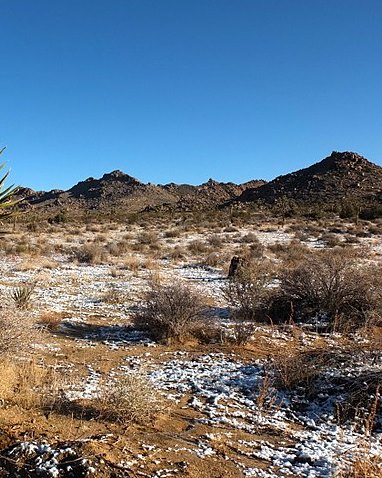
It was thirty-nine degrees today, with wind at fifteen miles per hour. In the spring, when it blows at twice that speed on a regular basis, I would call that a light wind. But it’s not cold in the spring. It’s normally not cold in the winter, either, for which I’m grateful. I have a low tolerance for low temperatures. Still, I had to get out and run. The weather had been even less inviting for the previous two days. A third day without prolonged outdoor time would have been far worse than wearing the winter running gear I’ve so seldom needed since moving to Truth or Consequences. My mind and body crave nature, light, and movement.

It would have been easier to stay indoors, but less rewarding. The sky was brilliant New Mexico blue, and no one else was out on the trail. No humans, that is. On my third loop, there were fresh deer tracks, signs they had been there just before me. By the end of my run, my face was cold, and my fingers and wrists deeply chilled through my gloves, but I’m glad I braved the weather. It was uncomfortable at times, but whenever I turned a curve that took me out of the wind, I cherished the reprieve and communed with the winter sun.

I have a list of unpleasant tasks I’ve been crossing off, one by one, but a few remain—and they’ve remained on that list a long time. I have to remind myself that the actual doing of the difficult thing is less stressful than thinking about doing it.


Book Review: New Mexico Ghost Stories by Antonio Garcez

The land of enchantment is full of ghosts. Some of them scare you; some are just showing up for work. This book starts off with Santa Fe, where apparently some of the scariest ghosts in the state reside. A few are bland, but many of them are hair-raising and bone-chilling. Other parts of the state have some dark and terrifying ghosts as well, but not in such concentration.

Hospitals are, as one might expect, often haunted, as are private homes. However businesses, especially restaurants, have a disproportionate share of ghosts. A frequent pattern in haunting emerges. The former proprietor or employee of a business, or the former resident of place that’s now a business, stays around and does innocuous but strange things. I’m sure these events are startling and even frightening when experienced individually, but after a while, I began to wonder why deceased women tend to haunt in white dresses and red dresses. And why female business owners in particular are most inclined to keep showing up for work after they die.

There are a few gentle, loving ghosts who come back to visit family, and even the ghost of a monkey who died on his way to be in a circus.

The author occasionally spends too much time, in my opinion, on background stories that aren’t ghost stories, but for readers unfamiliar with New Mexico, this is probably valuable material. His writing style can be clunky in places, and he overuses exclamation marks, but it’s a minor flaw in an otherwise rich and intriguing book. He collected the stories one by one through interviews with people who experienced each ghost, and his accounts of these meetings give depth to the tales.

*****

Yes, I know this is not remotely holiday-themed, but I finished the book and wanted to review it. I wish all my readers the best of the holiday season, in whatever way you celebrate it.