Chasing Rabbits

I try not to think about him or to look for him. I’ve stopped leaving his dinner out for him. At least for tonight, I think I have. It’s hard to let go of his beauty, though. I want to see him again and hope to be able to touch him. But I’m afraid he feels betrayed.
 When my neighbor in the next apartment mentioned how odd it was that the larger rabbits in the neighborhood were white, and the small ones brown, I had no idea what he was talking about. I said they all looked gray-brown to me. Then it arrived in our courtyard. A domestic rabbit, someone’s lost or abandoned pet. My neighbor said, “See? It wasn’t just some Jefferson Airplane thing.” Since then, that song has played in my mind, complete with lyrics I didn’t realize I knew. Feed your head?

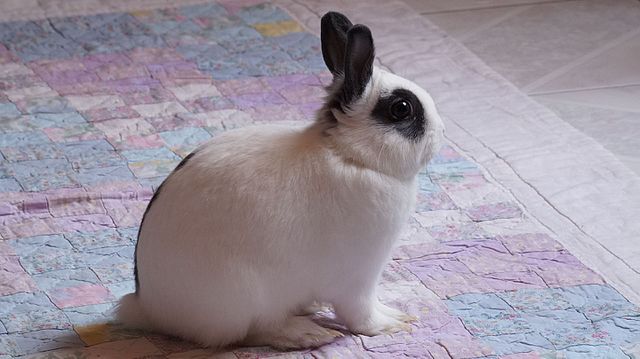
I was more concerned with feeding the rabbit. I wanted to tame it and find it a good home. Pet rabbits’ colors make them easy prey. This rabbit is white, astoundingly clean as if freshly washed and brushed, with gray-brown ears and a little gray stripe down its back. A few days after its first arrival, it was joined a smaller white bunny with gray spots. They sometimes went to the yard of the empty trailer across the alley and out into the alley. There’s grass there, but dogs who escape their owners tend to show up there. And two big, half-feral Siamese cats prowl the neighborhood, hunting. Not to mention foxes and hawks. I know nature has to take its course, but I grew attached to the white rabbits, giving them fruits and vegetables, and they began to come up and eat from my hand. The white rabbit was so at ease with me, he would sit there after a veggie snack and wash his face, yawn, and stretch out for a nap. Once I saw him fold an ear down and run it through his mouth for cleaning and flip it back up.

My neighbor and I located the rabbits’ original owner. His fiancée’s granddaughter moved out of state to live with her dad and left seven pet bunnies behind. Two escaped. The man didn’t want the runaways back, but he brought me a lot of food for them. The spotted bunny got adopted, after a minor chase in the yard. I was impressed with how the mother-and-son team who came for the bunny worked together to catch her in a fishing net on a pole. They raise rabbits, and the teenaged boy shows them in 4H. They donate affectionate bunnies who don’t make good show rabbits to families whose children with autism need a pet. They also take bunnies to the Veterans’ Home for petting. The spotted rabbit screamed like a human for a moment when her paws got tangled in the net, but once her new owner had her cradled in his arms, she totally trusted him and let him examine her paws and teeth. I got to pet her finally. She had the softest fur I’ve ever touched. Now she’s living in what I call the Bunny Spa, safe and loved with plenty of fresh water and hay.
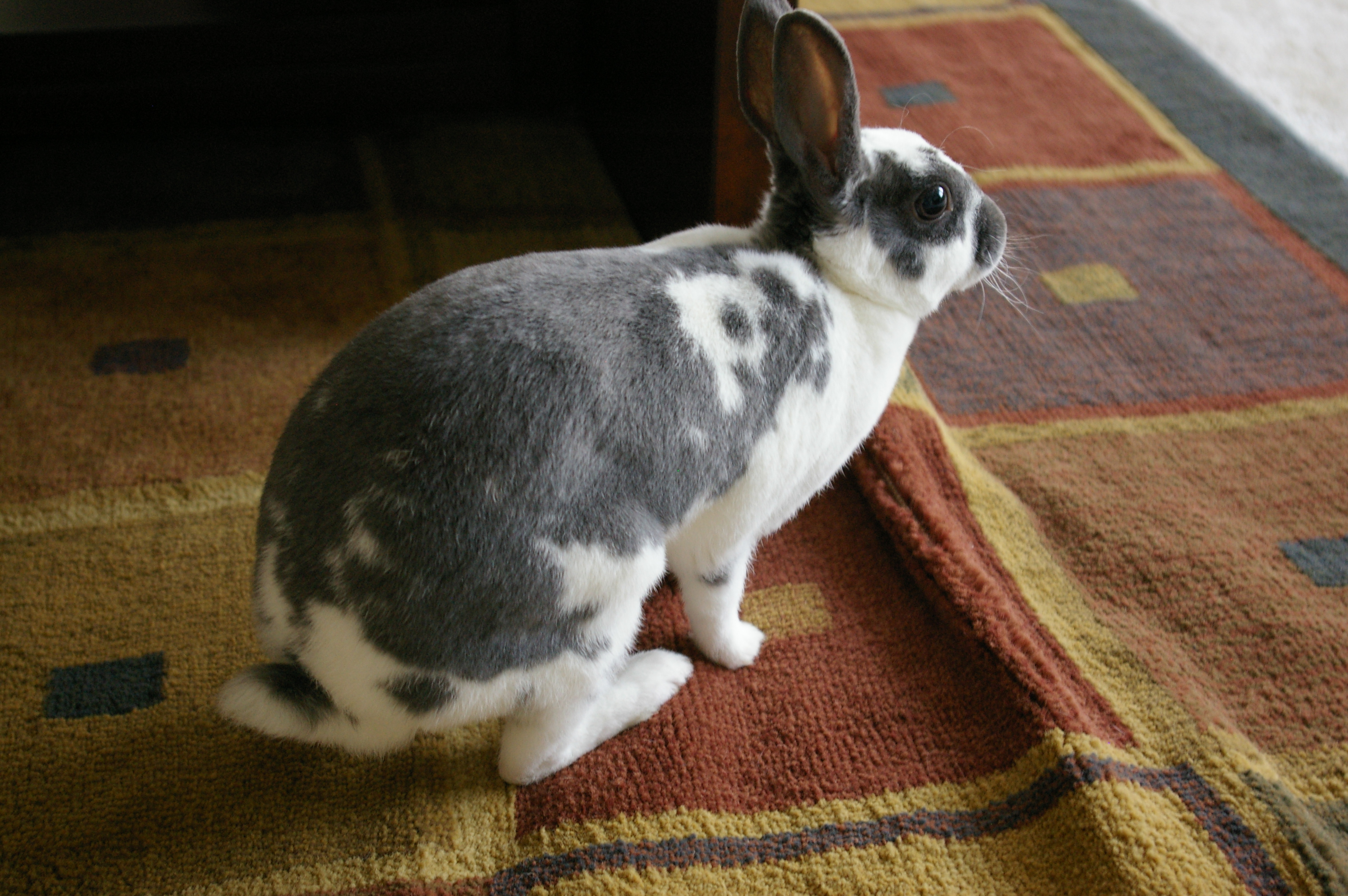
But Bunny Number Two is another story. The white rabbit. We tried to catch him twice and failed. While the sunset burned orange into gray clouds in the west, he led us down alleys and over rocks and goatheads and other thorny weeds in the yards of run-down, abandoned houses and trailers, places I would not otherwise have gone. (This feels like a great opening scene for a mystery.) The boy caught him briefly in his net, but the bunny sprang out before the magical taming cuddle could take place.

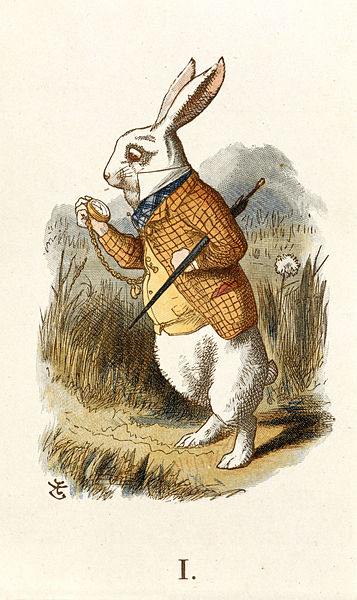
I decided to break up with the white rabbit, to let go of trying to save him and pet him and take care of him. He no longer stops by in the evening to hang out with me and receive offerings of pears, spinach and lettuce. Not after the episode of the net. Instead, he visits early in the morning while I’m still sleeping. My neighbor sees him sitting under the fig tree where I’ve been leaving his nightly salad and bowl of water, staring  back at him. White Bunny is playing hard to get. I say we’ve broken up, but in truth, this could go on a long time. As Alice could tell, you, once you start chasing white rabbits …

The Sunset Was Free

I just sent a book to my beta readers, the third or fourth or maybe fifth revision of Shadow Family, the seventh Mae Martin Mystery.  There are a couple of characters in it who feel good about themselves as thieves. They smile a lot, acting the role of good guys. The theme in the book is self- justification. How we dig in and commit more and more deeply to our mistakes and bad judgments to justify our behavior to ourselves, and how people who are doing something ethically wrong convince themselves it’s actually right.

After a yoga workshop in Albuquerque Sunday, I stopped by Whole Foods to pick up some organic groceries. While I was in the bulk foods section filling a bag with pecans, a fit, cheerful-looking bearded man of about thirty, carrying a plastic bag of produce, pulled the lever on the bulk bin of chocolate covered peanuts, dumping a large serving into his hand. He flashed me a bright smile and ate from his handful as I stared at him, giving him the “WTF?” look, too startled to speak. We made eye contact. He smiled again and swaggered on up the aisle toward frozen foods, munching away. I put my bag of pecans in my cart and proceeded to get walnuts. A skinny teenaged boy with stylishly eccentric glasses walked up and grabbed a yogurt-coated pretzel from a bin and began to eat. This time I found my voice.

“Does everyone do this? You’re the second person in five minutes to just take stuff and eat it.”

He smiled and walked away. I once saw a little girl furtively sneak one raisin from a bulk bin at the same store. She realized I saw her, and she ducked her head, apparently feeling guilty.

The guys’ smiles bothered me more than the petty theft. I told myself it must have been a study with actors playing the role of thieves, and someone was watching, observing how others reacted. I didn’t want this to be normal. They looked right at me and assumed my complicity and approval. It reminded me of the way colleagues at a job I had way back in the early eighties would look around, see that all the employees in the break room were white—you can tell the look—and then make a racist joke. I would get up and walk out, telling them it was not okay with me. Racism is a huge wrong. Stealing a pretzel, pretty small. Assuming everyone agrees with you is troubling in both cases, because you think you’re not violating moral norms.

While I was on my way home Sunday, I stopped for gas in Socorro at exactly the moment the sunset was at its most spectacular. Orange and purple in the west, pink in the east, and pink and orange in the north layered with thin, swirly, magenta wisps. Above was a ceiling of pink clouds. A woman in the parking lot of the gas station was taking pictures. I walked all over the lot and into the space next to the adjoining business, seeking the best view of the clouds and the mountains. When I finally went in to pay for gas,  it was hard to let go of the beauty for even a few minutes. The picture-taker urged the young woman minding the store to come out and look at the miracle. She did, but she couldn’t linger. After all, sad to say, someone might go in and steal something.

Incompleteness

A week of thunder and lightning, but no rain.

A long to-do list.

A book finished but not finished. It’s with my beta readers and critique partners now. I have no idea how much revision they’ll recommend.

A world I wish I could change for the better.

If only the clouds didn’t have so many spaces between them. I think they could rain if they all got together. I have no power over that, though. I only have power over how I handle incompleteness. One thing crossed off the list every day. Small steps taken to make a better world, adding my voice and my efforts. Accepting there are no guaranteed results.

Inner quiet time. Without it, I can’t do the rest.

Snake Tracks

What was going on that night? Are they always out in such numbers, and the conditions simply revealed their traces? Or was it a special event?

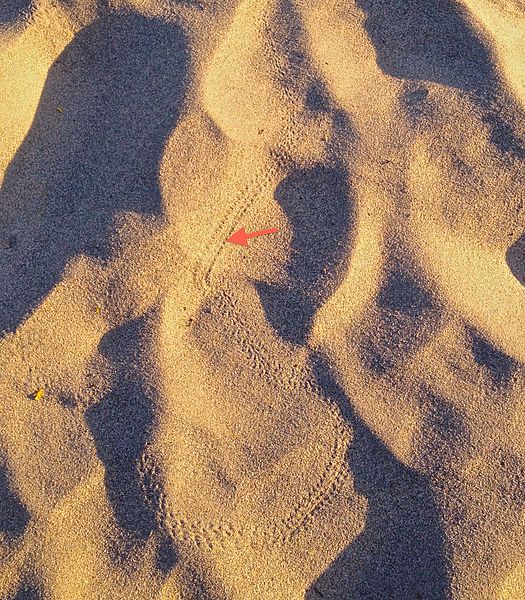
A light evening rainstorm, isolated in Elephant Butte, cleared all other imprints from the sand on the trail, so only the tiny dots of rain pocked the otherwise smooth surface. It was so hot the next day, no humans had set foot there until I went for a run. Every few feet, a snake track crossed the trail. Thin snakes, thick snakes, straight-line travelers, undulating travelers. Travels to bushes, to rocks, to holes. I had wondered what lived in that hole. Now I know.

I also know how a snake can travel in a straight line. If it’s in no hurry, it can propel itself along on the scales in its belly, almost like walking. I watched a video. Amazing. Now back to writing the book in progress. As long as it’s been taking, I seem as slow as a scale-walking snake after a rain, but I’ve been busy. Every night. Apparently, so have the snakes.


The Full Circle Moon of Good Intentions

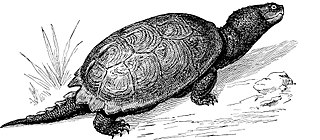
“Do you know anything about turtles?” the woman asked. She was a slim, big-eyed brunette in a sundress, carrying a large blue canvas bag. A silver-haired man carrying a plastic grocery bag stood nearby, poised to walk off, his shoulders turned away from her. She must have already asked him, and he obviously wanted to keep moving.

I was on my way to meet a friend for a sunset walk. The clouds promised great color effects. But when I discovered the woman was uncertain how to rescue a  turtle that was trying to cross the street, I had to stop. We were five blocks from the river. A long hike for a turtle, and a dangerous one. Hot pavement, traffic, and predators. Yes, predators. And not just cats. There was a gray fox trotting down the alley across from us. Unlike turtles, foxes come downtown quite often. (Plenty of bunnies, no competition from coyotes.)

I found a small flower pot lying on the street. The woman offered to sacrifice her towel—she was on her way to La Paloma for a hot spring soak—to wrap the turtle, and I cupped its sharp-beaked little head in the pot. First we just lifted the critter over the adobe wall into the yard of the nearest house. I knew the owners, and they wouldn’t mind. But the turtle took off running for the sidewalk. I never realized they could move that fast. It would be in the street again any minute.

I called my friend and explained that I was taking a turtle to the river, and he said he would meet us there. My new acquaintance and I headed toward the Rio Grande, with her cradling the turtle in a fluffy pink towel. She told me was in T or C on a long visit from Austin and was thinking about moving here. Since she was too young to retire, I asked what she would do here. “Thrive,” she replied.

We met my friend and his dog on the way and then released the turtle into a muddy spot on the riverbank, not too steep or bumpy, so it could have a safe slide into the water. It stared at the river and then hurried into the weeds.

Satisfied, we humans lingered to watch the full moon rise from behind Turtleback Mountain, and my new friend and my old friend told stories, getting acquainted. Bats dived after insects, swooping in close to us, and we gradually fell silent in the sacred space.

Later, at home, I looked up turtles. I’d never answered the question that started the evening’s adventure: Do you know anything about turtles? If I had, the answer would have been no.

I learned they lay eggs around this time of year and may walk up to a mile from the water to do so. Our rescue interrupted a turtle on a mission. I told myself we meant well, and that she came out the wrong side of the river. The other side is wild, but she was heading downtown. Even if she somehow found a spot to bury her eggs, the hatchlings would never make it home. Still, I have to wonder about the unintended consequences of our good intentions. Maybe she knew what she was doing. I hope she found a good, safe place to lay eggs, but after her heroic trek, we brought her right back to where she started.


Dropping In

When I was a teenager with divorced parents, one of the many things I loved about living with my father was the spontaneous sociability. People dropped in on him, often in the late mornings on weekends, and on summer evenings we would go for walks and drop in on friends. We were in a small town on the Maine coast where he was informally referred to as “the mayor,” though the town was in fact so small it didn’t have one. He was one of the few year-round residents.

Where I live now, spontaneous socializing happens on the streets, in coffee shops, and at the brewery, but I don’t drop in on friends unless they own shops—dropping in on shop-owners is a social custom here. Otherwise, I’ve developed the habit of calling if I want to make short-notice plans. Then my cell phone provider and I had to part ways, due to a series of annoying technical events. I couldn’t make calls. I was in the middle of I-will-not-tell-you-what kind of hassle trying to set up online with the new provider when I heard a knock on my door.

A friend had dropped by to tell me his phone didn’t work.

Needless to say, the timing was perfect. I invited him in. I’d been meaning to call him during my three days of phone problems and couldn’t. We vented about cell phone service, and he said he’s going to get a landline. “Why do I need a phone with me all the time?”

Good question.

I didn’t go quite so far back in tech time as he decided to, but I still don’t have a smart phone. Why do I need a computer with me all the time? I like talking. If friends want to get in touch, I like it if they call and talk, not text. If it’s after eleven a.m., they can even drop in.

Anniversary Sale

Two years ago today, June 2, I was half-way across the country, moving from Virginia to New Mexico. I’d lived in Santa Fe previously and left for a job in northeastern North Carolina, where I found the setting for The Calling. I always knew I’d be back, and when I discovered Truth or Consequences, I was instantly caught in the vortex. I knew I would live here someday.

In Shaman’s Blues, Mae Martin moves to T or C. Unlike me, she’s never seen it before. Never been to New Mexico. Doesn’t know a soul in town except her father. Join her on the adventure and celebrate my anniversary.

Click here for 99 cent sale

Slowness

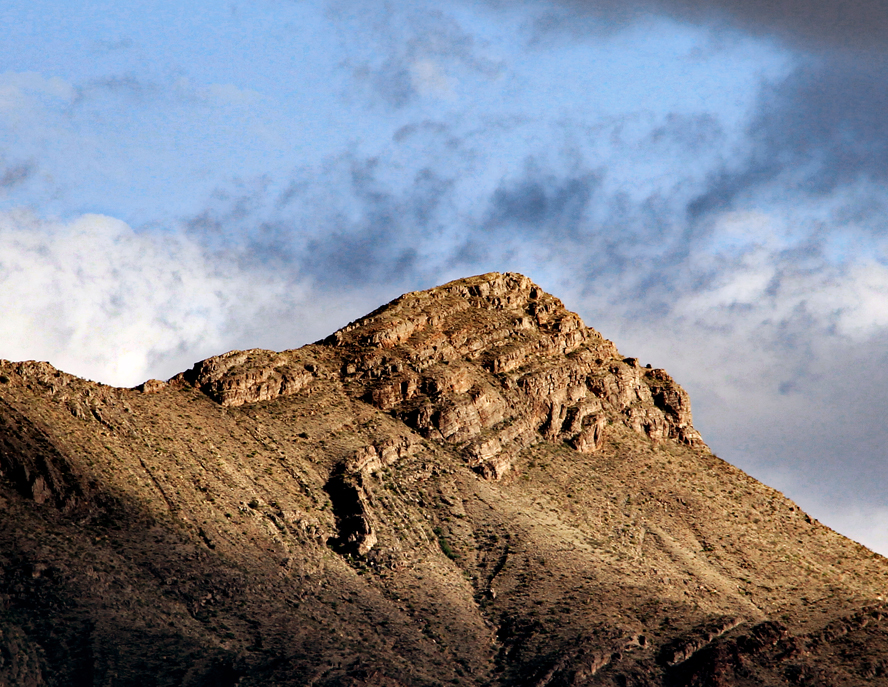
In honor of the Turtle, the local deity of Truth or Consequences who rests atop Turtleback Mountain, I contemplate the virtues of going slowly.

A friend who came in next-to-last in a marathon told me with pride that it took a special kind of endurance to keep on going for such a long time at her slow pace, especially mental endurance. It was a good insight. After all, she had no illusion she could win. Her motivation was personal and internal. She wasn’t competing, just completing.

I’m a slow writer. I write daily and have no shortage of inspirations. What takes time is depth.  I have to know what every character is thinking and feeling, discover the subterranean aspects of my lead characters’ minds, the emotions they themselves might not be touch with, and become aware of potential interactions at that level as well as in the mystery plot.

The style of yoga I study and teach is slow, not flow. The psychological state of flow occurs, but the asanas are explored in depth rather than in a fast-flowing sequence. I’m taking a twelve-week workshop with the teacher who first trained me to teach. In each weekly session, we study two or three asanas that have similar patterns in the body, attending to the subtle organization, the inner details. Seventy-five minutes on just utkatasana, warrior one, and warrior three was fascinating.

It’s not that I don’t enjoy anything fast. I love dancing to fast-paced music and reading fast-paced novels. Sometimes, in my personal yoga practice, I do a vigorous vinyasa. Speed is energizing. To achieve it with skill, though, the writer, dancer, or yogi first has to master slowness.

I look at the mountain and realize there’s more. The Turtle has mastered stillness.

*****

Turtleback image by Donna Catterick, whose photography graces the covers of Death Omen and Small Awakenings.

Snake Appreciation Day

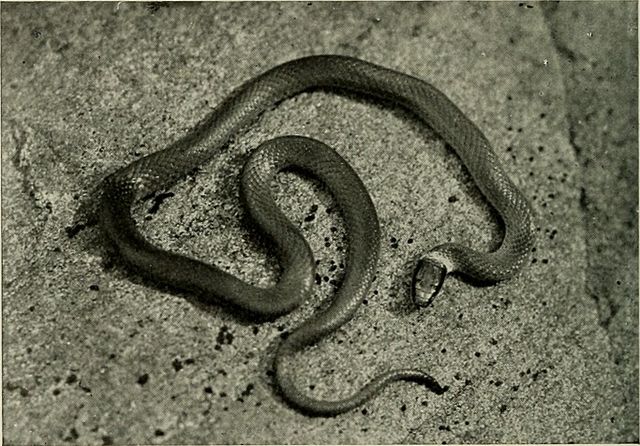
My first sighting, finally, after years of running in the New Mexico desert. A sunny day turned suddenly cool and cloudy, which must be what made this normally nocturnal creature stir.* I slowed down to let the snake cross the trail and go wherever it was going. What an amazing design. Such graceful motion. It was plain gray, not a speckle (or a rattle) to decorate its slender form. Perfectly silent, it disappeared under a bush with its gentle undulations. I crept past the bush, sneaking a look under it. No snake. I didn’t expect it would have stayed. They’re shy, after all.

As I resumed my run, I marveled at the snakeness of the snake, its directness and simplicity. There I was with how many bones in each foot, moving from one set of tarsals, metatarsals and phalanges to the other, using how many muscles in each leg and hip, with hinge joints and ball-and-socket joints in motion, postural muscles at work … I had to ask myself …

Whose locomotion shows more art?

I have so many moving parts.

But Snake can get along just fine

While being nothing but a spine.

*****

*I looked it up and concluded it was a ringneck snake. They are colored like a gray suit with a bow-tie and are rarely seen during the day. Wikipedia describes them as “dainty and inoffensive.”


Desert Encounters


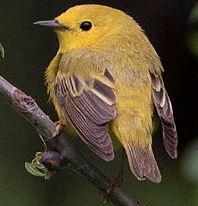
The hind end of an animal I’d never seen before in this stretch of desert silenced my thoughts. Whatever it was, brown and furry and scurrying, stub-tailed and about the size of a rabbit, it made me aware. The novelty of birds with bright yellow feathers broke into my thought-cycle also as I ran—yellow warblers migrating through (at least I think so; I’m not a bird expert, just an admirer). A quail atop a bush, its crest profiled against the blue sky, brought another moment of surprised inner stillness. Quail are usually running on the ground. It’s the lizards who pose.

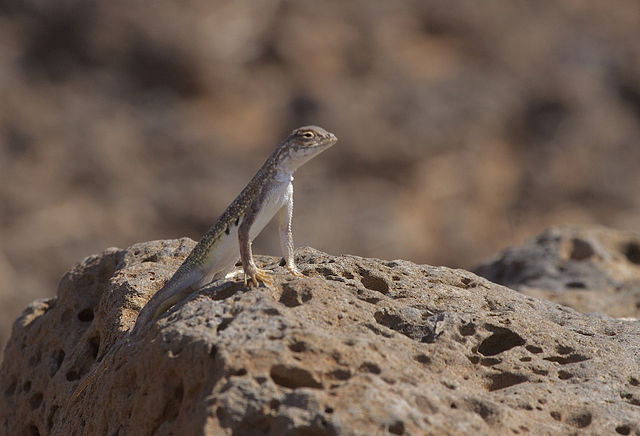
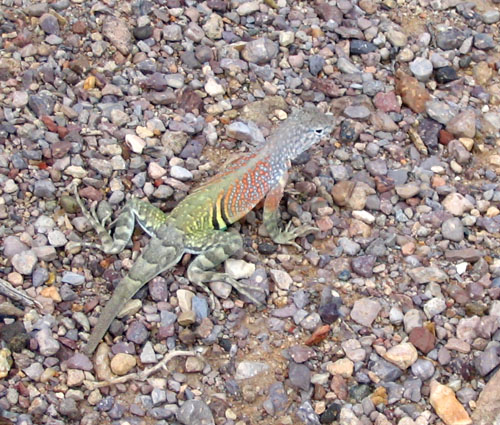
I stop for lizards. A lesser earless lizard, no bigger than my thumb, has little bright eyes and long golden toes, subtle gray-on-gray spotted markings, and tiny arms that enable it to do push-ups with flawless form. Its miniature legs run faster than I can. The greater earless lizards seem to be showing off their green hind legs, their side stripes, their green-and-orange forelegs, and the rose patches on the females’ flanks. I’m sure they’re displaying for each other, but I appreciate the show. Everything else on the ground blends in—brown or gray—but they glow. It seems odd for small, delicate, ground-dwelling creatures not to be camouflaged, but they flourish, maybe because they like the heat and nothing else does (except crazy runners). Their body ideal temperature for activity is 101 degrees. I observed a large one getting brighter the longer he baked. On my third lap of the trail, his orange stripes were radiant, as if he had to be heated properly to light up.

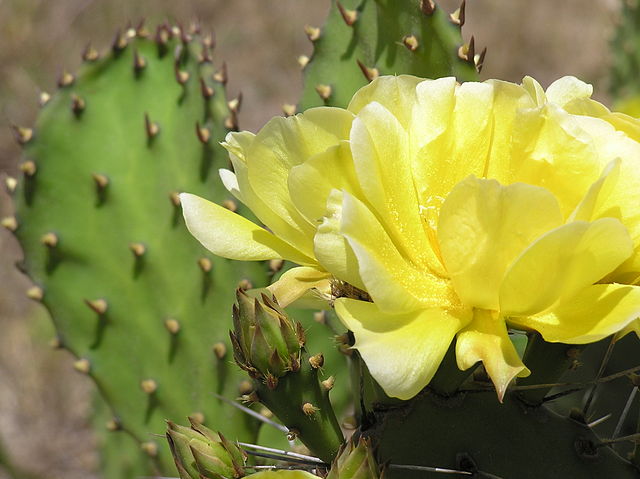
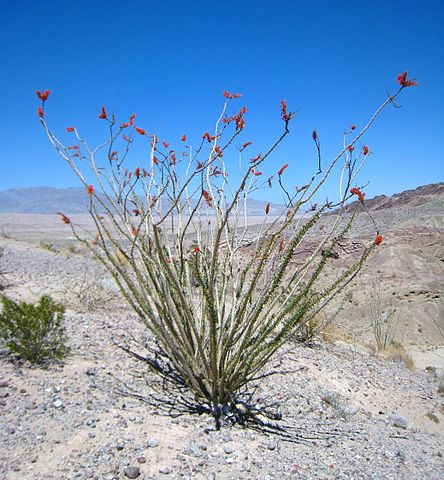
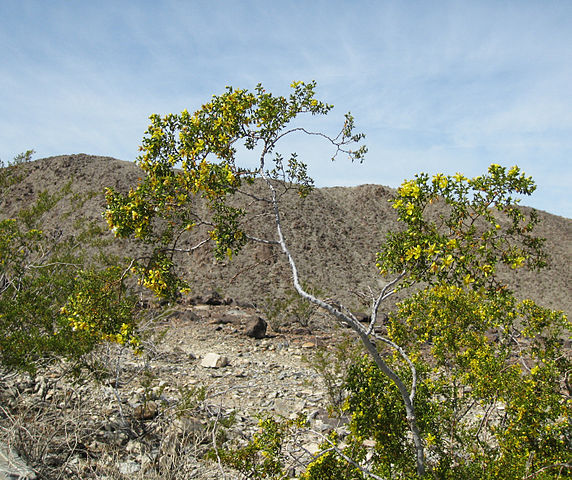
The prickly pear cacti are blossoming, bright yellow. Creosote bushes have small yellow buds. Ocotillo blooms shoot out like red-orange flames on the tips of slender, bare stalks. The yellow birds are posing on them, contrasting with the flowers, and perching among the creosote branches in a yellow-on-yellow match.

The birds-and-flowers encounters make me stop in awe. Yes, I’m running, but there are moments not to be hurried.