IndieBRAG Christmas Blog Hop: A Free Holiday Short Story

ALL-ABOARD-with-medallionB.R.A.G. Medallion authors are taking you on a holiday tour through their blogs. On this stop, enjoy my new short fiction for the season.

Santa Claus Checks in at the Fat Buddha Spa

Mae Martin raced her twin stepdaughters to the pasture fence and almost let them win, making it a three-way tie. The llamas looked up from grazing on the dry winter grass, blinking their long lashes. Taking walks to visit the neighbors’ animals had been a favorite pastime for Mae and girls when she’d lived with them. Now, on her first holiday visit after separating from their father, she was trying to keep everything as normal as possible. As the six-year-old girls clambered onto the fence, Brook shouted. “That’s what I want for Christmas. A llama.”

“Are you sure?” Mae picked up a small purple glove from the weeds and put it in her pocket. The late December day was growing warm and both girls had taken off their gloves and hats. “I thought y’all wanted a tarantula.”

“We do, but Miss Jen is scared of spiders.”

Their father’s new girlfriend didn’t share Mae’s appreciation for crawly critters. “She might think a llama was cuter, but I don’t think anybody can afford one right now. You do know your presents come from family, right? Your daddy said y’all don’t believe in Santa anymore.”

“Yeah. We figured it out.” Stream perched on the top rail, swinging her legs. “We watched this TV show with Grampa Jim and Granma Sally about these people who have reindeer in some place near the North Pole.”

“Lapland?”

“Yeah. And those things are big. There’s no way they can fly.”

“What about magic?”

Brook sat beside her sister. They studied Mae as if they felt sorry for her. Poor mama. She’s not caught up with us yet. “Magic is for little kids who can’t figure things out. We’re gonna be bug scientists when we grow up—”

“Nun-uh.” Stream wriggled and sat straighter. “That’s your job. I’m gonna be a race car driver.”

Mae walked up and placed her hands on their knees. She loved their independence and eccentricity, but they could be tactless about how smart they were—like her ex-mother-law—and she needed to take that attitude down a notch. Gently. “Now what in the world is Santa Claus gonna do if all these kids don’t believe in him?”

Brook frowned, saying he couldn’t do anything if he wasn’t real, but Stream started to laugh. “He’ll pop like a bubble.”

Mae did her best to act serious. “Did you tell your friends there’s no Santa?”

The girls exchanged glances. Brook said, “We got in trouble for it at school. It made some kids cry.”

“It might be hard on ol’ Santa, too. Popping like a bubble. Before you tell any more kids he’s not real, I think I’d better give him a call and see how he’s feeling.” Mae took her cell phone from her jacket pocket and pretended to make a call. She rolled her eyes and sighed as if waiting a long time for an answer.

The girls poked each other and giggled. Stream whispered to her sister, “She can’t call him. She’s making believe.”

Mae raised her eyebrows, giving them the oh yeah? look, and then a triumphant smile as if she’d finally heard a voice. “Well hey, Santa buddy. What’s up? You know Summer Stream and Autumn Brook Ridley don’t believe in you anymore? … Oh. Of course. I can’t surprise you. You know who’s naughty and nice. “

Brook protested, “We weren’t naughty. We told the truth.”

“But did you tell it nice?” Mae turned away, lowering her voice to resume her conversation with Santa. “I hope they didn’t hurt your feelings. They told half the kids in Hertford County, North Carolina—You’re kidding! … So what are you doing now? … Really? Shut up! I live there. I just left for my vacation.” She put her hand over the phone. “You won’t believe it. He’s checked into a spa back in Truth or Consequences, New Mexico. So many kids stopped believing in him, he’s taking this Christmas off.”

“What’s a spa?”

“It’s sort of like a motel with extra stuff. The ones where I live have hot springs and massages. People go there to relax and get healthy.” She got back to Santa Claus. “Which one? You at the Charles? La Paloma? … I never heard of that one. The Fat Buddha? … Oh. Reckon I wouldn’t see it.”

She explained to the girls, “He’s at a spa for supernatural beings. Regular folks can’t see it.”

Both girls frowned, and Brook asked, “A spa for what?”

“Supernatural beings. Kinda like ghosts or angels, but not exactly. It’s run by a big fat Buddha. You know who he is?”

The_Laughing_&_Lucky_Buddha!_A_stroke_of_Luck!_(413428647)

Stream nodded. “Granma Sally has his statue on her desk. She says he helps her stay calm when she does taxes.”

“He’s helping Santa, too. And they’re hanging out with another fat supernatural, Ganesh. He’s this Hindu god with an elephant head.”

“An elephant head?” Stream whooped.

Brook asked, “How come they’re all fat?”

Mae repeated the question to Santa and listened while she worked on an answer.

“He says it’s because they’re supernatural. They don’t have to be in shape to be healthy. Ganesh …” She had to stop and think again. Her neighbors in T or C were into yoga and they had a Ganesh poster in their living room. Finding it strange but beautiful, she’d asked Kenny to explain it. “Ganesh is fat but he’s big and strong, too. People call him the remover of obstacles. Like an elephant can pull a fallen tree off a road but a human can’t.”
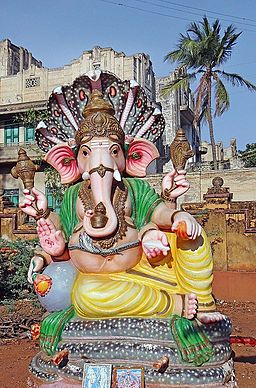
Ganesh_2Stream looked skeptical. “Do people believe in the elephant-head guy? Like they believe in Santa?”

“Some do, but a lot of people just believe in what they all stand for. Like being generous and happy and enjoying life. Santa says they’re hanging out in the hot spring together and these other guys helped him with something he was worried about. So, you did him a favor, giving him a vacation, but he wants to go back to work next year, and he’ll need kids to believe in him again.”

“We can’t make them.”

“No—but you can keep it to yourselves if some new believers come along. You know why he wants to go back to work?”

Brook asked, “Does he get paid a lot?”

“No—he does it to be kind. And this is what those other fat dudes at the spa told him. He’s been too generous. See, they don’t get as carried away with their roles as he does. They help people by changing their lives, not giving stuff. He’s been giving people way too much expensive stuff, and they’re starting to think Christmas is about getting big, fancy gifts. So next year, he’s gonna cut back. Give stuff that means more and costs less.”

Mae took a deep breath and let it out. She hadn’t known she was going to say that. But as a college student with a part-time job and not much cash, she’d had to buy small gifts this year—child-sized team T-shirts for the College of the Rio Grande Tarantulas and a pair of stuffed toy versions of the mascot. She’d wanted to do more, but the trip east had cost all she could spare, and yet she didn’t want the girls to think she loved them less because she didn’t live with them anymore.

“Like when we make you presents,” Brook said.

“Exactly.” Mae smiled in relief.

“Good,” said Stream, “because we—”

Brook dug a fist into her sister’s arm. “Sh. You can’t tell her.”

“That’s right.” Mae put her phone in her jacket pocket. “Being surprised is part of the fun.”

The girls stared at her pocket. “Mama,” Brook said, “That was rude. You hung up on Santa without saying goodbye.”

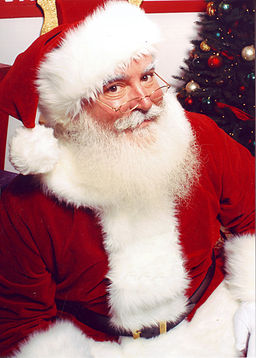
“Oops. Look like I’ve been naughty, too. Good thing he’s taking the year off.”Santa_Claus
            *****

This interlude occurs offstage during the third Mae Martin Psychic Mystery, Snake Face.

Snake Face and Shaman’s Blues (book two) received B.R.A.G. Medallions.

Dive into the series at a discount. E-books are on sale for $2.99 on all major online bookstores, paperbacks have been reduced from $17.99 to $13.99, and the series prequel, The Outlaw Women, is free. Sale ends January 10.

https://amberfoxxmysteries.wordpress.com/buy-books-retail-links

https://amberfoxxmysteries.wordpress.com/free-downloads-retail-links

*****

For links to all stops on the blog hop, go to: http://www.bragmedallion.com

 The next stop on the indieBRAG Christmas Blog Hop is today, December 18 with Malcolm Noble

While We Hold Still, Time Doesn’t

I came across this phrase years ago in my fitness work: While we hold still, time doesn’t. When we procrastinate exercising, we don’t maintain the status quo but get into worse shape. The same is true of the planet. While world leaders and national leaders put off serious action on climate change for too many years, the process didn’t pause and wait for them to get around to something. I want to believe that the new agreement forged in Paris will lead to action, finally. While conscious pausing can be positive—taking time to deliberate and then choose an action—inaction can lead to negative consequences as powerfully as any unwise action might.

I’ve been thinking about my own areas of procrastination. I don’t wrestle with the behaviors people typically make New Year’s resolutions about, such as eating right and staying fit. However, there are plenty of things I put off as if they will take care of themselves—tedious paperwork chores that are much less fun than running. Choosing between what feels good today that will lead to something bad tomorrow and something that calls for discipline and discomfort today that will lead to a greater good tomorrow seems to be the key issue in procrastination—along with the delusion that time holds still with us. Meanwhile, the forces of physics, the marketplace, biology and karma keep moving.

Healing as a Mythic Journey: Book Review of The Healing Path

The unifying theme of this book is that healing calls for making meaning out of illness. Stories have arcs that organize experience into meaning, as they grow from the initial alarm into conflict and struggle in pursuit of a goal, and finally come to a resolution. Marc Ian Barasch uses classic films as myths of the healing path, a framework within which he tells his own story and the stories of others who have confronted serious illness. The essence of healing isn’t always surviving. Some of his journeyers, as he calls his fellow travelers on the path, died. Others had virtually impossible recoveries through spiritual and holistic approaches to self-healing, defying both medical predictions and medical advice. Still others, like the author, had conventional treatment while integrating psychological and spiritual changes.

Barasch did substantial research. His own encounter with cancer and his bizarre dreams that diagnosed it long before his doctors did and predicted aspects of his treatment provoked his curiosity about how others heal. (He wrote another book, Healing Dreams, which I highly recommend.) I’ve read just about every book or study that he cites in The Healing Path , which made this section of the book a little too familiar to me, but then, I’m a professor who has taught a course on alternative medicine. The book is few years old, so its medical information isn’t the latest, but the essence of the message holds up. His adventures as a seeker of alternative options, and the profound self-explorations of the journeyers he interviewed, make for a compelling story.

His language is extraordinary. I bought this book as a used paperback, idly curious after having liked Healing Dreams, and I’ve actually highlighted and starred sections, something I don’t normally do to my books. There are so many shining jewels I had to make sure I could find them again.

The final sections of the book blew me away. I’ve studied energy healing, psychology, and a lot of yoga and meditation. I teach the latter two. I write fiction that involves a healer. I know this stuff, but he knows more, because he has lived through things I haven’t. He taught me, even though all the facts were familiar. His wisdom isn’t platitudinous. It’s hard won.

In James Scott Bell’s writing guide Super Structure, he discusses how great movies and fiction all have a turning point in the middle where the protagonist confronts a painful or frightening truth about himself or his life. Bell calls it the Mirror Moment—looking in the mirror literally or figuratively—and says the essence of it is change or die. This might not mean bodily death; it could be spiritual or emotional or professional. (Synchronicity: He uses one of the same movies Barasch does, the Wizard of Oz, to illustrate his ideas.) This next observation is a minor spoiler, if nonfiction can have spoilers. Barasch says his realization at the key stage of his journey through cancer was change or die. He had to change his whole life, not just get the disease treated. He was facing all the forms of death, not just the one threatening his body.

Change or die. That’s the hardest lesson—we fear change. It can seem like a death of sorts. When sick people change, it can upset those around them. This aspect of healing and illness is examined frankly in this book. The larger story around each journeyer shows over and over that healing is not a return to sameness. Disruptions ripple in all directions.

Anyone who is or has been seriously ill, knows someone who is, or simply loves good writing, could appreciate this book. And strangely enough, there’s a lot in it for fiction writers to learn from, as Barasch uses fiction to illuminate aspects of the plunge into illness, the confrontation with mortality, and the helpers and obstacles encountered on the way out—the healing path.


Whole Series Sale

All e-book editions of the award-winning Mae Martin Psychic mystery series are on sale for $2.99. Marked down from $3.99. You could think of it as “buy three get one free.”

 callingebooknewshamanebooknewsnakeebooknewsoul ebookhttps://amberfoxxmysteries.wordpress.com/buy-books-retail-links


Lucky Me!

I’m taking time to reflect on the good people and good fortune that enhance my creative life.

I am grateful for:

  • Having had parents who loved books and theater and a grandfather who was a poet. I was raised on Shakespeare and Sherlock Holmes and taken to plays before I was in first grade. Language was valued in my family. My mother advised me not to cuss because it made me look as if I had a limited vocabulary—a far greater sin than saying a dirty word. My father was a late adopter of all things electronic and claimed to be a member in good standing of the Lead Pencil Society, which made him as good a letter writer as he was a conversationalist, full of wit and good stories.
  • Discovering Sisters in Crime when I was just getting started on my first book. I bought How I Write by Janet Evanovich, even though I may be the only person alive who doesn’t like her Stephanie Plum series. I told myself: “She’s successful. I could learn from her.” She mentioned SinC in the book, and I joined, and through them I have found many of the people I’m grateful for, listed below.
  • My first critique partner, an editor and writer. She was supportive of the potential she saw in my early efforts that didn’t turn into a polished book until I’d worked on it for over for three years. She edited it and all my other books, and has taught me about the craft of writing in the process.
  • My current and former critique partners, who can tell me when something works or falls flat, offer insight into my plots and characters, and not only help me create better work, but reassure me that I’m not alone in caring about it.
  • Readers. Without them I’m an actor in an empty theater. Having my characters live in someone’s mind and heart means a lot to me.
  • Readers who review. They don’t have to do it. It takes time to organize thoughts and post them on a review site. They help other readers think about my work and often help them decide to buy the books.
  • Tara at Draft2Digital customer service. She’s cheerfully solved many little problems for me, and she remembers me. I’m not just some author with a question. I’m a person.
  • My job. Most writers need a day job, and I am blessed to have one that gives me summers off to write. When I’m grading papers until nine at night I tend to forget that—but I am grateful.
  • My whole life. From the annoying people who inspired antagonist characters, to the losses and loves and joys that enable me to tell stories with a heart.


Leaves in Mud, Leaves in Sky

trees

Standing on a riverbank, I found myself absorbed in watching the motion of a low-growing tree branch that had been snagged by the current. Dead leaves in water, moving yet going nowhere drifting back and forth in the mud. The swaying was hypnotic. I broke the trance and looked up at the rest of the tree, vital and full of color in a bright blue sky. There was so much more.

It made me think of how much may lie beyond our ordinary perception, how much of reality we may miss. Not only the beauties we fail to notice, or the colors that bees can see and the sounds that dogs can hear, but the worlds that dreams walk through, the shamanic realms.

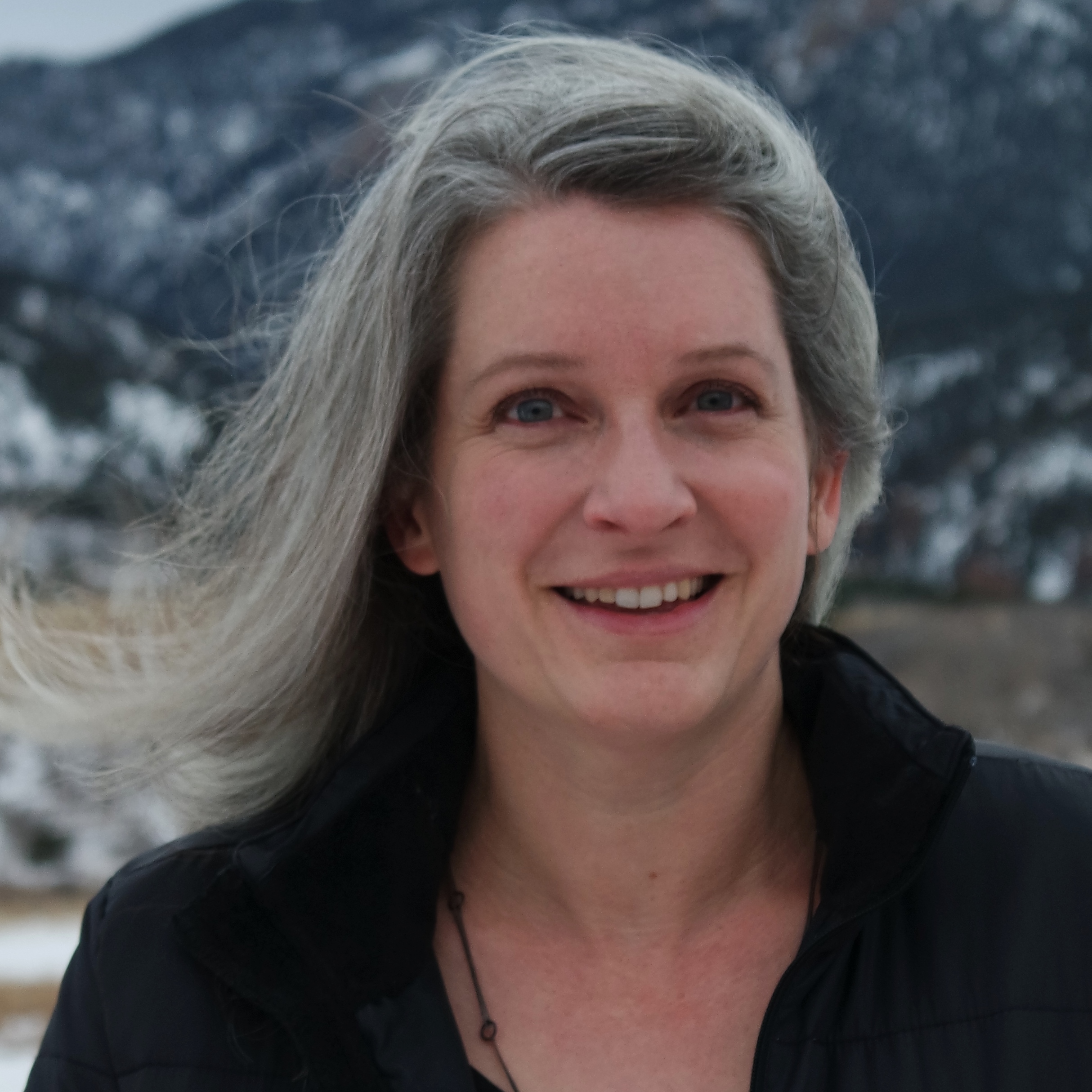
A New Mexico Mystery Author Interview: Ann Myers

SAMSUNG CAMERA PICTURES

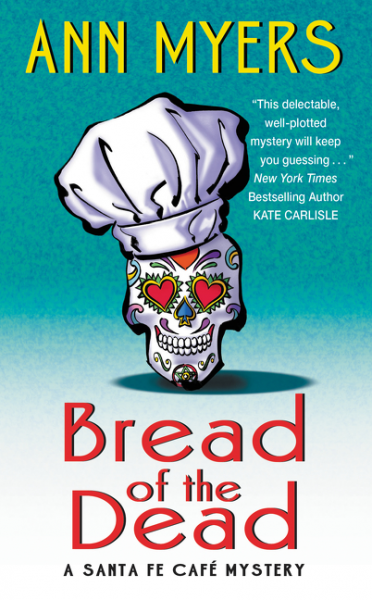
BreadofDeadcover

I’m happy to have Ann Myers, author of the Santa Fe Café Mysteries, as my guest today.

AF: Where did the inspiration for this story begin?

AM: Bread! I love baking and trying new recipes. I was baking up pan de muerto around the time I was brainstorming a culinary cozy and thought it would make a great title. Plus, it’s a marvelous bread, like a brioche but even better with anise and orange flavors and you can shape it like a skull and crossbones. What other bread has all that?

AF: Your book shows your love for the City Different. What’s your history with Santa Fe?

AM: This is where my main character Rita and I share a bit of similarity (along with our inability to dance). I’m originally from Pennsylvania and have lived in Louisiana, Japan, Ohio, and Florida and now Colorado. All great places, but like Rita I was instantly enamored with New Mexico and Santa Fe. Lucky for me, I get to go there a lot since moving to Colorado ten years ago. My husband researches water issues in New Mexico. It’s a never-ending project, and one I heartily encourage since it means summers and holidays in Santa Fe.

AF: Rita’s appreciation of food, kitchens, kitchen gadgets, and the art and meaning of cooking makes me think you must be a great cook yourself. Have you ever done it professionally or are you an enthusiastic amateur?

AM: Just an amateur cook and a very enthusiastic eater. Perhaps a little too enthusiastic? And, yeah, kitchen gadgets…I have a bit of a problem there too. Do I really need that raclette griddle that’s been languishing in my basement for years? Or the heavy cast-iron ebelskiver pan I was sure I’d use all the time, or the ice cream maker? Surely I’ll be making ice cream and round pancakes any moment now, so of course I’m hanging onto them. Lately, however, I’ve gotten better about sticking to small items, like cute old cookie cutters and cookbooks. You can never have too many cookbooks…

AF: What’s your favorite Santa Fe restaurant and why? You mention a few real ones in the books. Is that your tribute to them? And is Tres Amigas based on a real place?

AM: Oh, what a hard question. Santa Fe has so many great restaurants. My husband and I have a long list of places we have to visit when we’re in town, and the list keeps getting longer. One of my favorites is Tune-Up Café, which I couldn’t resist mentioning in the book. They make the best breakfast chiles rellenos with fried eggs and refried beans. So good! I also love Clafoutis for their fabulous French pastries, and I can always go for sopapillas, something I’d never make at home. I draw the culinary line at deep frying.

Tres Amigas is all fiction, or perhaps a mashup of some of my favorite cafés. I wanted someplace warm and cozy, serving up comfort-food favorites. The place I dream of having down the street from my house.

AF: I found details like Cass’s process making jewelry of fascinating. What was the most fun part of researching the book? What was the hardest part?

AM: Thanks! At the time I was writing Bread of the Dead, a friend and I were trying our hands at soldering and jewelry making. “Trying” is the key word for me. Whereas my friend was merrily wielding a giant flame, I was terrified by my tiny kitchen torch (which can melt metal, by the way). I did manage to master crème brûlée, and I learned a lot of about jewelry making, which I added to the book with Cass’s character.

Researching the food was also fun—and tasty! I’ve acquired a big stack of New Mexican cookbooks, including some great older ones with recipes from home cooks. Some of the recipes are simple in terms of ingredients but turn out so delicious. Like green chile stew, a basic stew but with loads of roasted green chiles. I’ve also enjoyed learning about Pueblo culinary traditions, both through reading and—better yet—attending Pueblo feast days, when residents invite family, friends, and strangers into their homes to eat. Such generosity and an amazing culinary feat to keep up a buffet for unknown numbers of guests. I always think of my family and how we’d stress out seeing hungry people lined up on the sofa, waiting to rotate in for a place at the table.

One of the research challenges I hadn’t anticipated was fitting my fictional places into the real landscape. Rita’s casita, for instance, is on a well-known street, although I didn’t have a particular address in mind. For Tres Amigas Café, I had a general idea of the location, but after my husband read the book, he thought it was somewhere else. In Feliz Navidead, I added an entire fictional hotel to the historic downtown since I wouldn’t want to be staging murders in real places. That took a lot of walking around and scoping out empty lots and worrying about how to make the fictional setting mesh with the actual one.

AF: Who are your favorite authors—mystery or other?

AM: I’m a huge mystery fan. It’s hard to pick favorites, although I adore British mysteries, such as those of Martha Grimes and Elly Griffiths. I’m also always reading cozy mysteries of all sorts. I love the everywoman heroines of cozies, as well as the craft/culinary/DIY themes. I’ve also recently discovered audiobooks, which I listen to at the gym or when working around the house. My local library has all the Hamish Macbeth mysteries on audio, and I went through at least a half-dozen while painting our house this fall. Fun to hear the Scottish accent read aloud and to imagine the bleak moors.

 AF: Tell me about your work in progress.

AM: Two more Santa Fe Café Mysteries are with my publisher right now! Cinco de Mayhem will be out in March 2016, just in time for Cinco de Mayo. In this book, Rita takes on a bully French chef, a corrupt food inspector, and a killer to help her friend Linda. She also has to come up with a perfect dinner date menu, a Southwest-French feast featuring a green chile and cheese soufflé.

The third book, Feliz Navidead, let me think of Christmas all last summer. So much fun, but also a little difficult to conjure images of snow and farolitos when sitting in front of a swamp cooler in our broiler Santa Fe rental casita. I won’t give away too much, but there is a devil involved and pie. I’m still trying to settle on the perfect pie recipe. So far I’ve tried a green chile, apple, cheddar (wow!) and a pumpkin brûlée. I’m thinking chocolate and red chile with a cookie crust should be next. Or maybe I’m delaying to have an excuse to make and eat more pie…

AF: Is there anything I didn’t ask that you’d like to share?

AM: How about a recipe for New Mexico’s official state cookie, the bizcochito? It’s a yummy, anise-flavored shortbread cookie, perfect for any special occasion and the upcoming holidays.

Bizcochitos

Bizcochito traditionalists swear by lard for the proper flavor and texture. If you can’t find good lard, or prefer not to use it, shortening or butter can be substituted. You can also spice up your cookies by adding some chile powder to the cinnamon sugar. Delicious!

Makes three to four dozen cookies, depending on cookie cutter size

Ingredients

1 c lard (or butter or shortening)

1 c sugar

2 eggs

2 T anise seeds

1 t vanilla extract

½ t salt

¼ c brandy, sweet wine, or an anise-flavored liqueur, OR apple or orange juice

4 c all-purpose flour

1½ t baking powder

Cinnamon-sugar topping

¼ c sugar

1 t ground cinnamon

¼ t (or more) red chile powder (optional)

Directions

Preheat oven to 350°F. Line a baking sheet with parchment paper. Using a stand or hand mixer, in a large bowl, cream the lard or butter until it is light and fluffy. Beat in eggs, sugar, vanilla, and anise seed.

In separate bowl, mix together the flour, baking powder, and salt. Stir the lard mixture into the dry ingredients, along with the brandy (or juice). Mix until you have a dough that is soft but not sticky. If you’re baking in a dry region like the Southwest, add a little more orange juice or brandy if the dough seems too shaggy or stiff. Form the dough into a ball.

Place on a lightly floured surface and roll out to about ¼ inch thick. Cut the cookies out, using your favorite cutter. Small round or rosette shapes are popular. You can also forgo a cookie cutter and simply cut the dough diagonally to form diamonds. After cutting, dip the front face of each cookie in the cinnamon sugar mixture (you might have to press the sugar in and/or sprinkle a little extra sugar on top). Place the cookies on the baking sheet, leaving a little space in between.

Bake until lightly golden and puffed, about 11 to 13 minutes. Cool on a rack. Bizcochitos store well in containers, if you can resist eating them all.

*****

Thank you, Ann. This has been delightful.

For more about the Santa Fe Café series and more recipes, go to http://www.annmyersbooks.com/

and https://www.facebook.com/AnnMyers.writer


A New Mexico Mystery Review: Bread of the Dead


bec99b44a2fd5c6e3780eab3ea253edbIn some ways this is the coziest of cozy mysteries, full of food and folk art, but in other ways it’s not typical of the genre. The victim is not only important to the amateur sleuth but to the reader. He’s the most deeply appealing and complex character in the story. In a light sort of mystery, the loss of such a person is unusual. It gives the protagonist a strong reason to do that otherwise unbelievable thing—amateur sleuthing—and it also makes the story function on two levels: solving a puzzle with all the usual elements of a cozy; and contemplating life, death and legacy, good works and grieving. The mood and meaning of the Day of the Dead festival—reconnection with the beloved departed—is central to the story and is set beautifully at the beginning.

Myers has a wonderful way with words and uses culinary imagery with flawless precision, true to her narrator’s point of view. Foodies will love this book. The amateur sleuth, Rita Lafitte, is a cook, and the food theme is woven smoothly throughout. Recipes and their meaning to friends and family form a framework that turns the plot in a way that even a kitchen-impaired reader like myself could enjoy.

The Santa Fe setting is rendered in detail that will satisfy any would-be visitor who hasn’t been there yet and wants to take a fantasy trip, and will spark memories for those who have visited before. At times, I felt as if the author had tried a little too hard to fit as much local color in as possible, but overall the portrait of the City Different and its environs was painted well, from Pueblo speed traps to purple taxis to the famous Plaza—and the food, of course.

A few of the characters and events are entertainingly over-the-top, while others are realistic, another aspect of this book’s dual personality. I found the spiritual materialism of Broomer, the irritable owner of an expensive Zen garden, unfortunately true to some aspects of Santa Fe life. The arts center for teens reflects a fictitious version of a real and vital part of the city.

I can’t say why I suspected the real culprit early on, and I was frequently thrown off the trail by other suspects and plausible motives. The final solution and the revelation still came as a surprise, as the various strands of the story came together in one of the most elegantly crafted discovery scenes I’ve read.

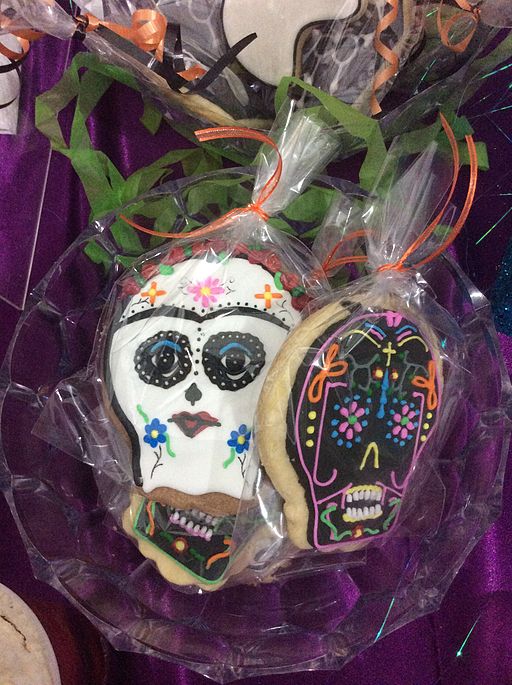
If you’re a cook, you’ll enjoy the final section: recipes for foods related to the story, including the Bread of the Dead.Day_of_the_Dead_Coyoacan_2014_-_136

Next week, look for an interview with Ann Myers.

http://www.annmyersbooks.com/

https://www.goodreads.com/book/show/24392805-bread-of-the-dead


The Risk of Enjoying Something New

Humans are attracted to familiarity and recognizable patterns. We like music with tunes: melodies have patterns. Routines and habits are patterns we don’t have to think about, and having them spares us from making millions of minute choices in a day. Rituals are patterns to which we pay deep, contemplative attention. Habit: tea at my desk while I grade papers. Ritual: a Japanese tea ceremony.

Novelty is nether habit nor ritual, and it can feel incredibly uncomfortable even when it’s trivial. I read an interview in a medical journal with a physician who included nutrition in his treatments. He said—using hyperbole, I hope—that people would rather change their religion than what they eat for breakfast.

I like to ask my college health classes, “How many of you think tofu tastes bad?”

Ten or twelve hands out of twenty-five usually go up.

“How many of you have tasted tofu?”

About half the hands go down. A few others go up. In other words, some have tried it and know they don’t like it. Some people have tried it and found it enjoyable. Others have decided in advance that it’s going to taste bad without ever trying it. On a zero-to-ten scale of risky behaviors, trying a new food is a one or a two. Nothing terrible happens if you don’t like it, and you might find that it’s delicious.

In my freshman seminar, I encounter a few students who resist unfamiliar books. “It’s too long—I don’t like long books.” “I never heard of the author.” “I don’t read non-fiction.” “I’ve never read any kind of philosophy.” Behind this resistance is often the dread of being bored. Some take the risk and read deeply and engage with the book whether or not they entirely like it. Others guarantee boredom by skimming, getting the result they dreaded in the first place.

My book club makes me venture beyond books I would choose for myself, and through them I’ve expanded my reading horizons. How big a risk is it, after all, to read a book I might not like, or to read outside my habitual patterns? If I truly dislike a book, I give myself permission to stop reading after forty or fifty pages, but that’s a decision I’ve only made once with a book club selection.

Over the years the club has chosen books some books we all loved, many we disagreed on, and a few we unanimously didn’t like. The nonfiction book Winged Obsession, about a collector and seller of illegal and endangered butterflies, sounded great in reviews and in blurbs from established authors, but every single one of us thought it was poorly written in spite of the solid research. (It was still worth reading. I learned a great deal about butterflies and about law enforcement in Fish and Wildlife.) The humorous indie novel The Scottish Movie delighted us all with its quirky insider’s look at the movie industry. The book isn’t famous nor is it blurbed by the famous, but it was fun.  It’s the only indie book we’ve read as a club and I remember how amazed the other members were when they saw the price. An e-book for $2.99? I read a lot of indie books, but they’re used to paying $7.99 or more. At that price, an unfamiliar author wasn’t much of a risk for them.

Expensive risks are the hardest. The decision to move. The decision to open a business. To travel to a new place. Some of my yoga teacher friends have been to India. One of them had a blissful experience, staying in an ashram where tiny tame deer came to the patio. The other got some kind of fungal infection and spent the whole trip sick—and yet, she didn’t regret the journey. Its lessons were profound.

Some of the risks people take on a daily basis are so comfortable they feel safe. The phone is familiar, and so is the car. I remember riding with a friend who took both hands off the wheel while driving on a curving road—one hand to shift gears and one hand on his phone. When I pointed out what he’d done, he acknowledged that he hadn’t even noticed. That’s what’s risky: not noticing. While we need some routines and habits, going through life without paying attention is dangerous. We risk our lives with distracted driving, risk boredom by skimming the surface of books or experiences, or risk missing a new experience altogether by not even realizing we could have it.

My last book club gathering included an off-topic discussion of the various unexpected new things members’ aging parents were doing. Making maple syrup. Taking water aerobics. Learning to paint. I have a seventy-nine-year-old man in my Gentle Yoga class who is learning this skill for the first time. Everyday novelties can open doors and break old patterns.

A few years ago I read a study done by a professor at Northern Arizona University on inducing happiness. His experiment involved having people do random acts of kindness, take on small achievable new goals and reach them, and make minor variations in their routines. Compared to a control group, the people who made these little changes became measurably happier.

Taking minor risks like trying new books, activities or foods can add up. When I try something new and different, not only do I feel the satisfaction of achievement but the quality of my attention changes. With awareness, even the familiar can become new and different.

 *****

The Scottish Movie

https://www.goodreads.com/book/show/15841493-the-scottish-movie


“Yikes! That’s a creepy story!”

bearing copy

As you can probably tell already, I enjoy Halloween, and I never lost my childhood love of creepy, scary stories. What I find most terrifying in horror stories is not the big reveal of the monster or the alien or the big gory mess but the signal that something isn’t quite right in a chilling and unnatural way. Subtle abnormality creeping up, a sneaking shift in reality. (Some favorite examples of this are the beginnings of Gregor Xane’s horror novellas Six Dead Spots and The Hanover Block.) That’s the kind of scariness I aimed for in Bearing, so the above comment from an early reader made me happy.

I read horror, but never thought I’d be writing it. Then I shared some data on authors’ earnings in various genres with one of my Goodreads groups, and a horror writer commented that he would have to switch to romance because that was where the money was. I replied, “Horror-romance?” We were joking, but a few other writers began to play with the idea and one suggested we should create an anthology of horror-romance short stories, each based on one of the seven deadly sins. My choice: sloth. I enjoyed the challenge of making laziness frightening.

Because my story was more than three times as long as the other contributions to the anthology, far exceeding the word count limit, I withdrew from the project and set my horror-romance aside for a while. Now, it’s almost Halloween, and I’ve released it as a ninety-nine cent stand-alone.

Bearing

 A tale of paranormal horror based on Native American myths.

Mikayla, young Apache woman attending a powwow with her family, becomes entranced by an outsider, a Cree man who shows up without his Apache girlfriend. As her fascination consumes her, Mikayla changes in ways both pleasurable and frightening, powerless to overcome his dark magic until it may be too late.

https://amberfoxxmysteries.wordpress.com/buy-books-retail-links