Joy is Healing

There are days that don’t promise much. Too busy. Too cold. And then there is the endless business of being human, being a body. It’s a resilient organism but it’s also vulnerable to the strangest injuries from the most random, unlikely sources. On a day like that, where will joy come from?

I was stuck having to run indoors today due to all of the above. One of my most reliable joy sources, nature, was only outside the windows. I decided to make up for it with music. Most people who like Krishna Das’s music use it for yoga, but I needed the uplift of his voice while I ran. His voice is a gift to the world, rich and warm, full of feeling. Because the songs are in Sanskrit, I don’t get lost in words, I simply respond in my heart.

The catharsis of joy mobilizes the chemistry of healing. It also broadens the spirit, touches the soul. Spirituality is hard to define, and yet when I hear this music, I know it, and sense that the singer lives it. It’s not solemn or rigorous, but full of melody and rhythm, love and life.

Listen at http://www.krishnadas.com

Have a joyful day.

Reading it Forward with my Team

Writing may seem like a solitary occupation, and it does involve long hours alone, but like most work done well, it also involves a team. In the past week I’ve finished the second draft of the fifth Mae Martin book and sent it to critique partners. I’ve also critiqued two short stories by fellow writers and am one-third of the way through another’s full-length work in progress. None of us could do it without each other.

I have two writing support networks. For some reason, in each trio I have one British partner and one Australian. My “mystical mystery sisters” Virginia King and Marion Eaton share similar readers, people who like mysteries that go off the beaten track and have an element of non-religious spirituality, so we share not only writing ideas but marketing. My other writing trio includes two authors of humorous mysteries, J.L. Simpson and Jordaina Sydney Robinson. They both have a knack for tight plotting as well as comic timing and can tell me when I’m going off track. I can’t imagine producing a book without them.

It doesn’t feel like work to take the time to read and critique their books. I’m honored to be part of these authors’ teams and would like to introduce them to my blog readers who may not already know their work. Virginia King did a guest post on this blog, and Marion Eaton joined me for an interview.

https://amberfoxxmysteries.wordpress.com/2015/04/16/virginia-king-mything-in-action

https://amberfoxxmysteries.wordpress.com/2015/03/24/interview-with-m-l-eaton-the-mysterious-marsh

Their web sites are:

Marion Eaton

http://www.marioneaton.com

Virginia King

http://www.selkiemoon.com

J.L. Simpson is part of the group blog Ladies of Mystery with me.

http://ladiesofmystery.com

Learn about her Daisy Dunlop series here

http://www.jlsimpson.com/?page_id=77

Jordaina Sydney Robinson’s first book, Beyond Dead, will come out soon, and I’ll be one of the first to spread the word. I mentioned it midway in this blog post a while back:

https://amberfoxxmysteries.wordpress.com/2015/09/17/karma-and-creativity

(Note: the giveaway in the link at the end is long over.)

Teaching Myself to See

Years ago, at a party on the Damariscotta River waterfront in Maine, I met an artist with whom I struck up a long, thoughtful conversation. We stayed in touch for quite a while, but what I remember most about him is this. He said, “I paint to teach myself see.” I was making my living acting at the time, so I responded, “I wonder if I act to teach myself to feel.”

Writing, I have to be actor, artist, and playwright, teaching myself to observe more mindfully, to listen to others and the sounds of the world, to experience my own emotions with awareness, and to notice textures and scents. A smell can trigger a memory more powerfully than anything else. The more I pay attention, the more seeds I have in the seed bank of ideas from which stories, scenes and characters grow.

As well as being part of the creative process, this practice of awareness pops the bubble of busyness and brings me into the present moment. It’s an eye-wide-open meditation I can do at any time, cracking the shell of the ordinary to reveal its depth.

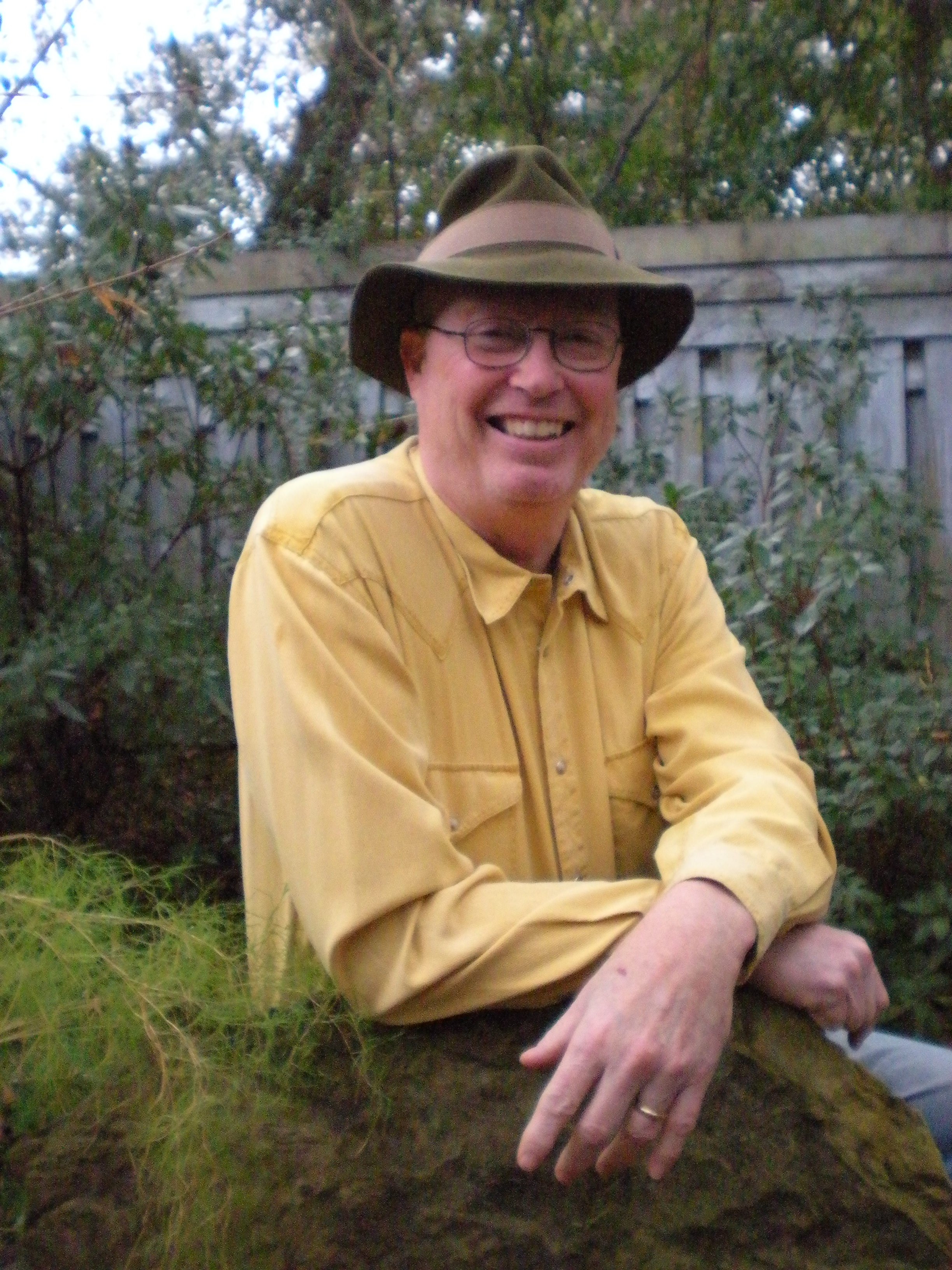
A New Mexico Mystery Author Interview: J. Michael Orenduff

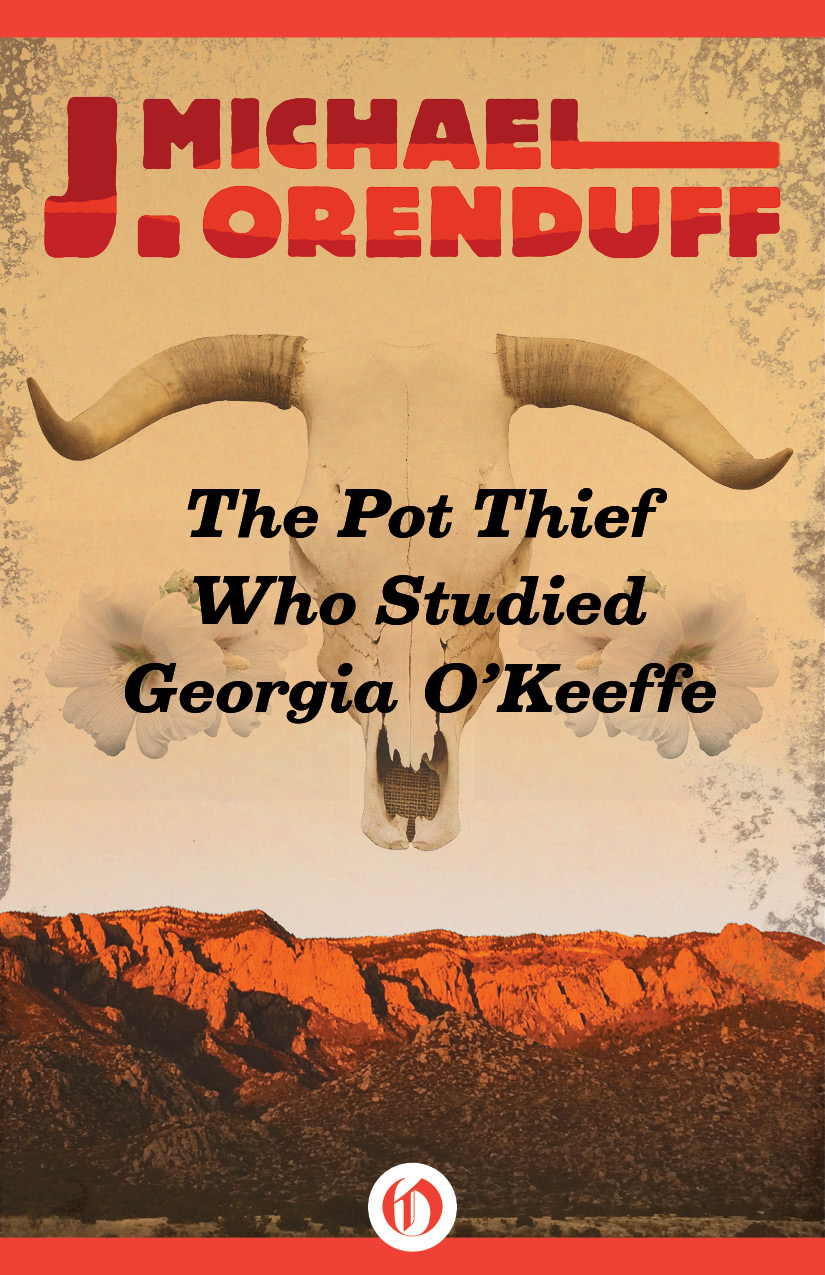
author 1.53mbO'Keeffe cover 3

Last week I reviewed the Pot Thief Who Studied Georgia O’Keefe.

https://amberfoxxmysteries.wordpress.com/2016/01/01/a-new-mexico-mystery-review-the-pot-thief-who-studied-georgia-okeefe

I’m delighted to have the author as my guest today.

 Bio: Mike Orenduff grew up in a house so close to the Rio Grande that he could Frisbee a tortilla into Mexico. A former president of New Mexico State University, he took early retirement from higher education to pursue his career as a fiction writer. His many accolades as an author include the Lefty Award for best humorous mystery, the Epic Award for best mystery or suspense e-book, and the New Mexico Book Award for best mystery or suspense fiction.

AF: You’ve been a professor at various colleges. What did you teach? Which class did you most enjoy teaching and why?

JMO: I taught philosophy (primarily logic courses) and mathematics. The mathematics courses were what are now called developmental. They used to be called remedial, but someone decided that’s politically incorrect. That may be, but remedial is a more accurate description. It is no blot on students who are not skilled at math. Good math teachers are rare in the public schools, so students often show up at college unprepared for college level math courses. My courses were a remedy. My favorite teaching experience was the pre-algebra courses I taught at Central Wyoming College. Many of my students were from the Wind River Reservation. The most rewarding thing about teaching is not standing at the blackboard writing the steps of some arcane proof. It is having a student say, “I thought I couldn’t do math. But now I can.”

AF: What’s your favorite place you’ve lived outside of New Mexico? Could you share an anecdote or memory from that place?

JMO: I lived in La Serena, Chile for a summer while my wife was teaching at La Universidad de la Serena. It was an idyllic life. I shopped each day at the market for food and fresh flowers, both of which were waiting when my wife arrived home from work. La Serena is in the northern desert area of Chile, so it was like New Mexico except it’s on the Pacific Ocean. Albuquerque with a beach. And even more Spanish being spoken. Two of my favorite memories from northern Chile are seeing the southern cross in the beautiful clear skies and being stranded in a small fishing village twenty miles north of La Serena after travelling there in a collectivo (a taxi into which six people are crammed to go to a place with no bus service). It was easy to find a collectivo in La Serena, a large city. But Las Casetas was a village and had no collectivos. Hence, no means to return. As we stood by the road wondering what to do, a man in a small Japanese pickup pulled over and asked us if we wanted to go to La Serena. We crowded into a bench seat designed for two people and had a delightful conversation with him on the ride south. I offered to pay him. He declined. I offered to at least pay for his gasoline. He declined again, saying he was going there anyway, so no extra gas was being burned. He told us about his wife whom he obviously adored. When we arrived in La Serena, I finally coaxed him into accepting money by holding out enough pesetas to buy flowers and saying, “This is for flowers for your wife.”

AF: Your books make me want to pay more attention to very old Native pottery. What would be the best places to go for a (legal) pottery tour of New Mexico?

JMO: Of course the shops and museums in Santa Fe are the places most people associate with ancient Native pottery, but my favorite place is Western New Mexico University in Silver City. Their museum has the largest collection of prehistoric Mimbres Mogollon pottery and artifacts in the world, including pottery and artifacts of the Upland Mogollon, Casas Grandes, Salado, and Anasazi. And as an added benefit, you can tour the Gila Cliff Dwelling just north of town and see artifacts in situ and where the people lived who made them.

AF: You share my love of T or C. I noticed that every place you mention there is real. What about the places in Albuquerque? I found myself guessing that every location except Hubie’s shop might also be a real place, but I seldom dine out in Albuquerque so I’m not sure. Are they? What’s behind your decision to use actual places rather than fictitious versions of them?

JMO: You guessed it. Every place is real. The only fictional ones are Hubie’s shop and Dos Hermanas. All the other places are real, even Sharice’s condo. Georgia O’Keeffe said that she preferred painting flowers instead of models because flowers, “are cheaper and they don’t move.” I prefer real places because it’s easier to describe them than to make up new ones. And I like to give them free publicity.

 AF: What made you choose the White Sands Missile Range for Hubie’s latest pot thieving adventure?

 JMO: There were several reasons. Perhaps the most interesting one is a real event that happened there is 2001. A man hunting Oryx found a Chupadero black-on-white water jug dating back to around 1300. Where else could that happen? Especially the Oryx part.

AF: Why Georgia O’Keeffe in the title?

 JMO: After starting out with a bunch of dead white males with no connection to New Mexico, I finally tumbled to the realization that I should use people with NM connections such as D. H. Lawrence. Then I decided a woman in the title would be good. And I chose O’Keeffe because she is strongly identified with NM but also because I had a small personal connection with her. In 1985, I was serving as the academic vice president at West Texas State University, known as West Texas State Normal College when Georgia O’Keeffe taught there from 1916 to 1918. We were celebrating the 75th anniversary of the school’s founding and looking for something to make the event special. I decided we should ask O’Keefe to grant us the right to make prints of a painting she had done while teaching there and allow us to sell those prints to fund scholarships. I gave the task of approaching Ms. O’Keeffe to my wife, whose charm and grace were best suited to the task. And it helped that she is also an artist and an art historian. O’Keeffe granted her request. So Georgia O’Keeffe helped me raise scholarship funding and also inspired me to write the latest book in the series.

 AF: Who are your favorite mystery writers? What is it that makes them stand out?

JMO: In no particular order and with apologies to the many others whom I like but didn’t pop to mind: Simon Brett, Michael Bond, John Mortimer, Mary Jane Maffini, Aaron Elkins, Carl Hiaasen, Leann Sweeney, Lawrence Block (but only his Bernie Rhodenbarr series), and Tim Hallinan (especially his Junior Bender series). What makes them stand out is clever humor.

AF: Did you know you were going to write a series when you wrote the first Pot Thief book? Which book in the series was the most challenging for you to write and why?

JMO: I knew it was to be series, but I didn’t know the titles would all start with The Pot Thief Who Studied…. In fact, the working title of the second one was The Pot Thief Who Gazed at the Stars. What was I thinking?

The first was the most challenging because I had to create everything from scratch. The rest somewhat less so, but I try to have the characters grow and develop as people do in real life.

AF: Any idea what the pot thief will study next?

 JMO: Edward Abbey. Like Hubie (and me), he was a graduate of the University of New Mexico.

AF: One of my favorite writers—and a good match with Hubie. I look forward to it.


A New Mexico Mystery Review: The Pot Thief Who Studied Georgia O’Keefe

O'Keeffe cover 3

This is not an interstate kind of a story; it’s a back road drive with a raconteur at the wheel. There’s a wonderful pot in a remote place, and it takes a bit of a hike and some excavation to find it. Brush off another layer, and there it is, an intact marvel of original workmanship. The old pots which the narrator, Hubie Schuze, admires were made by hand, not on a wheel, and their shape shows it. Not perfect—and not meant to be. That’s part of their character. This book is not shaped like a standard mystery novel, either. Don’t expect it to be. Just ride the back road. Hubie knows where he’s going (though you may wonder about that at times).

The prologue takes off like a rocket. Then, during the first few chapters, new readers may go through what I’ll call “orientation to Hubie,” getting used to the flow of his entertaining and often educational ramblings on topics historical, artistic, culinary, and unclassifiable. (Established fans of the series already enjoy this as much as solving the mysteries.) If you’re new to the Pot Thief and decide to start here, don’t worry, keep reading. Once Hubie gets out in the desert to illegally “rescue” an ancient pot, the story, his character, the setting and his deep reverence for the artifacts he finds and sells come together into a lively, colorful tale that’s both a clever mystery caper and a sweet, delightfully off-beat love story. There’s a lot of wordplay, for fans of that type of wit. However, the humor I liked most in this book was that which came authentically from characters and situations, and there’s plenty of it. Hubie’s sincere and awkward attempt to put his girlfriend at ease in a delicate situation is hilarious, all the more so because it comes from his heart. A sudden turn of events near the end is so perfectly timed and phrased for comic effect, I think my neighbors heard me laugh when I read it.

The New Mexico landscape and locations—from Albuquerque to Truth or Consequences to the vast emptiness of the White Sands Missile Range—are portrayed well. Hubie’s idiosyncratic meanderings are part of the New Mexico feel of the book. I can easily see him in the mini-park in the median in Truth or Consequences across from Black Cat Books and Rio Bravo Fine Art. I can’t decide if he would get on my nerves or amuse me if I sat with him—probably both—but he fits perfectly. (There seem to be a lot of smart, eccentric, single, middle-aged men in T or C.) Orenduff has created a unique character in Hubie, and his own style of mystery—intelligent, non-violent, and funny, with the murder aspect secondary to other puzzles. The red herrings are effective, the clues are laid well, the solution is surprising, and the end is satisfying.

If you haven’t yet discovered the earlier books in the series and want to start at the beginning, the titles, in order, are:

The Pot Thief Who Studied Pythagoras

The Pot Thief Who Studied Ptolemy

The Pot Thief Who Studied Escoffier

The Pot Thief Who Studied Einstein

The Pot Thief Who Studied D.H. Lawrence

The Pot Thief Who Studied Billy the Kid

The Pot Thief Who Studied Georgia O’Keefe (release date: Jan. 26, 2016)

 Next week I’ll have an interview with the author, J. Michael Orenduff.


Phew! Yee-ha! And a Pitiful Cry

I know life is made up of moments lived, not a series of goals and strivings, but I love how it feels when I get something done. Today I finished preparations for the course I’ll teach over the three-week January term. It’s hardly an adventure, more of a task, leading to a mere “phew” of satisfaction. The fun will come when I have students next week, new people with fresh ideas and thoughtful questions. I can’t have the fun, though, without the work.

With writing, the joys run backwards. Today I also finished the first satisfactory draft of the next Mae Martin mystery. I describe it that way because my writing process goes through so much ongoing revision and recycling that it’s hard to call anything a first draft. The moment of knowing that this is the plot that works and this is the ending is exhilarating, a big “yee-ha!” I dance quite a bit at this stage of writing, something I don’t do in my college office. I’m excited about revising the book, too, and sharing it with critique partners and revising it more. I even enjoy the picky details of word choice and sentence structure, of deciding what to cut and what to add, and experimenting with the best way to describe certain feelings and actions. It’s work that doesn’t feel like work, all the way to the final draft.

Getting sales and reviews is the work that feels like work. A book isn’t fully alive until it has readers, just as a planned-out college class is nothing until it has students. I have to do this work, but I look at Twitter and Facebook, trying to think of witty snippets of chat, and I shrivel. No, please, there has to be better way. My New Year’s resolution is stop whimpering and become a marketing genius without boring or annoying anyone. (That’s what would make me a genius.) I need to learn to dance with delight about filling out an advertising form, or at least look forward to the “phew” of having done it. Instead of just tweeting links, I will take up the challenge of composing something original and intriguing in 140 characters or less. Follow me on Twitter and see if I succeed. But don’t hold your breath. I’d rather be writing a hundred thousand words of fiction, or even next semester’s syllabus.

IndieBRAG Christmas Blog Hop: A Free Holiday Short Story

ALL-ABOARD-with-medallionB.R.A.G. Medallion authors are taking you on a holiday tour through their blogs. On this stop, enjoy my new short fiction for the season.

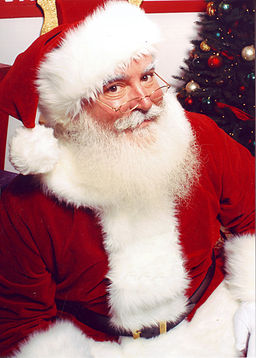
Santa Claus Checks in at the Fat Buddha Spa

Mae Martin raced her twin stepdaughters to the pasture fence and almost let them win, making it a three-way tie. The llamas looked up from grazing on the dry winter grass, blinking their long lashes. Taking walks to visit the neighbors’ animals had been a favorite pastime for Mae and girls when she’d lived with them. Now, on her first holiday visit after separating from their father, she was trying to keep everything as normal as possible. As the six-year-old girls clambered onto the fence, Brook shouted. “That’s what I want for Christmas. A llama.”

“Are you sure?” Mae picked up a small purple glove from the weeds and put it in her pocket. The late December day was growing warm and both girls had taken off their gloves and hats. “I thought y’all wanted a tarantula.”

“We do, but Miss Jen is scared of spiders.”

Their father’s new girlfriend didn’t share Mae’s appreciation for crawly critters. “She might think a llama was cuter, but I don’t think anybody can afford one right now. You do know your presents come from family, right? Your daddy said y’all don’t believe in Santa anymore.”

“Yeah. We figured it out.” Stream perched on the top rail, swinging her legs. “We watched this TV show with Grampa Jim and Granma Sally about these people who have reindeer in some place near the North Pole.”

“Lapland?”

“Yeah. And those things are big. There’s no way they can fly.”

“What about magic?”

Brook sat beside her sister. They studied Mae as if they felt sorry for her. Poor mama. She’s not caught up with us yet. “Magic is for little kids who can’t figure things out. We’re gonna be bug scientists when we grow up—”

“Nun-uh.” Stream wriggled and sat straighter. “That’s your job. I’m gonna be a race car driver.”

Mae walked up and placed her hands on their knees. She loved their independence and eccentricity, but they could be tactless about how smart they were—like her ex-mother-law—and she needed to take that attitude down a notch. Gently. “Now what in the world is Santa Claus gonna do if all these kids don’t believe in him?”

Brook frowned, saying he couldn’t do anything if he wasn’t real, but Stream started to laugh. “He’ll pop like a bubble.”

Mae did her best to act serious. “Did you tell your friends there’s no Santa?”

The girls exchanged glances. Brook said, “We got in trouble for it at school. It made some kids cry.”

“It might be hard on ol’ Santa, too. Popping like a bubble. Before you tell any more kids he’s not real, I think I’d better give him a call and see how he’s feeling.” Mae took her cell phone from her jacket pocket and pretended to make a call. She rolled her eyes and sighed as if waiting a long time for an answer.

The girls poked each other and giggled. Stream whispered to her sister, “She can’t call him. She’s making believe.”

Mae raised her eyebrows, giving them the oh yeah? look, and then a triumphant smile as if she’d finally heard a voice. “Well hey, Santa buddy. What’s up? You know Summer Stream and Autumn Brook Ridley don’t believe in you anymore? … Oh. Of course. I can’t surprise you. You know who’s naughty and nice. “

Brook protested, “We weren’t naughty. We told the truth.”

“But did you tell it nice?” Mae turned away, lowering her voice to resume her conversation with Santa. “I hope they didn’t hurt your feelings. They told half the kids in Hertford County, North Carolina—You’re kidding! … So what are you doing now? … Really? Shut up! I live there. I just left for my vacation.” She put her hand over the phone. “You won’t believe it. He’s checked into a spa back in Truth or Consequences, New Mexico. So many kids stopped believing in him, he’s taking this Christmas off.”

“What’s a spa?”

“It’s sort of like a motel with extra stuff. The ones where I live have hot springs and massages. People go there to relax and get healthy.” She got back to Santa Claus. “Which one? You at the Charles? La Paloma? … I never heard of that one. The Fat Buddha? … Oh. Reckon I wouldn’t see it.”

She explained to the girls, “He’s at a spa for supernatural beings. Regular folks can’t see it.”

Both girls frowned, and Brook asked, “A spa for what?”

“Supernatural beings. Kinda like ghosts or angels, but not exactly. It’s run by a big fat Buddha. You know who he is?”
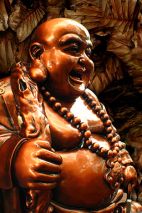
The_Laughing_&_Lucky_Buddha!_A_stroke_of_Luck!_(413428647)

Stream nodded. “Granma Sally has his statue on her desk. She says he helps her stay calm when she does taxes.”

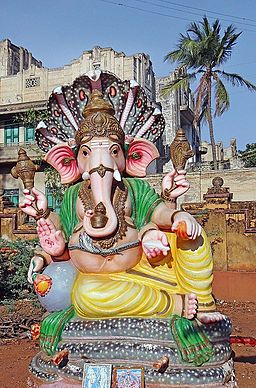
“He’s helping Santa, too. And they’re hanging out with another fat supernatural, Ganesh. He’s this Hindu god with an elephant head.”

“An elephant head?” Stream whooped.

Brook asked, “How come they’re all fat?”

Mae repeated the question to Santa and listened while she worked on an answer.

“He says it’s because they’re supernatural. They don’t have to be in shape to be healthy. Ganesh …” She had to stop and think again. Her neighbors in T or C were into yoga and they had a Ganesh poster in their living room. Finding it strange but beautiful, she’d asked Kenny to explain it. “Ganesh is fat but he’s big and strong, too. People call him the remover of obstacles. Like an elephant can pull a fallen tree off a road but a human can’t.”
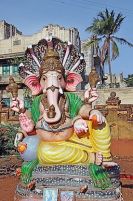
Ganesh_2Stream looked skeptical. “Do people believe in the elephant-head guy? Like they believe in Santa?”

“Some do, but a lot of people just believe in what they all stand for. Like being generous and happy and enjoying life. Santa says they’re hanging out in the hot spring together and these other guys helped him with something he was worried about. So, you did him a favor, giving him a vacation, but he wants to go back to work next year, and he’ll need kids to believe in him again.”

“We can’t make them.”

“No—but you can keep it to yourselves if some new believers come along. You know why he wants to go back to work?”

Brook asked, “Does he get paid a lot?”

“No—he does it to be kind. And this is what those other fat dudes at the spa told him. He’s been too generous. See, they don’t get as carried away with their roles as he does. They help people by changing their lives, not giving stuff. He’s been giving people way too much expensive stuff, and they’re starting to think Christmas is about getting big, fancy gifts. So next year, he’s gonna cut back. Give stuff that means more and costs less.”

Mae took a deep breath and let it out. She hadn’t known she was going to say that. But as a college student with a part-time job and not much cash, she’d had to buy small gifts this year—child-sized team T-shirts for the College of the Rio Grande Tarantulas and a pair of stuffed toy versions of the mascot. She’d wanted to do more, but the trip east had cost all she could spare, and yet she didn’t want the girls to think she loved them less because she didn’t live with them anymore.

“Like when we make you presents,” Brook said.

“Exactly.” Mae smiled in relief.

“Good,” said Stream, “because we—”

Brook dug a fist into her sister’s arm. “Sh. You can’t tell her.”

“That’s right.” Mae put her phone in her jacket pocket. “Being surprised is part of the fun.”

The girls stared at her pocket. “Mama,” Brook said, “That was rude. You hung up on Santa without saying goodbye.”

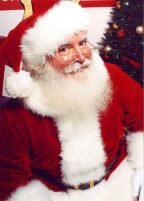
“Oops. Look like I’ve been naughty, too. Good thing he’s taking the year off.”Santa_Claus
            *****

This interlude occurs offstage during the third Mae Martin Psychic Mystery, Snake Face.

Snake Face and Shaman’s Blues (book two) received B.R.A.G. Medallions.

Dive into the series at a discount. E-books are on sale for $2.99 on all major online bookstores, paperbacks have been reduced from $17.99 to $13.99, and the series prequel, The Outlaw Women, is free. Sale ends January 10.

https://amberfoxxmysteries.wordpress.com/buy-books-retail-links

https://amberfoxxmysteries.wordpress.com/free-downloads-retail-links

*****

For links to all stops on the blog hop, go to: http://www.bragmedallion.com

 The next stop on the indieBRAG Christmas Blog Hop is today, December 18 with Malcolm Noble

While We Hold Still, Time Doesn’t

I came across this phrase years ago in my fitness work: While we hold still, time doesn’t. When we procrastinate exercising, we don’t maintain the status quo but get into worse shape. The same is true of the planet. While world leaders and national leaders put off serious action on climate change for too many years, the process didn’t pause and wait for them to get around to something. I want to believe that the new agreement forged in Paris will lead to action, finally. While conscious pausing can be positive—taking time to deliberate and then choose an action—inaction can lead to negative consequences as powerfully as any unwise action might.

I’ve been thinking about my own areas of procrastination. I don’t wrestle with the behaviors people typically make New Year’s resolutions about, such as eating right and staying fit. However, there are plenty of things I put off as if they will take care of themselves—tedious paperwork chores that are much less fun than running. Choosing between what feels good today that will lead to something bad tomorrow and something that calls for discipline and discomfort today that will lead to a greater good tomorrow seems to be the key issue in procrastination—along with the delusion that time holds still with us. Meanwhile, the forces of physics, the marketplace, biology and karma keep moving.

Healing as a Mythic Journey: Book Review of The Healing Path

The unifying theme of this book is that healing calls for making meaning out of illness. Stories have arcs that organize experience into meaning, as they grow from the initial alarm into conflict and struggle in pursuit of a goal, and finally come to a resolution. Marc Ian Barasch uses classic films as myths of the healing path, a framework within which he tells his own story and the stories of others who have confronted serious illness. The essence of healing isn’t always surviving. Some of his journeyers, as he calls his fellow travelers on the path, died. Others had virtually impossible recoveries through spiritual and holistic approaches to self-healing, defying both medical predictions and medical advice. Still others, like the author, had conventional treatment while integrating psychological and spiritual changes.

Barasch did substantial research. His own encounter with cancer and his bizarre dreams that diagnosed it long before his doctors did and predicted aspects of his treatment provoked his curiosity about how others heal. (He wrote another book, Healing Dreams, which I highly recommend.) I’ve read just about every book or study that he cites in The Healing Path , which made this section of the book a little too familiar to me, but then, I’m a professor who has taught a course on alternative medicine. The book is few years old, so its medical information isn’t the latest, but the essence of the message holds up. His adventures as a seeker of alternative options, and the profound self-explorations of the journeyers he interviewed, make for a compelling story.

His language is extraordinary. I bought this book as a used paperback, idly curious after having liked Healing Dreams, and I’ve actually highlighted and starred sections, something I don’t normally do to my books. There are so many shining jewels I had to make sure I could find them again.

The final sections of the book blew me away. I’ve studied energy healing, psychology, and a lot of yoga and meditation. I teach the latter two. I write fiction that involves a healer. I know this stuff, but he knows more, because he has lived through things I haven’t. He taught me, even though all the facts were familiar. His wisdom isn’t platitudinous. It’s hard won.

In James Scott Bell’s writing guide Super Structure, he discusses how great movies and fiction all have a turning point in the middle where the protagonist confronts a painful or frightening truth about himself or his life. Bell calls it the Mirror Moment—looking in the mirror literally or figuratively—and says the essence of it is change or die. This might not mean bodily death; it could be spiritual or emotional or professional. (Synchronicity: He uses one of the same movies Barasch does, the Wizard of Oz, to illustrate his ideas.) This next observation is a minor spoiler, if nonfiction can have spoilers. Barasch says his realization at the key stage of his journey through cancer was change or die. He had to change his whole life, not just get the disease treated. He was facing all the forms of death, not just the one threatening his body.

Change or die. That’s the hardest lesson—we fear change. It can seem like a death of sorts. When sick people change, it can upset those around them. This aspect of healing and illness is examined frankly in this book. The larger story around each journeyer shows over and over that healing is not a return to sameness. Disruptions ripple in all directions.

Anyone who is or has been seriously ill, knows someone who is, or simply loves good writing, could appreciate this book. And strangely enough, there’s a lot in it for fiction writers to learn from, as Barasch uses fiction to illuminate aspects of the plunge into illness, the confrontation with mortality, and the helpers and obstacles encountered on the way out—the healing path.


Whole Series Sale

All e-book editions of the award-winning Mae Martin Psychic mystery series are on sale for $2.99. Marked down from $3.99. You could think of it as “buy three get one free.”

 callingebooknewshamanebooknewsnakeebooknewsoul ebookhttps://amberfoxxmysteries.wordpress.com/buy-books-retail-links