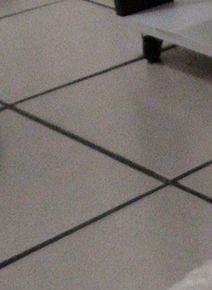
White Tile Floor

 It makes the rooms seem larger and brighter.

It shows every grain of desert sand, every drop of spilled tea.

I was doing my housework and noticed how cluttered my mind was, how full of random inner chatter of no importance, and how un-restful that was, like listening to a radio station that fades in and out mingled with another equally unclear one. While I was on my hands and knees washing the white tile floor, I turned off the noise and focused on the moment. The swish of the rag. The movement of my arm. The small crawl to the next stretch of floor. It won’t stay spotless, floor or mind. But imagine my state of home or head without the effort!


Water’s Colors

Shortly after I posted about the early spring and the warm dry winds, it finally rained. Cool as well as wet, it was practically our first winter day all winter. The rain smell was so welcome, so magical, I had to go out in it. With a large umbrella, of course. The sound of raindrops on it was the best music I’d heard in months.

There’s a beautiful walking route in Elephant Butte known as “the dirt dam.” It’s a road that’s been closed to traffic and takes you over the dirt dam to the big dam, the one that really makes the lake. It’s not the dams that make it scenic, though—to me, anyway. It’s the subtle colors and dramatic shapes of the desert. On a sunny blue-skied day, I’m drawn to notice the grand-scale sculptures of rocks and mountains. I seldom see this place soaking wet. It was a different world, where fat, silvery raindrops hovered on the tips of pale brown thorns. Many years ago, a friend told me he liked cloudy days because the colors of nature were revealed better, the way they were in classic Japanese watercolors. He was right. The rocks and soil were darker, and the bare thorny bushes looked black. Against this backdrop, dried-out straw-colored flower-stalks surrounded suddenly bright green stems. A red hue streaked up clumps of pale yellow grass, the same coral red as some crystals I’ve collected in the area. The flat, spiky pads of the purple cacti seemed more intensely purple and the green ones more vividly green. One full day of water and winter. I’m grateful.

Flawed

At first, she didn’t show them to anyone. But she admitted to fellow artists and creative people who would understand, “I’ve been making devils.” An art therapist, she trusted her muse and followed it. The devils finally came out on gallery walls months later, small blue or red ceramic masks with a wild variety of expressions. I especially like a red one with curved horns and a crooked grin full of sharp teeth that remind me of red chiles. It’s so gleefully wicked. The little devils sell, and I can see why. We all have our shadow side, our mischievous side, our tired-of-being-perfect side. Even the weather gets devilish. I’m not talking about the New Mexico’s summer heat and monsoons—we love the storms. I’m talking about the wind. It’s already started, a couple of weeks too early, and it’s going to be blowing for months. To live with it, you learn to wear goggle-type sunglasses, even on a cloudy day, to keep the grit out of your eyes, and the constant blowing sound either gets as normal as an air conditioner in the summer—or drives you crazy. E. Christina Herr, a gifted New Mexico songwriter, sums it up in her song “Devil Wind.”  If you love New Mexico, though, you take it as it is, wind and all. It’s not perfect. Tourist images of our state don’t show visitors chasing their fly-away hats or sneezing with a face full of dust and juniper pollen, but the cowboy’s bandana was, among many other things, a dust mask. Imperfection has its charms.

In my work in progress, I’m developing an antagonist character who’s obsessed with being smarter and more capable than anyone else, which of course, makes her anything but perfect; and the antagonist character in Shaman’s Blues likes to give bizarre advice, with the assurance, “ I’m always right.” My favorite fortune cookie message: The greatest of all faults is to be conscious of none.”

I’ve been pleasantly surprised how many readers love Jamie Ellerbee, the flawed and troubled character I first introduced in Shaman’s Blues four years ago. When I wrote the book, I was experimenting with turning as many conventions of romance around as I could, while still writing about love. He’s a mess, though he struggles not to be. Not exactly a conventional romantic lead. The book’s original title as a work on progress was Samskaras, the Sanskrit word for the residue of our actions and emotions that creates new cycles of karma. One of my spiritual teachers said a good English translation for it was “Some scars.” Jamie has a lot, and he’s not skilled at hiding them. But then, hiding doesn’t bring people closer to each other. Kindness does.

Happy Valentine’s day.

*****


Shaman’s Blues is on sale for 99 cents .

Smashing Clichés

Movies featuring things blowing up are popular. People like to watch demolitions, from buildings to demolition derbies. And then there is art-to-be burned, such as Burning Man and Zozobra. When I lived in Virginia, I used to clean the park where I ran and sometimes enlisted the help of several boys who played there. One day, they found a large toy firetruck in the stream and pulled it out—and proceeded to smash it to pieces with rocks. This was obviously more fun than playing with it.

Someone has been making faces on the trail where I run in the desert. Not walking along being silly, but arranging pebbles in smiley-faces on top of the rocks that mark the edge of the trail. The first one didn’t annoy me, but then they multiplied. I don’t mind intriguing, meaningful art made among the desert rocks. A labyrinth. A miniature Stonehenge-like creation. A rounded lava rock that looks like a fertility goddess surrounded by a little maze and an altar. A small rock nestled in a hollow in a large rock just because it fits so perfectly. Such arrangements fall over gradually or get covered with sand, and nature looks natural again. Someone left a small painted rock near the trail, red white and blue with the Texas flag’s star, the name of a soldier who died in combat, and few words of love and honor. It means something. No one moves it. Perhaps he used to love this trail and used to hike it with the person who left the rock. But smiley-faces? Twenty or more of them? That’s nineteen clichés too many.

On a lovely, sunny, seventy-degree winter day, I got tired of them and gave a swipe at one as I passed. No effect. The pebbles had been glued to the trail-marker rock. What the heck? Did the face-maker think this stuff should be permanent? I soon found that a quick kick could dislodge most features of the glued-on smiley-faces, and it felt good. Can I justify it? Maybe not, but to me, gluing all those faces along the trail was arrogant. If they’d been arranged lightly, without attachment, I might have knocked one aside and been content, had my fun like the boys smashing the toy firetruck, and forgotten about it. Nature would have blown them away eventually.

Writers are regularly advised to “kill your darlings,” those scenes we love that weigh down the pace, or those wonderful (to us) witty lines that don’t serve the story. We have to weed out clichés and our favorite over-used words. They can have an effect on readers like seeing twenty-plus smiley faces, an intrusion on the flow of enjoyment. Today I noticed that someone else had destroyed smiley-faces. There were face-pattern glue marks on some rocks with branches laid over them, as if my fellow self-appointed curator of trail art was saying, “Don’t even think about putting that back.”

Sometimes I store my cut scenes and lines for a while, in case I want to put them back, but ninety-percent of those darlings never return. Nothing in the first draft is glued in place. I have to destroy in order to create. Fortunately, I enjoy revision. It’s a lesson in non-attachment, and almost as much fun as smashing a smiley.

Variations on a Theme of Conscious Community

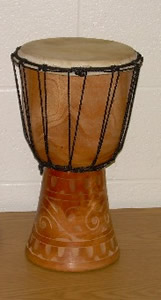
In celebration of the super moon-blue moon-blood moon-eclipse Wednesday, a healing music center in T or C invited a large circle of like-minded souls to dance and drum. The evening was semi-structured, with guided meditation followed by free-form dancing, drumming, singing, and story-telling. The opening meditation encouraged us to share self-expression in a non-judgmental space.

When I’m attending a ceremony like the Apache dances of the Mountain Gods or a Pueblo corn dance, every drummer and dancer seems to merge with the ceremony. Apache Ga’an dancers are painted and masked. The women who circle the dance arena are wrapped in shawls, and all do the same step. At Pueblo corn dances, the entire community filling the plaza becomes one flowing pattern, the men in white leather kilts and red-brown or turquoise-blue body paint, and the women in one-shouldered black dresses and rainbow crowns, subtle individuality showing only in their jewelry and parrot feathers. The clowns are painted, losing their personal faces to the role they fulfill.

In T or C at the full moon event, we danced as our individual selves. Entering a spiritual, ceremonial mind space was more psychologically challenging. My head kept filling with questions. Whose little girl was that, doing happy somersaults in the middle of the circle? Why wasn’t a certain person dancing—was she okay? Was it all right to use a drum I found near my chair? Was I taking up too much space when I danced? A lot like the dance of daily life in a community.

A healer and dancer led the opening breath work and imagery. For those who weren’t aware of it, she mentioned that she has a degenerative condition that affects her muscles, so she depends on chi, and called her illness a gift that helped her truly appreciate and experience this vital force. She guided us to raise our energy and awaken our spines, and she then danced, graceful and expressive. During the drumming portion of the event, she was often the only person moving. She wasn’t performing for an audience; the circle was giving her energy, chi, and sharing the joy of moment, with awareness of the limited time in which she may be able to move this way. As Castaneda’s teacher Don Juan told him, death is your advisor; he walks by your left shoulder. Listen to him. The difference between her and the rest of us is that she is always listening. She opened the evening with the analogy of the body’s web of connective tissue and how it enables one small part to affect another at a distance, saying we were connected in a web of life energy the same way. Briefly, while drumming for her, I felt myself disappear into the rhythm, and there was only the sound and her dance.

I had hesitated to schedule a hot spring soak at the Charles Spa right after this event—it meant leaving before the music was over, and missing the closing meditation—but my legs were sore from the previous night’s yoga class in Albuquerque and I knew I needed the mineral bath. When I arrived at the Charles, the young man at the front desk informed me there were other women in the baths. He knows I like peace and quiet when I soak. No chatting, no loud groans and sighs. Noisy relaxation isn’t relaxing for me. “They’re part of a silent retreat,” he said. I was more than willing to share space with them.

The tubs at the Charles are private, each person behind her own curtain. The knowledge that the other people were observing silence as a spiritual practice put me into the same frame of mind. I’ve done half-days of silence at various retreats and taken college students on silent walking meditation, so it was a familiar zone. A welcome one. No sounds but water. Stillness. Then someone moving in water. I was in a new communal spiritual space with unseen people. Consciously silent. Respectfully present.

Continuing Education

I just finished a two-week intensive course on plot arcs. Writers aren’t required to get CECs the way health and fitness professionals are. I don’t have to renew a certification or have to take a certain number of courses per two-year period to prove to anyone that I’m keeping up my skills. But I have to keep learning.

People sometimes ask me why I go all the way to Albuquerque to take yoga classes every couple of weeks, classes I don’t get CECs for. The other teachers in T or C are good, after all. But they’re my peers. We’re equals. While I enjoy their classes, I also want to study with someone more advanced than I’ll ever be. I get excellent critiques from other writers, my peers, but I took a class with my editor’s editor.

It forced me to outline my work in progress before I completed the first draft, which I don’t usually do until I’ve improvised the whole plot, so it was challenging. I’m not sure my outlines made sense. But the ideas the instructor brought to the course did. Her structure for pacing and tension, for weaving in secondary storylines, and the key elements that need to take place in various portions of a book, will help me when I revise. She said she admired my bravery in staying with my “pantsing” (writer-talk for flying by the seat of your pants through the first draft) style while being required to outline. Maybe that was a diplomatic word for stubbornness. I don’t think I was brave. It’s just how I create. When I make plans, my characters seldom go along with them. I look forward to applying what I learned in the course when I do the major revisions in the second draft—once I know what everyone is up to.


Relative Discomforts

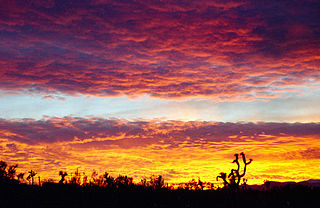
Cloudy winter days aren’t as blissfully beautiful as the sunny ones with pure bright bowls of New Mexico blue overhead, but the payoff comes later, with mind-blowing, psychedelic color and texture at sunset. The changes happen so fast, I have to time my sunset viewing exactly right and pick the right location for it. The sunsets may technically be in the west, but the colors can show up anywhere. There was a thick, creamy, red-purple display in the southeast one evening, a blazing orange total-sky event on another, then a softly glowing purple radiance in the north the next night. On a cloudless day, all we get is a pale rim of gold on the edge of the bowl.

Most of these lovely clouds haven’t rained, though. Yesterday’s shower was the first in around two months. It’s been a warm, dry winter. One day in December was actually cold. One day. High temperatures should be in the fifties, not sixties or seventies. I wonder if the snakes ever brumated. The other day, a little yellow jacket wasp was walking around on the top of my shoe while I was working out by the river. I like bees and wasps, but should they be out and about in January? The pines trees have shoots of new growth and I think they’re pollinating. The fig tree in my yard is budding. A mosquito tried to bite me. I’m comfortable, but too comfortable. The bugs and plants and I should be enduring bit of a chill. I’m sure my East Coast friends would like to ship a big load of winter to the Southwest about now, and I wish you could. Without snow in the mountains, we could be headed for a dry year.

The following is not a complaint: My home internet was down for a week and I had a cold—events so insignificant in the realm of human difficulties that they remind me my life isn’t hard. My immune system probably appreciated the chance to do a little work. I wasn’t knocked-out-flat sick for even a day. To avoid spreading germs, I was less social, but less dancing meant more writing. And while I had to schedule my limited online time and leave home to do it, my reading changed for the better. Fewer news articles, and more in articles in Alternative Therapies in Health and Medicine, a medical journal I still find fascinating even though I’ve retired. A challenging read keeps the dust off my brain, and I occasionally get plot material from it, including the remarkable studies that help shake up Mae’s world view in The Calling and the Tibetan medicine material in Death Omen.

I can cope with minor personal discomforts and even benefit from them. The uneasy comfort of the weather troubles me more.

Recycling Another Old Calendar

I use a paper calendar, not an electronic device, for planning, and I can flip back through the pages and see the things I had to keep track of before I took early retirement and moved, finally, back to New Mexico. I can see the to-do list of the transition, too, and the schedules and plans in my new life. The year was significant, but the days more significant. Each of those little squares was life lived. Interactions, connections, experiences. Each of those little squares was a day when I kept certain commitments no matter what else was going on: yoga, meditation, and writing. My life has felt more circular than linear, and since I have occasional precognitive dreams, I question the perception of time as a step-by-step passage, with clear lines between past, present and future like those little squares that organized 2017.

There are many New Year’s rituals in which people let go of their past habits or troubles and embrace something new and positive. One such ritual is an interactive art installation in the ladies’ room at the T or C Brewery. The one before it used maps, and invited the women passing through the space to add notes about where they had been and places that affected them. The one for the New Year is a figure with messages accumulating on her, letting-go and turning-toward intentions. She will be burned, like Zozobra, in February.

A small spaceship full of hopes and wishes will go up on New Year’s Eve from Healing Waters Plaza at the time of the Ascent of the Turtle, T or C’s uplifting variation on dropping the ball in Times Square. (I have no idea what this little spaceship is—I’ll find out and report back.)  I like the imagery of both these rituals, and yet I can’t think of anything to add to them, not a message to set afire or one to send out to the universe.

Though I’ve I learned from my past, I seldom think about it. There’s more behind me than in front of me, but what’s ahead is more important. And what’s now is most important of all.

A book I’ve read a few times and no doubt will read again is No Word for Time by Evan Pritchard. The author, of Micmac descent, visits a tribal elder in Canada to study his ancestral culture and language. He asks the words for various things, and of course, asks the word for time. How would you react to the answer, there is no word for time?


Sitting

There’s good sitting and bad sitting. I’ve been working on a post for Ladies of Mystery about the bad-for-you sitting that writers have to do and how to counteract it, but here, I’m talking about the good sitting. Meditators often use the word “sit” to mean meditate.

Sitting slows down the activity of the mind—a problem when you’re trying to be creative, a benefit when you’re practicing awareness. After I cool down and stretch at the end of a run, I sit in vajrasana, lightning bolt pose. I initially started doing it to stretch the muscles on the front of my shins and ankles, and realized that it had an effect on my state of mind. After all that movement, after the ever-changing visual input and the flow of creative thought, after the more active stretches, I sit on the ground in stillness. If I’m alone at the end of the trail, it becomes a moment of pure presence. Breeze on skin. Leaves scuttling on dirt. Blue sky. Buttes and mountains across the lake. The sharp shadows of every pebble and rock in the afternoon’s brilliant light as the sun rides low in the sky for the solstice. Sitting. The drop into inner silence.

If I were to get out of my chair now and sit in that same pose, I would have to work to empty my mind. The inner quiet comes naturally after asana practice as well.  Moving my body is the prelude to quieting my mind.

*****

Note: The image is an abstract overhead view of a person sitting in meditation. I didn’t see it right away, so I thought I should point it out for anyone else who saw only a blue design.

People My Own Age

When I was a kid, I was close to my older sister and tended to share friends with her, people a year ahead of me in school. In college and when I first started working, I mingled with my own age group, and I also retained a close connection with a couple who were my father’s good friends. These mature people stood as a contrast to the crazy mistakes my peers and I made in our twenties. I would visit their home, leaving the sea of drama that is young adulthood for an island of sanity, culture, and intellectual engagement, and become aware of the difference, enjoying the respite and the chance to be a little more like them.

As I got older, my friends tended to become younger. I didn’t do this on purpose; they were the people I met through work and yoga, and I seldom felt older than them. By the time I retired, I was generally socializing with people twenty years my junior.

At work, I was surrounded by eighteen-year-olds five days a week, teaching primarily first-year courses. Since I taught in health and exercise science, the subject of aging naturally came up in classes. I often heard students say, “I love old people. They’re so cute.” It was good to know they loved their elders, but that adjective made me cringe.

My former backdoor neighbors had a frantic, poorly trained little dog which they let out in the yard to yap nonstop at all passersby. One morning, a stooped, gray-haired woman passed through the alley between my apartment and dog-owners’ trailer, and of course, the little beast barked hysterically. The woman muttered, “Someone ought to kick that f___ing rat in the head.” I wonder if my former students would think she was cute.

I live in a town where, according to one of its younger residents, the average age is “retired.” My friends are in their fifties, sixties and seventies. Vigorously engaged in their work, their creative pursuits, and in community organizations, they defy stereotypes of aging. Many of the poets who gather at Black Cat Books and Coffee are in their silver-haired years, and the vibrancy and originality of their work is impressive—perhaps because of the years behind the words.

At first I thought the predominance of fellow Boomers and creative people in T or C made it too easy to fit in, and I wondered, is this good for me? While I don’t miss the daily hassles of dealing with college freshmen or grading their papers, I realize I benefited from the abrasion. The longer I’m here, the more I see that everyone, in their own way, will challenge me to adapt and grow. People who are superficially and demographically like me are just as different from me in many ways as my eighteen-year-old students were. This is good. People who are not like me help wear the rough edges off my personality and opinions, like the wind sculpting desert rocks. With that softening comes access to the place where we are more alike, the essence, the humanness, the spirit.