Flowering of the Heart

Never can I write of Damascus

without my fingers becoming

a trellis for her jasmine.

Nor can my mouth speak that name

without savoring the juices of her apricot,

pomegranate, mulberry and quince.

Poem by Nizar Qabbani.

Translated by students in the Iraqi Student Project

Never Can I Write of Damascus: When Syria Became our Home, by Theresa Kubasak and Gabe Huck is a memoir of the couple’s years with the Iraqi Student Project, preparing Iraqi refugees in Syria in to attend college in the U.S. Huck and Kubasak chose the work of creating educational opportunities for Iraqi young adults as their way of compensating in some small way for the damage done to Iraq by the U.S. invasion. They chose Syria because it had welcomed such large numbers of Iraqi refugees. Little did they know that in seven years they would be leaving Syria themselves, and that this country they came to love would be flooding the world with its own desperate refugees.

If I were not about to retire from education, I might use this book in a first-year seminar, teaching college students how to explore intellectually, do critical thinking, engage in civil discourse, and appreciate learning, language and culture for their own sake. The model of highly motivated learning in the ISP groups is fascinating, as they discovered world literature and poetry in discussion groups and worked together in writing workshops, to a large extent self-directed with guidance from Kubasak.

Through this book, I’ve learned more about Syria than I have ever learned from the news. I got a clear feeling for what it must be like to leave your home and your possessions because your life is in danger and your country at war within itself, and also for how Syria made room for refugees, first from Iraq and then from its own disrupted society. Though they make occasional references to politics, most of all Huck and Kubasak have written a love letter to Damascus: its language, its architecture, its food, its artisans, its spirituality, and its people. Damascus as it was. The city in this memoir is full of music, dancing, fresh fruit juices, family, prayers, creativity, and most of all friendliness and generosity.

The authors use excerpts from student writings, interviews with local residents, and quotations from books and poetry to illustrate the themes of each chapter. One moving story is from an Iraqi refugee. She tells about stopping in Mosul on a cold night as one of many escaping to Syria, taking shelter in a mosque. The travelers didn’t know each other, but little by little they drew closer to each other for conversation and for warmth, and thus they spent the night, comforted by each other’s human presence and warmth. They were Shia, Sunni and Christian in that group, and it no longer mattered at all.

My final meeting with my Virginia book club was special. It’s the only time we’ve had the author of the book we read join us. Two of us in the club know Theresa Kubasak as our yoga student, and we invited her to talk with us and share the in-depth stories behind her memoir.

As our guest, she did something quintessentially Syrian. Eager to share Syrian culture with us, she brought food: fresh hummus seasoned with garlic and sumac, freekah (cracked wheat with slivered almonds), figs and dates stuffed with walnuts, and the wonderful soft flatbread that she describes in her book as something people often carry home on their heads. The generosity and sociability of the Syrian people is the life force that animates the book. She embodied that spirit. In addition to cooking for us, she brought two of the books of the poems and essays written by the Iraqi refugee students she and her husband worked with, and a long white curtain inscribed by a number of the students with the best lines from their essays about spiritual life. For a while, it hung over a door in my apartment, words written by young people in Damascus. There was something moving about its presence, a scene from their lives carried into ours, bearing their words in their handwriting. One of the writers, Mustafa, had signed his name over a sketched bank of fluffy clouds. A book club member who volunteers helping Syrians resettle here was so entranced by the small volume of the student writings that she read some of the poems over and over and then had to share them aloud with us.

Another member of the club asked Kubasak what was difficult or different in returning to the U.S. after seven years in Damascus. She described a day during their readjustment to New York, where they had been living before they took on the Iraqi Student Project, including this anecdote as part of her answer: After going to various institutions and businesses on errands, she looked at her husband and remarked, “We’ve been to five places today, and no one has offered us tea.”

Not all book clubs will be so fortunate as to be able to invite the author, but if you’re in a club and need something important, moving and different to read, I recommend this. Have some Syrian food as you discuss it, and apricot or pomegranate juice and tea.


Reflection and Self-Study: Down Time Needed

On a recent trip that took me through three guest rooms in three nights, I forgot my evening meditation and journaling practice. I barely kept a journal, and what little I wrote in it was about other people. The interesting people I met at my reading and book signing. What great hosts and wonderful people I was with. Thoughts on how the friends I visited were doing. No inner work. I took time daily for asana practice in the morning and I also found time to write fiction, though only a paragraph or two, but I ended my day turned outward still. How strange. I made the commitment years ago for an evening practice and yet I simply forgot. By the time I was on my way home I realized how important that commitment was.

I stopped at a rest stop to eat a picnic supper. As I opened my car door, it lightly tapped the vehicle next to it. I saw that there was no scratch, not even a bit of paint left on the other vehicle, and proceeded to reach for my cooler. Then a male voice said, “Are you going try to pretend nothing happened?”

A young man of about nineteen stood between the two cars, blocking my exit and glaring at me. I said that nothing had happened, and showed him. My door had touched the hard plastic rim over the wheel well of his Jeep, a protective surface I suspect is there for off-road driving, though this Jeep looked new and shiny, as if it had never done what it was designed for. He demanded an apology. Something about a kid the age of my freshman students acting like an angry parent with a misbehaving child over a non-event rubbed me the wrong way and I got sarcastic with him. “Sir, I most humbly apologize that my door ever so lightly tapped your Jeep, doing no damage whatsoever.” He told me I didn’t have to be like that. I told him he hadn’t had to be a jerk. (The only common sense I had left kept me from calling him something more offensive than jerk. I noticed my inner editor canceling out the A-word.) He denied being a jerk and told me to be more careful in the future. I told him not to be so angry in the future and walked off to the picnic table. Thus the interaction ended with both people still wanting to be right. No communication.

As I set up my dinner, I could see him standing between our cars, studying mine intently. What was he looking for? Evidence of a chronic, habitual parking lot door-hitter? My car was a mess inside, full of the detritus of traveling, and I have a New Mexico habit of not wasting water washing it, so it’s got a nice coat of dirt, but it’s not full of dings or other people’s paint. Perhaps he was peering at the empty Perrier and iced tea bottles, hoping they would turn out to have contained something stronger. I didn’t ask, just watched him, and he finally drove off.

It’s possible he was driving his parents’ car and was paranoid about damaging it, and acted toward me the way they would act toward him if it got a tiny scratch. Or maybe he’d saved up for a fancy car and is anxious about it. I don’t know. What I do know is that my pause-to-check mechanism was rusty. My capacity to step back and reflect instantaneously, to recognize that his hostility was his and that I didn’t need to be reactive, was weakened by only a few days without real reflection. I could have simply acknowledged him. He seemed menacing at first, blocking my way and starting with an accusation, but that’s all the more reason I could have and should have handled the situation better. After all, he was a kid. It was my job to be the adult.

Before I drove on, I wrote a journal entry on some scratch paper, processing all my thoughts and feelings. When I got home, I appreciated the depth and value of my night’s meditation and journaling practice. I need to do all these things to keep myself on track. Yoga asanas, writing fiction, writing a journal, and meditation. I don’t function at my best without deep down time. Not distraction or entertainment time, but inner time. It doesn’t have to take long to go deep. I don’t think I’ll forget again.

Image credits: Occupy the Present, Bryan Helfrich; heart puzzle, Katarina Caspersen

Signing Books at Book and Table, Valdosta GA

Should any readers happen to be in this area, I would love to meet you in person. I’ll be signing books and doing a short reading at Book  and Table, 120 North Patterson St. in Valdosta, GA on Friday the 14th of April at 7:00 and at noon Sat. the 15th. The bookstore/restaurant is run by one of my favorite authors, J. Michael Orenduff, author of the Pot Thief Mysteries. If you’re an East Coast fan of New Mexico mysteries, come meet both of us.

Inner Beauty

I’m a people-watcher. My fellow humans are endlessly fascinating and the fragments of their lives that I observe have the seeds of stories in them, maybe even new characters. They also give me an opportunity to practice what Buddhist teacher Jack Kornfield describes in his book The Wise Heart as seeing the inner nobility in in others.

On a recent run in a park, I noticed a romantic young couple setting up a hammock, and they asked a man who was walking his dog to take their picture in front of it. The man had a pair of hot pink headphones parked on his neck. He was around six foot three, wearing a baggy old T-shirt over a broad chest and prominent belly and khaki shorts that revealed thick, powerful calf muscles. They thanked him and he walked on with his stubby-legged little white mutt, a comical creature that looked all the smaller and stubbier for being his dog. As I finished one lap, I encountered the dog sitting patiently while the man fiddled with his MP3 player, pink headphones now attached to his head. On my next lap, he and his dog were in the middle of the green space, and he faced away from the couple in the hammock, who had vanished deep into its blue embrace. The man was singing. I realized the headphones were providing him with his accompaniment, and he was … rehearsing? Creating? He had a huge soaring tenor voice, classically trained, sweet yet strong and passionate, filling the air with a song about lost love.

You never know what’s inside another person. The pink headphones were a hint that music mattered to him, but the sound of his voice, the feeling and beauty with which he sang, expressed far more than anything on the outside. The inner depth, the inner nobility.

Kufwasa

I discovered this beautiful concept while researching Zambian culture for my work in progress. Kufwasa is a word in the Tumbuka language that means a blend of patience, mindfulness, flow, enjoyment, and something unique to the understanding of people who live in a traditional African culture which may be hard to put into English words. My goal in reading about Zambia was to understand more about a minor character, Mwizenge Chomba, who has been in my series since book two, Shaman’s Blues, but is about to play a larger role in the book I’m writing, the seventh in the series. I wanted to make sure I got his background right, his way of seeing the world. I’m not sure I’ll find a place for describing kufwasa in the book, but it should exist in the character himself, in the world view he grew up with.

Kufwasa implies doing one thing at a time, with full concentration and a kind of serenity, or it will be neither done well nor fully experienced. My character was raised in a remote village, so his family members would have planned one major activity a day. When you get around on foot, by bicycle, or in old and unreliable vehicles, travel and errands can’t be hurried. Cooking can’t be rushed, either, using traditional methods. A society without distractions enjoys taking time to talk and laugh and tell stories over these slowly prepared meals. In the twelve hours of equatorial darkness, married couples have plenty of time for kufwasa in their relationships. (I liked coming across this idea about marriage, because my Zambian character is married to an American woman who writes romance novels.) Love thrives on kufwasa.

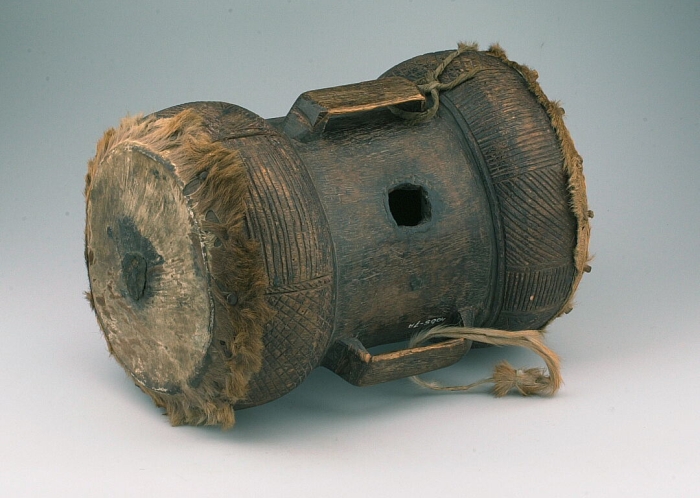
It’s funny how I can discover something about a character that makes perfect sense even though I didn’t know it at the time I introduced him. Mwizenge appears in Shaman’s Blues as a singer and drummer in a world music trio. Live music of all kinds is a big part of Santa Fe life, and I’ve enjoyed African drumming and dance groups there, so he simply showed up the way characters do as someone likely to be in Santa Fe. I understand now why he feels at home there, so far from his village. He carved his own drum with kufwasa back in Zambia and grew up with music and dancing as community events. Compared to the high-pressure lifestyles of some parts of the country, the pace in New Mexico comes a little closer to kufwasa.

Next time I find myself trying to do too much too fast, I hope I can slow down and remind myself to practice kufwasa.

Ahimsa and Santosha

Though a few of my fictional characters do practice yoga, this week it’s Amber the yoga teacher and college professor more than the novelist who’s talking.

The Sanskrit word ahimsa is usually translated as “non-harming.” It’s one of the principles of yoga philosophy, one of the yamas, which means abstentions or restraints. Ideally, we’re aware of it in our asana practice and also as we take our yoga with us into our lives. Ahimsa applies to self and others, to all life forms, not only to humans. Thinking unkind and hostile thoughts, saying destructive things, or doing harmful actions are all contrary to the principle of ahimsa.

When I teach, I remind students to stay in a pain-free range of motion and to come out of a pose completely when fatigued rather hang in their joints and possibly injure themselves. But then I’ll look around and see students succumbing to the competitive urge to do what a stronger or more flexible classmate can do. Santosha needed! This is one of the niyamas, the observances to be practiced without restraint. It means contentment. One does not fight reality but takes an attitude of receptive awareness. Objecting to reality with complaints and harsh judgment doesn’t change it. Change can occur, however, from this basis in contentment. Approaching one’s own body and one’s own character from santosha seems to go with having a sense of humor that is kind and open.

I do my best to integrate yoga philosophy into my teaching without giving a formal lecture. However, it’s incredibly hard to teach Americans not to hurt themselves, and when I instruct other kinds of physical activity it’s even harder. There’s no expectation of spirituality or stress reduction in a strength-training class, but of self-improvement, and for some reason, we seem to think we’re better people if we push ourselves beyond healthy limits. I’ve met young men who take pre-workout pills with so much caffeine they could cause a heart attack in order to force their exhausted bodies to work harder, when what they really need is eight hours of sleep a night. I think Americans subscribe to a pervasive cultural delusion that it’s virtuous to go without sleep or heroic to work sixty hours or more a week, and that a great athlete will sacrifice the long-term well-being of his or her body for the sport and for the team. I wish no one had ever come up with the phrase, “no pain, no gain.”

Well-rested, relaxed people get more done in less time. They fight less. Comprehend more. Pay attention and remember better. Procrastinate less. Have more energy. If we all slowed down and allowed our nervous systems to stop buzzing, what would happen? If we valued our health as a nation and as a culture, rather than seeing it as expendable in the pursuit of other goals, what would happen? How would employers treat workers? How would we treat ourselves?

Seeing a Ghost

ghost

As research for the seventh Mae Martin book, I recently read a book on paranormal investigation techniques by a professional skeptic. It reminded me of this post I wrote three years ago, which some of my current blog readers may not have seen, so I’ve updated and recycled it.

Once in a while, writing paranormal mysteries, I need to introduce a character who is no longer alive.* In Shaman’s Blues, Mae has no concept of ghosts at first, but Jamie, an anthropologist’s son, assures her that every culture has them.

Ghosts fascinate us, even when we don’t believe in them. People sign up for ghost tours of historic districts, and some choose the option to get the presumably haunted room at a B&B. Part of the attraction in ghost stories is the curious pleasure of safely experienced negative emotions. There is something frightening about an encounter with the dead, and most ghosts are said to have fallen into the place between worlds through tragedy. By seeking out ghosts, we can dip into terror and sadness for a quick swim and come back out, invigorated by the plunge.

It’s different for the ghost. Stuck in the crack between two worlds, attached to earthly life yet incapable of living it, looking, perhaps, for one particular soul, the ghost must be frustrated, bewildered and lonely. No wonder they behave badly sometimes. It can’t be much of an afterlife.

I say that lightly, but at the moment that I met a ghost, I was scared to the bone. It was quite some time ago, but I can still feel her when I think about her.

The cold is what made her frightening.

I was a college student on Christmas break visiting my sister and her husband, and my boyfriend and I stayed in the attic bedroom of their old house. In the dark before dawn, the alarm went off, and my boyfriend got up to go to work. We spoke briefly, kissed goodbye, and he left. Wide awake, I stayed in bed under a heap of quilts and blankets, hoping I could go back to sleep. Our shared body heat had made a cozy nest of the bed and I didn’t want to get up early on my vacation.

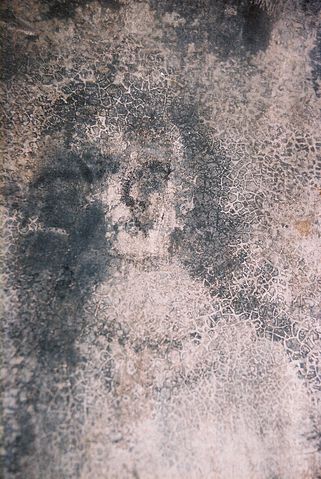
I snuggled the blankets around me—and was suddenly chilled. I wasn’t alone. A woman’s head and shoulders floated on the far side of the room. She stared at me, her face stern and judgmental over a high-collared dress, her hair pulled back in a severe tight bun. I was terrified, not by her apparent resentment, but by the deep, unnatural chill. At the same time, I thought her features were like the country comedian Minnie Pearl. I’ve cited Stephen King’s Danse Macabre in a book review before, and it fits here: comedy and horror go hand in hand. I pulled the blanket over my head until the cold went away.

Prior to that, I didn’t believe in ghosts. I’m not sure I do now, either, but it’s like what anthropologist Michael Harner says about shamans not believing in spirits. They don’t have to. They know.

*****

*My books containing characters who are ghosts or spirits are Shamans’ Blues and Soul Loss.soul ebookshaman


The Fascination of What’s Difficult

I memorized this poem years ago when I was working in theater and also pursuing a degree in a new field. It struck me as the perfect fit when I used it as the introduction to a research paper on stress and  health. To me, it describes the reaction of the human spirit to the demands of work—work we once chose with idealism and commitment but which now consumes us. William Butler Yeats, no doubt, rewrote the poem many times to achieve such simplicity and strength, yet the words seem to rush out in a flow of passion.

My father was my role model in many ways, the kind of person I aspire to be, with his gentleness, humor, open-mindedness, warmth, community engagement and enjoyment of the arts. He retired early from his management job to run his own small business selling specialized supplies to bird watchers. In many ways he was a cautious person, but he had the courage to risk a change when it was time. People tell me I’ve been glowing since I decided to retire early. Revisiting this poem after I’ve acted on the need it expresses, I get more out of it than ever.

How does it speak to you?


The Fascination of What’s Difficult

The fascination of what’s difficult

Has dried the sap out of my veins and rent

Spontaneous joy and natural content

Out of my heart. There’s something ails our colt

That must, as if it had not holy blood

Nor on Olympus leaped from cloud to cloud

Shiver under the lash, strain, sweat and jolt

as though it dragged road metal. My curse on plays

That have to be set up in fifty ways,

On the day’s war with every knave and dolt,

Theater business, management of men.

I swear before the dawn comes round again

I’ll find the stable and pull out the bolt.

Shrines

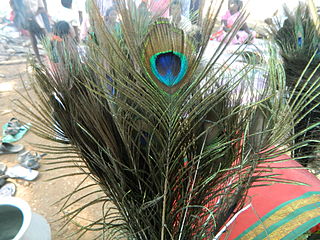
peacock-feather In Martyn V. Halm’s one-of-a-kind suspense novel, In Pocket, the narrator Wolfgang, a pickpocket, begins to doubts the motives of a young woman who befriends him because her shrines don’t seem authentic. He says that in his observations of women’s homes, they make shrines. He doesn’t mean religious ones but highly personal arrangements of objects that honor special aspects of each woman’s life.  When I think of friends’ houses and apartments, the most common shrine is the family pictures shrine, but I’ve seen idiosyncratic ones. I recall a friend who had peacock feathers and other objects arranged around a mirrored dressing stand on the hall landing, her shrine to I know not what, but it had a kind of art deco bordello feeling to it.

Some people’s kitchens are shrines, arranged to honor the gods of nourishment and conviviality. My academic colleagues’ offices are shrines to scholarship, with diplomas and books and journals—but also softened with mini-shrines to family. In my books, I’ve used this kind of imagery—Charlie’s door and office in The Calling are the most vivid example—as a way of revealing character and also implying a mystery. Why do people  build the shrines they do?

I have so much meaningful art around me that my whole home is a shrine. And then I look at the clutter, the heap of writing reference books, the heap of journals on alternative medicine, the stack of books and magazines I’m reading, the notes on my work in progress spread on the left side of my desk, and I think—that’s not clutter, those are shrines. Shrines to reading and writing.

When I move to a smaller space, I’ll be parting with slice-of-life shrines, eccentric random gifts with stories behind them. A Roswell NM alien-face paper fan a friend gave me at the Mescalero ceremonies many years ago. A Gumby one of my yoga students gave me. A stuffed toy tree frog. I’ll trust my heart to store the people and memories I echo back to myself with things like these little green creatures. Sooner or later, we all part with everything we own. Practicing non-attachment seems abstract at times, but not when I am taking down my shrines.gumbyleaning2

Everyone is my Teacher

640px-very_large_array_cloudsIt’s surprising what you can have in common with someone when at first it seems there might be nothing. At a friend’s birthday dinner party, I was seated next to a graduate student in astrophysics who specializes in radio astronomy, a young man whose hobbies include ice climbing. All these things are fascinating, but far out of my realm of experience and expertise. We  managed to make conversation, though, and somehow discovered a mutual interest in meditation. I’m not sure how we got there. Perhaps from talking about his childhood in Vietnam and how he’s not a practicing Buddhist but follows the philosophy without the religion, or perhaps from talking about my work teaching yoga. “I can learn from you,” he said. “Everyone is my teacher.”

I didn’t feel as though I taught him anything. However, he did, through example, teach me. He was so enthusiastic about adopting daily meditation, so aware of its benefits in the stressful life of a Ph.D. student. I’m older and have been practicing longer, but his deep gratitude for the effects of this simple commitment reached me. Yes, I also practice daily, but how mindful has my mindfulness been? Could I take a little longer, become a little quieter?

His work in radio astronomy is listening—finding ways to hear the universe. It works for me as a metaphor for meditation and for everyone being my teacher. What subtle signals have I not yet heard?