Conscious Listening

Sound can be noise, it can be distraction, it can be enjoyable, beautiful or soothing, and it can also be a direct route to clearing the mind. Sound reaches the brain faster than thoughts, faster than images or sensation. So, if you listen mindfully, you can silence the inner chatter and be. I recently attended a concert of healing music, a sound bath, in a St. Paul’s Episcopal Church in Truth or Consequences. It wasn’t religious music, but it was sacred. I started out with thoughts of writing, of possible scenes and settings, since one of my ongoing characters is a musician who composes healing music. He would have loved the event (writers think this way about their characters), but I forgot about him during the performance. The beauty of the experience was getting past verbal thought altogether and into pure sound—bells, electronic tones, rain sticks, non-melodic music created to promote a meditative state or an inner journey. The composer/performer encouraged the small audience to close their eyes and go inward, and I did. The music came through eight speakers in patterns that gave it a spatial structure and a quality of movement that triggered flowing abstract color visions in my mind, and yet I was always grounded and present in my body, aware of my own energy. The next morning I still had a lingering sense of deep clarity, as if I had been meditating. And that is not the way I normally feel before coffee!

Recommended listening: Tom Montagliano

If you have a chance to hear his music in person, don’t miss it.

Meet Mae Martin — a southerner who loves silliness, hates bullying, and has a very unusual talent for solving mysteries

Fellow paranormal mystery author Terri Herman-Ponce did an interview with my protagonist on her web site. I love this idea–interviewing the character rather than the author. Get to know Mae better, in her own words.

Inner Beauty

I’m a people-watcher. My fellow humans are endlessly fascinating and the fragments of their lives that I observe have the seeds of stories in them, maybe even new characters. They also give me an opportunity to practice what Buddhist teacher Jack Kornfield describes in his book The Wise Heart as seeing the inner nobility in in others.

On a recent run in a park, I noticed a romantic young couple setting up a hammock, and they asked a man who was walking his dog to take their picture in front of it. The man had a pair of hot pink headphones parked on his neck. He was around six foot three, wearing a baggy old T-shirt over a broad chest and prominent belly and khaki shorts that revealed thick, powerful calf muscles. They thanked him and he walked on with his stubby-legged little white mutt, a comical creature that looked all the smaller and stubbier for being his dog. As I finished one lap, I encountered the dog sitting patiently while the man fiddled with his MP3 player, pink headphones now attached to his head. On my next lap, he and his dog were in the middle of the green space, and he faced away from the couple in the hammock, who had vanished deep into its blue embrace. The man was singing. I realized the headphones were providing him with his accompaniment, and he was … rehearsing? Creating? He had a huge soaring tenor voice, classically trained, sweet yet strong and passionate, filling the air with a song about lost love.

You never know what’s inside another person. The pink headphones were a hint that music mattered to him, but the sound of his voice, the feeling and beauty with which he sang, expressed far more than anything on the outside. The inner depth, the inner nobility.

Kufwasa

I discovered this beautiful concept while researching Zambian culture for my work in progress. Kufwasa is a word in the Tumbuka language that means a blend of patience, mindfulness, flow, enjoyment, and something unique to the understanding of people who live in a traditional African culture which may be hard to put into English words. My goal in reading about Zambia was to understand more about a minor character, Mwizenge Chomba, who has been in my series since book two, Shaman’s Blues, but is about to play a larger role in the book I’m writing, the seventh in the series. I wanted to make sure I got his background right, his way of seeing the world. I’m not sure I’ll find a place for describing kufwasa in the book, but it should exist in the character himself, in the world view he grew up with.

Kufwasa implies doing one thing at a time, with full concentration and a kind of serenity, or it will be neither done well nor fully experienced. My character was raised in a remote village, so his family members would have planned one major activity a day. When you get around on foot, by bicycle, or in old and unreliable vehicles, travel and errands can’t be hurried. Cooking can’t be rushed, either, using traditional methods. A society without distractions enjoys taking time to talk and laugh and tell stories over these slowly prepared meals. In the twelve hours of equatorial darkness, married couples have plenty of time for kufwasa in their relationships. (I liked coming across this idea about marriage, because my Zambian character is married to an American woman who writes romance novels.) Love thrives on kufwasa.

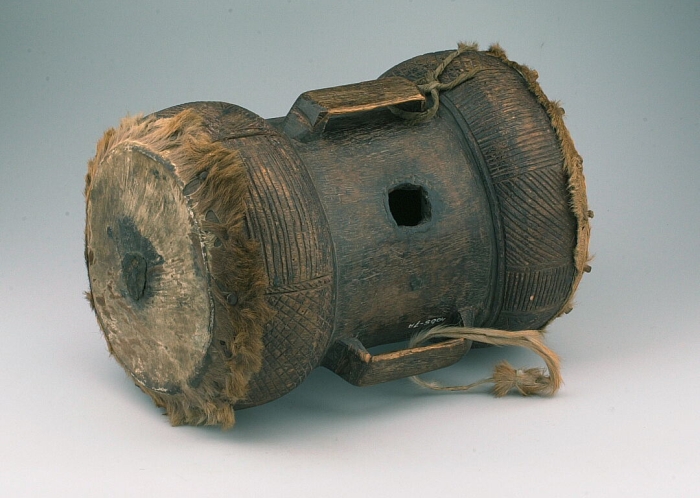
It’s funny how I can discover something about a character that makes perfect sense even though I didn’t know it at the time I introduced him. Mwizenge appears in Shaman’s Blues as a singer and drummer in a world music trio. Live music of all kinds is a big part of Santa Fe life, and I’ve enjoyed African drumming and dance groups there, so he simply showed up the way characters do as someone likely to be in Santa Fe. I understand now why he feels at home there, so far from his village. He carved his own drum with kufwasa back in Zambia and grew up with music and dancing as community events. Compared to the high-pressure lifestyles of some parts of the country, the pace in New Mexico comes a little closer to kufwasa.

Next time I find myself trying to do too much too fast, I hope I can slow down and remind myself to practice kufwasa.

A New Mexico Mystery Review: Deadly Recall

This is the first of a series of New Mexico Mystery features. In true New Mexico fashion, I don’t have schedule, but will post these at random intervals when I find the right books. (If I find a NM book I don’t like, it won’t be featured here, though I may review it elsewhere.) I’ll be following each review with an author interview a week later. The Land of Enchantment is a diverse place, and I hope to share a wide range of stories that highlight its many faces.


Review

 Equal parts mystery and romance, Deadly Recall by Donnell Ann Bell is tightly plotted and suspenseful, and has intriguing three-dimensional characters. With the male lead being a police detective and the female lead a defense attorney, conflict is natural to the plot and situation. (I found this to be a refreshing change after reading a number of romances in which the conflict felt contrived.) Kevin and Eden have a delightful and believable first encounter that sets both the love plot and their interwoven roles in the mystery plot in motion. Their attraction to each other is portrayed with depth, and their relationship in progress is often charming.  Bell has a knack for witty, natural banter between lovers and friends. Eden occasionally makes decisions which made me want to shake her but I could see that was her nature, not a plot contrivance. It made me empathize with Kevin.

The book is set in Albuquerque, showing the city that its residents see. While in some ways the protagonists could be from anywhere, their homes or hobbies have local flair. Eden’s loft near Old Town felt like a real part of the city, and I liked the very Albuquerque detail that Kevin is part-owner of a hot-air balloon. A number of the supporting characters feel like part of the local scene, people who put the quirky in Albuquerque, such as Eden’s client the vegan, tattooed housepainter-and-artist, and her neighbor Mr. Lucero, who thinks his cat is the reincarnation of General MacArthur. The behavior of the chatty, nosy, Chinese food delivery guy struck me as typical of the way people in NM talk to strangers. All of the minor and secondary characters have personalities, even if they are only onstage for a cameo.

The author’s style is sometimes so original and well phrased that I wanted to applaud while reading. Once in a while the wording seems a little hasty or not quite polished, but not often. As a reader who loves the craft of writing, I spent far more time in a state of admiration than I did getting in touch with my inner editor.

The clues and red herrings kept me guessing and thinking in step with the characters as they worked through the layers of mystery. Some romances make it seem as if love is the end of the story. I liked the way this book kept going a little further. Not only the love story and the mystery plot are wrapped up (without a single cliché for wrapping), but also Eden’s inner experience, her rediscovery.

I look forward to reading more of this author’s work. Even if it’s not set in New Mexico.

How I Write

I used to be an actor, dancer and choreographer, and loved improvisation. Writing is getting into character in all the roles and doing “improv”. I start with characters, and create situations that will challenge them. I’m what writers call a “pantser”, meaning I plot by the seat of my pants for the first draft. My favorite part of writing is the arrival of a new character. They seem to show up and reveal themselves in ways I don’t plan or expect, and this brings new complexity to the lives of my ongoing characters. I like mining my ongoing characters’ past lives, too.

I have critique partners who read my works in progress. There’s nothing like another writer’s input to make for better writing. Revising can take longer than creating. I rewrite a book at least five times, sometimes more.  The series may seem to come out fast as it gets published, but each book has actually been in progress for years. I have a stash of scenes and ideas extracted from books I didn’t use them in, and probably always will. I review my writing recycling bin periodically and clean it out. I find occasional gems as well as scenes that I need to reinstate that I thought I should cut—and a lot that makes me glad I cut and revise so much.