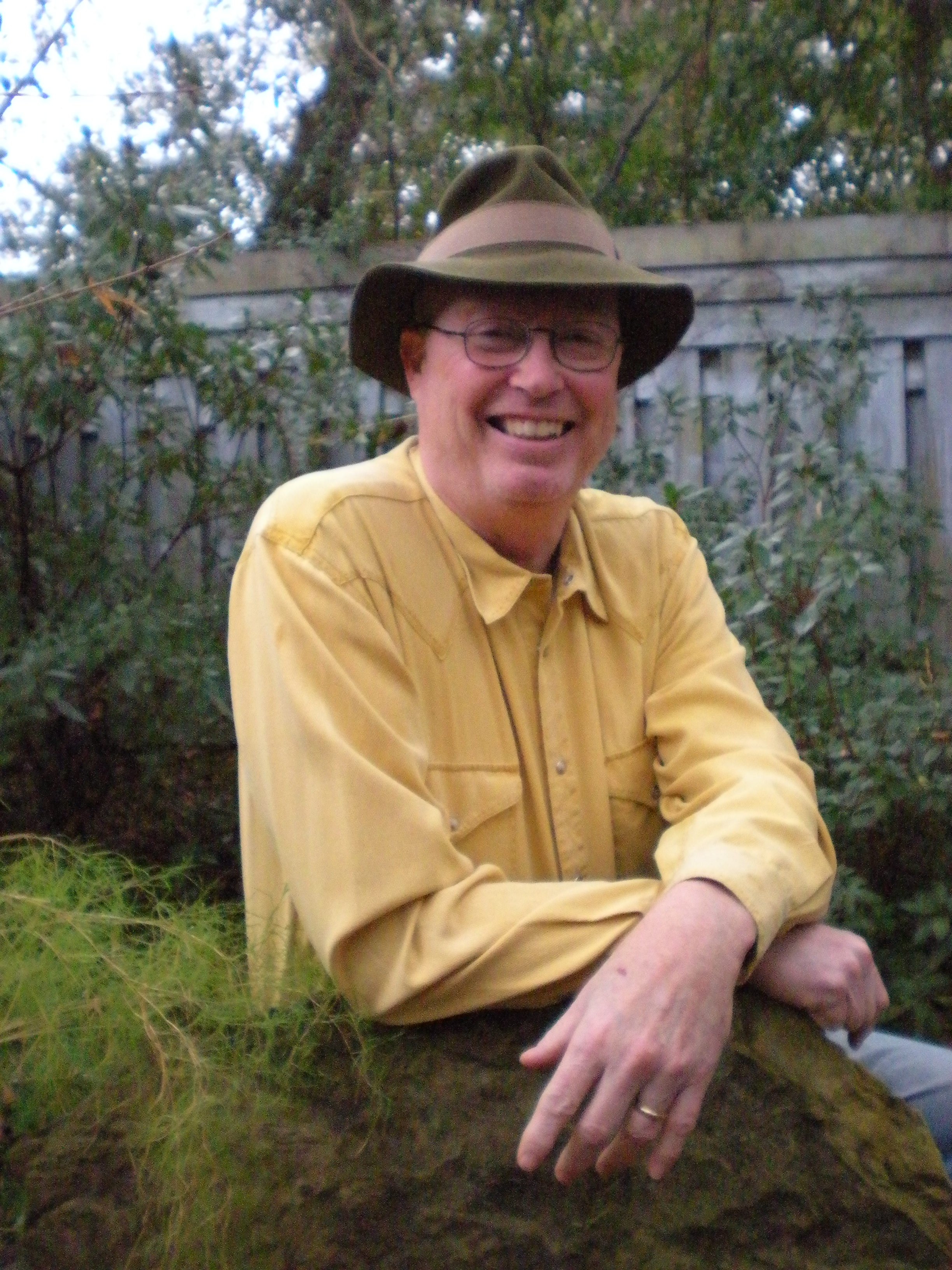
A New Mexico Mystery Author Interview: J. Michael Orenduff

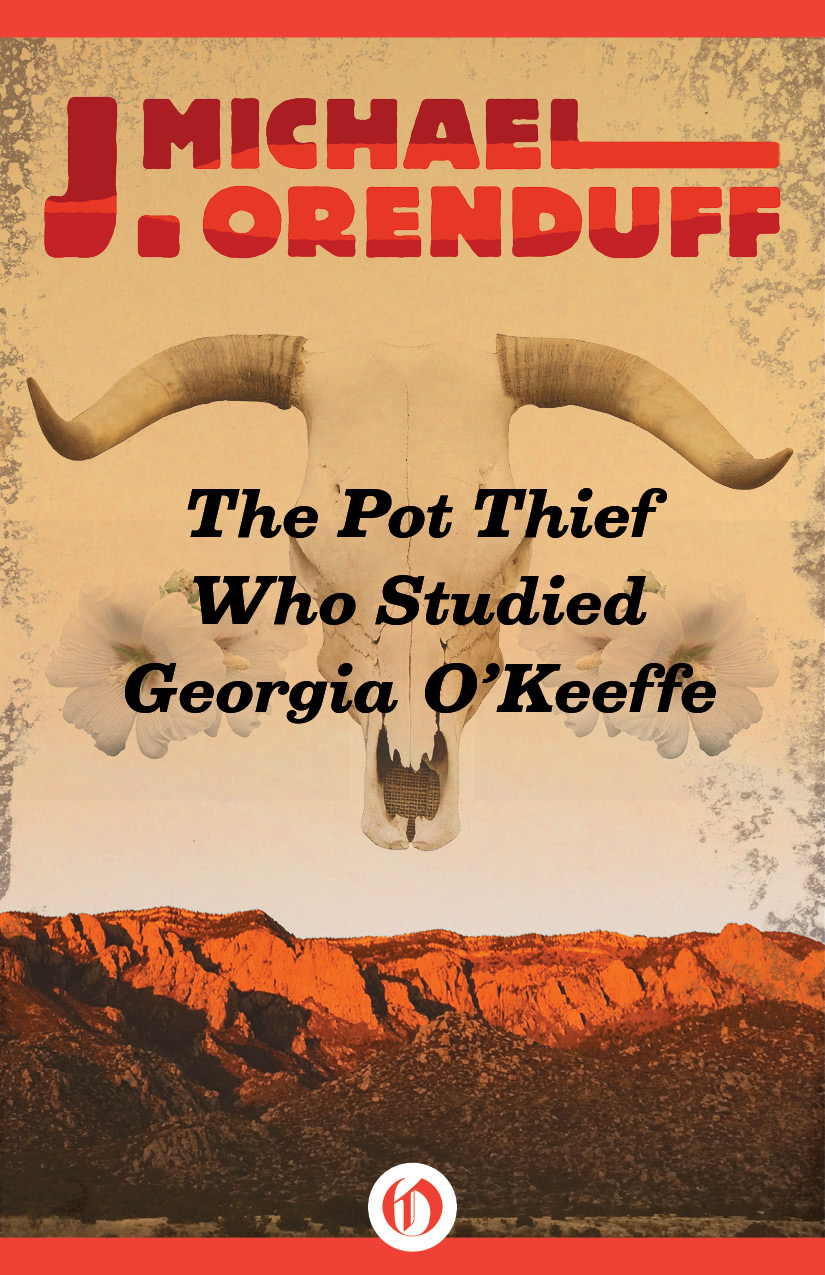
author 1.53mbO'Keeffe cover 3

Last week I reviewed the Pot Thief Who Studied Georgia O’Keefe.

https://amberfoxxmysteries.wordpress.com/2016/01/01/a-new-mexico-mystery-review-the-pot-thief-who-studied-georgia-okeefe

I’m delighted to have the author as my guest today.

 Bio: Mike Orenduff grew up in a house so close to the Rio Grande that he could Frisbee a tortilla into Mexico. A former president of New Mexico State University, he took early retirement from higher education to pursue his career as a fiction writer. His many accolades as an author include the Lefty Award for best humorous mystery, the Epic Award for best mystery or suspense e-book, and the New Mexico Book Award for best mystery or suspense fiction.

AF: You’ve been a professor at various colleges. What did you teach? Which class did you most enjoy teaching and why?

JMO: I taught philosophy (primarily logic courses) and mathematics. The mathematics courses were what are now called developmental. They used to be called remedial, but someone decided that’s politically incorrect. That may be, but remedial is a more accurate description. It is no blot on students who are not skilled at math. Good math teachers are rare in the public schools, so students often show up at college unprepared for college level math courses. My courses were a remedy. My favorite teaching experience was the pre-algebra courses I taught at Central Wyoming College. Many of my students were from the Wind River Reservation. The most rewarding thing about teaching is not standing at the blackboard writing the steps of some arcane proof. It is having a student say, “I thought I couldn’t do math. But now I can.”

AF: What’s your favorite place you’ve lived outside of New Mexico? Could you share an anecdote or memory from that place?

JMO: I lived in La Serena, Chile for a summer while my wife was teaching at La Universidad de la Serena. It was an idyllic life. I shopped each day at the market for food and fresh flowers, both of which were waiting when my wife arrived home from work. La Serena is in the northern desert area of Chile, so it was like New Mexico except it’s on the Pacific Ocean. Albuquerque with a beach. And even more Spanish being spoken. Two of my favorite memories from northern Chile are seeing the southern cross in the beautiful clear skies and being stranded in a small fishing village twenty miles north of La Serena after travelling there in a collectivo (a taxi into which six people are crammed to go to a place with no bus service). It was easy to find a collectivo in La Serena, a large city. But Las Casetas was a village and had no collectivos. Hence, no means to return. As we stood by the road wondering what to do, a man in a small Japanese pickup pulled over and asked us if we wanted to go to La Serena. We crowded into a bench seat designed for two people and had a delightful conversation with him on the ride south. I offered to pay him. He declined. I offered to at least pay for his gasoline. He declined again, saying he was going there anyway, so no extra gas was being burned. He told us about his wife whom he obviously adored. When we arrived in La Serena, I finally coaxed him into accepting money by holding out enough pesetas to buy flowers and saying, “This is for flowers for your wife.”

AF: Your books make me want to pay more attention to very old Native pottery. What would be the best places to go for a (legal) pottery tour of New Mexico?

JMO: Of course the shops and museums in Santa Fe are the places most people associate with ancient Native pottery, but my favorite place is Western New Mexico University in Silver City. Their museum has the largest collection of prehistoric Mimbres Mogollon pottery and artifacts in the world, including pottery and artifacts of the Upland Mogollon, Casas Grandes, Salado, and Anasazi. And as an added benefit, you can tour the Gila Cliff Dwelling just north of town and see artifacts in situ and where the people lived who made them.

AF: You share my love of T or C. I noticed that every place you mention there is real. What about the places in Albuquerque? I found myself guessing that every location except Hubie’s shop might also be a real place, but I seldom dine out in Albuquerque so I’m not sure. Are they? What’s behind your decision to use actual places rather than fictitious versions of them?

JMO: You guessed it. Every place is real. The only fictional ones are Hubie’s shop and Dos Hermanas. All the other places are real, even Sharice’s condo. Georgia O’Keeffe said that she preferred painting flowers instead of models because flowers, “are cheaper and they don’t move.” I prefer real places because it’s easier to describe them than to make up new ones. And I like to give them free publicity.

 AF: What made you choose the White Sands Missile Range for Hubie’s latest pot thieving adventure?

 JMO: There were several reasons. Perhaps the most interesting one is a real event that happened there is 2001. A man hunting Oryx found a Chupadero black-on-white water jug dating back to around 1300. Where else could that happen? Especially the Oryx part.

AF: Why Georgia O’Keeffe in the title?

 JMO: After starting out with a bunch of dead white males with no connection to New Mexico, I finally tumbled to the realization that I should use people with NM connections such as D. H. Lawrence. Then I decided a woman in the title would be good. And I chose O’Keeffe because she is strongly identified with NM but also because I had a small personal connection with her. In 1985, I was serving as the academic vice president at West Texas State University, known as West Texas State Normal College when Georgia O’Keeffe taught there from 1916 to 1918. We were celebrating the 75th anniversary of the school’s founding and looking for something to make the event special. I decided we should ask O’Keefe to grant us the right to make prints of a painting she had done while teaching there and allow us to sell those prints to fund scholarships. I gave the task of approaching Ms. O’Keeffe to my wife, whose charm and grace were best suited to the task. And it helped that she is also an artist and an art historian. O’Keeffe granted her request. So Georgia O’Keeffe helped me raise scholarship funding and also inspired me to write the latest book in the series.

 AF: Who are your favorite mystery writers? What is it that makes them stand out?

JMO: In no particular order and with apologies to the many others whom I like but didn’t pop to mind: Simon Brett, Michael Bond, John Mortimer, Mary Jane Maffini, Aaron Elkins, Carl Hiaasen, Leann Sweeney, Lawrence Block (but only his Bernie Rhodenbarr series), and Tim Hallinan (especially his Junior Bender series). What makes them stand out is clever humor.

AF: Did you know you were going to write a series when you wrote the first Pot Thief book? Which book in the series was the most challenging for you to write and why?

JMO: I knew it was to be series, but I didn’t know the titles would all start with The Pot Thief Who Studied…. In fact, the working title of the second one was The Pot Thief Who Gazed at the Stars. What was I thinking?

The first was the most challenging because I had to create everything from scratch. The rest somewhat less so, but I try to have the characters grow and develop as people do in real life.

AF: Any idea what the pot thief will study next?

 JMO: Edward Abbey. Like Hubie (and me), he was a graduate of the University of New Mexico.

AF: One of my favorite writers—and a good match with Hubie. I look forward to it.


A New Mexico Mystery Review: The Pot Thief Who Studied Georgia O’Keefe

O'Keeffe cover 3

This is not an interstate kind of a story; it’s a back road drive with a raconteur at the wheel. There’s a wonderful pot in a remote place, and it takes a bit of a hike and some excavation to find it. Brush off another layer, and there it is, an intact marvel of original workmanship. The old pots which the narrator, Hubie Schuze, admires were made by hand, not on a wheel, and their shape shows it. Not perfect—and not meant to be. That’s part of their character. This book is not shaped like a standard mystery novel, either. Don’t expect it to be. Just ride the back road. Hubie knows where he’s going (though you may wonder about that at times).

The prologue takes off like a rocket. Then, during the first few chapters, new readers may go through what I’ll call “orientation to Hubie,” getting used to the flow of his entertaining and often educational ramblings on topics historical, artistic, culinary, and unclassifiable. (Established fans of the series already enjoy this as much as solving the mysteries.) If you’re new to the Pot Thief and decide to start here, don’t worry, keep reading. Once Hubie gets out in the desert to illegally “rescue” an ancient pot, the story, his character, the setting and his deep reverence for the artifacts he finds and sells come together into a lively, colorful tale that’s both a clever mystery caper and a sweet, delightfully off-beat love story. There’s a lot of wordplay, for fans of that type of wit. However, the humor I liked most in this book was that which came authentically from characters and situations, and there’s plenty of it. Hubie’s sincere and awkward attempt to put his girlfriend at ease in a delicate situation is hilarious, all the more so because it comes from his heart. A sudden turn of events near the end is so perfectly timed and phrased for comic effect, I think my neighbors heard me laugh when I read it.

The New Mexico landscape and locations—from Albuquerque to Truth or Consequences to the vast emptiness of the White Sands Missile Range—are portrayed well. Hubie’s idiosyncratic meanderings are part of the New Mexico feel of the book. I can easily see him in the mini-park in the median in Truth or Consequences across from Black Cat Books and Rio Bravo Fine Art. I can’t decide if he would get on my nerves or amuse me if I sat with him—probably both—but he fits perfectly. (There seem to be a lot of smart, eccentric, single, middle-aged men in T or C.) Orenduff has created a unique character in Hubie, and his own style of mystery—intelligent, non-violent, and funny, with the murder aspect secondary to other puzzles. The red herrings are effective, the clues are laid well, the solution is surprising, and the end is satisfying.

If you haven’t yet discovered the earlier books in the series and want to start at the beginning, the titles, in order, are:

The Pot Thief Who Studied Pythagoras

The Pot Thief Who Studied Ptolemy

The Pot Thief Who Studied Escoffier

The Pot Thief Who Studied Einstein

The Pot Thief Who Studied D.H. Lawrence

The Pot Thief Who Studied Billy the Kid

The Pot Thief Who Studied Georgia O’Keefe (release date: Jan. 26, 2016)

 Next week I’ll have an interview with the author, J. Michael Orenduff.


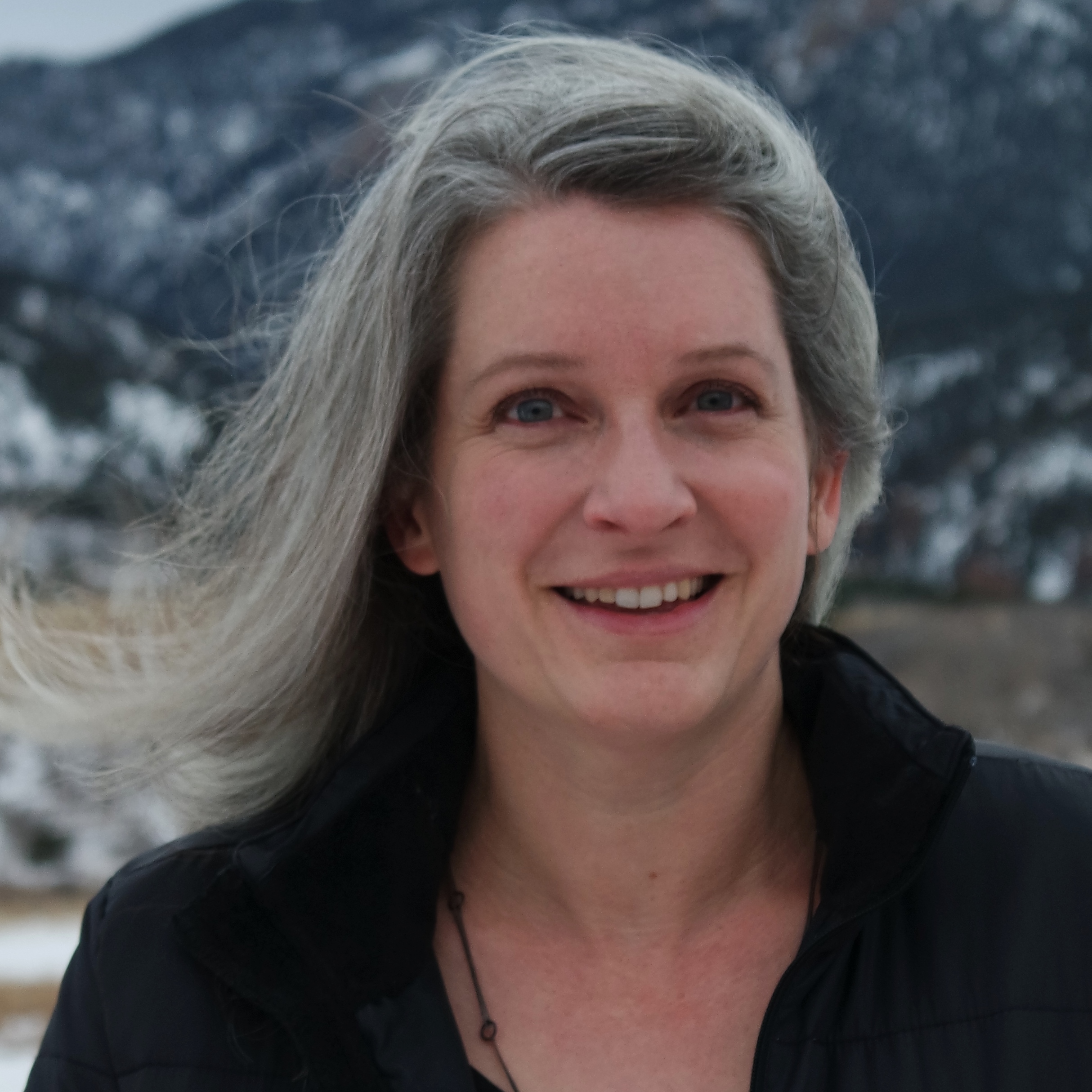
A New Mexico Mystery Author Interview: Ann Myers

SAMSUNG CAMERA PICTURES

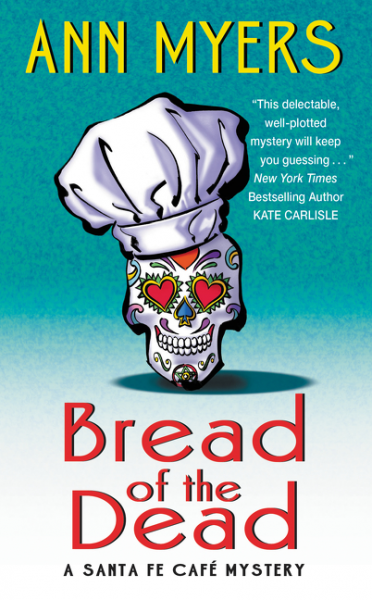
BreadofDeadcover

I’m happy to have Ann Myers, author of the Santa Fe Café Mysteries, as my guest today.

AF: Where did the inspiration for this story begin?

AM: Bread! I love baking and trying new recipes. I was baking up pan de muerto around the time I was brainstorming a culinary cozy and thought it would make a great title. Plus, it’s a marvelous bread, like a brioche but even better with anise and orange flavors and you can shape it like a skull and crossbones. What other bread has all that?

AF: Your book shows your love for the City Different. What’s your history with Santa Fe?

AM: This is where my main character Rita and I share a bit of similarity (along with our inability to dance). I’m originally from Pennsylvania and have lived in Louisiana, Japan, Ohio, and Florida and now Colorado. All great places, but like Rita I was instantly enamored with New Mexico and Santa Fe. Lucky for me, I get to go there a lot since moving to Colorado ten years ago. My husband researches water issues in New Mexico. It’s a never-ending project, and one I heartily encourage since it means summers and holidays in Santa Fe.

AF: Rita’s appreciation of food, kitchens, kitchen gadgets, and the art and meaning of cooking makes me think you must be a great cook yourself. Have you ever done it professionally or are you an enthusiastic amateur?

AM: Just an amateur cook and a very enthusiastic eater. Perhaps a little too enthusiastic? And, yeah, kitchen gadgets…I have a bit of a problem there too. Do I really need that raclette griddle that’s been languishing in my basement for years? Or the heavy cast-iron ebelskiver pan I was sure I’d use all the time, or the ice cream maker? Surely I’ll be making ice cream and round pancakes any moment now, so of course I’m hanging onto them. Lately, however, I’ve gotten better about sticking to small items, like cute old cookie cutters and cookbooks. You can never have too many cookbooks…

AF: What’s your favorite Santa Fe restaurant and why? You mention a few real ones in the books. Is that your tribute to them? And is Tres Amigas based on a real place?

AM: Oh, what a hard question. Santa Fe has so many great restaurants. My husband and I have a long list of places we have to visit when we’re in town, and the list keeps getting longer. One of my favorites is Tune-Up Café, which I couldn’t resist mentioning in the book. They make the best breakfast chiles rellenos with fried eggs and refried beans. So good! I also love Clafoutis for their fabulous French pastries, and I can always go for sopapillas, something I’d never make at home. I draw the culinary line at deep frying.

Tres Amigas is all fiction, or perhaps a mashup of some of my favorite cafés. I wanted someplace warm and cozy, serving up comfort-food favorites. The place I dream of having down the street from my house.

AF: I found details like Cass’s process making jewelry of fascinating. What was the most fun part of researching the book? What was the hardest part?

AM: Thanks! At the time I was writing Bread of the Dead, a friend and I were trying our hands at soldering and jewelry making. “Trying” is the key word for me. Whereas my friend was merrily wielding a giant flame, I was terrified by my tiny kitchen torch (which can melt metal, by the way). I did manage to master crème brûlée, and I learned a lot of about jewelry making, which I added to the book with Cass’s character.

Researching the food was also fun—and tasty! I’ve acquired a big stack of New Mexican cookbooks, including some great older ones with recipes from home cooks. Some of the recipes are simple in terms of ingredients but turn out so delicious. Like green chile stew, a basic stew but with loads of roasted green chiles. I’ve also enjoyed learning about Pueblo culinary traditions, both through reading and—better yet—attending Pueblo feast days, when residents invite family, friends, and strangers into their homes to eat. Such generosity and an amazing culinary feat to keep up a buffet for unknown numbers of guests. I always think of my family and how we’d stress out seeing hungry people lined up on the sofa, waiting to rotate in for a place at the table.

One of the research challenges I hadn’t anticipated was fitting my fictional places into the real landscape. Rita’s casita, for instance, is on a well-known street, although I didn’t have a particular address in mind. For Tres Amigas Café, I had a general idea of the location, but after my husband read the book, he thought it was somewhere else. In Feliz Navidead, I added an entire fictional hotel to the historic downtown since I wouldn’t want to be staging murders in real places. That took a lot of walking around and scoping out empty lots and worrying about how to make the fictional setting mesh with the actual one.

AF: Who are your favorite authors—mystery or other?

AM: I’m a huge mystery fan. It’s hard to pick favorites, although I adore British mysteries, such as those of Martha Grimes and Elly Griffiths. I’m also always reading cozy mysteries of all sorts. I love the everywoman heroines of cozies, as well as the craft/culinary/DIY themes. I’ve also recently discovered audiobooks, which I listen to at the gym or when working around the house. My local library has all the Hamish Macbeth mysteries on audio, and I went through at least a half-dozen while painting our house this fall. Fun to hear the Scottish accent read aloud and to imagine the bleak moors.

 AF: Tell me about your work in progress.

AM: Two more Santa Fe Café Mysteries are with my publisher right now! Cinco de Mayhem will be out in March 2016, just in time for Cinco de Mayo. In this book, Rita takes on a bully French chef, a corrupt food inspector, and a killer to help her friend Linda. She also has to come up with a perfect dinner date menu, a Southwest-French feast featuring a green chile and cheese soufflé.

The third book, Feliz Navidead, let me think of Christmas all last summer. So much fun, but also a little difficult to conjure images of snow and farolitos when sitting in front of a swamp cooler in our broiler Santa Fe rental casita. I won’t give away too much, but there is a devil involved and pie. I’m still trying to settle on the perfect pie recipe. So far I’ve tried a green chile, apple, cheddar (wow!) and a pumpkin brûlée. I’m thinking chocolate and red chile with a cookie crust should be next. Or maybe I’m delaying to have an excuse to make and eat more pie…

AF: Is there anything I didn’t ask that you’d like to share?

AM: How about a recipe for New Mexico’s official state cookie, the bizcochito? It’s a yummy, anise-flavored shortbread cookie, perfect for any special occasion and the upcoming holidays.

Bizcochitos

Bizcochito traditionalists swear by lard for the proper flavor and texture. If you can’t find good lard, or prefer not to use it, shortening or butter can be substituted. You can also spice up your cookies by adding some chile powder to the cinnamon sugar. Delicious!

Makes three to four dozen cookies, depending on cookie cutter size

Ingredients

1 c lard (or butter or shortening)

1 c sugar

2 eggs

2 T anise seeds

1 t vanilla extract

½ t salt

¼ c brandy, sweet wine, or an anise-flavored liqueur, OR apple or orange juice

4 c all-purpose flour

1½ t baking powder

Cinnamon-sugar topping

¼ c sugar

1 t ground cinnamon

¼ t (or more) red chile powder (optional)

Directions

Preheat oven to 350°F. Line a baking sheet with parchment paper. Using a stand or hand mixer, in a large bowl, cream the lard or butter until it is light and fluffy. Beat in eggs, sugar, vanilla, and anise seed.

In separate bowl, mix together the flour, baking powder, and salt. Stir the lard mixture into the dry ingredients, along with the brandy (or juice). Mix until you have a dough that is soft but not sticky. If you’re baking in a dry region like the Southwest, add a little more orange juice or brandy if the dough seems too shaggy or stiff. Form the dough into a ball.

Place on a lightly floured surface and roll out to about ¼ inch thick. Cut the cookies out, using your favorite cutter. Small round or rosette shapes are popular. You can also forgo a cookie cutter and simply cut the dough diagonally to form diamonds. After cutting, dip the front face of each cookie in the cinnamon sugar mixture (you might have to press the sugar in and/or sprinkle a little extra sugar on top). Place the cookies on the baking sheet, leaving a little space in between.

Bake until lightly golden and puffed, about 11 to 13 minutes. Cool on a rack. Bizcochitos store well in containers, if you can resist eating them all.

*****

Thank you, Ann. This has been delightful.

For more about the Santa Fe Café series and more recipes, go to http://www.annmyersbooks.com/

and https://www.facebook.com/AnnMyers.writer


A New Mexico Mystery Review: Bread of the Dead


bec99b44a2fd5c6e3780eab3ea253edbIn some ways this is the coziest of cozy mysteries, full of food and folk art, but in other ways it’s not typical of the genre. The victim is not only important to the amateur sleuth but to the reader. He’s the most deeply appealing and complex character in the story. In a light sort of mystery, the loss of such a person is unusual. It gives the protagonist a strong reason to do that otherwise unbelievable thing—amateur sleuthing—and it also makes the story function on two levels: solving a puzzle with all the usual elements of a cozy; and contemplating life, death and legacy, good works and grieving. The mood and meaning of the Day of the Dead festival—reconnection with the beloved departed—is central to the story and is set beautifully at the beginning.

Myers has a wonderful way with words and uses culinary imagery with flawless precision, true to her narrator’s point of view. Foodies will love this book. The amateur sleuth, Rita Lafitte, is a cook, and the food theme is woven smoothly throughout. Recipes and their meaning to friends and family form a framework that turns the plot in a way that even a kitchen-impaired reader like myself could enjoy.

The Santa Fe setting is rendered in detail that will satisfy any would-be visitor who hasn’t been there yet and wants to take a fantasy trip, and will spark memories for those who have visited before. At times, I felt as if the author had tried a little too hard to fit as much local color in as possible, but overall the portrait of the City Different and its environs was painted well, from Pueblo speed traps to purple taxis to the famous Plaza—and the food, of course.

A few of the characters and events are entertainingly over-the-top, while others are realistic, another aspect of this book’s dual personality. I found the spiritual materialism of Broomer, the irritable owner of an expensive Zen garden, unfortunately true to some aspects of Santa Fe life. The arts center for teens reflects a fictitious version of a real and vital part of the city.

I can’t say why I suspected the real culprit early on, and I was frequently thrown off the trail by other suspects and plausible motives. The final solution and the revelation still came as a surprise, as the various strands of the story came together in one of the most elegantly crafted discovery scenes I’ve read.

If you’re a cook, you’ll enjoy the final section: recipes for foods related to the story, including the Bread of the Dead.Day_of_the_Dead_Coyoacan_2014_-_136

Next week, look for an interview with Ann Myers.

http://www.annmyersbooks.com/

https://www.goodreads.com/book/show/24392805-bread-of-the-dead


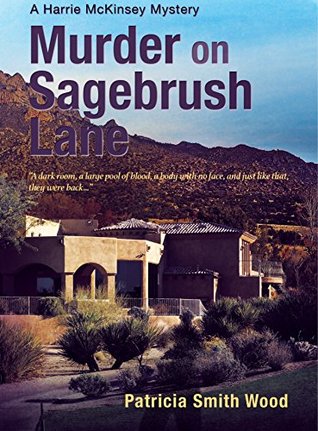
A New Mexico Mystery Review: Murder on Sagebrush Lane

Murder on Sagebrush Lane

Patricia Smith Wood’s second book in the Harrie McKinsey series picks up three years after the events in the first, The Easter Egg Murder. During the elapsed time, editor Harrie McKinsey has married an FBI agent, giving her a natural connection with law enforcement. Wood’s blend of detective work by police, FBI, and a believable amateur works well again. I say a believable amateur because while Harrie handles the stress of the situation with courage, she is affected by it in the way one would expect a non-professional to be. Harrie’s intuitive dreams play a smaller role in this book, but remain part of her motivation to ask questions about a murder.

The crimes in this book revolve around an important place that may not immediately come to mind when people think of New Mexico—Sandia National Laboratories. The attempted sale of government secrets from this research facility in the Albuquerque area and the murder of a Sandia Labs employee are the central mysteries. Alongside these runs the question of what will become of the blood-stained toddler who shows up in Harrie’s flowerbed the morning of the murder. The suspense is strong and Harrie is often in danger, but there is little violence onstage. The bloodiest event has already taken place when the story begins.

A reader could start with this book and go back to the first without feeling the sequence was a problem, aside from the minor issue of a lack of physical descriptions of some of the returning characters. The relationships are established clearly without an excess of backstory.

Wood manages a large cast of characters in complex scenes remarkably well—not an easy feat—as well as the interactions of multiple investigative agencies. She delivers a satisfying string of revelation scenes toward the end, none of which is the conventional confrontation-confession. Once I finally found out whodunit, I realized that the clues were there, but that I’d been sidetracked by all the other possibilities. Readers who like to give their brains a workout trying to solve a mystery will enjoy this. It’s tight, precise, and effectively paced, with every chapter turning the plot through yet another unexpected twist.

A new character I found particularly strong and engaging is Sgt. Cabrini Paiz of the Albuquerque Police Department. She deserves her own series, or could share the lead in this one, should the author be so inclined. There are precedents for this sort of shift. When James D. Doss wrote his first book, The Shaman Sings, Granite Creek Colorado police chief Scott Parris was his primary detective. Southern Ute Tribal Investigator Charlie Moon (nephew of the shaman of the title) showed up to assist him, and in that way that characters have, Moon took over. Not the investigation, but the author’s creative mind. The series became the Charlie Moon series, with Parris moved to a major supporting role. I like the books featuring Harrie, but I think Sgt. Paiz has equal potential as the protagonist of a mystery series, and I hope to see more of her.


Related posts:

Patricia Smith Wood

https://amberfoxxmysteries.wordpress.com/2014/12/02/a-new-mexico-mystery-author-interview-patricia-smith-wood

https://amberfoxxmysteries.wordpress.com/2014/11/25/a-new-mexico-mystery-review-the-easter-egg-murder

The convention of the confrontation and confession

https://amberfoxxmysteries.wordpress.com/2015/02/23/stop-talking-and-shoot-the-guy


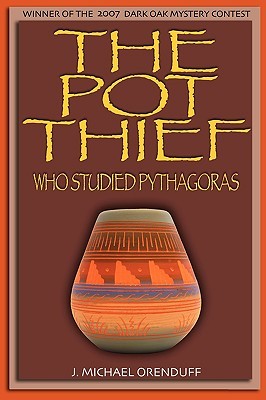
A New Mexico Mystery Review: The Pot Thief Who Studied Pythagoras

Pot thief 1

There is no sub-genre within the mystery genre that could classify this book, and I mean that as a compliment. Pot thief and pottery shop owner Hubie Schuze is so unlike any other protagonist in a mystery series, I can’t compare this to other books and say “it’s like X.” It’s not.

So what is it like? Albuquerque.

I suspect Hubie might cringe at the phrase “Keep Albu quirky,” but it’s not a bad way to introduce him and his way of looking at the world and loving his city. Orenduff has a knack for describing people with a few clear images that pick out their defining peculiarities, positive or just plain odd, and this seems to be integral to Hubie’s point of view. He sees people as they are—and sees himself as he is, too, with humor and humility despite some strong opinions. His delightful digressions are as essential to the flavor of the book as seasonings are to a good meal. One of his rambles is on the benefits and pleasures of walking in the city compared to driving, and it fit with the way I felt while reading. I had such fun being in the moment with Hubie and his friends that I forgot to try to figure out whodunit.

Hubie figures it out, of course, and the end is surprising. I wouldn’t have seen that coming even if I had been trying to solve the crime. Don’t let my drifting with the Tao of Hubie make you think this book is unstructured. It isn’t. Multiple intriguing subplots—adventures that are sometimes humorous and sometimes simply human—are interwoven with the mystery plot.

Hubie’s capacity for friendship and generosity is on equal footing with his inclination to break a few laws. It’s this combination of rogue and good guy that makes him so engaging. The acts of kindness as well as the minor crimes Hubie commits while solving a major one kept me looking at the scenery, walking, appreciating every step of the way.

 ******

 My interview with J. Michael Orenduff will follow my review of the newest book in the series, The Pot Thief Who Studied Georgia O’Keefe. I’ve had the pleasure of reading it early, before the ARCs come out. Keep an eye out for that review and interview in the upcoming months. Meanwhile, get into the flow with Hubie with this first Pot Thief book.


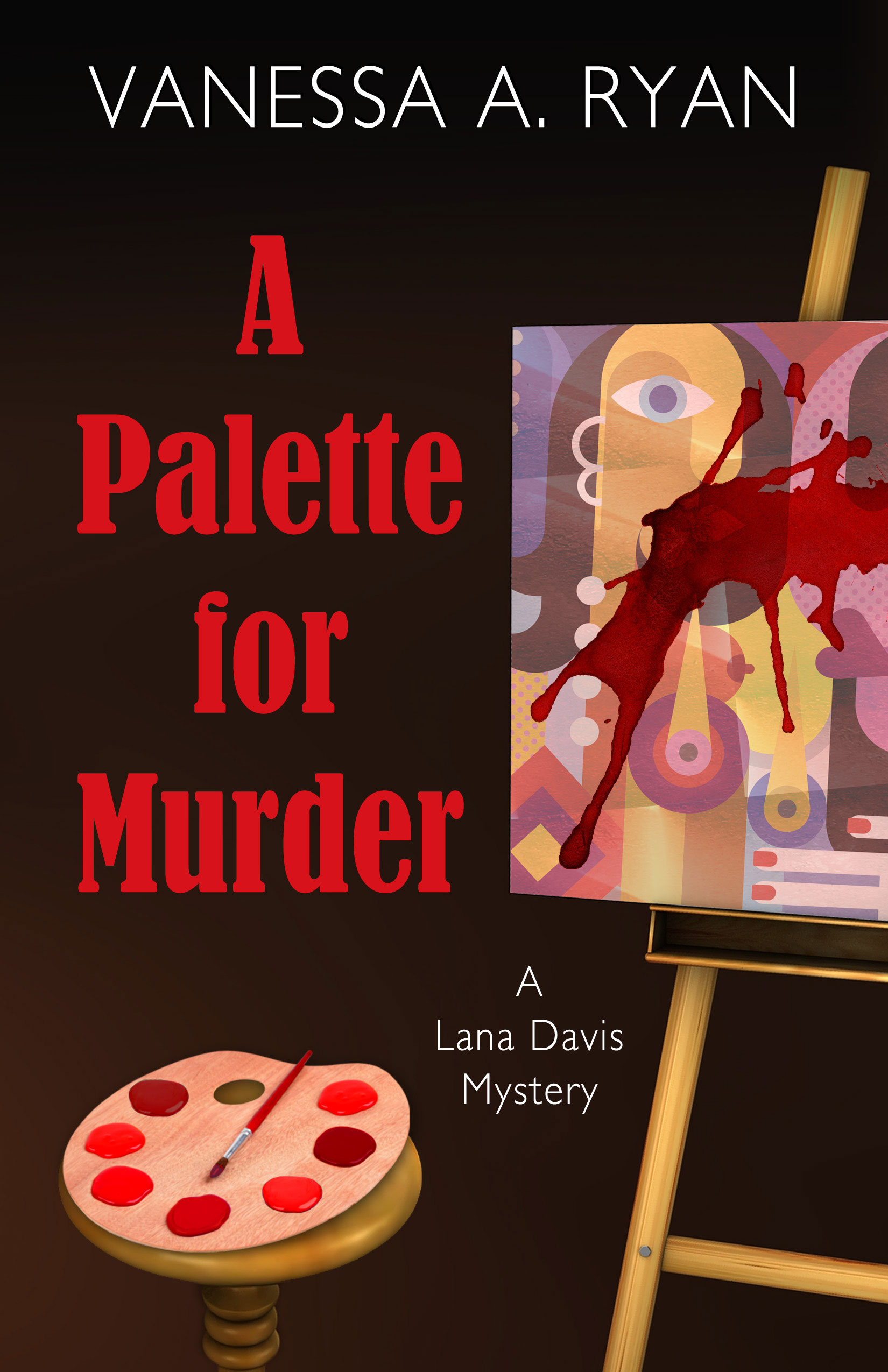
New Mexico Mystery Author Interview: Vanessa A. Ryan

PaletteForMurderFront-(w)V.Ryan copy

Vanessa A. Ryan is an actress in Southern California. She was born in California and graduated from UCLA. When not writing or acting, she enjoys painting and nature walks. Her paintings and sculptures are collected worldwide. At one point, she performed stand-up comedy, so her writing often reflects her love of humor, even for serious subjects. She is the author of A Palette for Murder, A Blue Moon and the trilogy Horror at the Lake. She lives with her cats Dezi, Teger and Riley, and among feral cats she has rescued.

The art works featured in this interview are by Vanessa A. Ryan

AF: How did this book start? Tell me about your creative process.

VAR: The book started with a visit to Santa Fe. Originally, the story took place in Los Angeles but ended up in Santa Fe. But when I moved to Santa Fe, I changed the focus of the story to Santa Fe, with brief forays into California. Regardless, the ending of the story is similar. In fact, when I lived in Santa Fe, my house burned down and I lost the last version of this novel that was in my computer. I found half of an older version of the manuscript on the upper shelf of a coat closet. Everything below the shelf had burned, but the first half of the manuscript was intact, as well as the last page of it. I was overjoyed when I found the manuscript until I realized it wasn’t up-to-date and not all of it was there. I set it aside for quite a few years until I rewrote it last year.

AF: Amazing. It sounds as if this book was meant to be. What’s your relationship with Santa Fe?

VAR: I had visited Santa Fe a few times and then I lived there for several years.

AF: Tell me about your research. Did any of the galleries bring you behind the scenes?

VAR: I have exhibited my work in Santa Fe so I know the art scene. I also have an artist friend who lives there and keeps me informed about the galleries. I didn’t go behind the scenes for the book, though I have on other occasions.

Ryan_Collage Series City Rain 54in x 54in acryl and wood on canvas 2009Ryan_Collage Series The Lake 54in x 54in acryl and wood and canvas collage on canvas 2009

AF: Have you done work like Lana’s job in the insurance industry? You seem to know the business inside out.

VAR: I wrote a series of articles for an insurance correspondence school as a freelance job, which is how I learned about that industry. Also, my first job out of college was a claims examiner for a large insurance company. I didn’t go in the field, but stayed in the office taking statements and writing up claims.

AF: I’m curious about that Picasso. Is this based on an actual or rumored work of his?

VAR: The last Picasso isn’t based on the last painting he did. It’s fiction.

AF: I noticed you used a blend of both real locations and fictitious ones. How did you go about deciding when to fictionalize and when ones to use real names? (Example: Suique Pueblo, fictitious; Canyon Road, real.)

VAR: I did that for legal reasons. My publisher has guidelines on this issue that I had to follow. I didn’t want to write about an actual tribe, but using real streets and towns, as long as they didn’t pertain to an actual address or business, was okay.

AF: Lana is pretty darned fearless, not only about getting hurt but about getting caught. Is she like you? Or is she pure invention?

VAR: She’s more invention than not. What we have in common are blond highlights, a disdain for snobs and a driving curiosity to know things. I wanted a character who is a little gutsy and not afraid to delve into the unknown. While I’m as curious about things as she is, I have a healthy respect for danger and I like to stay away from it. But I am as outspoken as Lana is fearless. And sometimes that gets me into trouble. I guess that’s my version of living dangerously. And if there’s something I want to know, I like doing detective work—just not in person as Lana does—only online, on the phone, or by researching articles and books.

AF: If you could spend a week in Santa Fe doing anything you wanted, what would you do?

VR: I would check out the scenery, the art galleries and hang out in some of my favorite watering holes. Like Lana, I don’t drink but I enjoy being in a crowded bar. More conversation to eavesdrop on for my next book.

AF: Is there anything you’d like to add?

VR: I hope readers will enjoy Lana’s adventures and the strange and haunting landscape of New Mexico.

Vanessa Ryan blue, yellow, green triptych 3-12 inch square paintings


Follow Vanessa A. Ryan at

http://vanessaaryan.com

https://twitter.com/Vanessa_a_Ryan

https://www.facebook.com/VanessaRyan33


A New Mexico Mystery Review: A Palette for Murder

PaletteForMurderFront-(w)

Vanessa A. Ryan picked the perfect background for a murder mystery in Santa Fe: rich people, not-so rich artists, and crime and corruption in the city’s art world.

First, some relevant local data: In the Santa Fe Reporter’s 2013-14 Annual Manual, the city’s population was given as 68,642 residents. The more recent Manual didn’t give us the population number, but both editions say that the City Different has four art galleries per 1,000 residents. That’s a lot of art. After city government, it’s the primary business in town, aside from tourism. Santa Fe is ranked the number one city for air quality in the country, and has 320 days of sunshine a year, which may be part of the reason it’s the fourth happiest city. I’ll second that. Music and dancing and general festivity are a way of life. The downside? The cost of living in Santa Fe is 17.7% higher than the national average. Maybe that’s why it’s not the happiest city. But without all those wealthy people, the art scene would die. It’s a necessary symbiosis—and central to this story.

Insurance administrator Lana Davis comes to Santa Fe looking for the beneficiary of a life insurance policy. As soon as she starts her search, the plot gets complicated. I can find my way around Santa Fe’s oddly configured streets without a map, but I couldn’t figure out whodunit. This is a classic puzzle type of murder mystery. Everyone’s a suspect, and I mean, everyone.

The behind-the-scenes look at an art gallery was intriguing. A lot of the little details—how important it is to some people to be invited to a benefit auction, the way rich people can tell who’s really one of them but poor artists can’t, and even snobbery about fauxdobe—also give the book an “insider” feel.

Lana is an amusing narrator. She’s basically good but willing to bend rules just enough to take some risks she shouldn’t take, and she’s cool enough not to get as freaked out by death, danger and violence as most people would. If she were an animal, she’d be a cat: independent, self-sufficient, and persistent and clever in the chase. She has nine lives, too, and is good at landing on her feet—at least figuratively. This makes her a good fit for the amateur sleuth role—the personality has to be believable for the premise of the amateur investigator to work. More sensitive or rule-following folks wouldn’t dare get into the situations she does. I think there are two kinds of series protagonists: the ones we identify with, and the ones we would like to be for a day. Lana is the second kind.

Ryan is a polished story-teller. If you like tight plotting, a great setting and a fast pace, this is your book.


*****

Next week, author—and artist—Vanessa A. Ryan is my guest for an interview

New Mexico Mystery Author Interview: Anne Hillerman

Last week I reviewed Rock with Wings by Anne Hillerman. She is an award-winning reporter, the author of several non-fiction books, and the daughter of New York Times bestselling author Tony Hillerman. She lives in Santa Fe, and this is her second novel. This week I’m delighted to have her as my guest for an interview.Uncropped AnneHillerman author photo credit Felicia Lujan

  AF: I appreciate the Navajo glossary in the back of Rock with Wings. I’ve heard the language spoken, and I cannot begin to reproduce the sounds even when I know a word and what it means.  Do you speak Navajo?

AH: Just a very few words.

AF: Which language do Chee and Bernie speak at home? Do they slip back and forth—English and Navajo for different kinds of topics?

AH: Yes, they slip back and forth—English when they are talking about work and financial discussions; Navajo for more important matters of the heart.

AF: One of things I enjoy in your books is the way you portray family and friendships. Several years ago I read your father’s wonderfully titled autobiography, Seldom Disappointed, and I recall that you grew up in a large family. Remind me how many siblings.

AH: I have two sisters and three brothers.

AF: Would you say this has affected your writing? In what way?

AH I believe almost everything you experience in life helps you in some way as a writer (and a person, for that matter), although you may not realize its value at the time. Growing up as the big sister to such a diverse group of siblings helped me learn how to negotiate and compromise—skills I later discovered I needed in the world of commercial publishing. Also, because we were a busy, lively household, I learned how to focus despite chaos. The amazing and unexpected things that happen in a large family certainly honed my sense of humor. And, of course, the diverse personalities I shared dinner with each night might have given me ideas for a few characters.

AF: You’ve attended citizens’ police academies and learned from members of the Navajo Nation police and other police forces in northern New Mexico. What are some of the most surprising things they taught you? The most useful for you as a writer?

AH: The most surprising, and most useful too, was their absolute willingness to let an outsider civilian like me into the club. I was humbled by the openness of the officers I spoke with who shared their insights into both law enforcement and human nature. I was swept away by their passion for and commitment to their work, especially officers who were involved with the very difficult assignments relating to domestic violence. I never appreciated the dichotomy in basic police work, where officers can go from static boredom to high adrenalin situations in a matter of seconds. I enjoyed learning about technology used in law enforcement but getting some insight into how cops size up suspects, witnesses, and victims and how they can usually tell when people are lying helped me even more.

AF: Both your books are set in June, the hot windy time before the rains. Are you one of those people who loves the windy season?

AH: No, no, no. Wind is not my friend! It makes me restless, stirs up the pollen from the juniper trees that surround my Santa Fe house, and rolls the tumbleweeds across the highways, creating traffic trouble.  I used June as a setting in both those books because it’s a season of suspense here in the dry Southwest. Temperatures spike in June. If we’re lucky, late June eventually and after much anticipation and broken promises, brings the start of summer rain.

AF: Do you have a favorite time of year, and what makes it special in your part of the world?

AH:  I enjoy the change of seasons and Santa Fe is great for that. I love the transition from winter to spring, the discovery of those early hyacinths in my garden when the nights are still way below freezing, and the way daffodils survive April snow and keep smiling. Summer’s long days and beautiful crimson sunsets remind me of why our mountains, the Sangre de Cristos and the Sandias, are named for blood and watermelon. I enjoy the contrast between summer days in the 90s and nights cool enough to require a blanket. July’s dramatic thunderstorms, usually more sound and light than moisture, sometimes create enough rain to turn the arroyos into running streams. Fall brings more eye-popping contrasts, the brilliant yellow of the shimmering aspen leaves against the deep blue sky. Crisp days scented with apples and pungent smoke of pinon and cedar in the fireplace—and a big pot of green chile simmering for dinner.  I love winter, too. Unlike many places, Santa Fe seldom goes two days in a row without sun. I love the diamond sparkle of fresh snow, the quiet discovery of rabbit and bird tracks along the road, and those crystal-clear winter nights with millions of stars, each with a story to tell.

AF: Tell me about your favorite trading post, roadside restaurant, or other out-of-the way place in the Four Corners Region that most people might not have heard of.

AH: So many places, I hardly know where to start, but I’ll give it a try. I love the old trading post at Toadlena, N.M.  with its beautiful setting at the base of the mountains. The owners and the staff reflect an attitude of hospitality that’s hard to beat. I always try to stop at Teec Nos Pos, N.M. and the Keems Canyon, Az. trading posts when I’m out that way. They always have some surprises. The Hubble Trading Post in Ganado, Arizona always makes me smile. I try to talk advantage of tours to visit the Hubble home when I’m there. It’s like a step into the past. I enjoy the Tuba City Trading Post (also in Arizona) with its wonderful collection of books, and the Code Talker Museum that shares the building. Across the walk is another of my favorite places, Navajo Interactive Museum. It’s filled with wonderful exhibits and videos in which the Navajo people tell their own history starting with their creation stories.  I love to stop for lunch at Earl’s on old Route 66 in Gallup, N.M. The food good, and you can shop while you eat because the restaurant invites native artists sell their jewelry, pottery, sculpture, etc. from table to table. I like the restaurant at the Quality Inn in Window Rock (AZ) with its sweet little patio garden, and the eclectic food at The Junction in Chinle (AZ).

AF: In continuing the series your father wrote, you’ve mastered the inner worlds of Bernie Manuelito and Jim Chee, and I found the glimpse into the workings of Joe Leaphorn’s mind in his little notebook in Spider Woman’s Daughter strangely touching—the intimacy of the ordinary. That orderly little book, without an emotional or private word in it, often just numbers and sketches, still made me think you knew him inside-out. Do you plan to use him as a point-of-view character in the future?

AH: Yes. I’m looking forward to writing about him. He was the character my Dad loved best, and I needed a few novels under my belt before venturing into his complex mind.

AF: What was the greatest challenge in making the transition from writing nonfiction to writing fiction? How has your earlier background helped you as a novelist?

AH: For Spider Woman’s Daughter, my greatest challenge was making the little voice that kept telling me “you’re not Tony Hillerman” understand that I could continue the series without being my Dad. That some changes and my own voice would be OK as long as I was true to the spirit of his work.  I knew there were many, many people who loved Dad’s work and would be highly skeptical of a new kid taking on his characters.  I’ve been touched and humbled by the notes I’ve received from many of them, telling me they were glad to see their favorite Navajo detective back on the job. The research I did for the non-fiction book I wrote about Dad and his work, Tony Hillerman’s Landscape, On the Road with Chee and Leaphorn, was enormously helpful. I didn’t realize when I wrote it that I would write a novel, but it paved the way. That book gave me an excuse to re-read all of Dad’s novels closely and to travel to places he loved in Navajoland and elsewhere in our beautiful Southwest. Also, because I had completed book-length manuscripts before, I know what to expect in terms of time commitment on a big project. Having dealt with New York editors before, I had some insight into the business end of publishing.  All that helped with the transition.

AF: I particularly liked the role of certain plants in Rock with Wings. One of your nonfiction books is on the Gardens of Santa Fe. Your protagonist Bernie Manuelito is interested in plants; she studied botany in college. I’m looking for the roots, pardon the pun, of this synchronicity.

AH: I loved writing Gardens of Santa Fe and the gardeners I interviewed taught me to appreciate plants in a new way. Luckily for me, Dad had established and developed Bernie’s interest in botany and the natural world in several of his novels. I’m glad he did, because it gave me a nice hook for Rock with Wings. The little cactus I mention is real, by the way, and actually is an endangered species.RockWithWings hc c

AF: Some writers start with a plan, others improvise, and some work with a blend of structure and free play. Tell me about your process of creating a story.

AH: For me, it’s a conglomeration of trying to plan, trying to be organized and efficient, and listening to inspiration when it comes, even if it means major revisions. With  Spider Woman’s Daughter, I was guided by the knowledge that Bernadette Manuelito needed to solve the crime and that the crime had to be a big deal.  I knew I wanted to use Chaco Canyon as one of my settings, so that led me to consider a plot that involved archaeology. Archaeology in turn, led me to use Santa Fe as another setting because the city is filled with museums stuffed with artifacts,  and I knew it would provide a nice contrast to the rural reservation substations and to isolated Chaco Canyon.  In Rock with Wings, I wanted to build on Bernie’s interest in plants. Then, I decided to take the reader to Monument Valley, a beautiful setting Dad never used. The story grew from there.

AF: The colorful supporting characters give so much life to your stories. Do these characters just show up? Do they surprise you? Do you intentionally build them?

AH: I’d like to stretch the truth and say I’m smart enough to build my supporting cast based on a long-range plan for the series, but, mostly, they just show up. A couple minor characters in Spider Woman’s Daughter come back in Rock with Wings.

AF: Do you have an idea for the setting of your next book?

AH: Yes. I think it will open at a big basketball game in Shiprock, and then move to Tuba City, an interesting town on the border of Hopiland and a good place to stop on the way to the Grand Canyon. The Grand Canyon may get in there, too.

AF: Thank you for such thoughtful answers. I look forward to the next book.