
No murder, just mystery. Book two in the Mae Martin Psychic Mystery series is 99 cents in all eBook stores through the end of January. The book that brings Mae to New Mexico!
No murder, just mystery.Book two in the Mae Martin Psychic Mystery series is 99 cents in all eBook stores through the end of January. The book that brings Mae to New Mexico!

My sister called it a Barbie phone. It’s tiny and pink, circa 2009. I used it through 2019. I’d given no thought to the pictures on it for years, and had never downloaded them while it was my working phone, so I’m not sure why I finally did—but I’m glad I did. On it, I found pictures of Truth or Consequences and Santa Fe in the years during which my books are set. The work in progress, book nine, takes place in 2013.
When I took these photos, I was collecting material for my books. I chose the settings through Mae Martin’s eyes, her delight and awe in discovering New Mexico, and the feeling of deep change and emergence that her new home gives her.
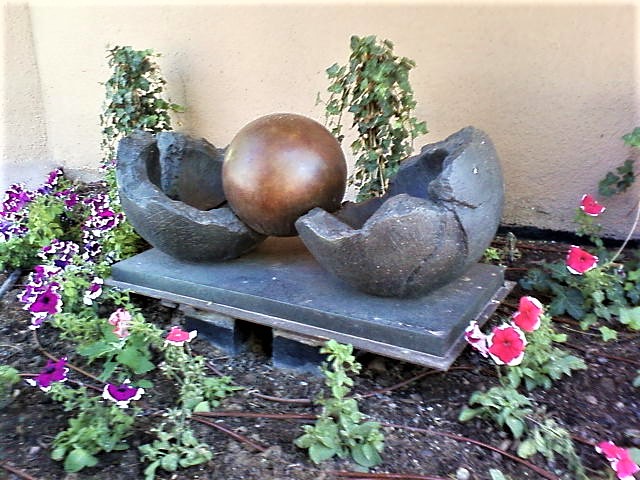
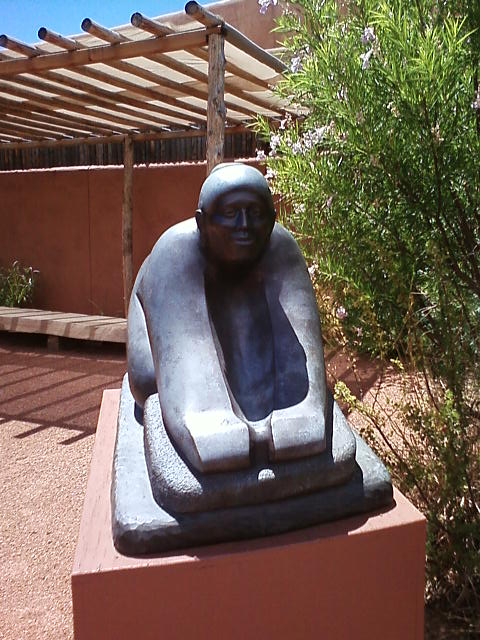
In Shaman’s Blues, Mae is often struck by the intensity of the light in Santa Fe. Encounters with outdoor art trigger key moments for her, for Jamie, and for the boy Jamie tried to help.

The nearly-dry Santa Fe River plays an important role, as does the image of the Lady of Guadalupe. I took a picture of this blue door in Santa Fe one year, and the next year the Lady had been painted on it.
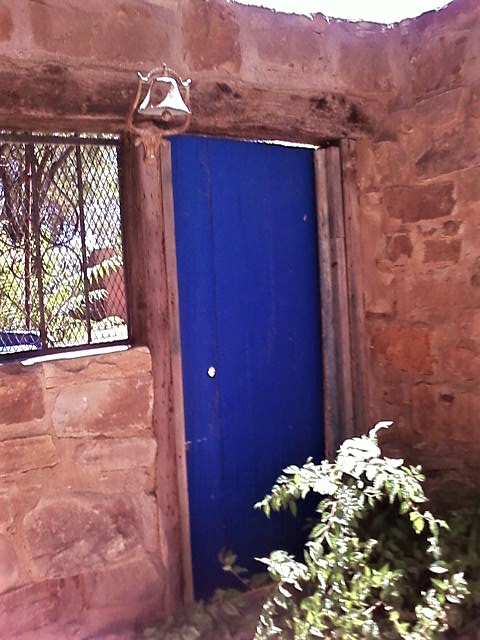
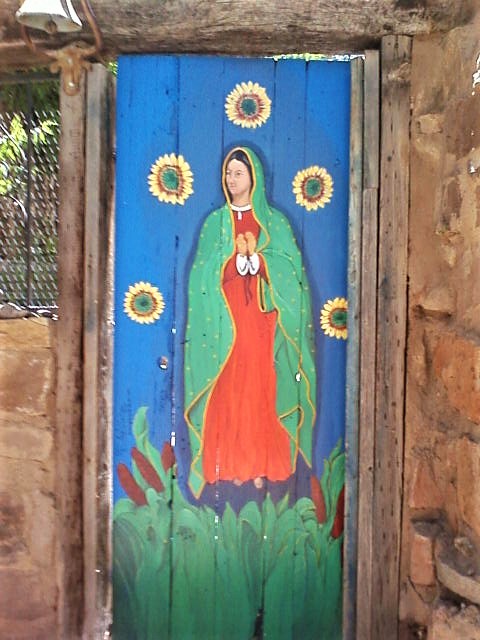
As I look at the colors in my old pictures, the book’s title echoes them. Blues.

I’ve also photographed settings that had meaning to other characters or played roles in later books, and will share some in future posts.
 The boxed set of the first three Mae Martin Psychic Mysteries is on sale for $2.99 through April 26th.
Is your book club reading either The Calling or Shaman’s Blues? These have become book club choices, I think, because of their genre-spanning qualities, with elements of women’s fiction, mystery, and the mystical/paranormal. After discovering how much my book club likes using the suggested questions for books, I’ve created a Book Club Discussion Question page on my web site. (I’ll eventually get around to adding the link to the end matter of the books. So far, I’ve added the task to my to-do list.)
Book nine in the Mae Martin series is in progress. I’m a slow writer, so it will probably take another year to bring it to its final form. Using the almost-finished first draft and an earlier, unfinished half draft as foundations, I’m creating anew while revising and recycling the earlier material. Always an adventure—following where the characters lead me.

In the mood to curl up with a good book? How about seven? The entire Mae Martin Series is on sale through December 16th. The Calling is free, Shaman’s Blues is $2.99, and the rest of the books in the series are $3.99 each. If you haven’t caught up with all seven, this is a great time to do it.
Two years ago today, June 2, I was half-way across the country, moving from Virginia to New Mexico. I’d lived in Santa Fe previously and left for a job in northeastern North Carolina, where I found the setting for The Calling. I always knew I’d be back, and when I discovered Truth or Consequences, I was instantly caught in the vortex. I knew I would live here someday.
In Shaman’s Blues, Mae Martin moves to T or C. Unlike me, she’s never seen it before. Never been to New Mexico. Doesn’t know a soul in town except her father. Join her on the adventure and celebrate my anniversary.
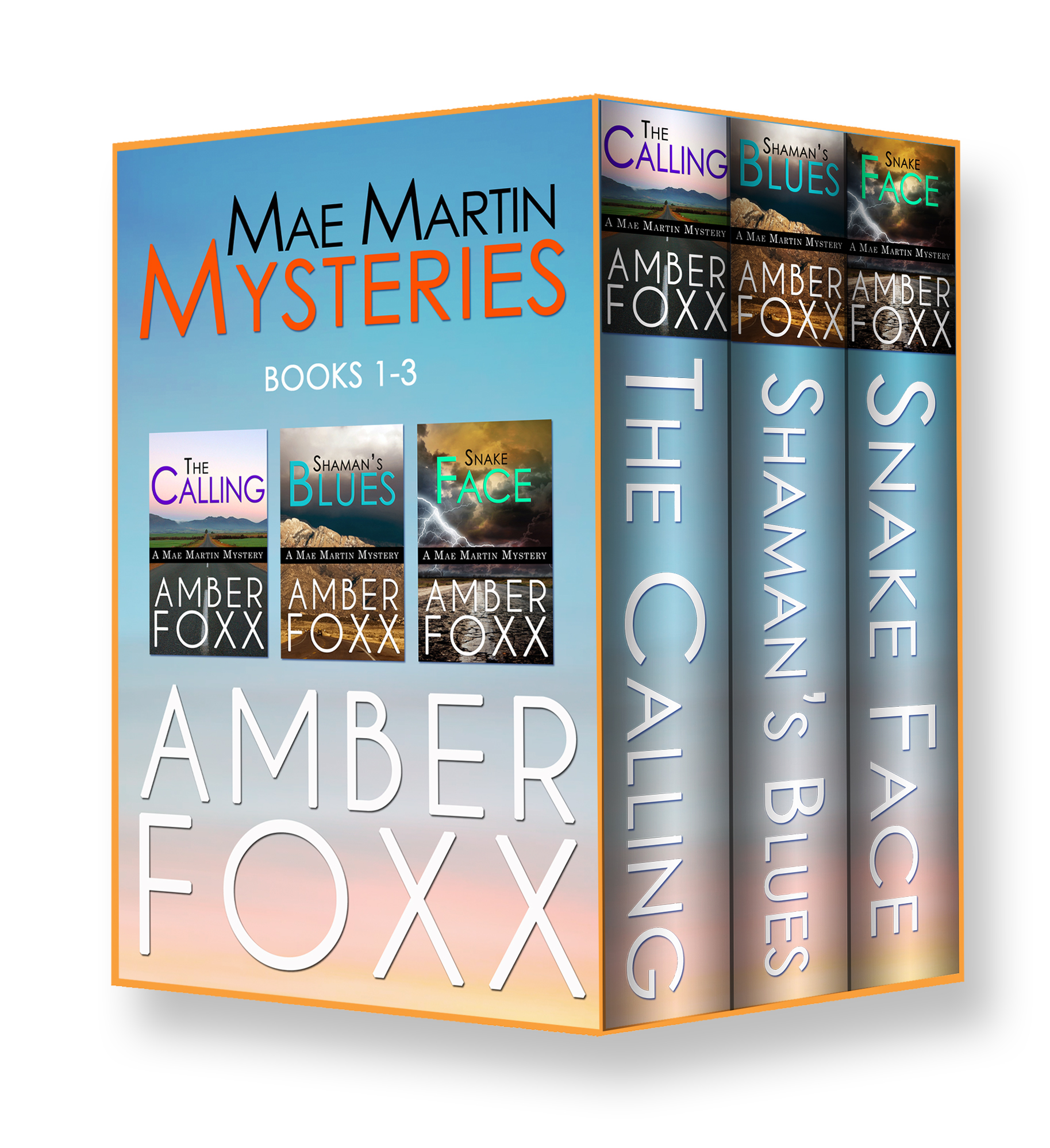
The Calling
A missing father. A mother with a secret. A professor who might be a shaman—or a fraud. As Mae discovers her gift of “the sight,” she overturns her own life and the lives of those around her.
Shaman’s Blues
A gifted musician disappears. A questionable seer vanishes, to Santa Fe or another dimension. Finding two missing people proves easier for Mae than learning the truth about either—or getting one of them, once found, to go away again.
Snake Face
Musician Jamie Ellerbee needs Mae’s psychic aid. His tour is being trailed by bad luck, an anonymous fan, and a strange new friend—who may not be a friend after all.
No murder, just mystery. Every life hides a secret, and love is the deepest mystery of all.
Three full-length e-books for $5.99.
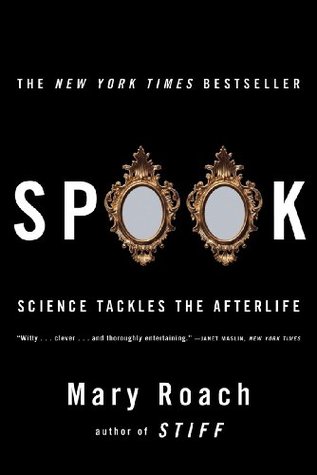
Reading Spook was one of the most enjoyable pieces of research I’ve done. My fiction often involves ghosts and other forms of contact with the dead, as well as psychic phenomena. I’ve found numerous studies of mind-to-mind communication, remote viewing, precognition, etc., but this is the first time I’ve read about scientific attempts to study the afterlife. I read a couple of books on ghost-hunting and paranormal investigation; however, the author of those books is more a professional skeptic than a solid scientist.
Mary Roach explores current science on reincarnation, soul weighing, out of body experiences, and also the history of mediums and other interactions with the spirits of the dead. She’s one of the funniest writers I’ve come across. She manages to find the strangest items in the historical record—her chapter on ectoplasm, for example. The fact that it was regarded so seriously at the time it was a popular mediumistic trick is as fascinating as the methods used to produce it.
Roach participates in a training for becoming a medium; takes part in a study on creating the perception of a ghost through infrasound; goes along on reincarnation research trips in India; visits a small North Carolina town where a ghost helped a man win a lawsuit; and more. Her inquiries are serious, but she never takes herself seriously. Much of the humor comes from her ability to laugh at herself, and to notice the workings of her own mind.
Whether or not you believe in ghosts or life after death, you can enjoy and learn from the author’s journey.
 A great way to discover new authors.
This special promotion includes book two in the Mae Martin series, Shaman’s Blues.
And many others!
At first, she didn’t show them to anyone. But she admitted to fellow artists and creative people who would understand, “I’ve been making devils.” An art therapist, she trusted her muse and followed it. The devils finally came out on gallery walls months later, small blue or red ceramic masks with a wild variety of expressions. I especially like a red one with curved horns and a crooked grin full of sharp teeth that remind me of red chiles. It’s so gleefully wicked. The little devils sell, and I can see why. We all have our shadow side, our mischievous side, our tired-of-being-perfect side. Even the weather gets devilish. I’m not talking about the New Mexico’s summer heat and monsoons—we love the storms. I’m talking about the wind. It’s already started, a couple of weeks too early, and it’s going to be blowing for months. To live with it, you learn to wear goggle-type sunglasses, even on a cloudy day, to keep the grit out of your eyes, and the constant blowing sound either gets as normal as an air conditioner in the summer—or drives you crazy. E. Christina Herr, a gifted New Mexico songwriter, sums it up in her song “Devil Wind.” If you love New Mexico, though, you take it as it is, wind and all. It’s not perfect. Tourist images of our state don’t show visitors chasing their fly-away hats or sneezing with a face full of dust and juniper pollen, but the cowboy’s bandana was, among many other things, a dust mask. Imperfection has its charms.
In my work in progress, I’m developing an antagonist character who’s obsessed with being smarter and more capable than anyone else, which of course, makes her anything but perfect; and the antagonist character in Shaman’s Blues likes to give bizarre advice, with the assurance, “ I’m always right.” My favorite fortune cookie message: The greatest of all faults is to be conscious of none.”
I’ve been pleasantly surprised how many readers love Jamie Ellerbee, the flawed and troubled character I first introduced in Shaman’s Blues four years ago. When I wrote the book, I was experimenting with turning as many conventions of romance around as I could, while still writing about love. He’s a mess, though he struggles not to be. Not exactly a conventional romantic lead. The book’s original title as a work on progress was Samskaras, the Sanskrit word for the residue of our actions and emotions that creates new cycles of karma. One of my spiritual teachers said a good English translation for it was “Some scars.” Jamie has a lot, and he’s not skilled at hiding them. But then, hiding doesn’t bring people closer to each other. Kindness does.
Happy Valentine’s day.
*****
Shaman’s Blues is on sale for 99 cents .

I discovered this beautiful concept while researching Zambian culture for my work in progress. Kufwasa is a word in the Tumbuka language that means a blend of patience, mindfulness, flow, enjoyment, and something unique to the understanding of people who live in a traditional African culture which may be hard to put into English words. My goal in reading about Zambia was to understand more about a minor character, Mwizenge Chomba, who has been in my series since book two, Shaman’s Blues, but is about to play a larger role in the book I’m writing, the seventh in the series. I wanted to make sure I got his background right, his way of seeing the world. I’m not sure I’ll find a place for describing kufwasa in the book, but it should exist in the character himself, in the world view he grew up with.
Kufwasa implies doing one thing at a time, with full concentration and a kind of serenity, or it will be neither done well nor fully experienced. My character was raised in a remote village, so his family members would have planned one major activity a day. When you get around on foot, by bicycle, or in old and unreliable vehicles, travel and errands can’t be hurried. Cooking can’t be rushed, either, using traditional methods. A society without distractions enjoys taking time to talk and laugh and tell stories over these slowly prepared meals. In the twelve hours of equatorial darkness, married couples have plenty of time for kufwasa in their relationships. (I liked coming across this idea about marriage, because my Zambian character is married to an American woman who writes romance novels.) Love thrives on kufwasa.
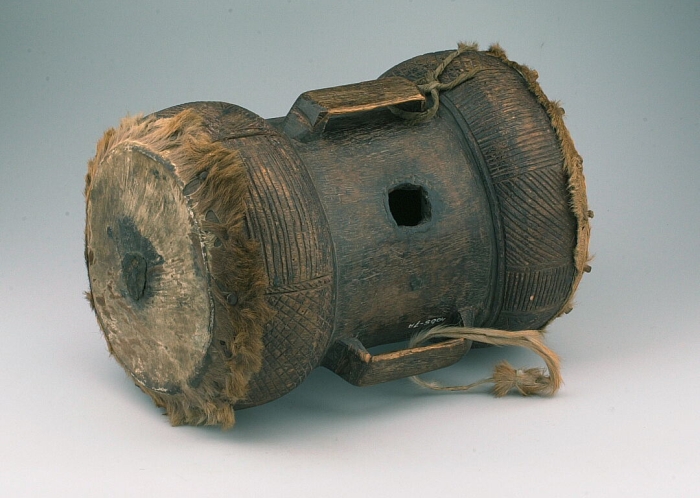
It’s funny how I can discover something about a character that makes perfect sense even though I didn’t know it at the time I introduced him. Mwizenge appears in Shaman’s Blues as a singer and drummer in a world music trio. Live music of all kinds is a big part of Santa Fe life, and I’ve enjoyed African drumming and dance groups there, so he simply showed up the way characters do as someone likely to be in Santa Fe. I understand now why he feels at home there, so far from his village. He carved his own drum with kufwasa back in Zambia and grew up with music and dancing as community events. Compared to the high-pressure lifestyles of some parts of the country, the pace in New Mexico comes a little closer to kufwasa.
Next time I find myself trying to do too much too fast, I hope I can slow down and remind myself to practice kufwasa.
Shining a small, bright light in a wilderness of writing scams
Living and Writing in the great state of Maine
the Mae Martin psychic mystery series
An Iyengar Yoga blog
In a different light: my view of the world.
visionary author
middle of the night musings
Nancy Adams' blog
 Amber Foxx Mysteries