Eight plus Eight Equals Awareness

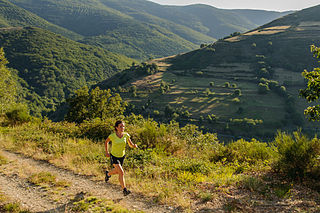
The dread of being stuck with an inconsiderate neighbor plagued me while I ran, as my mind rehearsed all the ways the problem could get worse and all the steps I might have to take to get it resolved. After all, there was only one good scenario: him moving out. But the bad ones seemed endless, and my mind seemed compelled to explore all of them, including having to move to get away from him. For me, his worst disruption of our previously serene little community in our building has been smoking (and stinking up my apartment!) although smokers are required to go off the property, not even in the courtyard, to light up. Worry clings to the mind in pursuit of a solution, even if there’s none possible at the time. Granted, this can be a preparation for coping, but I don’t go out in nature to worry, so I started counting the negative thoughts. Once I notice a pattern, it’s an effective way to interrupt it and make a particular worry into a practice rather than a torment. It came back eight times in four miles. With each return, I was no further along in solving the problem, but I was more aware of clinging to it and could let it go more quickly, to return to awareness of my movement and my surroundings. After all, if I can focus that intently on a negative, I apparently have the capacity to focus equally on something else if I chose to do so.

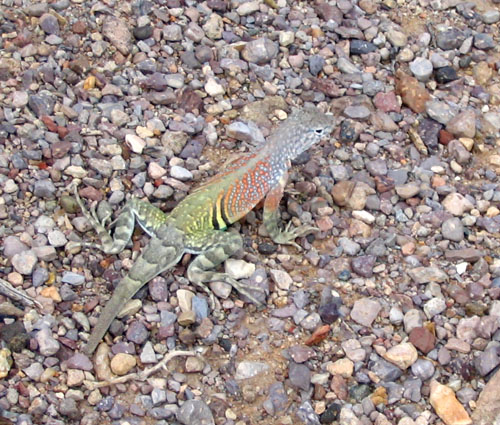
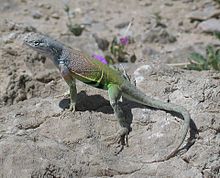
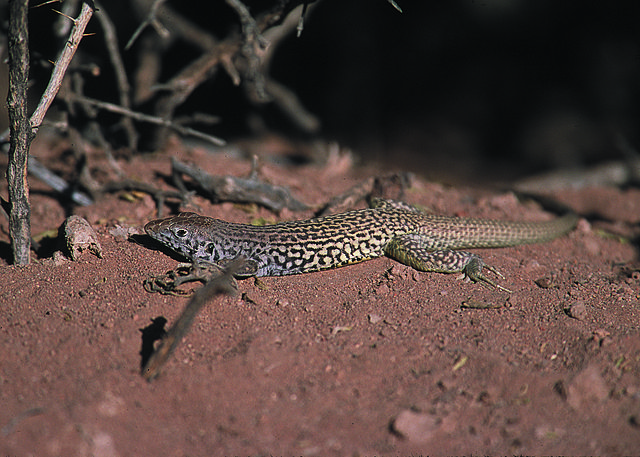
It was the day after a big rain, a cool eighty-two degrees, and that brought out the lizards. I saw eight greater earless lizards, evenly distributed along the trail, one about every half mile, and I paused to admire each of them. Their sleek gray heads and necks. Their glowing orange sides with diagonal black stripes. Their orange upper arms and radiant blue-green forearms. Their green hind legs and tail that seem lit from inside like a stained glass lamp. (The pictures don’t do justice to their true colors.) Most of them posed or did push-ups, as if showing off their jewel-like skins. Normally, I feel lucky to see just one, so this was an extraordinary bounty.
When I got home, my landlord let me know he was giving the smoker a thirty-day notice to vacate the premises. I wish the guy would leave sooner, but the point is, I hadn’t needed to keep thinking about it. I’m glad I was able to pop the worry bubble often enough to enjoy the weather and the lizards.

 

Launch

On June 1st 2017, I left my apartment in Virginia for the last time. With the help of an amazing friend, I had most of my belongings miraculously crammed into my very small car, and had already sold my furniture and excess books. I said my good byes and gave away my bed, my landlord inspected the place, and I hit the road. Bit by bit, plan by plan, I downsized to the minimum and retired early. I’d say more, but why? It was interesting to me, of course, but not because of any adventure or drama that would make a good story, but because it went so smoothly.

On June 1st 2018, I went for a walk to enjoy one of T or C’s amazing full-circle sunsets— pink clouds in the south and in the east, orange and purple mingling in the West—and to commune with the bats that emerge from an old warehouse in the middle of town, next door to the trailer I use as Mae’s house in my books. (I’ve not used the bats in my books yet, but Mae would like them.)

I watched the bats pour from a crack in the brick wall in a flow of perfectly sequenced flights, one bat right after another, and tried to imagine how they organized this exit. One squadron would take off, and then no one came out for a while, but after the pause there was a lot of squeaking high up in the old warehouse. Whenever the squeaking got loud and then stopped,  more bats came out. Sometimes a solo bat popped out of a small hole lower in the wall or shot out of a hole to the right of the main exit, while the main surge of fliers swept out from the big crack and headed for the river. Their orderly formations dispersed into every-which-way flutters, a few independent bats leaving the crowd altogether to stay and hunt bugs around the neighborhood.

One reason this multi-bat take-off is so amazing is they can’t run; they can only take off by dropping and launching like hang gliders. Imagine the launch sequence inside the old warehouse as one bat after another lets go of the ceiling and aims for the exit. Somehow, they organize it, and it works.

A year after my move, I have no regrets. It was the right decision, a successful launch. I can live happily as a writer and yoga teacher in a very small apartment in a wonderfully weird town. I’ve made new friends and no enemies (that I know of) and am still discovering the simple beauties of this place. I ran in the desert on June 1st 2018, aware that a year earlier I was in my car. On my way to the quail, the jackrabbits, the mule deer, and the checkered whiptails that made my run so beautiful. On my way home.


Smashing Clichés

Movies featuring things blowing up are popular. People like to watch demolitions, from buildings to demolition derbies. And then there is art-to-be burned, such as Burning Man and Zozobra. When I lived in Virginia, I used to clean the park where I ran and sometimes enlisted the help of several boys who played there. One day, they found a large toy firetruck in the stream and pulled it out—and proceeded to smash it to pieces with rocks. This was obviously more fun than playing with it.

Someone has been making faces on the trail where I run in the desert. Not walking along being silly, but arranging pebbles in smiley-faces on top of the rocks that mark the edge of the trail. The first one didn’t annoy me, but then they multiplied. I don’t mind intriguing, meaningful art made among the desert rocks. A labyrinth. A miniature Stonehenge-like creation. A rounded lava rock that looks like a fertility goddess surrounded by a little maze and an altar. A small rock nestled in a hollow in a large rock just because it fits so perfectly. Such arrangements fall over gradually or get covered with sand, and nature looks natural again. Someone left a small painted rock near the trail, red white and blue with the Texas flag’s star, the name of a soldier who died in combat, and few words of love and honor. It means something. No one moves it. Perhaps he used to love this trail and used to hike it with the person who left the rock. But smiley-faces? Twenty or more of them? That’s nineteen clichés too many.

On a lovely, sunny, seventy-degree winter day, I got tired of them and gave a swipe at one as I passed. No effect. The pebbles had been glued to the trail-marker rock. What the heck? Did the face-maker think this stuff should be permanent? I soon found that a quick kick could dislodge most features of the glued-on smiley-faces, and it felt good. Can I justify it? Maybe not, but to me, gluing all those faces along the trail was arrogant. If they’d been arranged lightly, without attachment, I might have knocked one aside and been content, had my fun like the boys smashing the toy firetruck, and forgotten about it. Nature would have blown them away eventually.

Writers are regularly advised to “kill your darlings,” those scenes we love that weigh down the pace, or those wonderful (to us) witty lines that don’t serve the story. We have to weed out clichés and our favorite over-used words. They can have an effect on readers like seeing twenty-plus smiley faces, an intrusion on the flow of enjoyment. Today I noticed that someone else had destroyed smiley-faces. There were face-pattern glue marks on some rocks with branches laid over them, as if my fellow self-appointed curator of trail art was saying, “Don’t even think about putting that back.”

Sometimes I store my cut scenes and lines for a while, in case I want to put them back, but ninety-percent of those darlings never return. Nothing in the first draft is glued in place. I have to destroy in order to create. Fortunately, I enjoy revision. It’s a lesson in non-attachment, and almost as much fun as smashing a smiley.

Sitting

There’s good sitting and bad sitting. I’ve been working on a post for Ladies of Mystery about the bad-for-you sitting that writers have to do and how to counteract it, but here, I’m talking about the good sitting. Meditators often use the word “sit” to mean meditate.

Sitting slows down the activity of the mind—a problem when you’re trying to be creative, a benefit when you’re practicing awareness. After I cool down and stretch at the end of a run, I sit in vajrasana, lightning bolt pose. I initially started doing it to stretch the muscles on the front of my shins and ankles, and realized that it had an effect on my state of mind. After all that movement, after the ever-changing visual input and the flow of creative thought, after the more active stretches, I sit on the ground in stillness. If I’m alone at the end of the trail, it becomes a moment of pure presence. Breeze on skin. Leaves scuttling on dirt. Blue sky. Buttes and mountains across the lake. The sharp shadows of every pebble and rock in the afternoon’s brilliant light as the sun rides low in the sky for the solstice. Sitting. The drop into inner silence.

If I were to get out of my chair now and sit in that same pose, I would have to work to empty my mind. The inner quiet comes naturally after asana practice as well.  Moving my body is the prelude to quieting my mind.

*****

Note: The image is an abstract overhead view of a person sitting in meditation. I didn’t see it right away, so I thought I should point it out for anyone else who saw only a blue design.

Rain Salutations

I know I can’t make the sky rain. It’s like trying to make someone love you. When the right conditions have arrived, the change comes. Sometimes, however, I think it fails to rain when the world is out of balance, and that it takes dancing and meditation, yoga done as rain salutations, people showing compassion and affection and listening to each other with their hearts, to invite rain. Love and care for the earth will call rain. Earlier today, it rained in the alley behind my apartment for one minute. I went for a short walk at sunset, and a massive blue-black cloud was flashing lightning out toward Elephant Butte, revealing the rain as a sheer curtain in each orange flare. I did a little dance, spinning and then running backwards, asking the storm to follow me home. It did, but I don’t take credit.

When I was running in the desert around noon today, I encountered a mule deer. They often look you in the eye before they run. If they even run. We circled a juniper, checking each other out, making eye contact through the branches, then she turned her back to me, did two full springs straight up in the air with a graceful tuck of all four legs, and trotted off. If anything had the power to call the storm, she did. The deer did the rain dance.

*****

Unrelated, but perhaps of interest: The Calling, book one in the Mae Martin series, is on sale for 99 cents on all e-book retail sites through July 21st. If you’ve enjoyed my books, tell a friend. Thanks.

Petrichor—An Ode to New Mexico Rain

Dominguez-Escalante_NCA_(8930993249)

The smell of rain in the desert is so special it has a name: petrichor. As moisture touches rocks and soil that have been hot and dry, they release a scent of minerals and plant oils and something else I can’t place. It’s the smell of life, I think.

When I crossed the state line from Texas into New Mexico last week it was pouring, with lightning so intense it flashed pale purple. At the same time, the last faint light of evening shifted through rain on the horizon like a pale gray aurora borealis. I parked at the rest area at Glen Rio and got out and danced in a backward spin, softly singing Michael Hearn’s lovely sweet song “New Mexico Rain,” not caring or noticing if anyone saw or heard me. It was that good to be back and to have my homecoming blessed with a storm.

Today we had a long, gentle rain, the kind the Navajos call female rain. I went running in it, on a favorite trail at Elephant Butte Lake State Park. Quails peeped, crickets chirped, and there were no other sounds but the rain, my steps and my breath. The sand was firm under my feet, the lake glowed silver-blue, and low puffs of clouds floated across the flat cone-top of an extinct volcano, making it look as if it had come back to life. The subtle greens of plants whose names I don’t know—feathery and blue-tinged, needle-like and yellow-green—glowed in the diffuse light. Wet lava rocks shone black or red as their pores soaked up the water. At each curve in the trail, the rain scent varied, mingling with juniper at times, stronger when the rain increased, fainter when it faded. Normally, I work on plot problems, writing scenes in my head as I run, but today my mind was quiet, my attention captured by sounds, textures colors and petrichor.

There’s not one special memory linked to this scent, just a sense of place. Of the earth itself within the borders that delineate New Mexico, a place where the Pueblo people are dancing for the rain. When that rain touches me, I feel as though something is released in me as well from the rocks. My heart knows who I am.Siler_pincushion_cactus_(6002291928)

Re-Bodying: Movement and Play

runningI’m reading Full Catastrophe Living again. I don’t know how many times I’ve read this wise book, but every time, it makes me more awake and aware. The chapters on mindfulness of the body inspired this blog post. The author, Jon Kabat-Zinn, reflects on how the words remind and remember can be interpreted as re-mind—come back home to your own mind, and re-member—become a member of your own consciousness, and then he suggests we may need the word “re-body.”

Children and animals know: it feels wonderful to move around. It’s not natural to hold still and sit for hours. I recently took a trip to visit friends in North Carolina and in Georgia, and the long drive left me craving movement. My friends are walkers and yogis, not runners. Walking and yoga sustained me for a while, but by the last day of the trip I was craving full flight. My Atlanta friend brought me to a trail along the Chattahoochee, and she walked while I took off in an explosion of delight, faster than I normally run. The novelty of the trail added to my energy. I had no idea what was around each curve or over each hill, and had to stay one hundred percent in the present moment to dodge roots and rocks and poison ivy and still take in the beauty of the woods and water. The speed and surprises were part of my joy, along with the sensation of my feet connecting with the earth, the springy strength in my legs.

We don’t all take joy from the same things, but whether we walk, run, dance, practice yoga, lift weights, do tai chi or go ballroom dancing, it doesn’t matter. We’re designed to move. And when we find the movement that matches our spirit, it’s like coming home every time we do it. I like to think that people who say they hate “exercise” haven’t discovered the kind of movement that will make them happy. They’ve been made to do activities incompatible with their nature. However, somewhere in every human is that child who had to be told to hold still. That child loved to jump, skip, run, and climb. It was play. For me, that new trail was play, the game of finding the next footfall on an unpredictable landscape. Yoga is play in the field one’s self, exploring the organization and sensation of each asana, the interaction of the posture and the breath. After decades of practice, I still find even the most basic poses fascinating.

For some people, the word exercise takes the play out of movement. Years ago, I read a study on why women exercise and why they quit. Reasons for starting: weight loss and looking better. Reasons for sustaining exercise: the discovery that it reduces stress. Reasons for skipping exercise or quitting: time pressures and stress. In other words, movement reduces stress, but when women are stressed (and I would guess this is true for men, too) they tend to forego it, as if it were a luxury. It can feel like one, in either the negative sense of an extra that can be cut from the time budget or in the positive sense of deep pleasure. It can be a luxuriant sensation to move, to be fully embodied, present and in motion.

When I’m writing and the story gets stuck, I find that if I stand up and walk around, ideas come to me. It’s as if the stuckness of sitting starts to affect my brain, and the energy of movement clears it. Movement is as essential to mental and emotional health as physical health, but “it’s good for me” is the last thing on my mind when I’m enjoying a run or a yoga practice or just getting up from my desk and re-bodying for a few minutes. I’m playing, following my movement bliss. What’s yours?

*****

Image by Robin McConnell originally posted on Flickr