Road Trip

I recently took a week and a few days to go back to Virginia and North Carolina to visit friends and collect some art I’d stored in one friend’s house. I enjoyed the reconnections with people, and the brief exposure to snow and cold and to architecture that was neither adobe nor trailer. T or C, with a population of a little over 6,000—it’s been shrinking—seems tiny next to Harrisonburg, Virginia (pop. 52,000), though it’s also considered a “small town” by some people. To me, Harrisonburg felt downright urban. So many ethnic restaurants with healthy choices, so many building over two stories tall, and so many traffic lights. (T or C has one.)

I dropped in on former colleagues, and due to snow, I was grateful that retired faculty have access to the college fitness facility. Running on an indoor track takes mental endurance, and if there hadn’t been so many students playing basketball to keep me amused, I wonder if I could have managed my usual distance. I taught a couple of yoga classes at the studio where I used to work in Harrisonburg, and it was a special and meaningful opportunity.

Part two of my road trip took me to Asheville, NC, where I found myself wondering what a trip to the mountains of North Carolina would be like for Mae Martin, my series’ protagonist.  (I was visiting the friend who inspired  the character.) Mae grew up in that area and she has connections in Asheville. What it would feel like for her to go back, after living in New Mexico? Asheville is a lot like Santa Fe and T or C in some ways, with its artists and yoga teachers and massage therapists, but in many ways it’s entirely different. The mountains are old and green. And the smaller towns beyond the city, such as the place where Mae’s grandparents lived, are another world, culturally and spiritually as well as physically, from the funky, eccentric town where she’s made a new home. (I moved her to T or C years before I made the permanent move myself.)

And what about a road trip itself as part of a story? Travel is inherently challenging. I drove through rain in the Blue Ridge on my way in, and on my way back through wind that started to peel the rubber rain-channel seal off my windshield, wind that made it hard to open the car door when I stopped for gas, wind that made big truckers struggle to open and close the doors of the truck stop. There were two wildfires on the outskirts of Amarillo and the flames and smoke mingled weirdly with the sunset. Any events in a story that I could set in weather like that would be doubly difficult for my characters, and it’s my job as a writer to make their lives difficult.

The outcome of all this? I’m glad to be home in this peculiar town with its colorful people and murals, its hot springs, and its art and music scenes. I was glad to see my T or C yoga students, to run in the desert again with the lizards and jackrabbits and roadrunners, and to go out dancing at the T or C Brewery. The art I brought back is either consigned for sale or on my walls, and I feel even more at home now with the pieces I chose to keep all around me. More complete, focused and inspired to create, with new ideas for the work in progress.

“Where’s Your Baby?”

As I charged up the last stretch of hill with a final burst of speed, I heard a shout of excitement from the playground at the end of the trail. A little boy, his dark face just visible above the stone wall, had spotted me. He must have been staring out into the landscape of cacti and junipers and sand, and been startled to see a human being—and one running, at that. I heard more happy shouts, and as I rounded the bend I saw four little heads flying along within the confines of the wall. The boy had an older sister, her hair in beaded braids that swung wildly as she ran. When I did a cooldown lap of the last little stretch, the children tracked me, and then they met me as I entered the parking lot. In an SUV parked nearby, I could see a young Hispanic woman with long hair and glasses, nursing a small baby in the back seat. Two of the kids looked like they were hers, and I wondered if the two black children were stepchildren in a blended family or if they were friends, perhaps out-of-town guests. In other words, what’s their story?

The boy who’d started the excitement of running with me was curious about me, too. I guessed him to be five at most, a handsome little guy with fine features and a runny nose. He asked me how far I ran and how often. He asked where I lived, and then followed up with questions that made me think he didn’t understand age yet.

“Where’s your mommy and daddy?”

“They passed away a long time ago.”

“Why did they pass away?”

I didn’t feel like telling a child at play about my parents’ end-of-life health problems, so I simply said, “They were very old.”

“My mommy’s still alive.”

“Of course. You’re young. That’s normal at your age, but not at my age.”

He followed me to my car as I got my water bottle. “Where’s your grandma and grandpa?”

“They passed away, too. They were even older.”

“Where’s your baby?”

“I don’t have one.”

This stumped him, and he asked again, saying everyone has a baby, and then added, “I have a baby.” He was carrying a toy in one fist, some kind of bristly green creature. Ah. His baby.

While I stretched at a picnic table, his sister, who was around eight or nine, joined us. They inquired about my age, which I gave as sixty-three. The girl told me their father is “six nine.” I asked, “Is that his height or his age?” She said, “He’s that tall and he’s that old. Do you know him?” I was sure I didn’t, if he’s really that tall. And was he really that old, with children so young? She had to be pulling my leg.

The two black kids and the Hispanic boy ran off to the swings, and the Hispanic girl, who was also about eight years old, stayed with me while I finished my stretches. Even while she’d been running and playing, she held onto a notebook with a pink cover that matched her pink sun dress. Perhaps she’s a future writer. Without my asking, she told me, “Those kids are from Arizona. They visit us every year. Usually once, but they came twice this year. The other one is my brother.” She intuited that people want to understand each other’s stories, but did not enlighten me as to whether her friends’ father really was sixty-nine years old and six-feet and nine inches tall.

It makes a better story if I’m left wondering.

Conversations and Story-Telling


My eighty-two-year old neighbor hasn’t been able to walk his dog since he fell off his bike and injured his shoulder. His dog is strong and energetic, and his balance isn’t as good as it once was. We worked out an arrangement where I hold the leash, and the three of us walk together. He’s there to give his dog commands as needed and pull occasional thorns out of her paws, and I’m there for a steady grip and good balance. One reason I offered to do this is because I knew we’d have great conversations. In an hour-long walk, we never ran out of interesting topics. With eighty-two years of engaged, thoughtful life plus a great sense of humor, my neighbor is a delightful story-teller, and I was happy to prompt him to keep going.

At a popular fishing spot on the curve of the Rio Grande, we ran into another gentleman of advanced years with his dog, and the men immediately struck up a conversation about fishing, dogs, and various other things. Normal T or C behavior—talking to strangers.

Later in the day, I went out to dinner with a friend, and when the server came to check if we were okay, since our meals hadn’t arrived yet, we’d been so busy getting caught up with each other we hadn’t noticed the kitchen was a bit slow. A young couple came in and was seated across the room from us. I had a view of them in profile, each hunched over a phone, heads bowed, making no eye contact and no conversation. They looked like a satire on smart-phone addicts. I wondered about the state of their relationship. First date and painfully shy? Together too long and bored? Or was this, to them, normal?

Maybe they’ll stay in T or C a while and put the phones down. I’ve seen local young people doing things like skateboarding the wrong way down the middle of Broadway, earbuds hanging loose and blasting music to passersby (I can use that for one of my characters—Misty Chino would do that), but so far I’ve never seen them doing the blind-to-the world phone-walk my college students so often did. I imagine the young tourists, phone-walking, bumping up against a cluster of locals yakking on the sidewalk with someone who pulled a truck over to the curb to join the conversation. And the couple makes eye contact with the strangers. They answer friendly questions and tell their stories, and go on their way, talking with each other.


White Tile Floor

 It makes the rooms seem larger and brighter.

It shows every grain of desert sand, every drop of spilled tea.

I was doing my housework and noticed how cluttered my mind was, how full of random inner chatter of no importance, and how un-restful that was, like listening to a radio station that fades in and out mingled with another equally unclear one. While I was on my hands and knees washing the white tile floor, I turned off the noise and focused on the moment. The swish of the rag. The movement of my arm. The small crawl to the next stretch of floor. It won’t stay spotless, floor or mind. But imagine my state of home or head without the effort!


Water’s Colors

Shortly after I posted about the early spring and the warm dry winds, it finally rained. Cool as well as wet, it was practically our first winter day all winter. The rain smell was so welcome, so magical, I had to go out in it. With a large umbrella, of course. The sound of raindrops on it was the best music I’d heard in months.

There’s a beautiful walking route in Elephant Butte known as “the dirt dam.” It’s a road that’s been closed to traffic and takes you over the dirt dam to the big dam, the one that really makes the lake. It’s not the dams that make it scenic, though—to me, anyway. It’s the subtle colors and dramatic shapes of the desert. On a sunny blue-skied day, I’m drawn to notice the grand-scale sculptures of rocks and mountains. I seldom see this place soaking wet. It was a different world, where fat, silvery raindrops hovered on the tips of pale brown thorns. Many years ago, a friend told me he liked cloudy days because the colors of nature were revealed better, the way they were in classic Japanese watercolors. He was right. The rocks and soil were darker, and the bare thorny bushes looked black. Against this backdrop, dried-out straw-colored flower-stalks surrounded suddenly bright green stems. A red hue streaked up clumps of pale yellow grass, the same coral red as some crystals I’ve collected in the area. The flat, spiky pads of the purple cacti seemed more intensely purple and the green ones more vividly green. One full day of water and winter. I’m grateful.

Flawed

At first, she didn’t show them to anyone. But she admitted to fellow artists and creative people who would understand, “I’ve been making devils.” An art therapist, she trusted her muse and followed it. The devils finally came out on gallery walls months later, small blue or red ceramic masks with a wild variety of expressions. I especially like a red one with curved horns and a crooked grin full of sharp teeth that remind me of red chiles. It’s so gleefully wicked. The little devils sell, and I can see why. We all have our shadow side, our mischievous side, our tired-of-being-perfect side. Even the weather gets devilish. I’m not talking about the New Mexico’s summer heat and monsoons—we love the storms. I’m talking about the wind. It’s already started, a couple of weeks too early, and it’s going to be blowing for months. To live with it, you learn to wear goggle-type sunglasses, even on a cloudy day, to keep the grit out of your eyes, and the constant blowing sound either gets as normal as an air conditioner in the summer—or drives you crazy. E. Christina Herr, a gifted New Mexico songwriter, sums it up in her song “Devil Wind.”  If you love New Mexico, though, you take it as it is, wind and all. It’s not perfect. Tourist images of our state don’t show visitors chasing their fly-away hats or sneezing with a face full of dust and juniper pollen, but the cowboy’s bandana was, among many other things, a dust mask. Imperfection has its charms.

In my work in progress, I’m developing an antagonist character who’s obsessed with being smarter and more capable than anyone else, which of course, makes her anything but perfect; and the antagonist character in Shaman’s Blues likes to give bizarre advice, with the assurance, “ I’m always right.” My favorite fortune cookie message: The greatest of all faults is to be conscious of none.”

I’ve been pleasantly surprised how many readers love Jamie Ellerbee, the flawed and troubled character I first introduced in Shaman’s Blues four years ago. When I wrote the book, I was experimenting with turning as many conventions of romance around as I could, while still writing about love. He’s a mess, though he struggles not to be. Not exactly a conventional romantic lead. The book’s original title as a work on progress was Samskaras, the Sanskrit word for the residue of our actions and emotions that creates new cycles of karma. One of my spiritual teachers said a good English translation for it was “Some scars.” Jamie has a lot, and he’s not skilled at hiding them. But then, hiding doesn’t bring people closer to each other. Kindness does.

Happy Valentine’s day.

*****


Shaman’s Blues is on sale for 99 cents .

Smashing Clichés

Movies featuring things blowing up are popular. People like to watch demolitions, from buildings to demolition derbies. And then there is art-to-be burned, such as Burning Man and Zozobra. When I lived in Virginia, I used to clean the park where I ran and sometimes enlisted the help of several boys who played there. One day, they found a large toy firetruck in the stream and pulled it out—and proceeded to smash it to pieces with rocks. This was obviously more fun than playing with it.

Someone has been making faces on the trail where I run in the desert. Not walking along being silly, but arranging pebbles in smiley-faces on top of the rocks that mark the edge of the trail. The first one didn’t annoy me, but then they multiplied. I don’t mind intriguing, meaningful art made among the desert rocks. A labyrinth. A miniature Stonehenge-like creation. A rounded lava rock that looks like a fertility goddess surrounded by a little maze and an altar. A small rock nestled in a hollow in a large rock just because it fits so perfectly. Such arrangements fall over gradually or get covered with sand, and nature looks natural again. Someone left a small painted rock near the trail, red white and blue with the Texas flag’s star, the name of a soldier who died in combat, and few words of love and honor. It means something. No one moves it. Perhaps he used to love this trail and used to hike it with the person who left the rock. But smiley-faces? Twenty or more of them? That’s nineteen clichés too many.

On a lovely, sunny, seventy-degree winter day, I got tired of them and gave a swipe at one as I passed. No effect. The pebbles had been glued to the trail-marker rock. What the heck? Did the face-maker think this stuff should be permanent? I soon found that a quick kick could dislodge most features of the glued-on smiley-faces, and it felt good. Can I justify it? Maybe not, but to me, gluing all those faces along the trail was arrogant. If they’d been arranged lightly, without attachment, I might have knocked one aside and been content, had my fun like the boys smashing the toy firetruck, and forgotten about it. Nature would have blown them away eventually.

Writers are regularly advised to “kill your darlings,” those scenes we love that weigh down the pace, or those wonderful (to us) witty lines that don’t serve the story. We have to weed out clichés and our favorite over-used words. They can have an effect on readers like seeing twenty-plus smiley faces, an intrusion on the flow of enjoyment. Today I noticed that someone else had destroyed smiley-faces. There were face-pattern glue marks on some rocks with branches laid over them, as if my fellow self-appointed curator of trail art was saying, “Don’t even think about putting that back.”

Sometimes I store my cut scenes and lines for a while, in case I want to put them back, but ninety-percent of those darlings never return. Nothing in the first draft is glued in place. I have to destroy in order to create. Fortunately, I enjoy revision. It’s a lesson in non-attachment, and almost as much fun as smashing a smiley.

Variations on a Theme of Conscious Community

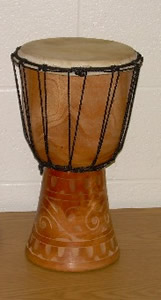
In celebration of the super moon-blue moon-blood moon-eclipse Wednesday, a healing music center in T or C invited a large circle of like-minded souls to dance and drum. The evening was semi-structured, with guided meditation followed by free-form dancing, drumming, singing, and story-telling. The opening meditation encouraged us to share self-expression in a non-judgmental space.

When I’m attending a ceremony like the Apache dances of the Mountain Gods or a Pueblo corn dance, every drummer and dancer seems to merge with the ceremony. Apache Ga’an dancers are painted and masked. The women who circle the dance arena are wrapped in shawls, and all do the same step. At Pueblo corn dances, the entire community filling the plaza becomes one flowing pattern, the men in white leather kilts and red-brown or turquoise-blue body paint, and the women in one-shouldered black dresses and rainbow crowns, subtle individuality showing only in their jewelry and parrot feathers. The clowns are painted, losing their personal faces to the role they fulfill.

In T or C at the full moon event, we danced as our individual selves. Entering a spiritual, ceremonial mind space was more psychologically challenging. My head kept filling with questions. Whose little girl was that, doing happy somersaults in the middle of the circle? Why wasn’t a certain person dancing—was she okay? Was it all right to use a drum I found near my chair? Was I taking up too much space when I danced? A lot like the dance of daily life in a community.

A healer and dancer led the opening breath work and imagery. For those who weren’t aware of it, she mentioned that she has a degenerative condition that affects her muscles, so she depends on chi, and called her illness a gift that helped her truly appreciate and experience this vital force. She guided us to raise our energy and awaken our spines, and she then danced, graceful and expressive. During the drumming portion of the event, she was often the only person moving. She wasn’t performing for an audience; the circle was giving her energy, chi, and sharing the joy of moment, with awareness of the limited time in which she may be able to move this way. As Castaneda’s teacher Don Juan told him, death is your advisor; he walks by your left shoulder. Listen to him. The difference between her and the rest of us is that she is always listening. She opened the evening with the analogy of the body’s web of connective tissue and how it enables one small part to affect another at a distance, saying we were connected in a web of life energy the same way. Briefly, while drumming for her, I felt myself disappear into the rhythm, and there was only the sound and her dance.

I had hesitated to schedule a hot spring soak at the Charles Spa right after this event—it meant leaving before the music was over, and missing the closing meditation—but my legs were sore from the previous night’s yoga class in Albuquerque and I knew I needed the mineral bath. When I arrived at the Charles, the young man at the front desk informed me there were other women in the baths. He knows I like peace and quiet when I soak. No chatting, no loud groans and sighs. Noisy relaxation isn’t relaxing for me. “They’re part of a silent retreat,” he said. I was more than willing to share space with them.

The tubs at the Charles are private, each person behind her own curtain. The knowledge that the other people were observing silence as a spiritual practice put me into the same frame of mind. I’ve done half-days of silence at various retreats and taken college students on silent walking meditation, so it was a familiar zone. A welcome one. No sounds but water. Stillness. Then someone moving in water. I was in a new communal spiritual space with unseen people. Consciously silent. Respectfully present.

Continuing Education

I just finished a two-week intensive course on plot arcs. Writers aren’t required to get CECs the way health and fitness professionals are. I don’t have to renew a certification or have to take a certain number of courses per two-year period to prove to anyone that I’m keeping up my skills. But I have to keep learning.

People sometimes ask me why I go all the way to Albuquerque to take yoga classes every couple of weeks, classes I don’t get CECs for. The other teachers in T or C are good, after all. But they’re my peers. We’re equals. While I enjoy their classes, I also want to study with someone more advanced than I’ll ever be. I get excellent critiques from other writers, my peers, but I took a class with my editor’s editor.

It forced me to outline my work in progress before I completed the first draft, which I don’t usually do until I’ve improvised the whole plot, so it was challenging. I’m not sure my outlines made sense. But the ideas the instructor brought to the course did. Her structure for pacing and tension, for weaving in secondary storylines, and the key elements that need to take place in various portions of a book, will help me when I revise. She said she admired my bravery in staying with my “pantsing” (writer-talk for flying by the seat of your pants through the first draft) style while being required to outline. Maybe that was a diplomatic word for stubbornness. I don’t think I was brave. It’s just how I create. When I make plans, my characters seldom go along with them. I look forward to applying what I learned in the course when I do the major revisions in the second draft—once I know what everyone is up to.