Relative Discomforts

Cloudy winter days aren’t as blissfully beautiful as the sunny ones with pure bright bowls of New Mexico blue overhead, but the payoff comes later, with mind-blowing, psychedelic color and texture at sunset. The changes happen so fast, I have to time my sunset viewing exactly right and pick the right location for it. The sunsets may technically be in the west, but the colors can show up anywhere. There was a thick, creamy, red-purple display in the southeast one evening, a blazing orange total-sky event on another, then a softly glowing purple radiance in the north the next night. On a cloudless day, all we get is a pale rim of gold on the edge of the bowl.

Most of these lovely clouds haven’t rained, though. Yesterday’s shower was the first in around two months. It’s been a warm, dry winter. One day in December was actually cold. One day. High temperatures should be in the fifties, not sixties or seventies. I wonder if the snakes ever brumated. The other day, a little yellow jacket wasp was walking around on the top of my shoe while I was working out by the river. I like bees and wasps, but should they be out and about in January? The pines trees have shoots of new growth and I think they’re pollinating. The fig tree in my yard is budding. A mosquito tried to bite me. I’m comfortable, but too comfortable. The bugs and plants and I should be enduring bit of a chill. I’m sure my East Coast friends would like to ship a big load of winter to the Southwest about now, and I wish you could. Without snow in the mountains, we could be headed for a dry year.

The following is not a complaint: My home internet was down for a week and I had a cold—events so insignificant in the realm of human difficulties that they remind me my life isn’t hard. My immune system probably appreciated the chance to do a little work. I wasn’t knocked-out-flat sick for even a day. To avoid spreading germs, I was less social, but less dancing meant more writing. And while I had to schedule my limited online time and leave home to do it, my reading changed for the better. Fewer news articles, and more in articles in Alternative Therapies in Health and Medicine, a medical journal I still find fascinating even though I’ve retired. A challenging read keeps the dust off my brain, and I occasionally get plot material from it, including the remarkable studies that help shake up Mae’s world view in The Calling and the Tibetan medicine material in Death Omen.

I can cope with minor personal discomforts and even benefit from them. The uneasy comfort of the weather troubles me more.

Recycling Another Old Calendar

I use a paper calendar, not an electronic device, for planning, and I can flip back through the pages and see the things I had to keep track of before I took early retirement and moved, finally, back to New Mexico. I can see the to-do list of the transition, too, and the schedules and plans in my new life. The year was significant, but the days more significant. Each of those little squares was life lived. Interactions, connections, experiences. Each of those little squares was a day when I kept certain commitments no matter what else was going on: yoga, meditation, and writing. My life has felt more circular than linear, and since I have occasional precognitive dreams, I question the perception of time as a step-by-step passage, with clear lines between past, present and future like those little squares that organized 2017.

There are many New Year’s rituals in which people let go of their past habits or troubles and embrace something new and positive. One such ritual is an interactive art installation in the ladies’ room at the T or C Brewery. The one before it used maps, and invited the women passing through the space to add notes about where they had been and places that affected them. The one for the New Year is a figure with messages accumulating on her, letting-go and turning-toward intentions. She will be burned, like Zozobra, in February.

A small spaceship full of hopes and wishes will go up on New Year’s Eve from Healing Waters Plaza at the time of the Ascent of the Turtle, T or C’s uplifting variation on dropping the ball in Times Square. (I have no idea what this little spaceship is—I’ll find out and report back.)  I like the imagery of both these rituals, and yet I can’t think of anything to add to them, not a message to set afire or one to send out to the universe.

Though I’ve I learned from my past, I seldom think about it. There’s more behind me than in front of me, but what’s ahead is more important. And what’s now is most important of all.

A book I’ve read a few times and no doubt will read again is No Word for Time by Evan Pritchard. The author, of Micmac descent, visits a tribal elder in Canada to study his ancestral culture and language. He asks the words for various things, and of course, asks the word for time. How would you react to the answer, there is no word for time?


Sitting

There’s good sitting and bad sitting. I’ve been working on a post for Ladies of Mystery about the bad-for-you sitting that writers have to do and how to counteract it, but here, I’m talking about the good sitting. Meditators often use the word “sit” to mean meditate.

Sitting slows down the activity of the mind—a problem when you’re trying to be creative, a benefit when you’re practicing awareness. After I cool down and stretch at the end of a run, I sit in vajrasana, lightning bolt pose. I initially started doing it to stretch the muscles on the front of my shins and ankles, and realized that it had an effect on my state of mind. After all that movement, after the ever-changing visual input and the flow of creative thought, after the more active stretches, I sit on the ground in stillness. If I’m alone at the end of the trail, it becomes a moment of pure presence. Breeze on skin. Leaves scuttling on dirt. Blue sky. Buttes and mountains across the lake. The sharp shadows of every pebble and rock in the afternoon’s brilliant light as the sun rides low in the sky for the solstice. Sitting. The drop into inner silence.

If I were to get out of my chair now and sit in that same pose, I would have to work to empty my mind. The inner quiet comes naturally after asana practice as well.  Moving my body is the prelude to quieting my mind.

*****

Note: The image is an abstract overhead view of a person sitting in meditation. I didn’t see it right away, so I thought I should point it out for anyone else who saw only a blue design.

People My Own Age

When I was a kid, I was close to my older sister and tended to share friends with her, people a year ahead of me in school. In college and when I first started working, I mingled with my own age group, and I also retained a close connection with a couple who were my father’s good friends. These mature people stood as a contrast to the crazy mistakes my peers and I made in our twenties. I would visit their home, leaving the sea of drama that is young adulthood for an island of sanity, culture, and intellectual engagement, and become aware of the difference, enjoying the respite and the chance to be a little more like them.

As I got older, my friends tended to become younger. I didn’t do this on purpose; they were the people I met through work and yoga, and I seldom felt older than them. By the time I retired, I was generally socializing with people twenty years my junior.

At work, I was surrounded by eighteen-year-olds five days a week, teaching primarily first-year courses. Since I taught in health and exercise science, the subject of aging naturally came up in classes. I often heard students say, “I love old people. They’re so cute.” It was good to know they loved their elders, but that adjective made me cringe.

My former backdoor neighbors had a frantic, poorly trained little dog which they let out in the yard to yap nonstop at all passersby. One morning, a stooped, gray-haired woman passed through the alley between my apartment and dog-owners’ trailer, and of course, the little beast barked hysterically. The woman muttered, “Someone ought to kick that f___ing rat in the head.” I wonder if my former students would think she was cute.

I live in a town where, according to one of its younger residents, the average age is “retired.” My friends are in their fifties, sixties and seventies. Vigorously engaged in their work, their creative pursuits, and in community organizations, they defy stereotypes of aging. Many of the poets who gather at Black Cat Books and Coffee are in their silver-haired years, and the vibrancy and originality of their work is impressive—perhaps because of the years behind the words.

At first I thought the predominance of fellow Boomers and creative people in T or C made it too easy to fit in, and I wondered, is this good for me? While I don’t miss the daily hassles of dealing with college freshmen or grading their papers, I realize I benefited from the abrasion. The longer I’m here, the more I see that everyone, in their own way, will challenge me to adapt and grow. People who are superficially and demographically like me are just as different from me in many ways as my eighteen-year-old students were. This is good. People who are not like me help wear the rough edges off my personality and opinions, like the wind sculpting desert rocks. With that softening comes access to the place where we are more alike, the essence, the humanness, the spirit.

Behind the Scenes: Writing Death Omen, the Sixth Mae Martin Mystery

Now that the book has been out a little over a month, and readers have had a chance to get into it, I thought it would be interesting  to share some of the background for the story and the setting.

The idea for the plot first came to me when I was reading a book I reviewed in depth almost two years ago, The Healing Path by Marc Ian Barasch. In it, the author chronicles his search for healing, and the choices he made when he was seriously ill. He also interviews people who took a variety of alternative, conventional or combined paths. Some were healed in body and spirit; some were healed only in spirit. He visited one healer who was so tactless and blaming, her words stunned me. My antagonist character was born, blended with aspects of a director I worked with in my theater days, a gifted young woman with control issues who could be domineering and aggressive in her methods of getting actors to find their feelings.

When I read a book review describing some unusual ideas about reincarnation, it added other ingredients into my mental stew, along with several articles on Tibetan traditional medicine in a medical journal on alternative therapies. It was the healer who made me angry that got the ball rolling, though. I live in a place where alternative healing is popular, and I would hate to see sincere seekers misdirected.

Another component of the story was the stress of being a medical mystery. No one wants to be one, and yet all illnesses and treatments have an element of the unknown. When symptoms show up, some people put off getting the mystery solved. They’re like the people who would call in to Car Talk and say their car was doing something terrifying but they managed to drive it home. Click and Clack always marveled at these callers. “If it could kill you, why do you feel like you have to drive it home?” We can be that way with our bodies, too. There’s such fear of what the symptom means, it’s an incentive to avoid the diagnosis. We go into denial. Or we don’t trust our doctors and go to alternative practitioners—some good and helpful, some not.

Midway through writing the book, I had an injury that an orthopedic doctor assumed was a labral tear in my hip joint—something that would require major surgery and time in a wheelchair for recovery. It was scary, wondering what was coming. However, suspecting he hadn’t listened to me very well, if at all, I postponed the MRI for a suspenseful month, observed my symptoms, then wrote him a letter thoroughly covering all the facts. He gave me a referral for physical therapy, and I’m well now, no surgery. Not all medical mysteries turn out this well, but the experience helped me understand some of my characters who are dealing with frightening prognoses.

Earlier in the writing process, I resided in one of the suites at the Pelican Spa. It was the summer of 2016, my last summer as a part-year resident of T or C before moving here. I got the idea to have the antagonist characters offer their healing retreat at the Pelican, and asked the manager if it would be okay to write a book in which some wacky people from Santa Fe rent the Red Pelican portion of the spa for a weekend program. She said, “That’s really happened.” The staff was incredibly generous, giving me tours of the Red Pelican rooms that summer and again this year, when I wanted to get the finishing touches right. The setting with an Asian flair turned out to be perfect, since a Tibetan traditional doctor plays a role in this mystery. The Pelican Apartment Motel, the section of the spa where I spent that summer, is where Jamie stays during the retreat, and I lived in the in the green-walled room he is given.

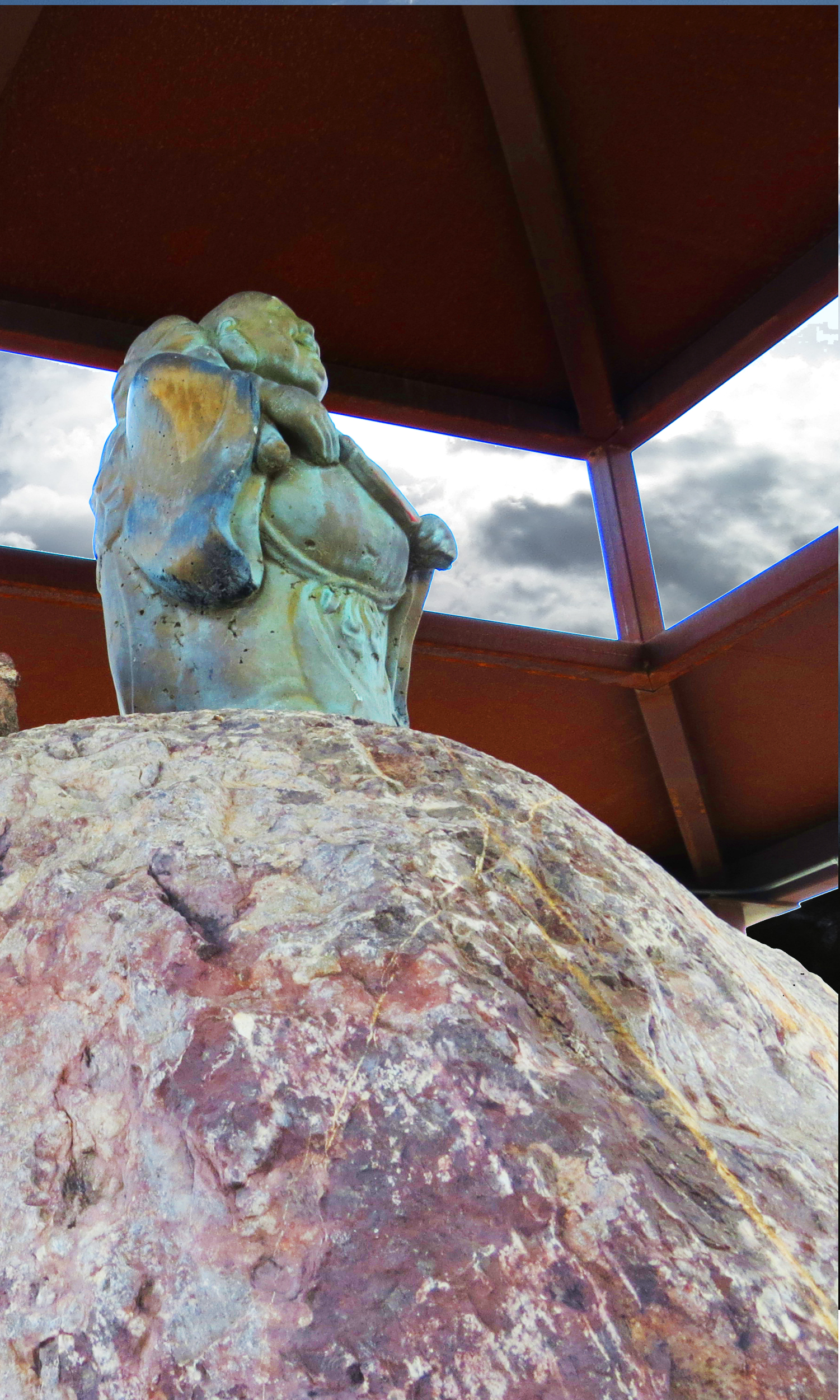
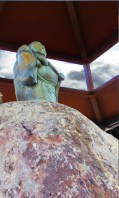
The bright laundry line visible from Jamie’s room is one of the features of the setting I couldn’t resist using. The laundry shot was taken by Donna Catterick, who took the picture for the cover, and was originally posted on her blog. I also like this picture of the Red Pelican’s courtyard rock and Buddha that Donna took. My characters often gather on the benches around that rock.
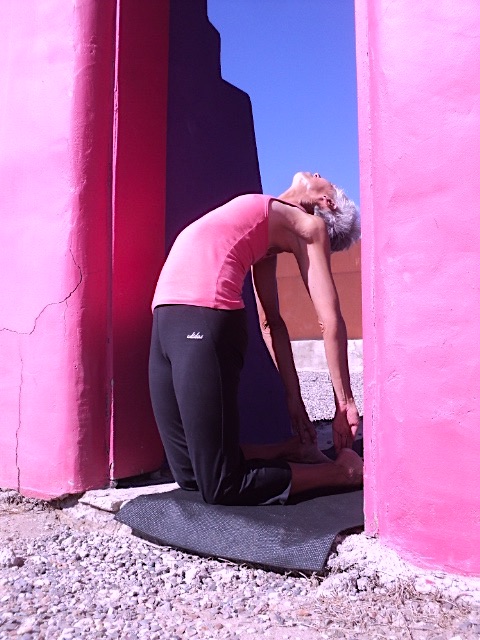
I didn’t tell my cover designer anything about the Pelican. I considered asking her to incorporate something of its color schemes and then decided to trust her judgment. She considered many options but found she kept coming back to the pink lettering. If you look at the cover next to this picture that a friend took of me doing ustrasana, camel pose, for a yoga  studio web site (I teach at a studio attached to the Pelican), you’ll see that the colors match remarkably. The archway where I’m posing is at the back entrance to the Red Pelican Courtyard that my characters often use.

A second real location in Truth or Consequences that I used is The Charles, another classic hot springs spa. When I arrived in T or C in June this year, I asked the owner if she would be willing to fictionally employ Mae Martin as an energy healer at the Charles. This was a healing modality they hadn’t offered in the past, though they’d had massage and reflexology there for years. She told me they’d recently added an energy healing room, and urged me to talk with her manager. I did, and he not only gave me permission to use the space in my book, but encouraged me to take pictures and make sure I got it just right. When I saw the room painted as a healing cave with blue sky in the ceiling, and crystals on the shelves, even lamps made from crystals, I knew Mae was meant to work there. Sometimes reality and fiction line up perfectly.


Quack Gong

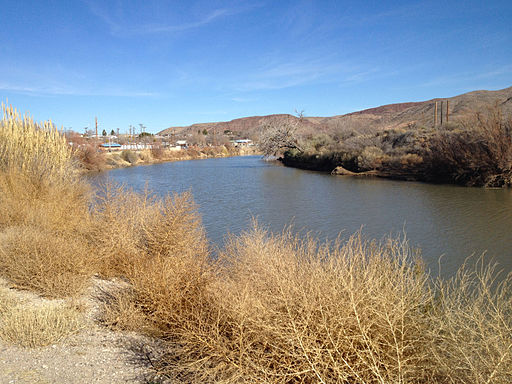
In an earlier post, I mentioned how much I love my “outdoor gym,’ the Rotary Park on the Rio Grande in T or C. Though the exercises I do there aren’t yoga but strength training with resistance bands, I still aim to bring a yogic sort of mindset to the movement, paying attention to my body and breath, and also to the world around me.

It’s amazing how busy my mind can get within a few reps of a single exercise. As a writer, I carry plots and characters in my head, and they show up and want attention. This is something I choose to invite while I run, setting a plot problem to solve in a free-flowing way, letting ideas bubble up while I turn my mind loose on the trail. With the trance-like drumbeat of running, I can get into a creative groove and stay aware of the beauty around me. There’s no steady flow during this strength workout, though, as I keep changing from one move to the next. I’m better off focusing on the scenery and on correct form in what I’m doing.

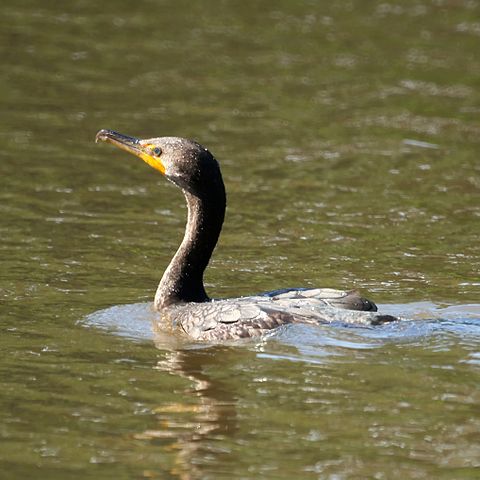
That’s where the cormorants come in. They winter here, fishing the river. Some gather on an island of matted reeds and twigs while others float. Their vocabulary is fascinating and full of surprises, from duck-like quacks to grunts, peeps, and croaks. The sounds were wild today when they announced that a blue heron had landed on their island, calling my attention to it along with each other’s. I’d been so busy inside my head that I had missed the arrival of this enormous bird.

As well as talking with each other, the cormorants dance noisily in brief arcs of foot-dragging, water-slapping flight, serving some purpose known to them but mysterious to me. I think of them as the gong in a Zen temple, interrupting my distracted mind and bringing it back to the present. The river. The mountains. A warm, sunny day and a swim of cormorants with sleek black feathers and bright yellow beaks. No need for my mind to be anywhere else.


Strange Things Happen

I dreamed I was leaving Hatch (the town where the chiles come from) and took a wrong turn onto a winding road with psychedelic pavement and narrow walls alongside it, also in bright pink, purple, blue, and yellow. The road took me to a farm at the end of a dirt road, where I met men who were raising pigs. I petted a piglet, got directions, and left by yet another route, not my usual way in and out of Hatch, but not the trippy pink one either.

While I drank coffee, I tried to interpret the dream symbols, but they made no sense. A friend called and asked if I’d like to go to Sparky’s in Hatch. A favorite blues band was playing. I agreed, and then proceeded to toss my purse into the trunk of my car with my keys in it and closed it. I hadn’t unlocked the car yet, so my phone and both sets of keys were in the trunk. Normally I would have a key in my pocket, but for some reason, I put the key in my purse. I walked to a neighbor’s blue and purple house and called Better World Club and got unlocked. Hm. Wrong turn on the way to Hatch instead of on the way out?

I picked up my friend at the foot of his driveway—more of a road, really—in the very small town of Arrey, and when we arrived at Sparky’s, Guitar Slim was playing a psychedelic pink and yellow electric guitar. As many times as I’ve enjoyed his music, I’d never seen that instrument before. While the band took a break, I looked in the display case behind me—Sparky’s has a mindboggling collection of off-beat antiques—and there was a collection of pig figurines. Two women in motorcycle gear arrived, one wearing a red elf hat and the other a leopard print elf hat. They also wore jingle bells along with their black leggings, turtlenecks, leather vests, and boots. Leopard Elf had the words “Pig savers” on the back of her vest. (I looked it up later. These are rubber nipples for bottle-feeding piglets. I guess she’s a pig farmer?)

The dancing was great—couples, kids, solo dancers, and trios. People from the audience were invited to sing, including Leopard Elf. Afterward, my friend offered me tomatoes, so instead of dropping him at the end of his “driveway,” I went all the way down the dirt road to a sort of farm—he grows tomatoes, mostly, and has a few chickens—and we picked the last viable tomatoes of his outdoor crop before the frost that’s expected tonight.

On my way home, I missed the turn to get on I-25 for T or C and ended up on the back road, winding and in places narrow, as the sky turned pink and purple and deep blue.

You could say this was all coincidence, a series of normal events. But I’d just been dancing in T or C to a different blues band the previous night, and had encountered this same friend in the crowd. The least likely thing was that he’d want to go dancing again right away on Sunday afternoon. I see him in town so much I haven’t been down the dirt road to his place in over a year. The way the night’s dream lined up with the day’s events, though in scrambled fragments, is intriguing. Hatch, wrong turns, a farm, a dirt road, a narrow winding road, psychedelic colors, and small pigs. The biker elves weren’t in the dream, but a lot of other things were. When I have precognitive dreams, they’re almost always about bizarre trivia like this. Only on rare occasions do I pick up significant events, warnings, or omens. This was just a reminder that time leaks, that past, present, and future are all happening at once, and reality is not the version that our linear perception of it creates.


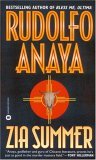
A New Mexico Mystery Review: Zia Summer by Rudolfo Anaya

A mystery with many layers, the first of Anaya’s Sonny Baca novels is crime fiction and also literary fiction with mythical depths. At one level, it’s the story of a young private detective’s search for his cousin’s killer; at the other level, it’s the story of his spiritual development and reconnection with his traditional culture and his ancestors. The story also reflects on the ecological and ethical challenges facing New Mexico as some seek to develop it and others to preserve and protect it. The sacredness of earth, sun and water, and their spiritual place in human hearts, is as important as the question of who committed the crime, and even inseparable from it.

Sonny Baca, great grandson of the famous Elefgo Baca, is—like his bisabuelo—a flawed hero. Sonny is still maturing as a man and in his profession, learning from his mistakes, but at the same time he’s smart, perceptive, and courageous, and he thinks a lot about both the world around him and the struggles within him. For a reader used to the pace of most crime fiction, this occasional descent into deep wells of thought may feel digressive, but Sonny’s insights are part of the story. Most of the time, the pace is intense and the story flies along.

One way Anaya sustains the flow is that he never translates or explains the Spanish words and phrases his characters sprinkle throughout their conversation. This not only kept the pace and the authenticity, but taught me. I began to understand them as I read. (If you’re not a Spanish speaker, notice how you figured out bisabuelo already.)

Though they have full personalities, there’s an archetypal quality to the characters. Sonny’s neighbor don Eliseo is the Wise Old Man, human and believable, not idealized. His spirituality is both transcendent and earth-bound. Rita, Sonny’s girlfriend, comes close to seeming too perfect, a strong, loving, nurturing goddess, but she’s written as seen by a man in love with her. The villains of the story are the inversions of these benevolent archetypes, making them some of the most disturbing criminals I’ve come across in a mystery.

The writing is engaging, as one would expect from a literary master like Anaya. The first chapter, however, is the weakest, heavy with backstory. Don’t let the slow start deter you. After that, the story comes alive. While the crime is horrific, the fullness of Sonny’s life and circle of friends balance this element with humor, love, and mystical wisdom.

*****

New Mexico Magazine recently profiled Anaya in a wonderful and thorough article, linked here.


Five More Things I Love About Truth or Consequences

Music. The quality and variety here is incredible, all within walking distance of my apartment. I’ve danced to blues and rockabilly at the T or C Brewery; listened to the Southwest Chamber Winds at Grapes Gallery, admiring the art during the concert; attended open mic night at Seba Gallery for original acoustic music by local singer-songwriters—again mingling music and art; was immersed in healing music in a church; and was surrounded by the vibrations of healing music again in an amazing sound-space designed especially for such events. This last concert, Matt Venuti’s, was like nothing I’d ever heard before. He plays a tuned drum, an instrument that is both melodic and percussive. I may have to incorporate that instrument into my books. Jamie would love it.

Full circle sunsets. Even with no clouds, there can be as much or more pink in the east over the Turtle as in the west. In the summer when there are storm clouds, the bowl of color effect is breathtaking and constantly changing. Orange, blue gray, rose pink, salmon pink, yellow-gold—all encircling the town.

Freedom to be yourself. Two of my neighbors happened to paint their houses blue and purple at the same time without consulting each other. (One house was previously pink paisley, the other solid lavender.) One of the purple-and-blue houses has a statue of an alien in saint’s robes on the porch. Self-expression in outdoor art is everywhere, and in the way people dress. I was at a meeting with my fellow yoga teachers, sitting outdoors at one of the downtown establishments, and I kept seeing various colorful folks pass by, such as a stout Santa-Claus-like man in red suspenders riding his bicycle with his dog on a long red leash trotting down the middle of Broadway. One of the other teachers, who was facing in toward the windows rather than out toward the street, would see that look cross my face and ask, “T or C?” And that would sum it up. Yep. T or C.

My outdoor “gym.” I take exercise tubing down to the Rotary Park on the Rio Grande and attach it to a pole of a picnic shelter for resistance training, and use the benches for various bodyweight exercises, while enjoying a view of the river, Turtleback Mountain, and wildlife ranging from ducks and herons to huge orange dragonflies. In keeping with T or C’s freedom to be oneself, no one has ever looked at my funny for doing this.

Too much to do. Especially at this time of year. The weather is perfect for running and hiking, and of course the end of October and early November are festive, too. First there was the costumed dance party at Grapes Gallery, a fundraiser for Friends of the Pool, with live blues music and the creative people of T or C dressing up and competing for the best costume award. (Artists do great Halloween outfits. My Gumby costume was pretty plain compared to the winners.) Then there was Day of the Dead in Mesilla, with all the beautiful shrines to loved ones on display in the old plaza under a classic New Mexico blue sky while musicians played from the bandstand. ( I know, this was not in T or C, but only an hour away.) On Halloween, the children’s costumed safe walk took place on Broadway, and I had to go around and admire everyone. The street was closed, business owners and employees were in costume on the sidewalks handing out treats, and families in Halloween finery were trick or treating. People here love to dress up. A man dressed as a baby doll stood in the doorway of his shop sucking on a lollipop. I even met a tiny dog in a Harley jacket and little black doggy jeans. Later, I went to a showing of Nosferatu, the black-and-white silent vampire movie, at Rio Bravo Fine Art. Three classically-trained musicians improvised an amazing, intense and spooky score live. (Surrounded by great art, once again.) Some of the audience members were masked or painted. One was, of course, entirely black and white. I stopped by another dance and costume event on my way home, but I didn’t stay. A writer has to go home and write. But last night, there was more good music to go out and dance to. I call it research. My protagonist likes to dance, too, after all.

New Release: Death Omen

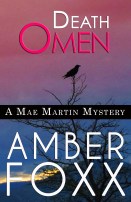
Death Omen

The sixth Mae Martin Psychic Mystery

Trouble at a psychic healing seminar proves knowing real from fraud can mean the difference between life and death.

At an energy healing workshop in Santa Fe, Mae Martin encounters Sierra, a woman who claims she can see past lives—and warns Mae’s boyfriend he could die if he doesn’t face his karma and join her self-healing circle. Concerned for the man she loves, Mae digs into the mystery behind Sierra’s strange beliefs. Will she uncover proof of a miracle worker, or of a trickster who destroys her followers’ lives?

The Mae Martin Series

No murder, just mystery. Every life hides a secret, and love is the deepest mystery of all.

*****

To welcome new readers to the Mae Martin series, the first book, The Calling, is free through the end of November, and so is the series prequel, The Outlaw Women.  My horror short story Bearing, based on Apache myths,  is also free this month.