Working Together, Washington, Wisdom and Walnuts

This week my college’s entire faculty and the president and the provost got together and discussed a major change in the academic calendar, a change which some support and some oppose, and we worked toward a compromise. Though we didn’t solve the problem yet, we agreed to keep talking. If we didn’t keep cooperating and communicating constructively, the institution would cease to function and it would fail the needs of those we serve, the students.

A few days ago, I finished reading an eight hundred page biography of George Washington, which I reviewed at length on my Booklikes blog. Washington was flawed, as all of us are, leaders and unknowns alike. He was successful because he listened and took time to think.

Here are two of my favorite quotations from his letters (also quoted in my review):

In this one, he was writing to his adopted grandson: “Where there is no occasion for expressing an opinion, it is best to be silent, for there is nothing more certain than it is at all times more easy to make enemies than friends.”
 

The following is an excerpt from a letter Washington wrote to a Jewish congregation in Philadelphia. Note that the word “demean” back then related to one’s demeanor and didn’t have its modern meaning of debasing. It meant comport or behave. “All possess alike liberty of conscience and immunity of citizenship. It is now no more that tolerance is spoken of, as if it was by the indulgence of one class of people that another enjoyed the exercise of their inherent natural rights. For happily, the government of the United States, which gives bigotry no sanction, requires only that they who live under its protection should demean themselves as good citizens.” He found religious tolerance to be too weak a concept, too condescending toward religious minorities.

Between two classes today, I took an outdoor yoga break. My route out the side of my building passes under a walnut tree and then across a lawn beside the tennis courts. Earlier in the fall, it was hard to tell a walnut in the grass from a tennis ball. A closer look at the bright yellow-green spheres revealed either the smooth texture of a walnut pod or the fuzzy skin of a tennis ball. Now the walnuts are yellow, resembling golden delicious apples, and some have softened open or been punctured by squirrels for the nut inside. The tennis balls, of course, are still firm and green. I place them on the wall of the court or toss them inside, in case they can be used again. Once they’ve been hit past the fence and left there, though, I wonder if they can serve any purpose in the game, or if these wild shots can’t be reclaimed by either the tennis players or the earth.
Curiosity and Openness

park

The boy braked his bicycle on the bridge over the creek and stood straddling the frame. “What are you doing here?”

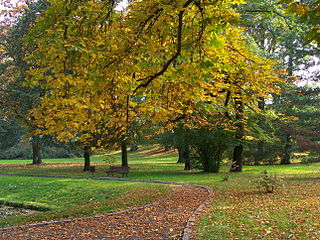
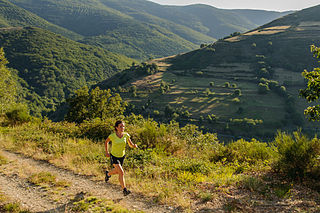
As I adjusted out of the mildly altered consciousness that comes from a long, peaceful run, I continued stretching my calf muscles, listening to the stream’s soft burbling, the autumn trees rustling, and studied my interrogator. He was about ten years old, with a stocky build, short hair and wire-rimmed glasses. His question wasn’t unfriendly—not as if he owned the park, but more of an inquiry into what other people came here for.

“I just ran four miles,” I said, “and now I’m stretching my legs.”

Four miles?” His eyebrows shot up. “I can’t even run one.”

“It took me a while to build up to four. I didn’t run that far when I first started running.”

The boy asked what it felt like to run four miles and I said it was beautiful, being outdoors and quiet, moving through nature. It’s hard to describe the spirituality of running and I didn’t do a very good job of it. He said it must be a good workout. I agreed. He rode around a little while I finished stretching, and then pedaled beside me as I walked through the parking lot toward my neighborhood.

“What was it like the first time you ran?” he asked.

I told him a shortened version of the story that follows.

I’d been visiting the Apache reservation in Mescalero, New Mexico. A friend informed me that there would be a five-K and 10-K race the next morning, then looked me in the eyes and said “See you there.”

He and his girlfriend would be running, but I could tell he didn’t mean I would be there to cheer them on. He meant I would be running. I took the challenge and ran the five-K. At the time, I lived at sea level in the Tidewater region of Virginia, and Mescalero is 7,500 feet above that. Being an aerobics teacher, I was in good shape, but until that day I wasn’t a runner. I struggled uphill at that altitude, but the singer for the Navajo Nation Dancers kept cheering me on. His group had come for the powwow, and we had met briefly and chatted while waiting for the race to start. He couldn’t remember my name, only where I was from, so he shouted, “Go, Virginia! You can do it!”

I came in second for my age group, and I was hooked. Not on racing, but on the Apache concept of spiritual running. This race was not just any race, but a community event to promote health and traditional culture, timed to go with the four-day Dances of the Mountain Gods and the girls’ coming of age ceremony. My friend who convinced me to run had told me about spiritual running when we first met, and before the race started I got to know a number of other people who ran for cultural reasons. That was almost twenty years ago. and I never lost my love for running.running

The boy in the park listened to the short version of this story attentively. We chatted a little longer. He concluded that he would still prefer bicycling and then pumped his way up the steep hill, wishing me a good day and saying, “See ya.”

There was a synchronicity to this encounter. Back in 1998, I made friends with the man who got me to run that first race by striking up a conversation with a stranger. I was stuck in an airport due to a delayed flight, and as I walked to pass the time, I noticed him sitting cross-legged on the floor rather than in a chair in one of the gate areas, and was intrigued by the writing on his T-shirt. It read: All Apache Nations Run Against Substance Abuse. I was doing research in graduate school about using traditional culture to combat modern health problems in Native communities. The idea of people running all the way from the various Apache nations, from Oklahoma and Arizona and New Mexico, to gather at one chosen reservation, was inspiring. We talked a while, and he invited me to visit Mescalero later that year and put me in touch with a medicine woman who could help with my research.

On subsequent trips, I ran the five-K several more times. At the time, I was thinking about writing an ghost sickness ebookacademic paper, not fiction, but years later these races, the powwows, and the ceremonies inspired many of the scenes in Ghost Sickness. By the time I wrote the book, I had a lot of experiences to draw from.

My new young acquaintance’s friendly curiosity makes me think he has what it takes to be a writer. He has his own view—prefers biking to running—but he wanted to know what I thought and felt as a runner, and not because he planned to start running. He simply wanted to know. That’s a writers’ mind, or an actor’s or a psychologist’s. He asks: What’s it like to be someone who is not like me?

Fragmentation and Focus

I’m a guest today on Lois Winston’s blog, talking about trying to focus despite fragmented time. If you share that frustration, you’re not alone. Stop by the blog and let me know how you handle it.

At the end of that post, I mention a 99 cent sale. The Calling is discounted on all retailers through October 28th.

Overfill Alarm

overfill

Taking my freshman seminar students for a mindful walking meditation excursion, I noticed things I’d never seen before. Most striking was a college van parked near the softball field, overgrown with vines. How fast did they take it over? Had the van been forgotten?

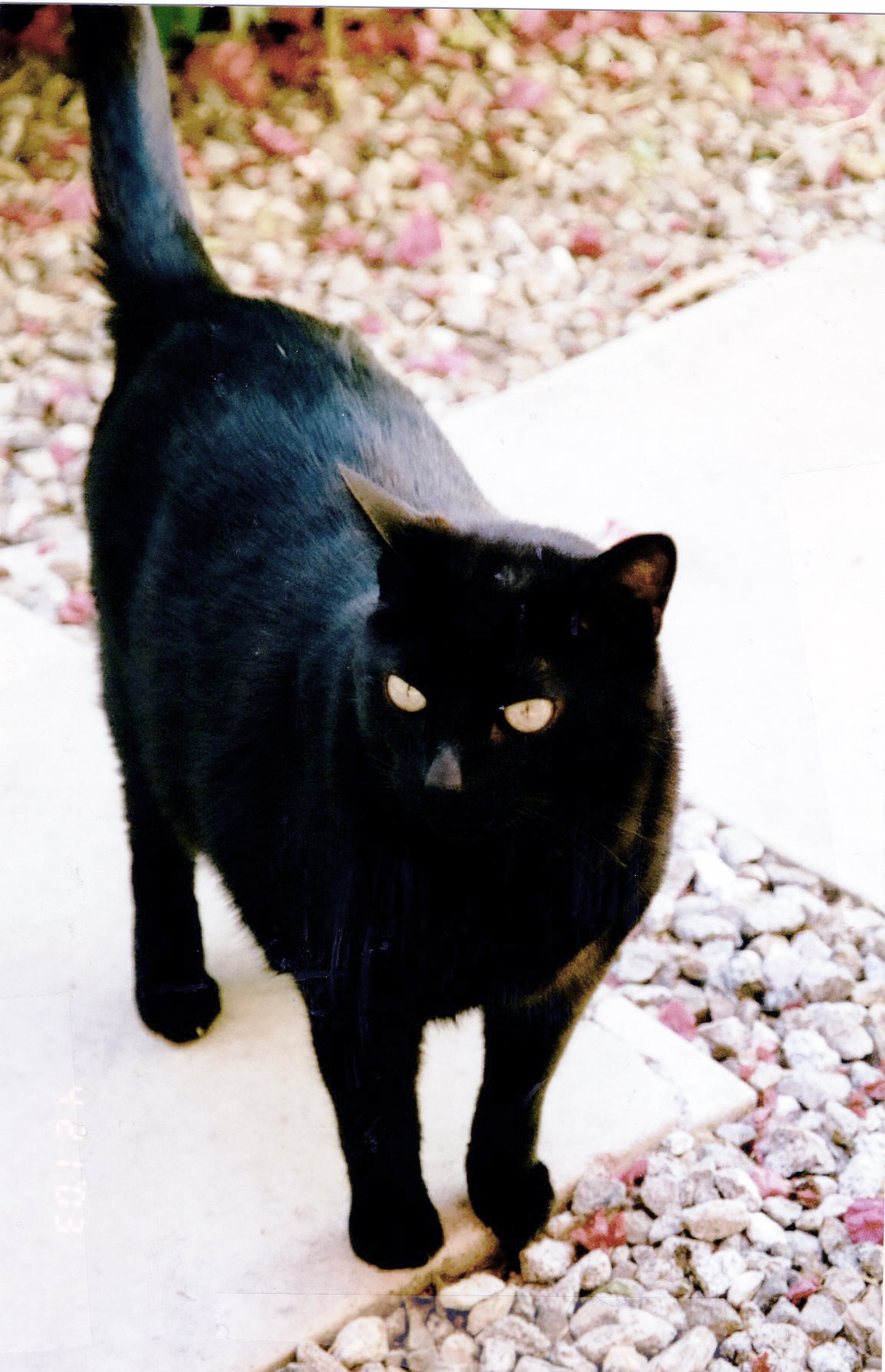
As always on such walks, I noticed the sounds: wind in leaves, the nearby river rolling softly over rocks, birds and crickets singing, and our footsteps. When we reached the park I was aiming for, one of my students found a friendly black cat and held him up. Part of the mindful condition is that we don’t talk or use phones for forty minutes. Her smile communicated all that was needed, and several of us gathered around her to pet the cat. Mindfully. Feeling the catness of the cat.felix

I watched carp in a lily pond, ducks on the river, and then crossed under a bridge to another part of the park. There, I saw a flock of birds reflected in gray water that was busy with a swarm of water-walking bugs, a moment of earth-sky-water symmetry that put my mind on pause. Pure perception uncluttered by the noise of thought.babyducks

A thin old tuxedo cat with a red collar trailed several students into a gazebo. He seemed to want human company, but unlike the black cat, he found no one to pay attention to him. When I went to pet him, the girls sitting in the gazebo were on their phones. Surrounded by nature’s beauty, free to enjoy silence, with a cat who wanted affection sitting at their feet, they were sucked into tiny screens.

On our return to campus, I stopped in front of another thing I’d never noticed before: a big yellow sign on the maintenance building that says OVERFILL ALARM. The class gathered in silence and looked at it. It was finally time to talk.

Does your brain have an overfill alarm? Do you override it and keep putting more in? What are the signs that it’s about to go off?

*****

Picture of black cat, Felix, courtesy of his owner, mystery author Sally Carpenter.

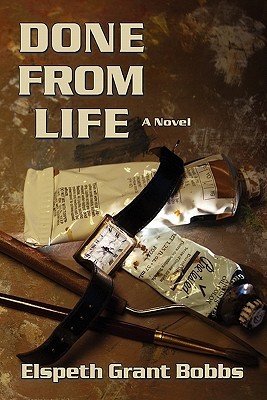
A New Mexico Mystery Review: Done From Life by Elspeth Grant Bobbs

done-from-life

Art and Murder in 1950s Santa Fe

 Rumor has it that a number of the characters in this book are based on real people who were part of the art scene in Santa Fe in the fifties. The author was part of that scene, married to an artist, but she didn’t write the book until 2011 when she was in her late eighties. Her ability to immerse her perspective in a fifties mindset without a single slip or anachronism is impressive. It makes the book fascinating and often startling, as the narrator, feisty young Mary McIntyre—Mac to most people—takes the sexism around her for granted, casually describes a fashion of the time as a “squaw dress” without the slightest sense that the word could be offensive, and tiptoes around the fact that someone is gay with what was no doubt open-mindedness and acceptance for those times. I’m not complaining about these features of the book; it’s realistic and well-done. The time period is neither romanticized nor denigrated, shown as it was in society overall, and in particular in Santa Fe (fictionalized as Villa Real, part of the city’s full name, La Villa Real de la Santa Fe de San Francisco de Asis, the Royal City of the Holy Faith of St. Francis of Assisi).

The characters are irresistibly both likeable and flawed, none of them fatally. Except, of course, one—the killer. Mac, who moved to Santa Fe for her health after spending time in a sanitarium (a true-to-life aspect of fifties New Mexico), works for the local art association. Three of its senior members, established artists, have recently died in accidents. During her illness, Mac read a lot of mystery novels to pass the time. For a lark, she and her neighbor, struggling artist Bill Thorpe, start plotting a mystery novel as if the deaths had been murders. Then, the more they think about it, the more they suspect it’s what really happened. Mac’s problem: she knows and likes all the suspects. Including Bill.

As Mac recovers her health and her looks, she basks in male attention, not hesitating to date two men at once, one of them married, taking unabashed pleasure in the situation and at the same time learning more about the murders that the police are sure were accidents.

As I read, I absorbed new information about an artist’s life and work, got a feel for a city I know and love as it was sixty-odd years ago, and enjoyed working out the puzzle in Mac’s engaging company. I suspected who had done it, but not how or why, though all the clues were well laid. So were the red herrings. Bobbs handles what is normally the worst scene in any mystery—the confession scene—with genuine originality, eliminating almost all of the clichés. At the end, Mac’s decision how to handle her knowledge is morally ambiguous, but her reasoning is clear.

A special charm of this book, for those who know Mrs. Bobbs’ contributions to Santa Fe, is that Mac’s hobby is gardening. Mrs. Bobbs’ gardens at La Querencia are legendary, making her a Santa Fe Living Treasure. The gardens, in fact, are her claim to fame, and it’s quite possible there are many people who know of her for this achievement and don’t realize she wrote a mystery.

In lieu of the usual author interview, I’ve linked to a blog post that features pictures of the author’s gardens and to a wonderful article from New Mexico Magazine that is better than anything I could have done. After reading it, I felt as if I’d spent time in Elspeth Grant Bobbs’ delightful presence. Enjoy.

I do have to point out a shortcoming in this book. I wish the copyeditor had done justice to it. Sunstone Press should have someone who is more attentive to detail do it over, fixing simple things like run-on sentences, a few unclear lines of dialog, etc. that the original editor should have corrected before publication. These oversights annoyed me considerably at first, but I became so immersed in the story that although I still noticed the problems, I ceased to be so distracted by them.


A Little of Everything

Today I’m a guest on fellow mystery writer Jim Jackson’s blog, answering ten questions about writing and reading. I had fun with this, and hope you will, too. Once you get to his blog, you can also find interviews with many other writers, including some of my favorites like DV Berkom. These Q&A posts could be great way to discover some new writers as well as get to know those whose work you enjoy.

Happy Tuesday.


What is Pleasant to Live Through …

… seldom makes a good story. I was reminded of this as I searched for something interesting to say in an e-mail to a friend. I wanted to stay in touch and to hear from him, but my sane, steady, enjoyable life provided little material. Hello. I’m happy. My students are great this semester. My yoga classes are going well. I’m reading good books and I’m writing. In conversation, a lot could flow from any of this, but in writing, not much.

A few years ago, I was talking with a new acquaintance at a faculty holiday party, and he mentioned that he was reading The Lord of The Rings for the first time. I had read it my freshman year in high school. Yet, when he mentioned the passage that stood out most strongly for him, it was one that I’d often thought of in the decades since reading it. Tolkien sums up the passage a long and pleasant time for the travelers in his story in one or two lines, then adds that things that are agreeable to live through are often dull to tell about, but things that are hard or even terrible to live through make marvelous tales. Authors tend to feel affection for their characters, and yet to make good stories, we have to put them through challenges. No life would remain pleasant if it didn’t require us to do something difficult. And that’s where the story is—growth through pain or danger.

At the last meeting of my book club, each us got the others caught up on her summer. One person was getting divorced, another had seen a friend through a major crisis, and another had taken her peace studies students to Hiroshima, a place that literally went through hell to become what it now is, a city dedicated to peace. And I … had been on vacation. Needless to say, the most compelling narrative wasn’t mine.

I had tons of fun, but my friends had more questions about a medical weirdness that took place shortly before I left for New Mexico. Because what makes a better story? “I went on vacation and it was great,” or “I had a posterior vitreal detachment?” They were fascinated by the phenomenon of having the gel in my eyeball partially detach and getting flashes of light and a giant floater in one eye. “How big is it? Like, the size of blueberry? Is it always there? Do you have to have surgery?” (Smaller than a blueberry, in case you care, and no, and no.) Ah, we humans. We love icky, scary stuff, and you can’t get much ickier than eyeballs.

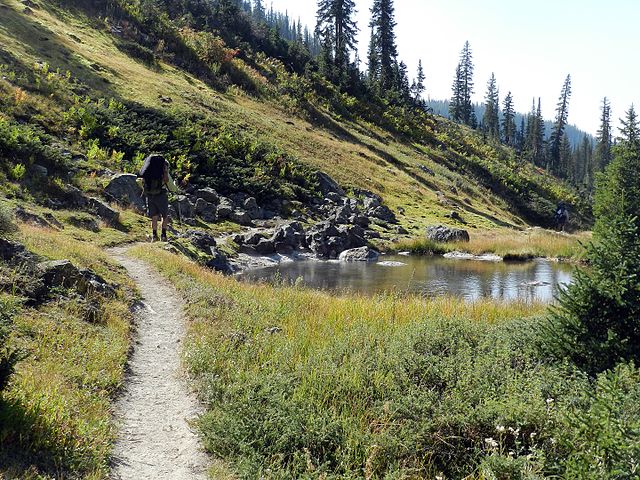
I thought the divorce story was amazing, a much better story. Not for the conflict but for the grace. The couple who are parting ways took a long-planned backpacking trip together even though they had decided they would end their marriage. I’ve talked to each of them about it and they’re glad they had this final adventure together. backpacking_bechler_canyon_18430518468It’s their story, so I won’t tell any more of it here, but I can see in it the qualities that make the best stories. In a way, it ties in with the peace studies story and the helping-a-friend-in-crisis story. It had value and purpose, and took strength and courage. It made them grow and change. And in its difficulty shines its beauty.

Turn it off. Turn it all off.

One of my yoga teachers in New Mexico often mentions the importance of quieting the nervous system. He doesn’t use music in his classes. I teach in places where music is expected, so I use unobtrusive, meditative music, but it’s still background sound, another level of stimulus.

Readers of this blog may have noticed I like to contemplate the effects of power outages. Today there was a brief one at the fitness center at my college. Normally, there are a few fluorescent lights in the group exercise studio that never go off, though I turn off the ones I can. These perma-lights were finally gone. So was the steady blowing of the air conditioning. Its presence has been ceaseless, so I never knew how harsh and persistent it was until it stopped. With plenty of natural light through the windows of a room that had been chilled a little too cool for yoga, the outage was wonderful. The quality of my voice softened. The clarity of my thoughts sharpened. My teaching became more precise, more aware, and I felt a matching shift in the students’ energy. When I stopped talking, there was nothing to be heard at all. Except, perhaps, each student heard his or her own breath.

Overstimulation has a subtle yet pervasive effect. Sometimes I wonder if it’s addictive. There are people who say they have to sleep with a TV on or have one running at all times when they’re home—“for the noise.” That would drive me crazy. I write in as much silence as possible and do my personal yoga practice in silence, too, either outdoors with only the sounds of birds and insects and occasional neighbors’ voices, or indoors in a quiet room. I’ve praised perfect silence in nature before, but today was the first time I’ve experienced the benefits of deep silence in my teaching.

Yoga doesn’t require stimuli that keep our minds bouncing and nerves buzzing. Yes, we can learn to do it in the midst of a barrage of sounds, but when we can choose to be free of them, it’s even better. The yoga sutras begin with a definition of yoga that can be translated as “Yoga is the stilling of the fluctuations of the mind.”


Music, Beauty, Wisdom, Bugs

Cricket_Drawing

On my last night in New Mexico for the summer, I listened to crickets as I left a Bandstand concert in Santa Fe. All of them kept the exact same beat throughout my fifteen minute walk to where I had parked my car, not single cricket out of sync with the rest. The bug music of the South is different. In Virginia at this time of year, cicadas ratchet away all day, and at night a polyphonic, polyrhythmic chorus begins. I meditate by going out on my deck, closing my eyes and deciding not to miss a note. It’s amazing how they produce this symphony by rubbing legs, or vibrating wings, or with specialized parts of their exoskeletons. Their bodies are musical instruments. (Did you know that Kokopelli, the flute player, was a bug? He’s identified with the musical cicadas but also with the stinging Robber Assassin Fly.)

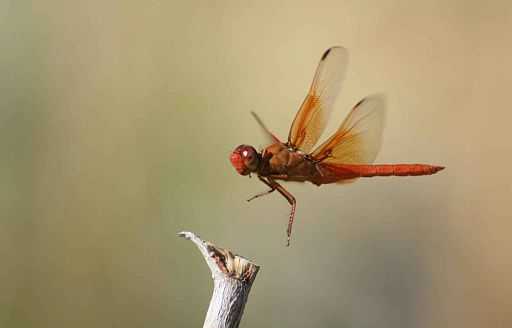
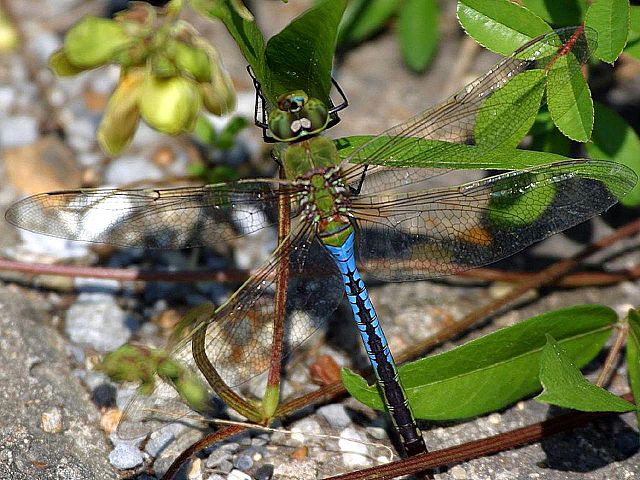
The crickets here who are making all the noise are tiny, like miniaturized versions. The dragonflies are delicate creatures, too, needle thin, brilliant green, orange-red, and sky blue, sometimes flying united, two fragile bodies connected in a mating dance. When I was in Maine, on a run through the green hilly countryside, I came across a farm with a clay pit where enormous colorful dragonflies hovered over the standing water, ten times larger than their southwestern Virginia cousins, like trucks compared to motorcycles. Flame_skimmer_insect_dragonflyBlue Dragonfliy

I’m not sure why insects are so large in less hospitable climates. New Mexico bugs will surprise people who think nothing can live in the desert. Think again. There are beetles and cockroaches out there that could carry a couple of fifty-cent pieces on their backs and not break a sweat (figuratively speaking).

If you’ve read The Outlaw Women, the short story prequel to the Mae Martin series, you know that Mae is not least bit squeamish about crawly critters. When it comes to this topic, more readers may identify with her friend Jamie, who enters the series in Shaman’s Blues. He’s appalled by spiders in particular and by things with too many legs in general. Personally, I like the many-leggeds, but with a few exceptions: roaches, flies, mosquitoes, biting ants and skunk beetles. I think I’ve mentioned before that bees and wasps sometimes walk on me when I do yoga outdoors, their delicate almost weightless feet on my skin. On close inspection, they’re quite beautiful. Some of them have bright yellow legs, a classy touch like the hubcaps that match the paint job on 1950s cars.

At a yoga and meditation retreat a number of years ago, Goswami Kriyananda came in a minute or two late to give his talk. He had stopped to help a fly that was trapped between a window and the screen. He opened the window, and then the screen, and closed the glass so the fly could go outdoors. He said it kept walking around and around on the screen in the same pattern it had before he offered it its freedom. With his warm and gentle humor, he said it reminded him of humans.

Recompressing

Half-way between New Mexico and Virginia, my tire pressure goes down. It happens every year. Nothing is wrong with the tires. It’s just that I go to mechanics in Santa Fe and they make sure the pressure is normal for that altitude, and then I descend to the lowlands.

When I unpack in Virginia, I always find that my shampoo bottle and other plastic containers have collapsed inward, folding in around the empty spaces inside them. When I run, I feel the heaviness of the air—the dampness as well as the low altitude. It’s hard work, like plowing through used teabags. Talk about coming down!

It’s time to recompress. I’ll readapt to the climate, to the busyness of the academic year, and to the green campus, so conventional and normal. I’m in the transitional phase, now though. I miss the colors and textures of the desert, the people in T or C, the eccentric personality of the town itself, the spaciousness of my life there and all the open space around it—so delightfully situated in the middle of nowhere. The challenge now is stay spacious inside when my surroundings aren’t, and as external demands become like the air, an unseen weight leaning on me. I did yoga on my back deck today, and two tiny bees sat peacefully on my shoulder through several poses. I was grateful to have this practice of active mindfulness. It left me feeling whole and bright. My outer life has to recompress, but my soul doesn’t.