Cross-Training—in the Lake and on the Laptop

During the summer, I like to mix up my usual weight-lifting routine with water exercise. The physics of water are such that you can use it for resistance training if you push against it. The technique is the opposite of lifting weights on dry land, where the more slowly you move the weight the harder you work. The faster you try to “lift” the water, the more it pushes back. Momentum doesn’t exist, and every movement is a concentric contraction, so the workout can be intense and efficient at the same time, a dual-purpose strength and cardio activity. It’s great cross-training, challenging my body to adapt to different demands and stimuli, and makes me less likely to get injured or over-train. Also, the variety enhances my awareness of what I’m doing. It keeps me out of a rut.

Today I was surprised to find the Truth of Consequences town pool closed for employee training, but I was in my suit and motivated, so I drove to Elephant Butte Lake State Park and did my workout in the lake. The change of scenery was invigorating. The water felt alive, and the people-watching opportunities were infinite.

This experience reminded me to cross-train as a writer. I do two things regularly: short essays such as blog posts and book reviews, and long, complex novels. I seldom write short fiction. It’s great cross training, though. The tight focus helps me in structuring scenes and chapters in my longer fiction. I get an especially tough writing workout when I enter short fiction contests, whether or not I win. The word limits and the required themes force me to sharpen my skills. So, I challenged myself to write a short story based on my people-watching at the lake today. Polishing it will be the next workout. I have to give it rest days between revisions. If I get it into shape worth sharing, I’ll post it here. Even if it doesn’t turn out to be publishable, though, it will have been worth the effort. There will be other results. The way my water workouts make me a better runner, my short fiction workout will make me a fitter and more flexible novelist

*****

For short fiction that I have published, go to the free downloads link.

Walking into a Story in Santa Fe

Inside an old bowling alley in Santa Fe lives a multi-dimensional work of art. The House of Eternal Return blends written word, video, sculpture, paintings, textiles, and architectural space to immerse visitors in a mysterious story. When you go through the doors of a Victorian house built inside the former bowling alley, you find evidence of a family’s seemingly ordinary life, but as you explore you find that something strange has happened to the people, and to nature of time and space and reality. The characters and their story have to be discovered through the artifacts in the house, ranging from photographs to drawings to journals. For example, if you open the pages of a diary in a child’s room, you learn more about the mystery. If you don’t, you find clues elsewhere.

Behind the refrigerator is another world. If you open the fridge, you leave ordinary reality. Or you might exit another way. The upstairs goes in and out of altered worlds. Some are serene, some adventurous, some disturbing though not terrifying, just intensely strange. The psychedelic nature of this art installation is hard to describe. There’s so much to explore, so many aspects to the story—moving, transcendent, bizarre—that I can see why people buy a year’s pass. One visit isn’t enough for a full discovery. I crawled through a hole in a closet to find a piano under a glass ceiling like a starry sky. I clambered down a winding narrow staircase to a mystical cave full of music and crystal-like forms. Much of the art is interactive. You can play pianos and unique percussion instruments built into the sculptural walls; you can turn pages and decide if you’ll leave that journal open or closed; and you can press buttons to get sound and light effects. There are hidden nooks with video screens showing episodes of the residents’ past. Some videos only start if you choose to sit in the chair in front of them, and they seem to react when you get up to leave.

I recommend this art space to anyone who loves to play with reality, and who will not be overwhelmed by occasional flashing lights, moments of chaotic sound, tight narrow spaces, spiral staircases, and a general sense of being unmoored, floating in a sea of dreams. After spending a few hours in it, I found that meditation after my yoga practice was deep and blissfully silent. The chains of thought-to-thought busyness had been broken and my inner space was open wide.

Later, when my left brain came back online, I reflected on the story-telling genius of The House of Eternal Return. The objects in the normal-time-and-space rooms hint at the inner life of the characters and at the events that happened to them, and visitors end up collaborating at uncovering clues. One person notices a document and reads it. Another discovers a crawl space. Another emerges from an unexpected place—like the refrigerator. It’s like sharing a 3-D novel—part science fiction, part mystery—with other readers.

When I write a book, I can improvise the plot as I go. More often, I know where it ends and then try out different routes to get there. Free-flowing as the initial process is, however, the end product is a linear narrative, with a beginning, a middle and an end. The story in The House of Eternal Return is told in a nonlinear way, with multiple options for how visitors experience it, but the process of creating this vast, multi-chambered work of art had to be as precise as the design of an aircraft. If you’re a story-teller, this aspect of it may intrigue you as much as the interactive masterpiece itself.

Petrichor—An Ode to New Mexico Rain

Dominguez-Escalante_NCA_(8930993249)

The smell of rain in the desert is so special it has a name: petrichor. As moisture touches rocks and soil that have been hot and dry, they release a scent of minerals and plant oils and something else I can’t place. It’s the smell of life, I think.

When I crossed the state line from Texas into New Mexico last week it was pouring, with lightning so intense it flashed pale purple. At the same time, the last faint light of evening shifted through rain on the horizon like a pale gray aurora borealis. I parked at the rest area at Glen Rio and got out and danced in a backward spin, softly singing Michael Hearn’s lovely sweet song “New Mexico Rain,” not caring or noticing if anyone saw or heard me. It was that good to be back and to have my homecoming blessed with a storm.

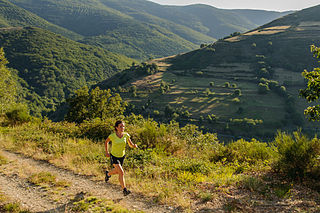
Today we had a long, gentle rain, the kind the Navajos call female rain. I went running in it, on a favorite trail at Elephant Butte Lake State Park. Quails peeped, crickets chirped, and there were no other sounds but the rain, my steps and my breath. The sand was firm under my feet, the lake glowed silver-blue, and low puffs of clouds floated across the flat cone-top of an extinct volcano, making it look as if it had come back to life. The subtle greens of plants whose names I don’t know—feathery and blue-tinged, needle-like and yellow-green—glowed in the diffuse light. Wet lava rocks shone black or red as their pores soaked up the water. At each curve in the trail, the rain scent varied, mingling with juniper at times, stronger when the rain increased, fainter when it faded. Normally, I work on plot problems, writing scenes in my head as I run, but today my mind was quiet, my attention captured by sounds, textures colors and petrichor.

There’s not one special memory linked to this scent, just a sense of place. Of the earth itself within the borders that delineate New Mexico, a place where the Pueblo people are dancing for the rain. When that rain touches me, I feel as though something is released in me as well from the rocks. My heart knows who I am.Siler_pincushion_cactus_(6002291928)

Falling Awake: Review of Full Catastrophe Living

The net impact of this book, no matter how many encounters I have with it, is awakening. I’m not claiming it makes me “enlightened,” only that it accomplishes its purpose of teaching—or reminding—the reader how to be more fully alive and aware, moment by moment.

Kabat-Zinn is a gentle teacher, a master of the non-judgmental suggestion and the empathic anecdote. His writing style is accessible to his entire target audience—everyone who experiences stress. It’s a friendly, natural style, with some idiosyncrasies. He’s fond of exclamation points and often says things like “our body” and “our mind,” addressing his readers as a group and as individuals at the same time, while including himself in that group. Grammatically, this plural-singular is strange, but that’s his voice, his way of bringing readers into a conversation with him. Though the book is long, it’s low-stress. The themes are expanded gradually, each chapter building on the next, with steady reminders about the practices he’s teaching. I recommend reading it slowly, a little at a time, and letting it soak in. This turns the process of reading into a kind of meditation.

This was my first exploration of the revised edition. It grew by around 200 pages from the original. The updates were needed for two reasons. One is that the author and many other scholars in health psychology and the study of emotions and stress have accumulated decades of well-designed research on the effects of mindfulness. Mindfulness-Based Stress Reduction is no longer an innovation at one Massachusetts hospital but an established, thoroughly studied program taught all over the world. The results of studies are integrated into the rest of the text. At first I wondered why he didn’t make those a separate chapter, a massive appendix, but a lot of readers might skip or skim this information if it was presented that way. When it flows as part of the story of coping with various stressors, it gets read, and adds substance and science where it’s needed. The other reason the book needed an update was the change in the nature of stress and distraction since its first publication. When it first came out, there was no such thing as texting while driving or feeling the need to sleep with a cell phone turned on and lurking under one’s pillow, no such thing as constantly sharing on social media. The stress-creating tendency he described in the first edition—to be in touch with everything except ourselves—has only grown over the past thirty years.

The chapters on coping with physical pain and emotional pain are especially profound. At one point in my progress through this book, I ended up reading it in the emergency room in the middle of the night. It helped me cope mindfully with a bizarre, ambiguous symptom and the decision to get it checked out, to sit with the not-knowing while I waited to be seen, to accept that I might have something serious that could require eye surgery, and to accept that if I didn’t need it, this was how I’d chosen to respond. I was even able to get a couple of hours’ sleep before seeing a specialist in the morning. (In case you wonder, no surgery was needed. I can now cope mindfully with a mere risk factor—and my insurance company.)

This recent experience with sleep deprivation made me relate strongly to the chapter on sleep stress. This chapter doesn’t seem to have been updated with research the way the others have. I agree with Kabat-Zinn that getting upset about being unable to sleep only compounds the problem. Making peace with the necessity of being awake reduces the suffering. It does not, however, reduce the need for sleep. Adapting to the stress of being tired is not the same thing as being able to maintain normal reflexes, attention or memory. I’ve found shortcomings with this chapter, but that doesn’t invalidate the whole book. In fact, the chapter stands out because the rest of it is so soundly supported.

I have one more critique: The material on the benefits of yoga is valuable but the drawings don’t provide good instruction. The little man in the pictures uses his back incorrectly in several forward bending poses, and uses no props. Using a strap to reach one’s foot in many poses makes a big difference in both benefit and safety. The selection of poses isn’t as balanced as it could be and there is one that I think should have been eliminated, a curled-up inversion that could stress the back and neck. Kabat-Zinn does mention approaching it with caution, but there are safer ways to relax and put your feet up in yoga, such as lying on the floor and putting your legs up the wall. My suggestion would be to read the chapter but to study yoga with a qualified teacher who pays attention to each student and who understands anatomy and injury prevention. Don’t use the pictures as instruction.

There’s an option with this book to buy CDs or download guided meditations. I’ve never done that, having studied yoga and meditation with live teachers and developed a daily practice, but as one of my yoga students was saying after class the other evening, it reduces her stress to have someone else guide her. There are beautifully written instructions for meditation in this book, and some wonderful short experiments a reader can do to begin exploring the practice. I think other readers could do as I’ve done and not buy the CDs. It should work well either way. With or without guidance, it’s challenging to commit to daily practice at first. The book suggests forty minutes. (I prefer not timing it, just doing it.) Daily practice is one of the foundations of the stress reduction program in this book, whether one does the body scan (similar to Yoga Nidra), sitting meditation, walking mediation, or yoga, or alternates among these. Daily, one commits to taking time to be present in oneself. It is, as the author once said, both the simplest and the hardest thing you’ll ever do. And it can, through awakening, change your life.


Open Space

Waiting for an idea, I watch the pages of my wall calendar being stirred by the fan. The current date is empty, a blank white square. The future is full of obligations and anticipations—busy little squares. But none of that is now. Now I sit in the open space of the present, aware of the sensation of sitting and breathing, of the sound of the fan, the breath-like movement of the pages, free to fully inhabit the whole of the moment while gazing at the illusion of time.

Re-Bodying: Movement and Play

runningI’m reading Full Catastrophe Living again. I don’t know how many times I’ve read this wise book, but every time, it makes me more awake and aware. The chapters on mindfulness of the body inspired this blog post. The author, Jon Kabat-Zinn, reflects on how the words remind and remember can be interpreted as re-mind—come back home to your own mind, and re-member—become a member of your own consciousness, and then he suggests we may need the word “re-body.”

Children and animals know: it feels wonderful to move around. It’s not natural to hold still and sit for hours. I recently took a trip to visit friends in North Carolina and in Georgia, and the long drive left me craving movement. My friends are walkers and yogis, not runners. Walking and yoga sustained me for a while, but by the last day of the trip I was craving full flight. My Atlanta friend brought me to a trail along the Chattahoochee, and she walked while I took off in an explosion of delight, faster than I normally run. The novelty of the trail added to my energy. I had no idea what was around each curve or over each hill, and had to stay one hundred percent in the present moment to dodge roots and rocks and poison ivy and still take in the beauty of the woods and water. The speed and surprises were part of my joy, along with the sensation of my feet connecting with the earth, the springy strength in my legs.

We don’t all take joy from the same things, but whether we walk, run, dance, practice yoga, lift weights, do tai chi or go ballroom dancing, it doesn’t matter. We’re designed to move. And when we find the movement that matches our spirit, it’s like coming home every time we do it. I like to think that people who say they hate “exercise” haven’t discovered the kind of movement that will make them happy. They’ve been made to do activities incompatible with their nature. However, somewhere in every human is that child who had to be told to hold still. That child loved to jump, skip, run, and climb. It was play. For me, that new trail was play, the game of finding the next footfall on an unpredictable landscape. Yoga is play in the field one’s self, exploring the organization and sensation of each asana, the interaction of the posture and the breath. After decades of practice, I still find even the most basic poses fascinating.

For some people, the word exercise takes the play out of movement. Years ago, I read a study on why women exercise and why they quit. Reasons for starting: weight loss and looking better. Reasons for sustaining exercise: the discovery that it reduces stress. Reasons for skipping exercise or quitting: time pressures and stress. In other words, movement reduces stress, but when women are stressed (and I would guess this is true for men, too) they tend to forego it, as if it were a luxury. It can feel like one, in either the negative sense of an extra that can be cut from the time budget or in the positive sense of deep pleasure. It can be a luxuriant sensation to move, to be fully embodied, present and in motion.

When I’m writing and the story gets stuck, I find that if I stand up and walk around, ideas come to me. It’s as if the stuckness of sitting starts to affect my brain, and the energy of movement clears it. Movement is as essential to mental and emotional health as physical health, but “it’s good for me” is the last thing on my mind when I’m enjoying a run or a yoga practice or just getting up from my desk and re-bodying for a few minutes. I’m playing, following my movement bliss. What’s yours?

*****

Image by Robin McConnell originally posted on Flickr

“Are You Psychic?”

“Are you psychic?” I’m occasionally asked this question, since my series’ protagonist has this is gift. The answer is yes, but I can’t do what Mae can do. I have a long history of precognitive dreams, some that predicted major events such a relative’s death, a friend’s illness, or a major change in my workplace, and others that foresaw peculiar and unlikely but utterly trivial events, such as seeing a man in a top hat at breakfast in a hotel. I have no idea why I dream the future, but it’s happened forty or fifty times. I stopped counting. I’ve only once been able to harness this ability intentionally in order to see something for a friend, and the dream took months to come true. I wouldn’t make a good psychic in a novel. I have a character with a more focused and useful version of this talent in the next book. Ezra Yahnaki, the twelve-year-old grandson of Mescalero Apache medicine woman Bessie Yahnaki, will be introduced in Ghost Sickness, book five of the series.

The idea for Mae’s gift was planted a number of years ago when a neighbor invited me for dinner. She had a friend visiting from out of town. This visitor could hold something you owned and pick up information about you and your life. I didn’t know what to expect, but I asked her to find out what I most needed to know. She turned away from the dinner table, holding my eyeglasses, and was quiet for about five minutes. When she faced me again, she described an elderly woman in a bed, and said she sensed that this woman was very sad. I recognized this was my mother, who was in a nursing home suffering from multi-infarct dementia. Though this psychic’s vision didn’t reveal something new, she had somehow perceived an important and difficult part of my life.

I based Mae’s gift on this woman’s ability to see and emotionally connect with the present at a distance through touch, and added the ability to see the past. The limitations of the gift add challenges to the plots. While the information she can access is vivid and deep, it’s also incomplete, provoking questions as well as providing answers.

This is revised and recycled from an old post from Dec. 2013

Flow, Lived Time, and Wasted Time

Alex_Jacobi_Boots_on_TVThis is another refection on the thought-provoking book Flow: The Psychology of Optimal Experience. In discussing leisure time, Cziksczentmihalyi observes that people experience the optimal emotional and mental state of flow fairly often at work, and yet they long to go home from their jobs and have leisure—where they tend to waste time. It’s strange how we tend not realize what makes us happy.

“Free time … is unstructured, and requires much greater effort to be shaped into something that can be enjoyed. Hobbies that demand skill, habits that set goals and limits, personal interests, and especially inner discipline help to make leisure what it is supposed to be—a chance for re-creation.” Instead, many of us waste that free time on things that ask little of us, imagining that passivity will bring happiness. Cziksczentmihalyi mentions frequently throughout the book that if not given focus, our minds tend toward entropy and so do our relationships, and he is especially critical of excessive television-watching as an entropic behavior. He says we spend many hours watching athletes rather than engaging in sports, and “watching actors who pretend to have adventures, engaged in mock-meaningful action. This vicarious participation is able to mask, at least temporarily, the underlying emptiness of wasted time.” The book was written prior to the development of binge-watching Netflix, an extreme example of the peculiar appeal of this kind of wasted time. Can you imagine a TV show in which the characters spent a lot of time watching TV? That would not be an entertaining story. Fictional characters are engaged in challenges all the time. That’s what interests us. Conflict, challenge, growth and change.

Flow activities make us deeper, stronger, and more complex, whether we are reading, dancing, gardening, talking with family and friends, engaged in community activism, or making art and music, and they result in something we can share that adds to the quality of others’ lives as well as our own.

Blogging about a book as I progress through it is a new approach—but this one is making me think so much I had to share the thoughts before finishing.


A New Mexico Mystery Review: Cinco de Mayhem

CincoCoverImage

The story begins with a green chile and cheese soufflé—spicy, light and airy, and at risk of sudden collapse, setting the tone for a comic culinary mystery. Rita Lafitte and her colleagues at Tres Amigas, the Santa Fe café of the series title, get involved in solving a murder again. The victim is a petty, arrogant bully, a restaurateur and food cart operator who made enemies of all the other food cart owners in the city. Not an easy death to care about except that a friend of Rita’s is being framed for it. Linda Santiago, the unlucky accused, is a wonderful, original character from the first book who doesn’t fit any mold or any of the standard roles in a comic mystery. Another complex, intriguing and believable character is the multi-faceted Don Busco, hotdog vendor and raconteur. Others are more broadly drawn and provide great comedy, especially Addie, with her delightfully eccentric fantasies of being British, and eighty-something Flori with her flirtatious ways, her sleuthing hobby and her new fascination with Sun Tzu’s Art of War. They are wildly colorful, but not to the point of being impossible. Someone just might feel free to be that odd in The City Different.

It was good to see Rita still connected to the memory of Victor from the first book in a natural flow of her personal story from one book to the next, and to watch how her budding romance develops. Her relationship with her daughter is an ongoing part of the series that adds depth and realism and of course the inevitable humor and conflict of parenting a teenager.

I got a kick out of the arrival of a flamboyant professional thief and his role in the plot. With the high rate of burglaries and thefts in Santa Fe, he may have strong future in the series. There are only 2 or 3 murders a year, but people like him have a thriving occupation.

The setting is brought to life, though only a very small portion of the city is featured. The writing is tight and polished, digressing only for the food-related tidbits that narrator Rita and culinary aficionado readers would find irresistible. With several subplots and red herrings, the plot was paced to keep to me turning the pages even after I figured out the killer’s identity. The revelation scene was the only weak point. Even though almost every mystery handles it this way, I’m not a fan of this particular genre convention and love it when authors find another option for getting closure on the crime. The final ending was satisfying, however. And of course, there are recipes for some of the foods featured in the story, including the thematic soufflé that frames the tale.

To learn more about the series, you can read my review of Bread of the Dead and my interview with Ann Myers, and check out her web site.