Uninterrupted

I’m reading a pre-publication review copy of a book on fascial anatomy and updated, science-based stretching techniques for athletes. (Don’t worry, I’m not going to review it here, but I am glad this publisher still wants a former professor as a reviewer.) Part of the pleasure in reading it today is that I could keep going for two and half hours, fascinated and intellectually refreshed. While I was working, that much unbroken time to read a book in my field was rare. Days were chopped up by e-mails and appointments and of course classes. Time was always tailgating me with papers to grade and endless pop-up tasks to organize.

 After reading for as long as I felt like reading today, I applied concepts from the book to my yoga practice, intrigued by the way the authors’ research lines up with things I’ve heard some of my teachers say and that I have discovered through exploration. The undulating wave of the breath moves through each stretch. You should experience no pain in stretching. Don’t exit a stretch by tightening the region of the body you just lengthened. Effective stretching releases connective tissue, fascia, not just muscles.

 I have all the time I need to study the charts and try out the techniques before integrating new skills into my yoga teaching—when I get around to setting up a teaching schedule. I’ll finish the review before it’s due. This spaciousness plus engagement is something I hadn’t experienced at work for years, probably not since the advent of email. In my windowless office, I used to read books like this in ten- and fifteen-minute spurts when I could grab the time, or read a page while the computer woke up. Today I read in sunlight with a view of flowering trees. Uninterrupted.


Namaste, Y’all

I have a file called Blog Posts Yet to Post where I store drafts of ideas and eventually find some worth revising and using. Today, in search of this week’s post, I found three rough drafts about moving, and I since I’m getting to the end of that topic, I didn’t need three posts. One was about sorting through my books and deciding which to keep and why, one was about parting with some of my art, and one was about no longer working as a professor. I’m so happy about the latter, there’s not much else to say. I went into my office this afternoon just to use a desk with a proper chair (I’ve sold almost all of my furniture) and that felt good, but I won’t miss sitting there for hours reading student papers. Or emails. I will stay in touch with some special people I got to know through the job, but it’s easy to let go of the work itself.

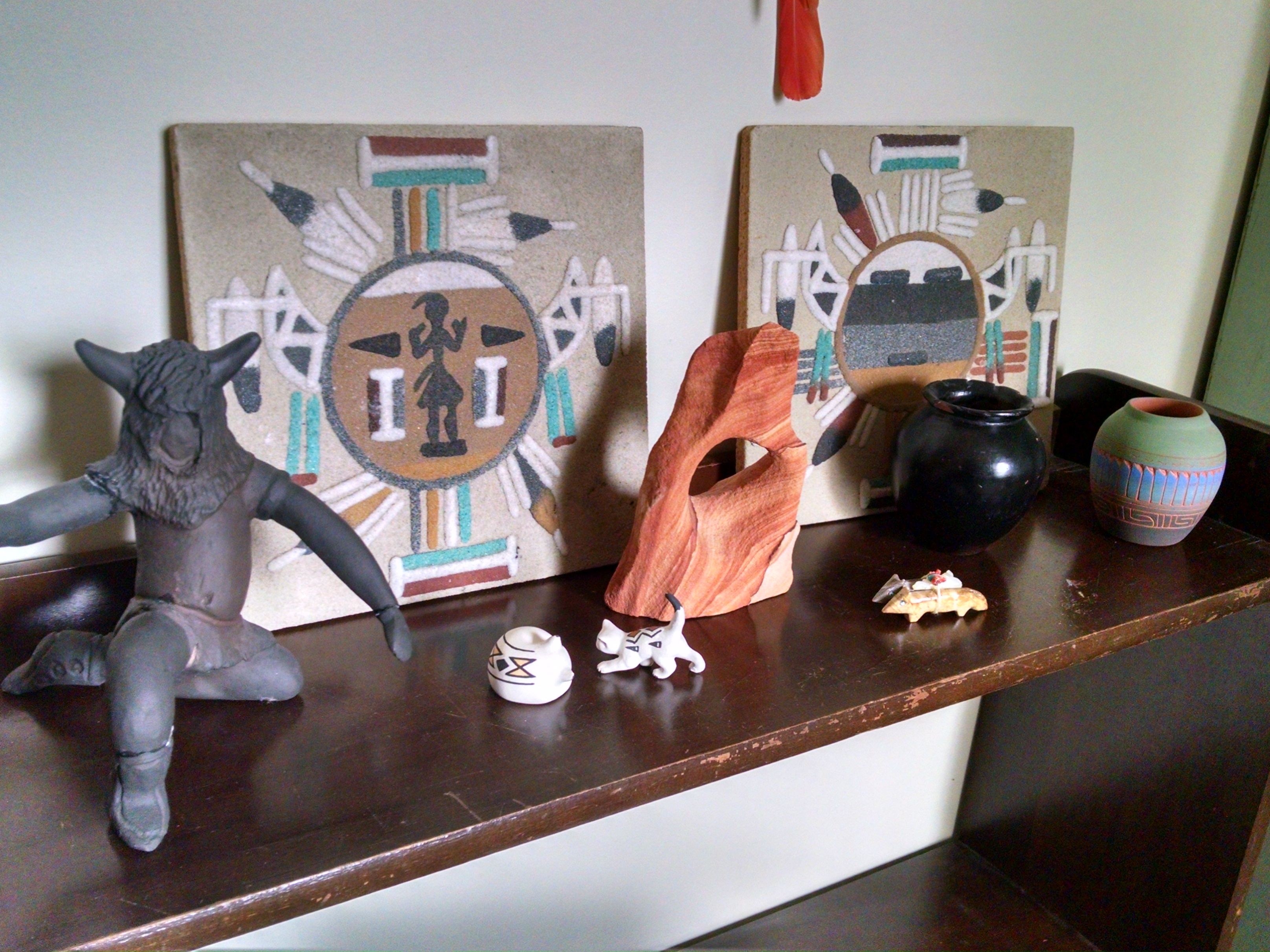
A friend who is going to open a used bookstore bought about eighty books. Those were easy to let go of, too. Parting with a piece of art is harder, sort of like cutting scenes when revising a book, but I decided not to challenge certain fragile things to make a trip to New Mexico. The Santa Clara Pueblo buffalo dancer, a small statuette made of black pottery, broke a hand, a foot, and a leg on his way to North Carolina from Santa Fe many years ago. I repaired him as well as I could. The powerful energy I felt at a buffalo dance was unforgettable, a force that swept through my whole body to the bones. He holds that sacred feeling in his glued-together form. I was happy when a neighbor who teaches history in the public schools and loves Native American history wanted him and several other items. When she came to get them, she asked which piece was made by which tribe, and appreciated the buffalo dancer for what he means, cracks and all, not for collectible value. I packed him carefully, wrapped the tiny Acoma cats so they wouldn’t break, and sent the collection off with someone who will feel the spirit of New Mexico in it.

Friends value us that way—for our spirits, flaws and all, not expecting or needing perfection. Letting go of people is harder. My closest friends in Virginia (and North Carolina and Georgia) will come out to see me eventually, but I won’t see them as often anymore. One who has helped me with the multitudinous hassles of the moving-out process has grown even closer as we’ve worked on things like my moving sale, and I will miss her all the more. I’ve said most of my goodbyes on campus, but I still have two more yoga classes to teach, to students who have been with me for years. I have friends to rejoin in T or C, and I’ll find new yoga students there, but it will still be hard to say the last “namaste” in Virginia.

Centering and Balancing

Moving and retiring is a positive disruption and it’s one that I chose. Still, I’m prone to wishing I could just get the tedious parts over with. There is no “over with.” It’s all part of my life, unique moments I am consciously living. I’m more effective when I’m present to a process, whether it’s cleaning out my desk, selling off my furniture, or going to one last department meeting. Not only more effective, but happier. Slowing down, I can get more out of each step of this change and put more into it. Be more attuned to the people around me. An attitude of rushing doesn’t speed things up. An attitude of spaciousness eases the pressure. It will all get done. It’s like yoga. Set up the pose with attention, be aware of the pose, sustain the pose, exit mindfully.

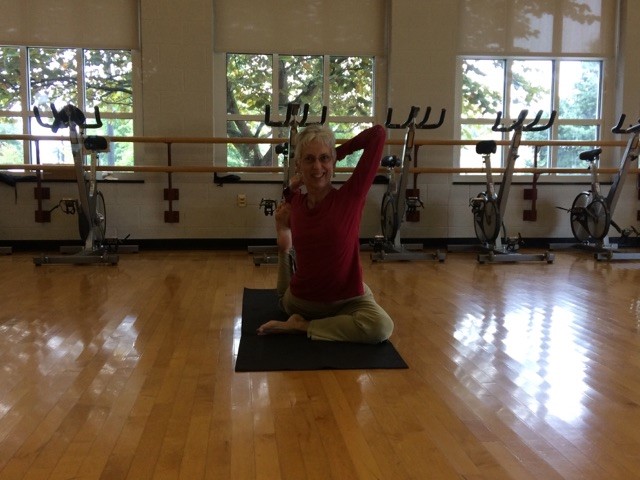
Note: the pictures were taken in the exercise studio on campus where I did my most important work: teaching yoga. At my retirement party, that’s what everyone was talking about. Yoga.

Meet Mae Martin — a southerner who loves silliness, hates bullying, and has a very unusual talent for solving mysteries

Fellow paranormal mystery author Terri Herman-Ponce did an interview with my protagonist on her web site. I love this idea–interviewing the character rather than the author. Get to know Mae better, in her own words.

Flowering of the Heart

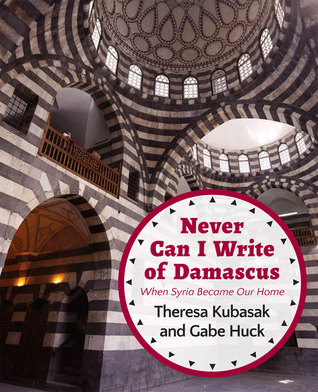
Never can I write of Damascus

without my fingers becoming

a trellis for her jasmine.

Nor can my mouth speak that name

without savoring the juices of her apricot,

pomegranate, mulberry and quince.

Poem by Nizar Qabbani.

Translated by students in the Iraqi Student Project

Never Can I Write of Damascus: When Syria Became our Home, by Theresa Kubasak and Gabe Huck is a memoir of the couple’s years with the Iraqi Student Project, preparing Iraqi refugees in Syria in to attend college in the U.S. Huck and Kubasak chose the work of creating educational opportunities for Iraqi young adults as their way of compensating in some small way for the damage done to Iraq by the U.S. invasion. They chose Syria because it had welcomed such large numbers of Iraqi refugees. Little did they know that in seven years they would be leaving Syria themselves, and that this country they came to love would be flooding the world with its own desperate refugees.

If I were not about to retire from education, I might use this book in a first-year seminar, teaching college students how to explore intellectually, do critical thinking, engage in civil discourse, and appreciate learning, language and culture for their own sake. The model of highly motivated learning in the ISP groups is fascinating, as they discovered world literature and poetry in discussion groups and worked together in writing workshops, to a large extent self-directed with guidance from Kubasak.

Through this book, I’ve learned more about Syria than I have ever learned from the news. I got a clear feeling for what it must be like to leave your home and your possessions because your life is in danger and your country at war within itself, and also for how Syria made room for refugees, first from Iraq and then from its own disrupted society. Though they make occasional references to politics, most of all Huck and Kubasak have written a love letter to Damascus: its language, its architecture, its food, its artisans, its spirituality, and its people. Damascus as it was. The city in this memoir is full of music, dancing, fresh fruit juices, family, prayers, creativity, and most of all friendliness and generosity.

The authors use excerpts from student writings, interviews with local residents, and quotations from books and poetry to illustrate the themes of each chapter. One moving story is from an Iraqi refugee. She tells about stopping in Mosul on a cold night as one of many escaping to Syria, taking shelter in a mosque. The travelers didn’t know each other, but little by little they drew closer to each other for conversation and for warmth, and thus they spent the night, comforted by each other’s human presence and warmth. They were Shia, Sunni and Christian in that group, and it no longer mattered at all.

My final meeting with my Virginia book club was special. It’s the only time we’ve had the author of the book we read join us. Two of us in the club know Theresa Kubasak as our yoga student, and we invited her to talk with us and share the in-depth stories behind her memoir.

As our guest, she did something quintessentially Syrian. Eager to share Syrian culture with us, she brought food: fresh hummus seasoned with garlic and sumac, freekah (cracked wheat with slivered almonds), figs and dates stuffed with walnuts, and the wonderful soft flatbread that she describes in her book as something people often carry home on their heads. The generosity and sociability of the Syrian people is the life force that animates the book. She embodied that spirit. In addition to cooking for us, she brought two of the books of the poems and essays written by the Iraqi refugee students she and her husband worked with, and a long white curtain inscribed by a number of the students with the best lines from their essays about spiritual life. For a while, it hung over a door in my apartment, words written by young people in Damascus. There was something moving about its presence, a scene from their lives carried into ours, bearing their words in their handwriting. One of the writers, Mustafa, had signed his name over a sketched bank of fluffy clouds. A book club member who volunteers helping Syrians resettle here was so entranced by the small volume of the student writings that she read some of the poems over and over and then had to share them aloud with us.

Another member of the club asked Kubasak what was difficult or different in returning to the U.S. after seven years in Damascus. She described a day during their readjustment to New York, where they had been living before they took on the Iraqi Student Project, including this anecdote as part of her answer: After going to various institutions and businesses on errands, she looked at her husband and remarked, “We’ve been to five places today, and no one has offered us tea.”

Not all book clubs will be so fortunate as to be able to invite the author, but if you’re in a club and need something important, moving and different to read, I recommend this. Have some Syrian food as you discuss it, and apricot or pomegranate juice and tea.

Reflection and Self-Study: Down Time Needed

On a recent trip that took me through three guest rooms in three nights, I forgot my evening meditation and journaling practice. I barely kept a journal, and what little I wrote in it was about other people. The interesting people I met at my reading and book signing. What great hosts and wonderful people I was with. Thoughts on how the friends I visited were doing. No inner work. I took time daily for asana practice in the morning and I also found time to write fiction, though only a paragraph or two, but I ended my day turned outward still. How strange. I made the commitment years ago for an evening practice and yet I simply forgot. By the time I was on my way home I realized how important that commitment was.

I stopped at a rest stop to eat a picnic supper. As I opened my car door, it lightly tapped the vehicle next to it. I saw that there was no scratch, not even a bit of paint left on the other vehicle, and proceeded to reach for my cooler. Then a male voice said, “Are you going try to pretend nothing happened?”

A young man of about nineteen stood between the two cars, blocking my exit and glaring at me. I said that nothing had happened, and showed him. My door had touched the hard plastic rim over the wheel well of his Jeep, a protective surface I suspect is there for off-road driving, though this Jeep looked new and shiny, as if it had never done what it was designed for. He demanded an apology. Something about a kid the age of my freshman students acting like an angry parent with a misbehaving child over a non-event rubbed me the wrong way and I got sarcastic with him. “Sir, I most humbly apologize that my door ever so lightly tapped your Jeep, doing no damage whatsoever.” He told me I didn’t have to be like that. I told him he hadn’t had to be a jerk. (The only common sense I had left kept me from calling him something more offensive than jerk. I noticed my inner editor canceling out the A-word.) He denied being a jerk and told me to be more careful in the future. I told him not to be so angry in the future and walked off to the picnic table. Thus the interaction ended with both people still wanting to be right. No communication.

As I set up my dinner, I could see him standing between our cars, studying mine intently. What was he looking for? Evidence of a chronic, habitual parking lot door-hitter? My car was a mess inside, full of the detritus of traveling, and I have a New Mexico habit of not wasting water washing it, so it’s got a nice coat of dirt, but it’s not full of dings or other people’s paint. Perhaps he was peering at the empty Perrier and iced tea bottles, hoping they would turn out to have contained something stronger. I didn’t ask, just watched him, and he finally drove off.

It’s possible he was driving his parents’ car and was paranoid about damaging it, and acted toward me the way they would act toward him if it got a tiny scratch. Or maybe he’d saved up for a fancy car and is anxious about it. I don’t know. What I do know is that my pause-to-check mechanism was rusty. My capacity to step back and reflect instantaneously, to recognize that his hostility was his and that I didn’t need to be reactive, was weakened by only a few days without real reflection. I could have simply acknowledged him. He seemed menacing at first, blocking my way and starting with an accusation, but that’s all the more reason I could have and should have handled the situation better. After all, he was a kid. It was my job to be the adult.

Before I drove on, I wrote a journal entry on some scratch paper, processing all my thoughts and feelings. When I got home, I appreciated the depth and value of my night’s meditation and journaling practice. I need to do all these things to keep myself on track. Yoga asanas, writing fiction, writing a journal, and meditation. I don’t function at my best without deep down time. Not distraction or entertainment time, but inner time. It doesn’t have to take long to go deep. I don’t think I’ll forget again.

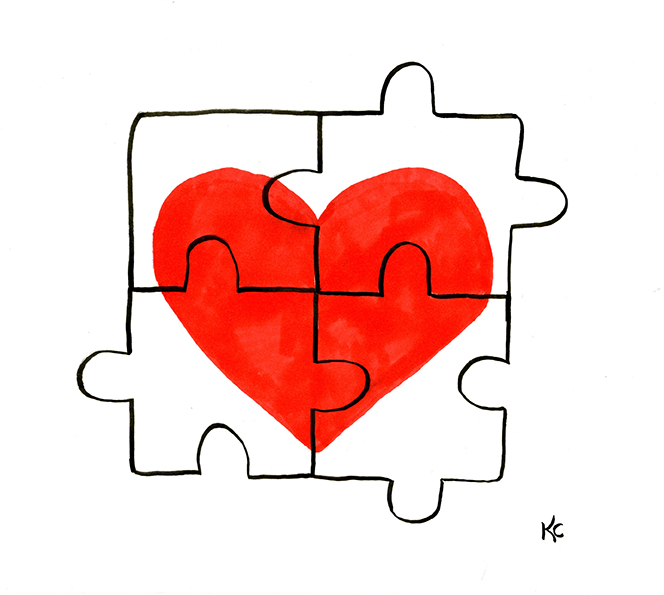
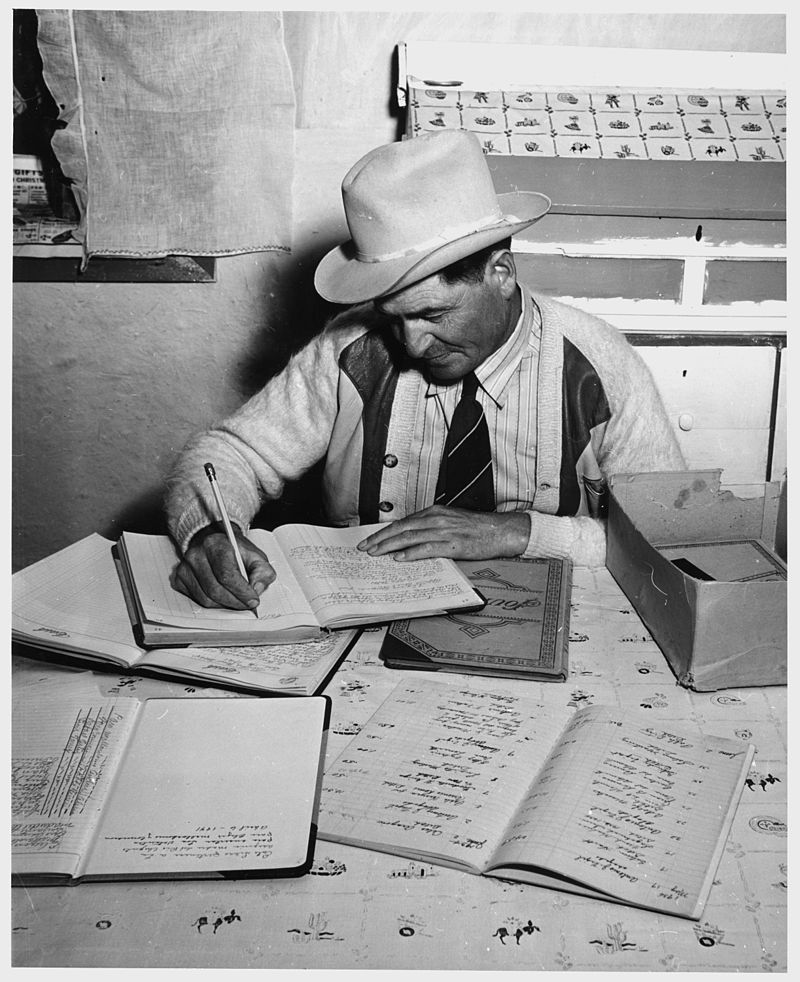
Image credits: Occupy the Present, Bryan Helfrich; heart puzzle, Katarina Caspersen

Signing Books at Book and Table, Valdosta GA

Should any readers happen to be in this area, I would love to meet you in person. I’ll be signing books and doing a short reading at Book  and Table, 120 North Patterson St. in Valdosta, GA on Friday the 14th of April at 7:00 and at noon Sat. the 15th. The bookstore/restaurant is run by one of my favorite authors, J. Michael Orenduff, author of the Pot Thief Mysteries. If you’re an East Coast fan of New Mexico mysteries, come meet both of us.

Inner Beauty

I’m a people-watcher. My fellow humans are endlessly fascinating and the fragments of their lives that I observe have the seeds of stories in them, maybe even new characters. They also give me an opportunity to practice what Buddhist teacher Jack Kornfield describes in his book The Wise Heart as seeing the inner nobility in in others.

On a recent run in a park, I noticed a romantic young couple setting up a hammock, and they asked a man who was walking his dog to take their picture in front of it. The man had a pair of hot pink headphones parked on his neck. He was around six foot three, wearing a baggy old T-shirt over a broad chest and prominent belly and khaki shorts that revealed thick, powerful calf muscles. They thanked him and he walked on with his stubby-legged little white mutt, a comical creature that looked all the smaller and stubbier for being his dog. As I finished one lap, I encountered the dog sitting patiently while the man fiddled with his MP3 player, pink headphones now attached to his head. On my next lap, he and his dog were in the middle of the green space, and he faced away from the couple in the hammock, who had vanished deep into its blue embrace. The man was singing. I realized the headphones were providing him with his accompaniment, and he was … rehearsing? Creating? He had a huge soaring tenor voice, classically trained, sweet yet strong and passionate, filling the air with a song about lost love.

You never know what’s inside another person. The pink headphones were a hint that music mattered to him, but the sound of his voice, the feeling and beauty with which he sang, expressed far more than anything on the outside. The inner depth, the inner nobility.

Kufwasa

I discovered this beautiful concept while researching Zambian culture for my work in progress. Kufwasa is a word in the Tumbuka language that means a blend of patience, mindfulness, flow, enjoyment, and something unique to the understanding of people who live in a traditional African culture which may be hard to put into English words. My goal in reading about Zambia was to understand more about a minor character, Mwizenge Chomba, who has been in my series since book two, Shaman’s Blues, but is about to play a larger role in the book I’m writing, the seventh in the series. I wanted to make sure I got his background right, his way of seeing the world. I’m not sure I’ll find a place for describing kufwasa in the book, but it should exist in the character himself, in the world view he grew up with.

Kufwasa implies doing one thing at a time, with full concentration and a kind of serenity, or it will be neither done well nor fully experienced. My character was raised in a remote village, so his family members would have planned one major activity a day. When you get around on foot, by bicycle, or in old and unreliable vehicles, travel and errands can’t be hurried. Cooking can’t be rushed, either, using traditional methods. A society without distractions enjoys taking time to talk and laugh and tell stories over these slowly prepared meals. In the twelve hours of equatorial darkness, married couples have plenty of time for kufwasa in their relationships. (I liked coming across this idea about marriage, because my Zambian character is married to an American woman who writes romance novels.) Love thrives on kufwasa.

It’s funny how I can discover something about a character that makes perfect sense even though I didn’t know it at the time I introduced him. Mwizenge appears in Shaman’s Blues as a singer and drummer in a world music trio. Live music of all kinds is a big part of Santa Fe life, and I’ve enjoyed African drumming and dance groups there, so he simply showed up the way characters do as someone likely to be in Santa Fe. I understand now why he feels at home there, so far from his village. He carved his own drum with kufwasa back in Zambia and grew up with music and dancing as community events. Compared to the high-pressure lifestyles of some parts of the country, the pace in New Mexico comes a little closer to kufwasa.

Next time I find myself trying to do too much too fast, I hope I can slow down and remind myself to practice kufwasa.

Ahimsa and Santosha

Though a few of my fictional characters do practice yoga, this week it’s Amber the yoga teacher and college professor more than the novelist who’s talking.

The Sanskrit word ahimsa is usually translated as “non-harming.” It’s one of the principles of yoga philosophy, one of the yamas, which means abstentions or restraints. Ideally, we’re aware of it in our asana practice and also as we take our yoga with us into our lives. Ahimsa applies to self and others, to all life forms, not only to humans. Thinking unkind and hostile thoughts, saying destructive things, or doing harmful actions are all contrary to the principle of ahimsa.

When I teach, I remind students to stay in a pain-free range of motion and to come out of a pose completely when fatigued rather hang in their joints and possibly injure themselves. But then I’ll look around and see students succumbing to the competitive urge to do what a stronger or more flexible classmate can do. Santosha needed! This is one of the niyamas, the observances to be practiced without restraint. It means contentment. One does not fight reality but takes an attitude of receptive awareness. Objecting to reality with complaints and harsh judgment doesn’t change it. Change can occur, however, from this basis in contentment. Approaching one’s own body and one’s own character from santosha seems to go with having a sense of humor that is kind and open.

I do my best to integrate yoga philosophy into my teaching without giving a formal lecture. However, it’s incredibly hard to teach Americans not to hurt themselves, and when I instruct other kinds of physical activity it’s even harder. There’s no expectation of spirituality or stress reduction in a strength-training class, but of self-improvement, and for some reason, we seem to think we’re better people if we push ourselves beyond healthy limits. I’ve met young men who take pre-workout pills with so much caffeine they could cause a heart attack in order to force their exhausted bodies to work harder, when what they really need is eight hours of sleep a night. I think Americans subscribe to a pervasive cultural delusion that it’s virtuous to go without sleep or heroic to work sixty hours or more a week, and that a great athlete will sacrifice the long-term well-being of his or her body for the sport and for the team. I wish no one had ever come up with the phrase, “no pain, no gain.”

Well-rested, relaxed people get more done in less time. They fight less. Comprehend more. Pay attention and remember better. Procrastinate less. Have more energy. If we all slowed down and allowed our nervous systems to stop buzzing, what would happen? If we valued our health as a nation and as a culture, rather than seeing it as expendable in the pursuit of other goals, what would happen? How would employers treat workers? How would we treat ourselves?